TEEHO TE012W Review: Fast Fingerprint Unlock, Real Battery Blind Spot
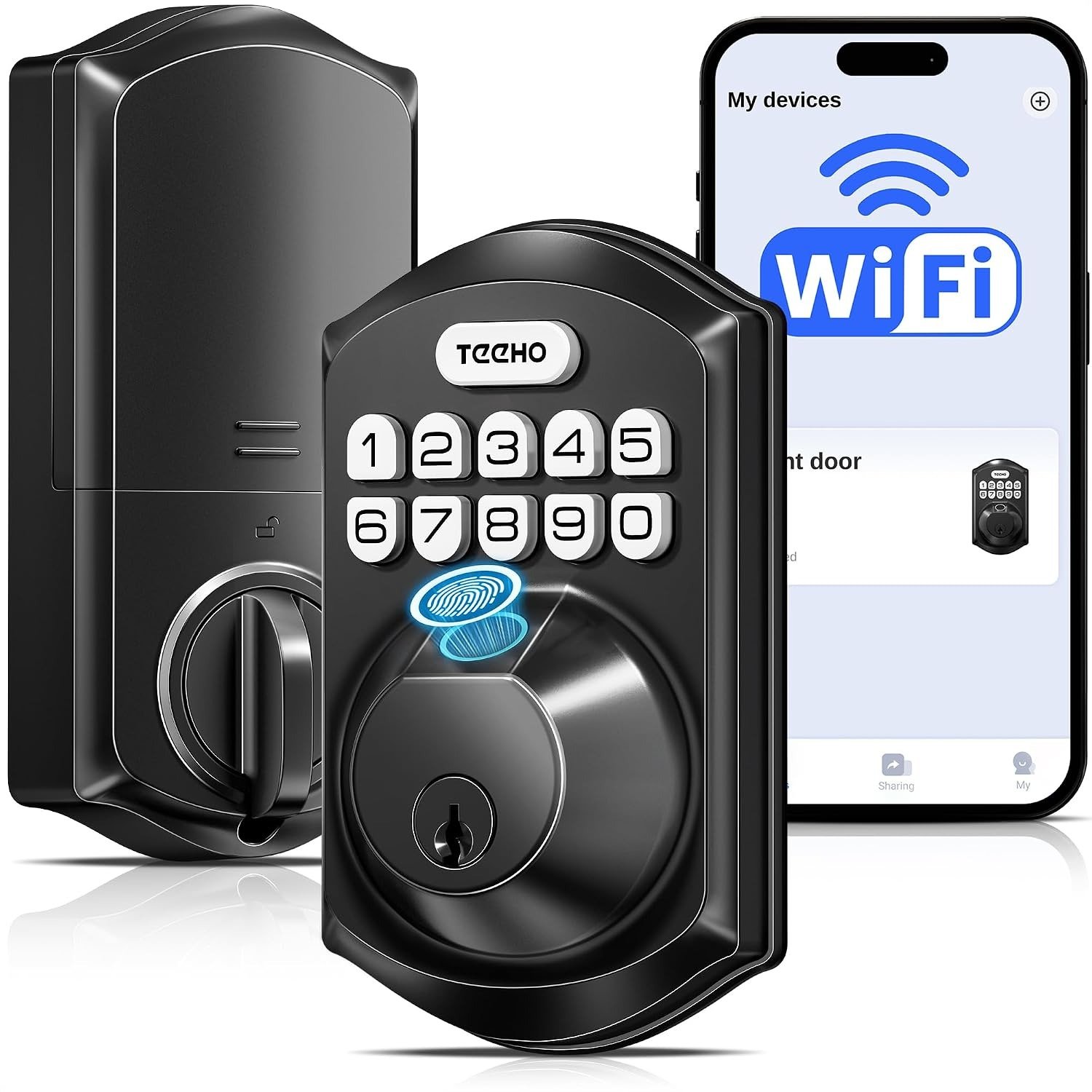
TEEHO TE012W
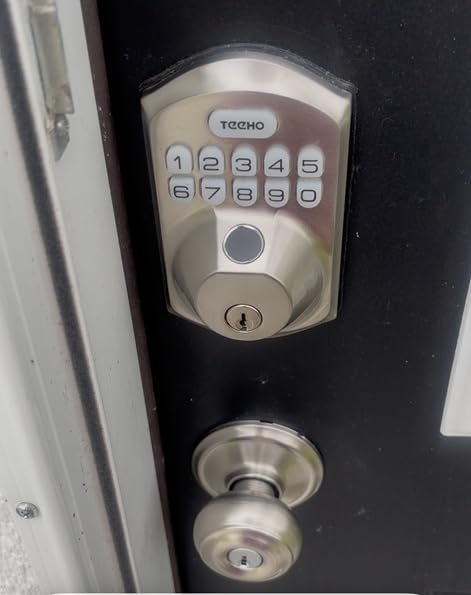
Your hands are full of grocery bags, the porch light hasn’t clicked on yet, and you’re patting down your jacket for keys that are almost certainly still sitting on the kitchen counter. That exact five seconds of fumbling is what the TEEHO TE012W is built to erase — press a fingerprint or punch a code into the backlit keypad, and the deadbolt turns before you’ve finished shifting the bags to your other arm.
That part, it does well. Every source we checked — owner reviews on Amazon and Walmart, independent gadget-review sites, TEEHO’s own documentation, even the FCC certification records behind the hardware — agrees on that much. Where the story gets more interesting is a few months in, in a place almost nobody checks before hitting “buy”: the battery compartment.
TEEHO TE012W First Impressions: The Lock Looks Perfect for the First Month
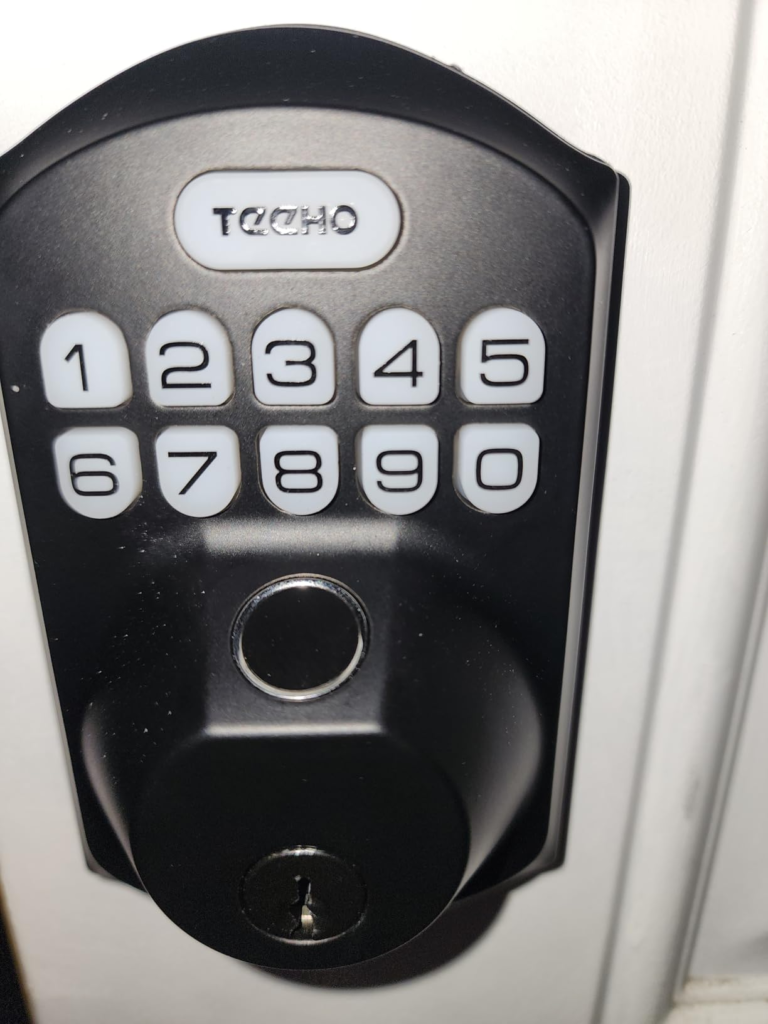
Out of the box, the TE012W feels like it belongs on a nicer door than its price suggests. It’s BHMA Grade 3 certified — the standard residential security rating most quality deadbolts carry — and the IP55 weather rating means rain and dust won’t make it glitchy.
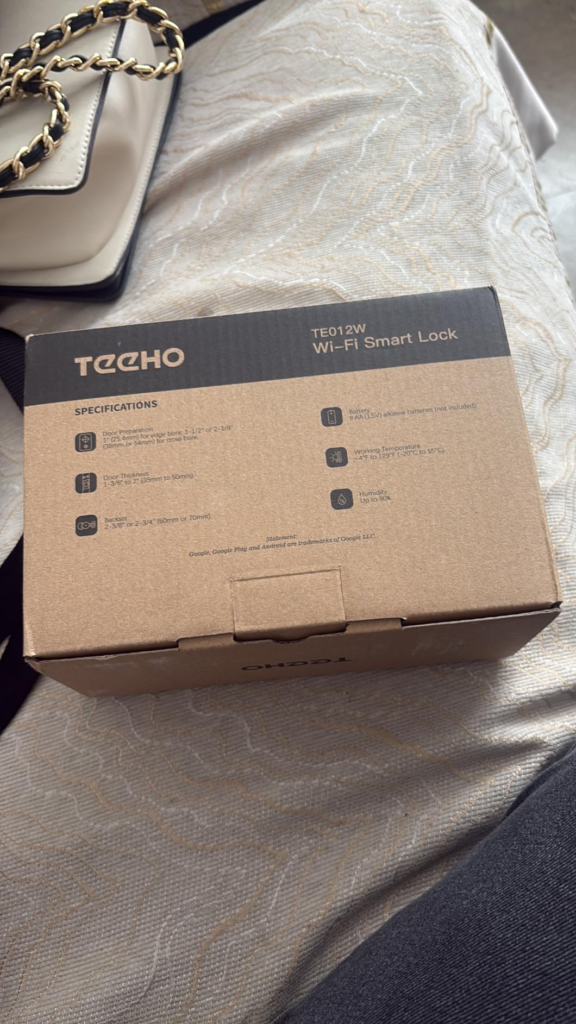
Installation is genuinely simple: a Phillips screwdriver, 10–15 minutes, no drilling. It fits standard doors (1-3/8″ to 2″ thick, 2-1/8″ or 1-1/2″ bore holes) and works on left- or right-handed doors without extra parts. Fingerprint enrollment takes seconds, and unlocking is fast enough that you stop noticing it within a week.
Here’s the catch: most smart lock reviews, this one included, get written in that first week or month. That’s not TEEHO cutting corners — it’s just how review timing works everywhere. The problems that shape a five-year relationship with a lock don’t show up on day three. They show up around day ninety.
TEEHO TE012W Common Complaints: What You Keep Noticing but Can’t Quite Name
Nothing about this lock fails dramatically. Nobody gets locked out on day one. What shows up instead is smaller: a low-battery warning that seems to come around faster than it should. An app that occasionally needs a second try to find the lock over Wi-Fi. A fingerprint that reads instantly on a dry morning and needs two attempts right after you’ve washed dishes.
None of that is a defect exactly. It’s friction — the kind that doesn’t make you regret buying it, but quietly chips at the “install it and forget it” promise every smart lock ad makes. Here’s why it happens.
Why TEEHO TE012W Batteries Drain Fast: The Hidden Mechanism Behind the Miss
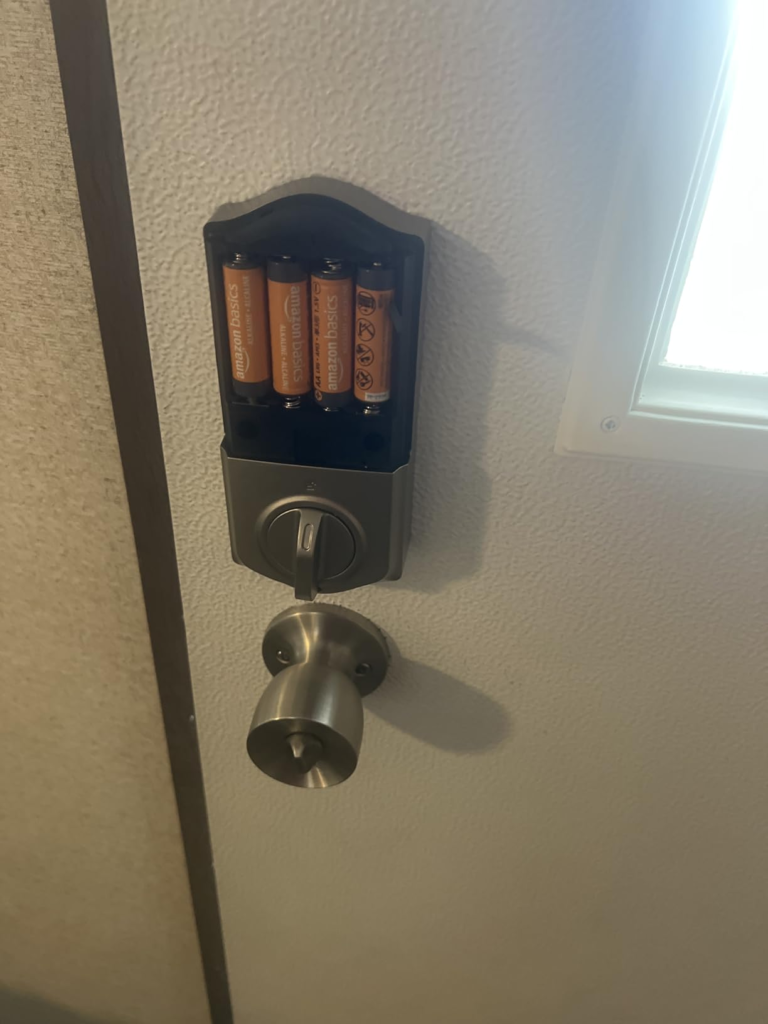
Buried in the spec sheet is the detail that explains most of the frustration above: the TE012W runs on eight AA batteries. TEEHO’s own non-Wi-Fi keypad locks, like the TE002, run on four and are rated for six to twelve months.
The difference is Wi-Fi. To let you unlock from your phone, get break-in alerts, or ask Alexa for status, the lock keeps a live radio connection to your router. That radio can’t sleep the way a Bluetooth-only chip can — the same reason your phone’s battery drops faster with Wi-Fi and location on than in airplane mode. TEEHO didn’t build a worse lock than its own cheaper model. It built a different one, and the extra four batteries are the honest price of the extra features nobody mentions on the listing page.
TEEHO TE012W Battery Life Threshold: Where the Convenience Quietly Breaks
TEEHO’s manual sets expectations at around eight months under normal use — one verified buyer confirmed that’s the figure printed in the box. Real-world reports swing wider than that, usually tracking how hard you lean on the app and voice features.
| Source | Battery Life Estimate |
|---|---|
| TEEHO manual (per verified buyer) | ~8 months, normal use |
| TE012W real owner reports | ~2 months to 8+ months, depending on app/Alexa use |
| TEEHO TE002 (non-Wi-Fi sibling) | 6–12 months |
| Heavy remote/app + voice use | Shortens the estimate — plan for more frequent swaps |
The threshold to watch: if you lean hard on remote unlocking for guests, deliveries, or pet sitters, budget for changes near the low end, not the high end. The good news — a dead battery here isn’t a full lockout. The TE012W ships with two physical backup keys, which is more than some keyless-only competitors offer.
TEEHO TE012W Buying Mistakes: Why Most Shoppers Compare the Wrong Things
Search for budget Wi-Fi fingerprint locks and you’ll find a wall of near-identical listings — TEEHO, Veise, and half a dozen other names, all with the same five unlock methods, the same IP55 rating, the same AES-128 claim. That’s not a coincidence. Certification records tied to this model trace back to Shenzhen Kaadas Intelligent Technology, a manufacturer that builds the hardware behind several of these storefront brands.
That means comparing spec sheets across brand names in this price tier often means comparing the same core hardware in different housings. The real differences are things a spec sheet doesn’t show: how responsive the warranty support actually is, how polished the app is, how the battery firmware is tuned.
| What Works | What Doesn’t |
|---|---|
| Sub-second fingerprint recognition | Occasionally misreads wet or damp fingers |
| No hub needed — connects straight to Wi-Fi | 2.4GHz only, no 5GHz support |
| Five entry methods, including two real backup keys | Needs 8 AA batteries, not included |
| Fingerprint data stored locally, not in the cloud | Auto-lock is timer-based, not door-sensor confirmed |
| Break-in lockout + anti-peep passcode | Newer brand, shorter track record than August or Yale |
| 2-year warranty, lifetime after-sales support | Drains faster than TEEHO’s own non-Wi-Fi models |
Who Should Buy the TEEHO TE012W: Who’s Actually Inside This Problem
This lock is built for a specific person: someone who wants keyless entry without an electrician, a hub, or a premium-brand budget. Renters who can’t drill or rekey. Homeowners handing a cleaner or dog walker a temporary code instead of a copied key. Anyone tired of the specific panic of patting down pockets on a cold porch.
Who Should Avoid the TEEHO TE012W: Where Wrong-Fit Begins
It’s the wrong fit for a landlord managing a 30-unit building — 20 fingerprint slots run out fast. It’s the wrong fit if your router sits far from your front door; a weak 2.4GHz signal is the single biggest cause of the app disconnects owners report. And it’s the wrong fit if you need the auto-lock to confirm the door is actually shut before it locks — this one runs on a timer, not a contact sensor, so a door caught by wind on its way closed can auto-lock without fully latching. If that worries you, use the manual one-touch lock instead of trusting the timer alone.
| This Fits You If… | Skip It If… |
|---|---|
| You rent, or don’t want to drill or rekey | You manage 20+ regular users |
| You’re fine swapping AA batteries every few months | You want zero-maintenance, install-and-forget |
| You want app + Alexa convenience for guests | Your router signal is weak at the front door |
| A $60–$100 lock fits your budget | You need a decades-proven brand for insurance or HOA rules |
| You like having a real backup key | You need auto-lock to sense the door is fully shut |
TEEHO TE012W vs Premium Smart Locks: The One Situation Where It Makes Sense
Stack the TE012W against an August or Yale Assure and the gap is obvious: those brands carry years of firmware history and price tags two to three times higher. What you’re paying that premium for is track record, not necessarily better day-to-day function.
| TEEHO TE012W | Typical Premium Lock (August/Yale-tier) | |
|---|---|---|
| Price range | ~$60–$100 | ~$150–$280 |
| Hub required | No | Sometimes, varies by model |
| Brand track record | Newer, since ~2013 per brand | Long-established |
| Fingerprint users | Up to 20 | Often none — app/code based instead |
| Warranty | 2 years + lifetime support | Typically 1–3 years |
| Fingerprint storage | Local only | Varies by brand |
The TE012W makes sense in one specific situation: you want fingerprint plus app plus Alexa plus a physical key backup, without hub costs or premium pricing, and you’re willing to treat battery swaps as routine maintenance rather than a failure. If that’s the trade you’re making, this is a rational pick, not a compromise.
TEEHO TE012W Realistic Expectations: What It Solves, Reduces, and Leaves to You
What it solves: lost keys, rekeying when a tenant moves out, handing strangers a code instead of a copied key. What it reduces: the odds of walking away with the door unlocked, and the odds of someone reading your code over your shoulder, thanks to the anti-peep entry and lockout after repeated wrong tries.
What’s still on you: replacing batteries on a real schedule instead of the marketing one, keeping the app updated, and treating the auto-lock timer as a backup habit — not a replacement for checking the door yourself.
TEEHO TE012W FAQ: The Questions Buyers Actually Ask
| Question | Answer |
|---|---|
| Does it need a separate hub? | No. It connects directly to your home Wi-Fi, which is part of what keeps the price down versus hub-based systems. |
| Does it work on 5GHz Wi-Fi? | No — 2.4GHz only. If your router broadcasts both bands, make sure you connect the lock to the 2.4GHz network specifically. |
| How many batteries does it need, and are they included? | Eight AA batteries, not included. Budget for that as part of the real setup cost. |
| How long do the batteries actually last? | TEEHO’s manual estimates around eight months under normal use. Real-world reports vary more than that — heavy app or Alexa use tends to shorten it, so keep a spare set on hand. |
| What happens if the batteries die completely? | The two included physical keys still open the door, so a dead battery is an inconvenience, not a lockout. |
| Is fingerprint data stored in the cloud? | No — TEEHO states fingerprint data stays local on the lock itself, not uploaded anywhere. |
| Can Alexa or Google unlock the door by voice? | Voice control covers locking and status checks. Voice-unlocking isn’t part of it — a standard security restriction across most Alexa- and Google-linked locks, not something specific to TEEHO. |
| What’s the warranty? | Two years, plus what TEEHO describes as lifetime after-sales support, including email support and weekday phone hours. |
TEEHO TE012W Final Verdict: Is It Worth Installing on Your Door
Judged on what it actually is — a sub-$100 Wi-Fi fingerprint deadbolt, not a $250 flagship — the TE012W earns its price. Installation is simple, the fingerprint reader is genuinely fast, and the backup key means a dead battery is a minor errand, not an emergency. The trade-off is real too: more battery swaps than a non-Wi-Fi lock, and a brand history measured in years rather than decades.
If that trade sounds fair for what you’re getting, it’s worth a closer look on Amazon. If a dead battery mid-week would stress you out more than the price gap to a premium brand justifies, that’s a real reason to spend more instead — worth knowing before you buy, not after.
Transparency Note:
This analysis is built on aggregated real-world experience.
It extracts what repeatedly holds, what breaks, and what users uncover only after living with the system—then shapes it into a clear model you can use immediately.
Think of it as structured experience, refined and presented so you don’t have to learn it the hard way.
“A quick note: Don’t believe the star ratings, but trust personal experience. This article is a compilation of collected experiences.”