Sony WH-CH720N Wireless Headphones: THE V1 PROCESSOR IS REAL, THE SILENCE IS NOT COMPLETE — HERE’S THE THRESHOLD THAT DECIDES EVERYTHING
The Result Looks Fine. The Problem Isn’t.
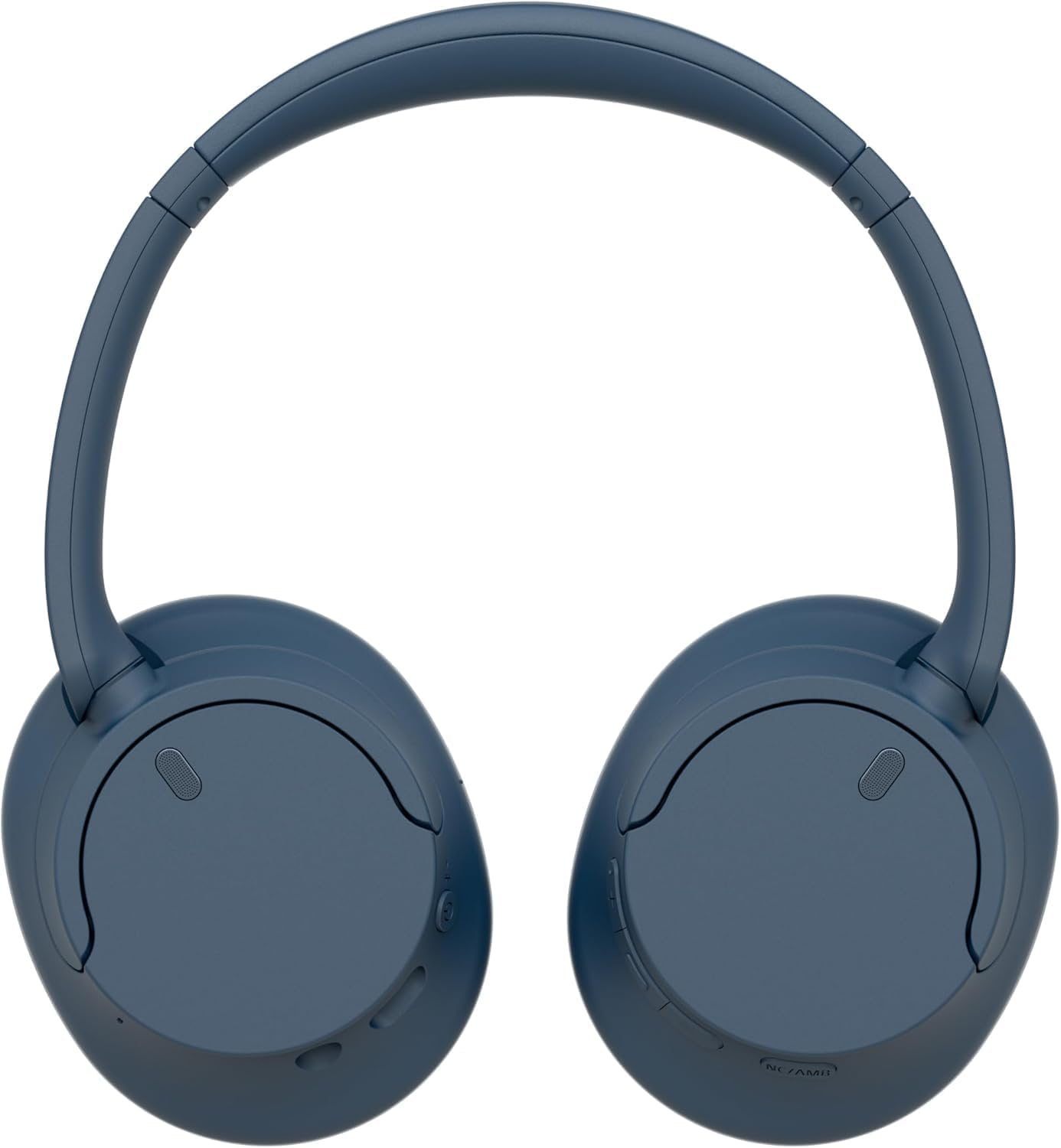
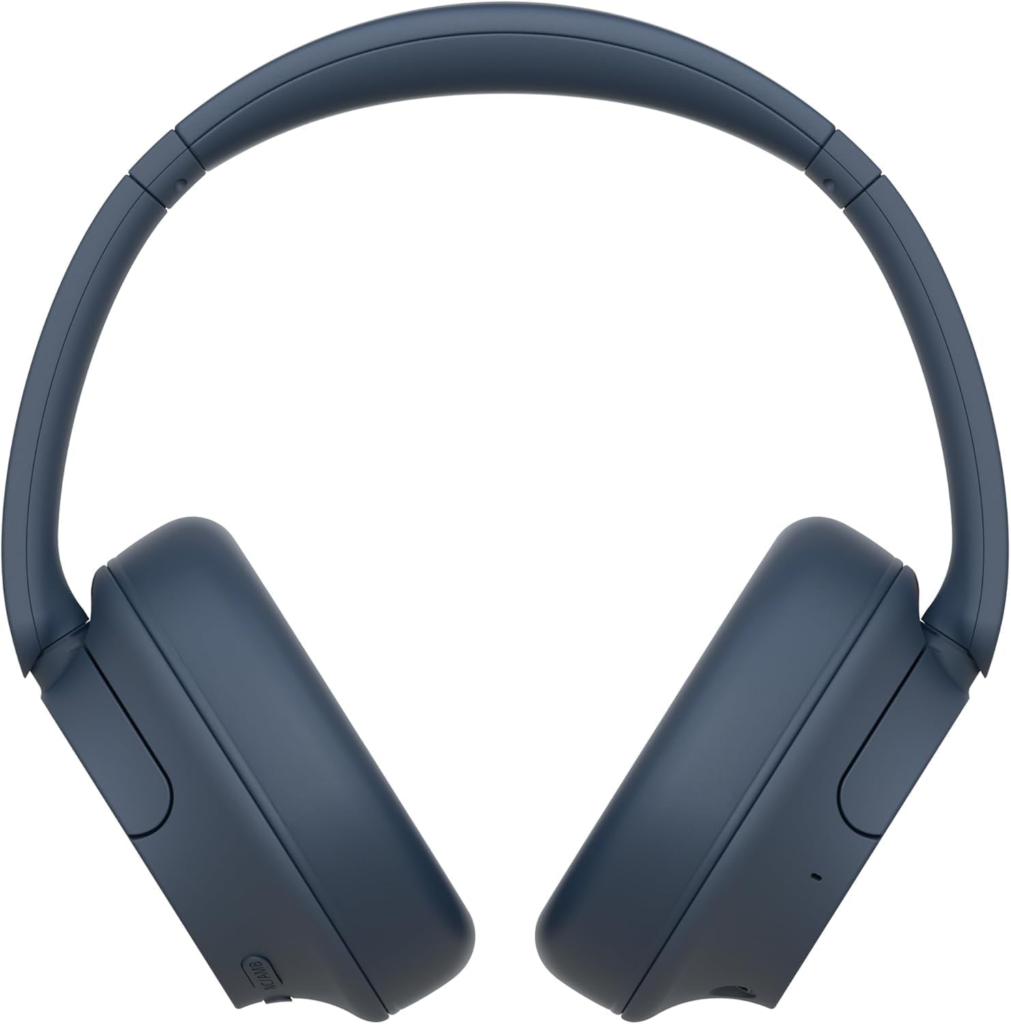
You buy the Sony WH-CH720N. You put them on. They’re shockingly light — 192 grams, lighter than anything in this category, lighter than Sony’s own premium XM5s. ANC turns on. The low hum of the AC unit fades. You think: this is working.
And it is working. Just not at the level the spec sheet made you imagine.
That gap between what you expected and what you actually got — that’s where most of the frustration with these headphones lives. Not in the headphones themselves. In the assumption that was never corrected before the purchase.
The WH-CH720N isn’t a failed product. It’s a product that gets misread, repeatedly, by the exact people it’s designed for.
| First Impression | What’s Actually Happening |
|---|---|
| Feels premium-light | All-plastic construction, no fold, no case included |
| ANC turns on, noise drops | Low-frequency noise reduced well; mid/high noise still present |
| “V1 Processor — same as XM5” | XM5 has a second QN1 chip dedicated to ANC; CH720N does not |
| Sound sounds full at first listen | Bass is boosted by default; EQ correction often needed |
| Battery life: 35 hours | Accurate — and actually exceeds expectations in real-world use |
What You’re Actually Feeling but Not Naming
There’s a specific annoyance that most buyers notice around day three or four. Not with the sound. Not with comfort. With the noise cancellation during calls, or in moderately loud environments.
You’re on a Zoom call. Someone in the background — a TV, a conversation, a fan — is still audible to the people on the other end. You expected the headphones to seal that off. They reduce it. They don’t eliminate it.
Or you’re in a coffee shop. The espresso machine blasts once, and you hear it clearly through the ANC. You weren’t promised perfect silence. But you weren’t prepared for this level of pass-through either.
These aren’t defects. They’re the natural result of one missing chip.
The XM5 pairs the V1 processor with a second dedicated QN1 processor for noise cancellation. The CH720N carries only the V1. That single processor handles everything — sound, ANC, DSEE upscaling — simultaneously. It does this well for the price. But it has a ceiling.
| What V1 Processor Handles in CH720N | What V1 + QN1 Handles in XM5 |
|---|---|
| Sound processing | Sound processing |
| ANC computation | ANC computation (dedicated QN1) |
| DSEE upscaling | DSEE upscaling |
| App features | App features + touch gestures |
| — | Stronger mid-frequency noise suppression |
The Hidden Mechanism Behind the Miss
When you search for a budget ANC headphone, you’re looking at three things: price, brand, and feature list. The WH-CH720N wins all three rounds before you’ve even opened the box.
The price is under $100 at most current retail points. The brand is Sony — the same company behind the XM5, which has been rated best-in-class for ANC for years. And the feature list includes the V1 processor, DSEE, 360 Reality Audio, 20-level adjustable ambient sound, Bluetooth 5.2, multipoint connection for two devices simultaneously, and USB-C quick charge.
On paper, nothing is missing that shouldn’t be missing at this price.
But here’s what the feature list doesn’t show you: ANC effectiveness is determined not just by which processor you have, but by how many processors share the noise-cancellation workload, and what frequencies they’re optimized to suppress.
The CH720N’s ANC is genuinely effective at low-frequency ambient noise — engine rumble, HVAC systems, consistent background drone. This is what most people mean when they say “the ANC works.” It does work. For that.
Where it steps back: variable frequency noise, human voices, moderately loud environments with mixed frequency content. The CH720N reduces these. It doesn’t erase them.
And the bass tuning compounds this. With ANC on, low frequencies are amplified in the default EQ profile. Many users describe the sound as impressive on first listen — but fatiguing over longer sessions. The fix is a few minutes in the Sony Headphones Connect app. But most users who find it disappointing never make that adjustment.
| Noise Type | CH720N ANC Performance |
|---|---|
| HVAC hum / engine rumble | Strong suppression |
| Office ambient noise | Moderate reduction |
| Human speech, mid-range sounds | Partial — still audible |
| Variable/sharp sounds | Minimal reduction |
| Wind noise (during calls) | Beamforming mics help; not eliminated |
The Threshold Where the Outcome Quietly Breaks
There is a specific use-case threshold where the CH720N stops delivering a satisfying experience and starts creating a different kind of frustration.
Call it the Active Isolation Threshold: the point at which you need ANC not to make your listening more pleasant, but to make your environment functionally quiet for focus work, calls, or travel in genuinely loud conditions.
Below that threshold — casual daily use, commutes with low ambient noise, work-from-home with background music, long-haul flights where you’ll be playing audio anyway — the CH720N performs with ease and outlasts virtually any competitor at twice the price. Its 35-hour battery with ANC on exceeds the XM4 and XM5, which are each rated at 30 hours.
Above that threshold — open-plan offices with active conversations, planes during takeoff, calls in noisy public spaces, or any context where you need clean silence rather than reduced noise — the CH720N begins to show its structural limitation.
This is not a flaw in the product. It’s a flaw in the expectation.
| Use Case | Below Active Isolation Threshold | Above Active Isolation Threshold |
|---|---|---|
| Home listening / study | ✅ Excellent | — |
| Commute / quiet transit | ✅ Works well | — |
| Long-haul flight (music playing) | ✅ Very capable | — |
| Open office with conversations | — | ⚠️ Voices still audible |
| Video/voice calls in noisy rooms | — | ⚠️ Background bleeds through |
| Plane engine during takeoff | ✅ Low rumble handled | ⚠️ Sharp sounds still present |
Why Most Buyers Misread This Too Early
The comparison trap is the most dangerous mistake in this price range. Most buyers look at the CH720N next to the XM5 and ask: how different can the ANC really be if they use the same V1 chip?
The answer is: significantly different, because the V1 chip in the XM5 is not the only processor handling ANC. The XM5’s QN1 chip was specifically designed for noise cancellation, and its presence means the V1 can focus on audio fidelity while noise suppression gets dedicated computational resources.
The CH720N’s V1 is doing both jobs. It does them competently. But competence in a dual-load system and excellence in a dedicated system are measurably different things.
The second misread: feature parity as performance parity. Having LDAC on paper is meaningless if the CH720N doesn’t support it — and it doesn’t. Codec support is limited to SBC and AAC. For Android users who wanted LDAC for high-resolution Bluetooth audio, this is a direct limitation that won’t be fixed by any app update.
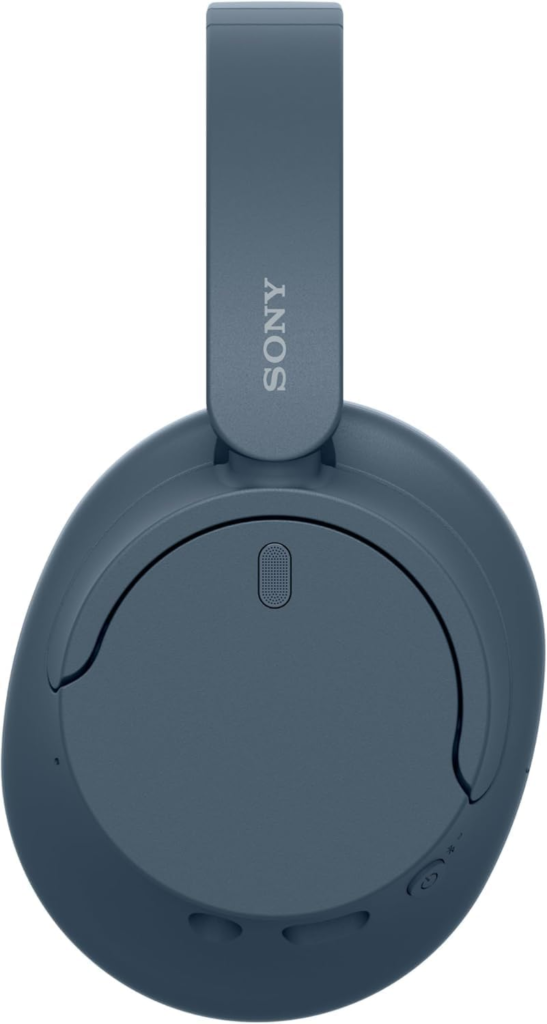
The third misread: build quality as an irrelevance. The headphones are all plastic, full-stop. No folding mechanism, no carrying case included. For someone replacing a Bose QC45 or a previous Sony XM-series pair, the physical impression when holding the CH720N for the first time is jarring. It feels cheaper than it performs. That gap creates doubt in the first week of ownership, even when the audio experience is genuinely good.
| Common Misread | The Correction |
|---|---|
| “Same V1 = same ANC” | XM5 also has a QN1 chip; CH720N does not |
| “Full Sony feature set” | No LDAC, no touch controls, no wear detection |
| “Build quality doesn’t matter” | All-plastic feel creates persistent doubt, especially for returning buyers |
| “ANC handles everything” | Effective on low-frequency only; voices still pass through |
| “Default sound is final” | EQ correction in Sony app makes significant difference |
Who Is Actually Inside This Problem
The CH720N is genuinely well-matched to a specific type of listener — and genuinely mismatched to another.
The person this headphone was built for uses headphones primarily to create distance from ambient noise while working or listening to music. They care about wearing them for hours without head fatigue. They change their listening source during the day — phone, laptop, tablet — and want quick switching. They don’t work in environments where background noise is the core problem to solve; they work in environments where the headphones need to soften that noise without eliminating it. And they do not need to sound impressive to people on the other end of their calls in a loud café.
At 192 grams, the CH720N is the lightest ANC over-ear headphone tested across multiple independent labs. That weight difference over six to eight hours of wear is not theoretical comfort — it’s measurable fatigue avoidance. The XM5s are heavier. The XM4s are heavier. The Bose QC45s are heavier. This headphone wins that specific contest without qualification.
The 35-hour battery with ANC on is not just competitive — it outlasts the premium tier. Quick charge gives one hour of playback from three minutes of charge. For casual daily use in low-to-moderate noise environments, this product over-delivers on the promises most users actually care about most.
| Profile | Fit Assessment |
|---|---|
| Remote worker, home office | ✅ Strong match |
| Student, library/café with light noise | ✅ Strong match |
| Daily commuter (bus, metro) | ✅ Strong match |
| Frequent long-haul traveler | ✅ Works, with audio playing |
| Open office worker needing voice isolation | ⚠️ Partial match only |
| Heavy call taker in noisy environments | ❌ Wrong tool |
| Audiophile wanting LDAC / high-res Bluetooth | ❌ Not supported |
Where Wrong-Fit Begins
There are three specific entry points where buying the CH720N becomes a decision you’ll question within 30 days.
The first is active call dependency in noise. If your primary use case is voice calls in environments with background noise — open offices, coffee shops, busy households — the CH720N’s beamforming microphones help. But they don’t solve the problem completely. People on the receiving end of your calls will hear your background. Not loudly. But audibly. If this matters for your work or your relationships, this headphone’s mic system will create friction before long.
The second is the expectation of premium ANC. If you’ve used Bose QC45s, Sony XM4s, XM5s, or any dedicated premium ANC product, the CH720N’s noise floor will feel inadequate. Not because it’s bad. Because your reference point is calibrated higher. The difference between “decent ANC” and “premium ANC” is viscerally obvious once you’ve experienced both, and no marketing language about shared processors will change that perception.
The third is durability expectations over time. The all-plastic construction is light and functional, but it signals a different product category than its feature list suggests. Users who’ve owned the headphones for over a year note normal wear and the expected limitations of budget plastics. If you need a headphone to survive commuter bag life, airport transit, and daily travel for two to three years, the build does not inspire confidence in the same way the XM5 does.
The One Situation Where the Sony WH-CH720N Becomes Logical
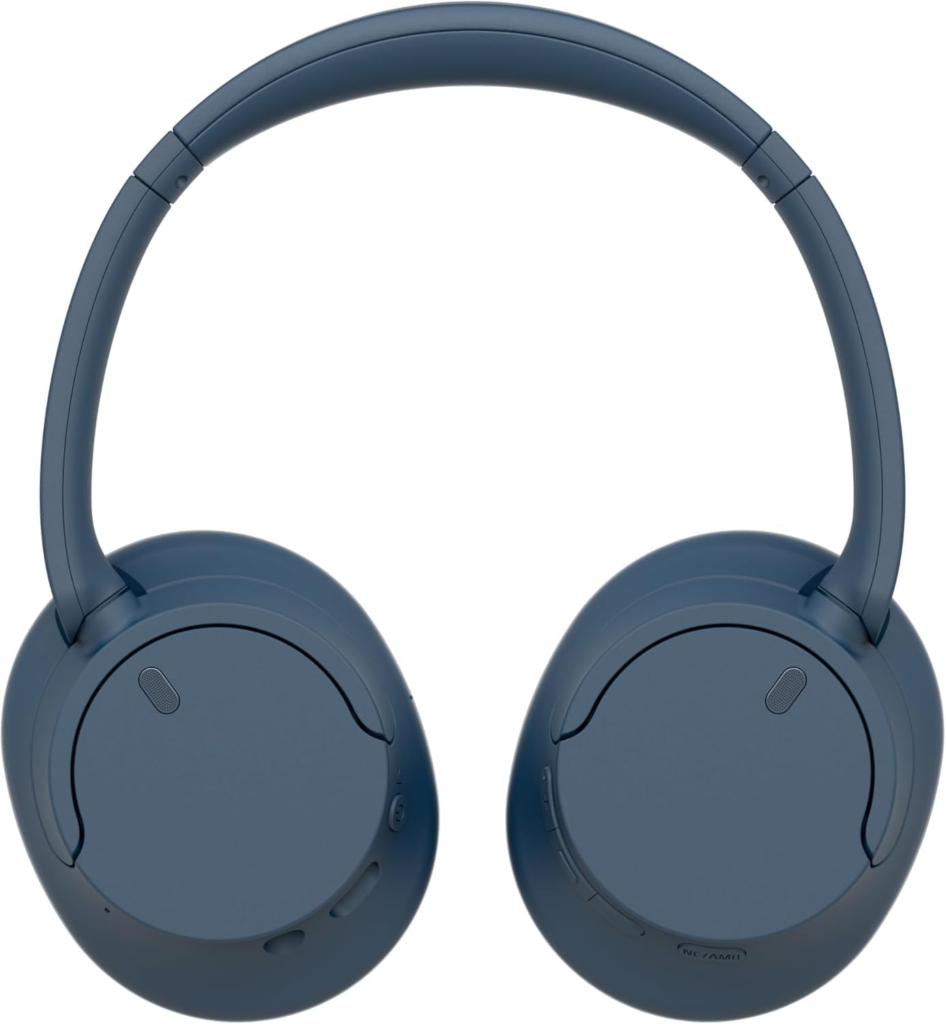
If your noise environment is manageable — not extreme — and your primary frustration is headphone weight and listening duration, there is no ANC over-ear headphone at this price that outperforms the CH720N on the metrics that actually govern daily use satisfaction.
The weight is the lightest in class. The battery outlasts the premium tier. The V1 processor delivers real ANC against low-frequency noise. The Sony app gives EQ control, 20-level ambient sound adjustment, and Adaptive Sound Control that changes ANC settings based on your detected activity. Multipoint connects two devices simultaneously. 3.5mm wired mode is available as backup. Quick charge is genuinely useful.
For someone who is currently tolerating a heavy pair of headphones, or dealing with a dead-battery situation regularly, or spending north of $200 on a product that delivers features they don’t fully use — the CH720N is not a compromise. It’s a correction.
The logical condition: you need reliable ANC for casual daily use, you wear headphones for extended periods, and you are not in a professional environment where ambient noise elimination is critical to your work output.
What It Solves, What It Reduces, and What It Still Leaves to You
Buying the CH720N ends specific problems cleanly. It does not end all the problems in the category.
What it solves outright:
Wearing fatigue from heavy over-ear headphones. All-day battery anxiety — 35 hours with ANC on means multi-day use before charging. Low-frequency ambient noise in most casual environments. Switching lag between devices with multipoint Bluetooth. Wired backup when battery is unavailable.
What it reduces without eliminating:
Mid-frequency and voice-range ambient noise. Call quality in genuinely loud spaces. Build quality confidence compared to premium-tier products.
What it still leaves to you:
EQ configuration — the default tuning needs adjustment for neutral sound. Managing the absence of a carrying case (no case is included). Accepting that human voices around you will still be audible with ANC on. Understanding that LDAC is not available — AAC and SBC are the ceiling.
| Category | Verdict |
|---|---|
| Weight & Comfort | Best in class at this price |
| Battery Life (ANC on) | 35 hrs — outlasts XM4 and XM5 |
| ANC Effectiveness | Strong for low-frequency; limited for voice/mid-range |
| Sound Quality (default) | Bass-heavy; requires EQ correction |
| Sound Quality (after EQ) | Genuinely good for price |
| Build Quality | All-plastic; acceptable, not premium |
| Call Quality | Functional; not excellent in noisy environments |
| Codec Support | SBC + AAC only; no LDAC |
| Included Accessories | USB-C cable, 3.5mm cable — no case |
| App Features | Full Sony Headphones Connect access |
| Price-to-Feature Ratio | High |
Final Compression
The Sony WH-CH720N is not a headphone that tries to be the XM5 for less money. It’s a headphone that solves a different problem — one that the XM5 doesn’t address: extended daily comfort with real ANC, under $100, with multi-day battery life.
The buyers who feel disappointed are mostly those who expected it to perform at the XM5’s noise isolation level. The buyers who feel satisfied are those who needed a lighter, longer-lasting alternative to headphones that were heavier, more expensive, or less practical for all-day wear.
If your listening environment is moderate and your frustration is weight or battery — this is the logical step. If your environment is loud and noise isolation is your primary requirement — the correct product is the XM5, and the price difference is not optional.
If you’re inside the first condition and currently delaying the decision, the math does not improve with more waiting. The WH-CH720N is available on Amazon with standard Prime delivery, and the price has stabilized well below its original $149.99 retail point.
Frequently Asked Questions — Sony WH-CH720N
| Question | Answer |
|---|---|
| Does the Sony WH-CH720N have the same ANC as the WH-1000XM5? | They share the V1 processor, but not the same ANC performance. The XM5 has an additional dedicated QN1 chip that handles noise cancellation independently. The CH720N’s V1 manages both audio and ANC simultaneously, resulting in lower ANC ceiling — especially for mid-frequency and voice-range noise. |
| Does the Sony WH-CH720N support LDAC? | No. Codec support is limited to SBC and AAC. LDAC is exclusive to Sony’s higher-tier headphones like the XM4 and XM5. For Android users who use LDAC for hi-res Bluetooth audio, this is a direct feature gap. |
| How many hours does the battery actually last? | Sony rates it at 35 hours with ANC on and 50 hours with ANC off. Independent real-world tests confirm the claims are conservative — several reviewers found the battery drained slower than expected in daily use. Quick charge gives one hour of playback from three minutes of charging via USB-C. |
| Is the noise cancellation good enough for airplane travel? | For engine rumble and low-frequency drone — yes, it performs well, especially with audio playing. For sharp or variable noise, including cabin announcements and crying children at close range, suppression is partial. Users upgrading from Bose QC25 or similar flagship ANC products will notice the step down. |
| Why does the sound feel bass-heavy straight out of the box? | The default EQ profile amplifies low frequencies, which becomes more pronounced with ANC enabled. This is a tuning decision, not a hardware limitation. Adjustment via the Sony Headphones Connect app — available for iOS and Android — resolves this meaningfully for most users. Note: the app requires iOS 16 or later; older iOS versions lose app-based EQ access. |
| Is the microphone quality good for calls? | The four beamforming microphones with wind noise reduction structure perform well in quiet-to-moderate environments. In actively noisy spaces, background noise bleeds through to the other party. The mic is functional — not excellent under stress. |
| Does it include a carrying case? | No. The CH720N includes a USB-C charging cable and a 3.5mm audio cable. No case, no pouch. The earcups swivel flat for bag storage, but there is no included protection. |
| Who should buy the XM5 instead? | Anyone who depends on calls in noisy environments, works in an open-plan office with significant ambient voice noise, needs LDAC for hi-res audio, or wants a product that feels premium in the hand as well as on the ear. The XM5’s noise isolation at full load is categorically different — and the price reflects that correctly. |
Transparency Note:
This analysis is built on aggregated real-world experience.
It extracts what repeatedly holds, what breaks, and what users uncover only after living with the system—then shapes it into a clear model you can use immediately.
Think of it as structured experience, refined and presented so you don’t have to learn it the hard way.
“A quick note: Don’t believe the star ratings, but trust personal experience. This article is a compilation of collected experiences”