Soundcore Sleep A20 Review: I Tested What They Won’t Tell You — And the Threshold Is Specific
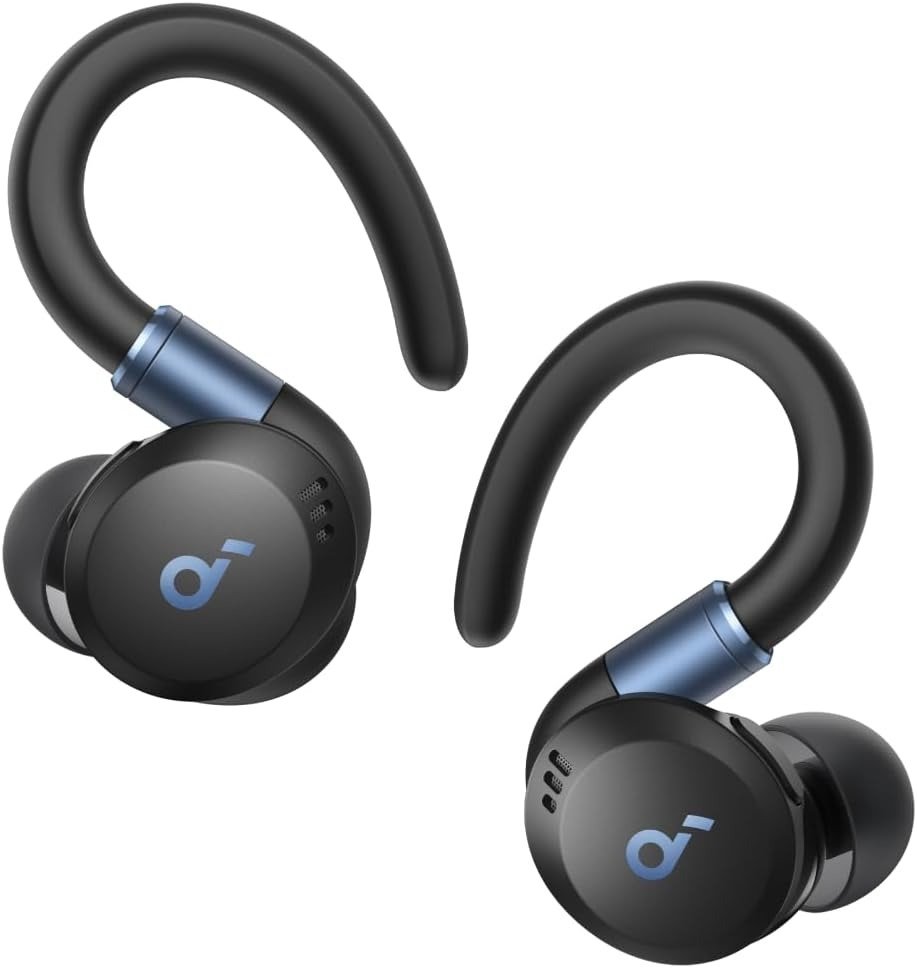
SOUNDCORE SLEEP A20
You don’t know you have a noise problem until you’ve slept through one night without it. You don’t know you have an earbud problem until you wake up at 3am with one lodged sideways against your pillow. Both are happening to you. The issue is that most people buy the solution before they’ve named which problem they actually have — and the Soundcore Sleep A20, despite being one of the most thoughtfully built sleep earbuds on the market, becomes the wrong answer for a very large group of buyers who have every reason to believe it’s right.
This review exists to name that threshold precisely. Not to push you toward a purchase. To make sure the one you’re already considering lands correctly or doesn’t land at all.
The Result Looks Fine. The Problem Isn’t.
The Sleep A20 is comfortable in all sleep positions, delivers good audio quality for sleep headphones, and has long battery life. These things are real and not exaggerated. Users who’ve been through foam earplugs, sleep masks, white noise machines, and regular earbuds sitting uncomfortably against pillows will feel a genuine difference within two nights.
But here is where the result diverges from the expectation: the product does not cancel noise. It masks it. These are different mechanisms. The Sleep A20 has no active noise canceling — the earbuds rely on ear tips and wings to achieve a physical seal, and passive isolation is what carries the load.
When that distinction costs you nothing, the product works brilliantly. When it costs you exactly the thing you needed eliminated — a heavy snorer in the same room, a street-facing bedroom in a dense city, a neighbor’s bass through shared walls — the result looks fine on the product page and fails you in practice every night.
What You’re Actually Feeling but Not Naming
There is a specific type of nighttime friction that brings people to this product. It is not dramatic. It is not a medical emergency. It is the accumulated cost of light disruption: the jolt-awake, the slow re-entry into sleep, the morning where you feel like you slept eight hours but registered maybe five.
Even at whisper-level ambient noise, nocturnal sound triggers cortisol release through a brain pathway that does not require waking you — creating a stress effect that carries into the next day. You are not imagining the fatigue. You are paying the tax of a noise environment your brain never stopped processing.
What most people reach for: earplugs (too sealed, no audio), regular earbuds (protrude, hurt the ear canal on a pillow), white noise machines (don’t travel, don’t isolate directionally). The Sleep A20 occupies the specific gap between all three. The question is whether your noise problem fits inside that gap.
The Hidden Mechanism Behind the Miss
Instead of ANC, the A20s attempt to maximize passive noise reduction through two rubber seals — the ear tips themselves plus a second seal that sits just outside the ear canal as part of the outer rubber pad. This dual-seal engineering is real and it contributes meaningfully to blocking mid-to-high frequency sound.
The passive noise blocking rating reaches approximately 30dB, with an ultra-slim 3mm profile designed for side sleeping.
What 30dB passive blocking means in practical terms:
| Noise Source | Approximate dB Level | A20 Behavior |
|---|---|---|
| Distant traffic / light city noise | 45–55 dB | Effectively reduced |
| Ceiling fan / HVAC hum | 40–50 dB | Reduced to near-inaudible |
| Partner snoring (mild) | 50–60 dB | Significantly masked with sound on |
| Partner snoring (heavy/loud) | 65–75 dB | Partially masked, breakthrough likely |
| Street-level urban noise (bass) | 70–85 dB | Low frequencies pass through |
| Airplane cabin noise | 80–85 dB | Incomplete blocking |
The earbuds can block out some ambient noise but struggle with low-pitched frequencies. This is the precise failure mode and it is structural, not fixable by tip size or volume increase.
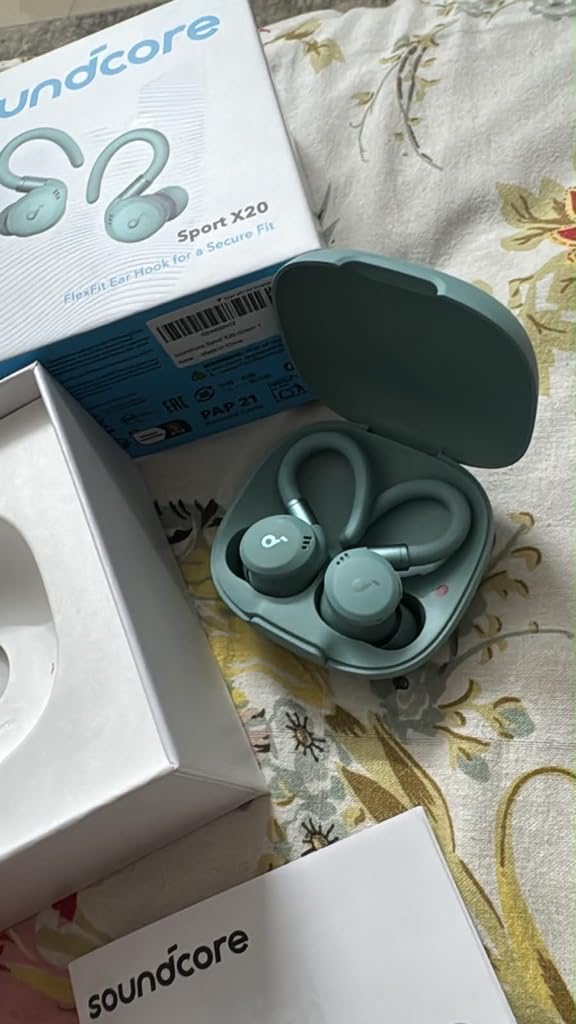
The Threshold Where the Outcome Quietly Breaks
There is a specific noise intensity line where the A20 stops working and starts simply existing in your ear. That line lives somewhere between a moderate snorer and a heavy one. Below it, the combination of physical seal plus the masking sounds from the Soundcore app absorbs the intrusion. Above it, neither the seal nor the sound library is enough to cover the signal.
The product blocks 60 to 70% of noise in real conditions. It does not block airplane jet engine noise. It can fall out during sleep despite the locking mechanism. Some users report that battery life degraded significantly after around 7 months of nightly use, dropping to barely an hour from a full charge. Anker’s warranty handled replacements in these cases, but the pattern is documented across enough users to count as a real long-term variable.
The app threshold is also worth naming directly: the Soundcore app is slow, buggy, and the layout is unnecessarily complicated. The app only allows you to store a maximum of four sounds in sleep mode, which is a real limitation if you build specific sound environments for sleep.
Why Most Buyers Misread This Too Early
The comparison trap runs like this: AirPods Pro have ANC, cost $249, and hurt after two hours on a pillow. The Sleep A20 costs $149, fits flat, and lasts 14 hours. Therefore the Sleep A20 solves what AirPods can’t. This reasoning is structurally correct and practically incomplete.
AirPods Pro’s ANC is better in certain scenarios like public transport. But their much shorter battery life and higher ear fatigue factor make them less suited for multiple hours of continuous wear. With the A20s, ear fatigue is not an issue — users report forgetting they’re wearing them.
But the comparison should not stop there. The category now includes purpose-built alternatives:
| Product | ANC | Battery (buds) | Side Sleeper Fit | Price | Best For |
|---|---|---|---|---|---|
| Soundcore Sleep A20 | No (passive only) | 14 hrs | Excellent | ~$149 | Value, moderate noise, all positions |
| Soundcore Sleep A30 | Yes (adaptive) | 9 hrs w/ ANC | Excellent | ~$229 | Heavy snoring, urban noise |
| Ozlo Sleepbuds | Active masking | 10 hrs | Outstanding | ~$299 | Comfort purists, ex-Bose users |
| AirPods Pro 2 | Yes | 6 hrs | Poor (pillow pressure) | ~$249 | General use, not sleep-specific |
| Loop Dream | Passive (no audio) | N/A | Good | ~$35 | Pure silence, no audio needed |
The Sleep A20 is a comprehensively better product than the Ozlo at less than half the price for users whose noise problem falls within passive blocking range. The inverse is equally true: for users with severe ambient noise, the Ozlo or A30 closes the gap the A20 cannot.
Who Is Actually Inside This Problem
The Sleep A20 works with precision for a specific user profile. Not everyone. Specifically:
The ideal user is someone for whom comfort in different sleep positions is the main priority. The earbuds can be worn all night long as a predominantly side or front sleeper. Their small size is in part due to the lack of active noise cancellation, which those who prefer silence rather than audio might miss — but in tests, they mask noise like snoring and music very well using the sleep sounds on the app or personal audio.
More specifically, the fit holds for:
- Side and stomach sleepers who have tried regular earbuds and lost the pillow battle
- People in moderate urban or suburban noise environments, not street-level urban cores
- Partners of light-to-moderate snorers (not industrial-grade snoring)
- People who want audio streaming options at night — podcasts, audiobooks, music — not just white noise
- Users with consistent enough ear anatomy to maintain the twin-seal during movement
- Users who want the longest battery life by far out of any sleep earbuds — up to 14 hours on one charge, which covers extended sleep periods without dying mid-night.
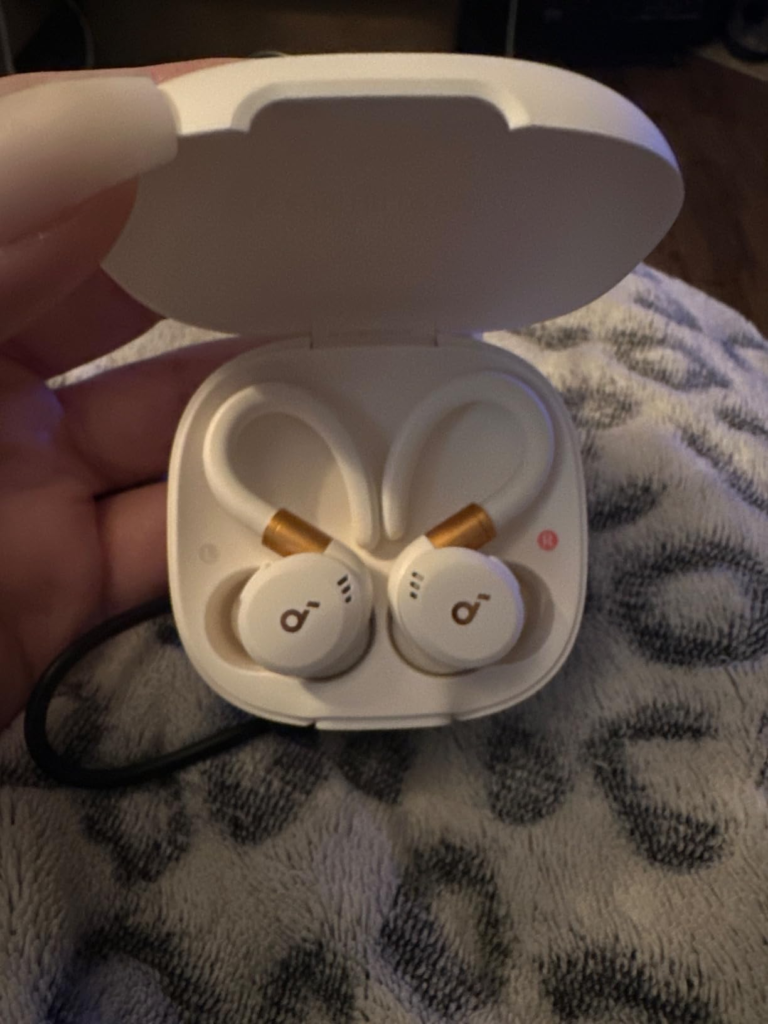
Where Wrong-Fit Begins
This section matters more than the recommendation that follows it.
You are likely outside the fit if:
- Your primary noise problem is a heavy snorer in the same room. The A20’s passive masking handles mild-to-moderate snoring; it does not block airplane jet engine levels or very loud, low-frequency noise.
- You have very small or asymmetric ears. Some users with small ears find them uncomfortable in one ear after several hours, while completely comfortable in the other — suggesting ear geometry is a real variable, not a marketing one.
- You expect the sleep tracker to give you accurate data. The sleep tracking is based on movement detection via MEMS sensor, which means lying still while unable to sleep gets logged as sleep, and tossing during actual sleep gets logged as awake. This feature should be ignored.
- You expect the earbuds to stay in place every night regardless of movement. Some users report the earbuds fall out every night regardless of which combination of tips and wings they use — this is a real subset of buyers and it is ear-anatomy-dependent.
- You are buying these specifically for travel noise blocking on planes. The A20 was not engineered for this use case and will not satisfy it.
The One Situation Where This Product Becomes Logical
After all of the above — after the mechanism is clear, the threshold is named, the wrong-fit is drawn — there is a specific buyer for whom this product stops being a consideration and becomes an obvious decision.
You are a side or stomach sleeper. Your noise environment is moderate: a snoring partner in the light-to-moderate range, or ambient building and neighborhood sound that wakes you intermittently rather than continuously. You have been through foam earplugs and lost audio access. You have tried regular earbuds and paid the pillow-pressure price by 2am. You want to stream audio at night — not just white noise, but actual content — on a battery that doesn’t die before you do.
The Sleep A20’s flat, ergonomic design, extensive audio library, and impressive quality for the price earn it a consistent place on best sleep headphones lists. The flexible wings help distribute pressure evenly, and Bluetooth 5.3 supports stable streaming from Spotify, Apple Music, Audible, and similar platforms.
Out of all sleep earbuds tested over a year of regular use — including Bose and Ozlo — the Sleep A20 is the only one that has not had operational issues throughout that period. That reliability pattern is a real differentiator at the price point.
What It Solves, What It Reduces, and What It Still Leaves to You
| Category | Status |
|---|---|
| Pillow pressure / ear fatigue | Solved. The flat, wing-supported profile eliminates this completely for most users. |
| Moderate ambient noise | Solved. Passive dual-seal plus sound masking effectively covers this range. |
| All-night battery | Solved. 14 hours handles even extended sleep without charging anxiety. |
| Heavy snoring / low-frequency bass | Reduced, not eliminated. Masking sounds help. Physical blocking does not fully close this. |
| Sleep tracking accuracy | Not solved. Movement-based detection is structurally unreliable. |
| App quality | Not solved. Slow, limited, and buggy — this is a known, persistent issue. |
| Long-term battery degradation | Variable. Some units degrade after 6–8 months of nightly use. Warranty covers this, but it requires action. |
| Fit stability across all ears | Variable. Dependent on ear anatomy. No universal fix. |
What remains yours to manage: understanding your own noise environment before buying. The A20 cannot cover what ANC covers. If your noise problem sits in the range where passive masking is sufficient, you will not miss ANC. If it doesn’t, adding more tip sizes will not close the gap.
Final Compression
The Soundcore Sleep A20 is not a universal sleep solution. It is a structurally sound answer to a specific, bounded problem — and within that problem, it outperforms anything near its price. The mistake most buyers make is purchasing it based on comfort specs alone without mapping their actual noise environment first.
If your noise problem is moderate and your sleep position is sideways or prone, this is the most logical entry point in the category. For those struggling with noise disturbances or who rely on audio to fall asleep, the Sleep A20 is a worthwhile investment — with the clear expectation that passive isolation is the mechanism and ANC is not part of the equation.
If your noise problem crosses the heavy-snoring or street-noise threshold, the Sleep A30 (with adaptive ANC at $229) is the version of this product that was built for you. Buying the A20 to save $80 in that situation is where regret is scheduled from the first night.
The decision stops being vague the moment you name what your noise actually is.
Frequently Asked Questions
| Question | Answer |
|---|---|
| Does the Soundcore Sleep A20 have active noise cancellation? | No. The A20 uses passive noise blocking through a dual-seal ear tip design rated at approximately 30dB isolation, supplemented by sound masking through the app. It does not generate an active noise-canceling signal. The Sleep A30 is the Soundcore model that adds true ANC. |
| Can I wear the Sleep A20 as a side sleeper all night? | Most users can, yes. The flat 3mm profile and flexible Air Wing design are specifically engineered to eliminate pillow pressure. However, fit is ear-anatomy dependent — a small percentage of users report discomfort after several hours in one specific ear regardless of tip combination. |
| How long does the battery actually last? | In sleep mode (offline sound playback), the earbuds last up to 14 hours on a single charge. The charging case extends total playtime to 80 hours. In Bluetooth mode (streaming), battery life drops to approximately 10 hours. |
| Can I stream music or podcasts, or only white noise? | Both. The A20 operates in two modes: Sleep Mode, which plays pre-downloaded sounds from the Soundcore library without a phone connection, and Bluetooth Mode, which streams audio from any app on your phone. The library holds a maximum of four sounds at a time in offline mode. |
| Is the sleep tracking feature accurate? | No. The MEMS-based movement sensor logs stillness as sleep and movement as wakefulness, which means lying awake motionlessly registers as sleep and restless sleep registers as wakefulness. The sleep tracking is the weakest feature of this product and should not be a deciding factor. |
| How does the A20 compare to the Sleep A30? | The A20 relies entirely on passive isolation and masking sounds. The A30 adds adaptive ANC, specifically tuned for snore masking, and is priced at approximately $229. If your noise problem is a loud snorer or significant urban ambient noise, the A30 addresses what the A20 cannot. |
| Will the earbuds fall out during sleep? | For most users, no — the wing-and-tip system maintains a secure fit through normal sleep movement. A documented subset of users reports consistent fallout regardless of tip configuration, which appears to be related to specific ear geometry rather than product defect. |
Transparency Note:
This analysis is built on aggregated real-world experience.
It extracts what repeatedly holds, what breaks, and what users uncover only after living with the system—then shapes it into a clear model you can use immediately.
Think of it as structured experience, refined and presented so you don’t have to learn it the hard way.
“A quick note: Don’t believe the star ratings, but trust personal experience. This article is a compilation of collected experiences”