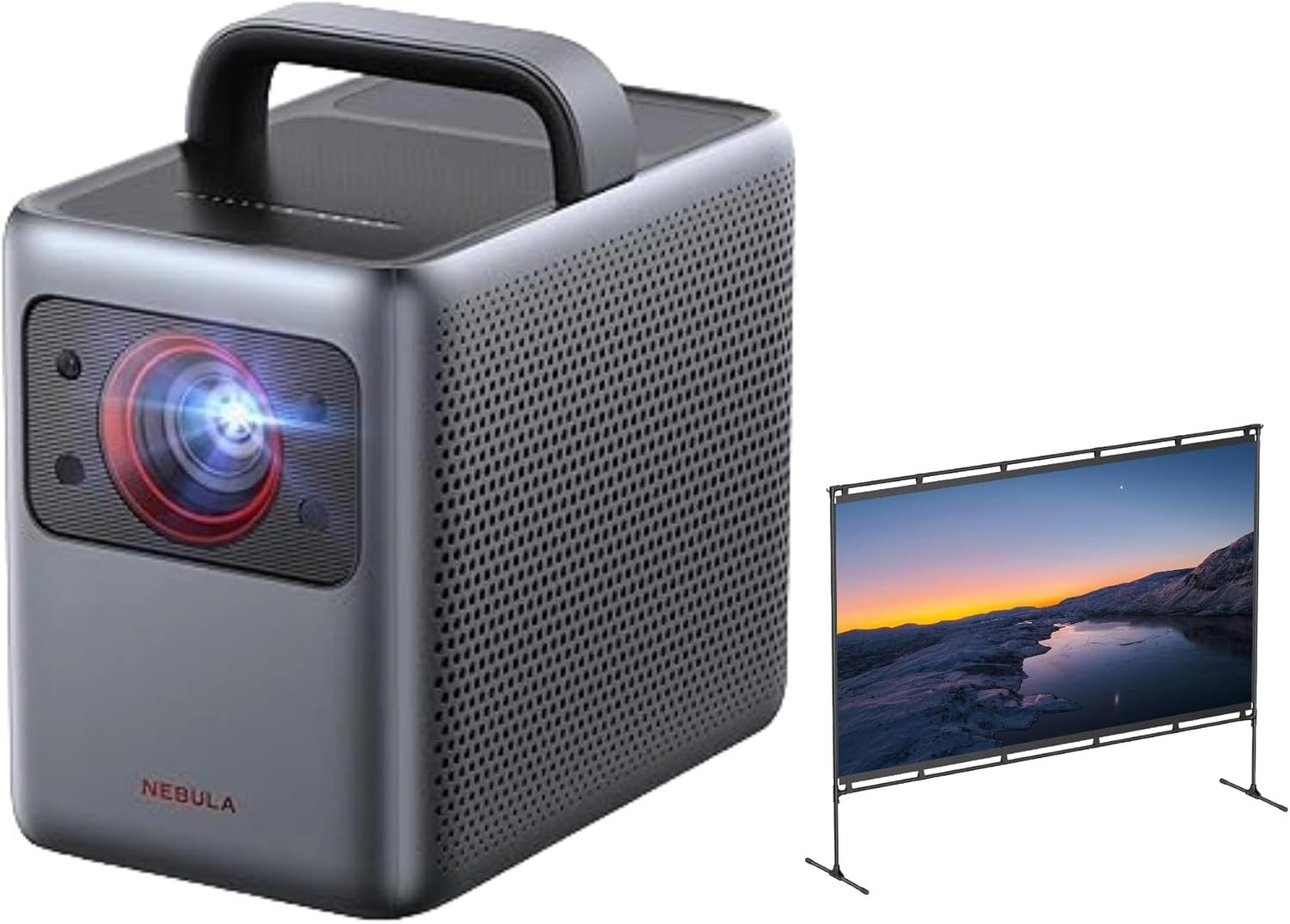
Your TV Sound Is Not Too Weak. It Is Too Flat. That Is the Point Where the Skywave F40 Stops Feeling Optional.
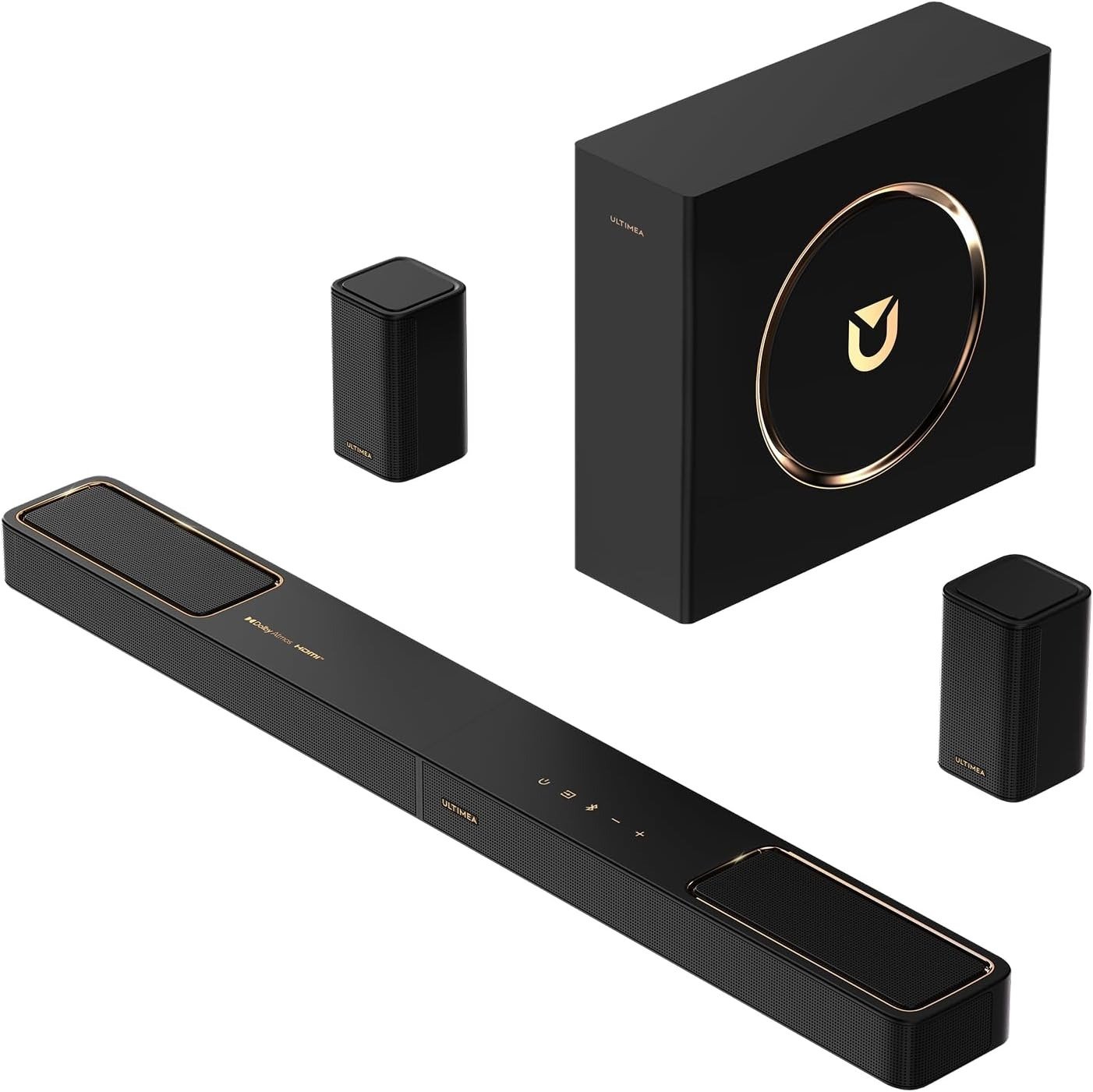
SKYWAVE F40
The Result Looks Fine. The Problem Isn’t.
The trap is obvious only after you hear it.
A modern TV can sound clean enough for ten minutes, sometimes even “good” on the first impression. Then the room starts betraying it. Dialogue sits on the screen like a sticker. Explosions bloom without weight. Rain falls nowhere. A helicopter flies across the frame, and the sound never leaves the glass. What looked acceptable turns out to be thin, front-locked, and strangely exhausting.
That is the first broken assumption: most people think the problem is loudness. It usually is not. The deeper problem is dimensional collapse. The Skywave F40 is built around that exact failure point, not around brute force marketing. On Amazon, it is sold as a 5.1.2 system with Dolby Atmos, two surround speakers, Bluetooth 5.4, HDMI eARC, and 400 watts of maximum output, with a 4.4/5 average from 402 global ratings at the time I checked.
What You’re Actually Feeling but Not Naming
What wears you down is not “bad sound.” It is mislocated sound.
You hear it as three annoyances at once:
| Friction you notice | What it feels like in the room | Why it becomes irritating |
|---|---|---|
| Dialogue strain | Voices seem pinned to the TV, then get swallowed when action swells | You keep reaching for volume, then regret it a minute later |
| Flat impact | Big scenes get louder, not larger | Your ears work harder, but the room never opens up |
| Fake immersion | Effects happen, but never around or above you | Movies feel processed instead of inhabited |
That is why weak TV audio creates a psychological tax. Not drama. Tax. You do not sit down and say, “I need more channels.” You sit down, lean forward, miss a line, nudge the volume, and feel the whole experience turning into maintenance. RTINGS’ Atmos testing explains the structural reason: height effects from soundbars depend on how well up-firing or side-firing elements can create a believable vertical image, and those phantom approaches are still less precise than true discrete height channels. In plain English, overhead sound is hard to fake well, which is why the hardware layout matters so much.
The Hidden Mechanism Behind the Miss
The hidden variable is not “power.” It is placement behavior.
A sound system starts feeling cinematic only when it can do three things at the same time: anchor voices, throw effects outward, and give bass a physical floor under the scene. The Skywave F40 attacks that with a 5.1.2 layout, two up-firing drivers, two rear surround speakers, and HDMI eARC for proper signal handling from a TV. Ultimea also positions it as a dedicated Dolby Atmos system rather than a virtual surround bar pretending to be one.
That distinction matters. RTINGS notes that up-firing drivers can create a sense of height by bouncing sound off the ceiling, but that effect is inherently less exact than discrete ceiling-mounted speakers. So the honest reading is this: the Skywave F40 is not competing with a true speaker-by-speaker custom theater. It is trying to cross a much more important line for normal rooms: the point where sound stops clinging to the TV and begins to occupy the room.
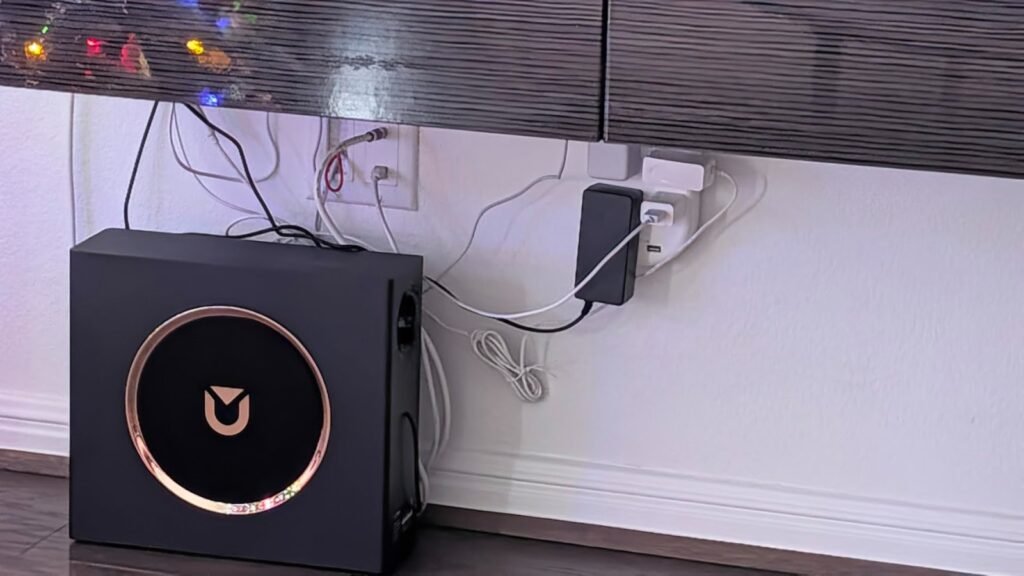
The Threshold Where the Outcome Quietly Breaks
Here is the threshold I would name for this category:
The Glass-Bound Threshold — the moment voices, effects, and bass remain trapped at the screen even though the content itself is mixed for space.
Once you cross that line, a basic bar is not enough. A louder bar is not enough. A cleaner bar is not enough. You need separation.
That is why the Skywave F40 matters more as a layout decision than as a spec-sheet flex. Even the brand’s own step-up and adjacent models reveal the pattern: once you move into real surround packages with dedicated rears and up-firing elements, you are no longer chasing “better TV sound.” You are chasing believable placement. RTINGS’ current Atmos guidance reinforces that products with up-firing drivers generally offer better Atmos support than tiny bars trying to virtualize everything from the front.
Why Most Buyers Misread This Too Early
Because they compare the wrong things too soon.
They look at wattage. They look at the word Atmos. They look at price. Then they flatten every option into a lazy question: Does it sound good? That question is too crude to be useful.
A better question is this: At what point does the front of the room stop carrying the whole burden?
That is where buyer confusion usually begins:
| Early comparison habit | Why it misleads | What matters more here |
|---|---|---|
| “It says Dolby Atmos” | Atmos labels vary wildly in how convincingly they are implemented | Whether the system has up-firing drivers and actual rear support |
| “More watts means better” | Extra output can make a system louder without making it more dimensional | Channel layout, driver placement, and signal path |
| “Any soundbar is better than TV speakers” | True, but often not enough to solve localization fatigue | Whether the room finally sounds wider, deeper, and less screen-bound |
That is also why some reactions from owners split. The praise tends to cluster around ease of setup, room-filling sound, and the jump from TV speakers or older cluttered 5.1 systems. The criticism tends to cluster around bass expectations, occasional connectivity quirks, and the limits of a budget Atmos package compared with more expensive surround systems. Those patterns show up in Amazon user ratings, Reddit owner comments, and review coverage of Ultimea’s similar 5.1.2 systems.
Who Is Actually Inside This Problem
You are inside this problem if your evenings sound like this:
You start a movie. The opening scene is quiet, tense, promising. Then the dialogue arrives and you instinctively lean in. Ten minutes later, the action hits and you reach for the remote because the voices and the effects are living in the same cramped space. The soundtrack is technically present, but the room never changes shape.
The Skywave F40 makes the most sense for a buyer who wants to cross out of TV-audio territory without jumping straight into premium multi-speaker pricing. The package includes the main bar, subwoofer, two surround speakers, and the cabling to get running, and it supports HDMI eARC, optical, and Bluetooth 5.4. The current Amazon listing also shows 500+ bought in the past month, which is not proof of excellence, but it does suggest this is landing in a live, active budget-home-theater buying lane rather than sitting ignored on the shelf.
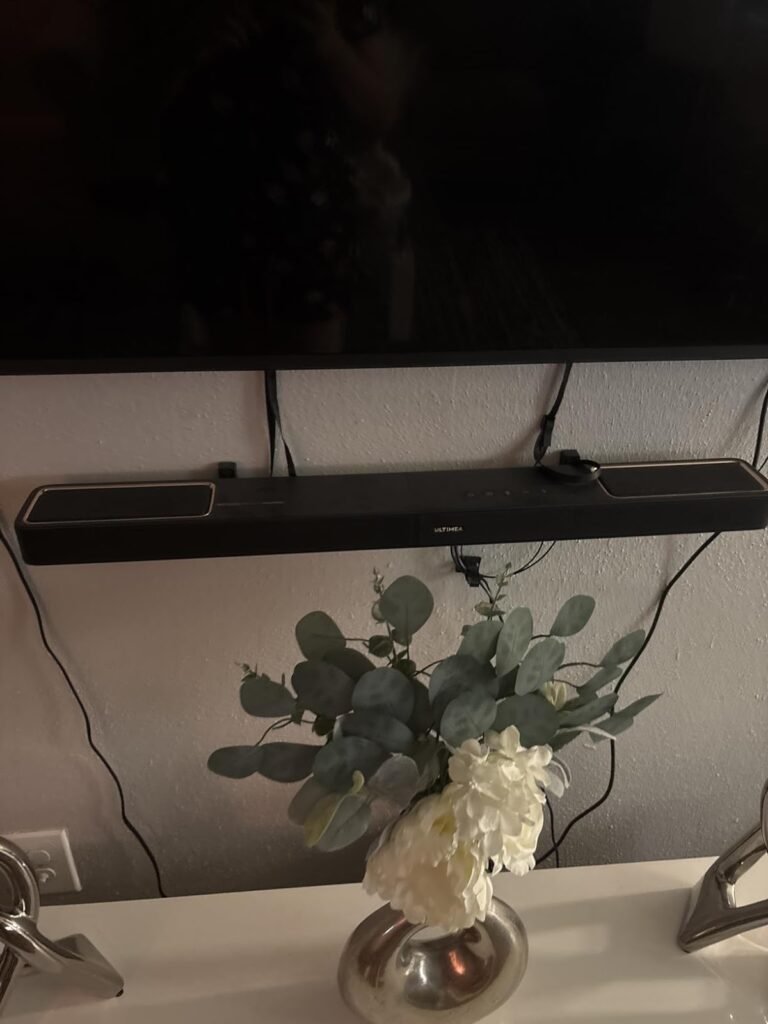
Where Wrong-Fit Begins
This is where the fantasy has to stop.
The Skywave F40 is the wrong fit if you want reference-grade Atmos precision, deep sub-bass authority below the normal budget threshold, or the kind of effortless vertical bubble you get from far more expensive systems with more drivers and, in some cases, up-firing rear modules. RTINGS’ top Atmos recommendations in 2026 still skew toward more advanced packages when the goal is maximum envelopment and height realism.
It is also the wrong fit if your real use case is mostly casual Bluetooth music in a room where rear placement is annoying, or if you are the kind of buyer who will obsess over every minor integration quirk. Some owner reports on related Ultimea systems mention choppy Bluetooth behavior or occasional eARC oddities, and Reddit discussion around the Nova S80 family reflects that value enthusiasm can coexist with complaints about bass behavior or signal handling.
Wrong-fit begins the second you ask a budget 5.1.2 package to behave like a flagship theater stack. That is not a flaw in judgment. It is a category error.
The One Situation Where This Product Becomes Logical
The Skywave F40 becomes logical when your break point is no longer “I want better sound,” but “I want the room to stop sounding glued to the screen.”
That is the exact use case this system is shaped for:
| What the room needs | What the Skywave F40 brings |
|---|---|
| More spatial spread than TV speakers or a simple bar | 5.1.2 layout with rear surrounds and up-firing drivers |
| Cleaner signal path from the TV | HDMI eARC support |
| Enough low-end weight to stop action scenes sounding papery | Included subwoofer, plus reviewer praise for punch relative to price on similar F40/Nova S80 packages |
| An easier jump from old cluttered home-theater wiring | Compact soundbar architecture with dedicated surrounds and simpler setup reports |
This is the quiet truth of it: the product does not become logical when you want the best. It becomes logical when you want the first real escape from flat-front audio without paying flagship money.
What It Solves, What It Reduces, and What It Still Leaves to You
What it solves:
- It gives movie sound somewhere to go besides the TV panel.
- It gives Atmos content a genuine shot at vertical suggestion through up-firing drivers.
- It reduces the sense that every scene is being poured from one narrow strip under the screen.
What it reduces:
- Volume-chasing.
- Dialogue strain.
- The visual ugliness of older cable-heavy setups, especially for people stepping down from legacy component systems.
What it still leaves to you:
- You still need a cooperative room. Ceiling bounce is never magic.
- You still need realistic bass expectations at this price tier.
- You still need to accept that “Dolby Atmos” on a budget product means smarter immersion, not cathedral-grade sonic architecture.
That last point matters more than most reviews admit. A good budget Atmos system does not erase physics. It just stops fighting them as badly.
Final Compression
Most people do not buy the wrong soundbar because they are careless. They buy it because they diagnose the symptom too early.
They think the issue is volume.
Then clarity.
Then bass.
The real issue is smaller, sharper, and more expensive to ignore over time: your room never opens. The scene never detaches from the screen. The soundtrack keeps tapping on the glass and asking to be let out.
That is why the Skywave F40 is not really a product for everyone. It is for the buyer who has already felt the Glass-Bound Threshold and is tired of pretending louder equals better. In that specific condition, this system stops looking like another budget soundbar and starts looking like a structurally sensible correction. The ratings are strong enough to take seriously, the feature set is correctly aimed at immersion rather than mere amplification, and the outside reactions are consistent in the one place that matters most: people hear a meaningful jump from thin TV audio into something that finally behaves like a room.
Transparency Note:
This analysis is built on aggregated real-world experience.
It extracts what repeatedly holds, what breaks, and what users uncover only after living with the system—then shapes it into a clear model you can use immediately.
Think of it as structured experience, refined and presented so you don’t have to learn it the hard way.
“A quick note: Don’t believe the star ratings, but trust personal experience. This article is a compilation of collected experiences”