SOUNDCORE SPACE Q45 REVIEW: THE SILENCE IS REAL. THE SOUND HAS A CEILING. KNOW WHICH ONE YOU’RE BUYING.
The Result Looks Fine. The Problem Isn’t.
You put them on. The noise drops. You think: this works.
And it does — for a version of the problem you brought to them.
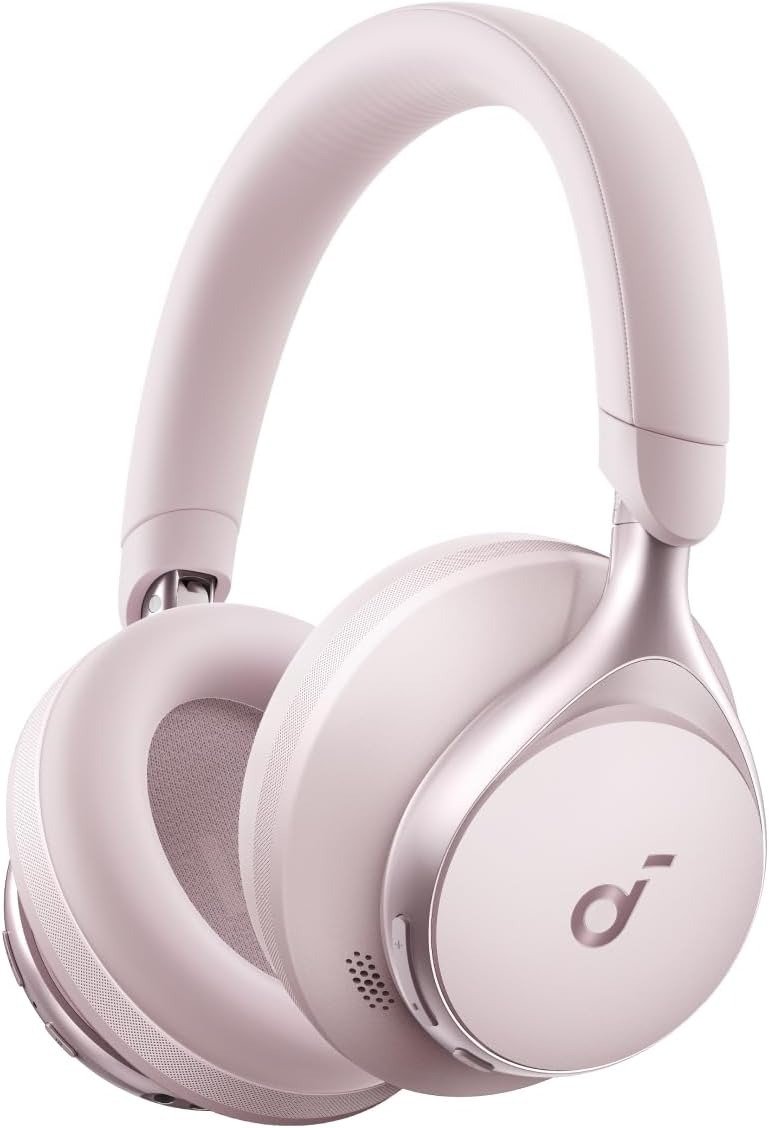
The Soundcore Space Q45 arrives with numbers that look flagship-adjacent: 50-hour battery, Bluetooth 5.3, LDAC support, adaptive three-stage ANC, dual-mic array with AI filtering. At $99–$150, those numbers produce a specific reaction in most buyers: this can’t possibly be real at this price.
That reaction is the first failure point.
Not because the headphone lies — it doesn’t. The specs are accurate. The ANC is effective. The build is solid. But the Space Q45 delivers on a set of specific promises inside a set of specific conditions. When those conditions don’t match the buyer’s actual use case, the result isn’t betrayal. It’s a quieter, slower disappointment — the kind that builds over three weeks, not three minutes.
The question was never whether this headphone works. The question is whether it works for what you are actually doing.
| Spec | Q45 Value |
|---|---|
| Battery (ANC on) | ~33–44 hours tested |
| Battery (ANC off) | Up to 70 hours |
| Quick Charge | 5 min → 2.5 hrs ANC / 3.7 hrs standard |
| Bluetooth | 5.3, Multipoint (2 devices) |
| Audio Codec | LDAC, AAC, SBC |
| ANC Levels | 3-stage adaptive (Low / Mid / High frequency targeting) |
| Transparency Levels | 5 adjustable levels |
| Driver Size | 40mm |
| Weight | 295g |
| Wired Mode | 3.5mm, Hi-Res certified |
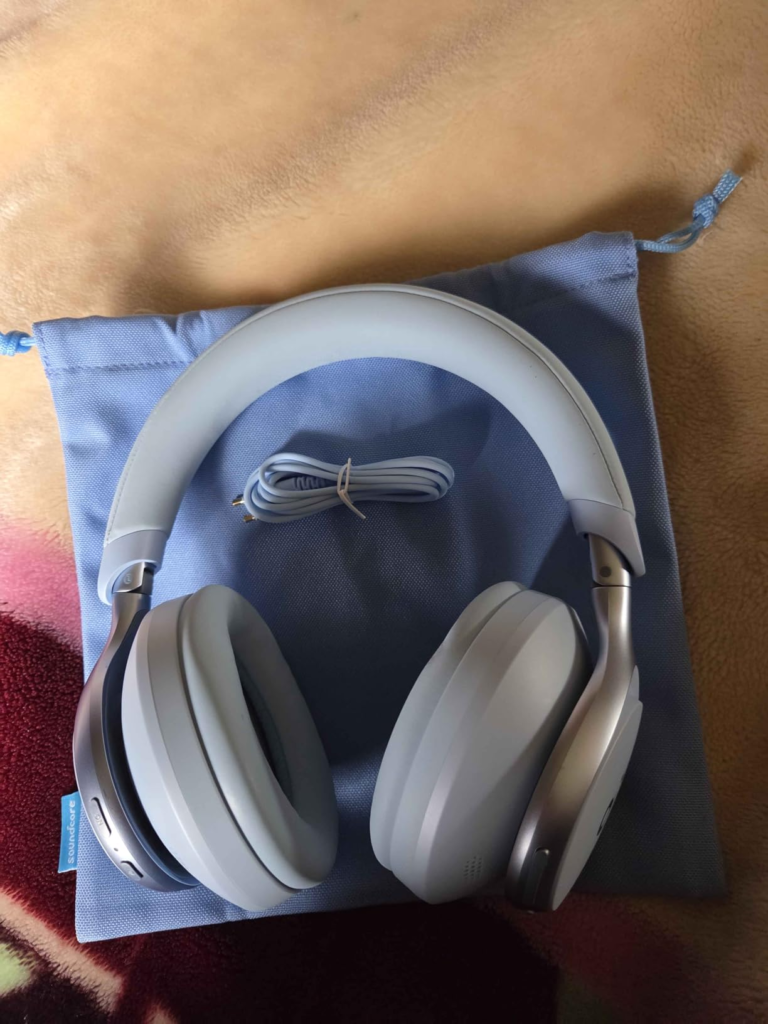
| Fold Design | Yes, hard-shell case included |
What You’re Actually Feeling but Not Naming
There is a specific feeling that budget-to-mid ANC headphones produce in people who’ve used them for longer than a month.
It isn’t regret, exactly. It’s closer to a persistent awareness that you are tolerating something small. A texture in the treble that never fully disappears. A bass response that sounds different depending on whether BassUp is on or off — and both versions feel like a compromise. A clamping force out of the box that makes the first two weeks more test than pleasure.
These aren’t catastrophic failures. They’re the gap between functional and transparent — and most buyers in this price range never fully name that gap until they hear something that sits on the other side of it.
The Space Q45 lives clearly on the functional side. Knowing that going in changes the decision completely.
The Hidden Mechanism Behind the Miss
The most common disappointment with the Space Q45 isn’t the ANC. The ANC genuinely overperforms for the price.
The miss is the sound profile — and specifically, why it behaves the way it does.
Out of the box, the treble is noticeably harsh and the bass is toned down compared to earlier models in the same line. Users who spend time with EQ adjustments frequently report that something still feels missing — a hollowness, a lack of depth — regardless of the preset they land on.
The mechanism behind this is a tuning decision. The Q45’s sound profile is weighted toward the treble end, which keeps the presentation clean and detailed at the cost of warmth and body. The app’s EQ system — 10-band, with 22+ presets — gives you real control, but EQ adjusts response curves, not driver character. You can make it warmer. You cannot make it sound like a headphone built around a fundamentally different transducer philosophy.
The low-end frequencies have been consistently reported as the headphone’s weakest aspect, and users trying to dial in more bass without sacrificing vocal clarity often reach a wall they can’t EQ past.
This is not a flaw unique to this product. It is the acoustic constraint of a 40mm driver in a plastic housing at this price tier. Understanding it removes the frustration. The Q45 is a detail-forward headphone. If your listening is bass-forward, the friction is built in.
| Listening Profile | Q45 Fit |
|---|---|
| Rock / Metal | Strong — layered texture, good separation |
| Jazz / Classical | Solid — space and detail visible |
| Pop / Vocal-Led | Adequate — vocals can recede slightly |
| Hip-Hop / EDM | Conditional — bass feels loose at higher volumes |
| Podcasts / Spoken Word | Excellent — clarity and mic rejection both work |
The Threshold Where the Outcome Quietly Breaks
The ANC on the Space Q45 has a real threshold, and most comparisons miss it because they test in single-frequency environments.
The three-stage noise cancelling targets low, mid, and high frequencies independently — and in combination with passive isolation from the over-ear design, it delivers significant quiet in everyday commuting and travel contexts.
That performance is genuine. Against aircraft cabin rumble, HVAC hum, low-frequency transit noise, and consistent environmental drone, the ANC is competitive with, and sometimes superior to, more expensive pairs in its class.
The threshold breaks with mid-frequency, irregular, human-generated noise — voices, keyboards, open-office conversation. ANC struggles with mid-range sounds like voices and keyboard noise, and open-office workers will notice the gap.
This is the distinction that separates the buyer who will be satisfied from the buyer who won’t. If your noise environment is low-frequency and consistent — planes, trains, coffee shop ambient — the Q45 ANC is excellent at its price. If your noise environment is vocal, irregular, and mid-frequency — shared offices, calls in loud rooms, home with activity — the ANC gives you partial relief, not silence.
| Noise Environment | Q45 ANC Performance |
|---|---|
| Aircraft cabin hum | ★★★★★ Excellent |
| Train / Metro rumble | ★★★★★ Excellent |
| HVAC / ambient drone | ★★★★☆ Very Good |
| Busy coffee shop (ambient) | ★★★★☆ Good |
| Open office conversations | ★★★☆☆ Partial |
| Keyboard / irregular clicks | ★★☆☆☆ Limited |
| Wind noise outdoors | ★★★☆☆ Moderate |
Why Most Buyers Misread This Too Early
The comparison trap around the Space Q45 almost always surfaces the same names: Sony WH-1000XM5, Bose QuietComfort 45, Sennheiser Momentum 4.
The comparison is not wrong. It’s premature.
Those headphones cost $280–$380. They are built with more refined transducers, deeper ANC algorithms, and acoustic chambers tuned across multiple hardware generations. Comparing them directly to a $99–$150 headphone and concluding the cheaper one is “almost as good” or “just as good” is a judgment made in a short window, in a controlled environment, by someone whose expectations were shaped by the price difference.
After extended use, the Q45 is best described as a solid all-arounder in the budget wireless ANC class under $200 — with the best build quality in its class, but sound quality that is only “good enough” rather than genuinely competitive with premium alternatives.
“Good enough” is an honest answer. It is not an insult. It is also not a blank check.
The second misread is the LDAC claim. iOS users should think carefully before buying: Apple devices do not support LDAC, leaving AAC as the available codec — which narrows the advantage significantly over cheaper alternatives. If you are on iPhone, one of the primary differentiators of this headphone does not apply to you.
Who Is Actually Inside This Problem
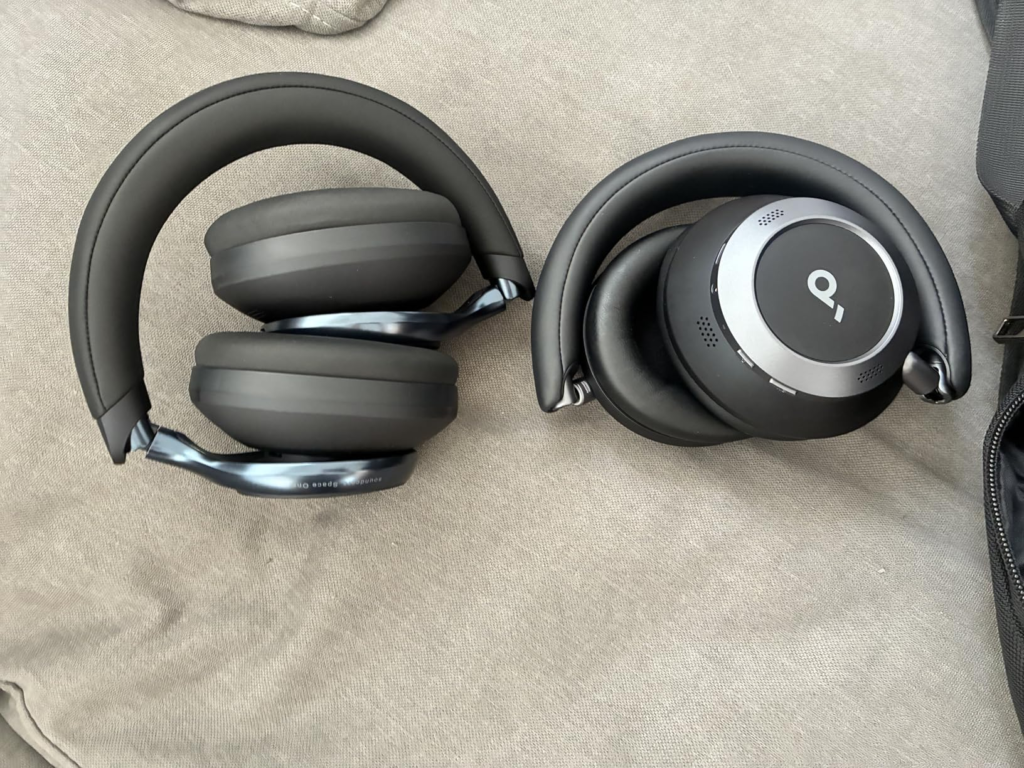
The Space Q45 has a very specific real owner.
That person commutes. Not occasionally — regularly. They sit in environments with consistent, low-frequency ambient noise. They wear the headphones for two to four hours at a stretch without needing to remove them. They are on calls, but not back-to-back professional calls where vocal clarity under pressure is a job requirement. They value not having to charge every day. They have an Android device, or a Windows laptop where LDAC works. They care about silence more than they care about sound signature.
The Q45 is best for commuters and workers seeking decent noise canceling at a reasonable price, and people who need headphones for flights — the well-made ear padding makes it comfortable for multiple hours of use at a time.
That is the exact buyer. Not a downgrade. Not a compromise. The precise match.
| User Type | Recommendation |
|---|---|
| Daily commuter (train/bus/flight) | ✅ Strong fit |
| Work-from-home (quiet room) | ✅ Good fit |
| Open office / call-heavy worker | ⚠️ Conditional fit |
| Bass-forward music listener | ⚠️ Expect adjustment |
| iPhone-primary user (LDAC matters to you) | ⚠️ Verify expectations |
| Audiophile benchmarking at this price | ❌ Wrong product |
| Gym / athletic use | ❌ Clamping and weight mismatch |
Where Wrong-Fit Begins
There are specific buyers who will regret this purchase. The regret is not random — it follows a pattern.
The open-office professional who expects the ANC to suppress colleagues’ voices will notice the gap by week two. The Q45 softens that noise — it does not eliminate it. If your productivity depends on full vocal isolation during deep work, this headphone is a partial solution wearing the face of a complete one.
The bass-first listener who enables BassUp, pushes the EQ low end, and still senses the headphone is working against itself — this person exists in every review thread. The bass, while decently fun, is loose, and vocals can get drowned out in ways that feel like the opposite of what you’d want from a music-first headphone. The EQ helps. It does not fix the underlying character.
The tight-fit-sensitive wearer. The clamping force is noticeably tight out of the box and can take several weeks of regular use to loosen. Users who wear glasses report significant pressure at the temples during that break-in window. This is real, and it is not a minor ergonomic footnote.
The frequent professional caller. The dual-mic array performs well rejecting environmental noise on city streets and in controlled environments — but under genuinely high-demand call scenarios, the microphone pickup under real-world conditions is inconsistent enough to matter.
The One Situation Where This Product Becomes Logical
You travel more than twice a month. You board planes, sit in airport lounges, work in cafés with ambient low-frequency noise, and need a headphone that lasts the full day without reaching for a charger. You have an Android device, or you use a laptop where LDAC matters. You care deeply about not hearing the engine. You care moderately about music quality — you want it to sound good, not transcendent.
In that situation, the Space Q45 is not a budget compromise. It is the rational, specific answer to a specific set of variables.
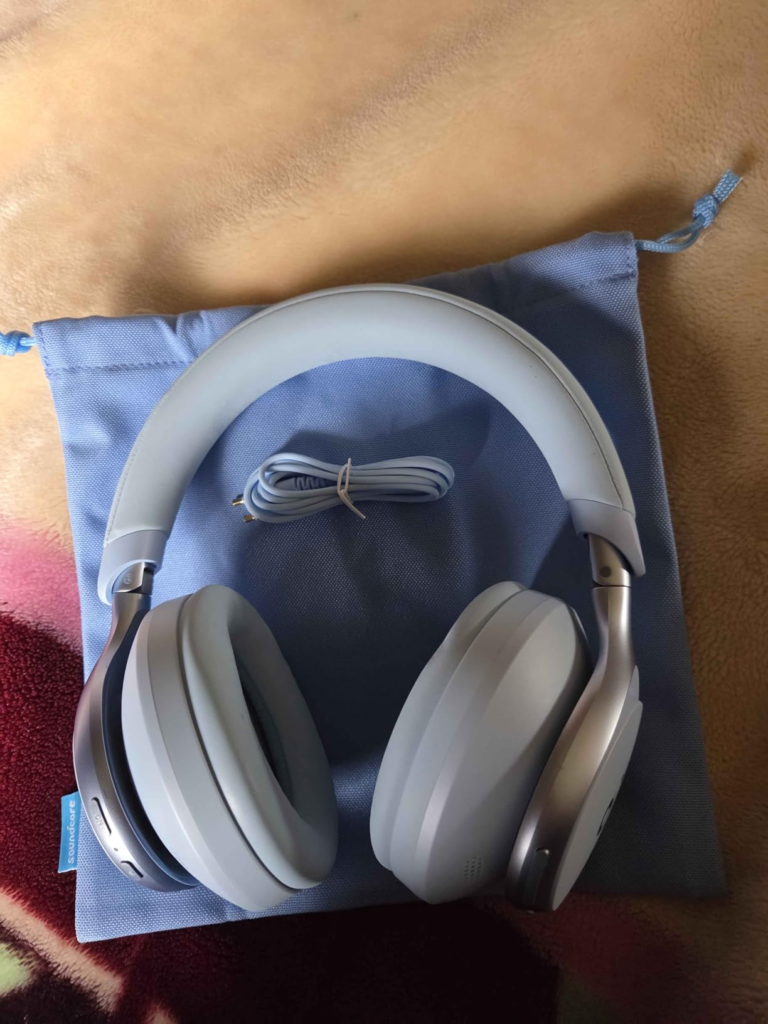
The comfort is excellent — ear pads are firm enough that ears never touch the speaker grills, the headband tension is well-calibrated, and the build holds up to multi-hour continuous use. The hard-shell case that comes in the box is not an afterthought — it is a properly structured travel companion. A five-minute quick charge delivers 2.5 hours of ANC playback, which means a gate-side charge solves a dead battery before boarding.
The ANC in a aircraft cabin is legitimately impressive. The battery is not a marketing number — in lab testing, 44 hours of real-world playback was measured against a 50-hour claim, which is one of the more honest ratios in this class.
This headphone does not require faith. It requires correct placement.
What It Solves, What It Reduces, and What It Still Leaves to You
| Category | What the Q45 Does |
|---|---|
| Consistent low-frequency noise | Solves — reliably and well |
| Battery anxiety on long trips | Solves — 33–44 hrs ANC, 5-min fast charge |
| Build durability concerns | Reduces — aluminum hinges, solid housing |
| Multi-device switching friction | Reduces — multipoint Bluetooth 5.3 |
| Sound signature dissatisfaction | Reduces via EQ — does not eliminate |
| Open-office voice isolation | Partially reduces — cannot fully solve |
| Bass depth for music-first use | Remains your management task |
| Fit pressure (first weeks) | Requires break-in patience |
| Call quality in extreme noise | Remains variable |
| LDAC on iOS | Not available — AAC only |
The Space Q45 does not promise a perfect experience. It promises a reliable, specific, well-engineered experience at a price that should not be able to deliver it. That promise it keeps. The areas it leaves to you are real — and knowing them in advance means you enter the ownership without a debt of misaligned expectations.
Final Compression
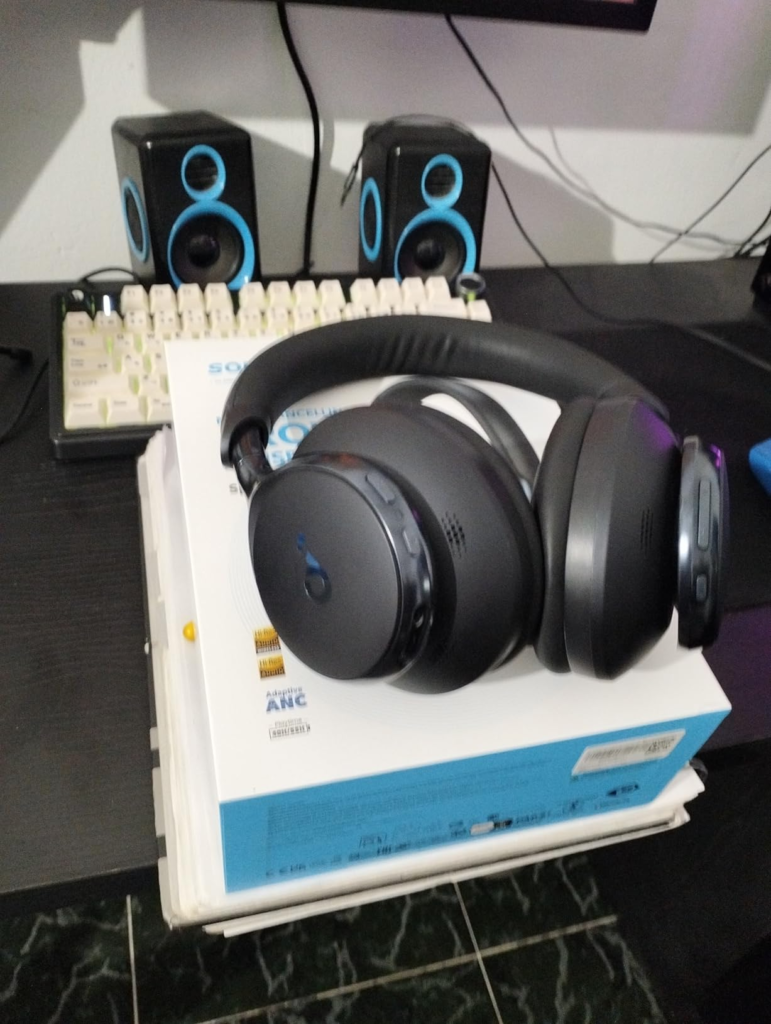
The Soundcore Space Q45 is a structurally honest product sitting in a market full of structurally dishonest comparisons.
The ANC is the real story. Not “great for the price” — genuinely effective against the noise types most people actually face in transit and travel. The battery is legitimate. The build is above its class. The app gives you real control, not decorative control.
The ceiling is also real. The sound signature is detail-forward, not warm. Bass-first listeners will reach an EQ wall. Open-office workers will find partial, not complete, isolation. iOS users forfeit the headline audio codec. The fit requires weeks before it becomes unconscious.
If you are a frequent traveler, a commuter, or a remote worker in low-frequency noise environments — on Android, with realistic expectations about sound — there is no smarter decision in this price range.
If you are buying it to compete with Sony and Bose at the same listening level, or to work across a loud open office all day, the fit is off. Not the headphone. The fit.
The Space Q45 is a great pick for anyone willing to accept its sound profile and app ecosystem in exchange for effective ANC, excellent battery life, and a microphone that genuinely performs in commuting environments. That trade is worth it — when it’s the right trade for your life.
If this is the problem you are actually inside — the airport, the train, the long commute — this is the headphone that solves it cleanly and without overreach.
Frequently Asked Questions
| Question | Answer |
|---|---|
| Is the Soundcore Space Q45 ANC comparable to Sony or Bose? | For low-frequency, consistent noise — aircraft, transit, HVAC — it is genuinely competitive and sometimes superior to pairs costing twice as much. For mid-frequency and voice noise, the gap between the Q45 and Sony/Bose flagships is real and noticeable. |
| Does LDAC work on iPhone? | No. Apple devices do not support LDAC. iPhone users will default to AAC, which is still adequate but removes the primary audio codec advantage over cheaper alternatives. |
| How long does the clamping pressure last before it loosens? | Most users report the fit softens meaningfully between two and four weeks of regular daily use. If you wear glasses, expect more sensitivity during this period. |
| Is the microphone good enough for professional calls? | It performs well in controlled environments and standard commuting conditions. In genuinely loud, irregular environments, the performance is inconsistent — not ideal if calls are a primary, high-stakes daily function. |
| What is the actual tested battery life with ANC on? | Independent lab testing measured approximately 44 hours of real-world ANC playback, against the 50-hour marketing claim. With ANC off, runtime extends significantly — tested above 70 hours in some conditions. |
| Does the EQ fix the sound signature? | It adjusts the frequency response meaningfully. It does not change the underlying character of the driver. You can make the Q45 warmer or more bass-forward — you cannot make it sound like a fundamentally different headphone. |
| Is the hard-shell case worth keeping? | Yes. It is one of the better included cases in this price class — genuinely protective, properly shaped, and carries the headphone folded flat for carry-on travel without wasting space. |
Transparency Note:
This analysis is built on aggregated real-world experience.
It extracts what repeatedly holds, what breaks, and what users uncover only after living with the system—then shapes it into a clear model you can use immediately.
Think of it as structured experience, refined and presented so you don’t have to learn it the hard way.
“A quick note: Don’t believe the star ratings, but trust personal experience. This article is a compilation of collected experiences”