SIMPLISAFE 8-PIECE REVIEW: WHY YOUR HOME FEELS SAFER THAN IT ACTUALLY IS
SIMPLISAFE 8-PIECE
You check the lock twice before bed. Not because you heard anything — because some nights, quiet doesn’t feel like safety. It feels like waiting.
That feeling is the real reason most people end up reading a SimpliSafe review at 11 p.m. on their phone instead of researching it calmly on a Tuesday afternoon. Not curiosity. A specific, low-grade unease that somebody else’s window sticker seems to have solved, and yours hasn’t. Only a small slice of American homes have any security system running at all. Most people aren’t protected. They’re just used to nothing having happened yet.
This is where the SimpliSafe 8-Piece Wireless Home Security System actually lives — in the gap between “I bought something” and “I’m covered.” Those are two different purchases. Most of what goes wrong with this system happens in that gap, not in the hardware.
Does SimpliSafe Actually Work? The Result Looks Fine, The Problem Isn’t.
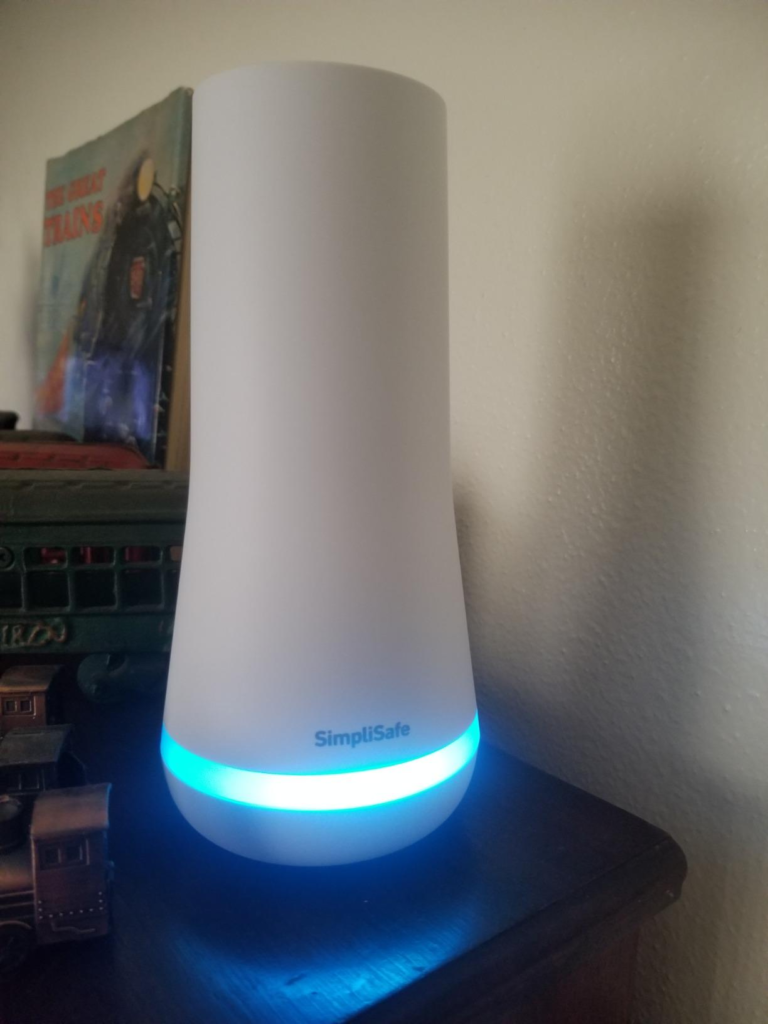
Unboxing day goes well for almost everyone. Base station plugs in, app walks you through pairing the keypad and sensors, and within thirty to sixty minutes the screen shows a green “system armed.” It looks finished. It looks like the problem is solved.
Here’s the quiet catch: “armed” and “monitored” are not the same word, even though they feel like they should be. A system that’s armed but has no professional monitoring plan behind it is really just a very loud noise machine with a good app. That’s not a flaw exclusive to SimpliSafe — it’s true of every DIY alarm in this category. But almost nobody reads that far into the setup screen before they stop paying attention, which is exactly why it needs saying plainly, once, up front.
SimpliSafe Complaints Nobody Mentions: What You’re Actually Feeling but Not Naming
It’s rarely the big dramatic failure people worry about before buying. It’s smaller than that.
It’s the entry sensor that quietly peeled off a south-facing window in July and nobody noticed until the app started throwing errors in August. It’s staring at “Base Station Offline” at 2 a.m. and not knowing whether that means the Wi-Fi blinked or something worse. It’s the half-second of doubt every single morning — did I actually arm it, or did I just glance at my phone and assume I did.
None of that is dramatic. All of it is real. And naming it now, before you’ve spent money, is cheaper than discovering it during a power outage.
How SimpliSafe Really Works: The Hidden Mechanism Behind the Miss
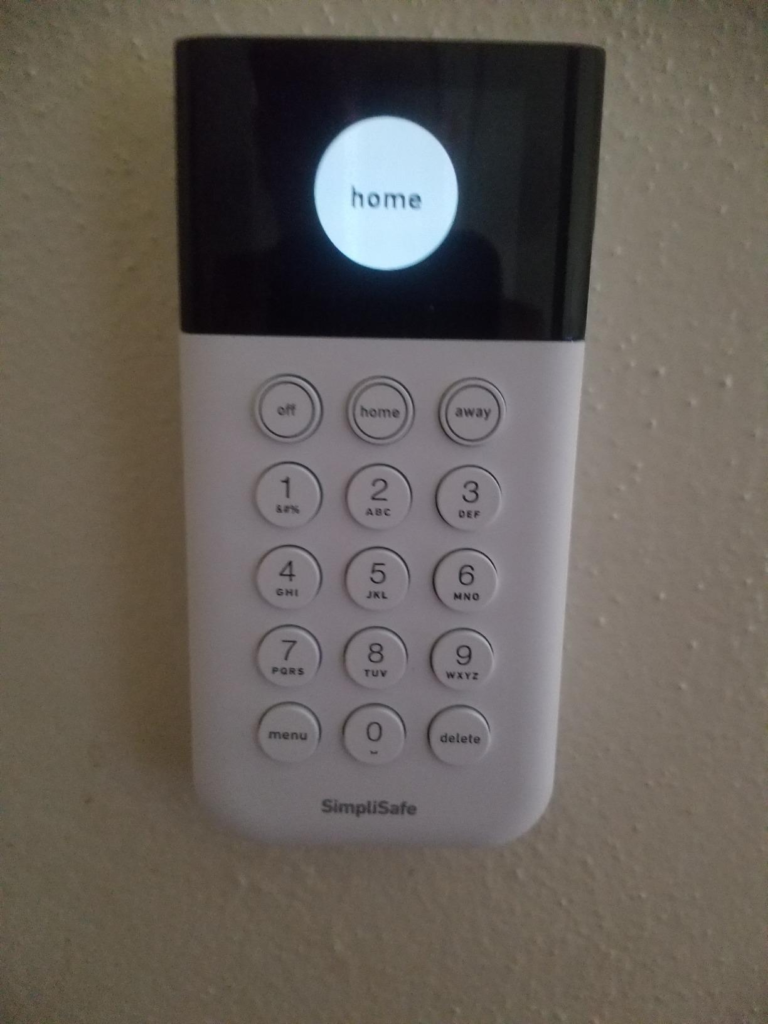
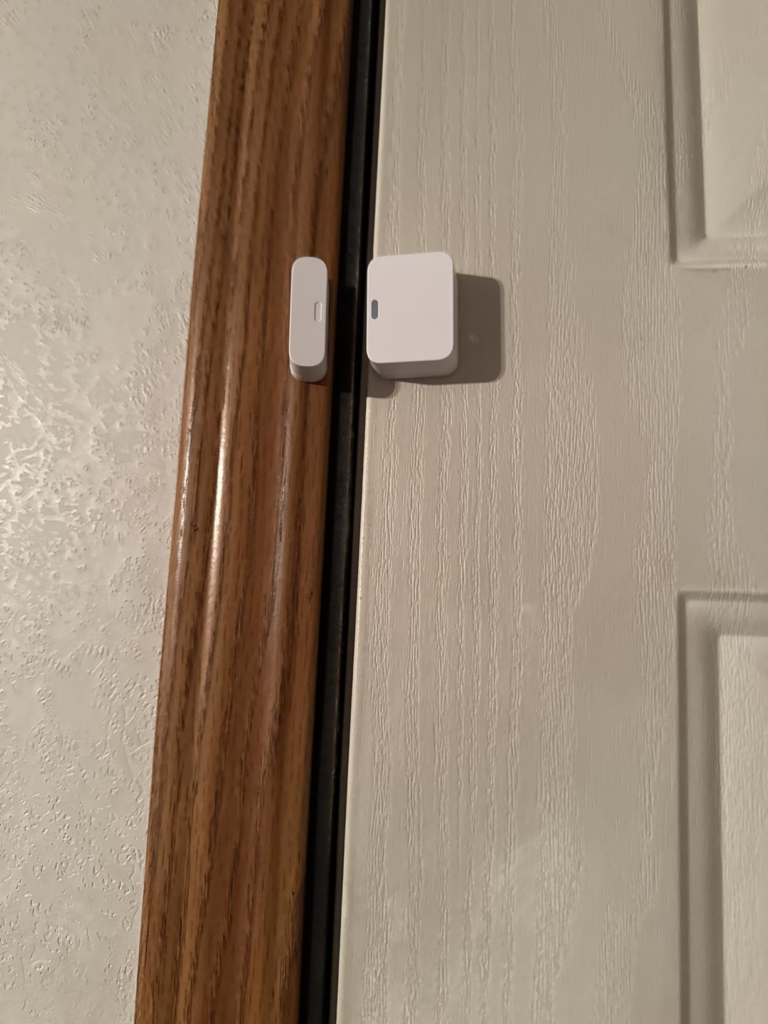
Why does a sensor fail in July and not January? Adhesive. The peel-and-stick mount uses a 3M-style tape that loses grip in direct heat and sunlight — it’s the single most common hardware complaint across owner forums and support threads, and it has nothing to do with the sensor’s electronics. Cleaning the surface first, avoiding south-facing glass, or swapping in reusable nano-tape solves most of it.
Batteries are the other quiet variable. Entry sensors and the panic button run on a single CR-2032 for roughly five years; the motion sensor runs on a CR-123A for about four. Nobody thinks about this on day one. Everyone thinks about it the day a sensor stops responding at the worst possible time.
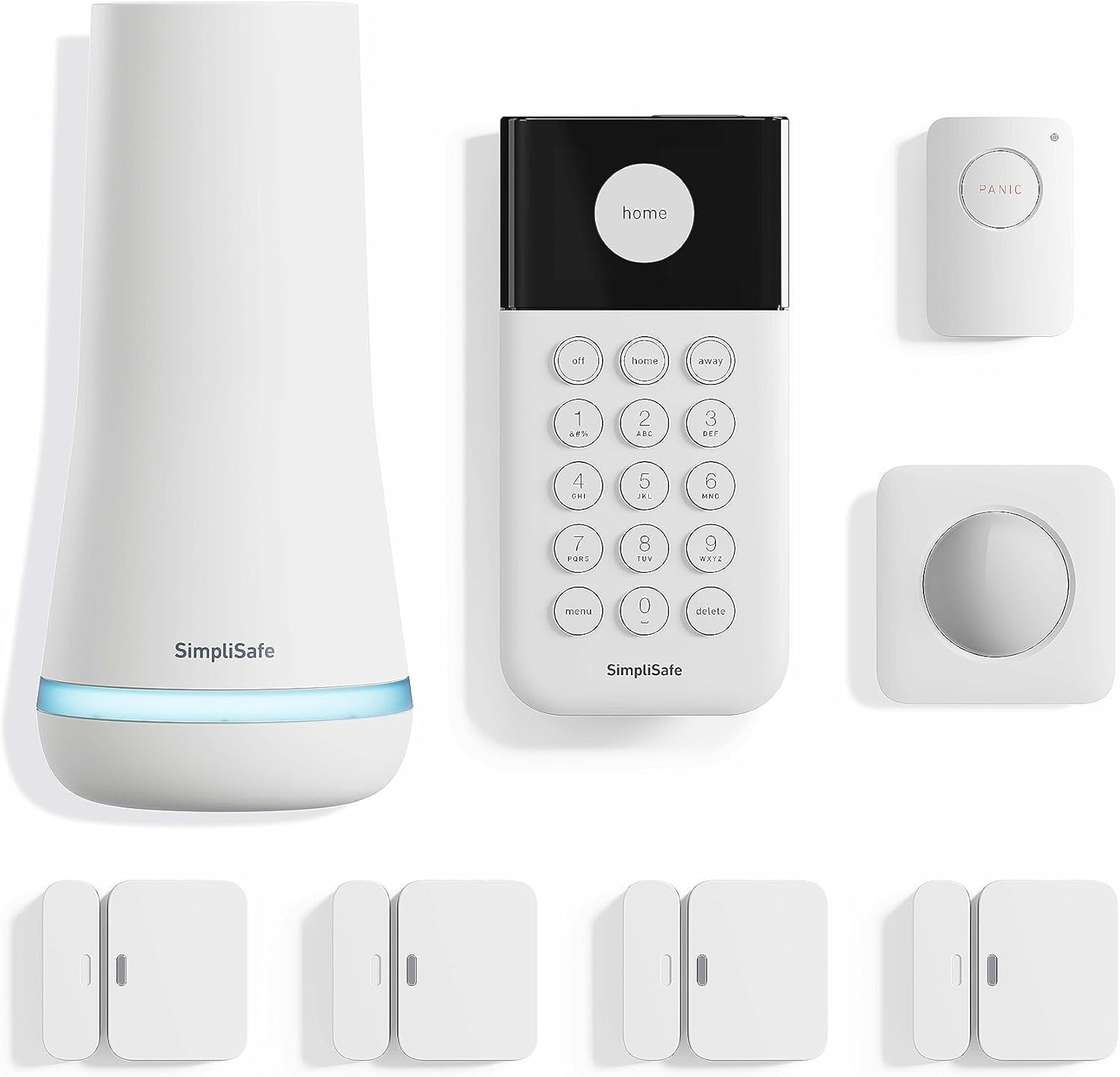
Here’s exactly what you’re working with in the box:
| Component | Qty | Power | What Actually Matters |
|---|---|---|---|
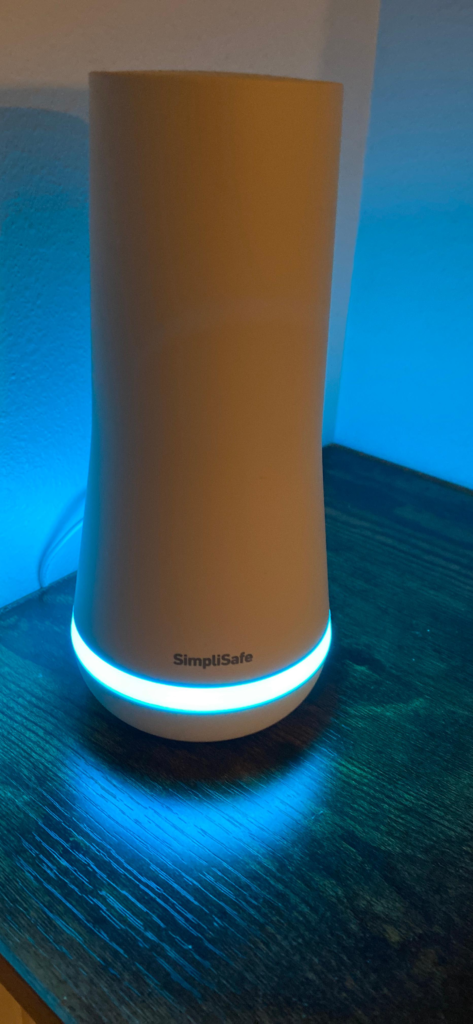
| Base Station | 1 | Plugs in; 24-hr rechargeable backup | The brain — talks to the monitoring center over cellular once you’re on a paid plan |
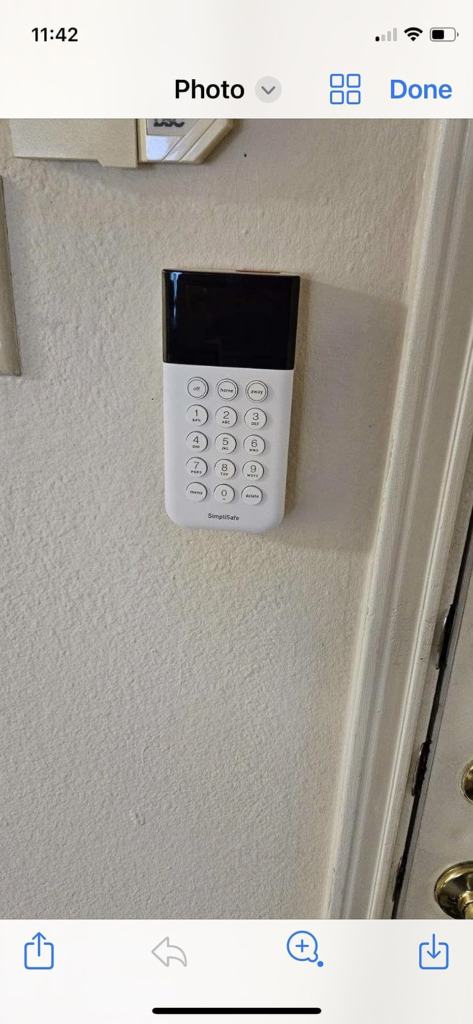
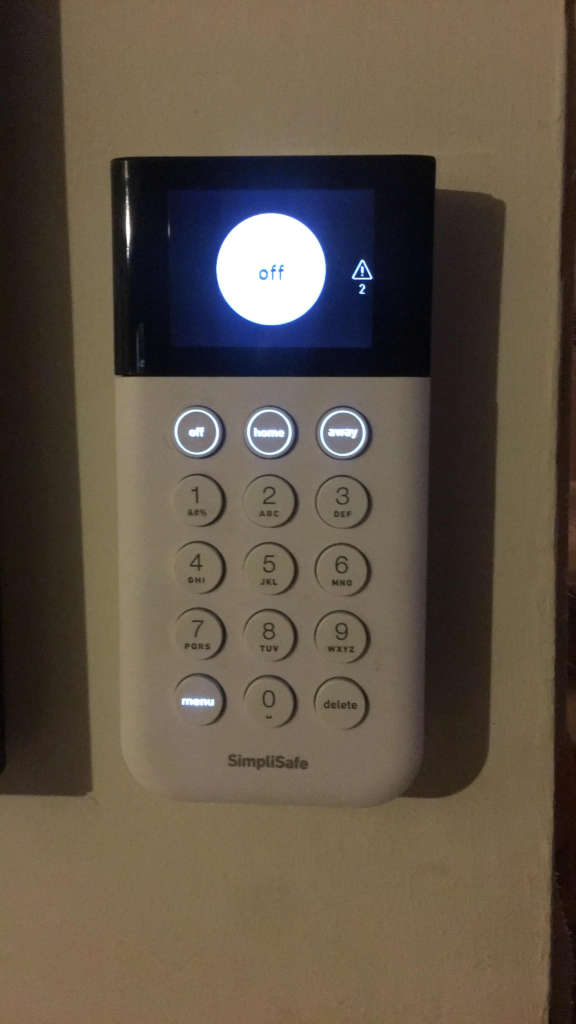
| Keypad | 1 | Battery, no wiring | Arms/disarms with a PIN; usable anywhere in the house |
| Entry Sensors | 4 | CR-2032, ~5-yr life | Doors, windows, cabinets; adhesive weakens in direct heat/sun |
| Motion Sensor | 1 | CR-123A, ~4-yr life | Ignores pets under ~60 lbs; roughly 35 ft range |
| Panic Button | 1 | CR-2032, ~5-yr life | Silent-alert option, no audible siren |
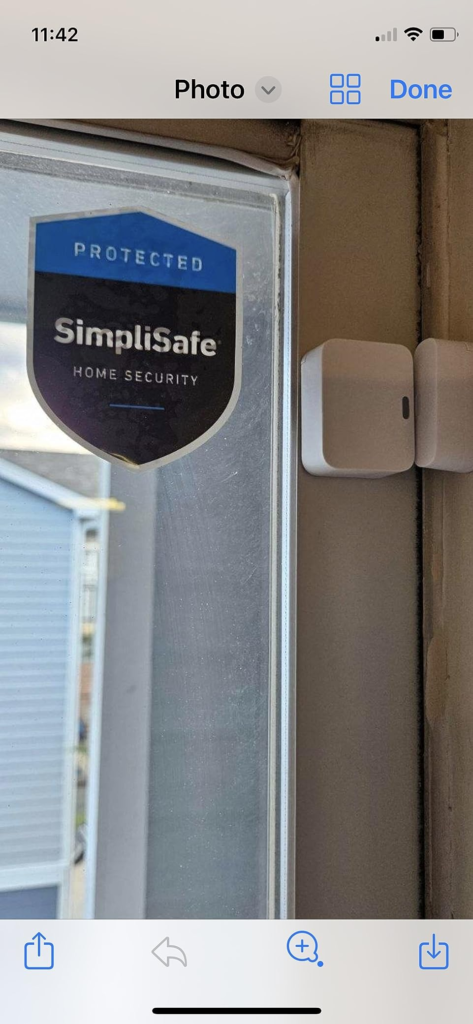
| Yard Sign + Stickers | 1 set | — | Deterrent only, doesn’t count toward the 8 monitored pieces |
| Siren (base station) | Built-in | — | Rated at 100 dB by SimpliSafe for this kit |
SimpliSafe Without a Monitoring Plan: The Threshold Where Protection Quietly Breaks
This is the one line in this whole review worth reading twice: without a paid monitoring plan, you are the dispatcher. The siren goes off, the app sends a push notification, and everything after that depends on you being awake, near your phone, and able to call 911 yourself. That’s not a criticism — it’s the actual mechanics of the free tier, spelled out plainly instead of buried in fine print.
| Plan | Price/mo | What You Actually Get |
|---|---|---|
| Self (no plan) | $0 | App arm/disarm, local siren only, no cellular backup, no dispatch |
| Self-Monitoring + Camera | $9.99 | Adds camera clips/recording, still no live agents |
| Standard | $22.99 | 24/7 professional monitoring, cellular backup, police/fire dispatch |
| Core (formerly Fast Protect) | $32.99 | Adds Intruder Intervention — an agent can view/speak through a compatible indoor camera; Alexa/Google voice arming |
| Pro | $49.99 | Adds Active Guard outdoor AI monitoring, 8 p.m.–6 a.m. |
| Pro Plus | $79.99 | Active Guard outdoor monitoring, 24/7 |
Worth knowing before you commit: these prices have crept upward over the past couple of years (Standard has climbed from roughly $15 to $22.99, Core from about $25 to $32.99), and SimpliSafe emails existing subscribers before each increase. No contract means no penalty for leaving — it doesn’t mean the price is frozen.
SimpliSafe vs. Ring vs. ADT: Why Most Buyers Misread This Too Early
Most people compare box price and stop there. That’s the trap. The real comparison is what happens to the monthly number a year in, and which ecosystem you’re already living inside.
| SimpliSafe 8-Piece | Ring Alarm | ADT / Vivint | |
|---|---|---|---|
| Contract | None | None | Often none now, but pricier |
| Free self-monitoring | Yes, full app control | Reduced since Ring Plus changes | Rare |
| Voice assistant | Alexa and Google (arm only) | Alexa only | Varies by package |
| Specialty sensors | Water, freeze, smoke/CO, glass-break | Narrower catalog | Wide, but costly |
| Typical monthly monitoring | $22.99–$79.99 | ~$20 (Ring Plus) | $25–$45+ |
| Best fit | No-contract seekers, mixed Alexa/Google homes | Amazon-ecosystem households | Full-service, hands-off buyers |
If you already live in an Echo-and-Ring household, Ring will feel native. If your home runs on both Alexa and Google Assistant devices — which is more common than people admit — SimpliSafe is the one of the two that doesn’t force a choice.
SimpliSafe for Renters and First-Time Buyers: Who Is Actually Inside This Problem
This kit is sized for a specific person, not everyone. It’s for the renter who can’t drill into a leased wall and needs something that comes down clean when the lease ends. It’s for the person buying their first system, who doesn’t want to guess-buy fifteen sensors before they know which doors actually worry them. It’s for the household that wants real protection without a three-to-five-year signature attached to it.
Four entry sensors and one motion zone cover a typical apartment, condo, or smaller single-family home’s actual weak points — front door, back door, one more entry, one main living space. That’s not a limitation. That’s the correct starting size for most of the people asking this question.
Who Should Skip SimpliSafe: Where Wrong-Fit Begins
Here’s where I’ll be direct instead of diplomatic, because a wrong-fit purchase costs you more than the $200.
| Good Fit | Skip This One |
|---|---|
| Renters, apartment dwellers, frequent movers | Apple HomeKit households — no support, unlikely to change soon |
| First-time buyers, smaller homes/condos | Large multi-story homes needing 8–10+ zones on day one |
| Budget-first, no-contract buyers | Anyone wanting deep smart-home automation (lights, locks, routines) — Ring or Abode fit deeper |
| Alexa and Google Assistant households | Anyone unwilling to call — not click — to cancel |
That last row isn’t a small caveat. Public complaint records show a real, recurring pattern: billing continuing after a cancellation call, and cancellation requiring a phone call rather than a single online button. This is separate from how the alarm hardware performs — reviewers and testers consistently rate the actual monitoring and dispatch experience well. But the account-and-billing side of the company is the documented weak link, not the siren. If you buy this, call to cancel (don’t email), ask for a confirmation reference number, and check your statement for the next two billing cycles. That’s not paranoia. That’s just reading the room correctly.
The SimpliSafe 8-Piece Kit: The One Situation Where This System Becomes Logical
If what you need is a fast, no-contract way to stop wondering whether your door is watched — and you don’t need whole-house automation, you don’t need Apple HomeKit, and your home is apartment-to-modest-house sized — this 8-piece configuration isn’t over-bought and isn’t under-covered. It’s sized for exactly that situation, which is rarer to say honestly about a security kit than it should be.
SimpliSafe Pros and Cons: What It Solves, What It Reduces, and What Still Falls on You
What it solves: the specific “is someone in my house right now” uncertainty, at the exact moment it matters, with a loud local siren and — if you pay for it — a live monitoring center behind it.
What it reduces: general burglary risk. Criminology research out of the University of North Carolina at Charlotte, built on interviews with convicted burglars, consistently finds that visible alarm signage and monitored systems rank near the top of what makes them choose a different house entirely. A yard sign isn’t decoration — it’s doing real work before the system ever makes a sound.
What still falls on you: checking sensor adhesive twice a year, replacing batteries on schedule instead of after they fail, choosing your monitoring tier honestly instead of defaulting to free and hoping, and staying on top of the billing side since that’s where real friction lives.
SimpliSafe 8-Piece FAQ: Fast Answers Before You Decide
| Question | Answer |
|---|---|
| Does it require a monthly fee? | No. App control works free. Professional monitoring is optional, starting at $22.99/month. |
| Can Alexa or Google Assistant disarm it? | They can arm it (on Core plan and above). Disarming by voice isn’t allowed, by design — a security decision, not an oversight. |
| How long do the batteries last? | About five years for entry sensors and the panic button (CR-2032), about four years for the motion sensor (CR-123A). The base station itself has a rechargeable 24-hour backup. |
| Will my pet set it off? | The motion sensor is built to ignore body heat under roughly 60 lbs, so most cats and many dogs won’t trigger it. |
| Is there a contract? | No. Every plan is month-to-month. Cancellation currently requires a phone call rather than a single online click — get a confirmation number when you do it. |
| Do the sensors really just stick on? | Yes, on most surfaces. Direct heat and sunlight are the known weak point — a stronger double-sided tape or the included screw-mount option fixes it. |
| Does it need Wi-Fi to work? | The core alarm functions run over the base station’s cellular connection once you’re on a paid plan. Wi-Fi mainly powers the app and camera streaming, not the core alarm signal. |
| Is 8 pieces enough for a whole house? | It covers a typical apartment, condo, or small-to-mid single-family home’s main entry points well. Larger homes usually add sensors afterward — easy to do, but it changes the total cost. |
The Bottom Line on the SimpliSafe 8-Piece System
Strip away the comparisons and the spec sheets, and it comes down to one plain question: do you want to keep doing the math on how fast someone could reach your door, or do you want that math done for you, tonight, for less than $250 and no contract.
If that’s the actual condition you’re in — not the brand loyalty, not the smart-home dream, just the door — this is where the decision stops being vague:
Transparency Note:
This analysis is built on aggregated real-world experience. It extracts what repeatedly holds, what breaks, and what users uncover only after living with the system—then shapes it into a clear model you can use immediately. Think of it as structured experience, refined and presented so you don’t have to learn it the hard way. “A quick note: Don’t believe the star ratings, but trust personal experience. This article is a compilation of collected experiences.”