The Alarm Looks Fine. The Problem Isn’t the Alarm.
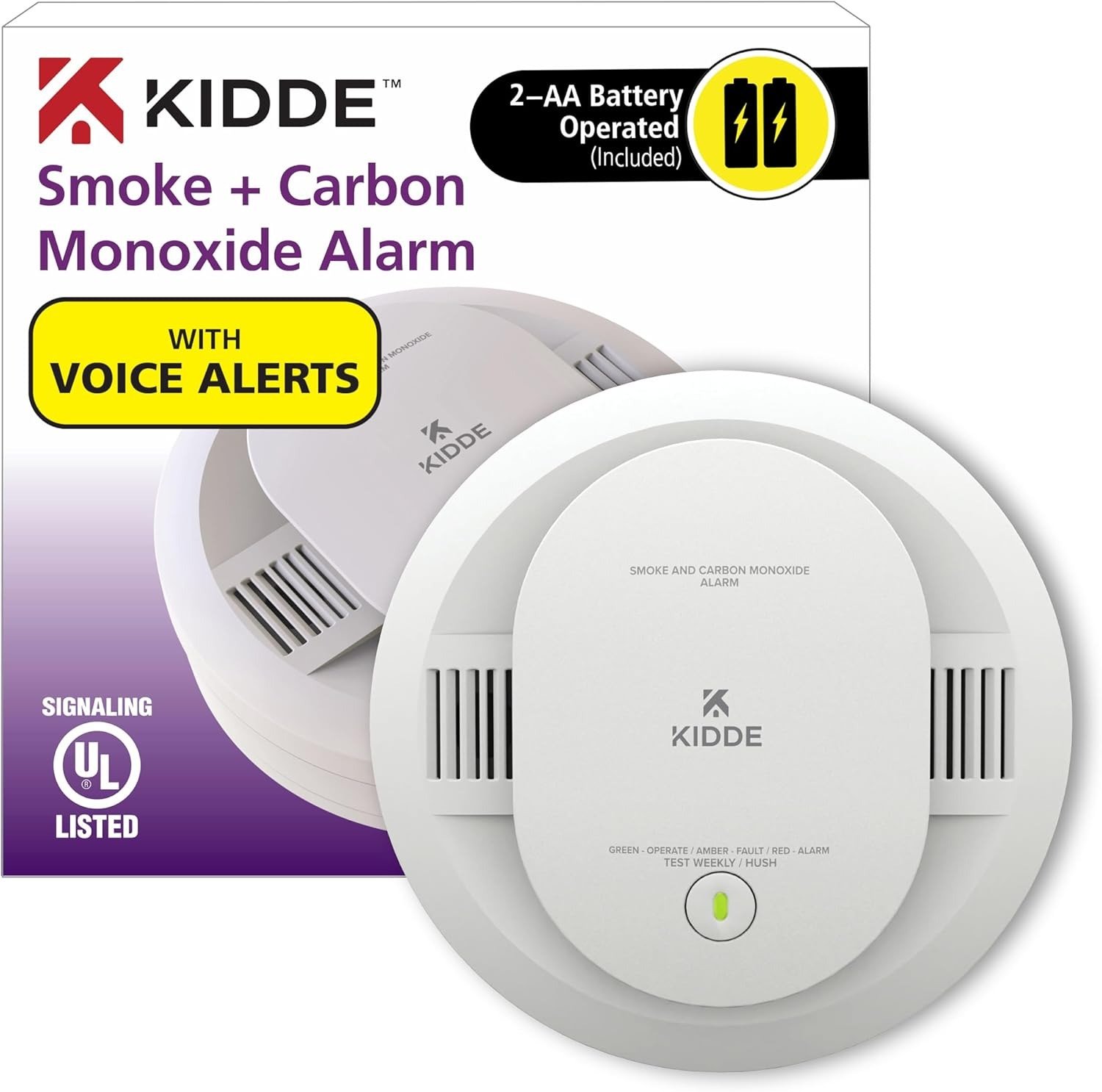
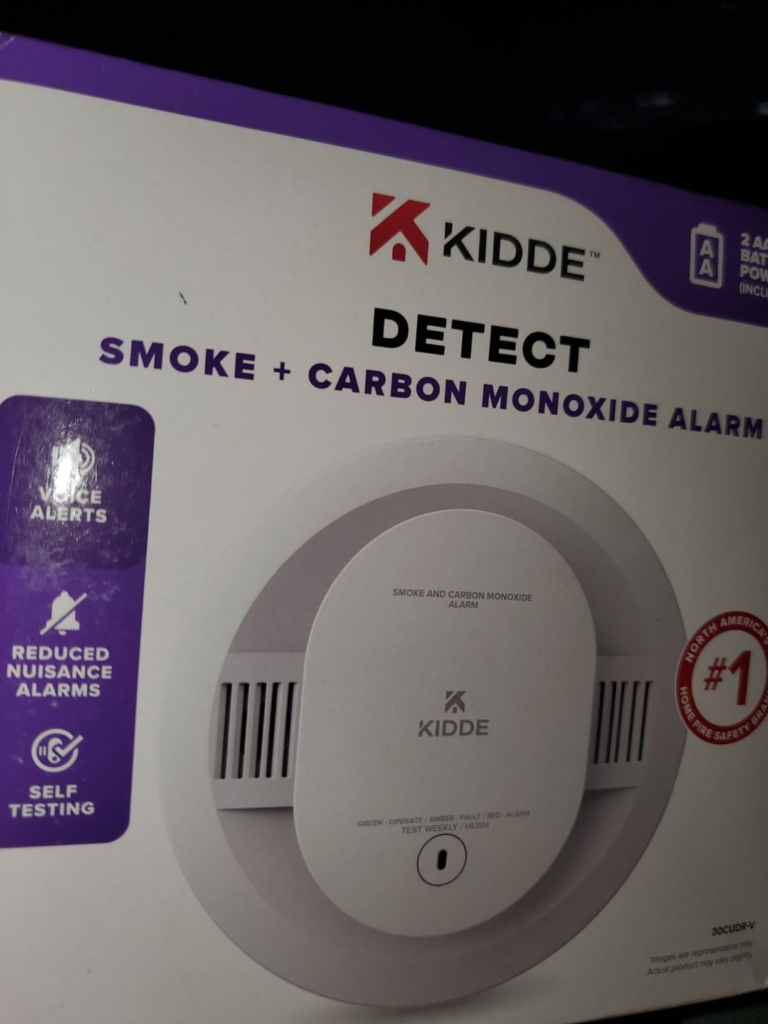
KIDDE 900-CUDR-V SMART SMOKE & CARBON MONOXIDE DETECTOR 2-PACK
You mounted it. The green light blinks. The test button chirped loud enough to startle the dog. By all visible measures, the detector is working.
And yet something feels unresolved.
Maybe it’s the 3 AM trip to the hallway — no smoke, no gas, nothing — just a screaming device that eventually went quiet on its own. Maybe it’s the quiet anxiety every time you cook something in a cast iron pan and watch the LED corner of your eye. Maybe you replaced the batteries six months ago and already hear a faint chirp starting again.
The device isn’t failing. But it isn’t working the way you assumed it would when you bought it.
That gap — between what you expected and what you’re actually living with — is exactly what this review addresses.
What You’re Actually Feeling But Not Naming
There is a specific kind of annoyance that comes from a safety device you no longer fully trust.
It’s not fear. It’s not anger. It’s something closer to low-grade vigilance fatigue. You start mentally calculating every time you heat oil in a pan. You sleep with one ear partially open. When the alarm does go off at 2:47 AM, your first instinct isn’t “emergency” — it’s “not again.”
That cognitive shift — from “alert device” to “unreliable device” — is the real cost most buyers don’t account for.
The Kidde 900-CUDR-V, sold as the Smart Smoke & Carbon Monoxide Detector 2-Pack (ASIN B0C8LYNJCY), is a competent detector in the right location. The problem is that “right location” is narrower than the box implies, and almost nobody explains the boundary before you install it in the wrong room.
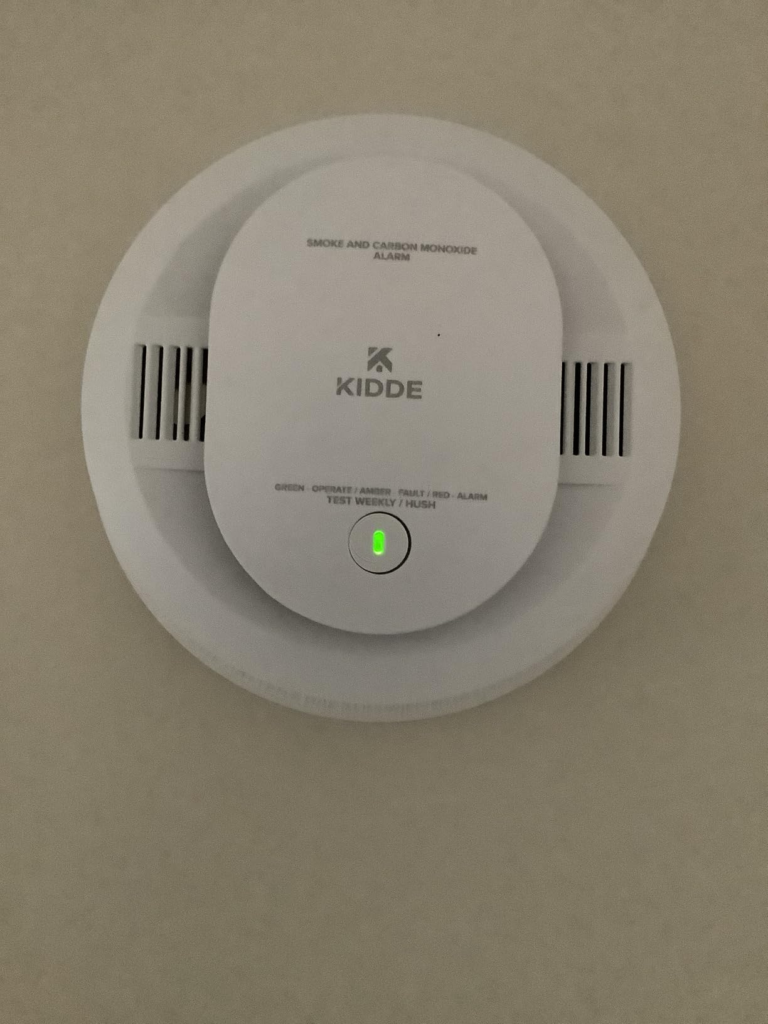
The Hidden Mechanism Behind the Miss
The 900-CUDR-V uses a photoelectric smoke sensor paired with an electrochemical CO sensor.
This is not a marketing distinction. It is a detection architecture that directly determines when this detector will alarm — and when it will stay silent.
| Sensor Type | Best At Detecting | Weakness |
|---|---|---|
| Photoelectric (this unit) | Slow, smoldering fires — furniture, bedding, electrical wiring | Slower on fast-flaming fires |
| Ionization | Fast, flaming fires | Higher false alarm rate near kitchens |
| Dual-sensor | Both fire types | Higher cost, less common in budget 2-packs |
| Electrochemical (CO — this unit) | Carbon monoxide gas accumulation | No smoke detection capability alone |
The photoelectric sensor works by detecting visible light scatter — larger smoke particles that float through an optical chamber. This makes it excellent for smoldering bedroom fires. It makes it legitimately less responsive to fast-flaming kitchen grease fires.
This is not a defect. It is a design tradeoff that UL certification bodies (UL 217 9th Edition, UL 2034 4th Edition) formally acknowledge. The detector passed rigorous testing and meets federal safety standards. But those standards do not guarantee the detector is equally appropriate for every location in your home.
The false alarm problem that so many users report — and the review record across Amazon, Home Depot, and Walmart is consistent here — almost always traces back to one of three placement-trigger failures:
| Failure Mode | What Happens | Why It Happens |
|---|---|---|
| Placed too close to kitchen | Cooking steam, oil vapor, bread particles trigger sensor | Photoelectric chambers respond to airborne particulates, not just combustion products |
| Placed in high-humidity zone (bathroom, laundry) | Sensor interprets condensation scatter as smoke particles | Humidity range is 10–95% non-condensing; condensing environments push past threshold |
| Placed near HVAC vent | Rapid air pressure or temperature changes generate amber fault codes | The self-testing circuit interprets certain sensor fluctuations as error states |
The 3 AM false alarm is almost never random. It is usually humidity — specifically the drop in overnight temperature that pushes a marginally-placed detector into its fault threshold.
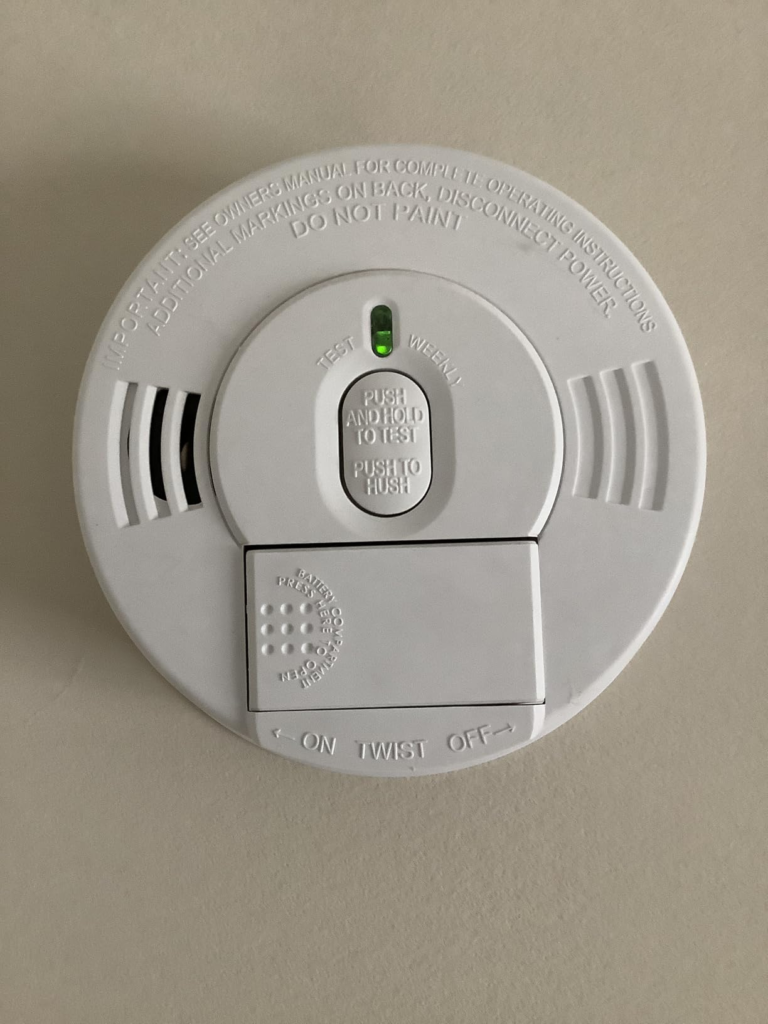
The Threshold Where the Outcome Quietly Breaks
Call this the Placement Validity Threshold.
The 900-CUDR-V performs as rated — reliably, quietly, without drama — when installed in these conditions:
- Ceiling mount, at least 10 feet from cooking appliances
- Hallways adjacent to sleeping areas
- Living room ceilings away from HVAC supply vents
- Bedrooms (ideal: photoelectric sensors are specifically suited for slow smoldering fires in fabric-heavy environments)
- Ambient temperature between 40°F and 100°F
- Humidity that does not regularly approach or exceed 85% relative humidity
The moment installation departs from that range — kitchen proximity, bathroom vapor zones, garage edges where temperature swings sharply — the sensor enters a reliability band where the false alarm rate climbs, the battery drains faster than expected, and the amber fault LED begins signaling errors that aren’t hazards.
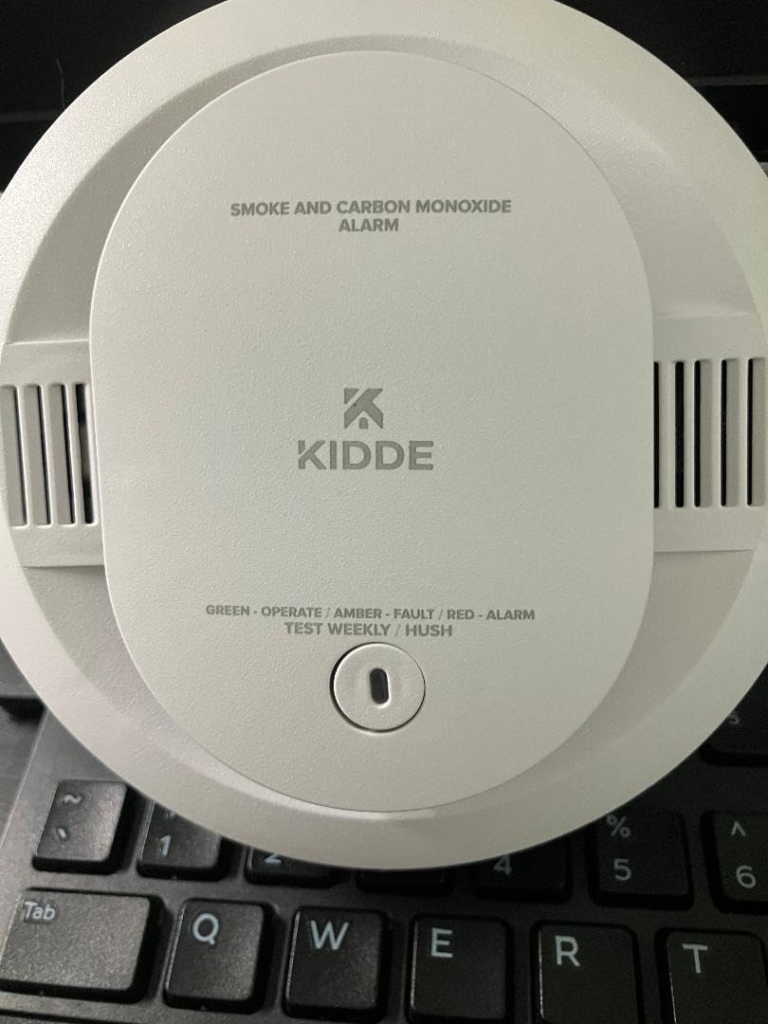
The self-testing circuit, which Kidde describes as “always checking to ensure the device is operating as expected,” is genuinely continuous. A single red flash plus three fast beeps every 60 seconds indicates a detected fault: photo sensor fault, CO sensor fault, or memory fault. Users who see this pattern in the first weeks of installation are almost always in a location mismatch — not a defective unit.
Placement Validity Reference Table:
| Location | Suitability | Risk Factor |
|---|---|---|
| Hallway outside bedroom | ✅ Ideal | Low — optimal smoldering fire coverage |
| Living room (center ceiling) | ✅ Suitable | Low |
| Bedroom | ✅ Ideal | Low — photoelectric excels here |
| Kitchen (over 10 ft from stove) | ⚠️ Marginal | Medium — cooking particulates possible |
| Kitchen (under 10 ft from stove) | ❌ Wrong fit | High false alarm probability |
| Bathroom / laundry area | ❌ Wrong fit | High — steam and condensation trigger |
| Garage | ❌ Wrong fit | High — temperature swing too extreme |
| Near HVAC vent (direct airflow) | ❌ Wrong fit | High — pressure and temperature interference |
Why Most Buyers Misread This Too Early
The 2-Pack format creates a specific decision trap.
You buy two units. You have two locations in mind. You install both in the same session, test them both with the button, hear the voice confirmation — “Warning! Carbon Monoxide!” / “Fire! Fire!” — and consider the job done.
The problem is that both detectors may be in the wrong rooms, and the test button confirms only that the alarm circuit functions. It does not validate placement suitability. It does not simulate humidity conditions. It does not test the photoelectric chamber’s actual sensitivity to the smoke types present in your specific room configurations.
The buyers who describe near-immediate false alarms — units going off within 60 days, units alarming every few weeks, units that screamed on the first night of installation — are almost universally describing placement failures, not unit failures. The pattern across hundreds of reviews is consistent: the alarm is installed within 8–10 feet of a kitchen, a bathroom, or a vent, and the sensor encounters exactly the particulate environment it was architecturally unprepared for.
The buyers who report years of reliable, silent operation are equally consistent: hallway mounts, bedroom mounts, living room ceiling positions, fuel-burning appliance adjacencies with adequate clearance.
The product is the same. The outcome is entirely determined by location.
Who Is Actually Inside This Problem
This detector is the correct choice if your situation matches this profile:
- You rent or own a home without existing hardwired infrastructure
- You need 2-in-1 detection (smoke + CO) without electrical work
- You have at least one floor with fuel-burning appliances (furnace, gas range, water heater, fireplace)
- You have hallways, living areas, or bedrooms without a detector currently
- You are replacing an expired detector (NFPA recommends replacement every 10 years)
- You want voice alarm differentiation — “Fire” vs. “Warning Carbon Monoxide” — rather than pattern-based beep codes
- You understand that AA batteries will need replacement approximately every 12 months and are prepared to maintain that schedule
This detector is a strong fit for:
| Buyer Profile | Match |
|---|---|
| Renters: no hardwiring option | ✅ Strong |
| Property managers: multi-unit coverage | ✅ Strong (per-unit cost is appropriate) |
| First-time homeowners: baseline protection | ✅ Strong if locations are chosen correctly |
| Bedroom + hallway coverage | ✅ Strong |
| Kitchen-primary placement | ❌ Wrong fit |
Where Wrong-Fit Begins
There is a buyer who will regret this purchase. The profile is specific.
You will likely experience sustained frustration if:
- Your primary installation location is within 10 feet of a stove, oven, or toaster
- You cook frequently with high heat, oil, or open flames
- You live in a high-humidity climate or your bathroom lacks adequate ventilation
- You want a device you never have to maintain — AA batteries require annual replacement; this is not negotiable and the 2-year Kidde battery warranty specifically excludes combination smoke/CO alarms
- You expect app connectivity, WiFi alerts, or remote monitoring — this unit has none of those features; it is a standalone, non-networked detector
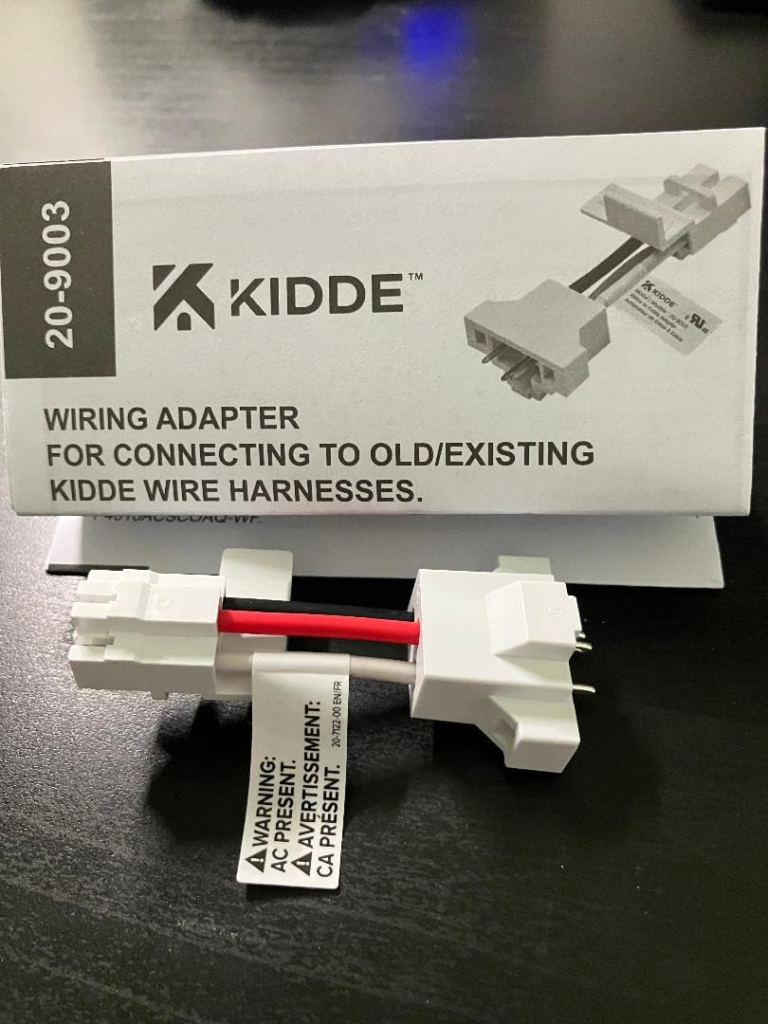
- You are replacing interconnected hardwired detectors — this unit does not interconnect with other alarms, meaning when this unit sounds, adjacent detectors do not
The non-interconnect limitation is the single most overlooked specification in this product category. In a multi-story home, a non-interconnected detector on the lower level cannot trigger alarms on the upper level. Industry standard recommends interconnected coverage — when one sounds, all sound. This unit cannot participate in that system.
The One Situation Where This Detector Becomes Logical
You have a bedroom, a hallway, or a living area with no current smoke or CO protection. You do not have hardwired infrastructure. You want voice differentiation between smoke and CO events. You are willing to replace AA batteries annually. You will mount the unit on the ceiling, at least 10 feet from the kitchen, away from bathroom vapor paths, and away from HVAC supply vents.
In that situation — and it describes the majority of residential rooms in American homes — the Kidde 900-CUDR-V 2-Pack is the most cost-appropriate, regulation-compliant, UL-verified option at its price tier.
The photoelectric sensor’s particular strength in slow-smoldering fires — the furniture, bedding, and electrical fires that begin during sleep — makes it architecturally well-suited for bedrooms. The electrochemical CO sensor provides the coverage required by code on any level with fuel-burning appliances. The 85dB alarm with voice announcement gives sleeping adults enough clarity to respond correctly in the first seconds of an alarm — not just a pattern of beeps to decode under panic.
Technical Specifications at a Glance:
| Specification | Detail |
|---|---|
| Model | 900-CUDR-V |
| ASIN | B0C8LYNJCY |
| Power Source | 2 AA alkaline batteries (included) |
| Smoke Sensor | Photoelectric |
| CO Sensor | Electrochemical |
| Audio Output | 85dB at 10 feet |
| Voice Alerts | Yes — “Fire! Fire!” / “Warning! Carbon Monoxide!” |
| LED Indicators | Green (normal), Amber (fault/error), Red (alarm event) |
| Self-Testing | Continuous internal component monitoring |
| Interconnectable | No |
| WiFi / App | No |
| Operating Temperature | 40°F – 100°F (4.4°C – 37.8°C) |
| Humidity Range | 10%–95% relative, non-condensing |
| Certifications | UL 217 9th Edition, UL 2034 4th Edition, FCC |
| Warranty | 10-year limited (batteries excluded) |
| Battery Replacement Interval | Every 12 months (or at low-battery chirp) |
| Unit Diameter | 4.95 inches |
| Pack Size | 2 units |
What It Solves, What It Reduces, and What It Still Leaves to You
What it solves:
- Code-required smoke detection in non-hardwired rooms
- Code-required CO detection on floors with fuel-burning appliances
- Voice differentiation between fire and CO events during nighttime alarms
- Detection gap in bedrooms and hallways where slow-smoldering fires most commonly originate
What it reduces:
- Kitchen-proximity false alarms compared to ionization sensors — the photoelectric architecture is inherently less reactive to cooking steam than ionization technology
- Installation friction — the twist-and-click bracket requires no tools and mounts in four orientations
- The cognitive load of two separate detectors — one unit covers both threats
What it still leaves to you:
- Annual battery replacement — no exceptions, no workaround at this price point
- Correct placement discipline — the device cannot enforce its own location requirements
- Interconnected coverage on other floors — you will need additional units or a different architecture for whole-home simultaneous alarming
- Fast-flaming fire sensitivity in kitchen zones — a separate ionization unit in that specific location remains the more appropriate choice
The honest performance boundary: This is not a whole-home system. It is a room-level detector. Bought and placed correctly, it does its job reliably for years. Bought and placed as an afterthought, it is the device that screams at 3 AM for no reason you can identify — and then gets removed entirely, leaving you with no coverage at all.
Final Compression
If your bedroom, hallway, or living area has no current detector — and most American homes have at least one uncovered zone — and you are not within 10 feet of a kitchen or bathroom vapor path, this is where the decision stops being complicated.
The Kidde 900-CUDR-V 2-Pack covers the exact threat profile most residential rooms face: slow smoldering fires and carbon monoxide accumulation from fuel-burning appliances. It does not require electricians, app setup, or infrastructure changes. It passes every current federal safety standard. It will work quietly, correctly, and without attention — as long as it is in the right room.
If you are placing this near a kitchen, in a high-humidity zone, or expecting it to function as part of an interconnected system — stop here. That is a different product requirement, and this unit will not meet it.
The install takes four minutes. The decision should take less than that, now that you know which room you’re actually protecting.
Frequently Asked Questions
| Question | Answer |
|---|---|
| Does the Kidde 900-CUDR-V work near a kitchen? | Not ideally. The photoelectric sensor is sensitive to cooking steam, oil vapor, and airborne food particles. Kidde and NFPA both recommend at least 10 feet of clearance from any cooking appliance. In a kitchen-adjacent zone, a dedicated kitchen-rated detector with an ionization or multicriteria sensor is the more appropriate choice. |
| How long do the AA batteries last in this detector? | Kidde recommends replacing the batteries at least once a year, or when the unit chirps to indicate low battery. Their branded AA batteries carry a 2-year guarantee — however, that guarantee explicitly excludes combination smoke/CO detectors like this model. Budget for annual replacement regardless of brand. |
| Why does my Kidde smoke detector go off at 3 AM for no apparent reason? | The most consistent cause across thousands of user reports is overnight humidity fluctuation. As temperatures drop at night, relative humidity rises. A detector placed in a bathroom-adjacent hallway, a laundry room, or near an exterior wall can enter its fault-sensing threshold when humidity shifts sharply. Relocating the unit away from moisture sources resolves this in most cases without replacing the hardware. |
| Does this detector interconnect with other Kidde alarms? | No. The 900-CUDR-V is a standalone, non-interconnected unit. When this alarm sounds, no other detector in the home is triggered. For whole-home coverage where all alarms sound simultaneously, you would need to purchase Kidde’s interconnected line (wired or wireless RF interconnected models). |
| Does this unit have app connectivity or WiFi alerts? | No. This is a fully standalone detector. There is no app, no WiFi radio, no remote notification capability. If you want smartphone alerts when the detector fires — particularly useful if you are away from home — the Kidde Smart line (separate product) with Kidde app or Ring integration is the appropriate alternative. |
| What does the amber LED mean on my Kidde detector? | Amber indicates an operating error — not a smoke or CO event. Per the 900-CUDR-V user manual, one red flash plus three fast beeps every 60 seconds signals a sensor fault (photo sensor, CO sensor, or memory). This often appears in newly installed units placed in environments outside the rated temperature or humidity range. If relocation to a better-suited room does not clear the fault within 24 hours, contact Kidde support at 1-800-880-6788. |
| Is the Kidde 900-CUDR-V better than a 10-year sealed battery detector? | The 10-year sealed battery Kidde models eliminate battery maintenance for the life of the unit and represent a meaningful long-term cost saving — Kidde estimates up to $40 in battery costs avoided. The tradeoff is a higher upfront cost per unit. If battery replacement discipline is a genuine friction point in your household, the 10-year sealed units are worth the premium. If you are willing to maintain an annual battery schedule, the 900-CUDR-V 2-Pack provides equivalent detection capability at a lower entry cost. |
Transparency Note:
This analysis is built on aggregated real-world experience.
It extracts what repeatedly holds, what breaks, and what users uncover only after living with the system—then shapes it into a clear model you can use immediately.
Think of it as structured experience, refined and presented so you don’t have to learn it the hard way.
“A quick note: Don’t believe the star ratings, but trust personal experience. This article is a compilation of collected experiences”