PGST HOME SECURITY SYSTEM REVIEW: THE APARTMENT TEST IT DOESN’T MENTION
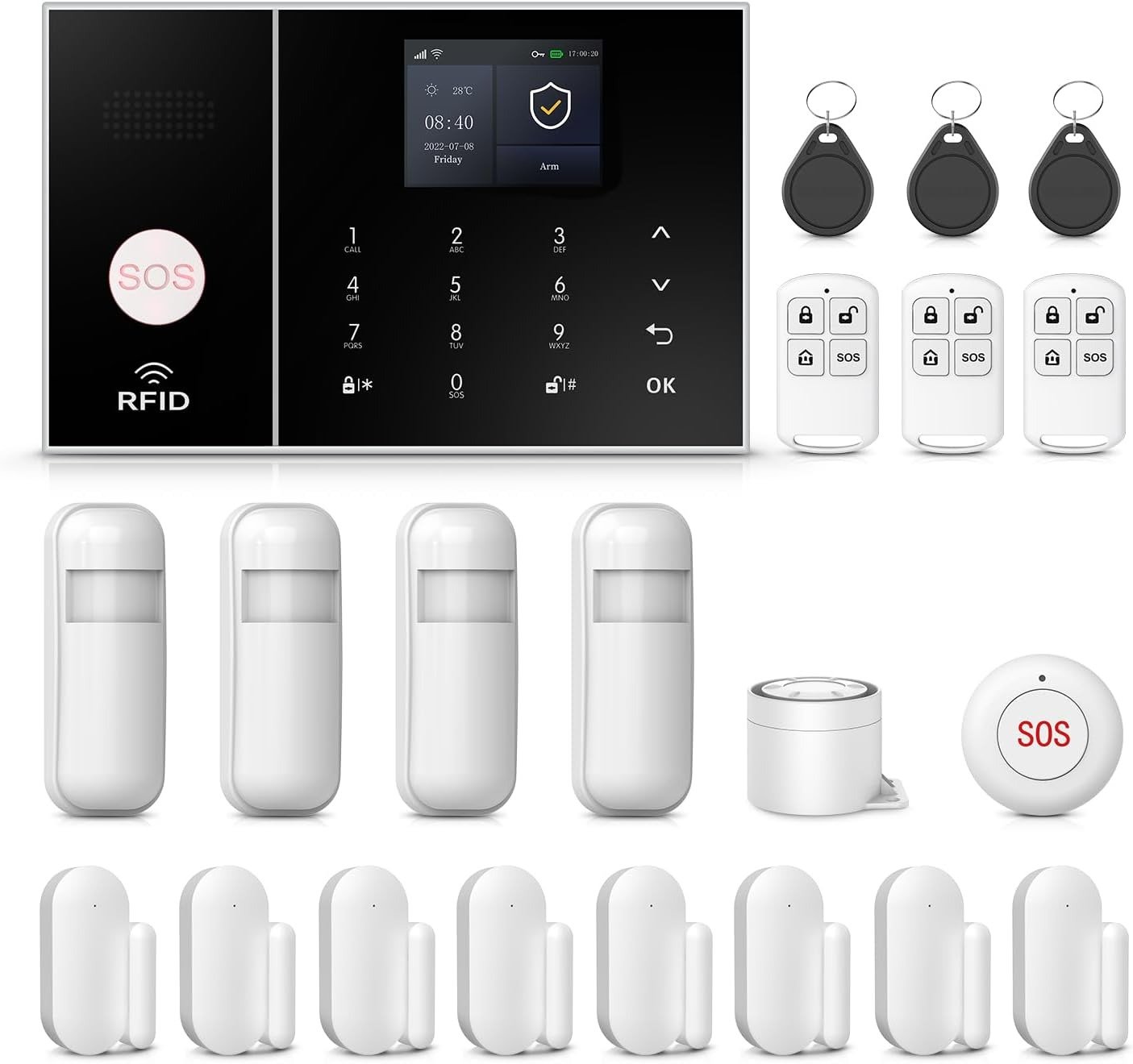
PGST HOME SECURITY SYSTEM
Your lease says it in nine words: no alterations to walls, doors, or fixtures. So the search starts at midnight, on a phone, in an apartment that suddenly feels a little too open. Wireless. Peel-and-stick. No monthly fee. Works with Alexa. The same four promises repeat across a dozen listings, and PGST is one of the names that keeps surfacing in that search.
The unboxing videos all show the same thing: sensors go up in minutes, the app finds the host, a little green checkmark appears, done. That checkmark is real. It’s just not the test this system actually has to pass. The real test happens later — quietly, on an ordinary day, when nobody’s watching for it.
PGST ALARM SYSTEM SETUP: THE GREEN CHECKMARK THAT DOESN’T TELL YOU EVERYTHING
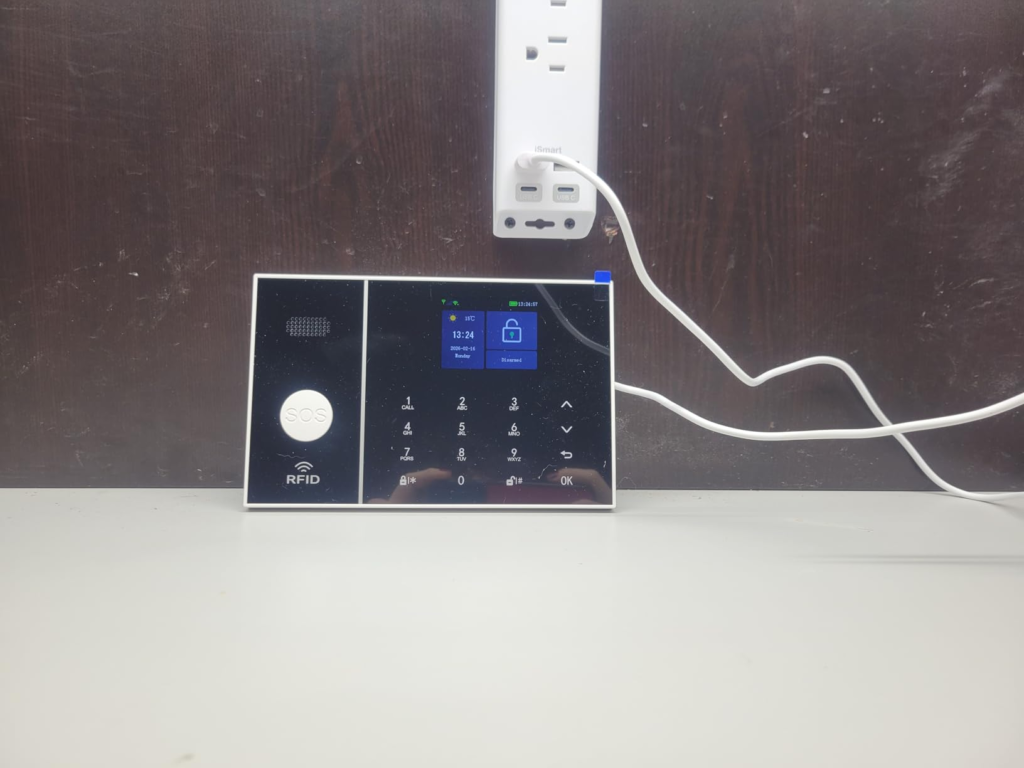
Setup itself is close to what the listing promises. The host plugs in, connects to a 2.4GHz Wi-Fi network through the Tuya “Smart Life” app, and each sensor pairs by triggering it once — open a door, wave a hand in front of the motion detector — while the panel listens. Ten to fifteen minutes, no tools beyond a screwdriver for the optional wall mount.
Worth knowing going in: PGST isn’t running its own proprietary smart-home platform. It’s one of a long list of budget security brands — alongside several other similarly-named kits sold on the same marketplaces — built on the same Chinese manufacturing base and the same Tuya app backend. That’s not a red flag by itself. It’s just the honest category this product lives in: solid, commodity hardware, not boutique engineering.
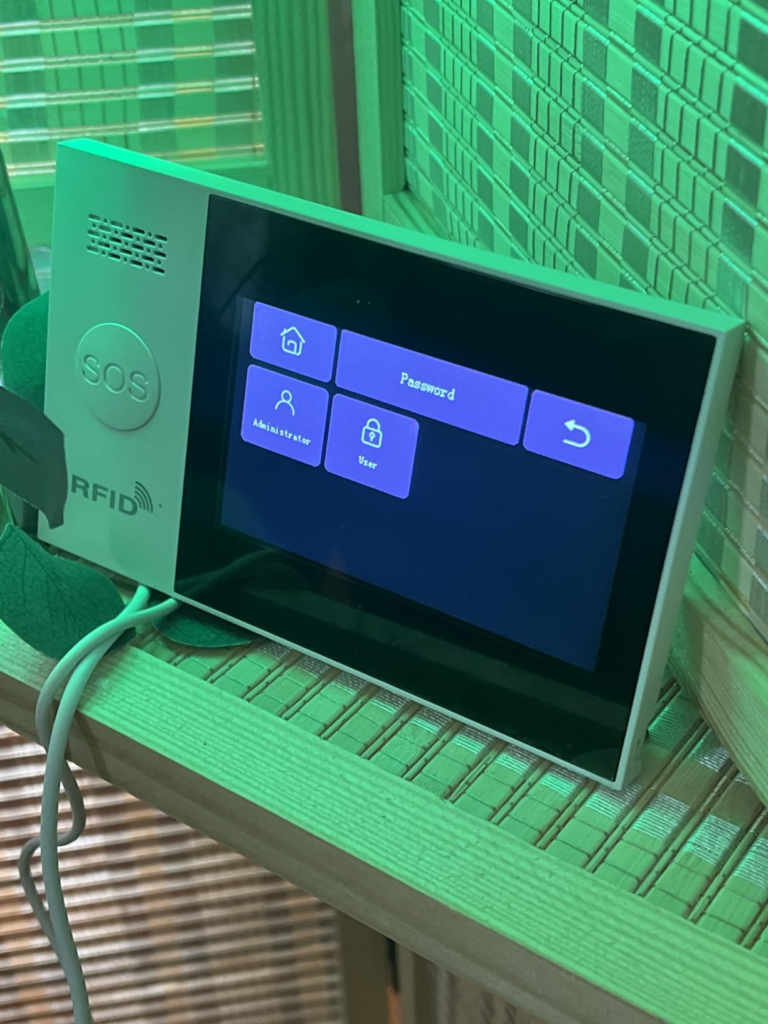
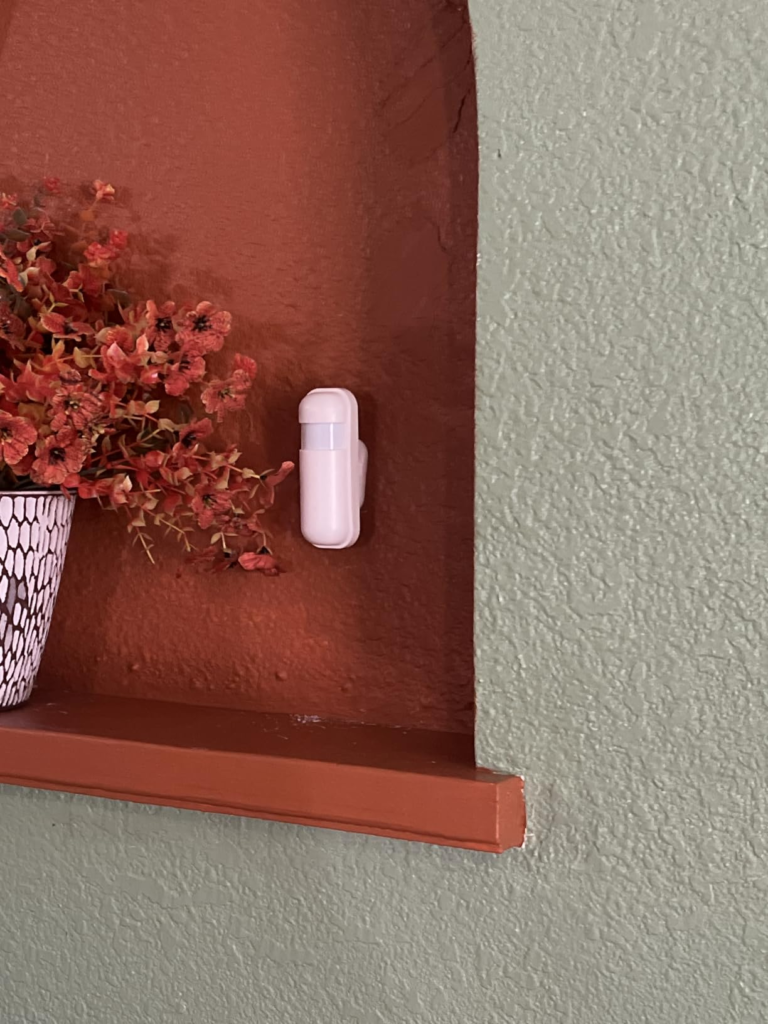
The one recurring snag shows up after setup, not during it. The double-sided adhesive on the door and window sensors holds fine on smooth paint — less reliably on textured trim or vinyl siding, which is exactly the kind of surface a lot of apartments have around the doorframe.
| What | PGST Apartment Kit (this listing family) |
|---|---|
| Connectivity | 2.4GHz Wi-Fi + optional 4G/GSM SIM (SIM sold separately) |
| Sensor-to-host link | 433MHz wireless, rated to roughly 100m in open air |
| Control app | Tuya “Smart Life” (shared across many budget security brands) |
| Siren | 100–120dB, depending on kit size |
| Backup power | Built-in battery keeps the siren running through an outage; no app alerts without a live connection |
| Sensor battery life | Roughly 18–24 months, manufacturer estimate |
| Install method | Peel-and-stick sensors, screw-mount host — no drilling required |
| Voice control | Alexa and Google Assistant |
| Monthly fee | None |
APARTMENT SECURITY ANXIETY: WHAT YOU’VE BEEN CALLING “BEING CAREFUL”
There’s a specific feeling renters know and rarely name out loud: checking the door handle twice from the hallway, glancing at a dark window from the parking lot, texting a neighbor “can you check if I locked up.” It gets filed under being careful. It isn’t. It’s an unanswered gap — nobody and nothing is actually watching that door while you’re gone.
So why doesn’t buying an alarm system automatically close that gap? Because the system only closes it if the notification actually reaches you, and that part depends on more than the box implies.
PGST WI-FI AND 433MHZ RANGE EXPLAINED: THE TWO SYSTEMS HIDING INSIDE ONE BOX
Every PGST-style kit is really two separate systems wearing one label. The first is the sensor-to-host link: 433MHz radio, battery-powered, roughly 100 meters of open-air range. This part is genuinely solid — it doesn’t care about your internet, your router brand, or whether your neighbor’s Wi-Fi is congested.
The second system is the host-to-you link: Wi-Fi, or an optional cellular SIM card, carrying the actual notification to your phone. This is where almost every confused, contradictory-sounding review actually originates. The sensor did its job. The siren went off. The alert to a phone just never left the building.
That distinction explains why two buyers can describe what looks like two different products. One installs it, tests it, gets an instant push notification, and calls it flawless. Another has a 5GHz-only mesh router, no separate 2.4GHz band, and never gets the host online in the first place — through no fault of the sensors at all.
| What people report | What’s actually happening | What actually helps |
|---|---|---|
| No app alert when a door opened | Host lost its Wi-Fi link, or the router is 5GHz-only | Confirm a 2.4GHz network exists; re-pair through the Smart Life app |
| Sensor fell off the door | Adhesive doesn’t bond well to textured paint or vinyl trim | A small dab of silicone alongside the tape holds it long-term |
| Alarm triggers with nobody around | Motion sensor aimed at a vent, window, or a pet’s usual path | Reposition away from airflow and heat sources |
| No call or text during an outage | No SIM installed, or the SIM has no active balance | A prepaid alarm SIM (roughly $5–$30) is what powers call/SMS backup |
THE SILENT NOTIFICATION THRESHOLD: WHERE ANY NO-FEE ALARM SYSTEM QUIETLY STOPS HELPING
Here’s the threshold worth naming plainly, because it applies to every self-monitored system, not just this one: the moment nobody is looking at their phone is the moment a no-fee alarm system provides exactly zero real-time response. Not a lesser response — none.
Picture the version of this that actually matters: not a dramatic break-in at 2 a.m. while you’re home, but a quiet one on a Tuesday afternoon, while you’re in a meeting with your phone face-down in a bag. The siren is doing its job in an empty apartment. The notification is sitting on a lock screen nobody’s checking. A monitored service has a person watching for exactly that gap. A self-monitored system has you — and only you.
NO MONTHLY FEE VS. PROFESSIONAL MONITORING: WHY THIS COMPARISON TRIPS UP MOST BUYERS
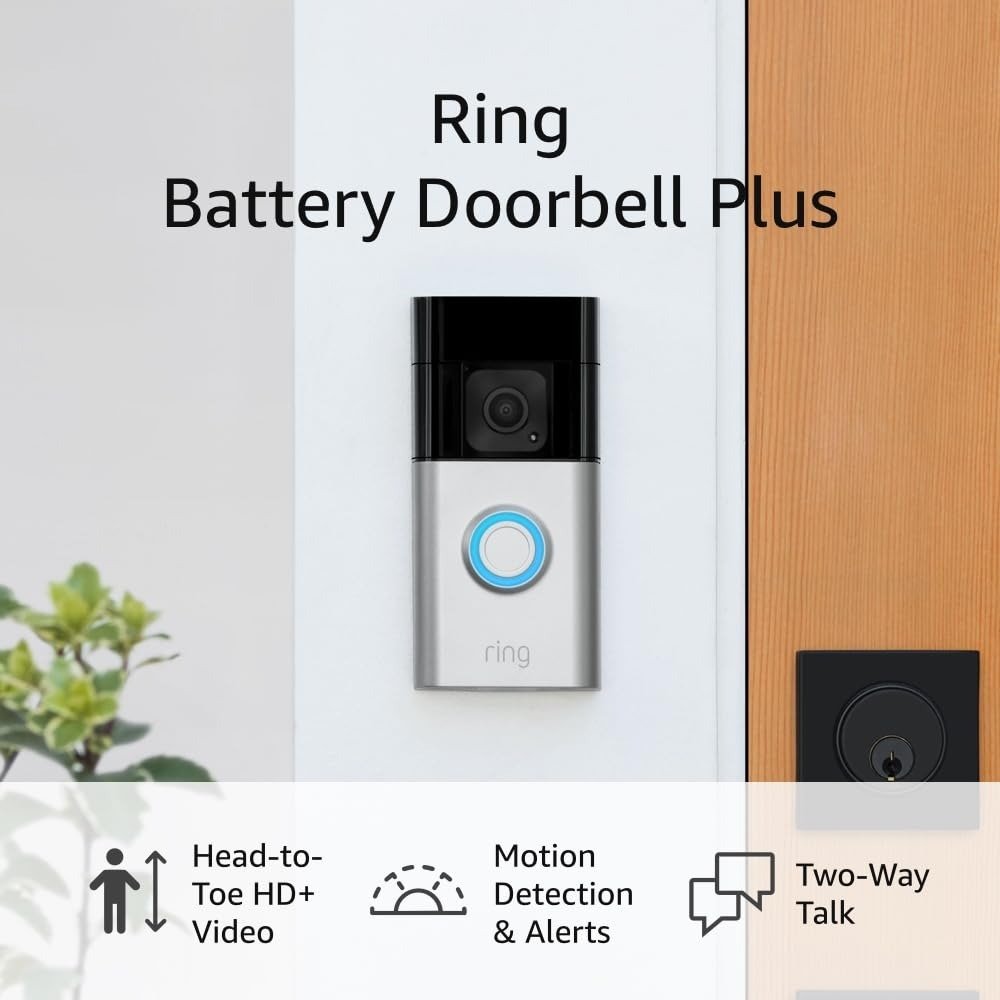
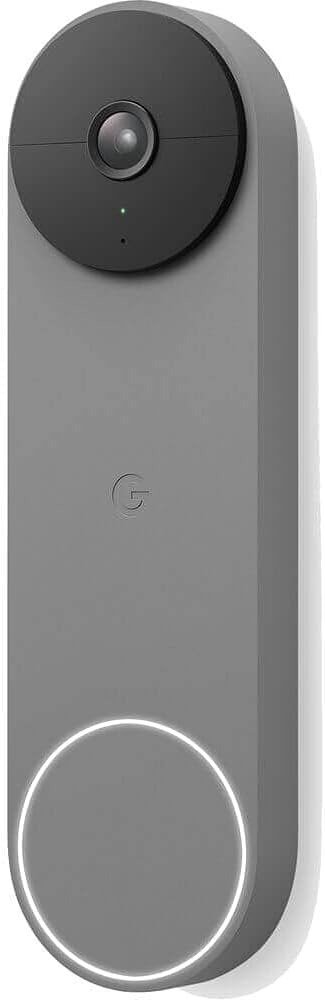
The comparison most buyers make is “PGST vs. SimpliSafe vs. Ring” as if they’re three prices for the same thing. They aren’t. Two of those are monitoring services with equipment attached. PGST is equipment, full stop.
SimpliSafe’s professional monitoring plans run from roughly $22.99 up to $79.99 a month, with a cheaper $9.99 self-monitoring tier. Over two years, that gap is real money — which is exactly the appeal of a one-time purchase. It’s just not the same category of protection, and pretending otherwise is the shallow read that leads to disappointment either way.
| PGST-style kit (one-time) | SimpliSafe (self-monitor) | SimpliSafe (pro-monitored) | Ring Alarm (pro-monitored) | |
|---|---|---|---|---|
| Upfront equipment | ~$70–$150, bundle-dependent | ~$250+ | ~$250+ | ~$200+ |
| Monthly fee | $0 | $0–$9.99 | ~$23–$80 | ~$5–$20 |
| Extra cost after 2 years | $0 | up to ~$240 | ~$550–$1,900 | ~$120–$480 |
| Human dispatch center | No | No | Yes | Yes, with add-on |
So is the “no monthly fee” pitch a trick? No — and this is worth being direct about. The catch isn’t hidden, it’s structural: no fee also means no monitoring company answering on your behalf. That’s not a scam. That’s a choice, and it’s a fair one for the right household.
WHO THE PGST SYSTEM IS ACTUALLY BUILT FOR: RENTERS, SMALL SPACES, DIY HOUSEHOLDS
This kit is built for someone specific: a renter who legally can’t drill or hardwire anything, living in an apartment, condo, or small house, who checks their phone often enough that a push alert actually reaches them, and who’d rather pair a sensor through an app once than pay a monitoring bill every month. If that’s the household, the 100-meter sensor range and the 2.4GHz Wi-Fi requirement are non-issues — most apartments are small enough that range was never the bottleneck.
WHERE PGST STOPS BEING THE RIGHT ANSWER: LARGE HOMES, ABSENT OWNERS, GUARANTEED DISPATCH
It stops making sense for a few clear situations: a large property needing multiple long-range repeaters, a household that genuinely needs guaranteed human dispatch (someone living alone who can’t reliably check a phone, or an insurance policy that requires certified professional monitoring for a discount), and anyone on an all-5GHz mesh router who isn’t willing to add a 2.4GHz band. None of those are flaws in the product. They’re just outside what it was built to do.
| This is probably a good fit if… | This is probably the wrong tool if… |
|---|---|
| You rent and can’t drill or hardwire anything | You need a system that calls the police automatically |
| You want to eliminate a monthly bill, not add one | You’re rarely near your phone during the day |
| You live in an apartment, condo, or small house | Your property needs multiple long-range repeaters |
| You’re fine pairing sensors through an app once | Your router is 5GHz-only and won’t add a 2.4GHz band |
| You want a loud deterrent plus a notification | You need certified monitoring for an insurance discount |
PGST HOME SECURITY SYSTEM REVIEW: THE ONE HOUSEHOLD IT WAS QUIETLY DESIGNED FOR
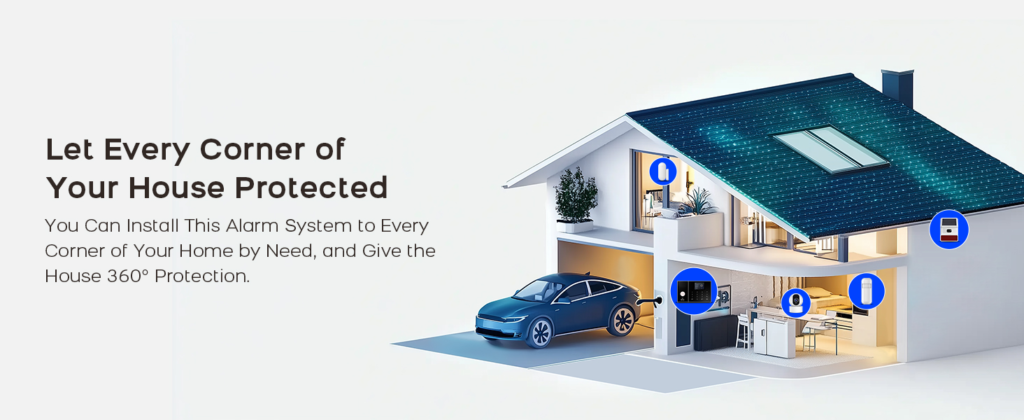
Strip away the marketing language and one household keeps coming into focus: someone renting a space they can’t modify, wanting a real first layer of security — a loud siren, an instant alert, entry-point awareness — without signing up for a bill that outlasts the lease. For that household, this isn’t a compromise version of “real” security. It’s the correctly-sized version of it.
WHAT PGST SOLVES, WHAT IT REDUCES, AND WHAT STILL DEPENDS ON YOU
It solves the basic blind spot: you find out the instant a door or window opens, instead of finding out later. It reduces the low-grade anxiety of an apartment with zero security layer, and it does that without adding a recurring cost to a household already paying rent.
What it doesn’t do is take the job off your hands. You’re the monitoring center now, which means testing the system occasionally, keeping the app’s notifications turned on, and deciding whether a cheap SIM card for cellular backup is worth it to you. It’s a deterrent and a notifier — not a guarantee, and not a substitute for renter’s insurance.
PGST HOME SECURITY SYSTEM: FREQUENTLY ASKED QUESTIONS
| Question | Answer |
|---|---|
| Does it work without Wi-Fi? | The siren keeps working on backup battery during an outage, but phone alerts need either Wi-Fi or the optional 4G/GSM SIM card. |
| Will it work with my router? | Only on a 2.4GHz band. If your router only broadcasts a merged or 5GHz-only network, you’ll need to add a separate 2.4GHz option. |
| Is there really no monthly fee? | Yes — the only optional recurring cost is a prepaid SIM card if you want call/text backup during an outage. |
| Can I take it with me when I move? | Yes. It’s wireless and adhesive-mounted, designed to be unpaired and reinstalled at a new address. |
| Does it call the police? | No. With a SIM installed, it calls or texts your own preset contacts — there’s no professional monitoring center dispatching authorities. |
| How long do sensor batteries last? | Around 18 to 24 months per sensor under normal use, per the manufacturer’s estimate. |
| Does it work with Alexa and Google Assistant? | Yes, both support voice arm and disarm commands. |
FINAL VERDICT: IS THE PGST HOME SECURITY SYSTEM WORTH BUYING?
For a renter who can’t drill a single hole and just wants a real notification layer without a monthly bill, this kit earns its price. If what you actually need is someone else answering the alarm at 3 a.m., no number of good reviews changes that it doesn’t do that — and that’s a fair reason to look at a monitored system instead.
Transparency Note:
This analysis is built on aggregated real-world experience.
It extracts what repeatedly holds, what breaks, and what users uncover only after living with the system—then shapes it into a clear model you can use immediately.
Think of it as structured experience, refined and presented so you don’t have to learn it the hard way.
“A quick note: Don’t believe the star ratings, but trust personal experience. This article is a compilation of collected experiences.”