RING BATTERY DOORBELL PRO REVIEW: 4K FOOTAGE THAT’S PERFECT — AFTER THE FACT
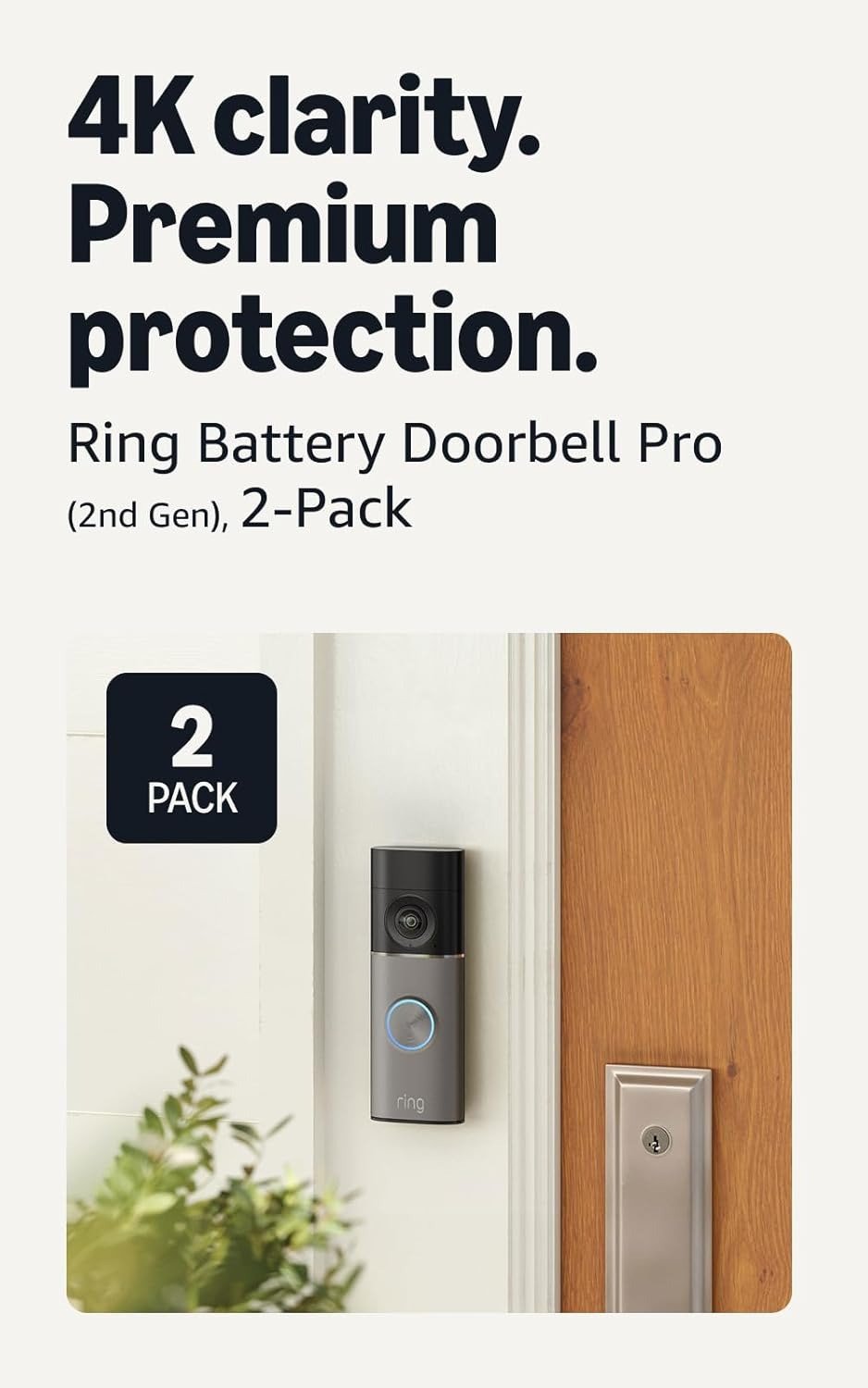
RING BATTERY DOORBELL PRO
You check your phone. The clip is beautiful — sharp, full color, the kind of footage that makes you feel like you spent your money well. And the porch is empty. Whatever happened, happened before you saw it.
That’s the gap this review is actually about. Not whether the picture looks good. It does. The question is whether looking good was ever the problem you needed solved.
RING BATTERY DOORBELL PRO REVIEW: THE RESULT LOOKS FINE. THE PROBLEM ISN’T.
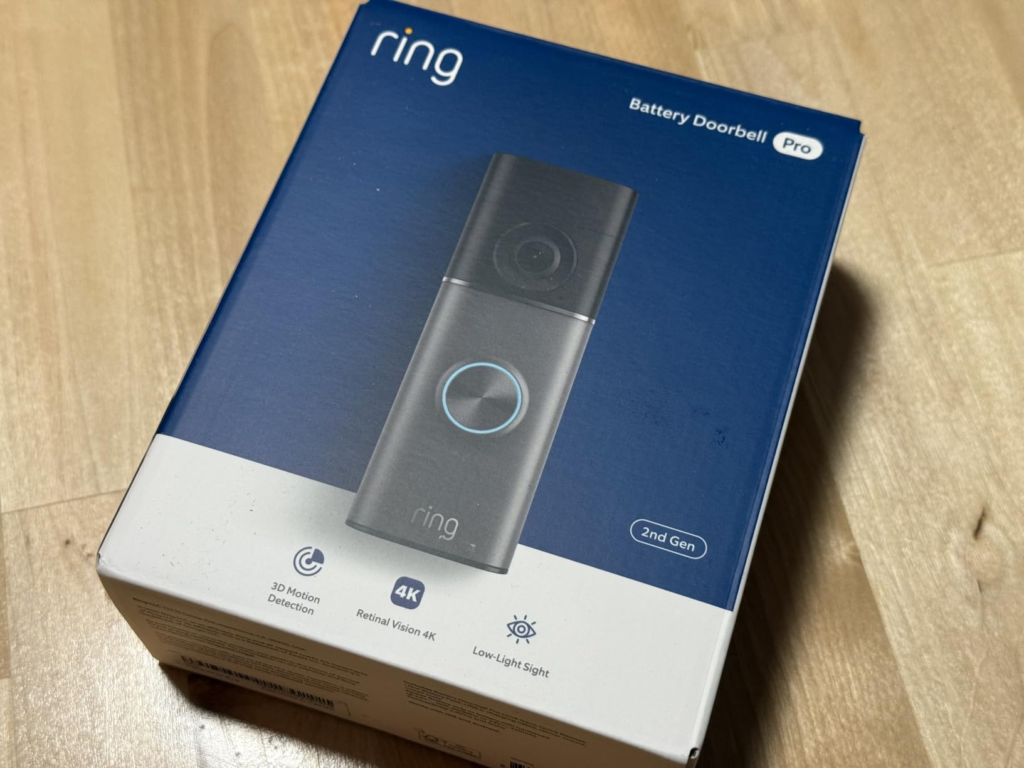
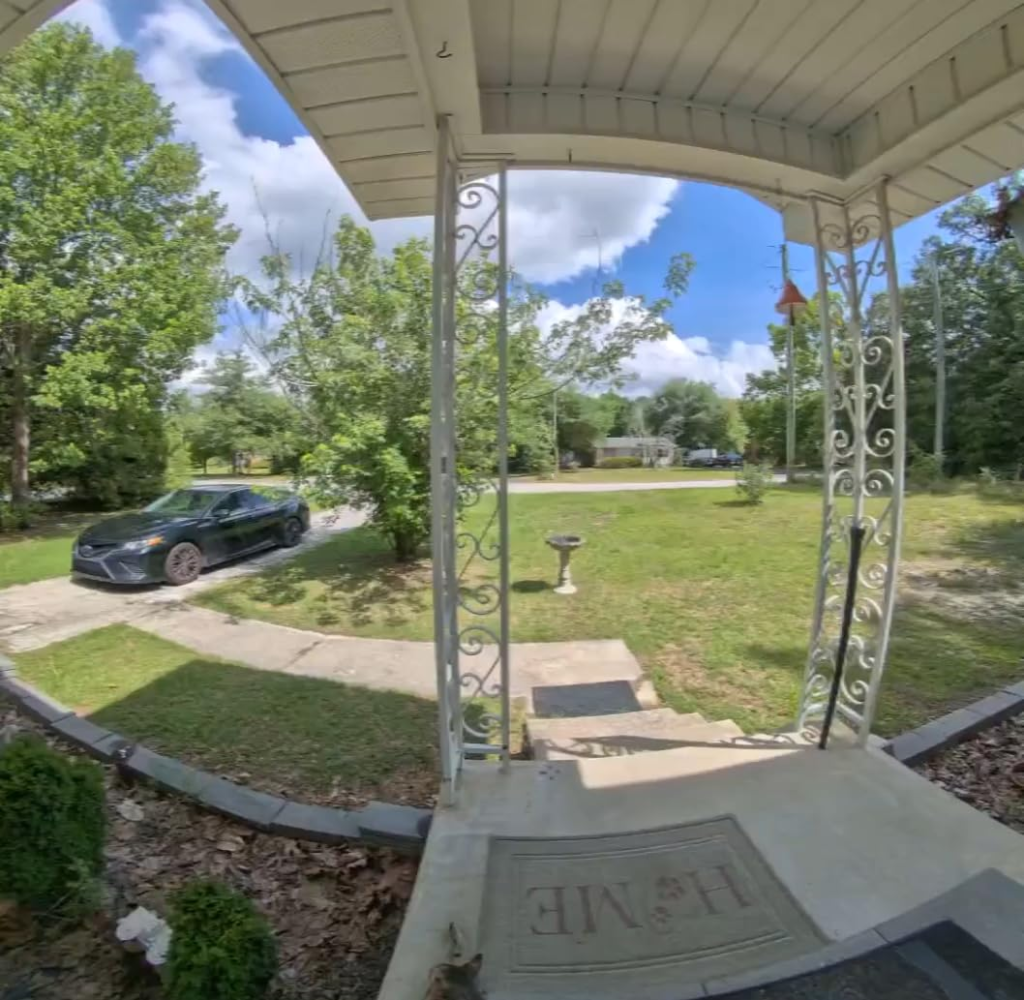
The Battery Doorbell Pro launched in early 2026 as Ring’s top battery-powered doorbell, priced at $250 and sold through Ring’s own site, Amazon, and other retailers. It shoots what Ring brands Retinal 4K, and compared with Ring’s own Battery Doorbell Plus, the jump in video quality is significant — the footage is sharp, the color reads true, and there’s very little of the distortion common on cheaper doorbell cameras.
So the video isn’t the complaint. The complaint that shows up a few months in is quieter than that: an alert that lands a beat too late, a battery that empties faster than the box promised, a feeling that the camera is watching perfectly while you’re still finding out last.
| Spec | Detail |
|---|---|
| Video | Retinal 4K, up to 10x Enhanced Zoom |
| Field of view | 140° horizontal / 140° vertical (“head to toe”) |
| Motion detection | 3D radar-based, with customizable zones |
| Audio | Two-Way Talk with Audio+, noise cancellation |
| Battery | Quick Release Ultra Battery Pack, USB-C charging |
| Connectivity | Wi-Fi 6, dual-band 2.4GHz/5GHz |
| Operating range | -4°F to 122°F, weather-resistant (not submersible) |
| Install | DIY, roughly 5 minutes, fits existing Ring mounts |
| Launch price | $249.99 single unit |
Dimensions run 2.11 x 5.78 x 1.51 inches, and basic features work without any subscription, but a Ring Protect plan is required for video recording, person alerts, and the rest of the advanced feature set. Keep that line in mind. It’s the thread that runs through almost every real complaint about this doorbell.
MISSED RING NOTIFICATIONS: WHAT YOU’RE ACTUALLY FEELING BUT NOT NAMING
Why does a camera this sharp still leave you a few seconds behind? Because clarity and speed are pulling against each other, and Ring says so itself.
Ring’s own support documentation states plainly that running a device in 2K or 4K can increase internet data usage, affect streaming performance, delay notifications, and drain the battery faster on battery-powered devices — and the Battery Doorbell Pro (2nd Gen) is the only battery doorbell in Ring’s current lineup that natively records and streams in 4K. That’s not a rumor from a forum. It’s Ring, describing its own flagship feature’s tradeoff.
Layer on the reality that video processing doesn’t lag once it starts, but the first couple of seconds of a clip often come in soft before the picture sharpens up, and you get the specific friction people struggle to put into words: not “the doorbell is bad,” but “I keep finding out just slightly too late to matter.” That’s not a defect. It’s the cost of pushing 4K through a home Wi-Fi connection in real time.
RING DOORBELL BATTERY DRAIN EXPLAINED: THE HIDDEN MECHANISM BEHIND THE MISS
Here’s the part the spec sheet won’t tell you. Ring advertises battery life of up to 12 months, but for homeowners with moderate foot traffic or a street-facing camera, real-world life often lands closer to one to three months, and homes with more than 50 motion events a week — an ordinary week for a busy front door — can see drain accelerate by 25% or more.
The mechanism is simple once you see it. Every motion event triggers detection, clip recording, and a push notification, and that cycle repeats hundreds of times a week in an active household. Opening live view in the app is even more draining — even a 30-to-60-second check-in can cost 5-10% of a charge. A weak Wi-Fi signal makes it worse, since the camera keeps retrying the connection and boosting its radio output, which alone can cut battery life by 20-30%. And per Ring’s own documentation cited above, simply having 4K turned on adds another draw on top of all of it.
| What’s Promised | What Typically Happens |
|---|---|
| Up to 12 months of battery life | Often 1–3 months with normal traffic; faster in high-motion homes |
| “Retinal 4K” ultra-clear video | Needs strong upload speed to hold; steps down quietly if the connection can’t keep up |
| Fast-charging, mount-anywhere battery | Charges faster than before, but the doorbell still goes dark while that battery is out unless you own a spare |
| 10x Enhanced Zoom | Reads faces and plates well in daylight; less reliable in shadow or after dark |
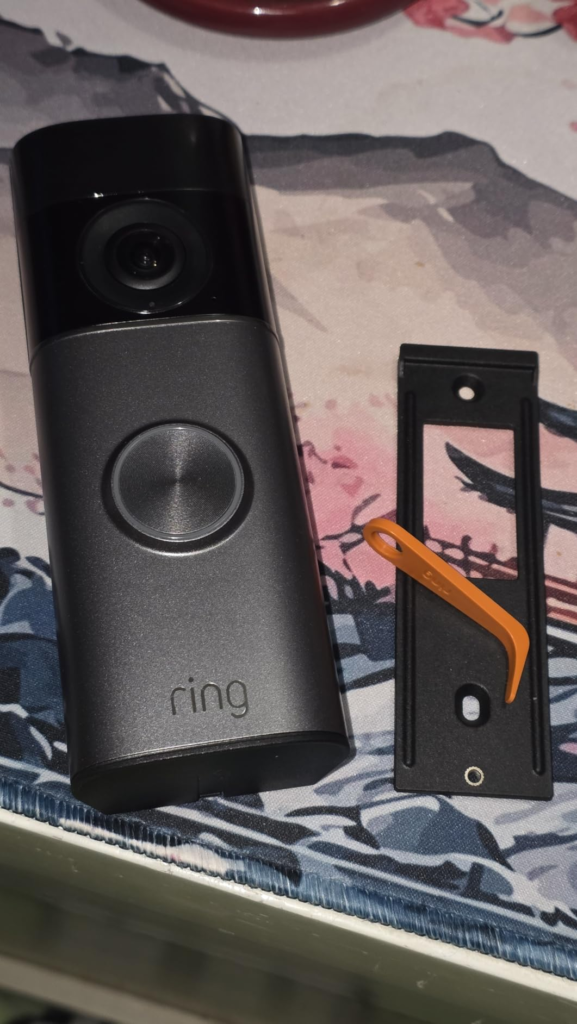
The one genuine fix here: the Quick Release design uses a small key that pops open the front of the camera to reach the battery, so you’re not prying off the whole housing to recharge it the way older Ring doorbells required. It’s a real improvement. It’s just not the same thing as never losing coverage.
RING 4K VIDEO AND WI-FI SPEED: THE THRESHOLD WHERE THE OUTCOME QUIETLY BREAKS
Every doorbell like this has a line where the marketing promise and the physical world stop agreeing. This one has three.
The bandwidth line. Ring recommends a minimum upload speed of 15 Mbps for full 4K. Below that, quality steps down automatically — no warning, no popup, just a softer picture. One reviewer testing the device found his own connection topped out around 12 Mbps and usually sat closer to 7-9 Mbps, and his footage suffered slightly as a result. If you’ve never run a speed test on the Wi-Fi actually reaching your front door, do that before you mount anything.
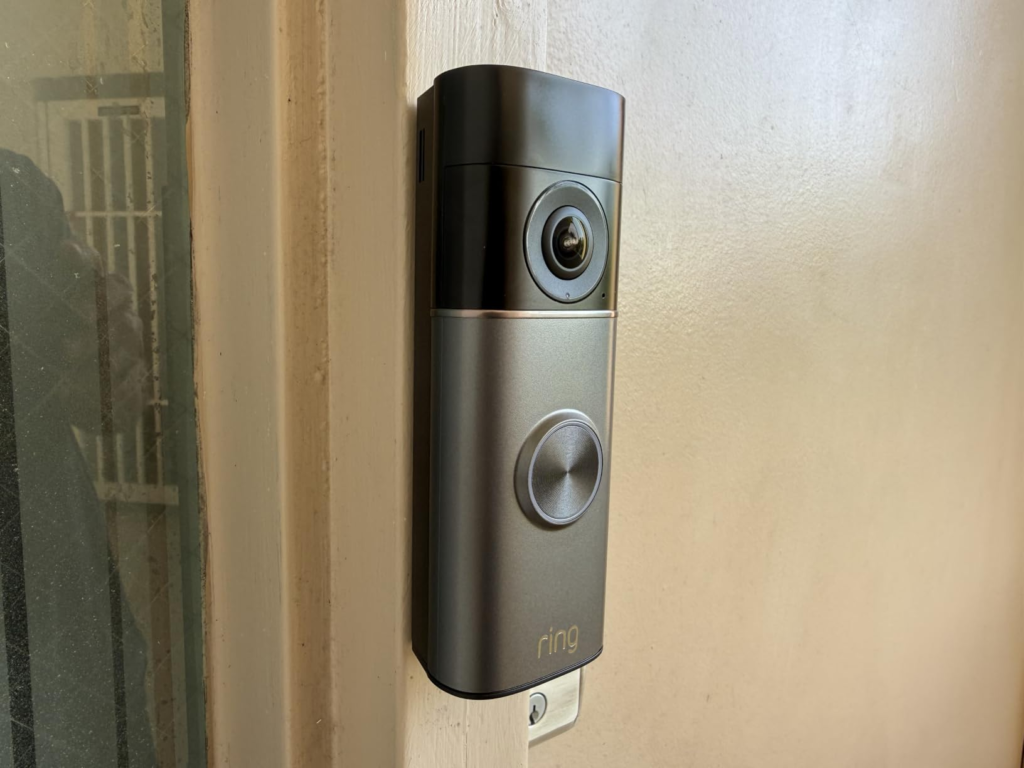
The mounting line. If you’re installing above more than a couple of steps, you’ll want the wedge mount that tilts the camera’s view down — otherwise you lose the benefit of the head-to-toe field of view you paid for. This is the kind of detail that decides whether you get a face or a hairline.
The light line. The 10x zoom is genuinely useful for reading a package label or a face at your gate — in good light. Push it after dark or into deep shadow and detail thins out fast. Treat the zoom as a daylight tool, not a night-vision substitute.
RING BATTERY DOORBELL PRO VS PLUS VS WIRED: WHY MOST BUYERS MISREAD THIS TOO EARLY
The most common mistake isn’t picking the wrong doorbell. It’s comparing the Pro against the wrong question — “which is cheapest” instead of “which one removes the thing that’s actually bothering me.”
| Model | Video | Motion detection | Battery | Launch price |
|---|---|---|---|---|
| Battery Doorbell (2nd Gen) | 2K | Standard | Built-in, non-removable | $99.99 |
| Battery Doorbell Plus (2nd Gen) | 2K | Standard/zones | Removable, Quick Release | $179.99 |
| Battery Doorbell Pro (2nd Gen) | 4K | 3D radar + Bird’s Eye | Removable, Quick Release Ultra | $249.99 |
| Wired Doorbell Elite | 4K | 3D radar | None — powered over Ethernet | ~$550 |
The base Battery Doorbell and the Plus and Pro models were all launched together in March 2026, and the detail buyers skip past most often: only the Battery Doorbell Plus and the Pro have a removable battery — the entry-level Battery Doorbell does not. That single difference matters more day-to-day than the resolution bump does. A camera you can’t swap a spare battery into is a camera that goes dark for hours every time it needs a charge.
At the top of the wired lineup sits the Wired Doorbell Elite, which uses Power over Ethernet instead of a battery or standard wiring — it also shoots 4K, but the price and installation requirement make it impractical for most homes. If you already have working low-voltage doorbell wiring, that’s a separate conversation from this one.
WHO ACTUALLY NEEDS THE RING BATTERY DOORBELL PRO
This doorbell earns its price with a specific person, not everyone. You’re that person if your entryway has no existing doorbell wiring to fall back on — a garage, a side door, a rental, a detached unit — and you want the sharpest picture Ring’s cordless lineup offers rather than settling for 2K.
You’re also the right fit if package activity is a real, recurring thing at your address, not a hypothetical. Roughly 40% of video doorbells in U.S. households are Ring’s, and smart doorbells now sit in more than a third of American homes for exactly this reason. But be honest about what a camera actually buys you: 98% of stolen packages were visible from the street, and the most effective defense combines a camera with a physical barrier like a lockbox — that combination cut theft by 96% in research, while a camera alone did less. 38% of consumers already doubt that a doorbell camera deters theft on its own, and they’re not entirely wrong. A camera documents. It doesn’t guard.
Where it earns real credit is honesty of a different kind — you’ll actually see who came, what they left, and when, instead of guessing.
WHO SHOULD SKIP THE RING BATTERY DOORBELL PRO: WHERE WRONG-FIT BEGINS
Skip it if you already have working doorbell wiring. A wired Ring doorbell never manages a battery, never steps down resolution to save power, and costs less than the Pro for comparable video.
Skip it if a recurring bill bothers you more than an upfront one. Without a Ring Protect subscription, the doorbell won’t save or let you review footage at all — live view and two-way talk still work for free, but the experience without a plan is genuinely hollow: you’ll know something happened without ever being able to see what. You do get a free 30-day trial when you first set the device up, but after that, the subscription is the real price of ownership, not an optional add-on.
Skip it, or at least go in clear-eyed, if cloud dependency and law-enforcement data-sharing matter to you. Ring canceled its data-sharing partnership with the surveillance company Flock in February 2026 following a comprehensive review, and police can only request footage through opt-in Community Requests you can ignore or turn off entirely — they can’t take it without your action except in genuine emergencies. Ring does offer end-to-end encryption that even Ring can’t see through, but turning it on disables shared users, person detection, facial recognition, and viewing on smart displays — privacy and convenience, pick one.
| YOU’RE LIKELY THE RIGHT FIT IF… | THINK TWICE IF… |
|---|---|
| No existing doorbell wiring at your entry | You already have working low-voltage wiring |
| You want the sharpest video in Ring’s battery line | You don’t want an ongoing subscription bill |
| Deliveries/visitors are a regular occurrence | Cloud-only storage is a dealbreaker for you |
| You’re already using Alexa/Ring devices | You want zero battery upkeep, ever |
RING BATTERY DOORBELL PRO REVIEW: THE ONE SITUATION WHERE IT BECOMES THE LOGICAL CHOICE
Take those two lists together and the decision stops being about features and starts being arithmetic. No wiring, real foot traffic, and a willingness to treat the subscription as part of the sticker price — that’s the exact profile this doorbell was built for. Outside of it, you’re either overpaying for resolution you won’t use or fighting a battery cycle a wired doorbell would have avoided entirely.
WHAT THE RING BATTERY DOORBELL PRO SOLVES, REDUCES, AND STILL LEAVES TO YOU
It solves the blind guesswork of a standard doorbell — you get a full head-to-toe view, sharp enough to read a label in daylight, delivered to your phone wherever you are.
It reduces false-alarm fatigue. The radar-based 3D motion detection lets you map zones so you’re alerted to activity on your porch or a package drop spot, not every car passing on the street — fewer pointless pings, more alerts that actually matter.
It still leaves to you the two ongoing costs nothing in the box removes: a subscription bill, and a battery you have to think about. Here’s exactly what that subscription buys:
| Plan | Price | Covers | Adds |
|---|---|---|---|
| Solo | $4.99/mo ($49.99/yr) | 1 device | Recording, smart alerts, 180-day history |
| Multi | $9.99/mo ($99.99/yr) | All devices, one address | Everything in Solo, plus extended warranty |
| Pro | $19.99/mo ($199.99/yr) | All devices, one address | Everything in Multi, plus 24/7 monitoring, Familiar Faces, video descriptions |
Solo runs $4.99 a month or $49.99 a year, Multi is $9.99 a month or $99.99 a year, and Pro is $19.99 a month or $199.99 a year. For one doorbell, Solo covers everything this review has discussed.
RING BATTERY DOORBELL PRO FAQ: QUICK ANSWERS BEFORE YOU BUY
| Question | Answer |
|---|---|
| Do I need a Ring subscription for it to work at all? | No. Live view, two-way talk, and basic press/motion alerts work without one. Recording, playback, and smart person/package alerts need a Ring Protect plan, and a 30-day free trial is included from setup. |
| How long does the battery actually last? | Ring markets up to 12 months. In practice, expect somewhere between one and three months for a typical front door, less if your home sees heavy delivery or foot traffic. A second charged battery removes the downtime entirely. |
| Is the “Retinal 4K” video really 4K? | Yes, at the sensor level — but holding that quality needs roughly 15 Mbps of upload speed. On a slower connection, the stream quietly steps down rather than failing outright. |
| Can I install it with no existing doorbell wiring? | Yes. It’s built to run entirely on battery. Wiring is optional and only adds trickle charging — it isn’t required for any feature. |
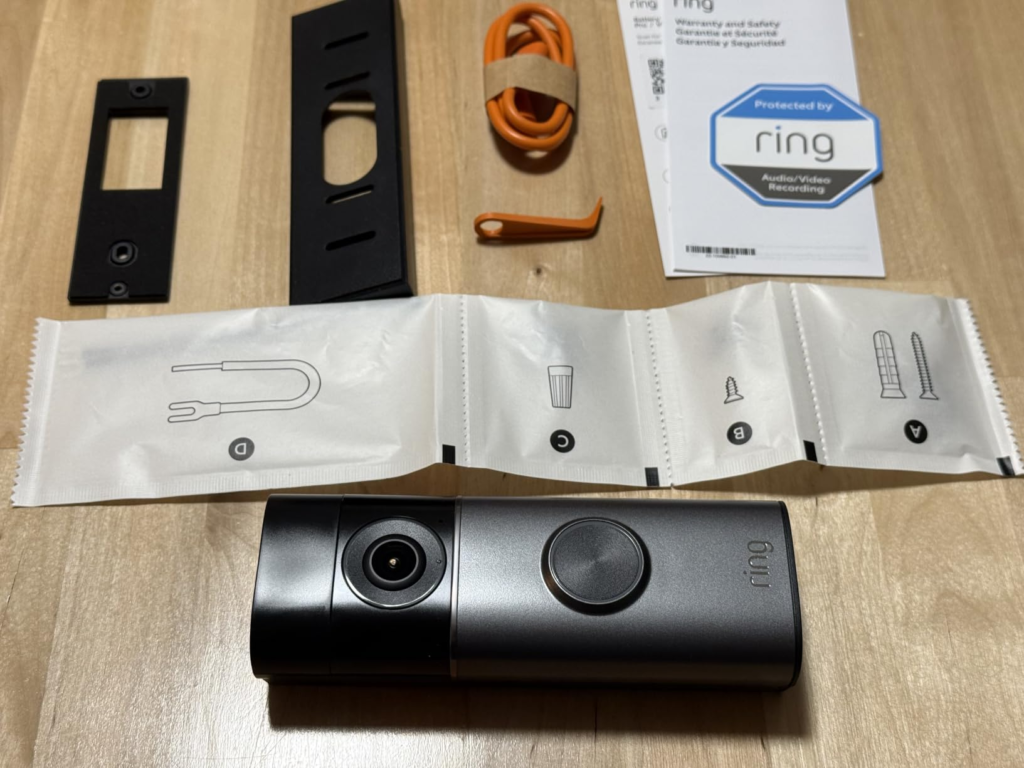
| What’s in the box? | The doorbell, mounting plate, corner kit, faceplate, Quick Release Ultra Battery Pack, install tools, USB-C cable, and setup guide. |
| Is the 2-pack worth it over a single unit? | If you’re covering two entrances — front door and a garage or side door — it makes sense and avoids buying twice. If you only have one door to cover, a single unit plus an optional spare battery is usually the more efficient buy. |
| Does it work with Alexa? | Yes. Echo speakers and smart displays can act as a chime and show live view from the doorbell. |
| Can it handle extreme weather? | It’s rated for -4°F to 122°F and is weather-resistant, but not fully submersible. Mounting under a covered porch or overhang is still the safer bet. |
RING BATTERY DOORBELL PRO REVIEW: FINAL COMPRESSION — SHOULD YOU BUY IT
Strip away the spec sheet and it comes down to one honest trade: the clearest picture in Ring’s cordless lineup, in exchange for managing a battery and paying a subscription for as long as you own it. Neither side of that trade is a trick. It’s just the actual shape of the purchase, once the marketing language is set aside.
If your entryway has no wiring to lean on and you’d rather see a visitor clearly than save thirty dollars on resolution, this is where the decision stops being vague.
Transparency Note:
This analysis is built on aggregated real-world experience.
It extracts what repeatedly holds, what breaks, and what users uncover only after living with the system — then shapes it into a clear model you can use immediately.
Think of it as structured experience, refined and presented so you don’t have to learn it the hard way.
“A quick note: Don’t believe the star ratings, but trust personal experience. This article is a compilation of collected experiences.”