BLINK WHOLE HOME BUNDLE REVIEW: THE COVERAGE LOOKS COMPLETE. IT ISN’T.
You order it because the name does the convincing for you. “Whole Home.” Doorbell, outdoor camera, indoor camera, one hub, one app. It reads like the problem is already solved before the box even ships. Then it arrives in three separate packages, you spend twenty minutes pairing devices, and a week later you’re staring at a notification that fired because a delivery truck’s headlights swept across your driveway at 11 p.m. The hardware did exactly what it was built to do. The coverage you thought you bought is a slightly different thing than the coverage you actually got.
That gap — not the hardware, the gap — is what this review is actually about.
The Result Looks Fine. The Problem Isn’t.
On paper, the Blink Whole Home Bundle (Video Doorbell, Outdoor 4, Mini 2, Sync Module Core) checks every box a first-time buyer is scanning for: sub-$180 list price, no wiring, up to two years of battery life, Alexa support, a 4.6-star average across thousands of ratings. Set it up, and the app shows four green dots. Everything looks armed. Everything looks done.
What the green dots don’t show is which parts of that protection are running on the included hardware and which parts are quietly waiting on a card number. That distinction doesn’t surface on day one. It surfaces the first time you actually need a clip — a package theft, a car prowler, a dispute with a neighbor — and discover what is and isn’t sitting in your account.
What You’re Actually Feeling but Not Naming
Most people don’t articulate this as “I don’t understand Blink’s storage architecture.” They feel it as something vaguer: a low-grade suspicion that the $90–$180 they spent wasn’t really the price of the system, just the price of admission to it. A sense that the battery indicator is lying a little. A nagging question about whether the camera that didn’t catch the one thing they wanted it to catch is broken, or just doing what it was always going to do.
That feeling has a name. It’s the difference between a motion-alert device and a recorded-evidence system. The Whole Home Bundle is fully one of those out of the box. It becomes the other one only under specific conditions — and the box doesn’t tell you which conditions.
The Hidden Mechanism Behind the Miss
Here’s the part that gets buried under the spec sheet: this exact bundle (ASIN B0F1CBPBJW) ships with the Sync Module Core, not the older Sync Module 2. They look similar and do almost everything the same — except the Core has no USB port, which means it cannot save clips locally. No flash drive, no offline backup, no free workaround. With this specific hub, your footage either lives in Blink’s cloud under a paid plan, or it doesn’t get saved at all.
That’s a meaningfully different product than the Blink bundles that ship with Sync Module 2, which do support a one-time ~$20–35 USB drive as a subscription-free storage path. If you’ve read older Blink reviews that mention “free local storage,” they were likely describing that other hardware — not this one.
| Device | Role | Power | What it does on its own |
|---|---|---|---|
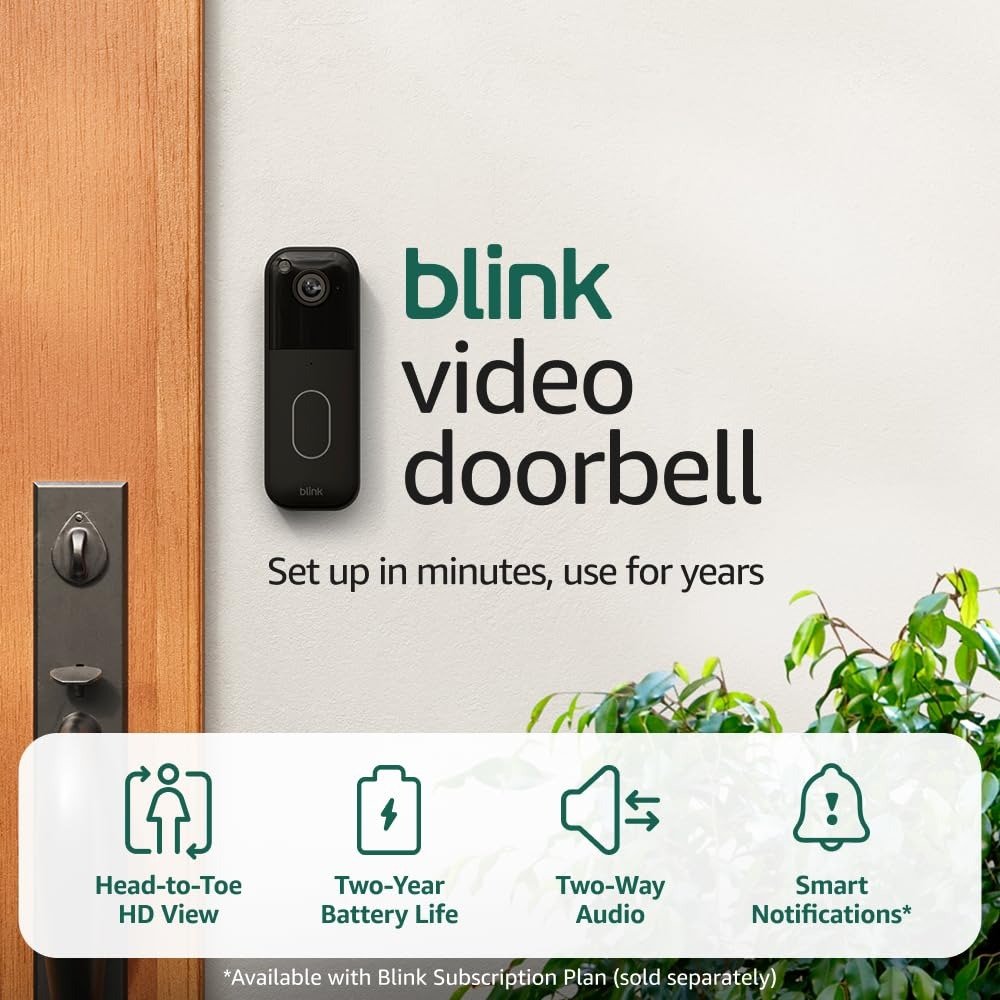
| Video Doorbell (2nd Gen) | Front-door visitor view | 3× AA lithium, up to 2 yrs | 1080p, 150° head-to-toe view, live alerts, no recording |
| Outdoor 4 | Driveway, side yard, single entry point | 2× AA lithium, up to 2 yrs | 1080p, color by day / black-and-white at night, motion alerts |
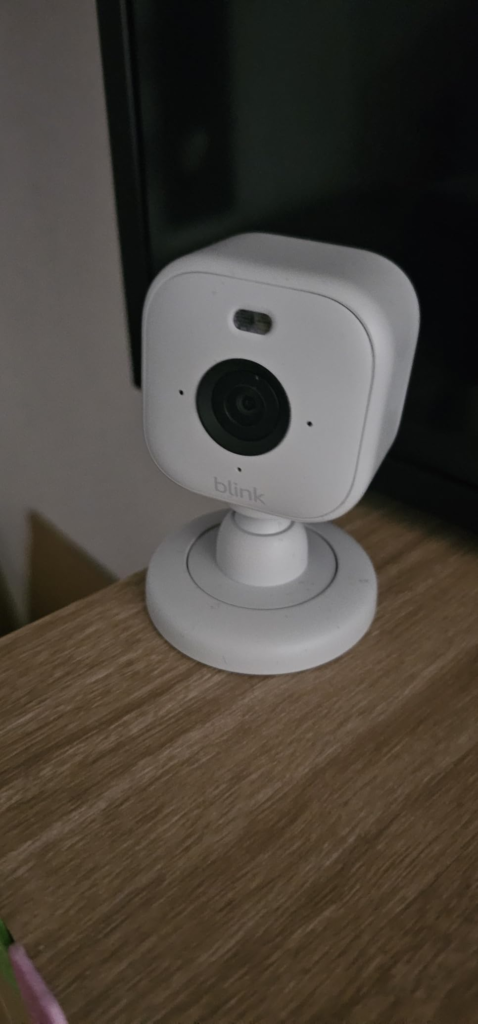
| Mini 2 | Indoor room or wire-free chime | Plug-in (wall power) | 1080p, two-way audio, indoor use only without an extra adapter |
| Sync Module Core | System hub, connects up to 10 devices | Plug-in | No local storage, no USB port — cloud or nothing |
The “person detection” line on the packaging follows the same pattern: the camera’s computer vision exists in the hardware, but it’s only switched on for accounts running a Subscription Plan. Without it, every alert is plain motion detection — meaning cars, branches, bugs on the lens, and your own dog all trigger the same notification a person would.
The Threshold Where the Outcome Quietly Breaks
There’s a specific line where this system stops being “free” and starts being a recurring bill, and it isn’t where most buyers expect.
It’s not at setup. It’s not at the 30-day trial expiration, either — Blink will keep alerting you for free indefinitely. The break point is the first moment you need a recorded clip you can actually retrieve, share, or hand to police. Without a plan and without local storage hardware on this Sync Module, that clip simply doesn’t exist after the live alert passes.
| No subscription | Basic — $3.99/mo per device | Plus — $11.99/mo, unlimited devices | |
|---|---|---|---|
| Live view & push alerts | Yes | Yes | Yes |
| Recorded clip history | No | 60 days, cloud | 60 days, cloud |
| Person/vehicle AI detection | No | Yes | Yes |
| Extended live view, Blink Moments | No | Yes | Yes |
| Local USB/SD backup | Not available on this Sync Module | Not available on this Sync Module | Not available on this Sync Module |
Pricing reflects Blink’s published U.S. rates following its October 2025 increase; check the app for your current rate.
Run three devices on Basic and you’re at roughly $12/month — more than the Plus plan, which covers the whole bundle for $11.99/month flat. That math is the actual threshold: below three monitored devices, Basic can make sense; at three or more, Plus is almost always the better arithmetic.
Why Most Buyers Misread This Bundle Too Early
The most common mistake isn’t choosing the wrong camera — it’s comparing this bundle to Ring or Wyze using only the spec sheet, before factoring in what each ecosystem gates behind a subscription. Ring’s storage model and Wyze’s AI-detection pricing are both structured differently, and a side-by-side that stops at resolution and battery life misses the part that actually determines your monthly cost.
The second misread is treating “up to two years” as a guarantee rather than a ceiling. That number assumes default settings, moderate alert volume, and mild climate. Owners in high-traffic spots — busy streets, driveways with regular car movement — report battery life closer to a few months than two years, simply because more triggers mean more wake cycles. This isn’t a defect; it’s the same physics every battery camera obeys. It’s just rarely stated plainly next to the headline number.
Who Is Actually Inside This Problem
| This bundle tends to fit | This bundle tends to disappoint |
|---|---|
| Renters and apartment dwellers needing entry-point coverage, no wiring | Multi-acre properties needing long-range or perimeter coverage |
| First-time camera buyers testing the category under $100 | Anyone expecting true 24/7 continuous recording |
| People comfortable managing everything from a phone app | Anyone who wants a desktop/NVR-style interface |
| Households fine with either a modest monthly fee or accepting alerts-only | Buyers who specifically want subscription-free recorded history |
| Alexa households wanting voice-arm/disarm | Anyone assuming “whole home” means full-yard coverage from one outdoor unit |
Where Wrong-Fit Begins
If you’re buying this expecting it to replace a monitored alarm system with police dispatch, it won’t — Blink has no professional monitoring tier at any price; in an emergency, you’re the one calling 911. If your property has more than one vulnerable entry point — a side gate, a detached garage, a long driveway — one Outdoor 4 camera won’t stretch to cover it, and you’ll be back on Amazon within a month buying add-on units. And if the entire reason you’re buying is to avoid an ongoing bill permanently, know going in that this specific Sync Module configuration removes the one path (local storage) that would have let you do that.
The One Situation Where This Bundle Becomes the Logical Choice
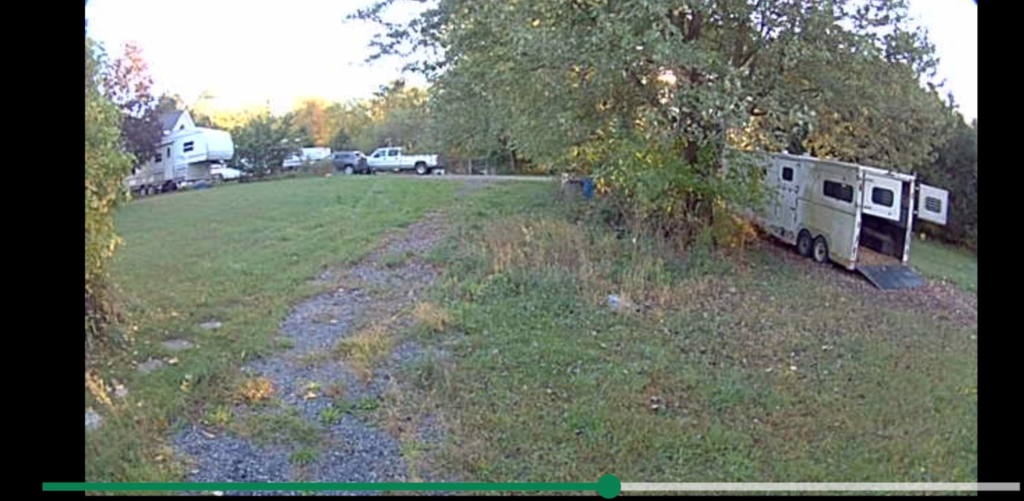
If what you actually need is fast, simple alert coverage on a front door, one outdoor angle, and one indoor space — and you’re either fine paying roughly $4 to $12 a month for recorded history, or fine living with alerts-only and no recordings — the math here holds up. At its frequent sale price (commonly $75–$100, against a $179.97 list), you’re getting four devices and a working alert system for less than a single mid-range standalone camera from most competitors. For that specific, narrower use case — not “whole-home security” in the literal sense, but “know who’s at my door and catch obvious motion at one or two points” — it’s a reasonable, low-friction starting point.
What It Solves, What It Reduces, and What Still Falls on You
It solves the blind spot of having zero cameras: you’ll know when someone’s at the door, and you’ll get a live look at your driveway or yard on demand. It reduces the friction of traditional security installs — no wiring, no professional install fee, setup genuinely takes under thirty minutes per device. What it doesn’t solve on its own: long-term evidence retention (that’s a subscription decision), full-property coverage (that’s an additional-camera decision), and the small lag — typically a few seconds — between a notification and live view actually connecting, which is normal for battery Wi-Fi cameras but worth knowing about in advance rather than discovering mid-incident.
| Consistently praised by owners | Consistently flagged by owners |
|---|---|
| Setup speed and DIY simplicity | False alerts from cars, headlights, insects, pets |
| Video clarity for faces/packages in daylight | Real-world battery life shorter than advertised in busy spots |
| Genuine ease of the phone app for everyday checks | No web/desktop interface — app only |
| Value at sale pricing | Core functions (recording, AI detection) gated behind a plan |
Frequently Asked Questions
| Question | Answer |
|---|---|
| Does the Blink Whole Home Bundle work without a subscription? | Yes, for live view and motion push alerts. You will not get recorded clip history, AI person/vehicle detection, or local backup with the Sync Module Core included in this specific bundle. |
| How many cameras come in this exact bundle? | One Video Doorbell, one Outdoor 4 camera, one Mini 2 indoor camera, and one Sync Module Core. It is not a two-outdoor-camera kit — if you need a second outdoor angle, it’s sold separately. |
| What’s the real battery life on the Outdoor 4 and Doorbell? | Blink rates both up to two years under default settings. In low-traffic spots that’s realistic; in high-traffic spots (busy street, frequent car motion) several owners report needing replacements every few months due to higher alert volume. |
| Can I store footage locally to avoid the subscription? | Not with the Sync Module Core included here — it has no USB port. Local storage requires the separate Sync Module 2, sold individually. |
| Does the Mini 2 work outdoors? | Not out of the box. It’s an indoor plug-in camera; outdoor use requires Blink’s separate weather-resistant power adapter. |
| Is there a privacy consideration since Blink is Amazon-owned? | Yes — an Amazon account is required, and Amazon Sidewalk connectivity is enabled by default and must be manually turned off if you’d rather not participate. |
Final Compression
The Blink Whole Home Bundle isn’t a bad system and isn’t an oversold one — it’s a narrower system than its name implies, with one specific hardware choice (the Sync Module Core) that removes the subscription-free path most buyers assume exists. If your situation is one door, one outdoor angle, one indoor room, and you’re at peace with either a modest monthly fee or alerts without recordings, this is where the decision stops being vague.
Transparency Note:
This analysis is built on aggregated real-world experience.
It extracts what repeatedly holds, what breaks, and what users uncover only after living with the system—then shapes it into a clear model you can use immediately.
Think of it as structured experience, refined and presented so you don’t have to learn it the hard way.
“A quick note: Don’t believe the star ratings, but trust personal experience. This article is a compilation of collected experiences”