Your Curtains Open on Time, Stay Quiet, and Never Drain — The SwitchBot Curtain 3 Rod Twin Pack Makes That a Solvable Problem, Not a Wishful One
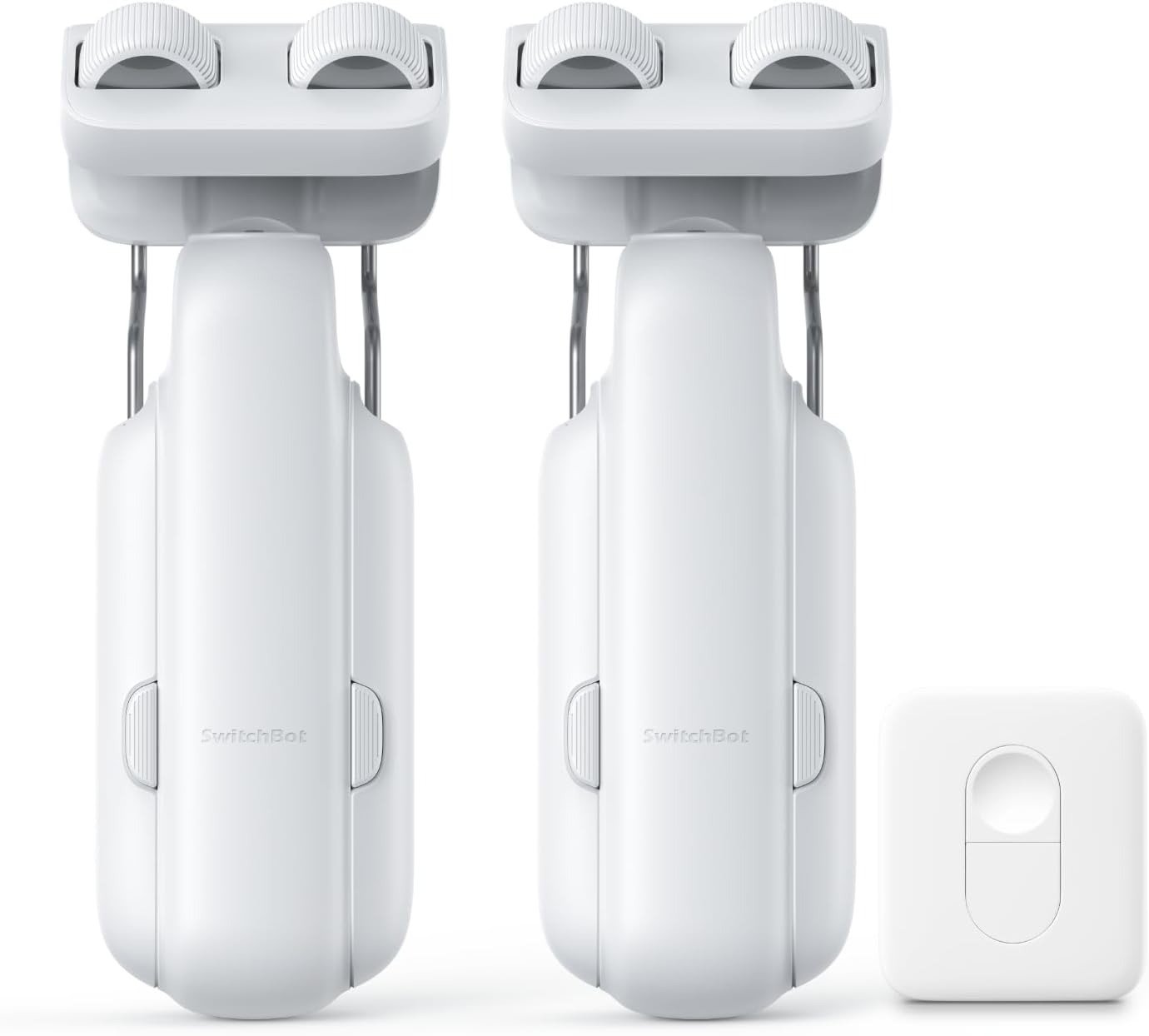
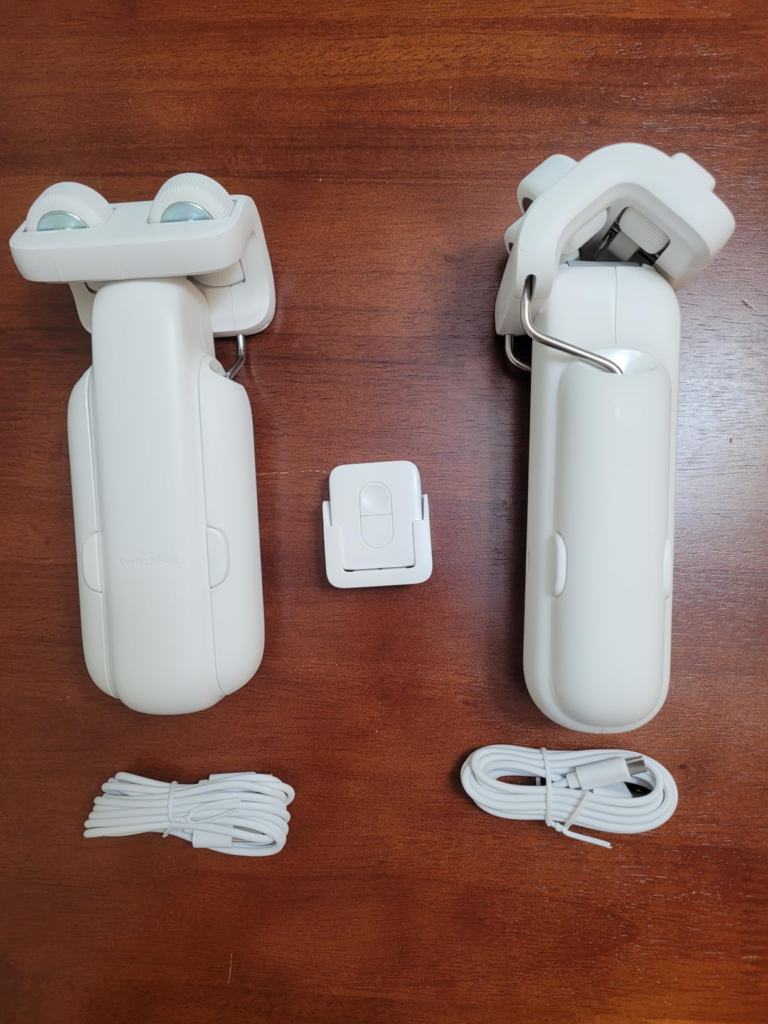
SWITCHBOT CURTAIN 3 ROD TWIN PACK
The Result Looks Fine. The Problem Isn’t.
You pull the curtains every morning. It takes five seconds. No one complains. The curtains work.
But that’s not actually what’s happening.
What’s actually happening: you forgot three mornings this week because you were already late. The bedroom stays dark until 9 AM when the sun angle changes. The home office window gets full afternoon glare for two uninterrupted hours because you weren’t there to close it. The baby’s nap gets cut short because the light shifted and no one was near enough to adjust it in time.
The curtains work. The timing doesn’t. And the timing is the entire problem.
Manual curtain control isn’t a failing — it’s a design mismatch. The curtain was built for a person standing in front of it. Your schedule, your sleep, your rooms without you in them — none of those were part of the original design. The SwitchBot Curtain 3 Rod doesn’t make curtains smarter. It makes timing reliable. Those are different things, and conflating them is what causes most buyers to misread what they’re actually evaluating.
What You’re Actually Feeling but Not Naming
There’s a specific kind of domestic friction that’s almost invisible until someone names it clearly.
You wake up and it’s too bright. Or too dark, and you don’t want to get up yet. You’re in the middle of a video call and the window behind you turns into a glare problem. You set the morning alarm, but nobody set the curtain. You go on a trip and the living room window stays in the same position for five days.
None of these feel like “problems with curtains.” They feel like small, separate annoyances — a bad start to a morning, a distracting meeting, a slight unease about an empty-looking house.
But they’re all the same underlying failure: curtain position is completely decoupled from context. Light changes, schedule changes, room occupancy changes — and the curtain stays exactly where you left it.
This is what the SwitchBot Curtain 3 Rod resolves. Not novelty automation. Not a gadget for gadget’s sake. A consistent, scheduled physical response to time-based and context-based triggers — without requiring you to be present.
The Hidden Mechanism Behind the Miss
Smart curtain products have existed long enough that most buyers approach them with a shortcut assumption: “It’s a motor on a rod. How complicated can it be?”
That shortcut is where most failures start.
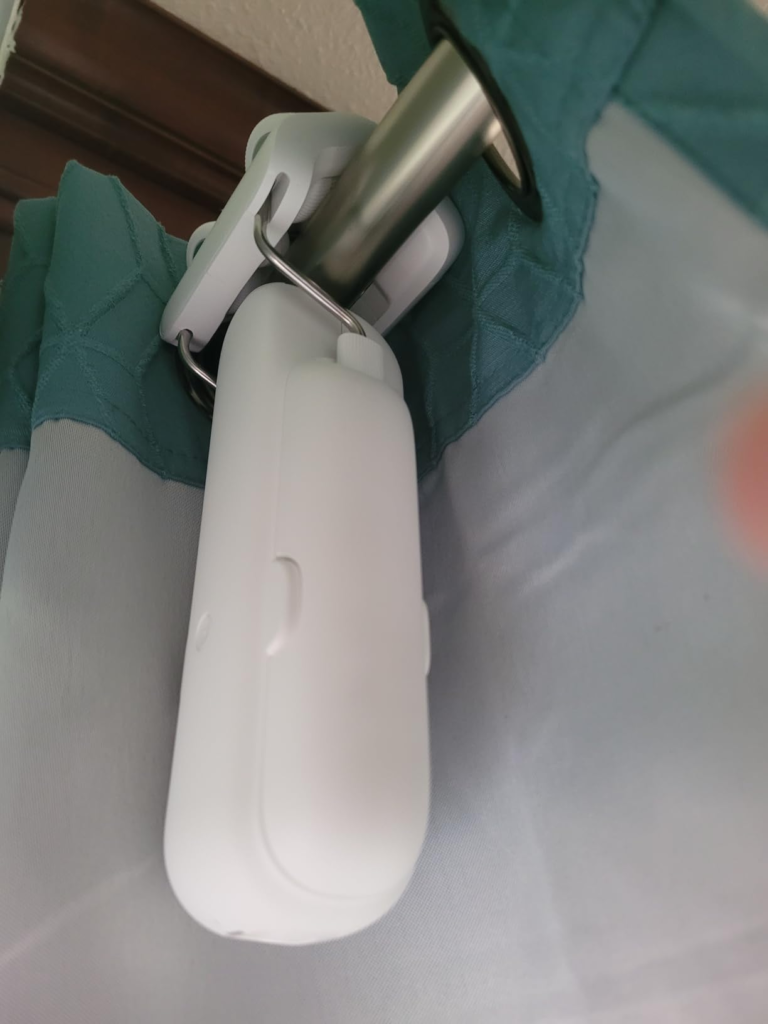
The real mechanism isn’t the motor. The motor is the easy part. The mechanism that actually determines whether this device works well or barely works at all comes down to three things operating in concert: grip integrity under repeated load, positioning precision over time, and Bluetooth-to-WiFi relay latency.
Grip integrity is what separates a device that handles a 12kg blackout curtain from one that slips, stalls, or creates that grinding noise that wakes everyone up. The SwitchBot Curtain 3’s massive motor upgrade gives it enough torque to handle the heaviest drapes, with a 33-pound (approximately 15kg) weight limit. That’s not marketing language — that’s a structural ceiling that earlier models didn’t come close to.
Positioning precision matters because a curtain that drifts two inches every day creates light leakage — which defeats the entire purpose of a blackout panel. SwitchBot now includes an extendable arm on the solar panel to ensure sun exposure, and the installation process has been significantly simplified on the newer Rod generation. The magnetic positioning system added in generation 3 addresses this directly: it gives the motor a fixed reference point so it doesn’t recalibrate from a slightly different position every morning.
The Bluetooth-to-WiFi relay issue is the one most buyers don’t see coming. Roughly 10% of the time, the devices don’t follow the schedule — requiring either a smart home override or a manual app trigger, sometimes with multiple attempts. This isn’t a defect — it’s a Bluetooth mesh characteristic. If you expect 100% schedule adherence without a hub, you will be disappointed. If you expect 90–95% with occasional app correction, that’s accurate.
The Threshold Where the Outcome Quietly Breaks
There are two operating thresholds for the SwitchBot Curtain 3 Rod. Cross the wrong one, and the device functions perfectly — just not for you.
Threshold 1: The noise threshold.
In standard operating mode, the Curtain 3 measures around 51dB. In QuietDrift mode, this drops to approximately 30dB. The difference is significant — 51dB is the sound of a quiet conversation. 30dB is closer to a gentle ambient hum. But QuietDrift mode is also a huge drain on battery, so it’s best used sparingly — for automations that would otherwise wake you up, not as a default.
For most rooms, standard mode is unremarkable. For a bedroom where someone is a light sleeper, it’s potentially disruptive without QuietDrift. In QuietDrift, the Curtain 3 can drift curtains of up to 15kg with almost dreamlike silence — slow enough, at 5mm/s, to let natural light increase gradually without a jolting motor sound.
Threshold 2: The rod diameter threshold.
When using an extendable rod, if the diameter of the extendable area is less than 5/8 inch (approximately 16mm), the device will not be compatible. This is a hard ceiling. The device won’t adapt around it. And it’s not something most buyers check before purchasing — because curtain rod diameters are not a detail most people have memorized.
The compatibility range for the standard Rod version covers rods from roughly 10mm to 40mm in diameter. Anything outside that range requires the I-Rail or U-Rail variant, not the Rod version being evaluated here.
| Feature | Standard Mode | QuietDrift Mode |
|---|---|---|
| Noise Level | ~51 dB | ~25–30 dB |
| Curtain Speed | Standard | ~5mm/s (slow) |
| Battery Impact | Low | High drain |
| Best Use Case | Daytime, general use | Bedroom mornings, naps |
Why Most Buyers Misread This Too Early
The most common mistake is comparing the SwitchBot Curtain 3 to doing nothing. That’s not the right comparison.
The right comparison is between unreliable manual timing and consistent automated timing with occasional connectivity imperfection. Framed that way, the math changes completely.
One reviewer calculated that it takes five seconds to manually open curtains versus a 45-minute installation — and concluded it wasn’t worth it. That conclusion is correct for a single-room single-curtain scenario where no scheduling friction exists. It’s incorrect the moment you introduce two rooms, a different sleep schedule than your partner, a work-from-home environment sensitive to light, or a recurring need to manage light while away from home.
The second misread is treating this as a standalone device. The Curtain Rod 3 excels when integrated with other SwitchBot devices and smart home automation — but may not be worth purchasing as a standalone piece unless you are excited by new technology. This isn’t a criticism of the product — it’s a description of what category it belongs to. A smart curtain motor is an actuator inside a larger system. Bought as a solo item without scheduling, voice control, or ecosystem integration, it will feel underpowered for its price. Bought as the physical layer of a room automation setup, it delivers exactly what it’s designed to do.
The device lacks a meaningful offline control mode — the remote still requires cloud routing, and there is no way to operate it independently of the app infrastructure. If your connectivity is intermittent, this matters.
Who Is Actually Inside This Problem
This device is built for a specific operating profile. If your situation matches this profile, the value is clear. If it doesn’t, the device will feel like a solution to a problem you don’t have.
You are inside this problem if:
- You have two-panel curtains in a bedroom where morning light timing matters for sleep quality.
- You work from home and manage glare across multiple windows throughout the day.
- You have blackout curtains (up to 15kg per side) that are physically heavy to operate repeatedly.
- You are building or using a SwitchBot or Matter-compatible ecosystem and need curtain automation as one layer.
- You have limited mobility or accessibility requirements that make repeated manual operation impractical.
- You travel frequently and want passive light management in an occupied-looking home.
Your curtains are in the right configuration if:
- They hang on a round rod between 10–40mm in diameter.
- They use rings, grommets, hooks, or loops that slide freely along the rod.
- The rod is mechanically stable and not made of fragile material that can’t support the device’s 980g weight.
| Buyer Type | Fit |
|---|---|
| Light sleeper needing silent timed open | Strong fit |
| WFH user managing afternoon glare | Strong fit |
| Accessibility-limited user | Strong fit |
| Smart home ecosystem builder | Strong fit |
| Buyer with one window, no scheduling need | Weak fit |
| Buyer with tab-top curtains on a thin tension rod | Incompatible |
| Buyer expecting fully offline operation | Poor fit |
Where Wrong-Fit Begins
There are three entry points into regret with this device. None of them are hidden — but all of them are easy to miss if you’re moving quickly through a buying decision.
Entry point 1: Tab-top curtains.
Tab-top curtains attach directly to the rod through fixed fabric loops. They do not slide. The SwitchBot Curtain 3 Rod operates by pushing a curtain ring or hook along the rod. If nothing slides, nothing moves. This is an absolute incompatibility, not a workaround situation.
Entry point 2: Expecting WiFi independence.
Full remote control and scheduling requires the SwitchBot Hub (sold separately), as the device itself only communicates via Bluetooth. Full functionality requires the separate SwitchBot Hub 2 at approximately $49, which adds to the overall system cost but enables remote control and advanced automation features. If you purchase the Curtain 3 expecting to control it from outside your home — or to set schedules that run independently — without the Hub, that expectation will not be met.
Entry point 3: Telescoping rods with crinkled extension tape.
The piece that allows the Curtain 3 to cross from a larger rod diameter to a smaller one on a telescoping rod is often taped into place with an aggressively crinkly tape — which generates noise during every pass and introduces a new category of mechanical friction the spec sheet doesn’t mention. Telescoping rods with visible tape joints at the overlap point are a known compatibility problem, not a universal one.
The One Situation Where This Product Becomes Logical
After everything above is accounted for — rod type, curtain weight, hub ecosystem, sleep sensitivity, use case — there’s a clear operating scenario where the SwitchBot Curtain 3 Rod Twin Pack becomes the most rational choice available.
That scenario: two-panel curtains in a room where light timing directly affects sleep, work, or occupant wellbeing — on compatible rods, inside a hub-enabled setup — where you want the curtain position to respond to schedule and context, not to your physical presence.
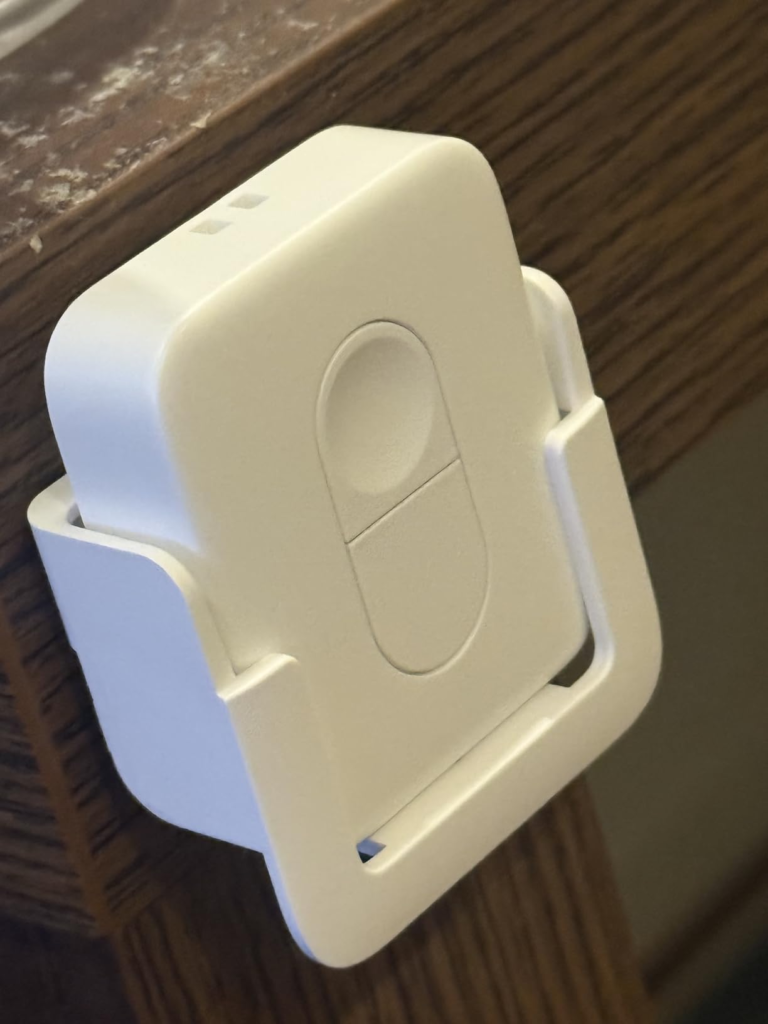
The Twin Pack specifically addresses the center-parting curtain. SwitchBot Curtain 3 supports one-side curtain control even in dual-open mode — you can control one side of your curtains independently from the device control page in the app. Two units, synchronized, cover the full width of a standard window while giving you independent control over each panel when needed.
The 2025 update includes advanced supercapacitor technology for stable charging even in rainy or low-light conditions. Without the solar panel, battery life reaches up to 8 months — and recharging via power bank means no need to dismount the device. This is a meaningful operational improvement. The previous generation required dismounting for every charge cycle. That friction alone caused many users to abandon automated scheduling altogether.
| Specification | SwitchBot Curtain 3 Rod |
|---|---|
| Max Curtain Weight | 15 kg per unit |
| Rod Diameter Range | 10–40 mm |
| Noise (Standard Mode) | ~42–51 dB |
| Noise (QuietDrift Mode) | ~25–30 dB |
| Battery Life (no solar) | Up to 8 months |
| Solar Panel Requirement | 3 hrs sunlight/day |
| Hub Requirement for WiFi | Yes (sold separately) |
| Charging Port | USB-C |
| Smart Assistant Support | Alexa, Google, Siri, HomeKit (via Hub) |
| Matter Support | Yes (via Hub 2 or Hub 3) |
| Warranty | 1 year |
What It Solves, What It Reduces, and What It Still Leaves to You
What it solves:
Timing. The curtain opens when you tell it to open — every morning, on schedule, regardless of where you are or whether you remembered. For two-panel setups, both sides move together or independently, in silence if needed.
What it reduces:
The physical and cognitive overhead of managing light in rooms you’re not always in. The afternoon glare that requires walking across the house. The morning light that wakes your partner at 6AM when you leave for work. The home that looks exactly the same whether you’re in it or not.
What it still leaves to you:
The hub. If you want remote WiFi control, scheduling from outside the home, and voice assistant integration — you need the SwitchBot Hub (sold separately, approximately $49). Without it, the device responds to Bluetooth only — usable at close range, but not from another room, and not on a timed schedule without being in range.
The initial calibration. Setup takes 15–20 minutes including the magnetic positioning step and app pairing. It’s not complex, but it’s not instant.
The rod check. Before purchasing, confirm your rod falls between 10–40mm in diameter. Confirm your curtains use sliding rings, hooks, or grommets — not fixed tab tops. Confirm the rod is solid enough to support an additional 980g per unit.

FAQ: SwitchBot Curtain 3 Rod — What People Actually Ask
| Question | Answer |
|---|---|
| Do I need two units for curtains that open from the middle? | Yes. Two-panel center-parting curtains require one unit per side. The Twin Pack is the right configuration for that setup. |
| Does the SwitchBot Curtain 3 Rod work without a hub? | It operates via Bluetooth without a hub — meaning you can control it from the app while in Bluetooth range. For schedules, remote control outside the home, and voice assistants, the Hub is required. |
| How heavy can my curtains be? | Up to 15kg per unit on the Rod version. Blackout curtains and thick decorative fabrics typically fall within this range, but weigh your curtain panels if you’re uncertain. |
| Will it fit my telescoping rod? | If the narrower section of your telescoping rod is under 5/8 inch (approximately 16mm), it will not be compatible. Standard telescoping rods above that diameter should work. |
| How loud is it really? | In standard mode, roughly 42–51dB — similar to a quiet room with background ambience. In QuietDrift mode, approximately 25–30dB. For a sleeping environment, QuietDrift is the relevant mode. Be aware it draws more battery. |
| What if the solar panel doesn’t get much direct sun? | The 2025 version includes supercapacitor technology for stable charging in low-light and rainy conditions. Without solar, battery life reaches up to 8 months. Recharging via USB-C power bank requires no dismounting. |
| Will it damage my curtain rod? | The rubber wear-resistant rollers are designed to avoid rod surface damage. Metal rods and standard wooden rods have no reported issues under normal operation. High-end lacquered or painted wooden rods may show minor wear over time with heavy daily use. |
| Can I control each panel independently in dual mode? | Yes. The app allows independent control of each unit even when running in synchronized dual mode. |
Final Compression
The decision compresses to one question: does your room have a light-timing problem that happens regardless of whether you’re present to fix it?
If yes, and if your rod and curtain configuration clears the compatibility thresholds above — diameter between 10–40mm, sliding curtain attachments, stable rod structure — the SwitchBot Curtain 3 Rod Twin Pack is the most structurally complete solution available for that specific problem at this price point.
Add the Hub. Run the calibration. Set the schedule. The curtain will open at the right time whether you’re in the room, in the house, or across the country.
If your situation doesn’t match that profile — single panel, no scheduling need, tab-top curtains, no ecosystem integration planned — the hardware will work correctly and feel like a solution to a problem you didn’t actually have.
The regret in this category almost never comes from buying the device and finding it doesn’t work. It comes from buying without checking the rod, skipping the hub, and then blaming the motor for a connectivity failure that was never about the motor.
Check the rod. Get the hub. Set the schedule. That’s where this stops being a gadget and starts being infrastructure.
Transparency Note:
This analysis is built on aggregated real-world experience. It extracts what repeatedly holds, what breaks, and what users uncover only after living with the system—then shapes it into a clear model you can use immediately. Think of it as structured experience, refined and presented so you don’t have to learn it the hard way.
“A quick note: Don’t believe the star ratings, but trust personal experience. This article is a compilation of collected experiences”