THE OXO BREW CONICAL BURR COFFEE GRINDER: YOUR CUP LOOKS CORRECT. YOUR GRINDER MIGHT NOT BE.
The Result Looks Fine. The Problem Isn’t.
You push the button. The beans disappear. Something dark and aromatic comes out the other side. You pour it, you drink it, you move on.
That sequence feels like evidence of a working system. It isn’t always.
The issue with most home grinding setups isn’t that they fail visibly. The issue is that they succeed quietly at the wrong level — producing something drinkable, something acceptable, something that smells like coffee and mostly tastes like it too. The gap between that and what the beans were actually carrying stays invisible unless you’ve had a reference point to compare against.
That reference point is usually what kills the assumption. Not a loud breakdown. A quiet cup beside a better one.
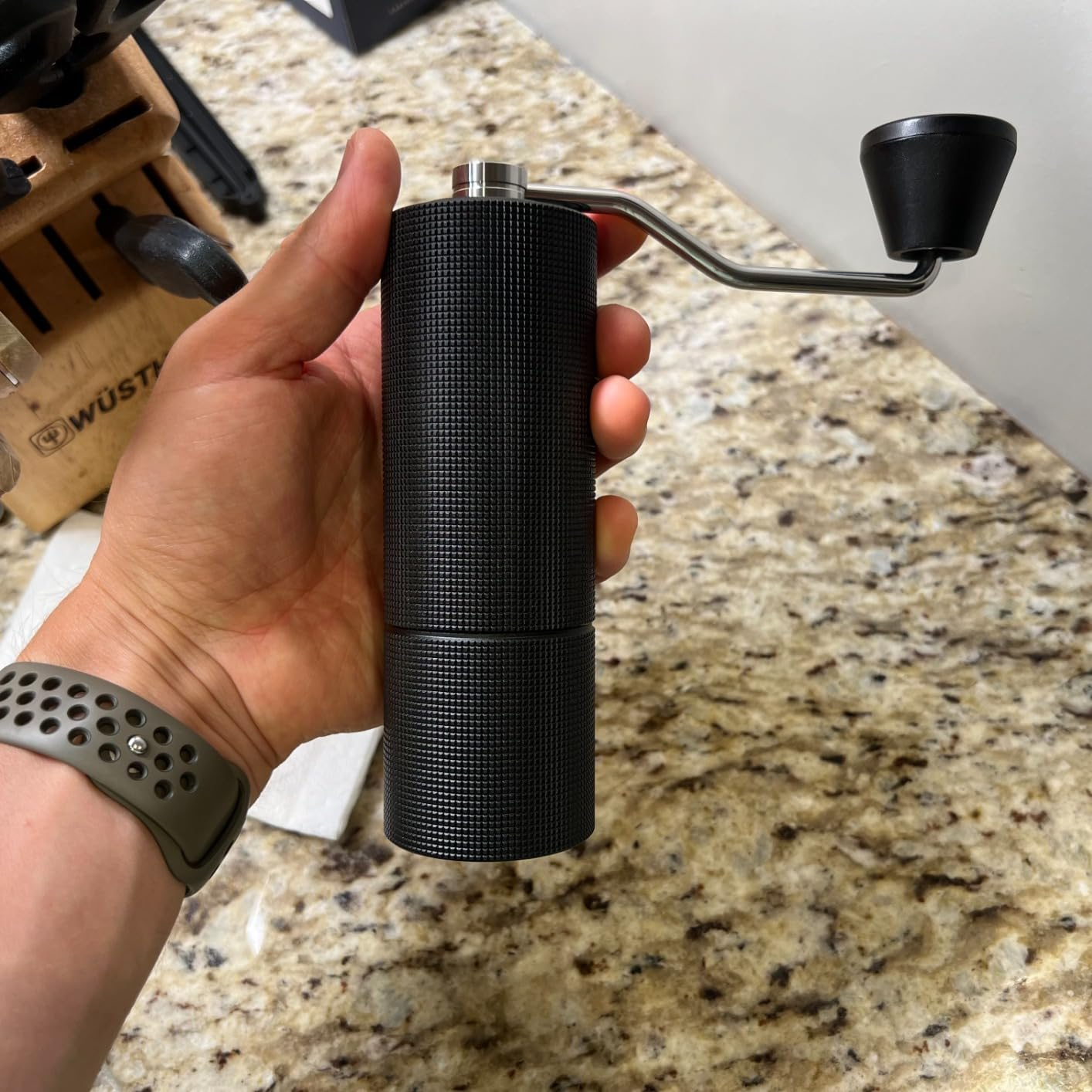
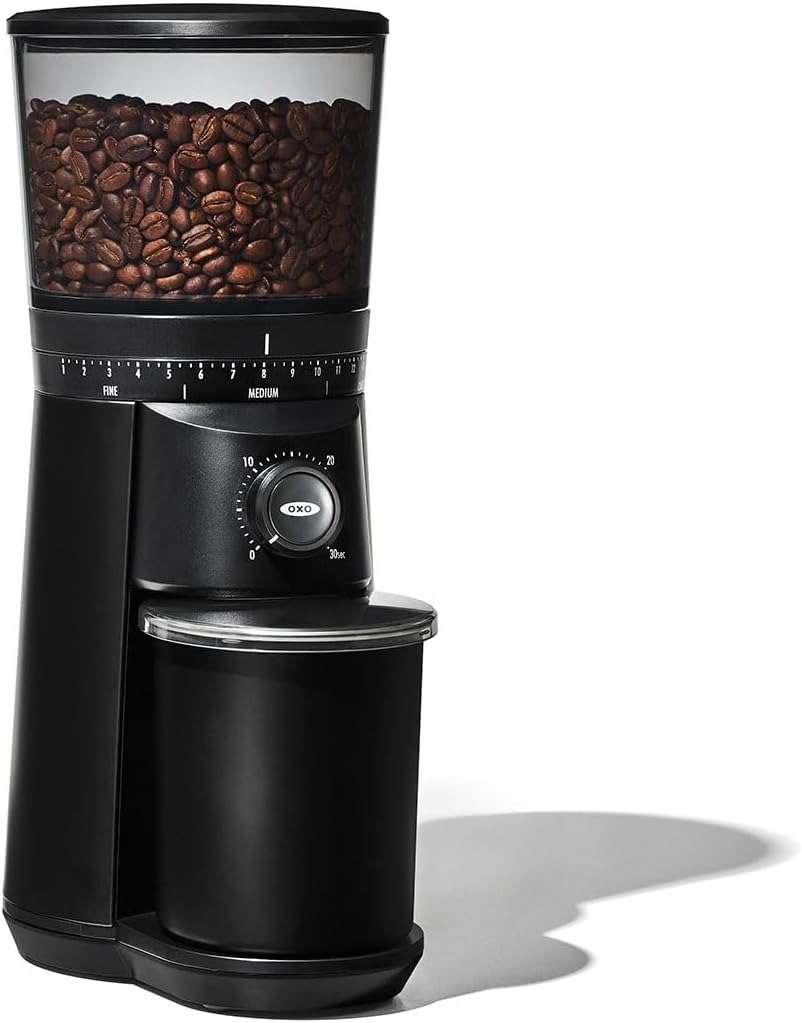
The OXO Brew Conical Burr Coffee Grinder sits at a precise inflection point in this story. Not because it’s marketed well — it is, heavily. But because it structurally occupies a real position that most grinders at its price don’t, and because the failure mode of the people who buy it wrong is almost always the same: they assumed “fine for espresso” on the settings dial meant “capable of espresso.” It doesn’t.
Understanding what the OXO actually does — mechanically, consistently, over years — is the entire question. Everything else is noise.
What You’re Actually Feeling but Not Naming
The person buying a grinder at this tier usually arrives through a version of the same friction. They’ve been buying pre-ground coffee. Or they’ve been using a blade grinder — the kind that chops rather than cuts, that produces a grind so uneven it’s essentially random. And the cup has had a signature: slightly bitter at the back, slightly flat in the middle, never quite as good as what they tasted at the shop that one morning.
That sensation is not imaginary. It has a mechanism.
Uneven particle size means that during extraction, smaller particles over-extract while larger ones under-extract — simultaneously, in the same brew, in the same filter. The bitter note is the over-extracted fines. The flatness is the under-extracted coarses. The result is a cup that tastes like two different mistakes blended together into something passable.
You don’t name this when you’re experiencing it. You just say the coffee’s okay. Or that you need better beans. Or that your brewer isn’t the right model.
Switching to a conical burr grinder at this tier cuts that cycle at the source. Not because any burr grinder is perfect. But because the geometry of conical burrs — where beans are fed down a cone and cut between two precisely machined surfaces — produces a particle distribution dramatically narrower than a blade can achieve. The cup stops being a blended mistake and starts being a single, more coherent extraction.
That shift is real. And it happens inside the OXO, reliably, every morning, for most of the methods most people actually use.
The Hidden Mechanism Behind the Miss
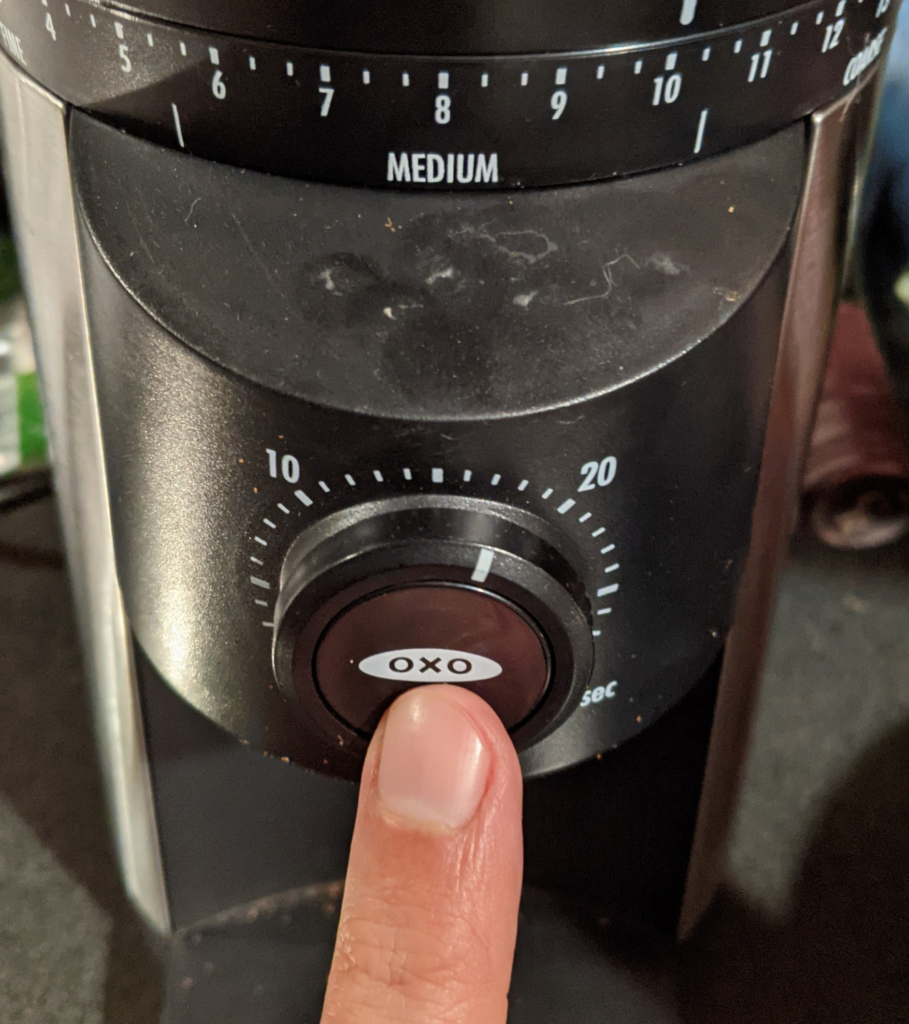
Here is the thing the specs page does not surface clearly enough: the OXO Brew Conical Burr Coffee Grinder operates a timer-based grinding system, not a weight-based one. You set the dial for how many seconds the machine runs, not how many grams come out. This is not a flaw in isolation — it becomes a flaw only when beans change density, roast level, or moisture content, because all of those variables affect how much coffee exits in the same time window.
Light roast is denser. Dark roast is more porous. A bag you just opened grinds differently from a bag that’s been sitting open for a week. The timer doesn’t know this. It grinds for the seconds you told it to, and the dose varies invisibly from day to day.
For most drip and pour-over brewing, this drift in dose matters less than it would for espresso, where the tolerance window is extremely narrow.
| Brew Method | OXO Performance | Confidence Level |
|---|---|---|
| Drip (auto brewer) | Excellent | High |
| Pour-Over (V60, Chemex) | Excellent | High |
| French Press | Excellent | High |
| Cold Brew | Excellent | High |
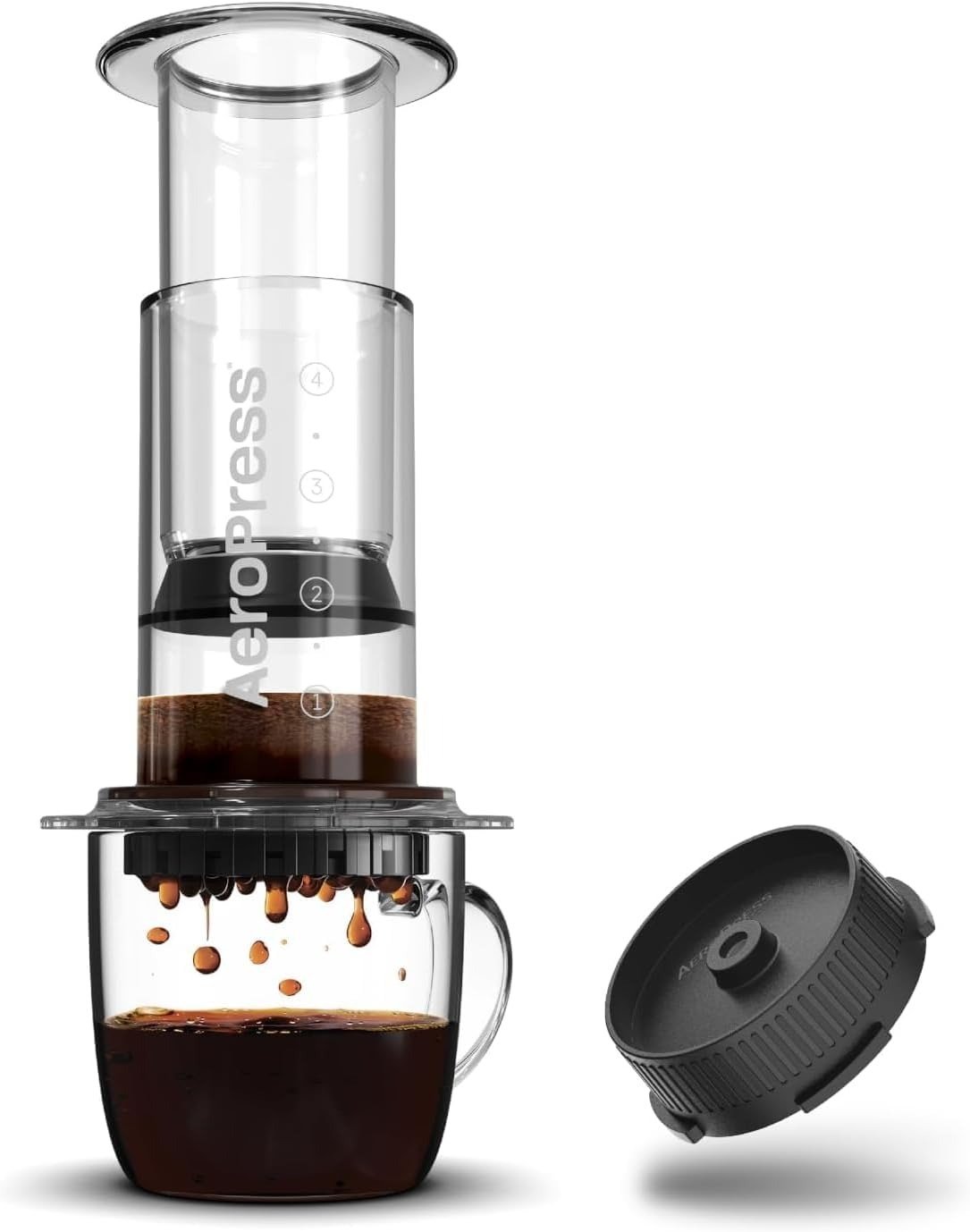
| AeroPress (medium) | Very Good | High |
| Moka Pot | Acceptable | Medium |
| Pressurized espresso machine | Marginal | Low |
| Unpressurized espresso (pro machines) | Insufficient | Very Low |
The OXO’s burr set struggles to grind fine enough for espresso and does not offer the minute adjustability that pulling a proper shot requires, making it structurally better suited for brewed coffee methods.
After 18 months of daily use, the OXO proves to be the best entry-level grinder for most people, delivering outstanding consistency for drip and pour-over coffee — but it definitively struggles to produce a true espresso grind.
The threshold is medium grind and coarser. The best results sit between settings 6 and 8 — medium grind settings that produce excellent results for V60, Chemex, and standard drip coffee makers.
Below that threshold, the machine is still running. The cup will still be produced. But the mechanism that makes the OXO a reliable workhorse — its consistency at medium-to-coarse — no longer applies in the same way. The grind becomes inconsistent enough at fine settings that the brew reveals the limits of the burr geometry.
This is not a marketing failure. This is how burr grinder physics works at the 40mm, $100 tier.
Why Most Buyers Misread This Too Early
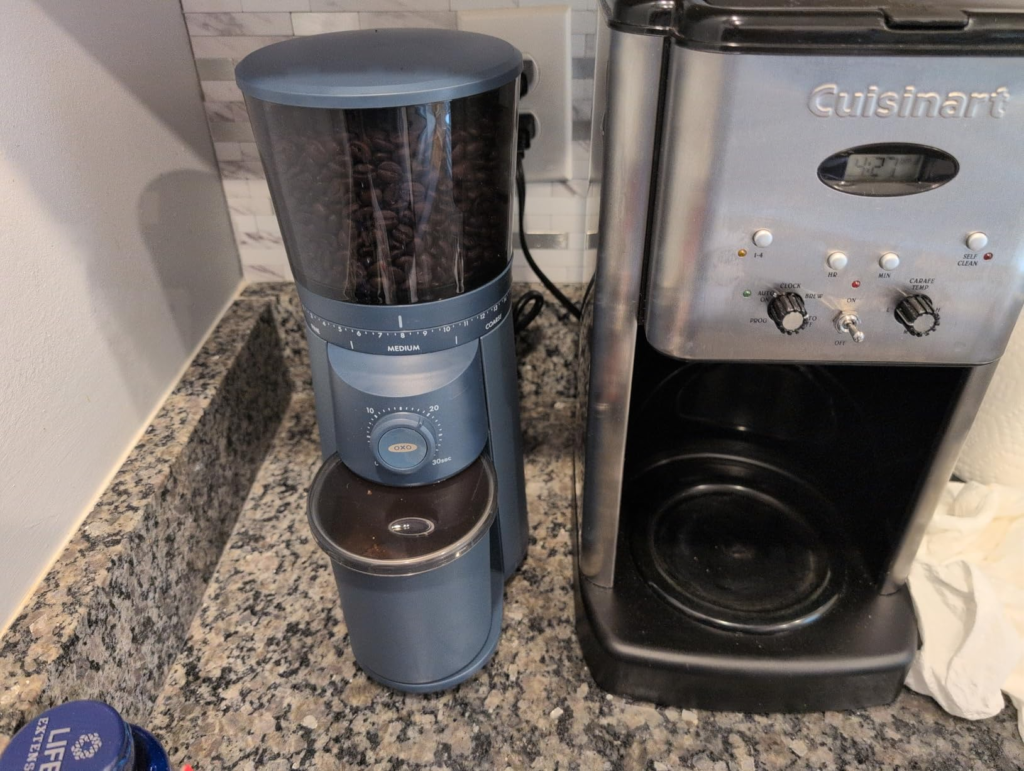
The dial says “espresso.” That label is not a lie, but it is not what you think it means. It means the machine will produce a grind finer than French press. It does not mean the machine will produce a grind fine enough — or adjustable enough in micro-increments — to control espresso extraction the way a proper espresso grinder does.
The OXO will not grind fine enough for espresso, and multiple experienced users who bought it as a first grinder confirm this and upgrade within months to dedicated espresso grinders.
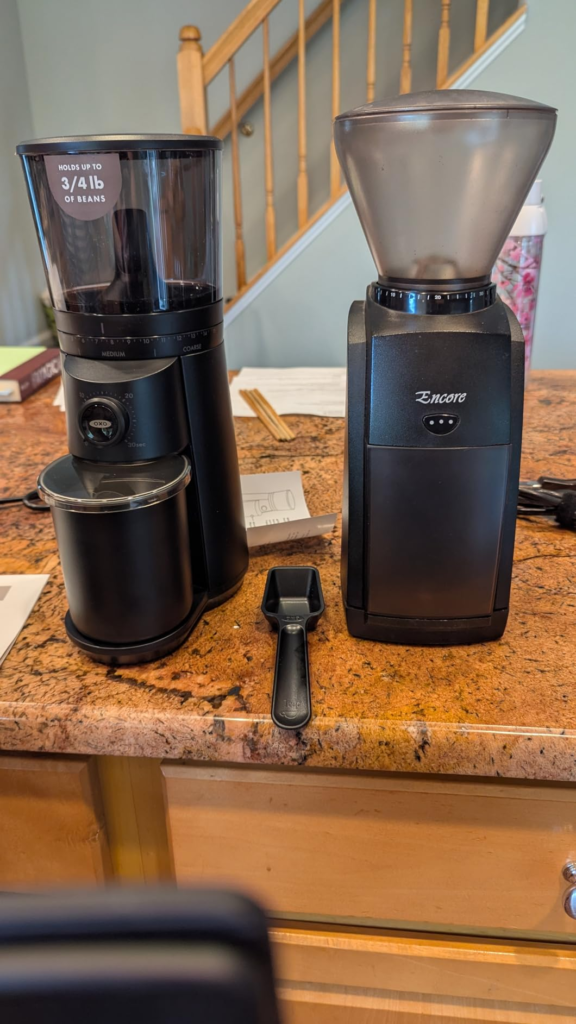
The comparison trap works like this: buyers look at the price of the OXO ($100–$110) and compare it against dedicated espresso grinders ($200–$400). They conclude the OXO is a deal. For espresso, it isn’t — it’s the wrong instrument at any price. For drip and pour-over, the comparison flips entirely: experienced users who own both the OXO and far more expensive grinders report the OXO performs comparably for drip and pour-over and is hard to distinguish from premium models in the cup.
The noise level deserves a mention here because it shapes the daily experience in a way that reviews underweight. The OXO is especially loud compared to other budget burr grinders — an early-morning grind will be heard throughout the house. This is not a dealbreaker. But for households where grinding at 6am has real social consequences, it is a real variable that doesn’t appear in the specs.
Users who’ve run the OXO daily for four or more years report consistent performance, relatively consistent grind output, and zero mechanical failure. Durability at this price tier is not guaranteed — the OXO delivers it.
Who Is Actually Inside This Problem
The OXO Brew Conical Burr Coffee Grinder solves a specific, real, common problem. That problem belongs to a specific person.
| Profile | Fit |
|---|---|
| Daily drip coffee drinker upgrading from pre-ground | Strong fit |
| Pour-over enthusiast, V60 / Chemex / Kalita | Strong fit |
| French press daily user | Strong fit |
| Cold brew batch maker | Strong fit |
| Household where 1–2 people drink 1–3 cups per day | Strong fit |
| Someone who wants one-touch operation with no reset ritual | Strong fit |
| AeroPress user (medium settings) | Good fit |
| Person grinding once and drinking for multiple days | Acceptable fit |
| Moka pot user who wants precision | Marginal fit |
| Home espresso purist with a proper machine | Wrong fit |
| Café-level espresso dialer | Wrong fit |
The OXO is for someone who wants consistent grind size for drip or French press, who prefers one-touch operation with a timer, and who values durable stainless steel burrs that will perform reliably for years.
The person inside this problem drinks coffee daily. They’ve accepted a cup that works but not one that delivers what the beans are actually capable of. They want simplicity — push the button, walk away, pour — without engineering a ritual. They are not trying to replicate a café. They are trying to stop drinking something that was never quite right.
Where Wrong-Fit Begins
The wrong-fit buyer for the OXO has two profiles, and both regret the purchase within 90 days.
The first profile is the espresso buyer. They see the dial go to “fine,” they see the price, they read one review that calls it capable for espresso, and they buy it expecting to pull shots. The OXO’s grinding geometry doesn’t produce the particle size or the micro-adjustability that pulling a consistent espresso shot requires — it is not a matter of calibration; it is a structural limit of the burr system at this tier. No amount of dialing will fix this. The machine simply does not operate in the range that unpressurized espresso extraction demands.
The second wrong-fit profile is the dose-obsessive. This is the buyer who tracks grams to single decimal precision, who adjusts their recipe daily based on bean freshness and ambient humidity, who expects their grinder to behave as a repeatable weighing instrument. The OXO grinds by time, not by weight — it runs for the seconds you set, and the dose varies based on bean density and roast level. If dose control matters at the gram level, this machine will create friction daily.
Both profiles will be tempted by the OXO’s price. Neither will be served by it.
The One Situation Where This Product Becomes Logical
You drink drip, pour-over, French press, or cold brew. You make it daily. You’re currently using pre-ground coffee or a blade grinder. Your cup is okay but has never surprised you. You don’t want to become a grinder enthusiast — you want to stop thinking about your grinder entirely after setup.
In that situation, the OXO Brew Conical Burr Coffee Grinder is not a compromise. It is the correct instrument.
The OXO Brew Conical Burr Coffee Grinder was named Wirecutter’s top pick in 2025 for its consistent grind quality, ease of use, and durable design — and that verdict holds because it reflects exactly this use case, not a broader one.
The mechanism that makes it work here is not marketing. It’s the 40mm stainless steel conical burr set operating in the medium-to-coarse range where its geometry is most coherent, combined with a DC motor that doesn’t generate enough heat to degrade the beans during grinding, combined with a UV-blocking hopper that keeps the beans you store inside it from degrading from light exposure, combined with a one-touch timer that removes the ritual overhead of daily grinding entirely.
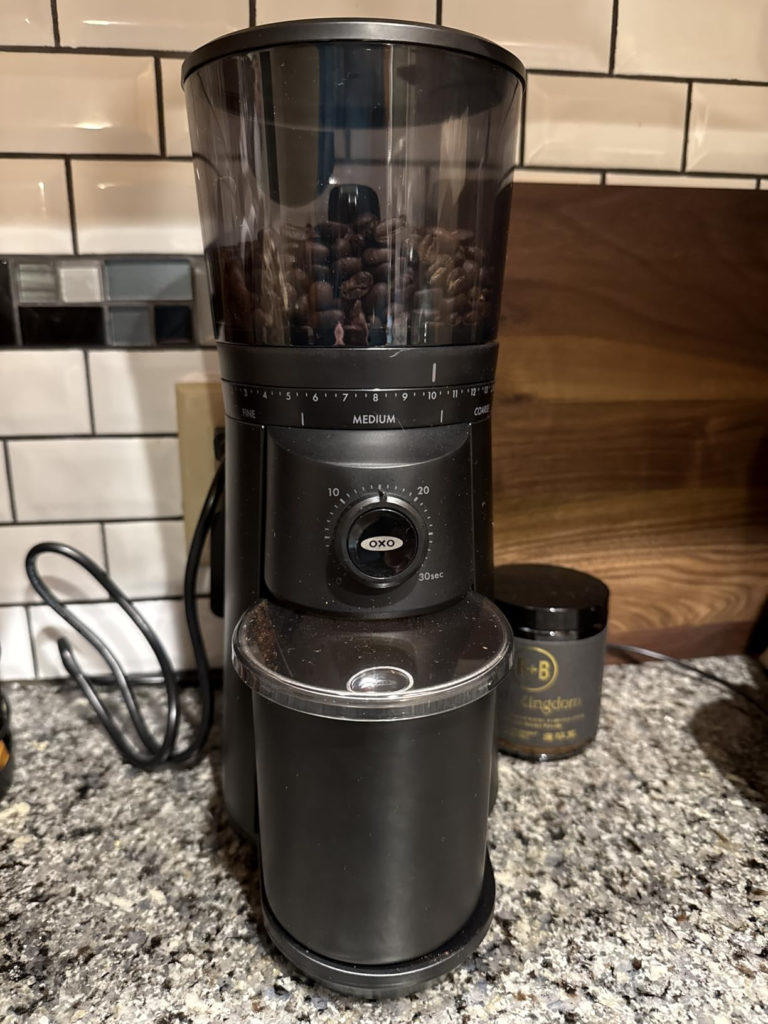
The grinder punches well above its price point for standard filter coffee brewing, and the thoughtful design details — the trap door that prevents bean spills when removing the hopper, the non-slip base, the static-reducing stainless steel container — reflect OXO’s operational discipline across products.
The grinding capacity is also practical in a way that competitors at this tier aren’t: the hopper holds 12 ounces of beans, the grounds container holds up to 110 grams — enough for 12 cups — and the one-touch timer remembers your last setting, meaning the Monday morning grind is identical in effort to the Sunday afternoon one.
At roughly $100–$110 new, this is the grinder that closes the gap between the cup you’ve been drinking and the cup the beans were supposed to produce.
What It Solves, What It Reduces, and What It Still Leaves to You
| Category | What the OXO Does | What Remains on You |
|---|---|---|
| Grind consistency | Eliminates blade-grinder variance at medium-coarse | Fine-setting consistency is still imperfect |
| Dose control | Timer-based, reliable per setting | Dose drift when beans change — you’ll need to re-calibrate |
| Espresso grinding | Not in scope | If you want espresso, budget for a dedicated grinder |
| Bean freshness | UV-blocking hopper extends hopper storage | Won’t compensate for stale beans |
| Static mess | Stainless container reduces but doesn’t eliminate cling | Dry-weather static still occurs — manageable, not solved |
| Noise | Standard for the class | Early-morning grinding will be audible in adjacent rooms |
| Long-term durability | Strong — 4+ year reliability documented at daily use | Requires periodic cleaning of burrs and chute |
| Grounds bin stability | Container is not locked in place | At fine settings, some grounds can escape over the rim |
Approximately 3 grams of coffee grounds are retained inside the machine between cleaning cycles — not ideal, but not unusual at this price tier, and manageable with regular maintenance.
Some static cling in dry weather is real, but a quick tap on the container before pouring largely resolves the transfer problem.
The OXO does not solve everything. It solves the one thing that causes most home brewing underperformance: the grind. The rest of the variables — bean quality, water temperature, brew ratio, filter type — remain on you. But the grind, which is where most of the unnamed friction begins, gets resolved.
Final Compression
The OXO Brew Conical Burr Coffee Grinder operates inside a specific threshold. Inside that threshold — drip, pour-over, French press, cold brew, daily use, one-touch simplicity — it performs at a level that is genuinely difficult to beat at the price, and has been verified durable over multi-year daily use by real users across multiple independent sources.
Outside that threshold — espresso, dose-critical workflows, ultra-fine grind precision — it does not perform, and the gap is structural, not adjustable.
The decision is simple once the threshold is visible:
| Your Primary Brew Method | Decision |
|---|---|
| Drip / Pour-Over / French Press / Cold Brew | Buy the OXO |
| AeroPress at medium settings | Buy the OXO |
| Espresso with a proper machine | Do not buy the OXO |
| Moka pot with precision dial needs | Look elsewhere |
| You’re not sure yet | Buy the OXO, you can always upgrade |
If your brewing life lives in the first three rows of that table, the remaining question is not whether the OXO is the right grinder. It is how long you’ve been drinking a cup that was losing something at the grind stage.
That cost compounds daily.
Frequently Asked Questions
| Question | Answer |
|---|---|
| Can the OXO Brew Conical Burr Coffee Grinder grind for espresso? | The dial includes fine settings marketed as espresso-capable. In practice, the grinder does not produce a fine enough particle or the micro-adjustability required for proper espresso extraction on unpressurized machines. Pressurized machines (super-automatics, entry-level pod hybrids) may work at fine settings, but serious espresso users should budget for a dedicated espresso grinder. |
| How loud is the OXO Brew Conical Burr Grinder? | Loud enough to wake people in adjacent rooms during early-morning use. It is not unusually loud for its class, but it is not quiet. If you grind at 5–6am in a shared home, this is a real consideration. |
| Does the static problem make a daily mess? | The stainless steel container reduces static compared to plastic bins. Some cling remains, especially in dry climates and during winter. A light tap on the container before pouring solves most of it. It is manageable, not solved. |
| How often does the OXO need cleaning? | The burrs and chute accumulate oils and fine particles over time. Light cleaning every two weeks and a deeper clean monthly maintains grind quality. The machine disassembles simply, with no specialized tools needed. |
| Why does my dose vary day to day if I use the same timer setting? | The OXO grinds by time, not by weight. Beans of different roast levels, freshness, and density will produce different amounts of grounds in the same time window. If your brew ratio is strict, re-calibrate when you open a new bag or change bean origin. |
| Is the OXO Brew Conical Burr Grinder worth it over a blade grinder? | Yes, if you’re making filter coffee. The difference in cup quality is not marginal — it is structural. Blade grinders create random particle sizes that produce simultaneous over-extraction and under-extraction in every brew. Conical burrs eliminate that mechanism. |
| How long does the OXO last with daily use? | Multiple users report 4+ years of daily use without mechanical failure. The stainless steel burrs are durable and do not require replacement under normal home-use volumes. |
| What’s the best grind setting for pour-over on the OXO? | Settings 6 through 8 on the main dial produce the most consistent results for V60, Chemex, and Kalita Wave brewing — where the grind behaves most coherently within the OXO’s optimal operating range. |
Transparency Note:
This analysis is built on aggregated real-world experience.
It extracts what repeatedly holds, what breaks, and what users uncover only after living with the system—then shapes it into a clear model you can use immediately.
Think of it as structured experience, refined and presented so you don’t have to learn it the hard way.
3- “For final technical specifications and current pricing, please refer to the official product page on Amazon.”