Your Coffee Isn’t Failing Because You Lack Taste. It’s Failing Because the Workflow Breaks Before the Cup Does.
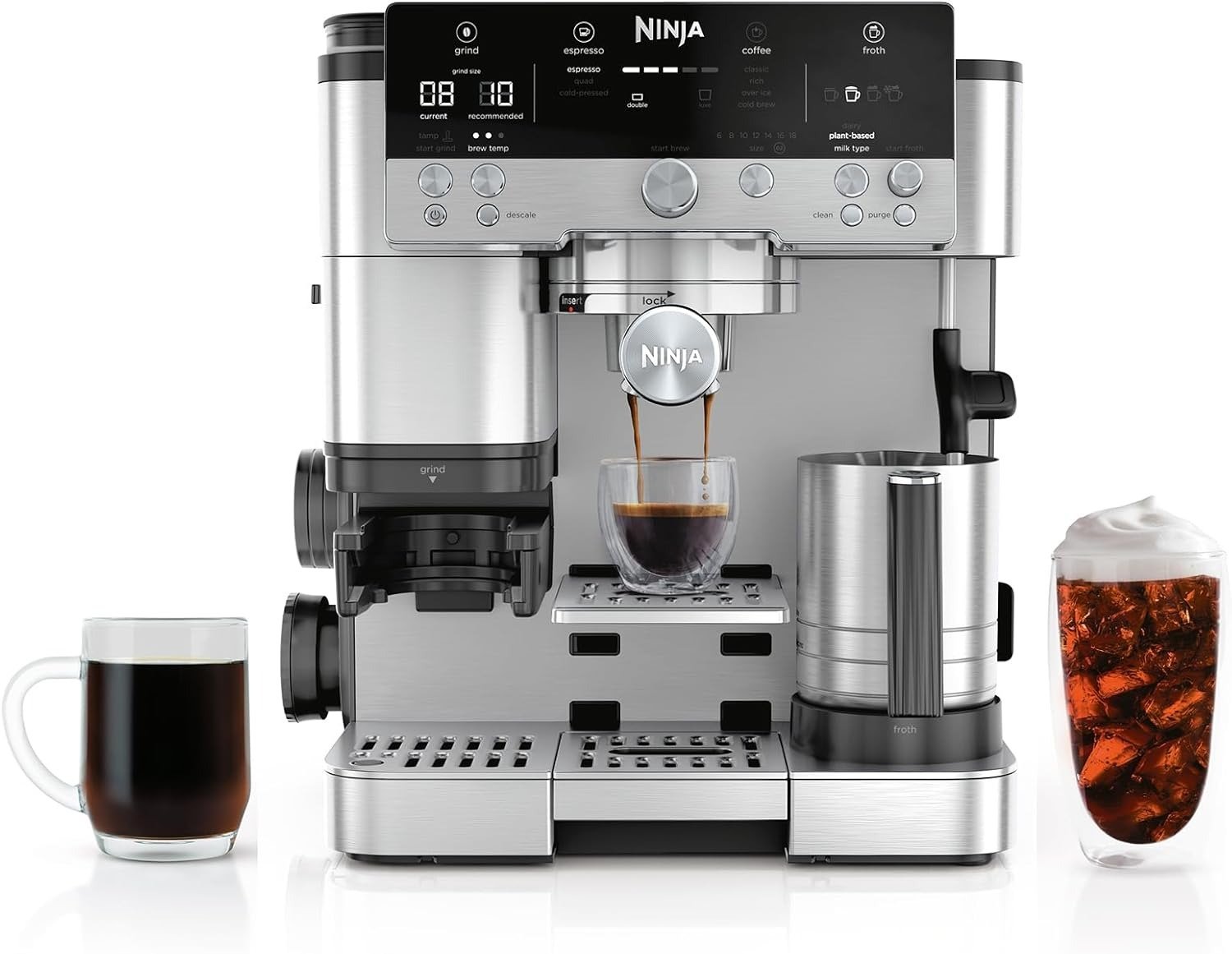
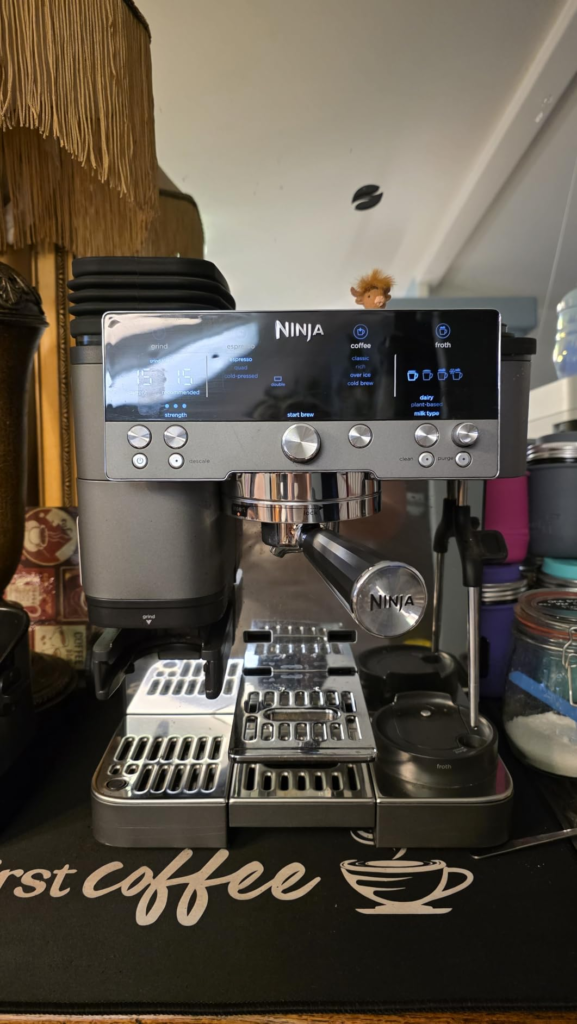
PRODUCT NAME: NINJA LUXE CAFÉ ES601
The Result Looks Fine. The Problem Isn’t.
The dangerous thing about bad home coffee is that it usually looks acceptable. The crema is there. The milk is warm. The mug feels heavy in your hand. From three steps away, it passes. Then you drink it and something is off—thin body, blunt sweetness, foamy milk that sits on top instead of folding in, a routine that feels like cleanup wearing a stainless-steel costume. That is the trap this machine is trying to solve. Not coffee as theater. Coffee as repeatable relief.
What pulled me toward the Ninja Luxe Café ES601 is not that it promises café drama. It does the opposite. It tries to remove the small frictions that quietly rot a home setup: guessing grind size, over-dosing, under-extracting, mistiming milk, and ending the morning with a sink full of parts and a shot that still needed apology. Officially, this is a 3-in-1 machine with espresso, drip coffee, and rapid cold brew, built around a conical burr grinder with 25 grind settings, weight-based dosing, and hands-free frothing. That sounds like feature language. The real question is simpler: does it reduce routine collapse?
What You’re Actually Feeling but Not Naming
Most people do not wake up thinking, I need better extraction control. They think something more human.
I’m tired of wasting beans.
I’m tired of making two drinks to get one right.
I’m tired of pretending my machine is “fun” when it’s actually a part-time job.
That is the friction here. Not espresso knowledge. Intervention burden.
The people who respond best to the ES601 are usually not chasing infinite control. They are trying to cross a line. They want the drink to feel more serious than pod coffee, more stable than cheap semi-automatic machines, and less demanding than true enthusiast gear. Reviewers repeatedly praised the beginner-friendly guidance, the built-in scale, and the automatic milk workflow for exactly that reason, while user discussions also show the same emotional pattern from the other side: when the machine disappoints, it is because the promise of ease collides with inconsistency or maintenance annoyance.
That distinction matters. You are not shopping for an espresso machine only. You are shopping for a lower-friction morning.
The Hidden Mechanism Behind the Miss
Here is the hidden variable: most home machines fail long before they fail technically. They fail behaviorally.
A machine can produce a decent shot and still lose the kitchen if the routine is too fussy, too loud, too wet, too inconsistent, or too dependent on perfect technique every single morning. That is why the ES601 is more interesting than its spec sheet first suggests. Its real design thesis is not “make the best espresso under $600.” It is closer to this: push the user past the chaos phase before they quit.
That is why the machine leans so hard into guided brewing. It uses Barista Assist to recommend grind changes, pairs the grinder with weight-based dosing, includes an assisted tamper workflow, and automates milk texturing with multiple froth modes. In CoffeeGeek’s long-term testing, the machine’s default espresso logic centered around roughly 18 grams in and about 45 grams out, with the ratio adjustable in the menu. In plain English: it tries to prevent beginner drift before beginner drift becomes buyer’s remorse.
But every shortcut writes a bill somewhere else. Wired found espresso could be inconsistent, with occasional leaking and underwhelming drip and cold brew relative to the espresso side. CoffeeGeek’s extended-use review praised the shot quality and workflow but called out loud milk steaming, constant drip-tray filling from auto-purging, and the missing hot-water function on the US ES601. Tom’s Guide loved it for beginners, then noted the same practical limits: no single-shot option and a tedious bean-switching routine.
That is the mechanism. The machine wins when guided convenience matters more than full manual freedom.
The Threshold Where the Outcome Quietly Breaks
This article runs on one model only: Threshold.
The threshold is where a coffee machine stops being judged by what it can brew and starts being judged by what you will still tolerate on a random Tuesday.
For the Ninja Luxe Café ES601, that threshold sits right here:
| Decision factor | Below the threshold | Above the threshold |
|---|---|---|
| Espresso skill | You do not want to learn every variable manually | You enjoy manual dialing and fine control |
| Drink mix | You rotate between espresso, milk drinks, drip, and cold drinks | You mainly care about pure espresso precision |
| Morning behavior | You value speed, guidance, and reduced guesswork | You accept slower ritual and repeated calibration |
| Noise tolerance | You can tolerate a loud frothing cycle | You need a quieter early-morning machine |
| Cleanup tolerance | You accept frequent tray emptying and purging | You get irritated by water waste and drip-tray babysitting |
| Americano habits | You do not rely on a hot-water spout | You drink Americanos often and want that built in |
Everything important about this machine becomes clearer once you see that line. CoffeeGeek described it as the most feature-rich machine they had tested under $600, but also one with a lower ceiling for skilled users than more manual alternatives. That sentence explains almost the entire product.
Why Most Buyers Misread This Too Early
The first mistake is comparing it like a traditional espresso machine.
It isn’t one. Not really.
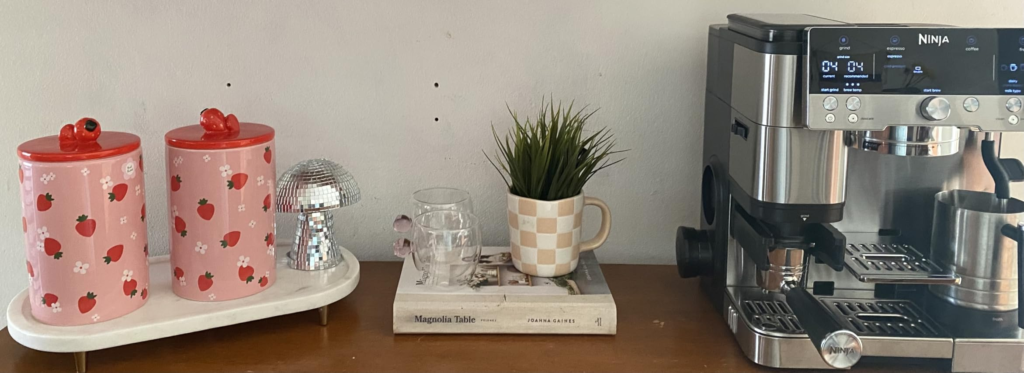
Yes, it has a portafilter. CoffeeGeek identified it as a proprietary 54 mm setup with two non-pressurized baskets, including a deep “Luxe” basket for larger coffee doses and quad-shot or brewed-coffee modes. But the machine’s logic is not built around the old barista fantasy of total control. It is built around managed variance. The grinder, the dosing logic, the workflow prompts, the milk automation—everything keeps trying to drag the user back toward a stable center.
The second mistake is believing versatility automatically means equal quality across every mode. The machine can brew espresso, drip, cold brew, over ice, and froth dairy or plant-based milk. That range is real. But multiple reviewers drew the same line: the espresso-and-milk experience is stronger than the drip-and-cold-brew side, and the US ES601’s lack of hot water weakens the “full café” idea if your habits lean Americano.
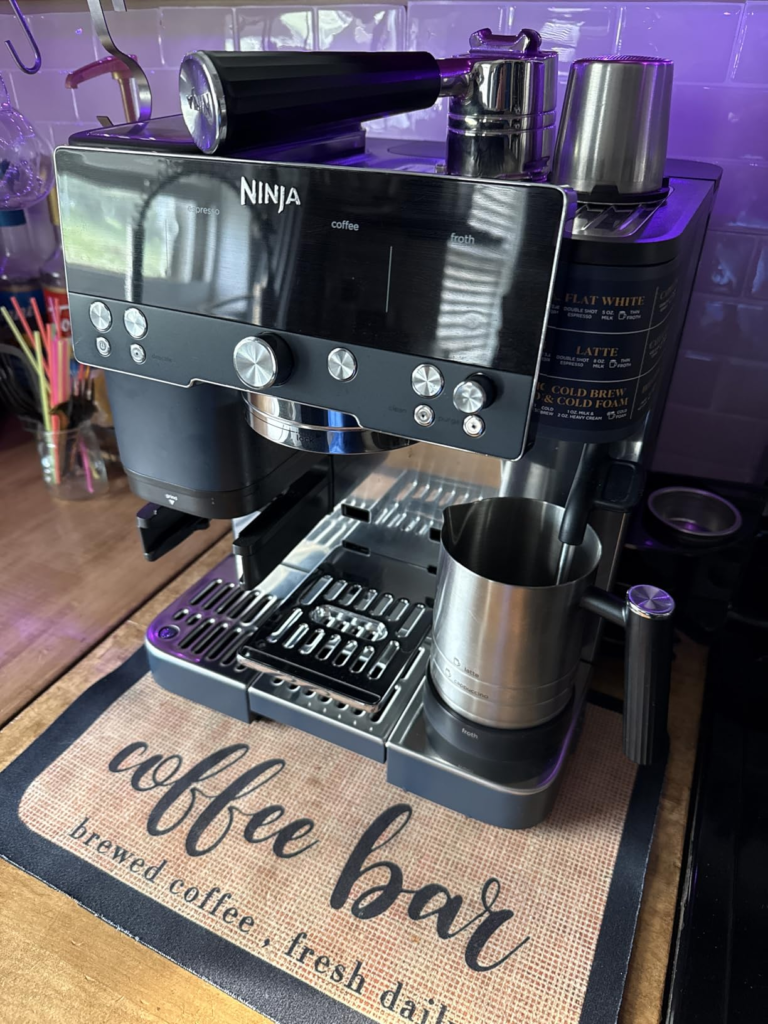
The third mistake is assuming “easy” means “maintenance-free.” It doesn’t. This machine auto-purges. That helps hygiene. It also means water use, tray filling, and more frequent emptying than many buyers expect. Some owners also report leaking or shot inconsistency, especially once the honeymoon phase ends. CoffeeGeek did not reproduce the worst online reliability complaints in lab use, but the complaints are widespread enough that they cannot be waved away.
Who Is Actually Inside This Problem
You are inside this problem if your mornings keep stalling at the same point: you want drinks that feel meaningfully better than commodity coffee, but you do not want a machine that treats every cup like an exam.
That includes the buyer who wants:
- guided espresso instead of manual roulette
- milk drinks without learning steam-wand choreography on day one
- one machine that can move between hot espresso, cappuccino, iced drinks, and regular coffee
- a shorter warm-up and a more structured workflow than traditional hobbyist machines often demand
It also includes households, not just lone hobbyists. This machine makes more sense when different people want different drinks. One person wants a latte. Another wants drip coffee. Someone else wants cold foam on an iced drink. That is why reviewers kept calling it beginner-friendly rather than merely inexpensive. The appeal is not only price. It is reduction of domestic friction.
And there is one more signal worth noticing: the market response has been strong. Amazon shows a 4.4/5 rating from over 2,000 ratings, with high recent purchase volume, while specialist reviewers and mainstream reviewers alike kept returning to the same core praise—breadth, approachability, and unusually guided workflow for the class. That does not prove perfection. It proves the machine is solving a real problem people recognize instantly.
Where Wrong-Fit Begins
Wrong-fit starts where control matters more to you than convenience.
If you already know you care about exact dose freedom, aftermarket ecosystem flexibility, classic manual steaming, quieter operation, or maximum espresso ceiling, this is where the romance ends. CoffeeGeek noted that skilled users can get better cups from more manual machines when they are willing to supply more crafted input. The Ninja’s proprietary basket and portafilter setup also narrow the appeal for tinkerers who enjoy swapping accessories and chasing incremental gains.
Wrong-fit also begins if your daily drink is an Americano. The missing hot-water spout on the US/Canada ES601 is not a tiny omission. It changes the machine’s logic. Reviewers called it baffling for a reason. If you want a true all-in-one station for espresso plus straightforward Americanos, this specific model makes you work around the machine instead of with it.
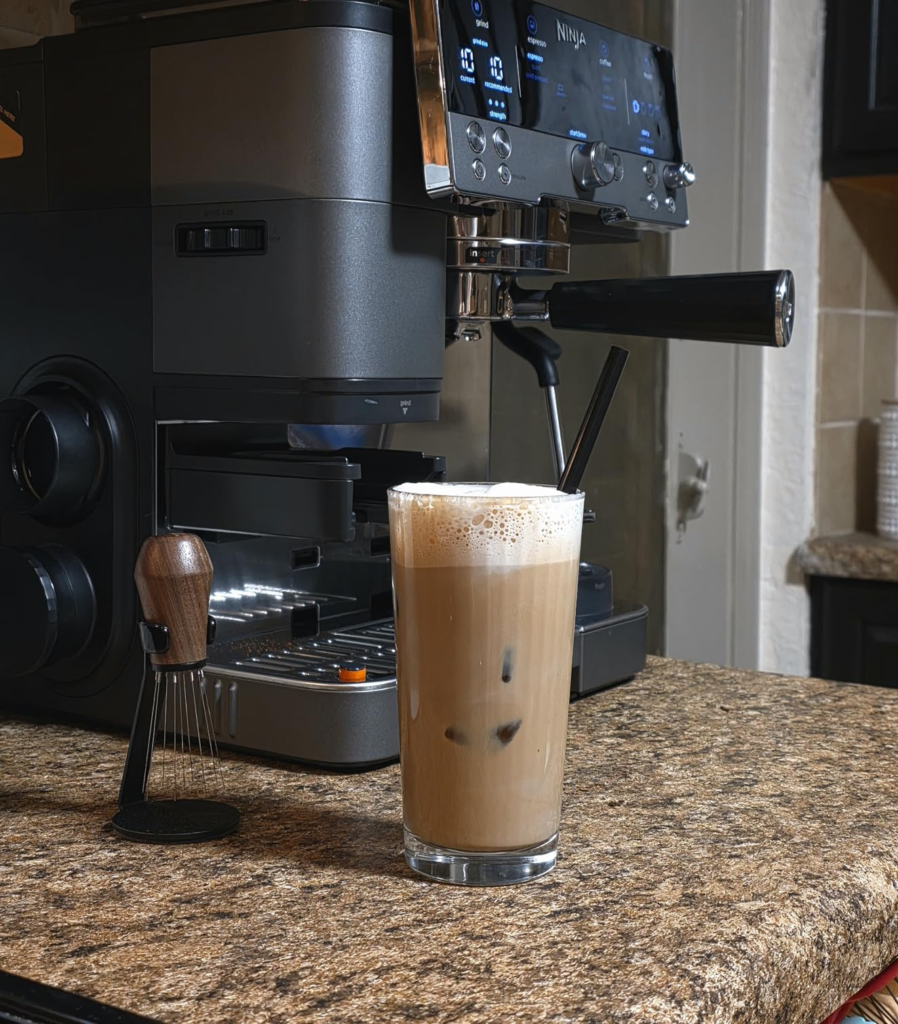
And wrong-fit begins fast if you are highly sensitive to mess or noise. The frothing system has been praised for convenience and cold-foam capability, but it has also been criticized for loud operation. The drip tray, meanwhile, is not a background detail. It is part of ownership. Ignore that and the machine will feel worse in month three than it did on day three.
The One Situation Where This Product Becomes Logical
This machine becomes logical in one very specific situation:
You want the shortest path from “I’m not a home barista” to “my drinks finally feel intentional,” and you want that path without collapsing into pods, sugar camouflage, or full hobbyist complexity.
That is where the Ninja Luxe Café ES601 stops looking like a crowded spec sheet and starts looking coherent.
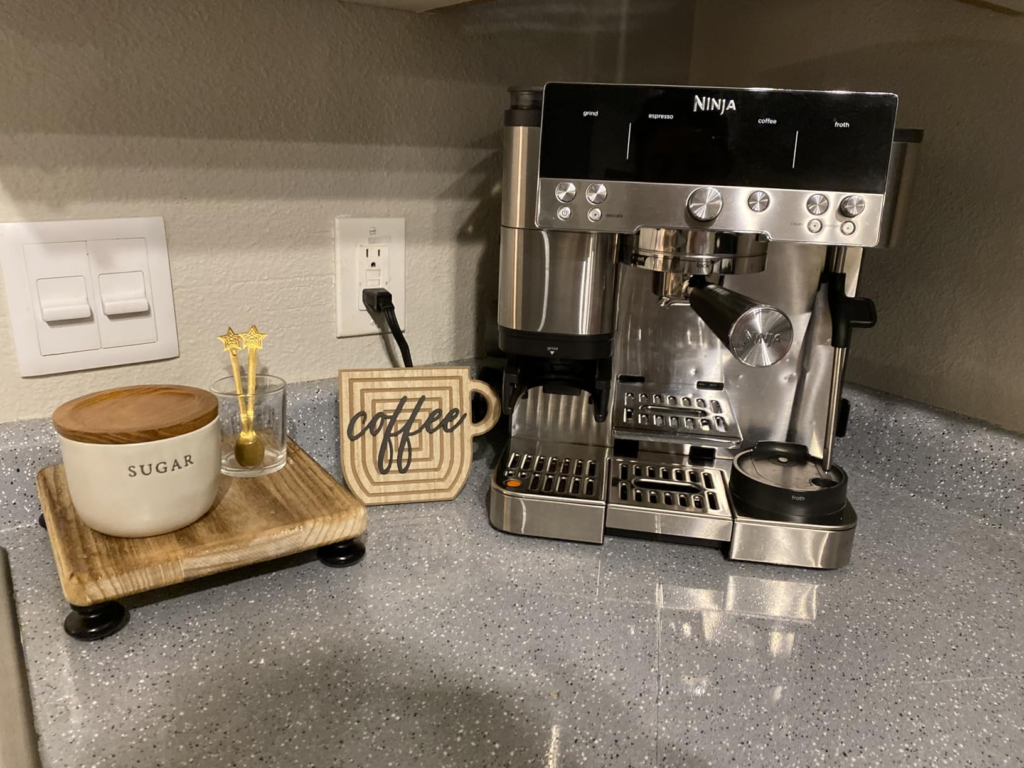
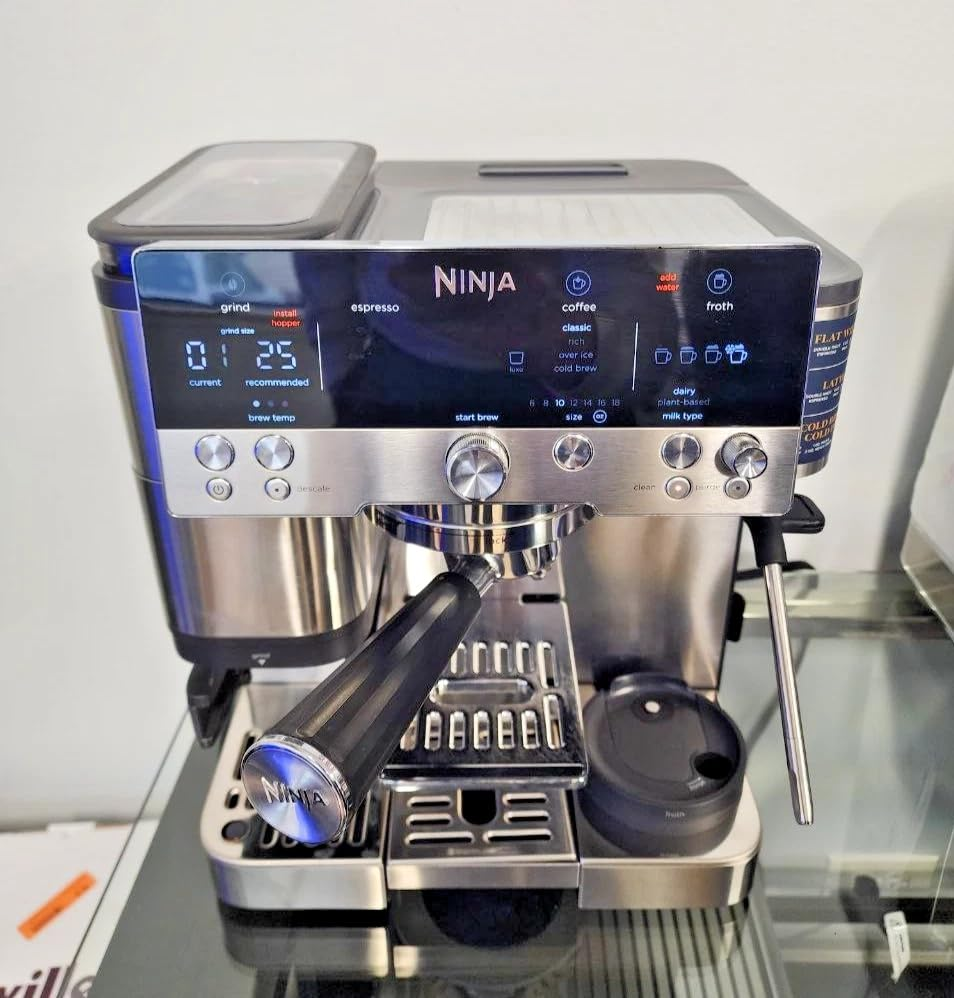
Its hardware and behavior line up around that use case. The machine combines a 25-setting conical burr grinder, weight-based dosing, guided grind recommendations, assisted tamping, multiple espresso and coffee modes, and a hands-free frothing system. CoffeeGeek’s testing praised the shot quality, the cold-foam capability, and especially the “Queue Milk” workflow, which lets milk follow the shot automatically. Tom’s Guide went further and called it the best beginner-friendly espresso machine the reviewer had tested. Even Wired, while more skeptical, still described it as an undeniable feat that does a lot and does most of it well.
That combination matters more than any single spec. This is not the machine I would choose for a person chasing the last ten percent of espresso purity. It is the machine I would choose for the person whose current setup keeps breaking the ritual before the pleasure ever arrives.
What It Solves, What It Reduces, and What It Still Leaves to You
Here is the clean version.
| What it solves | What it reduces | What it still leaves to you |
|---|---|---|
| Guesswork around grind starting point | Shot-to-shot chaos for beginners | Bean choice still matters a lot |
| Milk timing for cappuccinos and lattes | Manual frothing stress | Noise during frothing |
| Multiple drink styles in one footprint | Need for separate espresso + coffee devices | Frequent tray emptying and water refills |
| Fast guided workflow | Learning curve shock | Workarounds for Americanos on the ES601 |
| Better-than-chain home drinks with decent beans | Wasted mornings and wasted beans | Acceptance that drip/cold brew may not be the headline act |
It also leaves you with one non-negotiable truth: this is a machine that rewards realistic expectations. The official dimensions—15.75″ L x 15.24″ W x 20.51″ H at 1650 watts—tell you immediately that this is not a tiny countertop toy. It takes space. It takes attention. It takes a little tolerance. But if your current pain is not lack of obsession, rather lack of a reliable system, those trade-offs start to look fair.
Final Compression
After pulling together the official specs, expert testing, and long-tail owner complaints, I do not read the Ninja Luxe Café ES601 as a miracle machine. I read it as a threshold machine.
Below the threshold, people keep buying coffee convenience and getting coffee fatigue.
Above the threshold, they start paying for guidance, repeatability, and a workflow that does not punish them before breakfast.
That is why this product makes sense for a very particular buyer and starts to look wrong for everyone else. If your real problem is not espresso purity but routine collapse, the ES601 is one of the clearest answers in its class. If your break point starts there, this is where the decision stops being vague.
Transparency Note:
This analysis is built on aggregated real-world experience.
It extracts what repeatedly holds, what breaks, and what users uncover only after living with the system—then shapes it into a clear model you can use immediately.
Think of it as structured experience, refined and presented so you don’t have to learn it the hard way.
“A quick note: Don’t believe the star ratings, but trust personal experience. This article is a compilation of collected experiences”