HiBREW H10 Plus Review: Your Shot Looks Fine. Your Machine Is Quietly Lying to You.
HI-BREW H10 PLUS
You pull a shot. It’s dark, it has crema, it took 28 seconds. You assume something went right.
But the crema collapsed in 45 seconds. The shot tasted thin on Tuesday and bitter on Thursday. You adjusted nothing. The machine adjusted nothing either — it simply cannot. That’s not a skill problem. That’s a temperature problem nobody told you existed inside machines at this price.
This is where most entry-level espresso buying goes wrong: not at the purchase decision, but in the weeks after — when the results feel inconsistent and the machine gives you no diagnosis, no control, and no path forward. You’re not pulling bad shots. You’re operating a machine that lacks the architecture to pull good ones reliably.
The HiBREW H10 Plus was built against exactly that failure mode. Whether it succeeds — and for whom — is what this article is actually about.
The Result Looks Fine. The Problem Isn’t.
Home espresso has a deception layer that capsule machines eliminated and semi-automatics exposed: the shot can look correct while tasting wrong. Crema appears with water temperature as low as 85°C and as high as 98°C. The machine’s extraction timer runs regardless of whether pressure is at 6 bar or 14 bar. The drip hits the cup either way.
What your cup cannot show you without instrumentation: whether the pump is actually working at 9 bar at the group head (not 20 bar at the pump — that number is marketing for the pressure ceiling, not extraction pressure), whether the thermoblock stabilized before you engaged the shot, or whether pressure dropped mid-extraction because the heating element and pump shared a power draw your wall circuit handles poorly.
These are not theoretical failures. They are the invisible causes behind most home espresso frustration that gets attributed to grind, dose, or technique — when the actual variable is uncontrolled equipment behavior.
The HiBREW H10 Plus addresses these failures with hardware choices that are genuinely unusual at its price point.
What You’re Actually Feeling but Not Naming
There is a specific frustration pattern in home espresso that owners rarely name correctly.
It sounds like: “I can’t dial this in.” But what it actually means is: “My machine changes variables I’m not controlling.”
You adjust grind size. The shot improves on Monday. On Friday, the same settings produce something sour. You didn’t change anything — but ambient temperature dropped 8 degrees, the machine was cold from non-use, and the thermoblock never fully recovered between shots. The result shifts. You blame your technique.
This is the core hidden failure of single-boiler machines without active temperature management: they are thermally inconsistent across sessions, across days, and across back-to-back drinks. Your diagnosis is always chasing a moving target.
The feeling is specifically: grinding to a setting that worked, then not trusting that setting the next morning. That erosion of confidence is what kills the home espresso habit. Not the machine’s outright failure — its quiet, invisible variability.
The Hidden Mechanism Behind the Miss
Temperature stability in espresso is not about reaching a number — it is about holding that number across the entire extraction window.
A thermoblock heats water by passing it through a narrow heated channel. The water temperature at brew time depends on how long the machine has been on, how many shots preceded this one, and whether steam mode was just used. A thermoblock without active feedback drifts. The SCA (Specialty Coffee Association) publishes that optimal espresso extraction temperature sits between 90–96°C — a 6-degree window that controls whether your shot reads as sweet, balanced, or harsh.
Without PID control — Proportional-Integral-Derivative, the closed-loop feedback system that reads actual temperature and corrects it in real time — a thermoblock machine is essentially an open-loop system. It heats, you shoot, you hope. Most machines under $200 (and many under $400) omit PID entirely and advertise “temperature control” as a marketing term for a simple on/off thermostat.
The HiBREW H10 Plus includes dual PID: independent closed-loop temperature management for the brew circuit (90–95°C) and the steam circuit (125–150°C) separately. This matters most for consecutive drinks — an espresso followed by a steamed milk drink — where a single-boiler machine without this system would require you to wait, guess, or accept temperature surfing between functions.
Additionally, the H10 Plus features a 3-way solenoid valve that automatically purges residual pressure from the group head after extraction. In machines without this, remaining pressure in the brew head cracks the puck upon portafilter removal — causing channeling artifacts in your next shot before you’ve even touched the grind dial.
The Threshold Where the Outcome Quietly Breaks
Here is the specific pressure threshold where most home espresso machines — and this one — either hold their value or lose it:
The OPV (Over-Pressure Valve) setting.
Every espresso machine has an OPV — a mechanical valve that releases pressure above a certain ceiling to protect the pump. The ideal OPV for quality espresso extraction sits at 9 bar. Many entry machines ship with the OPV factory-set between 11–13 bar, and never disclose this. At 11+ bar, the machine is over-extracting every shot. The flavor consequence: a shot that is consistently harsh and bitter regardless of how refined your grind or dose becomes.
The HiBREW H10 Plus ships with an adjustable OPV — you can tune the extraction ceiling. Verified owners on Walmart’s review platform specifically praise this: “I love H10Plus for the adjustable OPV,” with one long-term owner noting that despite also owning machines at triple the price, the H10 Plus paired with a good grinder produces more consistent shots.
The pressure profiling system adds a second threshold lever: three flow-rate settings (H, L1, L2) allow you to extract light roasts at gentler pressure — where 1–3 bar enhances acidity and floral complexity — or apply fuller extraction pressure to dark roasts where body and sweetness dominate. This is a feature that appears on prosumer machines costing five to ten times as much.
| Feature | Machines Under $150 | HiBREW H10 Plus | Prosumer ($800–$2000) |
|---|---|---|---|
| PID Temperature Control | Rarely | Dual PID ✓ | Standard |
| OPV Adjustability | Never | Adjustable ✓ | Standard |
| Pressure Profiling | Never | 3-Level (H/L1/L2) ✓ | Standard |
| Solenoid Valve | Never | 3-Way ✓ | Standard |
| 58mm Portafilter | Rare | ✓ | Standard |
| Pre-Infusion (0–10s) | Never | Programmable ✓ | Standard |
| Live Pressure Gauge | Sometimes | ✓ | Standard |
| Dual Boiler | Never | No | Sometimes |
The H10 Plus owns nearly every professional control mechanism except the dual boiler. That is the one structural ceiling it hits.
Why Most Buyers Misread This Too Early
The “20 bar” headline is the first misread. Twenty bar is the pump’s rated pressure ceiling — not extraction pressure. Espresso is brewed at 9 bar. Every machine advertises the pump max, not the brew pressure. On the H10 Plus, the ULKA Italian pump (the same pump used in many prosumer machines as a component) operates to 20 bar ceiling while the OPV regulates actual extraction to 9 bar at the group.
The second misread is comparing by price-per-feature to Breville, De’Longhi, or Gaggia without accounting for what is actually inside the box. The Breville Bambino Plus at roughly $300 is an excellent machine — with automatic milk frothing and faster heat-up — but lacks user-accessible pressure profiling, lacks pre-infusion control, and uses a 54mm portafilter, meaning your accessory upgrade path is narrower. The Gaggia Classic Pro at $450 is a proven long-term machine, but ships without PID (added via a common aftermarket mod that can cost $100–150), without pre-infusion, and without any pressure profiling.
The H10 Plus does not win every category. But for users who intend to actively develop their espresso technique — not just push a button — it front-loads the control infrastructure that elsewhere requires either a higher budget or aftermarket modification.
The third misread is treating durability concerns as a dealbreaker before understanding their scope. Long-term users (18+ months of 2+ daily doubles) report continued satisfactory performance. The legitimate concerns are the plastic group head (run a blank shot before the first extraction each session to thermally stabilize it) and the levering handle fit, which several owners flag as a weaker mechanical link over time.
Who Is Actually Inside This Problem
The HiBREW H10 Plus belongs to a specific kind of buyer. Not everyone who wants good coffee. Not everyone who drinks espresso daily. A specific person in a specific position.
That person understands the following things are true simultaneously: they want café-quality output at home; they are willing to learn technique, not just press a button; they have a burr grinder or understand they need one; their budget for the machine itself is $150–$300; and they do not want to spend the next year modifying an analog machine to get features that should have shipped from the factory.
This person is leaving the capsule machine because they want to taste what a properly dialed shot actually is. Or they are already in home espresso and running into the ceiling of a basic machine with no controls. In either case, they need an infrastructure machine — one that gives them enough control to learn from their mistakes instead of blaming randomness.
They are not the buyer who wants coffee in under 90 seconds with zero ritual. They are not the buyer who prioritizes multi-year durability above all else and is willing to pay $800+ for an E61 group head. And they are not the buyer who will run 10–15 drinks daily in a small commercial setting and needs a real boiler with thermal mass.
Where Wrong-Fit Begins
The regret profile for the HiBREW H10 Plus is predictable, and it begins in three specific situations.
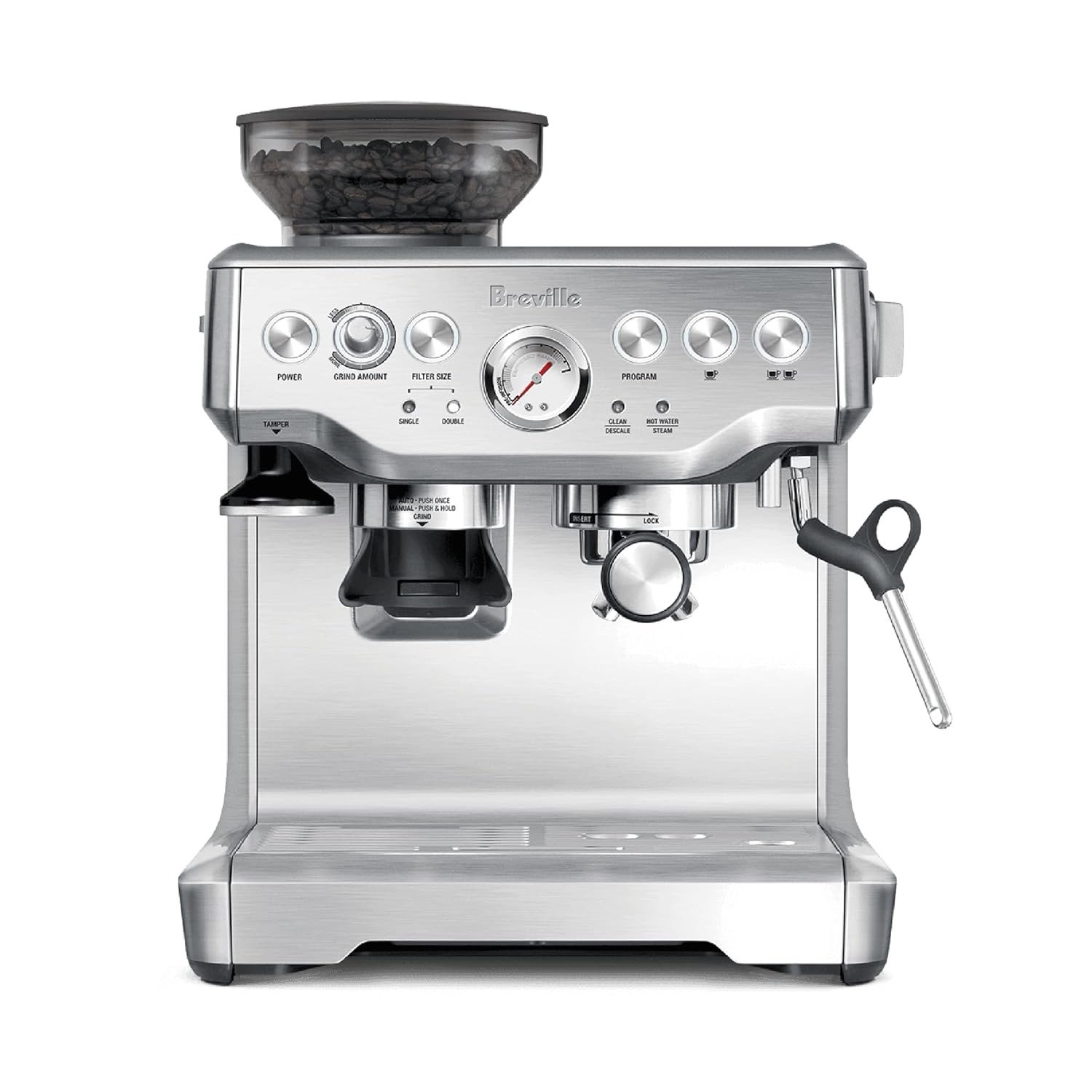
First: buyers who don’t own or won’t invest in a burr grinder. The H10 Plus exposes grinder quality more than simpler machines do — because with real pressure profiling and PID temperature control, your extraction can be genuinely dialed. That means a blade grinder or inconsistent pre-ground becomes the actual ceiling. Multiple verified owners across review platforms note the grinder requirement explicitly. One Reddit user operating an H10 Plus and Breville Barista Express side-by-side reported that the H10 Plus with a dedicated burr grinder produced more consistent shots than the integrated Breville system.
Second: buyers expecting the milk steaming speed of machines with dedicated steam boilers. The H10 Plus uses a single thermoblock with dual PID management. Steam is capable of producing real microfoam — reviewers confirm café-quality results in under 30 seconds — but the transition between brew mode and steam mode requires a thermal shift. One owner plainly stated: “Only qualms is that milk steaming is SLOW.” This is not a defect; it is a structural characteristic of thermoblock design at this price tier.
Third: buyers who will use the machine daily for years without descaling or maintenance. The thermoblock is more sensitive to mineral buildup than a brass boiler. HiBREW’s own documentation recommends descaling every 2–3 months with filtered water intervals between. Owners who skip this will experience thermal inconsistency that looks like machine failure but is actually limescale narrowing the heating channel.
| Buyer Profile | Fit |
|---|---|
| Learning home barista with burr grinder | ✓ Strong fit |
| Espresso + milk drinks, value control over speed | ✓ Strong fit |
| Upgrading from capsule, wants real technique | ✓ Strong fit |
| Blade grinder user, unwilling to upgrade | ✗ Wrong fit |
| Needs 8+ drinks daily at commercial pace | ✗ Wrong fit |
| Wants push-button automation | ✗ Wrong fit |
| Prioritizes 10-year durability over features | ✗ Consider Gaggia Classic Pro instead |
The One Situation Where the HiBREW H10 Plus Becomes Logical
After everything above, the decision compresses to one honest question: do you intend to learn espresso, or do you intend to consume it?
If your goal is extraction learning — understanding how pressure, temperature, pre-infusion time, and grind interact to produce flavor — the HiBREW H10 Plus is the most feature-dense machine available at its price point. Not the best-built. Not the most durable. Not the fastest. But the most instrumented, the most controllable, and the most honest about what espresso actually requires.
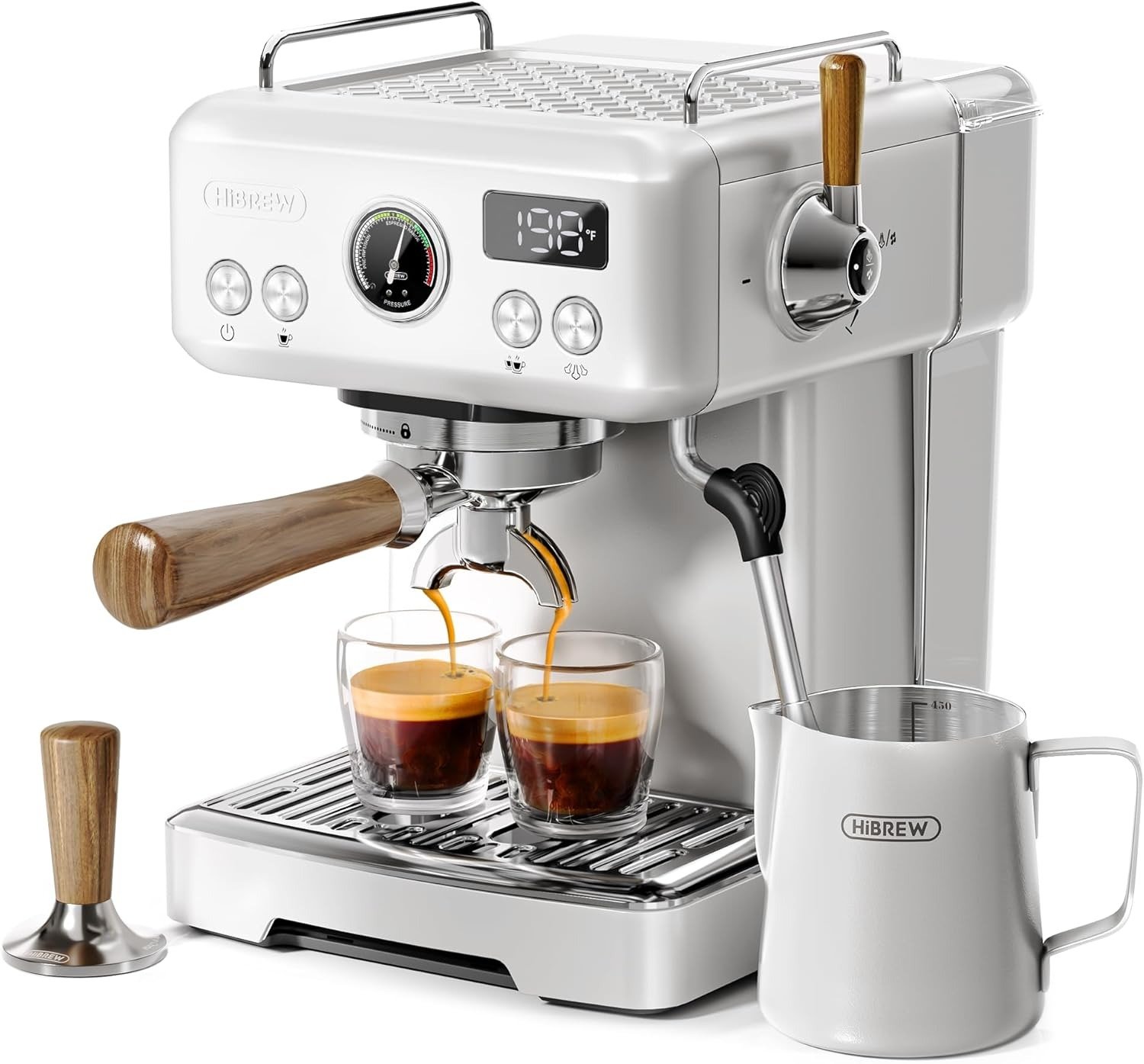
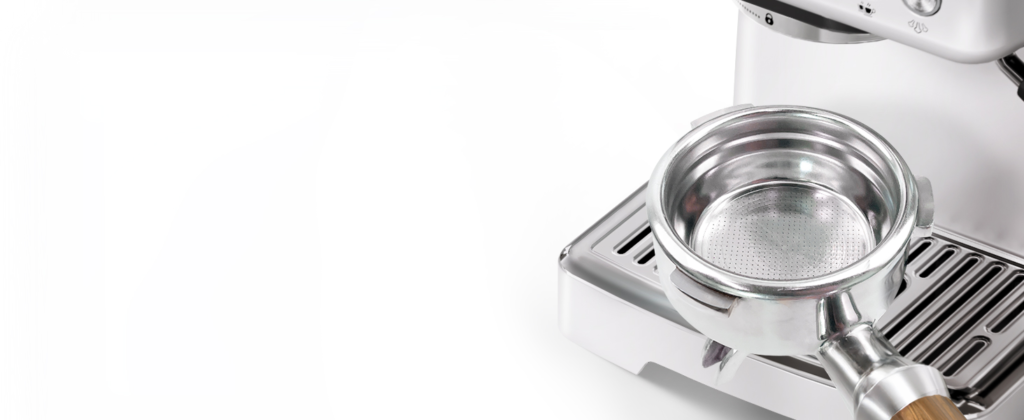
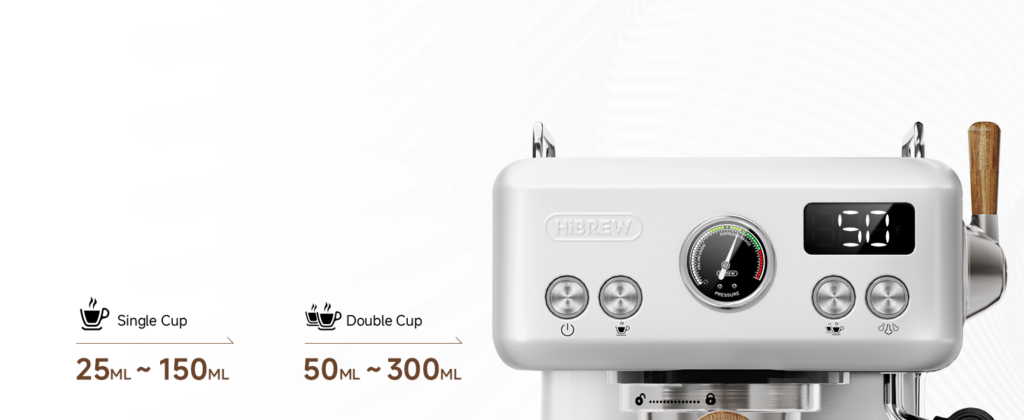
It ships with a ULKA Italian pump, dual PID, adjustable OPV, three-level pressure profiling, programmable pre-infusion from 0–10 seconds, 58mm commercial portafilter with both pressurized and non-pressurized baskets, live pressure gauge, intelligent LCD display with shot timer, a 1.8L removable water tank, and a solid wood-handled tamper with a 450ml upgraded milk pitcher. At its Amazon listing price, this is not a feature set that exists elsewhere in the same tier.
The logic of the purchase is this: you are buying the control infrastructure of a prosumer machine, housed in a thermoblock body. You are accepting the thermal ceiling of single-boiler design in exchange for the diagnostic and tuning tools that let you actually develop as a barista. The tradeoff is transparent. The value at its price point is real.
What It Solves, What It Reduces, and What It Still Leaves to You
What the HiBREW H10 Plus solves:
Temperature drift between sessions — addressed by dual PID that holds the brew and steam circuits at independent target temperatures rather than cycling blind. Shot inconsistency from over-pressure — addressed by the adjustable OPV that lets you calibrate to 9 bar rather than running factory-set 11+ bar. Puck damage post-extraction — addressed by the 3-way solenoid valve that releases pressure automatically so the puck exits cleanly. Lack of light-roast capability — addressed by pressure profiling that allows gentler extraction at lower flow rates.
What it reduces but doesn’t eliminate:
Channeling is reduced by the honeycomb shower screen and solenoid valve, but is not eliminated — a well-distributed, properly tamped puck is still your responsibility. Milk steaming wait time is reduced versus machines without dual PID, but a single thermoblock still requires sequential heating, unlike dual-boiler machines. Thermal mass is improved by design, not by hardware — you get PID precision without the thermal inertia of a real boiler.
What it still leaves entirely to you:
Grinder quality. This is non-negotiable. The machine will reward a burr grinder and punish everything else. Tamping consistency. Distribution. Descaling discipline. The willingness to pull a blank shot before your first extraction of the day to stabilize the group head temperature.
Final Compression
The HiBREW H10 Plus does not ask whether you are a beginner or an enthusiast. It asks whether you are serious.
If you are willing to pair it with a burr grinder, willing to learn what pre-infusion and pressure profiling actually do, and willing to run maintenance every 2–3 months — it will return café-quality shots inside a machine that costs a fraction of the hardware that typically carries these controls.
If you want coffee with no learning curve, or you believe a machine at this price can replace the discipline of technique, it will disappoint you. Not because it’s defective. Because it’s honest.
The specific situation where the decision stops being ambiguous: you have already owned a basic entry machine and hit its ceiling, you have a grinder or are buying one at the same time, and your ceiling for machine spend is around $200. In that situation, no machine in this tier gives you more instrumented control over your extraction.
That is the threshold. Everything outside it is a different purchase.
Frequently Asked Questions
| Question | Answer |
|---|---|
| Does the HiBREW H10 Plus actually brew at 20 bar? | No — and that is correct behavior. The 20 bar figure is the pump’s pressure ceiling. Espresso extracts at 9 bar. The ULKA pump operates up to 20 bar maximum, while the adjustable OPV regulates actual brew pressure to the target 9 bar range. Machines that extract at 20 bar would produce harsh, over-extracted, unusable shots. |
| What grinder does the HiBREW H10 Plus require? | A burr grinder — either flat or conical burr. The machine is routinely paired with the HiBREW G5 by verified owners who report the combination produces shots more consistent than machines costing three times as much. Blade grinders produce uneven particle distribution that defeats PID precision entirely. |
| Can the H10 Plus make lattes and cappuccinos? | Yes. The 270-degree rotating steam wand produces microfoam suitable for latte art. The dual PID maintains steam temperature independently of brew temperature. Owners report café-quality foam in under 30 seconds with proper technique (cold milk, cold pitcher, wand just below surface, whirlpool motion). |
| Is the 58mm portafilter an advantage? | For accessory compatibility, yes — 58mm is the commercial standard, meaning the aftermarket ecosystem of tampers, distribution tools, puck screens, and bottomless portafilters is wide. Some experienced users prefer 51mm for thicker puck geometry. Both are valid. The H10 Plus’s 58mm makes future accessory upgrades straightforward and affordable. |
| How does the H10 Plus compare to the Breville Bambino Plus? | The Breville Bambino Plus offers faster steam (dedicated steam thermojet), automatic milk frothing, and a more polished build. The H10 Plus offers pressure profiling, adjustable OPV, longer pre-infusion control, and a lower price. The Bambino is the better machine for convenience-first buyers. The H10 Plus is the better machine for technique-development buyers. |
| What is the HiBREW H10 Plus warranty? | One year, covering manufacturing defects. HiBREW’s customer service has been flagged positively by multiple owners — including proactive refunds when price drops occurred after purchase. |
| What are the main weaknesses of the HiBREW H10 Plus? | Three honest weaknesses: (1) plastic group head requires a warm-up blank shot each session, (2) milk steaming requires sequential heating that slows back-to-back milk drink prep, (3) the locking handle mechanism has been noted as a potential long-term durability concern under heavy daily use. |
| Who should not buy the HiBREW H10 Plus? | Anyone who won’t buy a burr grinder. Anyone making 8+ drinks daily in a high-throughput environment. Anyone who needs 10+ year appliance durability as the primary criterion. And anyone who wants the machine to do the work — the H10 Plus demands a genuine barista partnership. |
Transparency Note:
This analysis is built on aggregated real-world experience.
It extracts what repeatedly holds, what breaks, and what users uncover only after living with the system—then shapes it into a clear model you can use immediately.
Think of it as structured experience, refined and presented so you don’t have to learn it the hard way.
“A quick note: Don’t believe the star ratings, but trust personal experience. This article is a compilation of collected experiences”