Blink Video Doorbell + Outdoor 4 Bundle: The Real Cost of "Simple" Home Security
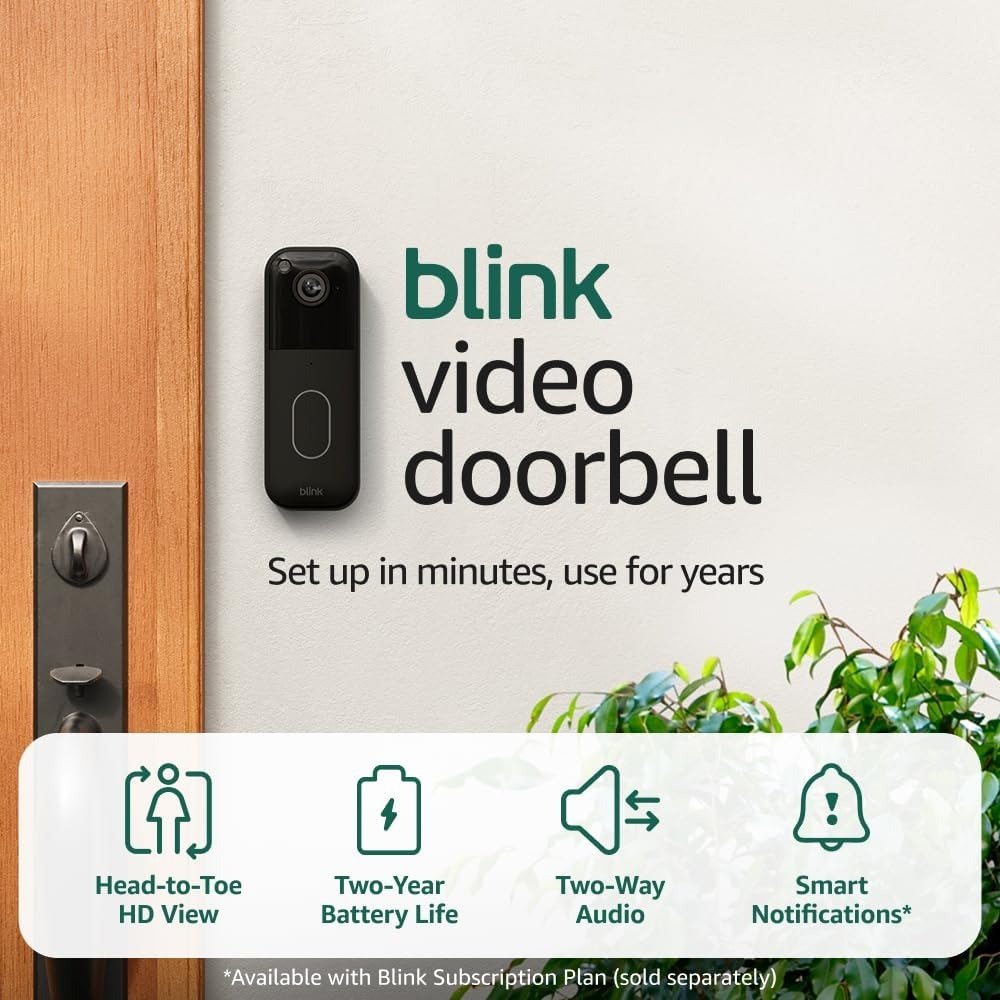
BLINK VIDEO DOORBELL + OUTDOOR 4 BUNDLE
You bought it — or you’re about to — because the price made everything else feel reckless. Under fifty dollars for a doorbell and a camera. Two years of battery. No wiring. Five minutes of setup. On paper, this is the no-brainer buy of modern home security.
So why do thousands of people feel quietly cheated three months later?
Not because the cameras failed dramatically. Not because the app crashed. Not because a storm destroyed the hardware. It’s quieter than that. The footage is there. The alerts come. The setup was fast. But something in the result doesn’t match what they imagined when they clicked “Add to Cart.” The image that didn’t load fast enough. The face that was slightly too blurry at night. The notification that arrived 30 seconds after the person already left. The moment they realized that to actually save those clips, there’s a monthly fee waiting behind the free trial.
This isn’t a product that fails. It’s a product that succeeds at something slightly different from what most buyers expect. And that gap — between what people assume and what the system actually delivers — is where the frustration lives.
What the Price Tag Is Really Selling You
The Blink Video Doorbell + Outdoor 4 bundle does not sell you security. It sells you coverage. Those are different things, and the distinction matters before you install anything.
Coverage means: something happened, a notification arrived, a clip exists. Security means: that clip is clear enough to identify a face, saved automatically, accessible the moment you need it, and recorded even when your Wi-Fi had a bad night.
The Blink system delivers coverage reliably. At no point do users typically report major connectivity hiccups, and the system does what it says it will do. The doorbell alerts you. The outdoor camera detects motion. The app loads. But the ceiling on what “working correctly” means is set much lower than most buyers realize.
| What Blink Promises | What You Actually Get |
|---|---|
| 1080p HD Live View | Clear daytime footage; acceptable quality |
| Infrared Night Vision | Black-and-white, limited to roughly 20 feet of reliable detail |
| Two-Year Battery Life | Two years under conservative use defaults — not with frequent live viewing or cold climates |
| Motion Detection | Triggers reliably, but requires tuning or expect false alerts |
| Free Storage | 30-day trial only — ongoing storage requires a paid subscription |
| No Monthly Fee (marketing implication) | Fees required for clip saving with the included Sync Module Core |
The Annoyance You Can’t Quite Name
Most Blink buyers don’t complain that the camera doesn’t work. They complain about something harder to describe — a persistent sense that the system is almost right but not quite.
The first challenge is dialing in motion sensitivity to that sweet spot between catching real threats and avoiding false alerts. With default settings, frequent “motion detected” alerts flood your phone. Drop the sensitivity too low, and you risk missing actual security events.
That tuning process isn’t advertised. It doesn’t show up in the product video. It’s the kind of invisible friction that only surfaces after installation, when you’re standing in your kitchen at 9pm getting an alert because a branch moved.
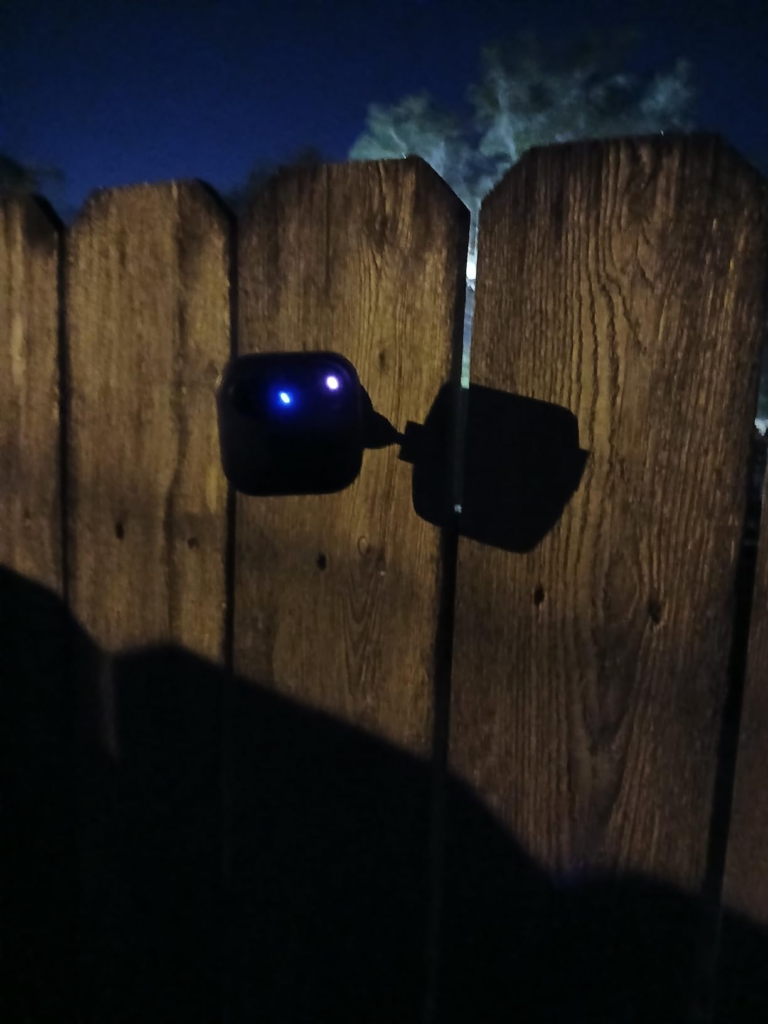
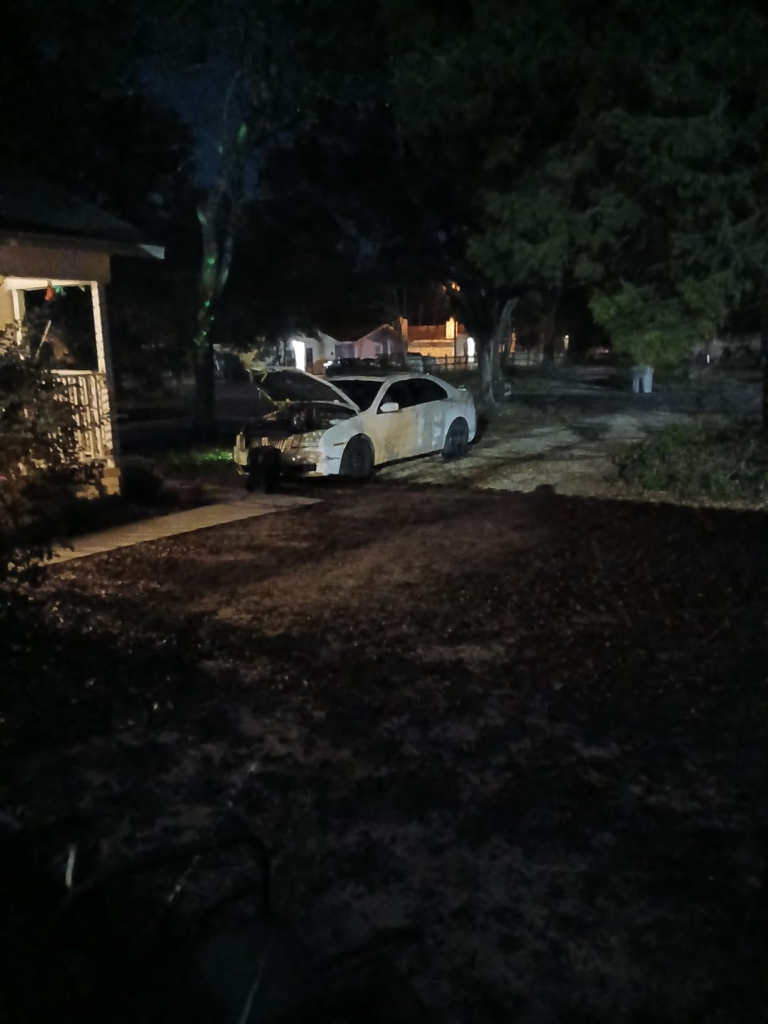
Then there’s the night vision. The infrared night vision works adequately for basic detection — you can tell when someone approaches your door — but facial details beyond 20 feet prove challenging to make out clearly. The image gets grainy and washed out.
And the audio: the doorbell speaker delivers clear, high-quality voice reproduction. But the audio stream returning through the app is plagued with a constant background noise riddled with audio artifacts — not bad enough to completely block conversation, but persistently present.
These aren’t bugs. These are the actual performance characteristics of a sub-$50 device. The problem isn’t the product. The problem is that the marketing around it creates a mental image of a security system, when what you’re actually buying is a motion-triggered notification system with a live view window.
The Hidden Mechanism Behind the Missed Expectation
There is one structural decision inside the Blink ecosystem that changes everything, and it is almost never explained clearly at the point of purchase: the Sync Module Core included in this bundle does not support local storage.
The included Sync Module Core does not have local storage. If you have the older Sync Module 2, it has a USB slot for local storage to record video clips when motion is detected — meaning no subscription is needed. But with the Core, there is no subscription-free path to saving clips.
This is not a minor footnote. It means the following:
| Storage Situation | What Happens to Your Clips |
|---|---|
| Sync Module Core (bundled) + No Subscription | Motion detected. Alert sent. No clip saved. Gone. |
| Sync Module Core + Free Trial Active | Clips saved to cloud for 30 days |
| Sync Module Core + Paid Subscription | Clips saved with person detection and extended history |
| Sync Module 2 (older, sold separately) + USB Drive | Clips saved locally, no subscription needed |
The Blink Subscription Plan runs $3/month or $30/year for one camera, or $10/month ($100/year) for unlimited devices at one address. Both tiers include cloud video storage, smart detection, and live view recording.
The product is advertised with a free trial. The free trial ends. At that point, unless you pay, your cameras are notification machines with no memory.
This is the mechanism most buyers don’t see until they’re already mounted, already set up, already past the return window.
The Threshold Where the Experience Quietly Breaks
There is a specific condition under which the Blink Video Doorbell + Outdoor 4 bundle stops feeling like a capable system and starts feeling like a compromise you’re actively managing. That threshold has three variables:
Wi-Fi signal strength. Blink cameras don’t have a strong range. Long distances, thick walls, or metal siding cause drops and missed clips. The system requires a stable 2.4GHz signal near each camera location. If your router is more than one room away from your front door or your outdoor camera placement, expect intermittent disconnections. One Reddit user with 500Mbps fiber and professional-grade access points reported that devices would go offline within minutes of the sync module restarting — and a replacement unit showed the same behavior.
Ambient light at night. Night vision isn’t great — but placing cameras close to existing sources of light works as a practical workaround. If your entry points have porch lights, streetlights, or any ambient illumination, the camera performs acceptably. In genuine darkness, the IR night vision produces footage that tells you something happened, but rarely who it was.
Temperature and battery behavior. The claimed two-year battery life rests on conservative defaults. Users may observe shorter spans with high-resolution streaming, frequent alerts, or extended night-mode operation. Cold weather increases drain below rated temperatures.
Below this threshold — good Wi-Fi, lit environment, moderate alert frequency — the system works well. Above it, you are continuously compensating.
Why Most Buyers Misread This Purchase Too Early
The comparison that kills the most decision accuracy is Blink vs. Ring. People look at both, see Amazon owns both, assume they’re choosing between the budget option and the premium one, and conclude that Blink is simply Ring with fewer features.
That framing is wrong. These are different instruments for different jobs.
| Dimension | Blink Video Doorbell + Outdoor 4 | Ring Video Doorbell + Camera |
|---|---|---|
| Price (bundle, sale) | ~$48–$62 | $100–$200+ |
| Night Vision | Infrared B&W, ~20ft reliable detail | Superior low-light, clearer detail |
| Storage without sub | None (Core module included) | None (requires Ring Protect) |
| Storage with sub | $3–$10/month | $4–$10/month |
| Smart Home | Alexa only | Alexa + broader integration |
| Build impression | Plastic, functional | Slightly more premium feel |
| AI detection (free) | No | No |
| Setup complexity | Very simple | Simple to moderate |
| Battery life | Up to 2 years | 6–12 months typical |
Blink cameras provide 1080p HD resolution across all models with clear daytime footage but lack HDR, which reduces detail and color depth in bright or high-contrast lighting. Frame rate is limited to 30fps, leading to slight blurring of fast-moving objects.
Ring is not better at the core job. It is better at the edges — the low-light performance, the ecosystem depth, the richer alerts. If you need the edges, Blink will disappoint you. If you don’t, Ring’s additional cost is wasted money.
The buyers who regret Blink are almost always people who needed Ring-level edge performance at Blink’s price. That product does not exist.
Who Is Actually Inside This Problem
This system belongs to a specific type of buyer. Not everyone. Not most people who discover it through a deal post. A specific profile.
You are the right buyer if:
- Your property has existing ambient lighting at the camera mounting points
- Your Wi-Fi router is within one strong-signal room of the doorbell and outdoor camera location
- You are comfortable paying $3–$10/month after the free trial, or you own a Sync Module 2 and a USB drive
- Your security goal is awareness — knowing something happened, being alerted in time to respond — rather than forensic-grade footage
- You are already in the Amazon/Alexa ecosystem and find that integration genuinely useful
- You don’t need Google Home or Apple HomeKit compatibility
Smart home protocol support is limited to Amazon Alexa — you cannot use this with Google Home or Apple HomeKit. This is not a trivial limitation for Google or Apple household users.
The system works best in basic setups where motion is predictable: front doors, small porches, indoor rooms. Long driveways, license plate capture, and large yards with unusual angles push past what this system was designed for.
Where Wrong-Fit Begins
There is a buyer who should not choose this system. Not because the cameras are bad, but because their actual situation will produce frustration that no amount of settings adjustment will resolve.
| Your Situation | What Will Happen |
|---|---|
| Dark entry points, no ambient light | Night footage will be too grainy to identify faces |
| Wi-Fi dead zones near camera locations | Frequent disconnections, missed clips, offline devices |
| Need Google Home or Apple HomeKit | System is incompatible — no path forward |
| Refuse to pay monthly subscription | Clips won’t be saved — alerts only, no recording |
| Need license plate or facial identification | Resolution and night vision ceiling too low |
| Large property, multiple access points at distance | Motion detection and connectivity unreliable at range |
| Need professional customer support | Blink is super buggy and customer support response is poor — their standard advice is to buy new equipment for any problem. |
While the system looks like a great buy on paper and has improved with each generation, build quality is affordable-feeling and audio remains an afterthought. If you are buying a security system to feel genuinely secure — not just covered — this is not the ceiling you want.
The One Situation Where This Bundle Becomes Logical
You have a rented home or apartment. Or a starter home. Or a property where you want basic perimeter awareness without committing to Ring’s pricing or Nest’s installation complexity. You have good Wi-Fi throughout. Your front door and driveway have existing lighting. And you are comfortable with the idea that you’re buying a notification layer, not a surveillance infrastructure.
In that situation, the Blink Video Doorbell + Outdoor 4 bundle is the correct purchase.
It is an affordable, simple system that works best within its defined parameters — especially if you already have other Blink cameras at home. It may not offer the best video quality or the most features, but it works as advertised and is very affordable.
Setup takes two to five minutes. The app is clear. The sync module links quickly to Wi-Fi. The cameras mount with included hardware. There is no wiring, no professional installation, no technical barrier to entry.
The product does what it says. The question was never whether it works. The question is always whether it works for you.
What It Solves, What It Reduces, and What It Still Leaves to You
What this bundle solves:
- Blind spots at your front door and one outdoor zone
- The gap between “I heard something” and “I have a clip of it”
- The complexity of wired installation
- The battery maintenance burden (two years is genuinely two years under normal use)
- The cost of entry into video monitoring
What it meaningfully reduces:
- Package theft awareness — you’ll know if something happened
- Uncertainty about who rang the doorbell while you were away
- The effort of basic home perimeter monitoring
What it still leaves entirely to you:
- Deciding whether to pay the subscription — because without it, the Core module saves nothing
- Managing Wi-Fi signal quality near camera locations
- Adjusting motion sensitivity until false alerts stop
- Adding external lighting if your entry points are dark
- Accepting that night footage will be functional but not sharp
Where regret typically begins:
Buyers who discover the subscription requirement after the free trial expires. Buyers who mount cameras in Wi-Fi-weak zones. Buyers who expected Ring-level performance at Blink’s price. Buyers in Google or Apple households who assumed “works with smart home” meant their smart home.
Final Compression
The Blink Video Doorbell + Outdoor 4 bundle is not overpriced. It is not a scam. It is not poorly made. It is a precisely-built entry-level security system that delivers exactly what it was designed to deliver — and stops there.
The buyers who are satisfied with it share one thing: they knew, before buying, that they were choosing coverage over depth. The buyers who are disappointed share one thing: they discovered that distinction after the fact.
| Decision Variable | Clear Yes | Clear No |
|---|---|---|
| Budget under $65 for doorbell + camera | ✅ | |
| Already in Alexa ecosystem | ✅ | |
| Good Wi-Fi signal at install locations | ✅ | |
| Existing ambient lighting outdoors | ✅ | |
| Need subscription-free clip saving | ❌ | |
| Need Google Home / Apple HomeKit | ❌ | |
| Need sharp night facial identification | ❌ | |
| Large property, distant camera points | ❌ |
If your situation sits cleanly in the left column, this is the logical next step. The system is in stock, the price is honest, and the setup is genuinely as simple as advertised.
If your situation includes anything from the right column, that mismatch will follow you past installation, past the free trial, and past the return window. Choose a different system before the cameras are mounted, not after.
Frequently Asked Questions
| Question | Answer |
|---|---|
| Does the Blink Video Doorbell + Outdoor 4 bundle require a subscription? | Not to receive motion alerts or use live view. But to save and replay video clips, you need either a paid Blink Subscription Plan or a Sync Module 2 (not the Core included in this bundle) paired with a USB drive. The included Sync Module Core does not support local storage — clips are only saved during the free 30-day cloud trial or with an active subscription. |
| How long does the battery actually last? | Up to two years under Blink’s conservative default settings — limited live view sessions, moderate motion frequency, and mild temperatures. Frequent live streaming, high motion alert rates, or cold climates will shorten that lifespan noticeably. |
| Does the Blink system work with Google Home or Apple HomeKit? | No. Blink is exclusively compatible with Amazon Alexa. If your home runs on Google Home or Apple HomeKit, this system will not integrate with your existing setup. |
| What happens to my clips if I don’t pay for a subscription after the free trial? | With the included Sync Module Core, nothing is saved. You will receive motion alerts, but no clip will be stored or retrievable. The event is gone once the notification is dismissed. |
| Is the night vision good enough to identify faces? | At close range (under 15–20 feet) with reasonable ambient light, yes — well enough for general identification. Beyond 20 feet in true darkness, the infrared footage becomes grainy and washed out. It will confirm that someone was there, but often not clearly who. |
| Can I use the Outdoor 4 without any subscription at all? | Yes — if you pair it with a Sync Module 2 (older model, sold separately) and a USB drive. In that configuration, clips save locally with no monthly cost. The bundle sold here includes a Sync Module Core, which does not support this path. |
| How difficult is installation? | Genuinely simple. Most users complete full setup in 5–10 minutes. The app walks through each step. No wiring required for the wireless Outdoor 4 cameras. The Video Doorbell can be installed battery-powered or wired to an existing doorbell circuit. |
| What is the field of view on the Outdoor 4? | 143 degrees diagonal, which provides wide situational awareness but introduces some edge distortion at the frame corners — a standard tradeoff at this angle. |
| Is the Blink Video Doorbell waterproof? | Both the Video Doorbell (2nd gen, 2025) and the Outdoor 4 carry an IP65 rating, meaning they are dust-tight and protected against water jets from any direction — sufficient for rain, snow, and normal outdoor exposure. |
| Who should buy this and who should skip it? | Buy it if: you’re Alexa-based, have good Wi-Fi near your camera points, have ambient lighting outdoors, and are comfortable with a modest subscription. Skip it if: you need Google/Apple compatibility, subscription-free local storage, sharp night vision, or reliable performance across a large property. |
Transparency Note:
This analysis is built on aggregated real-world experience.
It extracts what repeatedly holds, what breaks, and what users uncover only after living with the system—then shapes it into a clear model you can use immediately.
Think of it as structured experience, refined and presented so you don’t have to learn it the hard way.
“A quick note: Don’t believe the star ratings, but trust personal experience. This article is a compilation of collected experiences”
From our analytics lab: More top-rated reviews
| PRODUCT NAME: BLINK WHOLE HOME BUNDLE |
| PRODUCT NAME: ARLO ESSENTIAL VIDEO DOORBELL 2K |