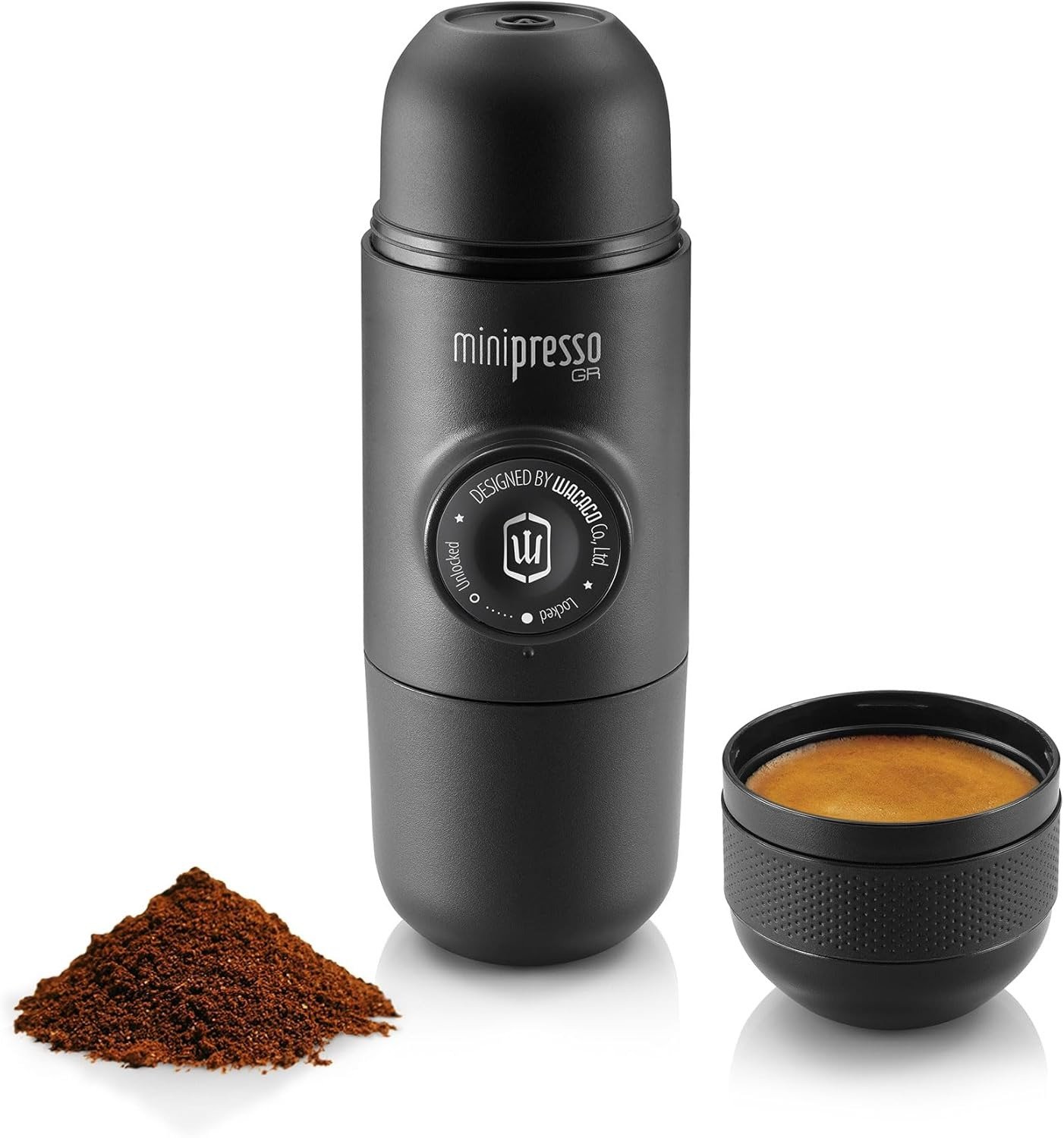
THE WACACO MINIPRESSO NS PROMISES ESPRESSO ANYWHERE — BUT "ANYWHERE" HAS A VERY SPECIFIC MEANING
The Result Looks Fine. The Problem Isn’t.
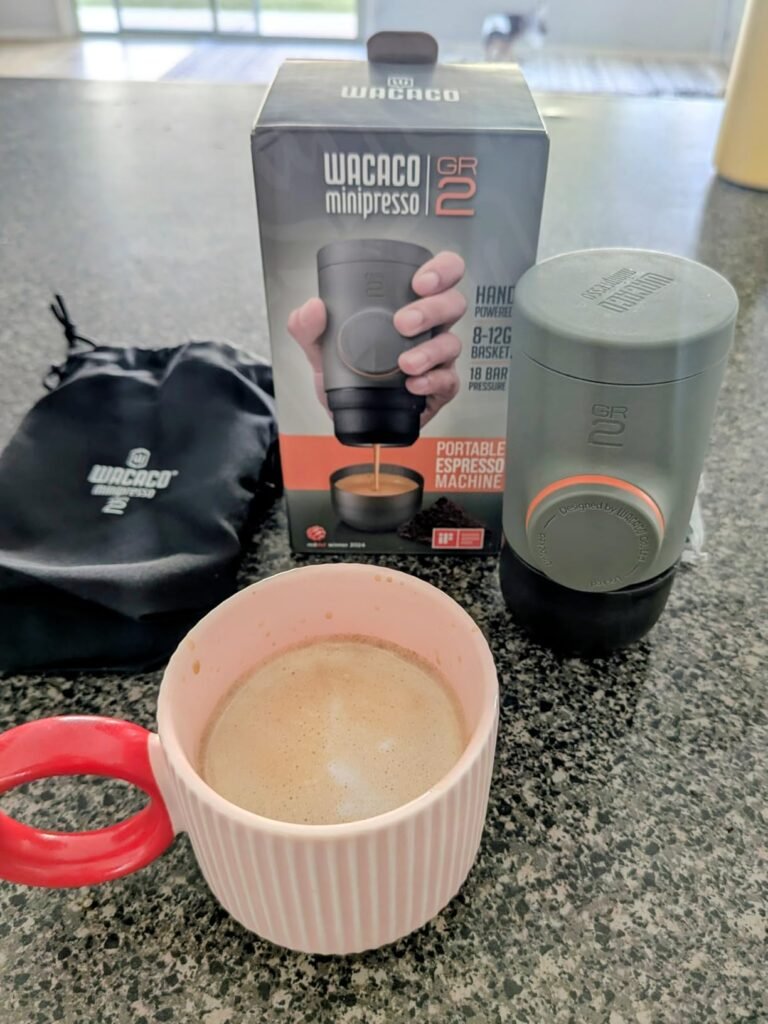
You unbox it. It’s smaller than expected. Lighter than a water bottle. You fill the tank with hot water, slot in a Nespresso capsule, pump the piston — and a dark shot pours into the tiny cup with what looks like crema on top.
It works. Technically.
But a week later, half of the people who bought it are still satisfied, and the other half are annoyed in a way they can’t quite name. Not because the machine broke. Because the espresso they got doesn’t match what they imagined when they ordered it.
That gap — between working and delivering — is exactly what this review is about.
What You’re Actually Feeling but Not Naming
There’s a specific frustration that comes from a product that does what it says but doesn’t do what you needed.
You were at a campsite, a hotel room, a long train ride. You wanted that moment — real espresso, not vending machine coffee, not instant powder. You wanted to control something in a situation where nothing is controlled. And the Minipresso NS gave you… a small warm cup of something that resembled espresso. Sometimes great. Sometimes underwhelming. And you didn’t know why it changed.
That inconsistency isn’t random. It’s structural.
Users who get consistently good results share one behavior: they preheat the machine with a hot-water flush before inserting the capsule. Users who get tepid, weak shots almost always skip this step — not because they’re careless, but because nothing in the product’s obvious presentation tells them it matters this much.
The machine doesn’t heat water. You supply the heat. And the machine’s plastic body absorbs it on the way through.
The Hidden Mechanism Behind the Miss
The Minipresso NS generates pressure through a manual piston — up to 8 bars when pumped correctly. That’s within real espresso range. The mechanism is sound.
But 8 bars of pressure through cool-bodied plastic with water that started at 90°C and dropped to 78°C by the time it reaches the capsule is a different thing entirely from 8 bars through a thermally stable portafilter at 93°C.
Here’s what actually happens when the shot underperforms:
| Variable | Ideal | What Most Users Do |
|---|---|---|
| Water entering tank | 95–100°C (just off boil) | Boiled 2–3 min earlier, ~85°C |
| Machine body temperature | Pre-warmed | Room temperature |
| Pumping rhythm | Steady, controlled | Rushed or inconsistent |
| Capsule quality | Nespresso OriginalLine | Off-brand compatibles |
| Assembly tightness | Snug but not overtightened | Either loose (leaks) or over-torqued (hard to pump) |
Each of these variables alone reduces shot quality by a noticeable margin. When two or three combine — which happens naturally in field conditions — the result is the shot that made someone on eBay write “Useless!! Even if you use original Nespresso capsules you only get a small quantity of espresso and tepid.”
That reviewer wasn’t wrong. Their conditions were wrong for the machine. Not the same thing.
The Threshold Where the Outcome Quietly Breaks
The Minipresso NS has a performance threshold that very few product pages acknowledge directly.
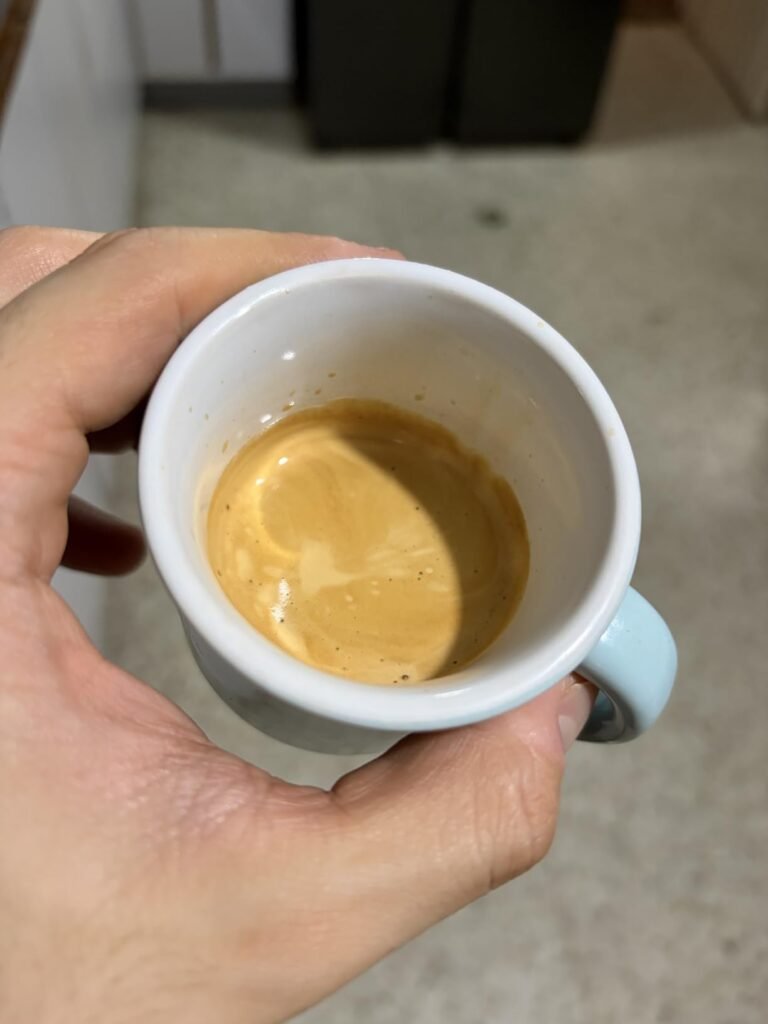
Below the threshold: You’re in a warm kitchen, you’ve preheated the unit, the water just came off a rolling boil, and you’re using original Nespresso capsules with a steady pumping rhythm. The shot is real espresso. Rich, aromatic, with a visible crema layer. You can do this three times in a row and be impressed every time.
At the threshold: You’re outdoors. The air is cold. You boiled water on a camping stove ten minutes ago. The machine sat in your pack all morning. The capsule is a budget-brand compatible. The shot is functional. Warm. Coffee-flavored. Not espresso.
Below the threshold: You’re rushing. You’re in a hotel bathroom. You forgot to preheat. The water was from the hot tap, not a kettle. You overfilled the tank and can’t get it to seal. Hot water escapes from the joint and touches your hand. The experience is stressful, messy, and the output doesn’t justify the ritual.
The machine doesn’t tell you which zone you’re operating in. That’s the structural invisibility of the problem.
Why Most Buyers Misread This Too Early
The comparison trap with the Minipresso NS is well-documented across every review community, and it almost always goes the same way.
Someone sees the NS next to the Nanopresso or the Picopresso. They notice the NS is easier — capsules instead of ground coffee, fewer components, a simpler assembly. They assume simplicity means lower stakes. They’re partially right. But they miss the asymmetry:
| Dimension | Minipresso NS | Nanopresso | Picopresso |
|---|---|---|---|
| Pressure | 8 bar | 18 bar | 18 bar |
| Heat sensitivity | High | High | Very High |
| Skill ceiling | Low | Medium | High |
| Skill floor | Medium (temp mastery) | Medium | High |
| Capsule lock-in | Nespresso OriginalLine only | Optional NS adapter | Ground coffee only |
| Shot quality ceiling | Good | Very Good | Café-level |
| Portability | Excellent | Excellent | Good |
| Failure mode | Tepid shot / leaking seal | Grind inconsistency | Technique failure |
The Minipresso NS is not the easiest machine in this lineup to get a great shot from. It’s the easiest to operate — but those aren’t the same thing. The Nanopresso, ironically, gives you more control over the variables that determine quality.
Buyers who compare price points without comparing this skills-vs-quality matrix often end up dissatisfied. Not because the product is bad. Because the product was matched to the wrong expectation.
Who Is Actually Inside This Problem
The Minipresso NS performs exactly as intended for a specific kind of user. That user:
- Travels regularly and has figured out that access to boiling water is not a problem (hotel kettle, travel kettle, thermos, camping stove with a two-minute buffer)
- Already uses Nespresso OriginalLine capsules and has a brand they trust
- Wants espresso ritual without equipment weight — and is willing to learn a two-step preheat process and maintain a consistent pump rhythm
- Accepts one shot per filling and doesn’t need volume
- Values that the device has no batteries, no charging, no electricity dependency
- Has hands strong enough to pump steadily without fatigue — or accepts that it’s a two-handed operation
The keyword here is accepts. The Minipresso NS is not a machine that forgives bad inputs. It rewards correct inputs very well.
Where Wrong-Fit Begins
There are several entry points where buyers regret this purchase. Each one is predictable:
Regret Type 1 — The Cold-Climate User
You camp in cold weather. The machine body chills quickly. Even if you started with boiling water, heat loss through plastic in a 5°C morning is significant. The shot comes out warm at best. No amount of technique corrects ambient temperature absorption.
Regret Type 2 — The Two-Shot Drinker
The tank holds one shot. If your routine is a double espresso, you’re refilling, re-sealing, and re-pumping twice. The second shot almost always suffers because the capsule compartment needs cleaning between uses and the machine body cools between cycles.
Regret Type 3 — The Impatient Assembler
Assembly has a tolerance window. Too loose and the joint leaks. Too tight and the capsule compartment becomes difficult to open after brewing. Several users report hot water escaping onto their hands — not from a defect, but from under-tightening during rushed conditions.
Regret Type 4 — The Off-Brand Capsule User
The NS is compatible with Nespresso OriginalLine capsules and stated-compatible third-party capsules. However, capsule geometry varies slightly between brands, and not all compatibles seal cleanly inside the NS chamber. Inconsistent sealing means inconsistent pressure means inconsistent shots.
| Regret Profile | Root Cause | Addressable? |
|---|---|---|
| Tepid shots | Water temp + no preheat | Yes, with technique |
| Weak flavor | Off-brand capsules | Yes, by switching capsules |
| Leaking joint | Assembly tolerance | Yes, with practice |
| Burned hand | Under-tightened seal | Yes, with practice |
| Cold-weather failure | Physics | No — wrong product for this environment |
| Double-shot need | Single-shot design | No — wrong product for this volume |
The One Situation Where This Product Becomes Logical
If you are someone who travels frequently in controlled indoor environments — hotel rooms, offices, trains, cars with a kettle — and you already use Nespresso OriginalLine capsules, and you want a single espresso shot without carrying a machine that needs a power outlet, the Wacaco Minipresso NS is the correct purchase.
It is lightweight at 360 grams. It fits inside a bag without padding. It has no batteries to die, no cord to forget, no power adapter to lose. The pump mechanism has proven durable across multi-year use for regular users. The espresso, when conditions are controlled, is genuinely good — not “good for portable” — good by any reasonable standard, with visible crema and a full extraction profile.
The ritual takes approximately three minutes once you know it. Preheat the body. Water just off boil. One OriginalLine capsule. Steady pumping rhythm. Disassemble, rinse, dry. Done.
For this specific user, no alternative at this price point does the job more cleanly.
What It Solves, What It Reduces, and What It Still Leaves to You
| Category | What the Minipresso NS Does |
|---|---|
| Solves | Access to real espresso without electricity or a coffee shop |
| Solves | Carrying weight — 360g vs. any electric alternative |
| Solves | Battery dependency and charging anxiety on long trips |
| Reduces | Cost per shot versus café purchasing ($3–5 per shot vs. capsule cost) |
| Reduces | Decision load — capsules eliminate grinding, dosing, tamping |
| Still leaves to you | Water temperature management |
| Still leaves to you | Preheat discipline |
| Still leaves to you | Assembly consistency under fatigue or cold |
| Still leaves to you | Capsule selection and brand quality control |
This is not a machine that removes all variables. It compresses the skill requirement relative to ground-coffee portables, but it does not eliminate the thermal variable. That variable is the one that surprises most users who thought they were buying simplicity all the way down.
Final Compression
The Wacaco Minipresso NS is a thermally sensitive, single-shot, piston-driven espresso maker built for indoor-adjacent travel conditions with Nespresso OriginalLine capsules. It performs well when you control the inputs. It underperforms when you don’t. The machine’s design does not warn you about this distinction loudly enough. Most negative reviews are temperature failures in disguise.
If your travel patterns include reliable access to water just off boiling, if you use or are willing to use Nespresso OriginalLine capsules, and if a single espresso shot fits your routine — this is a rational, durable, and affordable solution.
If you need two shots, brew outdoors in cold temperatures, or rely on off-brand capsules for cost reasons — the machine will work, but the output will rarely meet your expectation, and the frustration will be real.
The decision point is simple: does your environment let you control water temperature and assembly precision most of the time? If yes, the Minipresso NS delivers what it promises. If not, a machine with higher pressure and broader thermal tolerance — like the Nanopresso with an NS adapter — matches your conditions better, even if it costs slightly more.
Frequently Asked Questions
| Question | Answer |
|---|---|
| Does the Wacaco Minipresso NS make real espresso, or just strong coffee? | It produces genuine espresso extraction — up to 8 bars of pressure through a Nespresso capsule, with crema, when water temperature and pump rhythm are correct. Whether it tastes like your home machine depends entirely on how well you manage the thermal variables. |
| Why is my Minipresso NS shot coming out weak or tepid? | Almost always a temperature issue. The machine body absorbs heat from your water before it reaches the capsule. Use water just off a rolling boil, and run a preheat cycle — pump hot water through the machine without a capsule first, discard, then brew. This single step changes the output significantly. |
| Can I use any Nespresso-compatible capsules, or only original ones? | The NS is designed for Nespresso OriginalLine capsules. Many compatibles work, but some third-party capsules have slightly different geometry that causes inconsistent sealing and pressure loss. If shots are inconsistent, switch to a different capsule brand before adjusting technique. |
| Is the Minipresso NS or the Nanopresso better for travel? | The Nanopresso is more forgiving in field conditions and generates significantly higher pressure (18 bar vs. 8 bar). If you travel in variable environments — cold weather, outdoor settings, unpredictable water access — the Nanopresso with an NS adapter is the stronger choice. The Minipresso NS has an advantage in simplicity and slightly smaller form factor for purely indoor travel use. |
| Is the pump difficult to operate? | It requires steady effort. It is manageable for most adults in comfortable conditions. In cold hands, fatigue, or arthritis situations, the resistance becomes a genuine problem. Several experienced users describe it as a two-handed operation rather than one. |
| Does it work at altitude or in very cold outdoor environments? | Water boils at lower temperatures at altitude, which reduces extraction quality. Cold ambient temperatures increase heat loss through the plastic body. Both conditions work against the machine. It is not designed for backcountry brewing — it is designed for travel in environments where controlling water temperature is feasible. |
| Is the Minipresso NS worth buying if I already have a Nespresso machine at home? | Only if you travel frequently and want that specific ritual away from home. If you’re buying it as a backup or novelty for occasional use, the learning curve and thermal discipline may not be worth the investment compared to simply accepting café espresso when traveling. |
Transparency Note:
This analysis is built on aggregated real-world experience.
It extracts what repeatedly holds, what breaks, and what users uncover only after living with the system—then shapes it into a clear model you can use immediately.
Think of it as structured experience, refined and presented so you don’t have to learn it the hard way.
“A quick note: Don’t believe the star ratings, but trust personal experience. This article is a compilation of collected experiences”