OUTIN NANO REVIEW: THE SHOT PULLS FINE. YOUR SETUP IS WHAT ACTUALLY FAILS YOU.
The Result Looks Fine. The Problem Isn’t.
You pull the shot. There is crema. The color is right. The machine made all the right sounds.
And still, something is slightly off. The body is thin. The flavor tapers early. The experience doesn’t quite land the way you expected a 20-bar electric machine at $149.99 to land.
So you assume the machine underdelivered.
It didn’t. Your entry assumptions did.
The OutIn Nano is not a machine that hides its limits — it is a machine whose limits are invisible until you import the wrong operating logic from the wrong context. Most people who feel let down by it arrived carrying assumptions that belong to a countertop espresso environment. Those assumptions are structurally incompatible with what the Nano is actually doing, and no amount of re-reading the product page will tell you that.
This review exists to name that gap precisely — before you spend $149, before you order the Basket Plus as an afterthought, and before you decide you “just aren’t getting espresso on the road” as a category conclusion when the actual failure point was always narrower than that.
What You’re Actually Feeling but Not Naming
The frustration most people bring to the Nano isn’t about the machine failing. It’s about the experience not matching the implied promise of the category.
Portable espresso, as a category, carries one persistent ghost assumption: that you can replicate your home workflow in a smaller body. The Nano is sold in a space that has historically been dominated by manual hand-pump devices — machines that require pre-boiled water, arm effort, and deliberate ritual. Against those, the Nano looks like the obvious upgrade. Battery-powered. Self-heating. One button. What’s not to understand?
The friction that emerges later is quieter and harder to name:
- The shot volume feels small and you’re not sure if that’s right
- The grind you brought from home produces a near-choke or a dribble
- The battery depletes faster than expected under cold-water heating
- Light roast beans taste acidic and underdeveloped
- The included plastic basket feels inadequate but the Basket Plus wasn’t mentioned clearly at checkout
None of these are malfunctions. Every single one is a threshold mismatch — a case of the user’s operating model colliding with the Nano’s actual operating envelope.
The Hidden Mechanism Behind the Miss
The OutIn Nano generates 20 bars of pump pressure and heats 50ml of water to 198°F (92°C) in approximately 200 seconds from cold. That temperature, while impressive for a battery-powered portable device, sits at the lower edge of the specialty coffee extraction window — and it does not quite clear the threshold required to properly extract light or medium-light roasts, which demand higher brew temperatures to fully dissolve their more complex, dense compounds.
The device doesn’t quite get hot enough to handle light or medium roasts. And while the regular double basket is good, it’s still quite far from precision baskets — the basket is tall but not wide, which limits you to a more coarse grind size, and the number of holes is lower than a standard 58mm basket.
This is the hidden mechanism behind most failed expectations: users dial in a fine espresso grind — the same grind they use at home — and the shot either chokes completely or flows too slowly and produces a bitter, over-extracted result with no real body. The OutIn Nano will definitely fail if you use your typical espresso grind size: even with the supposed 20 bar pressure, you’ll be lucky to get a dribble of coffee by the time the machine gives up.
The basket geometry enforces a coarser grind than intuition suggests. That coarser grind, combined with the Nano’s controlled pressure, produces correct espresso — but only when the bean profile is dark enough to extract at lower temperatures and the grind has been adjusted away from countertop-machine logic.
| Variable | Home Machine Assumption | OutIn Nano Reality |
|---|---|---|
| Grind size | Fine (classic espresso) | Slightly coarser than standard |
| Bean roast | Any profile | Medium-dark to dark performs best |
| Water temp | 200–205°F | 198°F ceiling (factory) |
| Shot volume | 30–60ml standard | 50–80ml with standard basket |
| Battery per brew | Not applicable | 3–5 cold-water shots per charge |
| Extraction control | Adjustable | Fixed — one-button only |
The Threshold Where the Outcome Quietly Breaks
There are two thresholds that define whether the OutIn Nano performs as expected. Most buyers encounter them without ever naming them.
Threshold One: The Grind-Pressure Compatibility Threshold
Grinding too fine chokes the machine. The OutIn feels very solid and is constructed using quality materials, but there is a learning curve especially with grind size. The geometry of the Nano’s basket enforces a grind ceiling. Below that ceiling — meaning grinds finer than the basket can vent — the pump cannot push water through and the shot fails silently. The machine sounds like it’s brewing. Nothing meaningful exits. You assume it’s the pressure. It isn’t. It’s the portafilter geometry interacting with your grind choice.
Starting with grinding a tiny bit coarser — around 35 on a Kingrinder K6 — produces shots with good body and lingering taste. That grind recommendation contradicts everything a first-time Nano user brings from countertop espresso history.
Threshold Two: The Battery Heating Depletion Threshold
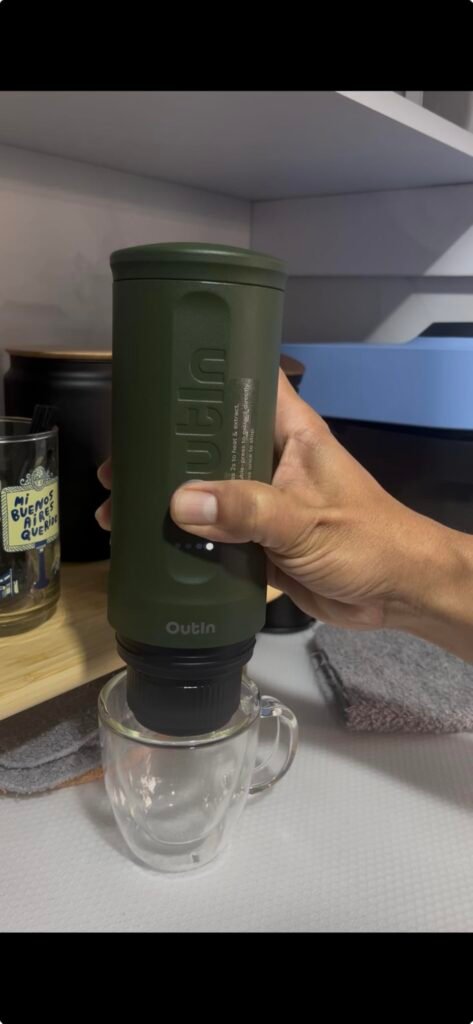
A fully charged Nano can heat up about five consecutive single servings using cold water; many more if using pre-boiled water. The self-heating function — the feature that makes the Nano genuinely category-defining — consumes a disproportionate portion of the 7,500mAh battery. In cold ambient conditions, battery drains faster, reducing shot count per charge — budget for three shots instead of five in freezing conditions.
Users who rely on the self-heating function as their primary operating mode will hit this threshold within one to two days of multi-session travel use. The solution — bringing pre-boiled water from an insulated flask — is effective and extends battery life dramatically, but it also removes the primary differentiation feature that justified the purchase decision in the first place.
| Usage Mode | Shots Per Charge | Battery Drain Rate | Practical Range |
|---|---|---|---|
| Self-heating (cold water) | 3–5 | High | Day trips, hotels |
| Self-heating (cold, sub-zero ambient) | 2–3 | Very High | Limited winter use |
| Pump-only (pre-boiled water) | 100–200+ | Minimal | Extended travel, camping |
| Mixed (some self-heat, some pre-boiled) | 15–30 estimated | Moderate | Most real-world use |
Why Most Buyers Misread This Too Early
The comparison that gets made most often — OutIn Nano versus cheaper manual portables like the Wacaco Nanopresso — is structurally lazy and produces bad decisions.
The Nano embraces tech and simplicity with self-heating and one-touch fully automatic operation. Its built-in pump delivers 20-bar pressure. Conversely, the Nanopresso, with 18-bar pressure, takes a more traditional approach — it’s a manual espresso maker that requires hot water and pumping, offering a more hands-on brewing experience.
These are not competing versions of the same product. They serve structurally different operators. The Nanopresso costs under $80 and removes every variable except your grind and your hot water source. It rewards deliberate users who pack a kettle and enjoy the ritual. The AeroPress excels in speed and simplicity for light coffee drinkers, while the Nanopresso rewards espresso fans who don’t mind manual effort.
The Nano, by contrast, removes the infrastructure dependency — no kettle required, no pumping, no arm fatigue. It adds electrical complexity and battery management in exchange for genuine one-touch operation in genuinely infrastructure-free environments.
The buyer who compares the two on price alone and chooses the manual option because it’s “simpler” will regret the absence of self-heating the first morning they need coffee before the camp stove is lit. The buyer who chooses the Nano expecting countertop espresso quality at travel size will hit the grind threshold and the temperature ceiling within the first week.
Neither regret is about the products. Both are about the comparison being made before the problem was properly located.
| Comparison Axis | Manual Portable (Nanopresso) | OutIn Nano |
|---|---|---|
| Infrastructure need | Hot water source required | None |
| User effort | Manual pumping every shot | One button |
| Weight | ~336g | ~670g |
| Grind tolerance | More forgiving | Specific window required |
| Battery dependency | None | Central |
| Best environment | Hiking, ultralight travel | Vanlife, road trips, hotels |
| Light roast handling | Better | Struggles below 198°F ceiling |
| Price | ~$80 | $149.99 |
Who Is Actually Inside This Problem
The OutIn Nano resolves a very specific problem that sounds simple but is structurally rare: the need for genuine espresso — not french press, not pour-over, not AeroPress — in an environment that has no power outlet, no boiling water source, and no tolerance for manual effort or technique variance.
You are inside this problem if:
- You travel frequently and lose your coffee quality entirely in hotel rooms, airports, offices without equipment, or outdoor setups
- You drink medium-dark or dark roast espresso and have a reasonable grinder — or are willing to acquire one
- You want one-button operation with no manual pumping and no pre-boiling dependency
- You understand that 3–5 self-heating shots per charge is your operational reality, not a spec to be improved by buying a bigger power bank
- You are willing to dial in a slightly coarser grind than your countertop machine requires and accept that the first few shots will be calibration shots
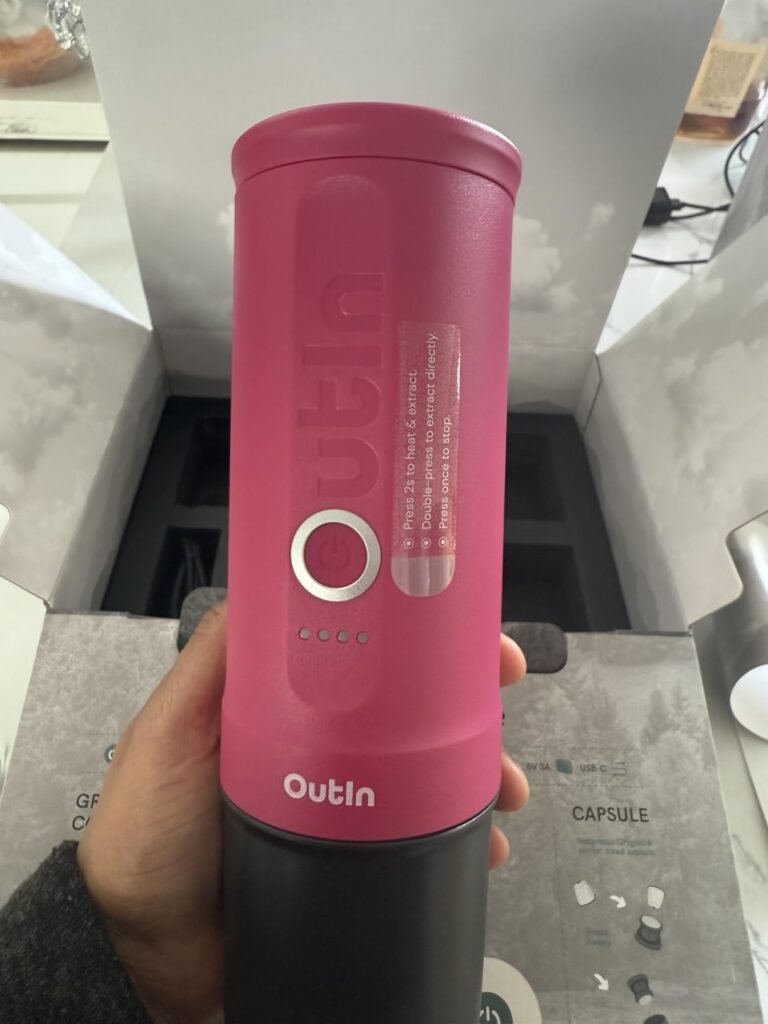
Outin’s mission is to make fresh espresso easier to enjoy in the great outdoors. Launched in January 2023 and fine-tuned over several iterations since, it now has a full team dedicated to development and support including dozens of baristas and coffee professionals for feedback.
Where Wrong-Fit Begins
The Nano will not serve you if your operating context doesn’t match the problem it solves. Knowing this before purchase is worth more than any specification comparison.
You are outside the fit if:
You drink light or medium-light roasts exclusively and expect full flavor development. The device doesn’t quite get hot enough to handle light or medium roasts. The 198°F ceiling is not a flaw — it is a structural result of battery-powered heating physics. No firmware update resolves it.
You want to use your home espresso grind without adjustment. Using your typical espresso grind size will cause extraction failure. Dialing in the Nano requires either a grinder with you or pre-ground coffee calibrated for this specific basket geometry.
You are planning multi-day backcountry trips with no power access and expect five shots per day on self-heating mode. The math does not hold. Two to three self-heating shots daily will exhaust the battery within two days.
You expect to use the machine while charging. The Nano cannot be used while plugged in.
You want to skip the Basket Plus and use the standard basket long-term if you care about shot volume and extraction quality. For the more experienced or ambitious espresso lover, the Basket Plus is a must-have — bumping capacity up to 18 grams of ground coffee. That upgrade costs an additional $39.90 and should be factored into your real purchase price from the start.
| Situation | Fit Verdict |
|---|---|
| Dark roast, travel daily, no kettle access | ✅ Strong fit |
| Light roast purist, temperature-sensitive | ❌ Wrong fit |
| Hotel / vanlife / road trip use | ✅ Strong fit |
| Multi-day backcountry without power | ⚠️ Marginal — pre-boiled water mode only |
| Wants countertop-level extraction precision | ❌ Wrong fit |
| Pods only (Nespresso Original compatible) | ✅ Convenient fit |
| Standard basket only, no Basket Plus budget | ⚠️ Reduced shot quality |
| Cannot use while charging — deal-breaker | ❌ Wrong fit |
The One Situation Where This Product Becomes Logical
After removing the wrong-fit cases, the space where the OutIn Nano is the correct and largely uncontested answer becomes specific but real.
You are a dark or medium-dark roast drinker. You travel with some regularity — whether for work, outdoor recreation, or extended road trips. You have access to some power source at some point in your day — a car USB-C port, a power bank, a hotel outlet — but you do not have a kettle, an outlet, or a dedicated coffee infrastructure at your point of consumption.
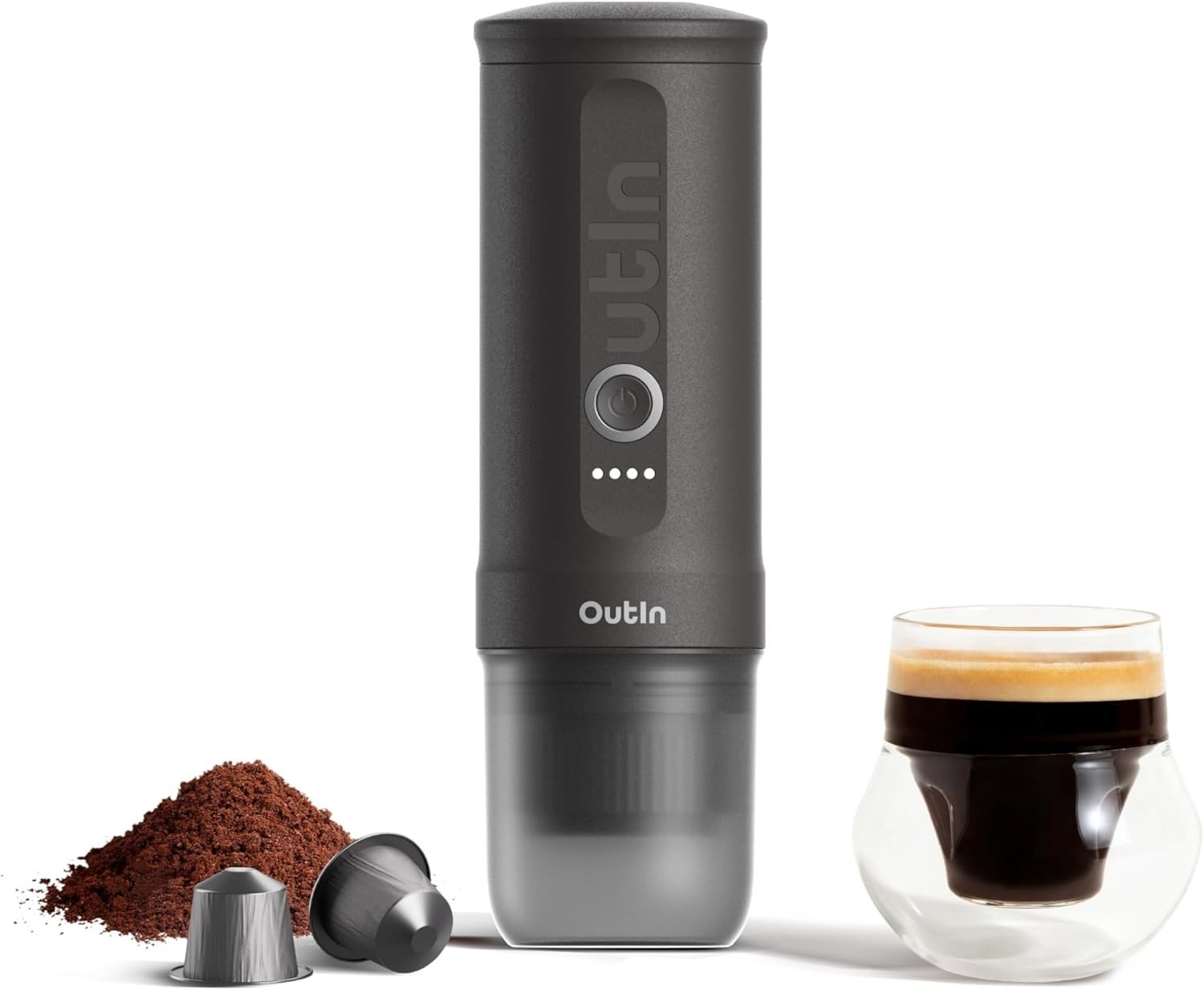
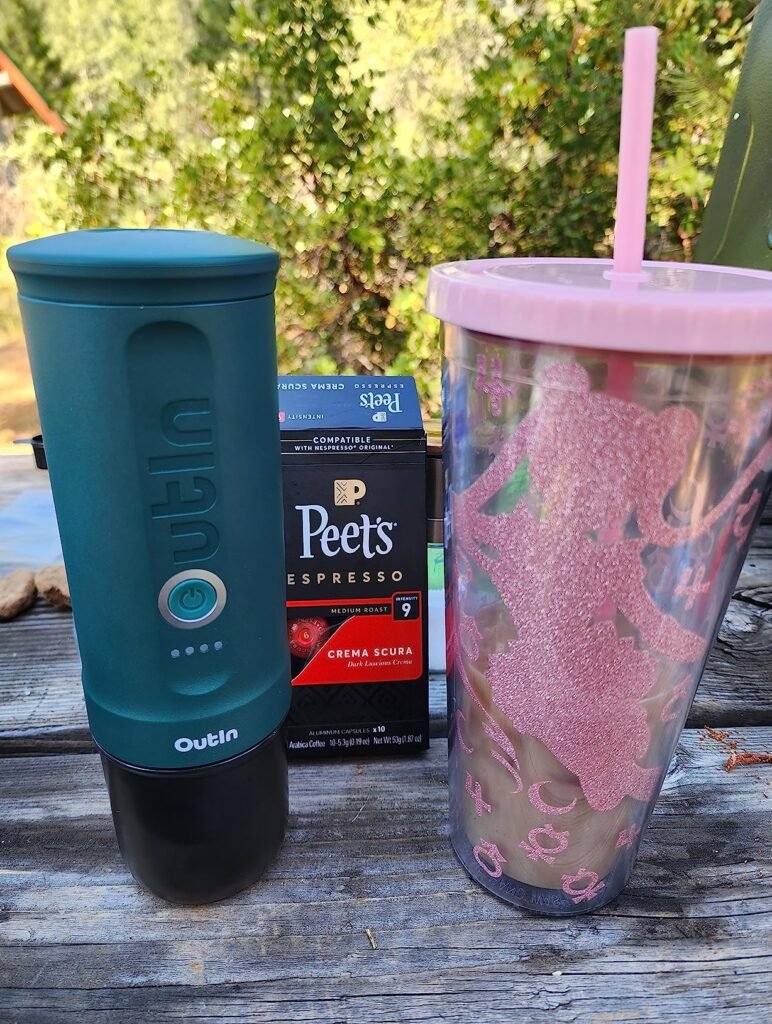
In that condition, the Nano does something no other device in its category does: it heats its own water, generates genuine espresso-level extraction pressure, accepts both ground coffee and Nespresso-compatible capsules, and delivers a crema-bearing shot with body in under four minutes — from ambient-temperature water — on battery alone.
The self-heating system brings water up to brewing temperature and sets the Nano apart from all other portable espresso makers. While this mode does consume more power, limiting you to 2–3 shots per charge, the freedom it affords is genuinely remarkable.
The ability to make 200+ shots with hot water is off the charts, and the USB-C charging compatibility means you can power it virtually anywhere. That combination — self-contained heat, genuine pump pressure, USB-C recharge, dual-format compatibility — does not exist at this price in any competing product. At $149.99 (plus $39.90 for the Basket Plus if you are a serious ground-coffee user), the total investment is $189.89. For the operator described above, that is a rational and defensible expenditure.
What It Solves, What It Reduces, and What It Still Leaves to You
| Category | What OutIn Nano Delivers |
|---|---|
| Solves completely | The need for a kettle or power outlet to produce espresso |
| Solves completely | Manual pumping and pressure consistency variance |
| Solves completely | Pod vs. ground coffee choice — both work |
| Reduces significantly | Battery anxiety if you manage charging overnight |
| Reduces significantly | Morning infrastructure burden in hotels and vehicles |
| Still requires you | Grind calibration — coarser than home machine |
| Still requires you | Bean selection — dark roast for best results |
| Still requires you | Basket Plus purchase for serious ground-coffee use |
| Still requires you | Pre-boiled water strategy for multi-day power-free trips |
| Cannot fix | Light roast extraction quality at 198°F ceiling |
| Cannot fix | Use during charging — a structural hardware limitation |
The Nano does not promise to replace a countertop machine. It promises to replace the absence of espresso in environments where a countertop machine cannot go. On that promise — specifically on that promise — it delivers.
Final Compression
The OutIn Nano is not a device for every espresso drinker. It is a device for a specific operator in a specific condition, and it performs that function with genuine distinction.
If you drink dark roast, travel beyond infrastructure, and need one-button espresso with no pumping and no pre-boiling — this is the logical next step. Buy the Basket Plus at the same time. Dial the grind coarser than your instinct suggests. Charge overnight. Operate accordingly.
If you drink light roast, expect countertop precision, or need more than five self-heating shots per day from a power-free environment — you are not inside this product’s problem. No amount of re-reading positive reviews will change the physics.
The threshold is clear. Either side of it, the decision is clean.
Frequently Asked Questions
| Question | Answer |
|---|---|
| How many shots can the OutIn Nano make on a single charge? | With cold water and self-heating, expect 3–5 shots per full charge under normal ambient temperatures. In cold weather, this drops to 2–3. If you bring pre-boiled water, the battery stretches to 100–200+ shots since only the pump draws power. |
| Does the OutIn Nano work with Nespresso pods? | Yes. It is compatible with Nespresso Original-style capsules using the included pod adapter. L’OR, Lavazza, Cafe Royal, Jacobs, and Kimbo pods are also compatible. Note: it does not fit Nespresso Vertuo capsules. |
| Do I need the Basket Plus accessory? | For serious ground-coffee users, yes — consider it a required upgrade. The standard basket holds approximately 8g and limits shot size and extraction quality. The Basket Plus holds 16–18g, unlocks proper double-shot volumes, and is sold separately for $39.90. Budget for it from day one. |
| Can the OutIn Nano handle light roast coffee? | Not well. Its maximum brewing temperature of 198°F (92°C) sits below the extraction requirements of light and medium-light roasts. Expect acidic, underdeveloped shots. This is a physics limitation, not a user error. Medium-dark and dark roasts perform significantly better. |
| Can I use the machine while it is charging? | No. The OutIn Nano cannot operate while plugged in. This is a hardware design constraint. Plan brewing sessions around your charging schedule. |
| What grind size should I use? | Slightly coarser than a standard espresso grind. Using typical fine espresso grounds will choke the basket and produce minimal or zero flow. The OutIn official recommendation starts at 2.1 on their proprietary Fino grinder. On third-party grinders, experiment coarser than your countertop setting by 10–15% increments. |
| How long does a full charge take? | Approximately 45–90 minutes from near-empty using a 5V/3A USB-C charger at 15W minimum. The device will not charge on adapters below 15W. |
| Can the OutIn Nano be taken on an airplane? | It can be carried in carry-on luggage only. It cannot be used during flight per global airline regulations. It cannot be checked in baggage due to the lithium battery. |
Transparency Note:
This analysis is built on aggregated real-world experience.
It extracts what repeatedly holds, what breaks, and what users uncover only after living with the system—then shapes it into a clear model you can use immediately.
Think of it as structured experience, refined and presented so you don’t have to learn it the hard way.
“A quick note: Don’t believe the star ratings, but trust personal experience. This article is a compilation of collected experiences”