LOGITECH Z407 REVIEW: THE SOUND HITS HARD — UNTIL YOU HIT THE CEILING NOBODY WARNED YOU ABOUT
The Result Looks Fine. The Problem Isn’t.
You set it up in twenty minutes. The subwoofer thumps satisfyingly under your desk. Music fills your room in a way your laptop speakers never could. You feel like you made a smart decision.
Then, two weeks later, something shifts. The bass feels slightly uncontrolled at your preferred volume. The connection chime blasts at full volume every time your PC boots. The wireless puck runs out of batteries and suddenly you can’t adjust a single thing — because there are no physical controls anywhere on the speakers themselves. The short satellite cables mean your speakers sit exactly where the subwoofer dictates, not where your monitor needs them.
None of this is catastrophic. But none of it showed up in the spec sheet.
That gap between the first impression and the actual daily experience is exactly what this review is built to close.
What You’re Actually Feeling but Not Naming
The frustration most Z407 users experience isn’t about sound quality. The sound quality, for the price, is genuinely impressive.
The frustration is structural. It shows up as small irritants that accumulate:
The boot-up connection chime fires at maximum volume — not at your current volume setting — every single time your computer starts. Users on Amazon and Best Buy who loved the audio quality still flagged this consistently.
The wireless control dial is the only way to adjust anything. No knob on the speakers. No button on the subwoofer. Lose the puck, forget its battery, or misplace it — and you have a speaker system you can hear but cannot control. One French user in 2025 explicitly described the battery-dependency of the puck as the single design element they found genuinely frustrating.
The satellite cables between the subwoofer and the speakers are short. This isn’t a complaint about quality — it’s a constraint on placement. Your speakers will live close to your subwoofer. If your desk is large, or if you want wide stereo separation, the Z407 will resist you.
These are not random complaints. They are structural realities of this specific design.
The Hidden Mechanism Behind the Miss
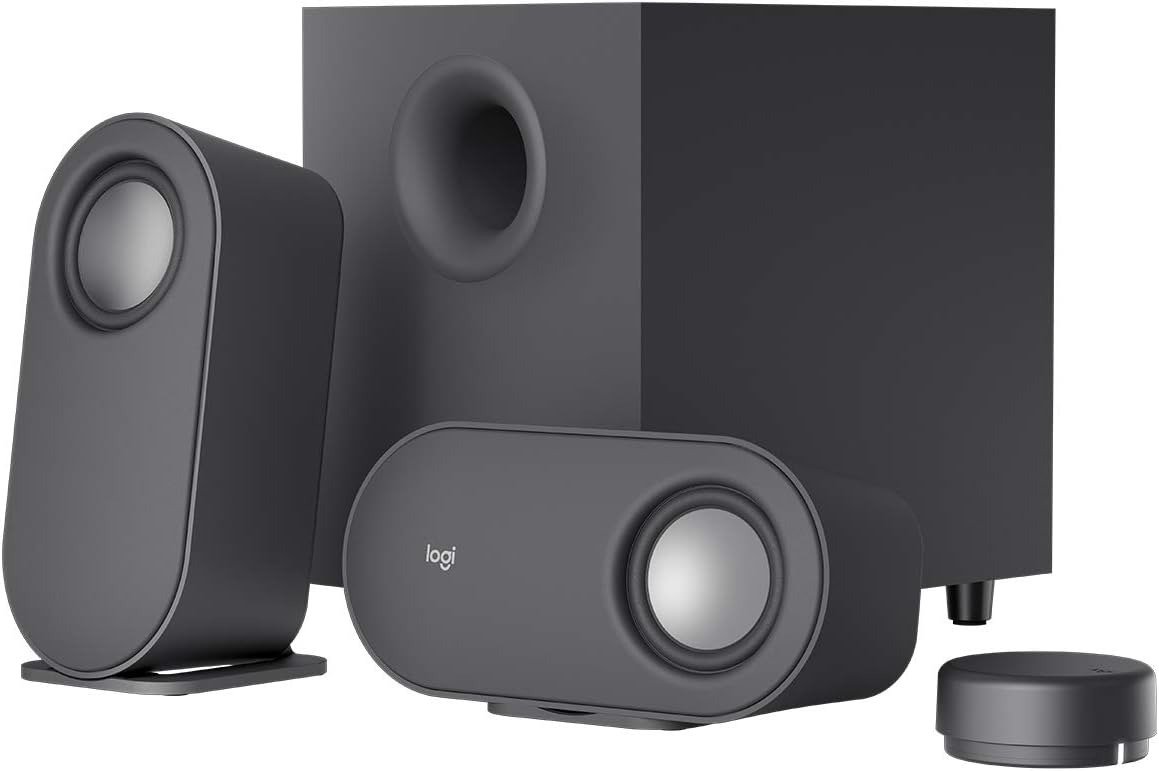
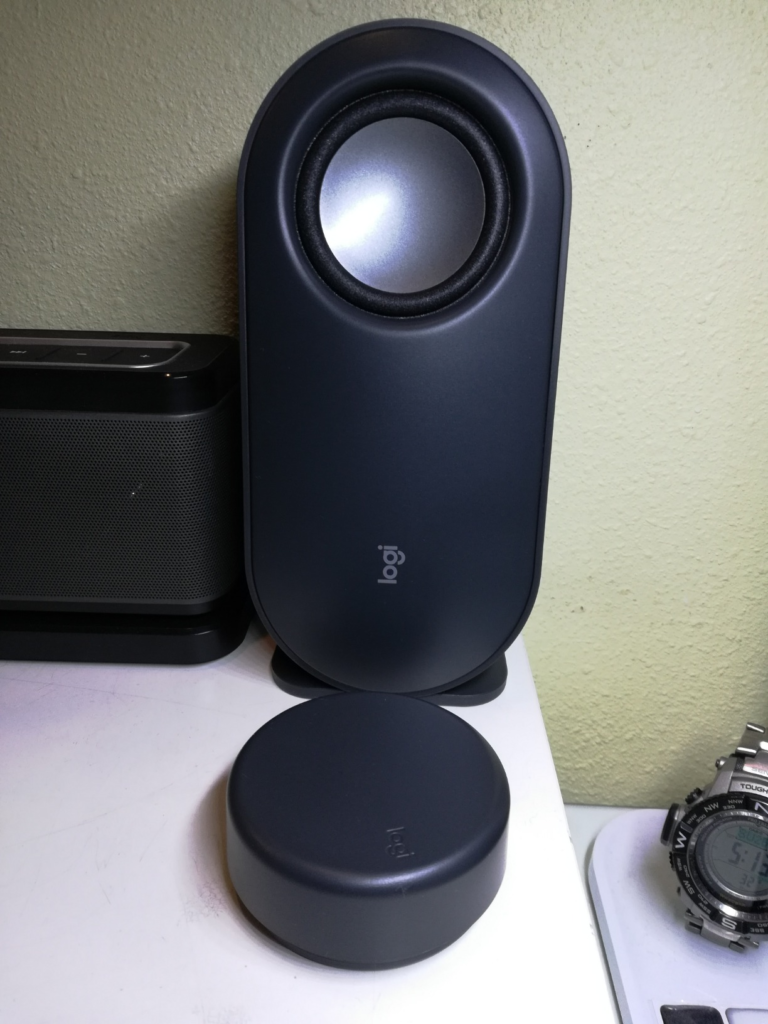
The Z407 was engineered around a specific philosophy: put the intelligence in the subwoofer, keep the satellites passive and clean, and control everything wirelessly through a single puck. That philosophy produces a genuinely elegant desk system for a compact setup.
But it creates a dependency chain. The subwoofer is the brain. The puck is the interface. Remove any link, and the chain breaks.
Most desktop speakers distribute control across multiple points — a knob here, a button there. The Z407 consolidates everything into one wireless object running on two AAA batteries rated for approximately twelve months under normal use. When that object fails or disappears, the speakers don’t degrade gracefully. They become static.
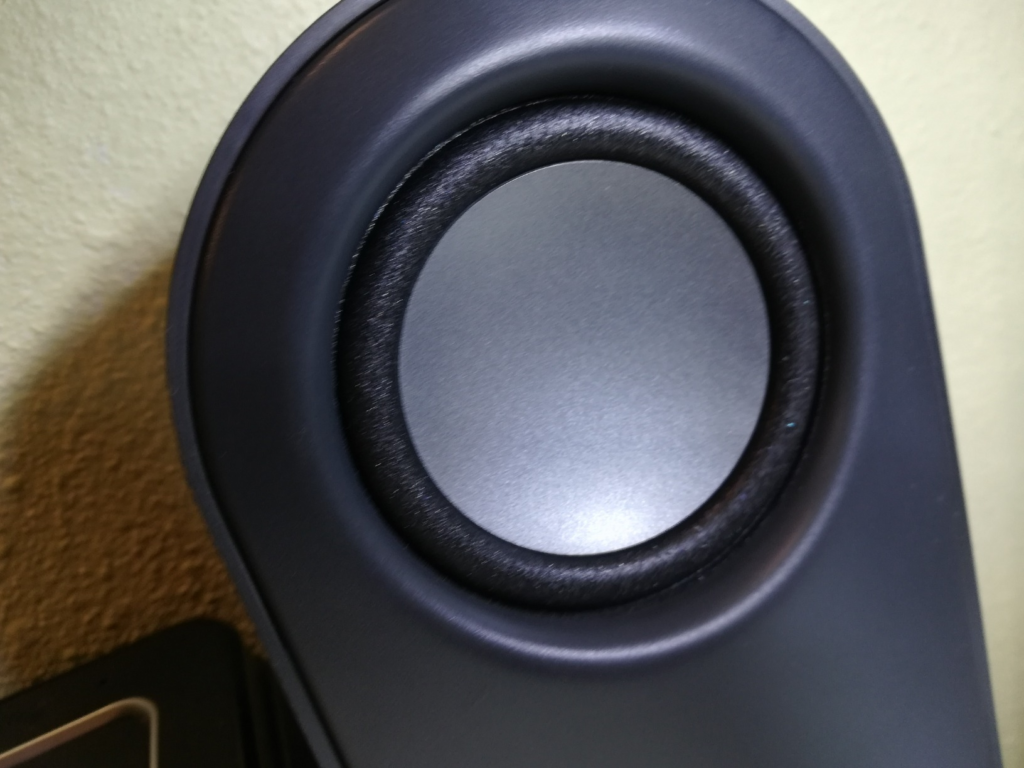
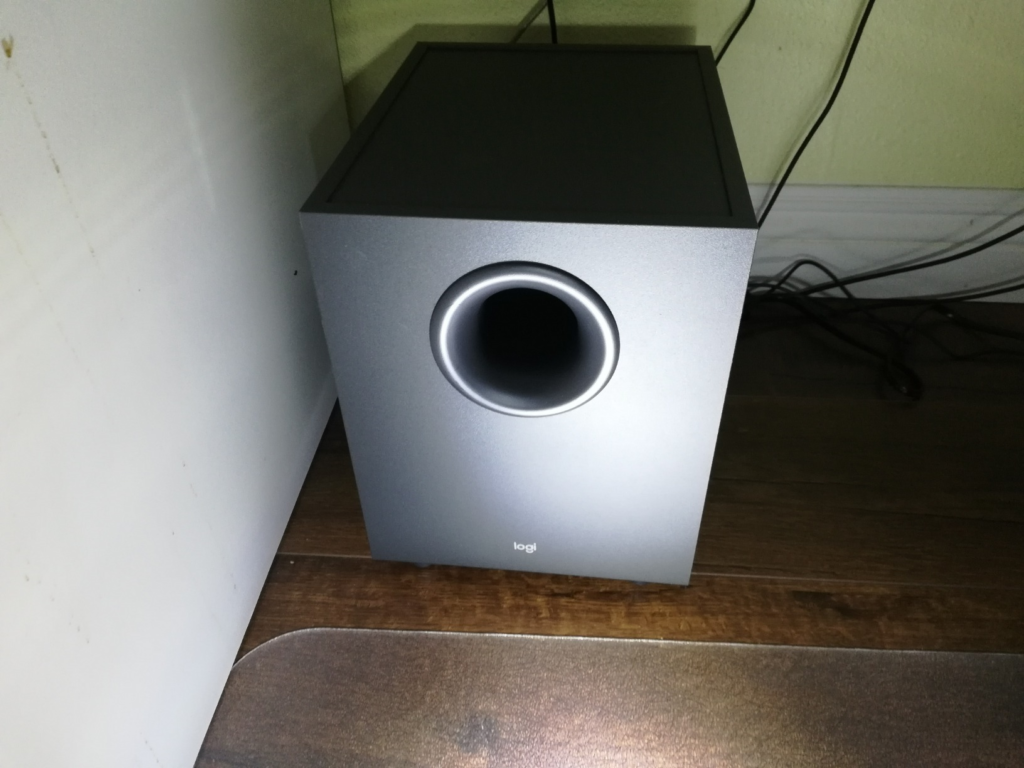
The DSP (Digital Signal Processing) inside the subwoofer is genuinely good. It maintains balance across the 40 Hz to 20 kHz frequency range, keeps the 5.25-inch woofer from overwhelming the 2.5-inch satellite drivers, and produces a soundstage that reviewers at TechRadar, GamesRadar, and 9to5Toys all independently described as impressive for the price tier. That part works as advertised.
The failure mode isn’t audio. It’s control architecture.
The Threshold Where the Outcome Quietly Breaks
I call this the Volume Control Dependency Threshold: the point at which the Z407’s single-point control design stops being convenient and starts being a liability.
Below this threshold — a compact desk, a single PC, casual listening at moderate volumes, reliable puck in reach — the Z407 is exceptional value. Above it, the frustrations compound.
| Condition | Below Threshold | Above Threshold |
|---|---|---|
| Desk size | Small to medium | Large, spread-out setup |
| Volume preference | Moderate to loud | Max or near-max consistently |
| Subwoofer position | Under desk, close | Far from satellite placement |
| Puck management | Easy, habitual | Often misplaced or dead |
| Boot-up chime | Minor nuisance | Daily irritant |
| Bass at high volume | Controlled | Can distort or overpower |
The subwoofer distortion at high volumes is real and documented. Multiple reviewers, including Newlin Tech and TechSpot, confirmed that pushing volume and bass simultaneously causes the sub to lose composure. The DSP manages the range well at moderate levels. At the top of the dial, it stops managing.
If you listen loud, you will find this ceiling. It isn’t catastrophic — but it’s there, and no spec sheet mentions it.
Why Most Buyers Misread This Too Early
The most common misread happens in the first ten minutes.
You plug in the Z407, play your favorite track, and the sound genuinely impresses you. 80 watts peak — split as 20W subwoofer and 10W per satellite — is real power for this size and price. The comparison window feels closed. You’ve already decided.
But the first-impression sound is not the same as the daily-use sound. First impressions don’t reveal:
- How the system behaves at boot
- How you’ll manage volume when the puck is on the other side of the room
- How the satellite cables constrain your layout
- How the sub behaves when you push the dial past 70%
The 4.3/5 average across over 1,500 Amazon reviews reflects genuine satisfaction — but the 3-star and 4-star reviews cluster around exactly these structural complaints, not audio quality. The audio quality complaints are rare. The design architecture complaints are consistent.
Buyers who compare the Z407 against cheaper 2.0 systems win immediately and clearly. Buyers who compare it against more expensive 2.1 systems with distributed controls, longer cables, and on-board knobs — like the Edifier line — find the tradeoffs more significant.
Technical Specifications at a Glance
| Spec | Detail |
|---|---|
| System Type | 2.1 (2 satellites + 1 subwoofer) |
| Total Peak Power | 80W |
| RMS Power | 40W |
| Subwoofer Power | 20W |
| Satellite Power (each) | 10W |
| Satellite Driver Size | 2.5 inches |
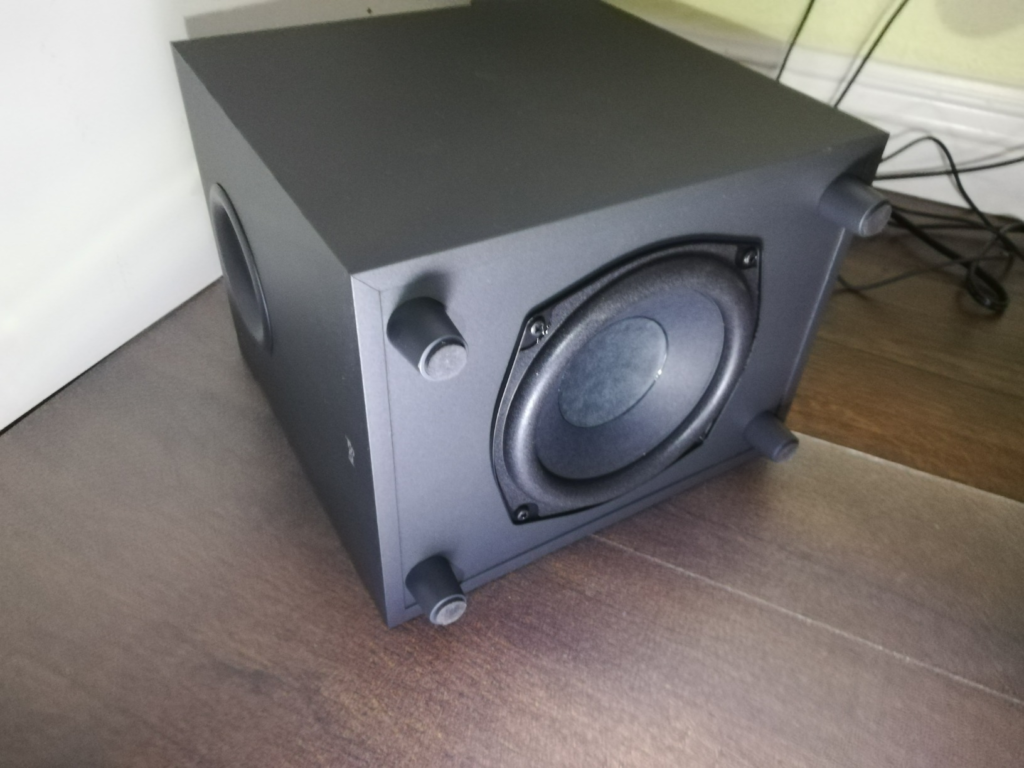
| Subwoofer Driver Size | 5.25 inches (down-firing) |
| Frequency Response | 40 Hz – 20 kHz |
| Connectivity | Bluetooth 5.0, Micro-USB, 3.5mm AUX |
| Wireless Control Range | Up to 65 feet (20 meters) |
| Control Puck Battery | 2x AAA (~12 months rated life) |
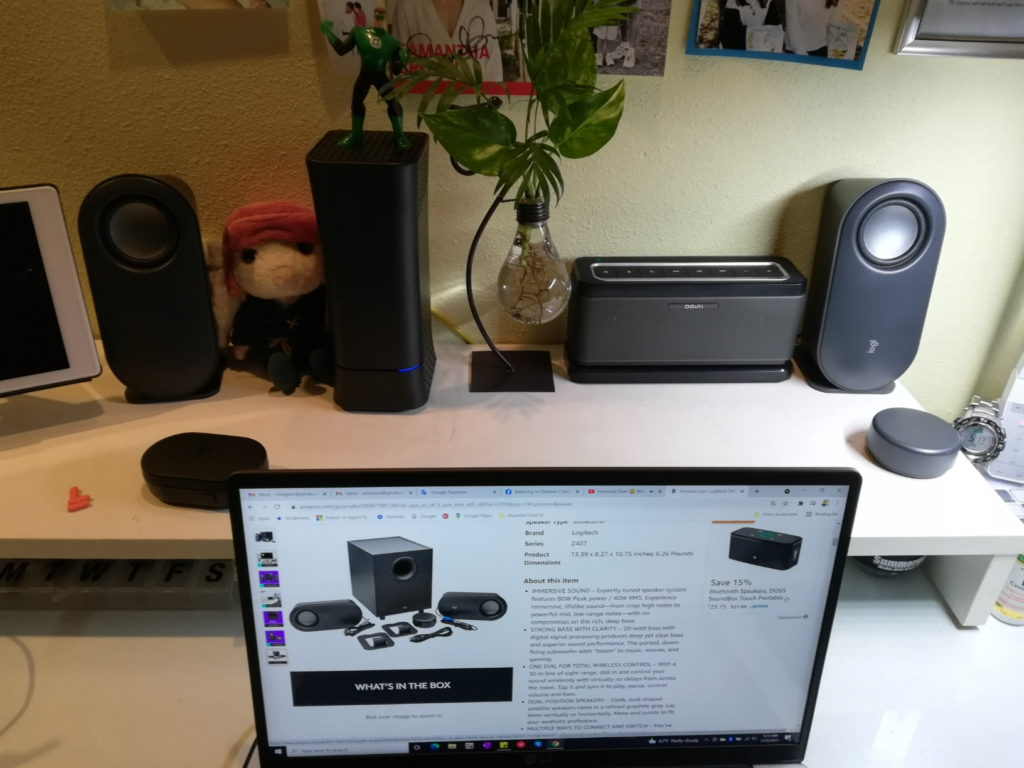
| Satellite Orientation | Vertical or horizontal (detachable stand) |
| Dimensions – Satellites | 7.87 x 3.70 x 3.35 inches |
| Dimensions – Subwoofer | 9.45 x 9.21 x 7.09 inches |
| DSP | Yes, integrated |
| Warranty | 1-year limited hardware |
| Current Price | $129.99 (up from $79 at launch) |
Who Is Actually Inside This Problem
The Z407 solves a specific problem for a specific person.
You have a desktop or laptop that produces weak, flat, or shallow audio. You work in a room that’s medium-sized at most — a home office, a dorm, an apartment. You sit at a desk. You want music, video, or game audio that feels full and real without requiring installation, calibration, or audiophile spending. You want to control volume without reaching across your desk.
That person gets outstanding value from this system. The DSP-managed sound at moderate volumes is smooth and full. The Bluetooth 5.0 connection is stable and genuinely allows you to switch between your phone and your PC without replaying the pairing sequence every time. The wireless puck — when in hand — is the most convenient volume control I’ve used at this price tier. The ability to orient the satellites horizontally lets them slide neatly under a monitor stand, which solves a real desk-space constraint.
TechRadar reviewed this in 2021, re-evaluated it in 2024, and still called it the best value computer speaker system available. That’s a four-year verdict at the top of the category. That’s not nothing.
Connectivity Comparison
| Input Method | Best For | Limitation |
|---|---|---|
| Bluetooth 5.0 | Phone, tablet, laptop wireless | Slight audio latency vs wired |
| Micro-USB | PC digital connection, best audio fidelity | Short cable constrains placement |
| 3.5mm AUX | Any device with headphone jack | Analog, no DSP enhancement |
| Wireless Puck | Volume, bass, track control from distance | Battery-dependent, no fallback |
Where Wrong-Fit Begins
This system begins to fail you in identifiable situations.
You listen at maximum volume regularly. The sub distorts under sustained pressure at the top of its range. This is physics, not a defect — but it sets a ceiling on your listening style.
Your desk is large and you want wide stereo separation. The satellite cable length is fixed and short. The geometry of the Z407 keeps left and right satellites close to the subwoofer. Wide soundstage positioning is not this system’s strength.
You share a large room or apartment. The Z407 fills a medium room well. In a large, open-plan space, you’ll push it past its comfort zone to feel present.
You lose things. The puck is the only control surface. If you’re the kind of person who misplaces remotes, or keeps a cluttered desk where small objects disappear, the single-point control architecture will frustrate you disproportionately.
You’re an audiophile comparing against reference monitors. The Z407 is not an audiophile product. The satellite drivers produce impressive clarity for the price, but detailed critical listening will expose the limits of the 2.5-inch driver and the bass-forward DSP tuning. This is a desktop multimedia system, not a monitoring rig.
You want parts-level after-warranty support. One Amazon reviewer documented a failed RCA connector on the satellite cable after three years. Logitech’s response was warranty expiration — no replacement part available, no individual component sold. If longevity and repairability matter to you, this supply-chain gap is a real risk.
The One Situation Where This Product Becomes Logical
If you sit at a compact desk, work and play within a medium-sized room, and your current audio comes from laptop speakers or a thin 2.0 bar — the Logitech Z407 is the most defensible purchase at this price tier.
The 80W peak, DSP-managed audio, Bluetooth 5.0 stability, three simultaneous connection inputs, and 65-foot wireless puck control form a package that no competitor at $130 matches cleanly. TechRadar’s 2024 re-evaluation confirmed this. The computer speaker market doesn’t change fast, and the Z407 has occupied its position at the top of the value bracket for four consecutive years.
The audio experience at moderate to loud volumes — music, gaming, video — is not just acceptable. For the price, it’s genuinely impressive. The bass rumbles without overwhelming the satellites. The highs are clear. The mids are present. The DSP does exactly what it promises.
The decision becomes logical precisely when your problem fits the system’s design: compact placement, moderate-to-loud volume, multi-device household, wireless control preference.
What It Solves, What It Reduces, and What It Still Leaves to You
| Category | What the Z407 Delivers |
|---|---|
| Solves completely | Flat, weak desktop audio from built-in laptop/monitor speakers |
| Solves completely | Need for wireless volume control from across the room |
| Solves completely | Multi-device connectivity (phone + PC + auxiliary) without re-pairing |
| Reduces significantly | Cost of entry into a 2.1 subwoofer system |
| Reduces significantly | Cable clutter on desk surface (wireless puck, dual-position satellites) |
| Does not solve | Audio performance in large, open rooms |
| Does not solve | Maximum-volume bass distortion |
| Does not solve | Parts availability or individual component replacement post-warranty |
| Still requires you | Keeping the puck accessible and batteries fresh |
| Still requires you | Accepting boot-up chime at high volume — no workaround exists |
| Still requires you | Desk layout constrained by short satellite cables |
Final Compression
The Logitech Z407 is not a speaker system for every desk. It is a speaker system for a specific desk, and on that desk it performs better than anything else at its price.
The threshold is simple: compact setup, moderate-to-loud listening, multi-device home, and comfort with a battery-dependent control puck. Inside that threshold, the Z407 earns its position and its four-year streak at the top of its category.
Outside that threshold — large rooms, maximum-volume habits, audiophile standards, large desks demanding wide stereo separation — the design constraints become daily friction.
If your desk matches the profile above, the decision is already made by the physics of your situation. The Z407 is the logical next step.
Frequently Asked Questions
| Question | Answer |
|---|---|
| Does the Logitech Z407 work without the wireless puck? | No. There are no physical controls on the speakers or subwoofer. The wireless puck is the only control interface. If the puck is lost, dead, or out of batteries, you cannot adjust volume, bass, or input source. Keep the puck accessible and replace its two AAA batteries annually. |
| Does the Logitech Z407 distort at high volumes? | Yes, at maximum or near-maximum bass and volume simultaneously, the subwoofer can lose composure and produce audible distortion. At moderate to loud levels — roughly 60–75% of max — the DSP keeps the sound balanced and clean. Push above that consistently and you will find the ceiling. |
| Can I use the Logitech Z407 with multiple devices at the same time? | You can connect up to three sources: one via 3.5mm AUX, one via micro-USB, and up to two via Bluetooth. You switch between them using the wireless puck. Only one input plays at a time, but the switching is simple. |
| Why does the Logitech Z407 make a loud noise every time I turn on my computer? | This is the Bluetooth connection confirmation chime. It fires at the system’s maximum volume level, not your current listening volume. No setting eliminates it. It is a documented, consistent complaint across Amazon, Best Buy, and forum reviews. If your computer boots frequently in shared spaces, this is a real consideration. |
| Is the Logitech Z407 good for gaming? | Yes, within its design limits. The subwoofer adds depth to explosions and environmental audio. The stereo separation from the two 10W satellites provides directional cues for left/right awareness. For casual and competitive gaming on a compact desk, it works well. For precision competitive gaming requiring accurate positional audio, a dedicated headset remains superior. |
| How long do the wireless puck batteries last? | Logitech rates the puck at approximately 12 months on two included AAA batteries, based on 16 uses per day under normal conditions. Real-world battery life varies with usage intensity. The puck cannot function wired and has no rechargeable option. |
| Is the Logitech Z407 worth the price increase from $79 to $129? | The value proposition has narrowed as the price increased 64% since launch. At $79, it was an obvious recommendation. At $129, it still wins against direct competitors at that price point — but the gap is smaller. For a compact desk primary setup, it remains the clearest choice. If budget is tight, watch for sales that bring it closer to the $90–100 range. |
| Can the satellite speakers be placed horizontally? | Yes. Each satellite comes with a detachable stand that inserts into two different slots, allowing vertical or horizontal orientation. Horizontal placement fits neatly under a monitor riser or on a low shelf. The sound signature remains consistent in either orientation. |
—
Transparency Note:
This analysis is built on aggregated real-world experience.
It extracts what repeatedly holds, what breaks, and what users uncover only after living with the system—then shapes it into a clear model you can use immediately.
Think of it as structured experience, refined and presented so you don’t have to learn it the hard way.
“A quick note: Don’t believe the star ratings, but trust personal experience. This article is a compilation of collected experiences”