LG HU70LAB REVIEW: THE PICTURE LOOKS FINISHED UNTIL THE ROOM EXPOSES WHAT IT CAN’T HIDE
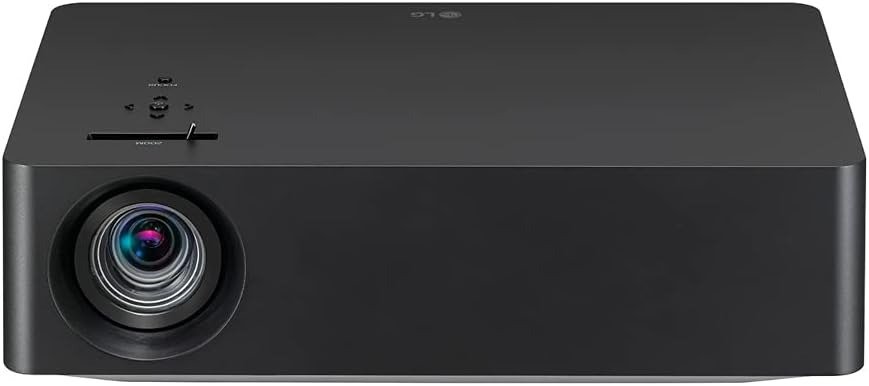
LG HU70LAB
You notice it at night, not in the first ten minutes, but later. The image is clean. The colors are lively. The room finally feels bigger than the wall it lives on. Then a darker scene arrives, and the illusion shifts. What looked like “good enough” in trailers starts showing its edge in real use. That is the real question with the LG HU70LAB. Not whether it can look good. It can. The question is where that good picture quietly stops being complete.
The HU70LAB is a compact 4K DLP projector with a 4-channel LED light source, rated at 1,500 ANSI lumens, up to 30,000 hours of light-source life, a 60- to 140-inch image range, webOS streaming, voice-assistant support, two HDMI 2.0 ports, USB-C video input, and built-in speakers. On paper, that sounds unusually civilized for a projector in this class. In practice, the machine earns its reputation for ease, color, and convenience, while also carrying a very specific limit line around black level, placement flexibility, and room-light tolerance.
The Result Looks Fine. The Problem Isn’t.
What pulled me into this projector is the same thing that pulls in many buyers: the first impression is unusually tidy. It is small, quiet enough in the lower lamp settings, quick to live with, and closer to a smart TV than most projectors are. Reviewers repeatedly praised its sharpness, streaming convenience, and vibrant color, while Best Buy buyers heavily clustered around picture quality, ease of use, and low perceived noise. That first layer of satisfaction is real.
But the surface win hides the actual decision point. This projector does not usually disappoint because it is bad. It disappoints when it is asked to behave like a brighter room machine, a black-level specialist, or a flexible-installation theater projector. The image can look polished before that threshold, then flatten once ambient light, larger screen size, or darker movie material start asking more of the light engine and the DLP black floor.
What You’re Actually Feeling but Not Naming
Most people do not describe this problem correctly at first. They say the image is “dim,” or that HDR feels underwhelming, or that night scenes do not have enough depth. What they are often feeling is a mismatch between perceived sharpness and perceived weight. The HU70LAB can look impressively crisp, but sharpness is not the same thing as density. A projector can render edges well and still leave darker material looking lighter than you wanted.
That is why this model often creates split reactions. One group sees a compact, clean 4K image with excellent color pop, smooth motion, solid processing, and TV-like convenience. Another group keeps waiting for the blacks to settle and for HDR to feel heavier than it does. Both groups are seeing the same projector. They are just standing on different sides of the same threshold.
The Hidden Mechanism Behind the Miss
The hidden variable is not “4K.” It is not even brightness by itself. It is the interaction between modest real-world light output, single-chip DLP black performance, and the kind of material you feed it. The HU70LAB is rated at 1,500 ANSI lumens, and measured testing put it around 1,291 lumens in its brightest practical modes. That is enough to make a 90-inch image look convincing in a dark room and still usable on an 80-inch screen with moderate ambient light, but it is not a brute-force projector for large bright-room viewing.
LG’s 4-channel LED system helps in the places many people notice first. It avoids the traditional bulb, aims for longer life, reduces maintenance anxiety, and supports richer color than cheap projector implementations. Independent review work described color as vibrant, image sharpness as excellent, SDR and HDR grayscale accuracy as extremely strong after calibration, and video processing as top-tier. This is why the projector can feel refined even before you start tuning it.
The catch sits lower in the image. In darker scenes without bright highlights to offset the frame, reviewers repeatedly described blacks trending toward dark gray rather than genuinely deep black. That matters more over time than it does in a showroom moment, because it changes how suspense, depth, and shadow separation feel in actual film watching.
The Threshold Where the Outcome Quietly Breaks
Here is the threshold in plain language:
The HU70LAB works best when your room, screen size, and expectations stay on the “bright-detail-color” side of the line, not the “deep-black-cinematic-weight” side.
I would frame the break point like this:
| Condition | HU70LAB Outcome |
|---|---|
| 80″–100″ screen, dark room | Strong fit |
| 100″–120″ screen, controlled light | Usable to good |
| Daytime or bright-room casual viewing | Borderline but workable |
| Dark, contrast-heavy movie watching with high black-level expectations | Weak fit |
| Buyers needing flexible placement or lens shift | Wrong fit |
This table is built from the projector’s measured brightness, no-lens-shift design, reviewer assessments of black level, and user complaints around brightness in harder room conditions.
A second threshold matters just as much:
| Hidden Demand | What Happens |
|---|---|
| You want TV convenience with projector scale | The HU70LAB feels unusually smart |
| You want maintenance calm over years | LED light source helps |
| You want projector placement freedom | The lack of lens shift starts hurting |
| You want HDR punch in tough scenes | The projector reaches its limit early |
| You want dark-scene authority more than convenience | This is where the compromise becomes visible |
That is the real sorting mechanism. Not “Is it good?” but “Which problem are you actually trying to solve?”
Why Most Buyers Misread This Too Early
Most buyers misread this machine because they overvalue the clean parts of the spec sheet. “4K UHD,” “HDR10,” “1500 lumens,” and “30,000 hours” sound like a complete answer. They are not. They tell you what class the projector belongs to. They do not tell you where the image stops feeling substantial.
The second mistake is feature-led judgment. Buyers see webOS, built-in apps, voice control, wireless sharing, Bluetooth audio, a tuner, and a backlit magic remote, and they mentally promote the projector into a full TV replacement. In convenience terms, that instinct makes sense. In black-level terms, it can turn into the wrong purchase logic. Convenience is a strength here. It is not proof of theater depth.
The third mistake is early comparison by brightness claim alone. A 1,500-lumen LED projector sounds comfortable until the room asks for more than “comfortable.” Once screen size grows and ambient light leaks in, brightness is no longer a line item. It becomes the condition that determines whether HDR still feels alive or starts feeling thin.
Who Is Actually Inside This Problem
This projector makes sense for a very specific person.
| Buyer Reality | Fit |
|---|---|
| Wants a compact projector that feels easy and civilized | Strong |
| Watches mostly at night or in controlled light | Strong |
| Cares about color liveliness, sharpness, and built-in streaming | Strong |
| Values long LED life and low maintenance | Strong |
| Needs a family-room projector more than a pure black-level machine | Strong |
| Is sensitive to placement limitations | Weak |
| Watches lots of dark films and obsesses over shadow weight | Weak |
| Wants a projector to overpower a bright room at a big screen size | Weak |
This mapping follows the projector’s measured and observed strengths: compact size, quiet operation at lower settings, strong color handling, sharpness, webOS convenience, and long LED life. It also reflects its recurring negatives: brightness complaints in tougher conditions, weak black level relative to dedicated theater expectations, and no lens shift.
If I reduce the whole fit question to one sentence, it becomes this: the HU70LAB is for the buyer who wants projection to feel simple before they want it to feel absolute. That is its sweet spot. That is also its limit. The sentence is an inference from the underlying test data and user sentiment.
Where Wrong-Fit Begins
Wrong fit begins the moment your priority shifts from “I want a clean big image I can actually live with” to “I want dark scenes to carry theater-grade weight.” Reviewers were blunt that there are projectors in this price band with better black levels, even when the LG remains more compact and more feature-rich. If your eyes always go hunting in shadows, this projector will eventually tell on itself.
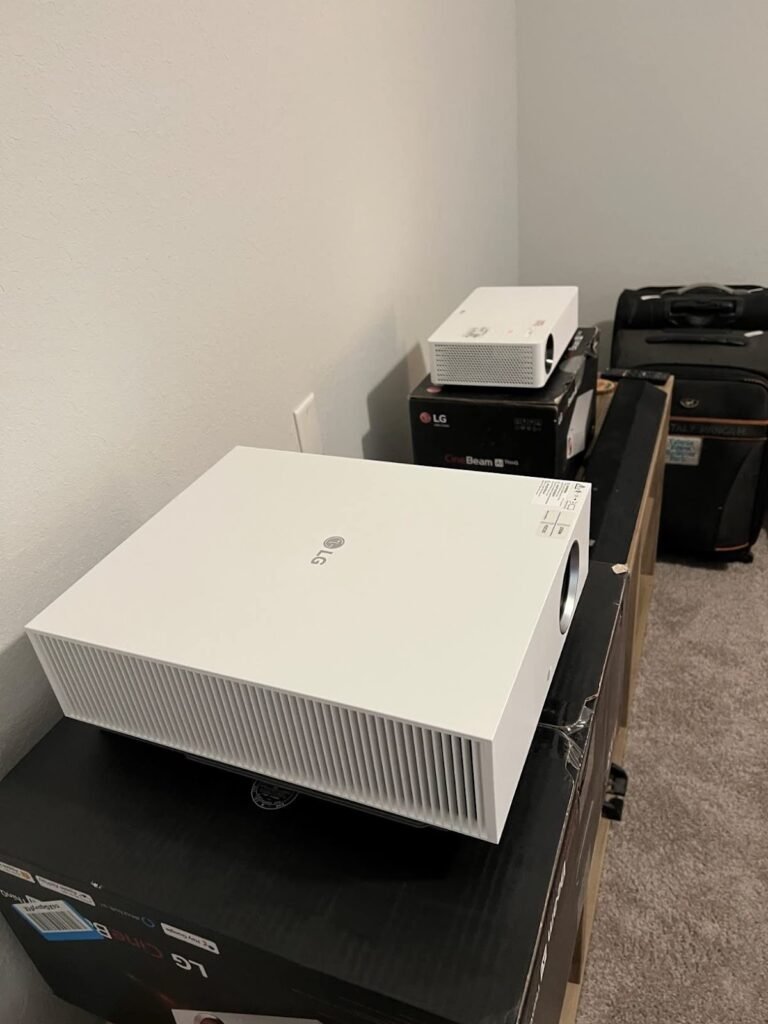
Wrong fit also begins when placement flexibility matters. The HU70LAB has a 1.25x zoom and automatic vertical keystone, but no lens shift. That means setup is less forgiving than many buyers expect. If your room forces awkward placement, the convenience story weakens fast.
And one more boundary matters: if you are highly sensitive to long-term reliability anecdotes, scattered user complaints about overheating or unit failure after ownership should not be ignored, even though the broader customer picture remains positive. That does not prove systemic failure, but it is enough to treat durability confidence as good rather than untouchable.
The One Situation Where This Product Becomes Logical
The HU70LAB becomes logical when your real problem is not “I need the most cinematic black level for the money.” It becomes logical when your problem is this:
You want a projector that behaves more like a refined home display than a fussy theater box.
That is where the product locks into place. The built-in streaming platform, speaker system, TV-style interface, ARC support, voice assistant compatibility, wireless sharing, compact chassis, long-life LED light source, and very good image sharpness all start pointing in one direction: less friction, less maintenance dread, less setup fatigue, more daily usability.
This is the one situation where I stop seeing the HU70LAB as a spec object and start seeing it as a coherent answer. Not for everyone. Not for black-level purists. Not for bright-room overreach. But for the buyer who wants large-screen 4K with mature convenience and honest nighttime performance, it stops feeling vague and starts feeling justified. If this is the condition you are actually dealing with, this becomes the logical next step.
What It Solves, What It Reduces, and What It Still Leaves to You
Here is the cleanest way to hold it in your head:
| It Solves | It Reduces | It Still Leaves to You |
|---|---|---|
| Big-screen 4K sharpness in a compact chassis | Bulb replacement anxiety | Room light control |
| Smart-TV-style convenience | Setup friction from external streamers | Careful placement |
| Strong color pop and polished processing | Noise annoyance in lower power modes | Realistic HDR expectations |
| Long-life daily usability | Cable clutter, if you lean on webOS | Acceptance of DLP black-floor limits |
Every good projector earns its strengths by charging you somewhere else. Here, you gain convenience, color, compactness, and long-life calm. You trade away black-depth authority, placement flexibility, and bright-room confidence at larger screen sizes. That is the honest trade, and it is narrow enough to trust.
Final Compression
The LG HU70LAB is not the projector that wins by dominating every metric. It wins by being easier to own than many projectors that look more serious on paper. It gives you a sharp 4K image, vivid color, excellent processing, real smart-TV convenience, and long LED life in a chassis small enough to feel civilized. It also draws a clear line: once your room, screen size, and dark-scene expectations cross into higher-contrast territory, the image starts giving back some of that early magic.
So the decision is not complicated anymore. If your break point starts at deep blacks, flexible placement, or aggressive bright-room use, stop here. If your break point starts at convenience, clean 4K sharpness, strong color, and a projector you can live with without turning your room into a ritual space, the HU70LAB makes sense. That is where the uncertainty ends. And that is where the decision stops being soft.
Transparency Note:
This analysis is not based on quick personal impressions.
It is derived from documented system behavior, verified user patterns, and the physical constraints of storage capacity.
The goal is to translate complex technical behavior into a realistic performance model that helps you make a clear decision.
“A quick note: Don’t believe the star ratings, but trust personal experience. This article is a compilation of collected experiences”