Valerion VisionMaster Pro 2 Review: When a Bright Room Stops Killing the Mood
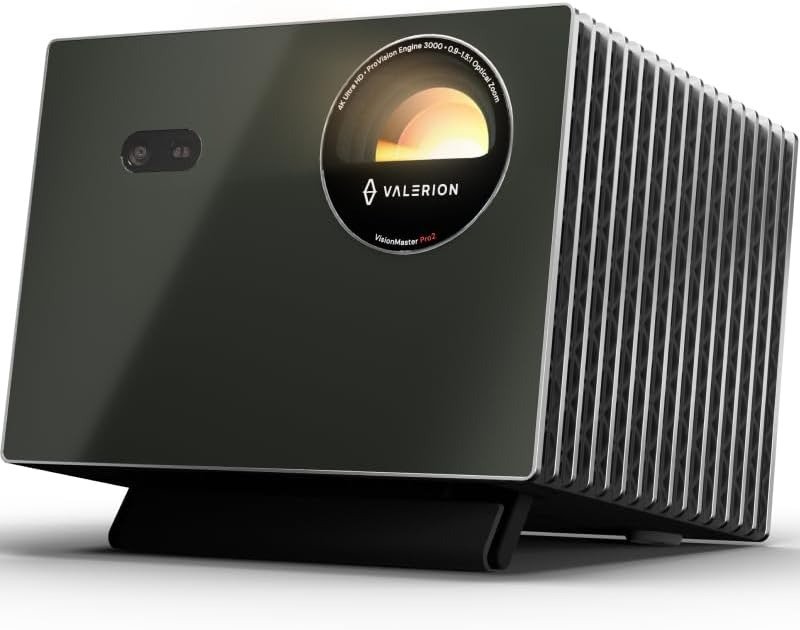
VALERION VISIONMASTER PRO 2
The lie is simple: most projector disappointment does not begin with the projector. It begins with a room that looks harmless in the daytime, a wall that seems “good enough,” and a buyer who thinks brightness alone will rescue the image. Then movie night starts, the blacks lift, faces flatten, the room feels expensive but the picture feels rented. That is the exact trap the Valerion VisionMaster Pro 2 is trying to escape, and after tracing the specs, lab testing, reviewer measurements, firmware notes, and owner feedback, I do not think its real value is raw brightness. Its value is that it keeps more of the cinematic mood intact after the room stops being ideal. That is the threshold that matters.
The Result Looks Fine. The Problem Isn’t.
A weak projector fails loudly. This one fails quietly, which is why people misread it.
On a spec sheet, the VisionMaster Pro 2 looks almost too eager: RGB triple laser, 3000 ISO lumens, claimed 110% Rec.2020 coverage, Dolby Vision, HDR10+, IMAX Enhanced, 0.9–1.5:1 optical zoom, and gaming modes up to 1080p/240Hz with 4ms input lag. That kind of list usually smells like brochure theater. Here, though, the unusual part is how much of it survives outside the brochure. RTINGS found it genuinely very bright with excellent brightness uniformity, strong contrast across scene types, a very wide color gamut, and a feature set that holds up for both movies and gaming. ProjectorCentral and What Hi-Fi likewise describe performance that punches above what lifestyle projectors usually deliver in this price band.
That does not mean it is magic. It means the image keeps its composure longer than expected. That is different. And if you have ever watched a projector collapse the moment a lamp stays on in the corner or a dark scene arrives in the middle of a bright evening, you already know why that distinction is expensive.
What You’re Actually Feeling but Not Naming
What most buyers call “I want a better projector” is usually something narrower and more personal.
It is the irritation of seeing a big image that still feels thin. It is the low-grade regret of spending real money only to keep tweaking settings because the picture never quite settles. It is the strange mismatch between a premium-looking room and an image that turns gray exactly when the scene is supposed to feel dangerous, intimate, or grand. Owners and reviewers keep circling the same emotional center in different words: deep blacks, strong color, sharp picture, quiet operation, easier setup than expected, but also a need to dial it in properly and, for some viewers, visible RGB speckle or image-processing choices that can hurt motion or dark-scene integrity if you lean on the wrong settings.
That is not “general home theater dissatisfaction.” It is threshold fatigue. You are not angry because the image is small. You are annoyed because the picture keeps flirting with greatness and then leaking atmosphere right at the edge where immersion should lock in.
The Hidden Mechanism Behind the Miss
The hidden variable here is not brightness by itself. It is how well brightness, contrast control, tone mapping, and optical flexibility stay balanced once the room stops behaving.
That is why this projector is more interesting than its headline number. The official feature stack is broad, but the mechanism that keeps returning across serious reviews is the pairing of strong light output with unusually credible black-level management for this class. RTINGS found strong contrast that remains solid across different scene brightness levels, with a dynamic contrast option that meaningfully deepens fades and very dark scenes. What Hi-Fi went further: with the Enhanced Black Level feature on Low, especially in Dolby Vision Dark, it described the result as among the best images seen near this price, with black levels improving substantially without badly draining brightness or color. That matters more than marketing copy, because this is exactly where many bright lifestyle projectors lose their nerve.
The second mechanism is installation freedom that does not feel like surrender. The 0.9–1.5:1 optical zoom is not just a convenience line item. It is what lets the projector fit a real living room, a media console, or a shelf placement without instantly forcing ugly compromises. Reviewers repeatedly single out the motorized optics and generous zoom as unusual strengths in the category. In plain English: it gives you more ways to place it without turning setup into geometry homework.
A third mechanism sits in gaming and everyday responsiveness. Officially, Valerion claims 4ms at 1080p/240Hz, 8ms at 1080p/120Hz, and 15ms at 4K/60Hz. ProjectorCentral says those numbers were mostly accurate in testing, while Projector Reviews echoed roughly the same lag figures. That makes the Pro 2 one of the few projectors that can credibly move between movie machine and gaming display without feeling like it is apologizing for one of those jobs.
The Threshold Where the Outcome Quietly Breaks
Here is the threshold I would name after studying this product: the atmosphere threshold.
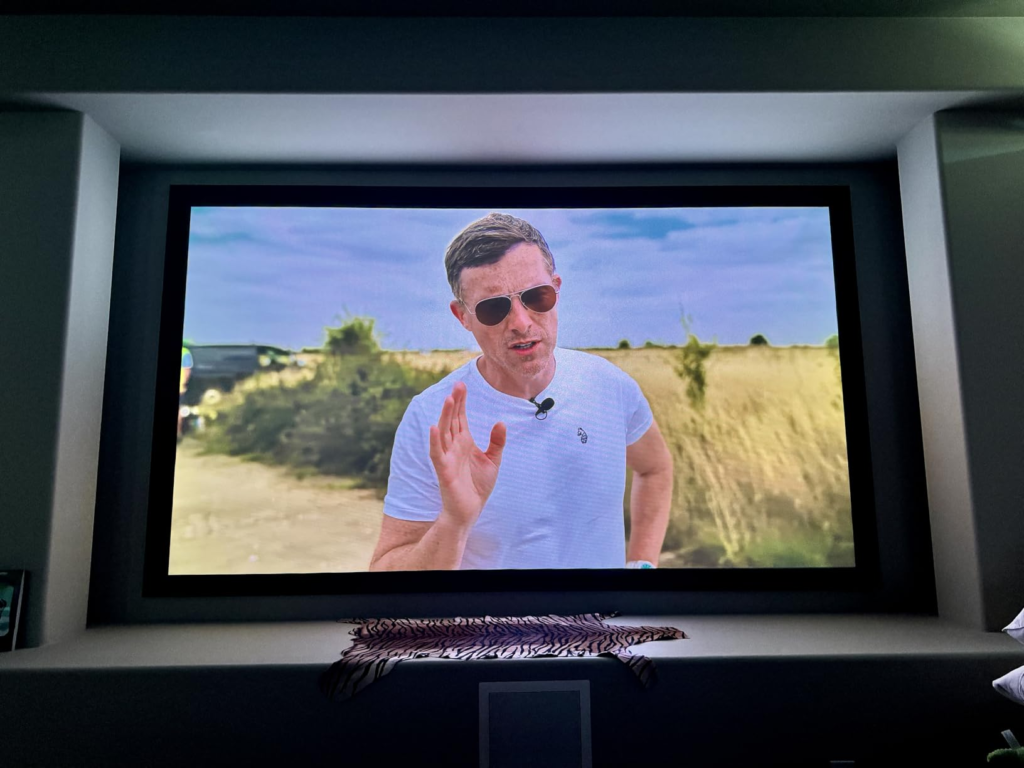
Below it, a projector can be bright, sharp, and technically impressive, yet still fail to make a room feel cinematic. Above it, the image stops looking like projected content and starts changing the room itself. The Pro 2 crosses that line when three conditions meet: the screen size is meaningful, ambient light is present but not reckless, and you care about dark-scene depth enough to notice when a projector goes chalky. That is the pocket where this model becomes hard to dismiss. RTINGS says it is comfortably bright on a 100-inch screen in a light-controlled room and can handle some ambient light; What Hi-Fi says the latest firmware and Enhanced Black Level processing can turn dark HDR scenes from merely decent to convincingly cinematic; owner feedback repeatedly talks about “inky blacks,” strong color, and low fan distraction.
But the threshold also breaks in the other direction. Push the wrong settings, chase maximum brightness at all costs, or expect flawless out-of-box tuning, and the illusion frays. The Hook Up found that one brightness-boosting mode could push measured output higher, but at the expense of color accuracy. What Hi-Fi notes that some presets need manual adjustment, that High Enhanced Black Level can create unpleasant brightness instability, and that 60Hz gaming does not feel as crisp as the projector’s faster modes. This is not a “set it anywhere and forget reality” machine. It is a projector that rewards correct use.
Why Most Buyers Misread This Too Early
Because they compare boxes, not break points.
They look at brightness first, price second, feature count third, and then assume the rest will sort itself out. That is how people end up buying a projector that wins the spreadsheet and loses the room. The VisionMaster Pro 2 is easy to misjudge from both sides. Skeptics see a newish premium sub-brand and assume the polish is cosmetic. Hype-driven buyers see triple laser, Dolby Vision, IMAX Enhanced, and 240Hz gaming and assume perfection is included. Both readings are lazy. The real story is more disciplined: this is a high-performing standard-throw projector whose strongest trait is not one headline spec, but the way brightness, contrast behavior, zoom range, HDR support, and usability combine into a system that stays convincing under more real-world strain than many rivals.
May it still lose on isolated metrics to some competitors? Yes. RTINGS explicitly says models like the XGIMI Horizon 20 Max or Hisense C2 Ultra can edge it out in certain areas. That is exactly why the right question is not “Is this the absolute winner at everything?” It is “Does this clear the atmosphere threshold in the kind of room and usage pattern I actually live with?” That question is harder to ask. It is also the one that saves money.
Who Is Actually Inside This Problem
If you see yourself in the left column, this projector starts making sense fast.
You are inside the problem if…
| You want a large image in a living room, not a cave | It combines high brightness with strong uniformity and unusually capable dynamic black-level control for the class. |
|---|---|
| You care about HDR mood, not just raw punch | It supports Dolby Vision and HDR10+, and multiple reviewers found its HDR performance unusually compelling once updated and tuned. |
| You want one machine for films, streaming, and gaming | It offers Google TV, casting support, three HDMI ports, and low-lag gaming modes up to 240Hz at 1080p. |
| Your room layout is awkward enough to punish fixed optics | The 0.9–1.5:1 optical zoom gives the kind of placement flexibility many competitors at this size and style do not. |
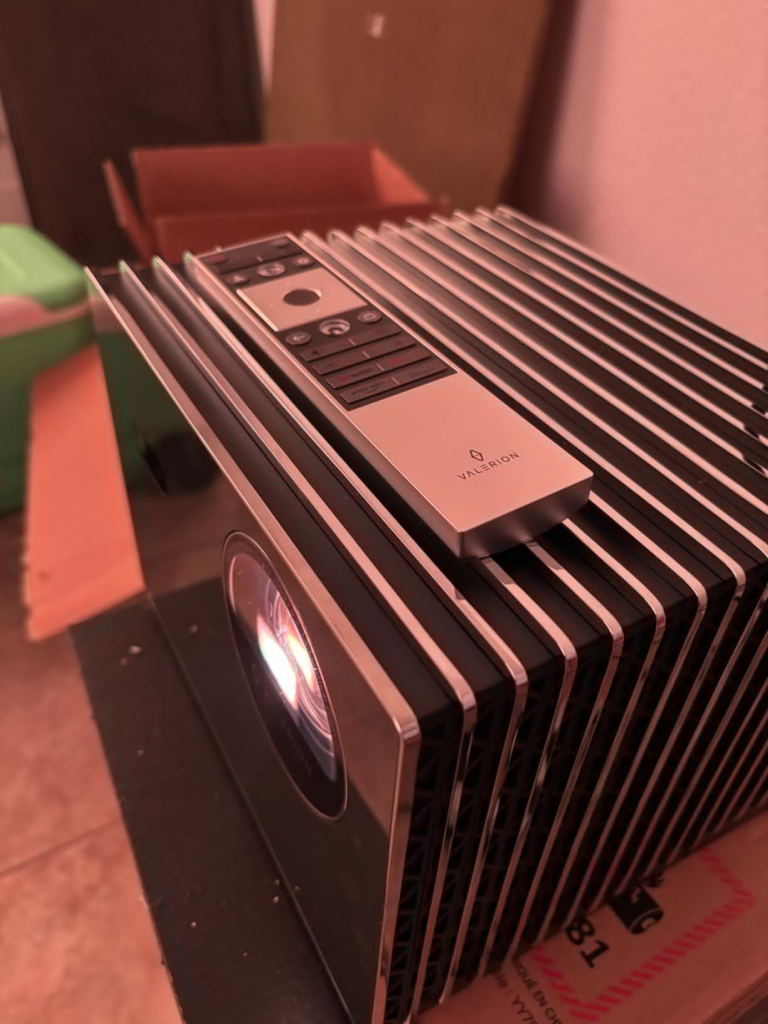
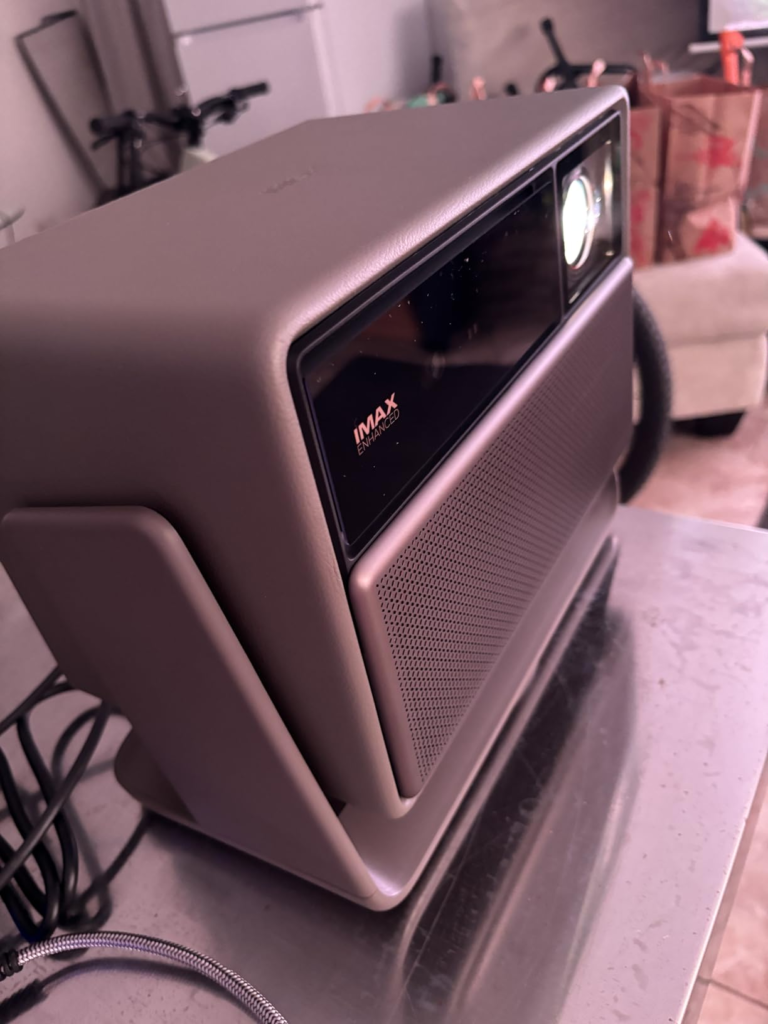
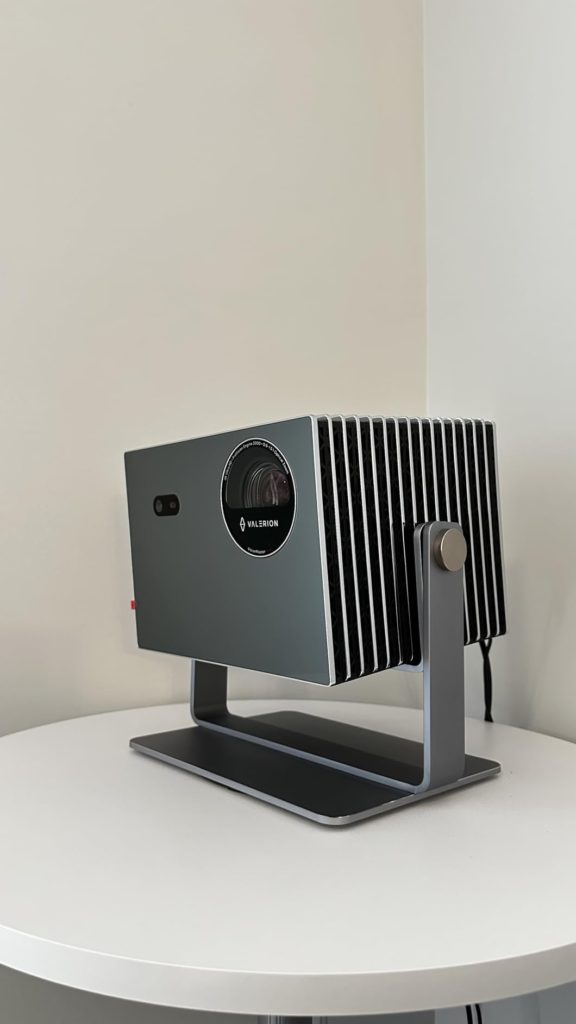
| You want the projector to look expensive even before it turns on | Multiple reviews highlight its heavy, ribbed-metal, mirrored-glass industrial design as genuinely premium. |
And yes, aesthetics matter here. Not in the shallow, Instagram sense. In the room-behavior sense. This is the kind of projector that looks best on a low media console, a sturdy sideboard, or a shelf with breathing space around it, lens centered cleanly toward the screen. Put it on a flimsy stool in a cluttered corner and the room resists it. Put it in a calm, deliberate line with the screen, and the hardware itself starts signaling seriousness before the image even opens. What Hi-Fi’s own photography almost accidentally proves the point: the Pro 2 belongs in a room arranged around intention, not improvisation.
Where Wrong-Fit Begins
This is where I would stop romanticizing it.
If you demand flawless image accuracy with zero tweaking, there are safer choices. If you are highly sensitive to DLP artifacts or laser speckle, you should not wave that away just because the highs are so high. If your gaming diet is mostly 60Hz and you are obsessively latency-sensitive, the Pro 2’s faster modes matter more than its slower ones, and What Hi-Fi’s mild reservations at 60Hz should stay in your head. If you need VRR, it is absent. If you are chasing maximum brightness modes as a badge of honor, remember that The Hook Up found a measurable color penalty in at least one high-output setting. And if your idea of setup is “turn on auto everything and never touch the menu again,” this projector may feel like it is asking for more attention than you expected.
Wrong-fit also begins when the room itself is working against the image and you refuse to admit it. A projector this good can soften a bad room. It cannot erase one. Owners getting the most dramatic results tend to mention disciplined placement, proper screen sizing, restrained use of keystone, and environments that let contrast breathe. One Reddit owner running 115 inches at 11.5 feet with no keystone and darkened surroundings describes exactly the kind of setup where this projector’s strengths bloom instead of pleading for mercy.
The One Situation Where This Product Becomes Logical
It becomes logical when you want one projector to make a living room look richer at night, stay usable before full darkness, carry movie nights without washing out the drama, and still let you game without that dull, delayed feeling that ruins scale.
That is the situation. Not “everyone.” Not “all buyers.” That one situation.
In that situation, the Valerion VisionMaster Pro 2 stops being an indulgent object and becomes a structural fix. It gives you the brightness to survive the room, the contrast behavior to preserve mood, the zoom to fit the space, the smart platform to avoid accessory clutter, the speaker system to stay respectable on casual nights, and the gaming performance to keep it from becoming a single-purpose cinema brick. The cumulative logic is stronger than any single feature claim.
What It Solves, What It Reduces, and What It Still Leaves to You
| What it solves | What it reduces | What it still leaves to you |
|---|---|---|
| Flat, washed-out large-screen viewing in imperfect rooms | The need to choose between movie quality and gaming readiness | Proper placement, sensible settings, and room discipline still matter. |
| The usual “lifestyle projector” compromise where convenience kills contrast | Menu frustration once you learn the right presets and black-level behavior | Some tuning is still needed for best results; presets are not all equally smart. |
| The fear that a stylish projector is secretly all costume | Fan-noise anxiety and external-box clutter thanks to Google TV and respectable built-in audio | VRR is missing, 60Hz gaming is less convincing than the faster modes, and some viewers may notice speckle or prefer different DLP behavior. |
That last column is important. I do not trust projector writing that wipes it away. The cleanest purchase is not the one with the prettiest praise. It is the one whose remaining annoyances you understand before the box lands on your floor.
Final Compression
If what you actually want is a projector that can survive a real room without murdering cinematic tension, the Valerion VisionMaster Pro 2 is not just another bright box with luxury manners. It is one of the clearest examples of a projector crossing the atmosphere threshold before the price drifts into dedicated-theater absurdity. Its strengths are real: brightness, color volume, black-level credibility for the class, optical flexibility, serious gaming support, and a design that can make a room feel more deliberate simply by being in it. Its caveats are real too: some setup literacy is required, some settings are better than others, VRR is absent, and perfection is not hiding in the menu.
So this is the clean decision line I would use: if your break point is not “I need the absolute best projector on earth,” but “I need the room, the image, and the ritual to finally agree with each other,” this is where the decision stops being vague and the forward move becomes logical.
Transparency Note:
This analysis is built on aggregated real-world experience.
It extracts what repeatedly holds, what breaks, and what users uncover only after living with the system—then shapes it into a clear model you can use immediately.
Think of it as structured experience, refined and presented so you don’t have to learn it the hard way.
“A quick note: Don’t believe the star ratings, but trust personal experience. This article is a compilation of collected experiences”