Your Apple TV 4K Replacement Remote Appears Compatible — Until the Signal Hits Your Living Room
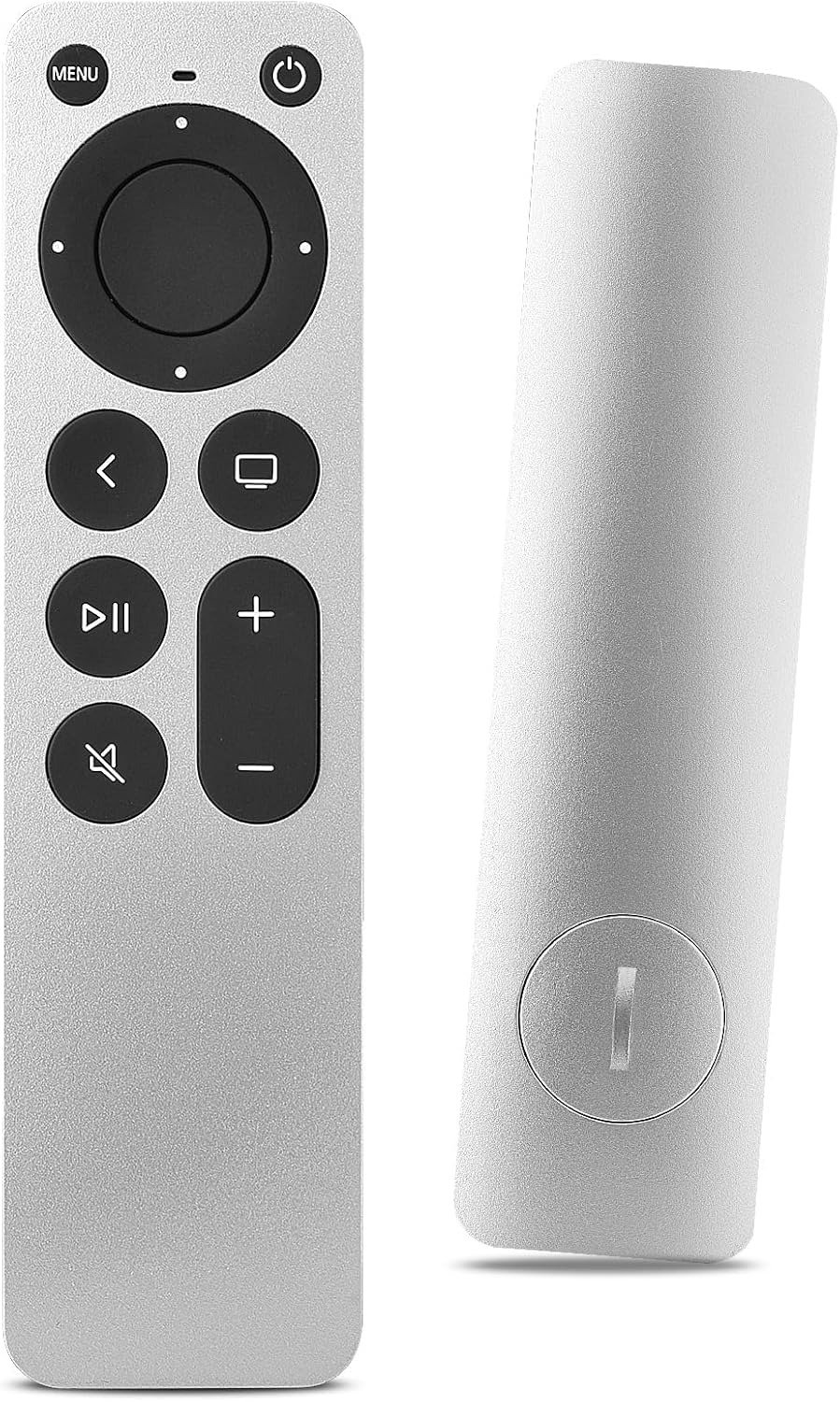
PRODUCT NAME: APPLE TV 4K REPLACEMENT REMOTE
The Result Looks Fine. The Problem Isn’t.
You find the remote listing. The compatibility table lists your Apple TV model. The price makes sense. The reviews average above four stars. You add it to cart.
And then it arrives.
You point it at the TV, press Menu, and nothing happens.
Or it works — but only from a specific spot on the couch, at a specific angle, if the entertainment cabinet door is open.
Or it works fine for two weeks, and then one morning the response becomes sluggish and inconsistent, and you can’t tell if it’s the batteries, the signal, or a pairing issue buried in settings you haven’t touched.
None of this is written on the product page. The compatibility matrix said yes to your model number. The stars said yes to your wallet. And now you’re holding a remote that technically works and practically frustrates you every single time you try to use it.
The listing was not dishonest. But it was also not telling you what actually determines whether this remote becomes invisible in your hand or a daily source of low-grade friction.
What You’re Actually Feeling but Not Naming
The annoyance isn’t “the remote doesn’t work.” If it didn’t work at all, you’d return it immediately.
The annoyance is subtler than that.
It’s the half-second lag that makes you press the button twice, accidentally skipping the scene you wanted. It’s having to shift your body on the couch slightly left so the signal hits. It’s realizing your Apple TV is sitting inside a media cabinet with a glass door — and this remote, which the listing never warned you about, requires unobstructed line of sight to function.
It’s picking up the remote in the dark and pressing what you think is Play, because there’s no tactile difference between the buttons, and accidentally opening the App Store.
These aren’t catastrophic failures. They’re the kind of friction that doesn’t show up in reviews written after three days of use. They accumulate. They become the reason the remote ends up on the coffee table as a secondary option while you use your phone as the primary controller — which defeats the entire purchase.
What you were actually looking for wasn’t just a remote that’s compatible with your Apple TV 4K. You were looking for a remote that disappears into the act of watching something.
Those are not the same thing.
The Hidden Mechanism Behind the Miss
Here is the mechanism most buyers skip past entirely.
The official Apple TV 4K remote — the Siri Remote, 2nd and 3rd generation — communicates with the Apple TV box via Bluetooth. This matters more than any other spec on the page.
Bluetooth does not require line of sight. It works through cabinet walls. It works with the Apple TV mounted behind the TV. It works at an angle, from across the room, without pointing. The signal travels. You never think about it.
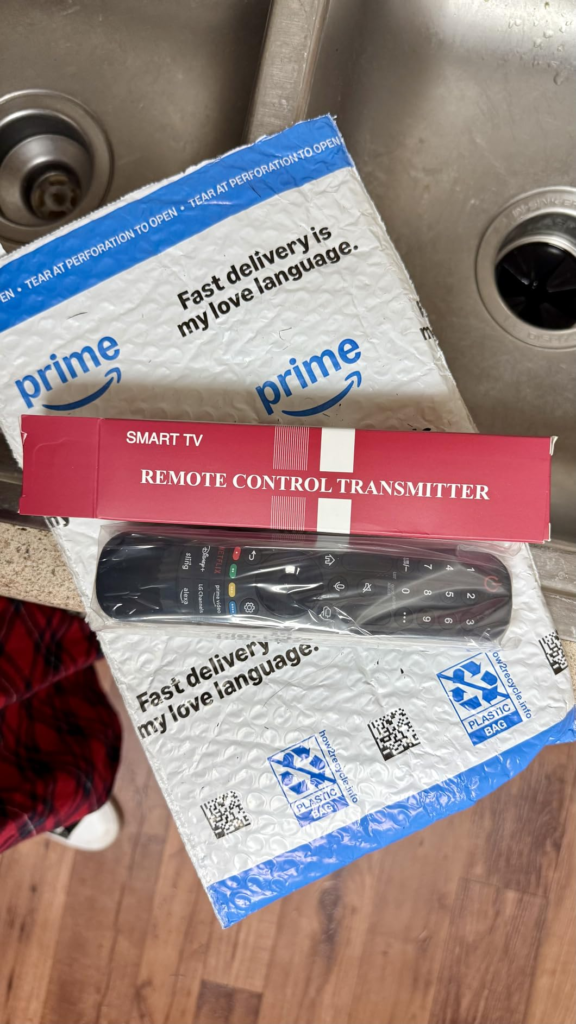
The majority of third-party replacement remotes — including the one in the Amazon listing you were looking at — operate on infrared. IR is the same technology in every TV remote made in the 1990s. It requires a clear, direct optical path between the remote and the device’s receiver.
| Feature | Official Siri Remote (2nd/3rd Gen) | IR Replacement Remote |
|---|---|---|
| Communication Protocol | Bluetooth 5.0 | Infrared (IR) |
| Line of Sight Required | No | Yes |
| Works Through Cabinet | Yes | No |
| Range | Up to 10m, omnidirectional | Up to 12m, directional only |
| Voice / Siri | Yes | No |
| Touchpad Navigation | Yes | No |
| TV Power / Volume Control | Yes (IR out) | Yes (IR only) |
| Pairing Required | Yes, automatic | No (plug-and-play) |
| Battery Type | Built-in, USB-C rechargeable | AAA or CR2032 (not included) |
| Price Range | $59–$79 (official) | $10–$35 (third-party) |
This table is the hidden structure of every buying decision in this category. The listing never presents it this way. It buries the IR note inside a bullet point in small type — “IR remote, line of sight required” — after leading with “Compatible with Apple TV 4K 1st, 2nd, 3rd Generation.”
Compatible, yes. Architecturally equivalent, no.
The Threshold Where the Outcome Quietly Breaks
There is a specific physical condition where IR replacement remotes fail to perform at the level buyers expect:
When the Apple TV box is not in direct open-air sight of where you’re sitting.
This threshold is hit more often than you’d think, because Apple TV 4K is small. Small devices get placed inside cabinets. Behind soundbars. Inside media centers with closed shelves. Some users mount them behind the TV itself on a VESA bracket — a popular setup that is entirely invisible to an IR signal.
| Placement Scenario | IR Replacement Remote | Siri Remote (Bluetooth) |
|---|---|---|
| Open shelf, line of sight clear | Works normally | Works normally |
| Inside closed cabinet | Fails completely | Works normally |
| Behind flatscreen TV | Fails completely | Works normally |
| Inside glass-door media center | Inconsistent | Works normally |
| On entertainment stand, slightly off-center | Requires pointing | Works at any angle |
| Behind soundbar | Partially blocked | Works normally |
| In another room | Fails completely | Works up to ~10m |
Once the Apple TV is inside an enclosure — even a partially enclosed one — the IR replacement remote performance degrades from “functional” to “manageable” to “daily inconvenience.”
This is the threshold. It is never described as such in the listing. It is hidden inside the phrase “line of sight required.”
Why Most Buyers Misread This Too Early
The comparison happens at the wrong moment.
A buyer whose original Siri Remote was lost or damaged goes to Amazon. They filter by “Apple TV 4K compatible.” They see the official Siri Remote at $59–$79. They see IR replacements at $12–$35. They read three reviews on the replacement: “Works great.” “Easy setup.” “Does what it says.”
What they don’t read — because it doesn’t appear in early reviews — is the setup that breaks it.
The early reviewer is testing on an open shelf, Apple TV fully exposed, sitting three feet away. Of course it works. That’s not the failure condition.
The failure condition is the buyer who has their Apple TV inside a cabinet because that’s how their living room is arranged — and who doesn’t realize the $12 remote just stopped being a viable option the moment the shelf door closed.
The comparison is also structurally flawed in another direction. Buyers comparing an IR replacement to the original Siri Remote sometimes conclude: “The Siri Remote has a touchpad, which I don’t like, so the replacement buttons are actually better.” This is partially true — many users prefer physical buttons over the swipe-based touch surface. But it conflates button preference (a real and valid issue) with signal architecture (an entirely separate structural constraint).
You can prefer physical buttons and still be buying the wrong remote for your room.
Who Is Actually Inside This Problem
The IR replacement remote — including the model in this listing — works well for a specific user in a specific situation.
Profile A — Clear Deployment: Apple TV on an open media stand or TV unit. Full line of sight from seated position. No enclosures. Primarily manual button navigation. Does not use Siri voice commands. Wants simplest possible replacement without recharging or Bluetooth pairing. This user will likely have no friction. The remote works exactly as described.
Profile B — Enclosed Setup: Apple TV inside a cabinet, behind the TV, inside a media center. The IR remote fails here in any consistent way. This user should not buy this remote, regardless of price. They should look at a Bluetooth option — either the official Siri Remote or a Bluetooth-capable third-party option like the Function101 Button Remote (Bluetooth Edition, model B0C6S6L61P).
Profile C — Shared Household: Multi-person household where some users find the Siri Remote’s touchpad confusing. Children, elderly family members who prefer traditional button layout. If the Apple TV placement allows line of sight, the IR replacement can actually be the better daily-use option for this group.
Profile D — Secondary Remote Seeker: User who already has a working Siri Remote but wants a low-cost second remote for a shared TV or second room. IR replacement is logical here — cheap, no pairing complexity, good enough for the secondary use case.
Where Wrong-Fit Begins
Do not buy an IR replacement remote — including this listing — if any of these conditions apply to your setup:
| Condition | Risk Level |
|---|---|
| Apple TV inside closed cabinet | High — will not work consistently |
| Apple TV mounted behind TV | High — signal blocked |
| Apple TV inside glass-door media unit | Medium-High — angle dependent |
| You rely on Siri for search and password entry | High — no voice function at all |
| You want to use the touchpad for scrolling | High — no touchpad, no gestures |
| Apple TV inside an A/V rack or entertainment system | High — obstruction likely |
| You want to control HomePod or AirPods via remote | High — not supported |
| You need to pair with Apple TV 4K HomePod Mini | High — not compatible |
The $15 savings relative to a Bluetooth replacement is not the issue. The issue is that in the conditions above, the $15 remote introduces friction every single session — and the cumulative cost of that frustration is higher than the cost difference.
Wrong-fit here doesn’t announce itself upfront. It appears over time, in small increments, until you’ve bought a second replacement anyway.
The One Situation Where This Replacement Remote Becomes Logical
The product in this listing — the IR-based replacement remote compatible with Apple TV 4K Gen 1, 2, 3 and Apple TV HD — is a logical purchase in one specific, well-defined condition:
Your Apple TV 4K is in open, unobstructed view from your seating position. You don’t use Siri voice control. You want physical buttons over the touchpad. You don’t want to manage a rechargeable battery. And you need a working remote quickly, either because yours was lost, broken, or you want a secondary unit.
In that condition, this remote does exactly what it claims. It responds within half a second. It pairs on first use without configuration. It controls both your Apple TV and your TV’s power and volume. The button layout is traditional and requires no adjustment period. It works at up to 12 meters with a clear path.
It is not a downgrade in those conditions. It is a clean, functional solution.
The key phrase is: in those conditions. That boundary is structural, not preferential.
What It Solves, What It Reduces, and What It Still Leaves to You
| Category | What This Remote Handles |
|---|---|
| ✅ Solves | Lost or broken original remote replacement |
| ✅ Solves | Navigate Apple TV menus, apps, playback |
| ✅ Solves | TV power, volume, mute (Samsung, LG, Sony, Vizio, Toshiba, Insignia, Westinghouse) |
| ✅ Solves | Physical button preference over touchpad |
| ✅ Solves | No charging dependency — AAA batteries |
| ✅ Reduces | Cost vs. official Siri Remote ($59–$79) |
| ✅ Reduces | Setup complexity — no pairing required |
| ❌ Does not solve | Enclosed or obstructed Apple TV placement |
| ❌ Does not solve | Siri / voice search capability |
| ❌ Does not solve | Touchpad gestures or swipe navigation |
| ❌ Does not solve | HomePod Mini or AirPods control |
| ❌ Does not solve | Works-from-any-angle usage |
| ⚠️ Leaves to you | Confirming Apple TV is in clear line of sight |
| ⚠️ Leaves to you | Providing CR2032 or AAA batteries (not included) |
| ⚠️ Leaves to you | TV brand compatibility check (Roku TVs not supported) |
Final Compression
The decision here is not “cheap vs. expensive.” It is “IR architecture vs. Bluetooth architecture” — and that distinction is entirely determined by where your Apple TV physically lives in your room.
If your Apple TV 4K sits in open view, you don’t use Siri, and you want a simple button-based replacement without managing a rechargeable battery — this remote is the correct decision. It works, it’s immediate, and it removes the daily friction of a missing or broken original.
If your Apple TV is inside any kind of enclosure, the IR mechanism will underperform from day one. No firmware update corrects that. No angle adjustment fully compensates. The architecture is the constraint, not the execution.
One clear test before purchasing: walk to where your Apple TV sits. If you could hold a flashlight where the remote would be and illuminate the Apple TV’s front receiver without obstruction — you’re in line of sight. If not, you need a Bluetooth-capable option.
That test costs thirty seconds. It is the decision.
Frequently Asked Questions
| Question | Answer |
|---|---|
| Will this remote work with my Apple TV 4K (3rd generation, 2022)? | Yes — the listing is compatible with Apple TV 4K Gen 1, 2, and 3, as well as Apple TV HD. Confirmed model numbers include A2169, A1842, A1625, A1427, A1469, A1378, and A1218. |
| Does this remote support Siri voice search? | No. This is an IR remote with no microphone. There is no voice or Siri functionality. If you rely on Siri for searching shows, entering passwords, or app commands, this remote does not replace that capability. |
| My Apple TV is inside a media cabinet — will this work? | In a closed or semi-closed cabinet, an IR remote will not perform reliably. The infrared signal requires an unobstructed path to the Apple TV’s front receiver. For enclosed setups, a Bluetooth-based replacement is necessary. |
| Does the remote control my TV’s volume and power? | Yes, for most major TV brands: Samsung, LG, Sony, Vizio, Toshiba, Westinghouse, and Insignia. It does not work with Roku-branded TVs. |
| Do batteries come included? | No. The remote requires a CR2032 coin battery. This is not included in the listing and must be purchased separately. |
| Is any pairing or setup required? | For Apple TV navigation: the remote typically works immediately after inserting the battery. A brief pairing step (holding Back + Left simultaneously for 6 seconds until the LED flashes) may be needed on some units. For TV volume/power control, the power button is pre-programmed for common TV brands. |
| What’s the difference between this and the official Apple Siri Remote? | The official Siri Remote uses Bluetooth 5.0, requires no line of sight, includes a touchpad, supports Siri voice commands, and has a built-in rechargeable battery (USB-C on 3rd gen). It costs $59–$79. This replacement remote uses infrared, requires line of sight, uses physical buttons only, has no voice function, and runs on a replaceable battery. It costs a fraction of the official remote. The right choice depends entirely on your setup and usage pattern — not the price gap alone. |
| Can I use this alongside my existing Siri Remote, rather than replacing it? | Yes. This can function as a secondary remote, particularly useful for households where multiple people watch TV and the original Siri Remote touchpad causes confusion for some users. |
Transparency Note:
This analysis is built on aggregated real-world experience.
It extracts what repeatedly holds, what breaks, and what users uncover only after living with the system—then shapes it into a clear model you can use immediately.
Think of it as structured experience, refined and presented so you don’t have to learn it the hard way.
“A quick note: Don’t believe the star ratings, but trust personal experience. This article is a compilation of collected experiences”