The KitchenAid KES6504 Looks Effortless Until the Morning Routine Starts Asking for Precision
KITCHENAID KES6504
I don’t trust espresso machines that sell calm before they prove control.
That sounds harsh. It should.
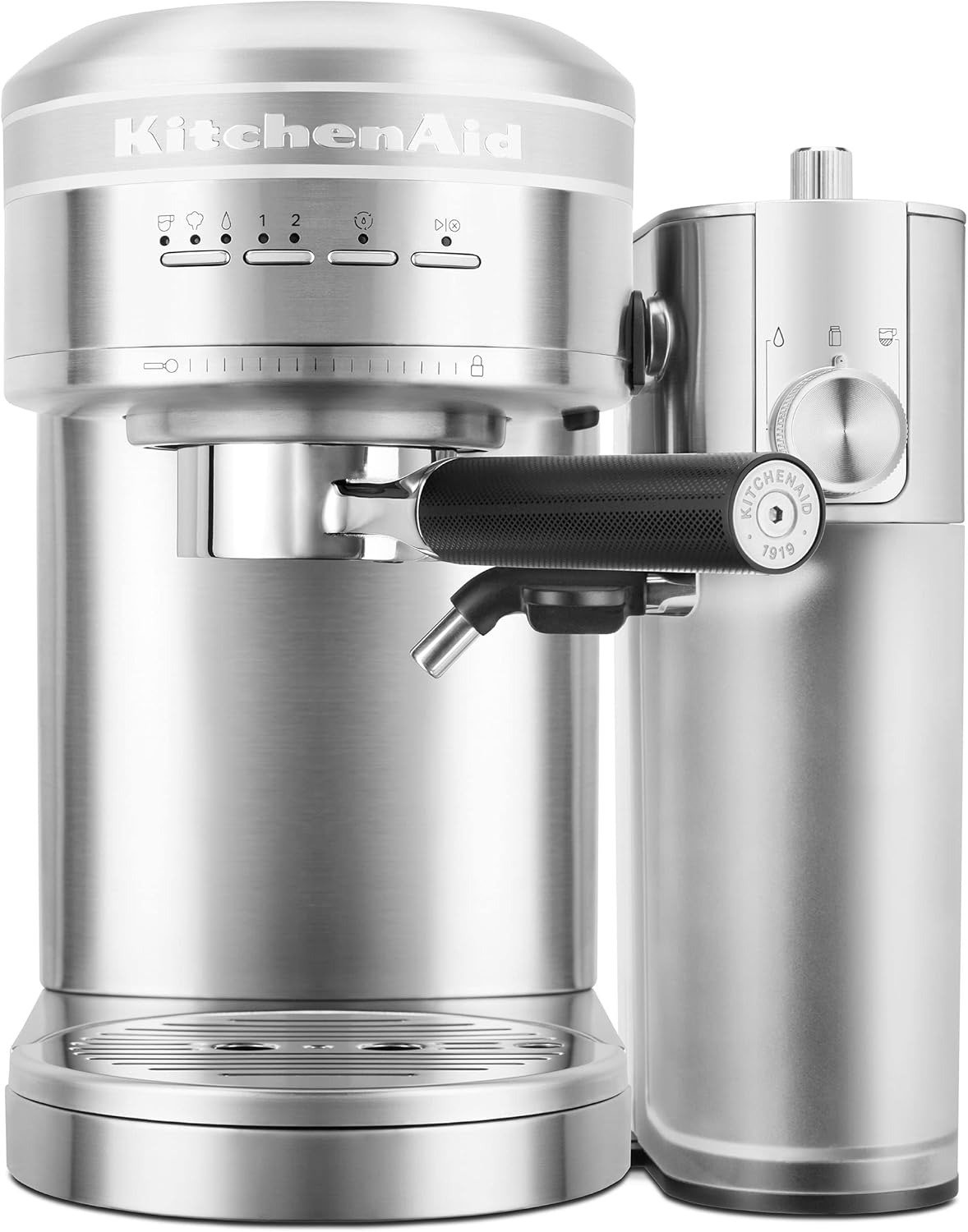
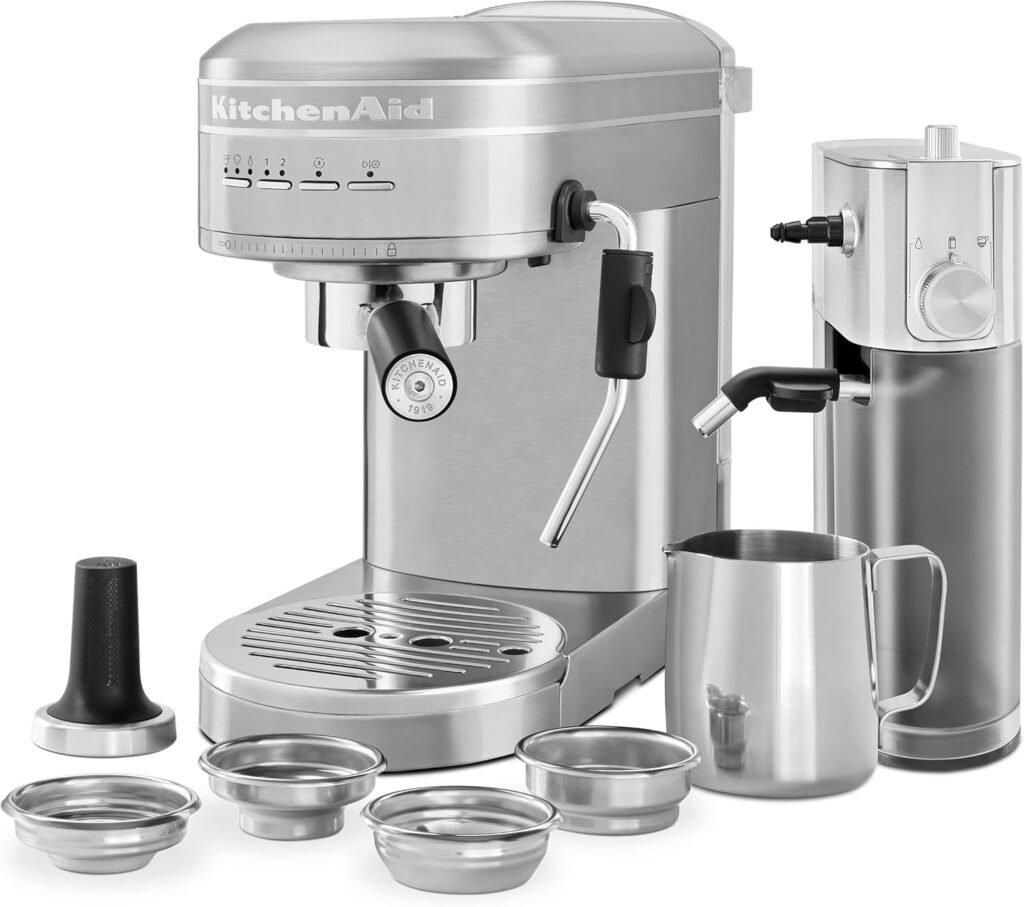
Because this is the trap with the KitchenAid KES6504 bundle: the brushed metal body, the polished front, the one-button milk promise, the language of ease. On the counter, it looks like a machine built to shrink friction. In actual ownership, the question is narrower and far more important: does it reduce the kind of friction that ruins your morning, or does it simply repaint it? The official pitch leans on dual smart temperature sensors, sub-40-second thermocoil heating, and an automatic milk frother that can dose and texture milk for you. The base machine also uses a 58 mm commercial-style portafilter and a 15-bar pump. Those are serious signals, not toy ones.
The problem is that espresso is not fooled by tidy industrial design. Neither is your patience.
The Result Looks Fine. The Problem Isn’t.
A latte can look finished long before the workflow feels settled.
That is the first uncomfortable truth here. The KitchenAid bundle is capable of producing attractive drinks and, in many hands, genuinely enjoyable espresso. Whole Latte Love found the espresso quality strong enough to highlight tasting notes well, and they also found the automatic milk frother improved latte consistency once dialed in. Verified owners on KitchenAid and retailers repeatedly praise the drink quality, the ease of operation, and the convenience of the milk system.
But the praise comes with a shadow pattern: what looks simple in the marketing copy can still ask for more tuning, cleanup, and repetition than the surface suggests. WIRED needed more rounds of trial and error than expected before it was happy with the cup, and The Modest Man described a similar sense of uncertainty around pressure and frothing consistency.
That gap matters.
Not because the machine is bad. Because the machine is often judged by the wrong outcome. People see a polished countertop appliance with automatic milk support and assume the hard part has been removed. In reality, some of the hard part has merely moved.
What You’re Actually Feeling but Not Naming
Most people do not say, “This machine has a threshold mismatch.”
They say something simpler.
Why did that shot choke?
Why did the next one run thin?
Why am I cleaning milk parts again for one drink?
That is not random annoyance. It is a three-part friction loop: setup drag, pressure uncertainty, cleanup repetition. The manual itself makes clear that pressure quality depends on grind size, dose, and tamping force, and KitchenAid’s own support page explicitly tells owners to correct low pressure by grinding finer and tamping more firmly—roughly 30 to 40 pounds of force—with the flat-base portafilter designed to help level tamping and reduce channeling.
So the emotional experience becomes strangely specific. The machine does not feel chaotic. It feels almost cooperative. That is worse for some buyers, because “almost” keeps you leaning forward. One more adjustment. One more shot. One more milk cycle. One more wipe of the line.
You are not dealing with failure in the obvious sense. You are dealing with near-success fatigue.
The Hidden Mechanism Behind the Miss
Here is the hidden variable: this machine removes some manual labor, but it does not remove espresso sensitivity.
That distinction changes everything.
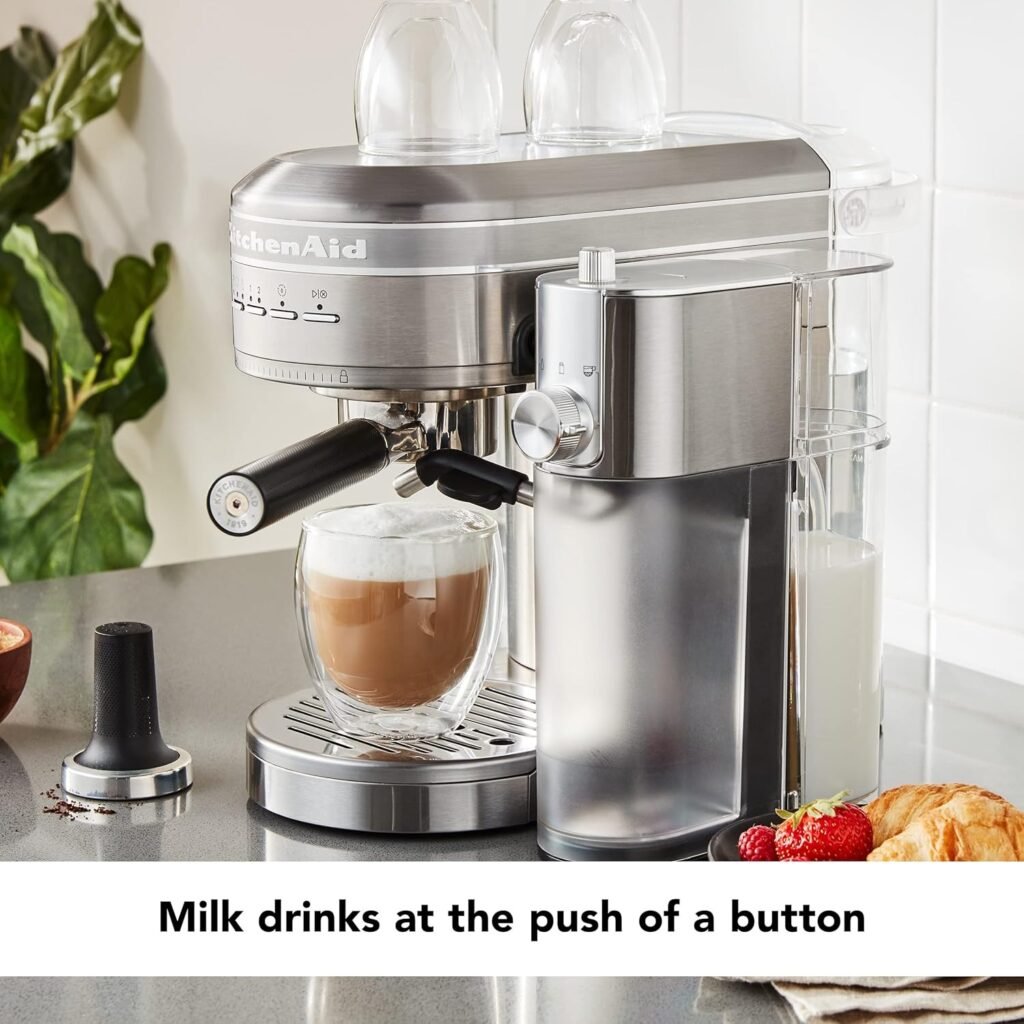
KitchenAid’s bundle solves two visible pain points very well. First, it heats fast and uses dual temperature sensors to keep brewing temperature steadier shot to shot. Second, the automatic frother can produce milk at the touch of a button with adjustable milk amount and foam level. For the buyer whose daily friction is “I can steam, but I don’t want to,” that is real value.
What it does not do is turn semi-automatic espresso into a push-button category. The manual still ties extraction quality to grind, tamp, and basket load. WIRED found the dosing/grind relationship needed more trial and error than expected. The Modest Man reported that even when doing things “right,” pressure could still feel inconsistent. Coffeekev’s hands-on review praised the quiet grinder and overall usability, but argued that the machine’s espresso fundamentals lag rivals when using fresher, more demanding beans, pointing specifically to grind-range limitations.
So the miss is not that the KitchenAid cannot make good drinks. It can. The miss is that many buyers confuse milk convenience with espresso forgiveness.
They are not the same machine behavior.
The Threshold Where the Outcome Quietly Breaks
This machine changes character at a very specific line:
It feels smooth when your priority is repeatable milk drinks with moderate espresso fuss. It starts feeling expensive when your priority is low-fuss espresso precision first thing every day.
That is the threshold.
Below it, the KES6504 feels thoughtful. Above it, it can feel like an appliance asking to be managed.
Based on KitchenAid’s own documentation, expert hands-on reviews, and owner reports, this is the threshold map I would use:
| Signal | Below the threshold | Beyond the threshold |
|---|---|---|
| Morning goal | Latte/cappuccino with less wand work | Espresso-first ritual with tight repeatability demands |
| Tolerance for dialing in | A few corrective shots feels acceptable | More than two or three correction rounds feels irritating |
| Milk workflow | You value automatic froth consistency | You resent cleaning extra milk-path parts after single drinks |
| Pressure behavior | You are willing to adjust dose/tamp/grind | You expect the machine to arrive nearly dialed |
| Ownership mood | “Convenient enough to keep using” | “Why am I still negotiating with this?” |
That is why the machine can delight one owner and quietly exhaust another without either of them being wrong.
Why Most Buyers Misread This Too Early
Because they buy the picture, not the operating rhythm.
KitchenAid gives you strong reasons to do that. The machine is visually convincing, fast-heating, and in the burr-grinder version of the platform, notably quiet—Quiet Mark certification backs the low-noise claim, and hands-on reviewers repeatedly describe the grinder as unusually quiet for this class. That matters more than people admit. A loud machine wakes a house. A quiet machine feels civilized.
But quiet does not equal forgiving. Beautiful does not equal automatic. And “automatic milk” does not mean “automatic espresso.”
Serious Eats currently points beginners toward easier, more proven options like the Breville Bambino Plus and Barista Express Impress, which says something important about category reality: the espresso market still rewards workflow clarity more than surface elegance. Wirecutter’s espresso guidance similarly centers machines that reduce learning friction rather than merely decorating it.
So the early buying mistake is not ignorance. It is a category misread. People see one-button frothing and assume the entire drink pipeline has been softened. It hasn’t.
Only one section has.
Who Is Actually Inside This Problem
I would put the real KES6504 buyer into one of three very specific rooms.
The first is the household that makes milk drinks more often than straight espresso and wants less steam-wand choreography. That buyer benefits directly from the attachment’s programmable dosing, adjustable foam level, and automatic temperature control. Whole Latte Love specifically found the attachment improved consistency for latte prep, and owner reviews keep returning to convenience, especially when making multiple drinks.
The second is the buyer who values countertop peace. KitchenAid’s semi-automatic platform has Quiet Mark certification, and hands-on reviewers call it unusually quiet. If your kitchen opens into family life, that matters in a way spec sheets rarely capture.
The third is the buyer who wants a semi-automatic machine that looks like a permanent fixture, not a hobby rig. KitchenAid’s design language, metal-clad construction claims, and brand familiarity are part of the appeal. Even critics concede it looks substantial and intuitive on the counter.
If you are in one of those rooms, the machine starts making sense.
If you are not, the romance fades faster.
Where Wrong-Fit Begins
Wrong-fit begins where the milk system stops being help and starts being another thing to maintain.
Whole Latte Love liked the attachment but still described post-use cleaning as repetitive, especially when frothing for a single drink. Best Buy owners have said a similar thing more bluntly: great espresso machine, okay frother, more hassle than expected. That is not a trivial complaint. It goes straight to daily adoption.
Wrong-fit also begins when you buy this machine for espresso absolution. KitchenAid’s own support and manual are explicit: grind size, tamping force, and dose still control pressure; under-extraction and over-extraction are both easy to trigger if those variables drift. Reviewers who know the category still reported longer dialing-in cycles than expected, inconsistent pressure feelings, or compromises in espresso fundamentals with demanding beans.
And wrong-fit begins when your emotional threshold is low. Some buyers can tolerate a machine that asks for a week of familiarity. Others want trust on day one. Neither is morally superior. But only one of them should buy this.
The One Situation Where This Product Becomes Logical
Here it is.
The KitchenAid KES6504 becomes logical when your real problem is not “I need the best pure espresso machine for the money,” but “I want a handsome semi-automatic machine that gives me credible espresso and easier, more repeatable milk drinks without forcing me to master steaming every morning.”
In that one situation, the product stops looking conflicted and starts looking focused.
The dual temperature-sensor setup, fast heat-up, 15-bar pump, 58 mm portafilter platform, and milk attachment all line up around a single type of user: not the obsessive dial-in purist, not the café cosplayer, not the total beginner who wants zero correction, but the buyer who wants better ritual without full manual burden.
That is the clean authorization point.
Not “everyone should buy it.”
Not “it beats the whole category.”
Just this: for that buyer, the logic firms up.
What It Solves, What It Reduces, and What It Still Leaves to You
This is the honest loadout. It matters because regret usually starts where expectation stayed blurry.
Based on the product documentation, expert reviews, and owner reports, I would summarize the machine like this:
| What it solves | What it reduces | What it still leaves to you |
|---|---|---|
| Faster access to milk drinks with automatic frothing | Steam-wand skill burden | Espresso dialing-in discipline |
| More repeatable milk volume/texture than ad-lib steaming | Some morning noise compared with louder grinders in class | Cleanup of milk lines and attachment parts |
| Better countertop fit and calmer industrial design than many hobbyist-leaning machines | Guesswork around milk temperature | Dose, tamp, and grind corrections when pressure drifts |
| A more approachable path to cappuccinos and lattes | The intimidation of pure-manual frothing | The decision of whether the extra frother workflow is worth it for single drinks |
What struck me in the review ecosystem was not sharp disagreement about the machine’s strengths. Most people can see them. The disagreement lives in the leftovers. Some owners barely mind them. Others feel them every morning.
That is why this machine should not be sold to you as magic. It should be sold to you as a specific trade.
Final Compression
If your daily drink is mostly milk-based, if countertop quiet matters, and if you want the machine to do more of the finishing work without abandoning semi-automatic control, the KitchenAid KES6504 is easier to justify than it first appears. Its fast heat-up, temperature stability claims, automatic frother, and strong owner satisfaction pattern all support that case.
If what you really want is effortless espresso precision with minimal dialing-in tolerance, this is where the shine can turn on you. The manual itself tells you pressure quality still depends on grind, dose, and tamp; expert reviews confirm the machine can ask for more adjustment than its calm exterior suggests.
So I would not frame the decision around whether the KitchenAid is good.
I would frame it around whether your friction starts at milk or your friction starts at espresso.
If it starts at milk, the decision gets cleaner.
If it starts at espresso, the decision gets harder.
And if you are already inside that first condition, the KitchenAid KES6504 bundle stops being decorative and becomes the logical next step.
Transparency Note:
This analysis is built on aggregated real-world experience.
It extracts what repeatedly holds, what breaks, and what users uncover only after living with the system—then shapes it into a clear model you can use immediately.
Think of it as structured experience, refined and presented so you don’t have to learn it the hard way.
“A quick note: Don’t believe the star ratings, but trust personal experience. This article is a compilation of collected experiences”