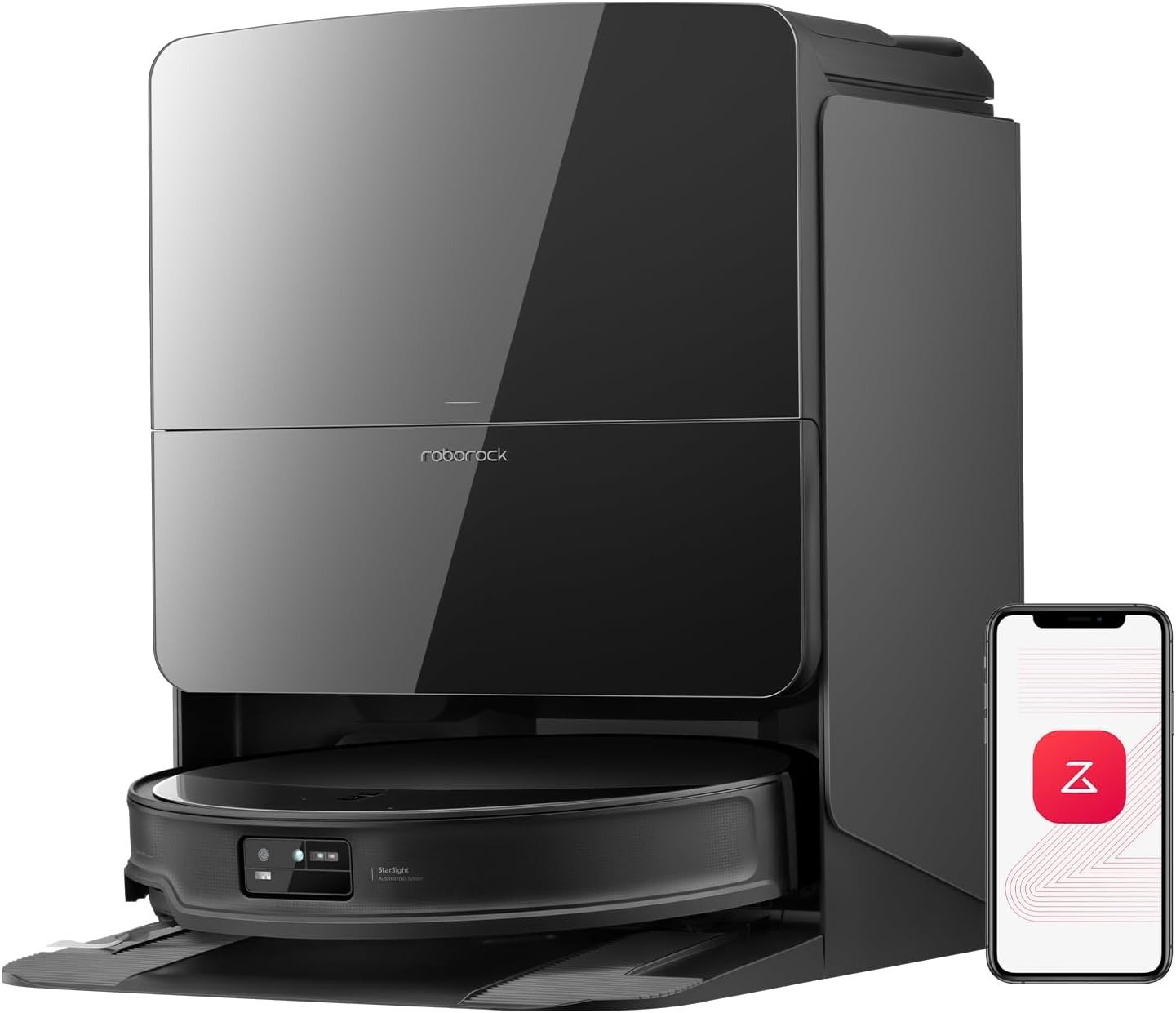
ROBOROCK SAROS 10R: THE FLOOR CAN LOOK CLEAN WHILE THE REAL PROBLEM SURVIVES
The Result Looks Fine. The Problem Isn’t.
The lie starts on the surface.
A floor can look calm, bright, almost finished—while the real failure is still crouching in the places most people never inspect: under the sofa lip, along the baseboard bend, inside the soft edge of carpet where fine grit thins out and disappears from the eye before it disappears from the room.
That is the tension with the Roborock Saros 10R. It is not a simple “good robot vacuum” story. It is a machine built to erase three daily frictions that slowly wear people down: ducking furniture, obstacle chaos, and mop maintenance fatigue. On hard floors, it is genuinely excellent. On navigation, it is even better. On pet hair buried in carpet, the story changes. Sharply.
When I mapped the reviews, the lab tests, the owner reports, and the official spec sheet against the same question—where does this machine stop feeling premium and start feeling compromised?—the answer was not suction in the abstract. It was threshold behavior. Not the door threshold. The decision threshold.
The moment when your home stops being “mostly hard floor with scattered friction” and starts being “pet-hair carpet recovery.” That is where the Saros 10R stops being a clean fit for everyone.
What You’re Actually Feeling but Not Naming
Most buyers do not wake up thinking, I need a robot with better obstacle recognition geometry. They feel something far more ordinary, and far more irritating.
They feel interruption.
Not one big interruption. A hundred small ones.
The robot gets stranded under a chair.
It smears a damp path too close to carpet.
It misses the dust ribbon under the media console.
It forces a rescue mission over cords, toys, socks, or pet accidents.
That low-grade domestic friction is what the Saros 10R is actually attacking. Its thin body, body-mounted sensing, obstacle avoidance stack, extending side brush, auto mop handling, hot-water washing, heated drying, and lift system are all aimed at one outcome: fewer manual interventions per week. That is the real premium promise here—not “cleaner” in the marketing sense, but less interruption, less babysitting, less dread.
And you can see that pattern in how owners talk about it. They do not just praise suction. They mention silence during repositioning, getting under furniture older models could not reach, going months before swapping the dust bag, and not dealing with mildew-smelling mop pads after every run. That is not hype. That is relief from chores that keep coming back.
The Hidden Mechanism Behind the Miss
Here is the hidden variable most buyers miss:
The Saros 10R is strongest when the mess is spatially awkward, not deeply embedded.
That one line explains almost everything.
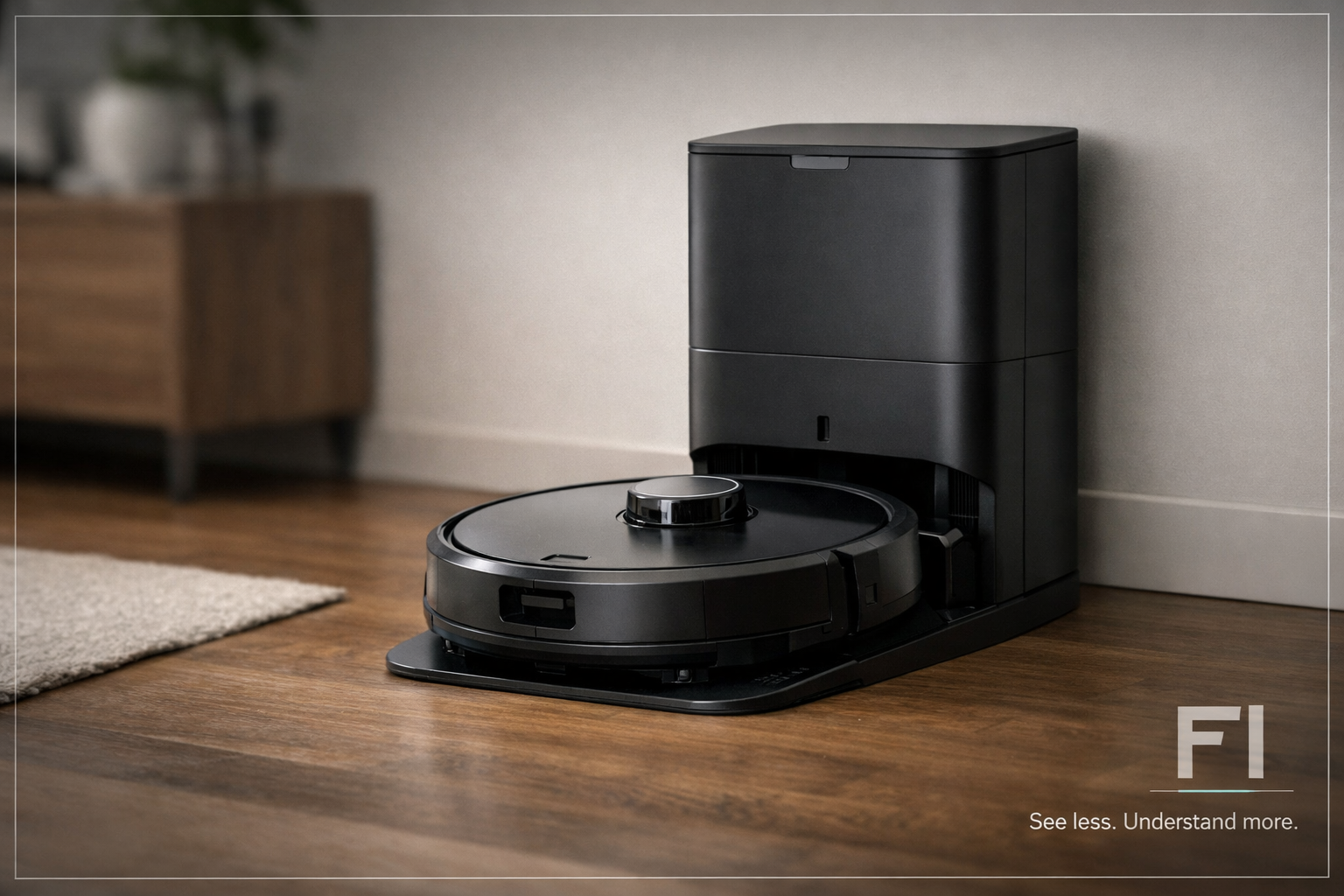
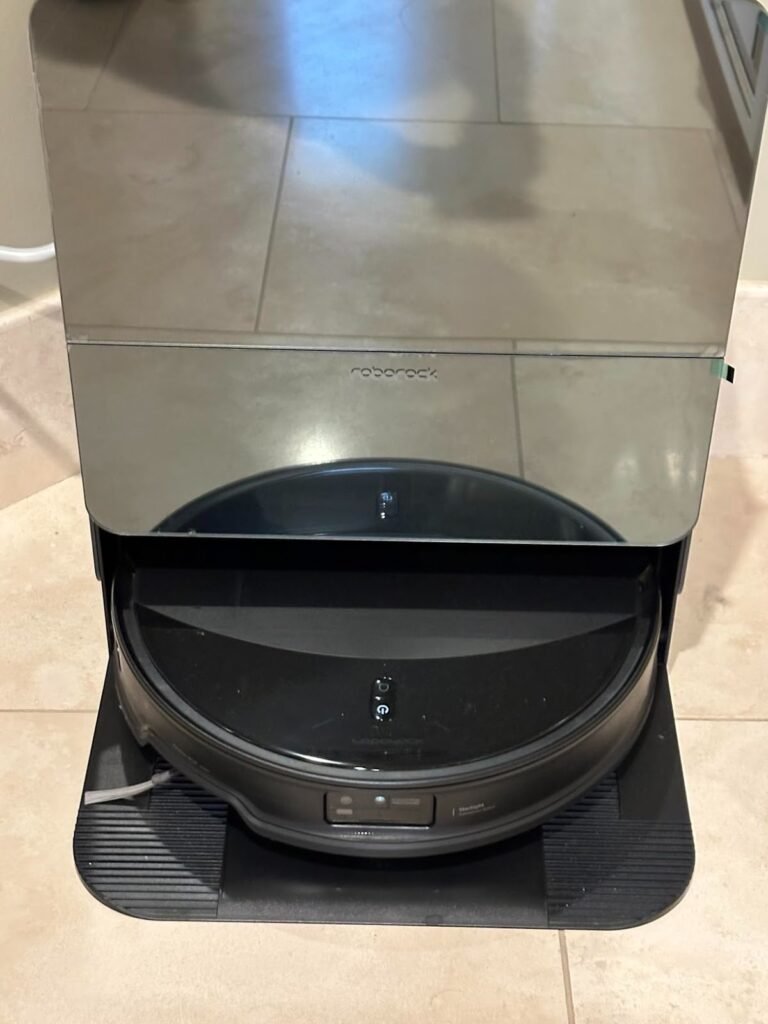
Its hardware stack is built around access and avoidance. Roborock’s official materials highlight the 3.14-inch ultra-slim body, StarSight Autonomous System 2.0, 3D ToF-based navigation, VertiBeam lateral obstacle avoidance, a chassis that can cross thresholds up to 4 cm, hot-water mopping up to 70°C, 80°C mop washing, auto mop detaching, and a 6400 mAh battery. Amazon’s listing adds 22,000 Pa suction, 108 recognized obstacle types, extending side-brush/mop reach, and the 10-in-1 dock.
But a robot vacuum is not judged by what it lists. It is judged by what its architecture favors.
The Saros 10R favors:
| Mechanism | What it helps most | Why it matters |
|---|---|---|
| Ultra-slim 3.14-inch body | Low-clearance furniture | Reaches dust zones tall-turret robots often miss |
| Advanced obstacle system | Cables, toys, chair bases, cluttered rooms | Cuts rescue events and collision anxiety |
| AdaptiLift chassis | Thresholds, transitions, uneven zones | Reduces hang-ups and route failures |
| Auto mop detaching/lifting | Mixed hard floor + carpet homes | Prevents wet-carpet annoyance and mode compromises |
| Hot-water dock maintenance | Repeated mopping use | Lowers mop upkeep burden and odor risk |
That same architecture does not automatically make it dominant at pulling stubborn pet hair out of carpet fibers. RTINGS is blunt here: hard-floor pickup is outstanding, but pet-hair pickup on carpet is inadequate and often needs multiple passes. Their explanation points directly at the split brushroll design: excellent for reducing tangles, weaker at agitating embedded pet hair out of carpet.
So the hidden mechanism is simple: this robot is biased toward clean access and low intervention, not maximum carpet agitation.
That is not a flaw in every home. It is a flaw in a specific kind of home.
The Threshold Where the Outcome Quietly Breaks
This is the threshold I would name for the Saros 10R:
The Embedded Hair Threshold.
Below that threshold, the Saros 10R feels almost surgical.
Above it, the premium story starts leaking.
Here is what that threshold looks like in practice:
| Home condition | Saros 10R behavior | Outcome |
|---|---|---|
| Mostly hard floors, moderate debris, furniture clearance problems | Excellent pickup, strong navigation, meaningful under-furniture reach | Feels like an upgrade you notice daily |
| Mixed floors, frequent clutter, cables, kid zones, chair legs | Elite obstacle handling, fewer stuck events, fewer manual rescues | High convenience payoff |
| Heavy pet-hair carpets, especially embedded hair | Needs multiple passes; may leave hair behind on carpet | Convenience stays high, extraction confidence drops |
| Loose clumps of pet fur on hard floor with avoidance active | Can interpret some clumps as obstacles | Requires more frequent runs or settings compromise |
That last row matters more than it looks.
Because it introduces a cruel little irony: the same intelligence that protects you from cords and pet mess can, in some households, become too cautious around loose fur clumps. Some users on Reddit describe exactly that behavior. RTINGS, from a different angle, reports the same broad weakness: strong avoidance, weaker pet-hair recovery from carpet, especially when multiple passes are required.
That is the break point.
Not “is it powerful?”
Not “is it advanced?”
But: when the dirt stops behaving like surface debris and starts behaving like fiber-anchored hair mass, the Saros 10R loses part of its authority.
Why Most Buyers Misread This Too Early
Because they buy the headline, not the pattern.
The usual early-buyer mistakes are predictable:
They equate listed suction with universal real-world dominance.
They assume anti-tangle automatically means strong pet-hair extraction from carpet.
They read thin-body design as a cosmetic luxury instead of a cleaning-access advantage.
They compare features line by line instead of comparing failure modes.
That is where lazy comparison traps people.
A robot vacuum is not a spec trophy. It is a weekly systems tool. The relevant question is never, “Which one has the bigger number?” The relevant question is, “What kind of failure do I keep paying for?”
If your repeated irritation is this—
robot gets stuck,
robot avoids the wrong things,
robot cannot reach under low furniture,
mop care turns into another chore,
—then the Saros 10R is pointing at your exact pain. Its obstacle avoidance scored a perfect 24/24 in Vacuum Wars’ test, and the site later gave it a mid-2025 obstacle-avoidance award. RTINGS also rates its obstacle handling very highly and notes that it keeps distance around furniture and mirrors while fitting under low furniture well.
But if your repeated irritation is this—
carpet still holds hair after the run,
pet fur packs into edges,
the machine needs second and third passes,
—then you are reading the Saros 10R from the wrong angle if you focus only on its premium convenience layer. RTINGS explicitly says its split brushroll is not nearly as effective on pet hair as some alternative Roborock brush systems.
Who Is Actually Inside This Problem
The best-fit buyer for the Saros 10R is not “everyone who wants a flagship.” That is lazy retail language.
The true-fit buyer is usually living inside three conditions at once:
- A low-clearance home
Beds, sofas, cabinets, coffee tables, suspended furniture, awkward chair bases—places where tall robots leave a permanent dust strip simply because they cannot enter. The 3.14-inch body is not decorative here. It is the whole point. - A cluttered home
Cords, toys, furniture legs, mirrors, room transitions, daily interference. This is where the Saros 10R’s obstacle stack earns its keep. Vacuum Wars calls its obstacle avoidance flawless in their evaluation, and owner reports repeatedly describe fewer collisions and fewer stuck events compared with older robots. - A mixed-surface home where mop maintenance matters
If you actually mop often, the dock matters. Hot-water washing, hot-air drying, auto mop handling, and rewash/remop logic are not glamour features; they are what keep the machine from becoming another high-priced object you stop using because upkeep becomes annoying.
For this buyer, the Saros 10R is not just logical. It is unusually coherent.
Where Wrong-Fit Begins
Wrong-fit begins the moment you need this robot to be a carpet-hair extractor first and an intelligent home navigator second.
That is the wrong hierarchy for this machine.
If your house is dominated by shedding pets, textured carpet, embedded hair, and neglected fur build-up, the Saros 10R can still function—but now you are buying a premium intervention-reduction robot and asking it to solve a deep carpet agitation problem. RTINGS is direct that this is not where it shines. Multiple passes may be necessary, and the split brushroll trades some pet-hair extraction strength for tangle resistance.
Wrong-fit also begins if you expect its avoidance intelligence to always interpret loose hair clumps the way you would. Some owners say those clumps can be treated like obstacles unless you run the robot more frequently or reduce avoidance sensitivity. That is not a universal failure. It is a household-pattern failure. Still real. Still worth naming.
And one more boundary matters: the internal dustbin is smaller than average at 270 ml according to Vacuum Wars’ review. In a large pet-heavy home, that can matter more than it looks, especially if you are asking the robot to pull large volumes of fur regularly.
The One Situation Where This Product Becomes Logical
The Saros 10R becomes truly logical in one specific situation:
You are tired of intervention more than you are chasing maximum carpet aggression.
That is the decision.
If the daily pain is not “my carpet still traps hair,” but rather “my robot keeps needing me,” the Saros 10R is one of the clearest answers in its class. Its combination of low-profile access, elite obstacle avoidance, threshold climbing, corner extension, carpet-aware mop handling, and heavy dock automation forms a very specific kind of value: it protects your attention.
That is why the product can feel almost eerily right in the correct home. You do not just see a cleaner floor. You feel fewer interruptions.
The room with cables gets cleaned.
The couch gap stops collecting dust.
The mop no longer turns into a sour-smelling afterthought.
The robot stops asking for supervision like a child with wheels.
At that point, the premium price begins to make structural sense.
If your real problem is access, avoidance, and maintenance drag—not deep pet-hair carpet extraction—the Roborock Saros 10R becomes the logical next step.
What It Solves, What It Reduces, and What It Still Leaves to You
Here is the cleanest way I can compress it.
| What it solves well | What it reduces | What it still leaves to you |
|---|---|---|
| Hard-floor debris pickup | Stuck events and furniture collisions | Embedded pet hair may still need repeat runs or another tool |
| Cleaning under low furniture | Mop upkeep burden | Loose fur clumps may need settings management in some homes |
| Threshold crossing and mixed-floor routing | Carpet-wetting anxiety during mopping | Very pet-heavy homes should watch bin load and pass frequency |
| Obstacle avoidance in cluttered rooms | Daily supervision | USB cords and tassels still deserve caution |
| Automated dock hygiene | “I forgot to wash the mop” friction | It does not erase the need for realistic fit judgment |
That balance is what builds trust.
Not praise inflation.
Not “best ever.”
Not pretend universality.
A machine becomes easier to trust when you can see exactly where it stops being magic.
Final Compression
The Roborock Saros 10R is a premium robot vacuum for homes where the real enemy is cleaning friction.
Not just dirt.
Friction.
Low furniture.
Obstacle clutter.
Threshold hang-ups.
Mop upkeep.
Mixed-floor hesitation.
Constant rescue moments.
In that environment, the Saros 10R is not merely impressive. It is structurally well matched. Officially, it brings the hardware to support that case: ultra-slim design, advanced 3D sensing, up to 4 cm threshold crossing, auto mop detaching, hot-water mopping, and hot-water dock washing. Independent testing reinforces the pattern: outstanding hard-floor pickup, excellent obstacle handling, strong mopping, and real convenience gains.
But the decision stops being vague only when you say the hard part out loud:
If your house lives above the Embedded Hair Threshold, this is not the cleanest fit. RTINGS says the pet-hair weakness is real. Some owners report that loose fur clumps can be treated like obstacles. That does not destroy the product. It defines its border.
And that border is the whole decision.
If you are buying for carpet-hair extraction first, keep looking.
If you are buying to remove interruption from a complicated home, this machine makes a lot of sense.
If that is the condition you are actually dealing with, this is where the decision stops being vague.
Transparency Note:
This analysis is built on aggregated real-world experience.
It extracts what repeatedly holds, what breaks, and what users uncover only after living with the system—then shapes it into a clear model you can use immediately.
Think of it as structured experience, refined and presented so you don’t have to learn it the hard way.
“A quick note: Don’t believe the star ratings, but trust personal experience. This article is a compilation of collected experiences”