The Rancilio Silvia Does Not Fail Because It Is Weak. It Fails You the Moment You Expect It to Be Easy.
RANCILIO SILVIA
The ugly surprise with the Rancilio Silvia is not bad coffee. It is false confidence.
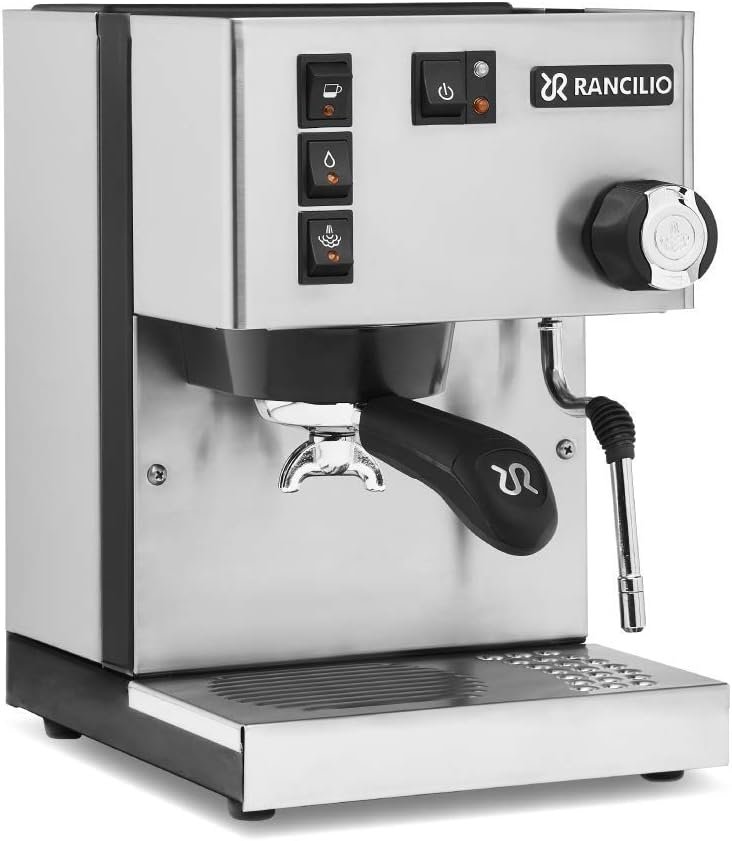
On the counter, it looks like the kind of machine that should behave like a clean little luxury object: steel body, commercial-size 58 mm portafilter, simple switches, compact footprint. But the Silvia is not a convenience machine dressed as a prosumer toy. It is a small, stubborn piece of café logic that asks you to meet it on its terms. The people who love it seem to love that exact thing. The people who regret it usually collide with the same wall: they bought “build quality” and discovered they had also bought ritual, timing, and thermal management.
That is why this machine has stayed alive for so long. Not because it flatters everyone. Because it survives the people who stay. Silvia has been around for decades, and the core architecture has barely drifted away from what made it credible in the first place: commercial-style group hardware, a 0.3 L brass boiler, a 2 L reservoir, a three-way solenoid, manual controls, and enough steam strength to embarrass softer home machines. That kind of longevity does not happen by accident. It happens when a machine gives serious users a reason not to leave.
The Result Looks Fine. The Problem Isn’t.
A bad Silvia shot can fool you.
The crema is there. The cup looks proper. The machine sounds purposeful. The body feels dense, almost overbuilt for the money. Then you sip it and something is off. Not always awful. Worse than awful, sometimes. Unclear. A little sharp, a little flat, a little hollow. The kind of miss that wastes beans while pretending everything went mostly right. That is the Silvia problem in miniature: it can produce the appearance of control before it gives you the reality of control.
That tension shows up again and again in how owners and reviewers describe it. They praise the machine’s solidity, serviceability, and espresso ceiling, then circle back to the same caveat: consistency is not automatic here. It has to be earned. Even people who defend it strongly usually do so with a sentence that contains both admiration and warning. Built like a tank. Steam is strong. Easy to repair. But you need to learn it. But it needs surfing. But it is not for people who want a button-led morning.
| What looks reassuring | What actually matters |
|---|---|
| Stainless steel body | Thermal behavior shot to shot |
| Commercial 58 mm portafilter | Your ability to work around manual temperature regulation |
| Strong steam wand | Your tolerance for a single-boiler workflow |
| Long reputation | Whether your routine fits the machine’s rhythm |
What You’re Actually Feeling but Not Naming
Most people do not say, “I am frustrated by a manual thermostat and a single-boiler transition.” They say something softer.
They say the machine feels fussy.
They say the shot was better yesterday.
They say milk drinks take more choreography than expected.
What they are feeling is workflow friction. More specifically: a mismatch between visible hardware confidence and invisible routine burden. The Silvia does not usually punish you with total collapse. It taxes you in tiny, repeated ways. Flush here. Wait there. Listen for the boiler. Time the shot window. Empty the small drip tray. Repeat tomorrow before you have fully opened your eyes.
That is why the Silvia creates such a split reaction. If you enjoy touching the process, the machine feels mechanical, honest, almost intimate. If you only wanted café-style drinks at home, the same behavior feels like being handed a beautiful hand tool when you thought you were buying relief. The machine is not merely making espresso. It is exposing what kind of coffee person you actually are.
The Hidden Mechanism Behind the Miss
The hidden variable is not pressure. It is heat timing.
Rancilio still gives the Silvia manual temperature regulation with a thermostat rather than built-in PID brew control. On paper, that does not sound dramatic. In the cup, it changes everything. Boiler temperature moves in a cycle. Your shot quality changes depending on where you enter that cycle. That is why the machine has an entire culture of temperature surfing around it, and why experienced reviewers still talk about flush routines in 2026 instead of pretending the issue disappeared with time.
Whole Latte Love’s recent testing described a working routine around the Silvia at roughly this sequence: heating light off, flush for 12 seconds, wait 20 seconds, then pull the shot. That is not a cute enthusiast quirk. It is the machine telling you, very plainly, that extraction quality lives inside a timing band, not inside a promise made by stainless steel.
And because this is a single-boiler machine, the same thermal logic spills into milk drinks. Brew and steam share one boiler. So every cappuccino asks you to cross a bridge and come back again. Reviewers consistently praise Silvia’s steam power once it is ready, but that strength arrives attached to waiting, sequencing, and attention. Fast steam, yes. Frictionless workflow, no.
| Core technical reality | Why it matters in daily use |
|---|---|
| 0.3 L insulated brass boiler | Good heat retention, but one boiler must serve brew and steam |
| Manual thermostat control | Shot quality depends on timing rather than fixed temp selection |
| 3-way solenoid valve | Cleaner puck release, safer backflushing, more “real machine” behavior |
| 58 mm commercial-style portafilter | Better tool ecosystem and familiar café workflow |
| 2 L internal tank | Decent home capacity without plumbing |
The Threshold Where the Outcome Quietly Breaks
Here is the threshold.
If you want the machine to absorb inconsistency for you, Silvia is already the wrong machine.
If you are willing to absorb inconsistency yourself until your routine becomes consistent, Silvia starts making sense.
That is the line.
The break point is not budget. It is not counter space. It is not even skill in the heroic sense. It is tolerance for repeatable ritual. The Silvia becomes satisfying only after you stop asking it to behave like a modern convenience platform and start treating it like a compact manual system with strong bones and imperfect thermal manners. Reviewers who stay with it usually accept that bargain; reviewers who move on tend to say the same thing in different words: the machine is capable, but the workflow cost is real.
I would put that threshold in three plain questions:
| Threshold test | If your answer is “no” |
|---|---|
| Can you tolerate a 15-minute warm-up and a deliberate pre-shot routine? | The Silvia will start feeling heavy before it feels rewarding |
| Are you comfortable learning one repeatable temperature-surfing pattern? | Espresso quality will feel random, even when the machine is not failing |
| Do you accept single-boiler pacing for milk drinks? | Morning drinks will feel slower than you hoped |
Why Most Buyers Misread This Too Early
Because they read the machine through the wrong lens.
They see “commercial heritage” and imagine performance without inconvenience. They see the steel shell and assume durability automatically means ease. They compare headline specs with softer appliances and miss the real question: not “Can this machine produce excellent espresso?” but “What does it demand before it does?” That is where early misreads are born.
There is another mistake, quieter and more damaging. People treat espresso machines as if better construction and better results rise together in a straight line. On Silvia, they do not. Better construction gives you a sturdier platform, a better steam wand, a proper portafilter, a serviceable machine, a long parts-and-mod culture. It does not spare you from learning the thermal rhythm. This is exactly why some reviewers say the Silvia can outdrink easier machines in expert hands, while also insisting that more modern, PID-led machines make more sense for most normal households.
That tension is not a contradiction. It is the truth.
Who Is Actually Inside This Problem
You are inside Silvia territory if your irritation comes from watered-down home espresso, weak steam, plasticky construction, or the feeling that most beginner machines stop teaching you anything after the first month. You want something mechanical. Something repairable. Something that does not feel disposable. Something that can live on your counter for years and still deserve the space. That is where Silvia starts to look less like an old design and more like a deliberate one.
You are even more squarely inside the problem if milk texture matters to you. The Silvia’s steam reputation is not accidental. Reviewers still talk about it with a kind of grudging respect because it can hit hard and fast once the machine is ready. Whole Latte Love described the initial pressure as almost nostalgic for commercial machines, and older commentary around the Silvia has long treated its steam power as one of the reasons the platform punched above its class.
And then there is the deeper type of buyer: the one who does not want automation so much as ownership. The Silvia fits that person unusually well. The machine is simple enough to understand, old enough to be well-known, and sturdy enough that people still speak casually about replacing parts, servicing it, or keeping one running for years. That matters more than flashy features when your real purchase is not a drink appliance but a long relationship with process.
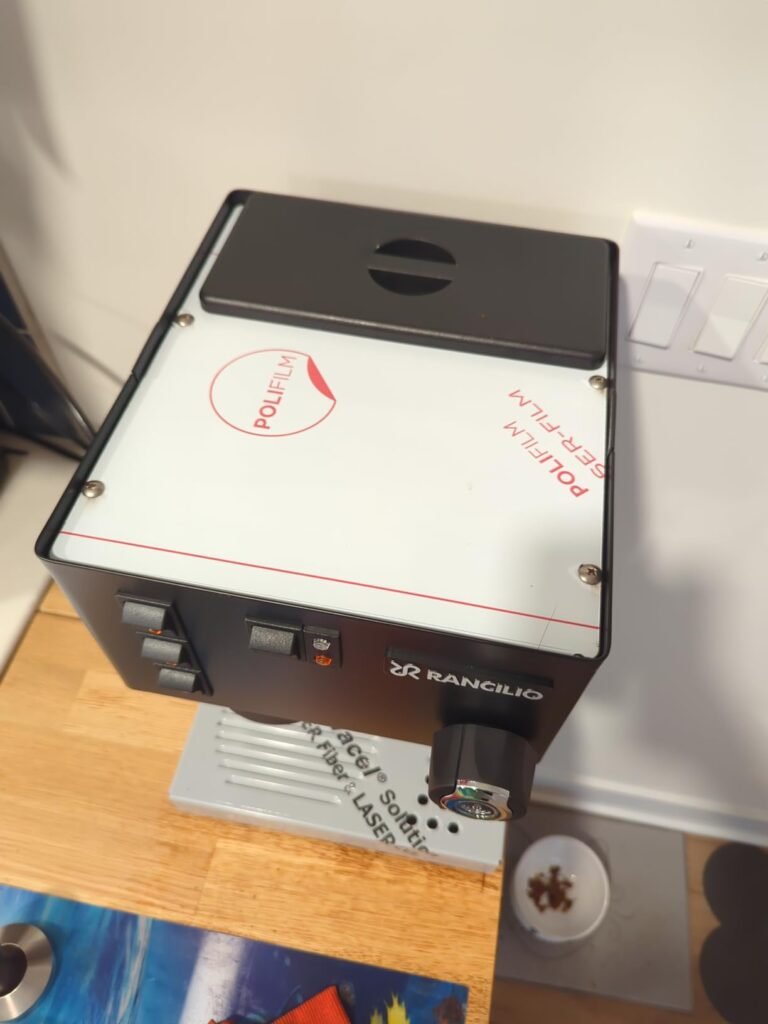
Where Wrong-Fit Begins
Wrong-fit begins the second your real need is convenience disguised as enthusiasm.
If you want to wake up, grind, pull, steam, and leave the kitchen with minimal thought, this machine is going to feel like a silent argument every morning. If your partner also wants fast milk drinks, the single-boiler pacing becomes even more noticeable. If you do not care about repairability, upgrade culture, or manual technique, the Silvia’s strongest virtues land with a dull sound because they are not solving your actual pain.
Wrong-fit also begins when you romanticize difficulty. Some buyers talk themselves into friction because it sounds serious. That is a mistake. The Silvia is not charming because it is inconvenient. It is worth tolerating only when the inconvenience buys you something you personally value: sturdiness, steam authority, tactile control, and a platform with a long life. Without that value match, the ritual curdles into resentment.
A few Amazon complaints sharpen that boundary further. Some low ratings focus not on cup quality, but on shipping dents, cracked tanks, units arriving with cosmetic damage, or early faults that made support feel more important than romance. That does not erase Silvia’s long reputation, but it does remind you that paying for a durable design is not the same thing as being immune to seller or fulfillment problems.
The One Situation Where This Product Becomes Logical
The Rancilio Silvia becomes logical when you want one machine, on one counter, to teach you real espresso habits without forcing you into a larger prosumer budget.
That is the moment the machine snaps into focus.
Not when you want speed.
Not when you want foolproof.
When you want a serious home platform with a clear ceiling, strong steam, commercial-size tooling, and the kind of repairable, metal-heavy construction that makes cheaper machines feel temporary. In that narrow but very real situation, Silvia stops looking old-fashioned and starts looking honest.
The numbers support the shape of that case. You get a 0.3 L boiler, a 2 L tank, a 58 mm portafilter, a brass group, manual controls, and a three-way solenoid in a body just over 9 inches wide and about 14 kg in weight. None of that makes the machine easy. It makes the machine substantial. There is a difference, and Silvia lives inside it.
What It Solves, What It Reduces, and What It Still Leaves to You
| What Silvia solves | What it reduces | What it still leaves to you |
|---|---|---|
| Flimsy, appliance-like feel | Weak milk steaming | Temperature surfing |
| Small-tool limitation with odd baskets | Mess after shots thanks to 3-way solenoid | Warm-up patience |
| Short-term ownership mindset | Anxiety about repairability and parts culture | Single-boiler sequencing |
| “Can this machine grow with me?” doubt | The sense that your setup will be outgrown instantly | Grinder quality, puck prep, routine discipline |
There is a psychological relief built into that table. Silvia removes the feeling that you bought a toy. It reduces the fear that the machine itself is the weak link. But it does not remove your own responsibility from the cup. In some homes, that is exactly the appeal. In others, it is the deal-breaker hiding in plain sight.
Final Compression
The Silvia is not the machine most people think they want.
It is the machine a smaller group of people keep respecting after the novelty dies.
If what bothers you is thin espresso, weak steam, cheap-feeling hardware, and the suspicion that easier machines are smoothing over limits you will eventually hit, the Rancilio Silvia is still one of the cleanest answers in its lane. If what bothers you is effort itself, stop here. This is not a comfort purchase. It is a threshold purchase. Cross that line, and the machine becomes coherent. Stay on the wrong side of it, and every morning starts to feel like proof you bought the wrong kind of seriousness.
If this is the condition you are actually dealing with — you want a durable, serviceable, steam-strong machine and you are willing to meet its workflow halfway — the Rancilio Silvia product page is the logical next step.
Transparency Note:
This analysis is built on aggregated real-world experience.
It extracts what repeatedly holds, what breaks, and what users uncover only after living with the system—then shapes it into a clear model you can use immediately.
Think of it as structured experience, refined and presented so you don’t have to learn it the hard way.
“A quick note: Don’t believe the star ratings, but trust personal experience. This article is a compilation of collected experiences”