MiiCoffee Apex V2: The Point Where “Budget” Stops Meaning Simple
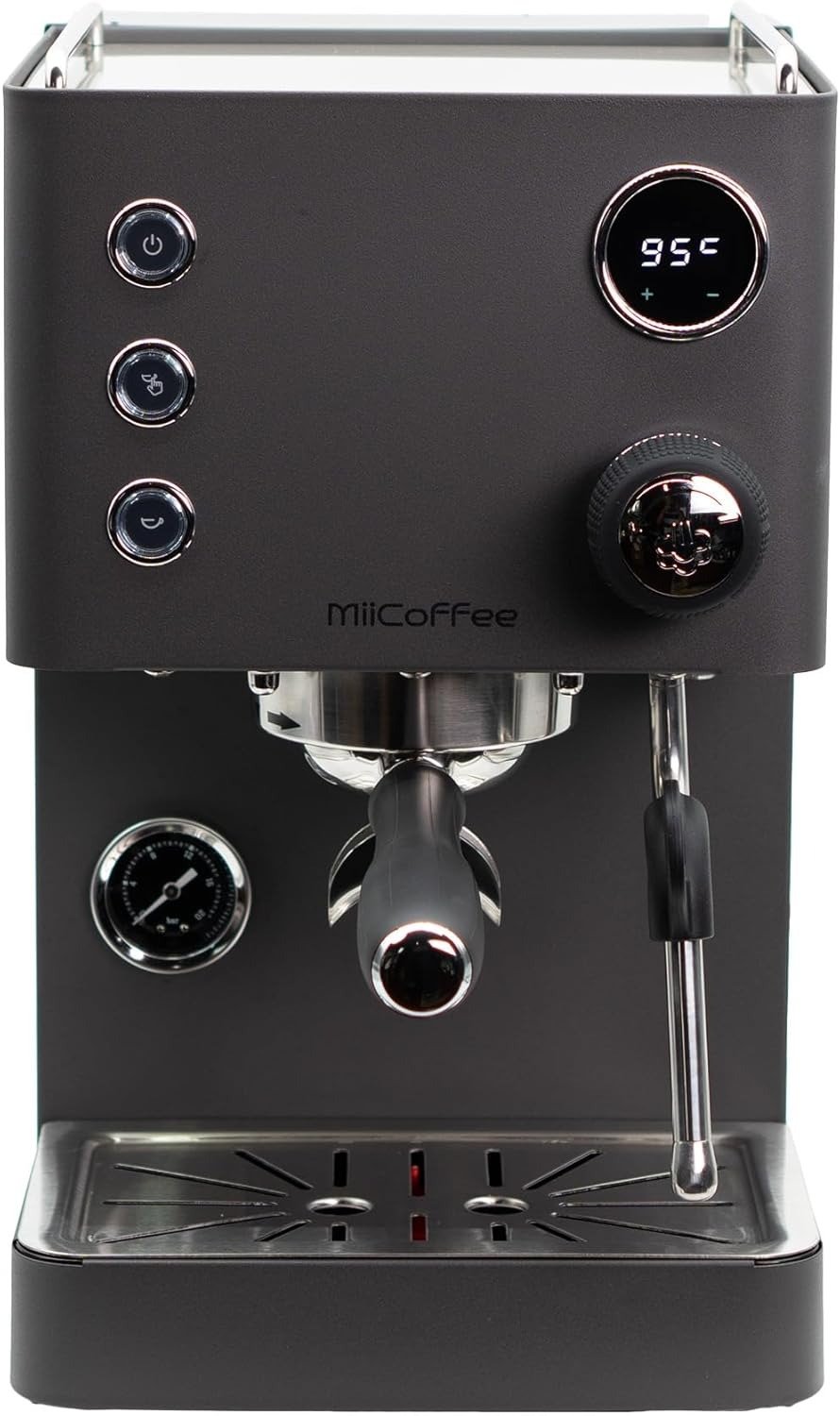
MiiCoffee APEX V2
The shot is fine. The crema is there. The gauge climbs. The machine looks calm on the counter.
Then the second part of the morning starts.
You move to milk, or try to tighten the recipe, or wonder why one small grind change suddenly shifts pressure, yield, and taste more than you expected. That is where this machine stops being a cheap espresso maker and turns into something more specific. The MiiCoffee Apex V2 is not really a “starter machine” in the lazy sense. It is a threshold machine. Below that threshold, it feels overbuilt for the money. Above it, the trade-offs stop hiding. Its core hardware is unusually ambitious at this price: a 550 ml stainless brew boiler, separate steam thermoblock, dual PID control, adjustable OPV, adjustable pre-infusion, a 58 mm portafilter, and a 3-way solenoid valve, all in a compact 9 x 11 x 15 inch body with a 1.7 L tank and quoted 5-minute warm-up.
I do not think the real question is whether it has enough features. It does. The real question is when those features become actual control, and when they become extra surface area that asks more of you than you wanted to give.
The Result Looks Fine. The Problem Isn’t.
This is the kind of machine that can fool people in two opposite directions.
The first group sees the price and assumes compromise. The second sees the spec sheet and assumes shortcut-free performance. Both are reading it too quickly. Reviewers keep landing on the same basic impression: it punches above its class, looks better than the price suggests, and offers uncommon control for the money. At the same time, several of those same reviews point to awkward workflow details, slow or inconsistent-feeling steam behavior, and settings that are more fiddly than the clean front panel suggests.
That mismatch matters because espresso regret rarely starts with a catastrophic flaw. It starts with a machine that looks like it is solving your problem while quietly moving the burden somewhere else.
With the Apex V2, the burden is not basic espresso capability. The burden is interpretation. You need to know what the machine is actually helping with, what it is merely exposing, and what it still leaves on your side of the counter.
What You’re Actually Feeling but Not Naming
Most buyers do not walk into this category saying, “I need a brew-control threshold machine with entry-level prosumer signals.” They say something simpler.
They are tired of vague espresso.
Tired of guessing whether a bad shot came from temperature drift, weak pressure control, shallow baskets, poor recovery, or just a machine that will not let them see what is happening. They want something that feels less toy-like than appliance espresso, but they do not want to pay prosumer money just to gain a pressure gauge and a real portafilter.
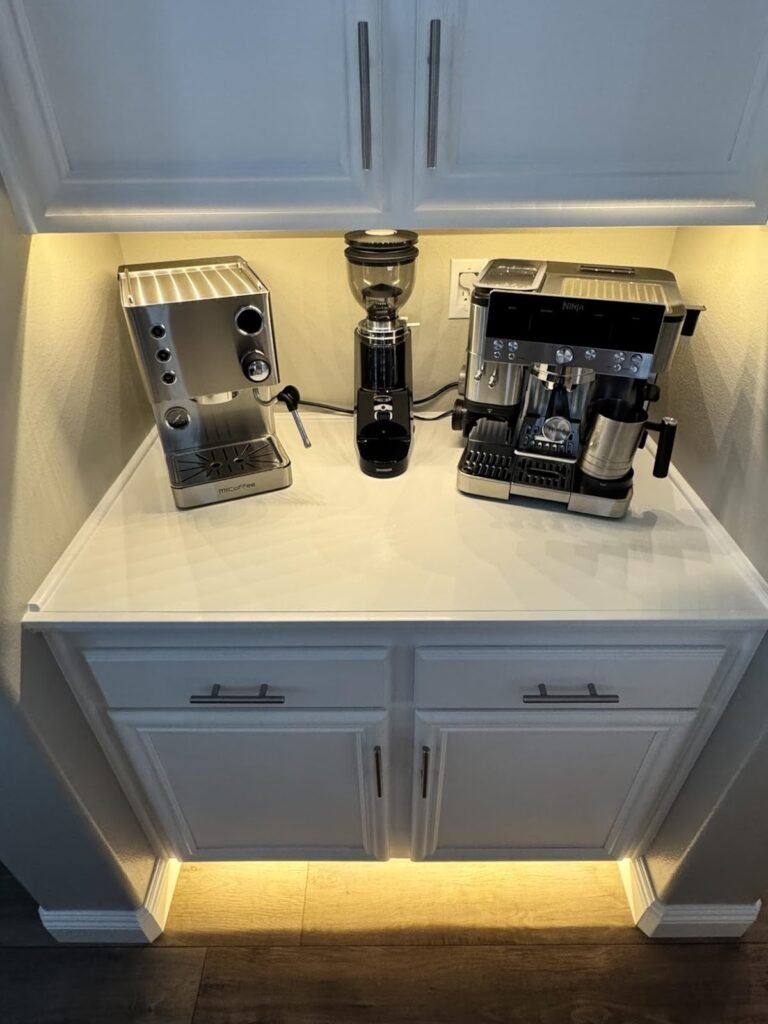
That is exactly the itch the Apex V2 is built to scratch. It gives you a visible pressure gauge, 9-bar targeting through an OPV, dual PID temperature control, pre-infusion adjustment, and a 58 mm workflow that opens the door to better baskets, tampers, and dosing habits. Owners and reviewers repeatedly frame it as a machine that teaches real espresso habits rather than hiding them, and that is why it keeps getting recommended as a value-heavy platform rather than a polished luxury object.
What many buyers are feeling, but not naming, is this:
They do not want automation. They want fewer blind spots.
And that is not the same purchase.
The Hidden Mechanism Behind the Miss
The hidden variable here is not pressure. It is control density per dollar.
Cheap machines usually stay cheap by removing one of three things: thermal stability, puck feedback, or workflow recovery. The Apex V2 tries to keep all three within reach by stacking a real brew boiler, separate steaming thermoblock, PID control, OPV adjustment, and a solenoid valve into a sub-$500 to low-$500 class machine, depending on seller and region. That is why it feels abnormal in this segment. It is trying to compress “serious machine signals” into a price bracket that usually asks you to accept at least one major blind area.
But compression has a cost.
The Apex V2 does not remove complexity. It relocates it into setup, tuning, and workflow behavior. Pre-infusion is adjustable, but several reviews and owner threads describe it as confusing to set or inconsistent enough to raise questions. The automatic mode stores brew-time and pre-infusion behavior, while manual mode does not give you the same pre-infusion behavior at all. That is a meaningful distinction, because a feature on the spec sheet is not the same thing as a feature that disappears into your routine cleanly.
That is the miss.
People think they are buying convenience with extra control. In reality, they are buying visibility with extra responsibility.
The Threshold Where the Outcome Quietly Breaks
This machine becomes easy to misread right at one threshold:
The moment you expect the feature set to do the work of skill, grinder quality, or workflow patience.
Below that threshold, the Apex V2 is impressive.
Above it, the machine starts reminding you that espresso does not care how generous the spec sheet looked on checkout day.
A coarse grind will not magically become a 9-bar extraction because the OPV exists. Espresso Outlet’s own overview makes that point directly: the OPV limits maximum pressure; it does not create pressure when the puck is too loose. Owner threads echo the same thing from the other direction, with people noticing that tiny grinder moves can swing pressure and yield quickly while they are learning how this machine responds.
That is the threshold I would name:
The Control Without Compensation Threshold.
Once you cross it, the Apex stops feeling like a bargain shortcut and starts feeling like a compact machine that tells the truth. If your grinder is weak, your puck prep is sloppy, or your workflow is impatient, the machine will expose that faster than friendlier appliance-style machines do.
That honesty is exactly why some people love it.
It is also why some people bounce off it.
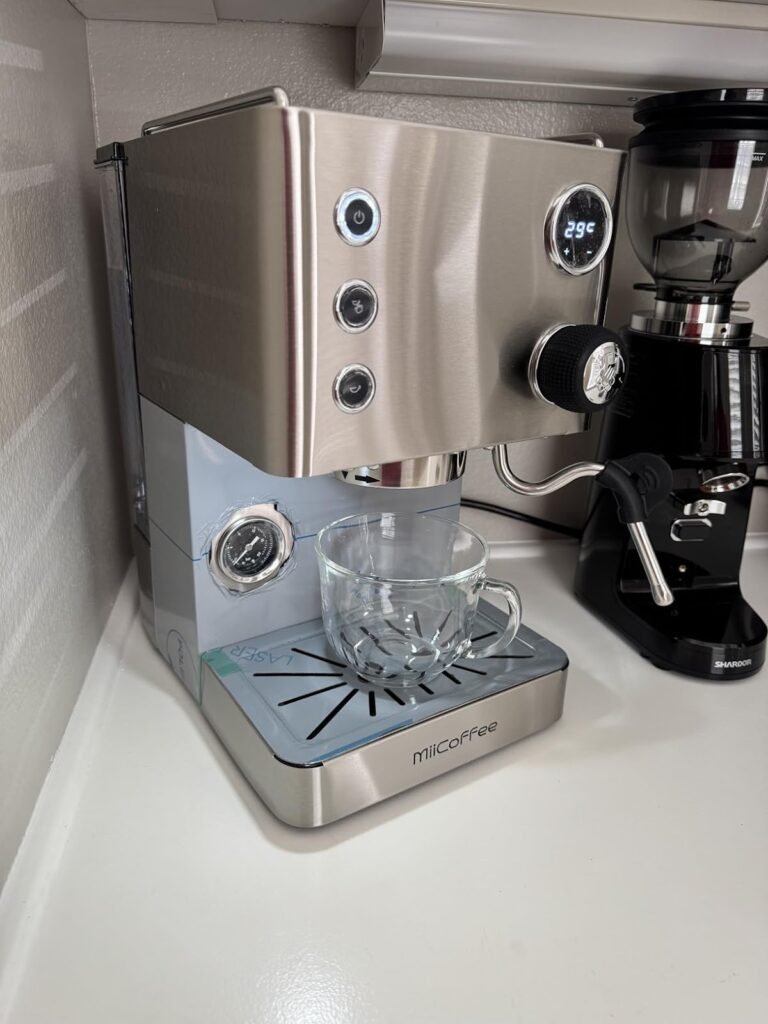
Table — Where the Threshold Really Sits
| What you expect | What the Apex V2 actually does |
|---|---|
| Easier espresso | Gives you more variables to see and manage |
| Better milk drinks, automatically | Gives you faster shot-to-steam transition, not café-speed steaming |
| More consistency by default | Gives you tools for consistency if the grinder and puck prep are already there |
| “Prosumer” feel for cheap | Gives you parts of that experience, not the full workflow refinement |
| Upgrade-proof ownership | Gives you a serious entry point, not the finish line |
Why Most Buyers Misread This Too Early
Because they compare category labels instead of break points.
“Entry-level.” “Semi-automatic.” “58 mm.” “PID.” “Dual heating.” Those labels are real, but they do not tell you where frustration starts. The better way to read this machine is not by asking whether it has advanced features. It is by asking whether your daily use will actually reach them.
For example, the separate steam thermoblock removes the long wait you get on many single-boiler machines between brewing and steaming. That is real. Reviewers and owners both note the near-zero gap between pulling a shot and moving into steaming. But that is not the same as saying the steam workflow itself is fast. Coffeeness explicitly calls the steaming process slow, notes that purging is especially necessary, and says first-drink steam can dribble water before pressure fully builds. Some user reports describe decent steam and microfoam once dialed in; others describe sputtering or frustratingly weak steam behavior.
This is where lazy comparisons fail.
You are not choosing between “can steam” and “cannot steam.” You are choosing between short wait-to-steam and fast, effortless milk workflow.
Those are not the same thing, and buyers who treat them as identical usually discover the difference while standing in front of the wand, already late.
Table — Trade-offs That Matter More Than Marketing
| You gain | You trade off |
|---|---|
| Real brew controls at a low price | More setup friction and learning load |
| Compact footprint | Tighter workspace and limited cup clearance |
| Separate steam thermoblock | Steam behavior that can still feel slow or fussy |
| 58 mm ecosystem entry | Some accessory-fit uncertainty reported by owners |
| Solenoid valve and dry puck behavior | Maintenance questions that are less settled than on legacy machines |
Who Is Actually Inside This Problem
This machine makes the most sense for a very specific buyer.
The buyer who has already learned that “espresso machine” is not one category. The buyer who wants to stop guessing. The buyer who would rather see pressure, set temperature, adjust pre-infusion, and work with a 58 mm basket than let the machine hide everything. The buyer who is willing to pair the machine with a capable grinder and accept that the machine will reveal grinder weakness instead of covering it. That is why reviewers keep describing it as unusually capable for first serious espresso, not first coffee appliance.
I would put the real fit like this:
Table — Compatibility Split
| Need | Fit |
|---|---|
| Learn real espresso variables without spending four figures | Strong |
| Upgrade from pressurized/appliance-style espresso | Strong |
| Compact machine with a real 58 mm workflow | Strong |
| Frequent milk drinks at rushed morning pace | Borderline |
| Plug-and-play recipe simplicity | Weak |
| Accessory certainty with zero tinkering | Borderline |
| Premium brand prestige and long legacy support | Weak |
If your goal is to understand espresso better, this machine is unusually logical. If your goal is to think about espresso less, it is much less attractive.
Where Wrong-Fit Begins
Wrong fit begins the second you expect the Apex V2 to behave like a finished premium machine instead of a compressed control platform.
This is not for someone who wants one-button convenience dressed up in metal. It is not for someone whose main drink is back-to-back milk beverages under time pressure. It is not for someone who will resent menu quirks, slower steaming, or the fact that some settings ask for more finger work than they should. It is not for someone who buys a 58 mm machine assuming every third-party E61-style accessory will slot in cleanly; at least one owner thread reports bottomless portafilter compatibility issues despite expecting otherwise.
There is also a quieter boundary here around maintenance confidence.
The machine includes a blind disc, yet owner discussions show conflicting guidance around backflushing, with one report quoting MiiCoffee saying the machine should not be backflushed in the normal “flow backwards” sense because it can potentially damage the pump, while other users report doing it anyway. Even when that kind of ambiguity does not become a real-world problem, it tells you something important: this is not a legacy platform with universally settled rituals and decades of community consensus.
That does not make it bad.
It makes it young, aggressive on value, and less idiot-proof than older machines with simpler identities.
The One Situation Where This Product Becomes Logical
The MiiCoffee Apex V2 becomes logical in one very specific situation:
When you are done paying for hidden limitations, but you are not ready to pay for full prosumer polish.
That is where it clicks.
Not when you want the easiest espresso. Not when you want the prettiest badge. Not when you want café milk speed.
When you want a machine that gives you real control surfaces early, exposes your mistakes honestly, and leaves enough room in the budget for the grinder that will actually determine whether those controls matter.
That is why the Apex V2 keeps getting described as a high-value machine for learning and real shot work. Owners praise the feature set, the temperature behavior, and the quality of espresso once dialed in. Even skeptical voices tend to land on the same central truth: build quality and refinement are not at premium-brand level, but the functional ceiling for the money is unusually high.
If this is the condition you are actually dealing with, this becomes the logical next step.
What It Solves, What It Reduces, and What It Still Leaves to You
What it solves is the numb part of budget espresso.
The part where you cannot tell what the machine is doing. The part where temperature feels vague, the portafilter feels disposable, the pressure is hidden, the puck comes out soupy, and the whole process teaches you very little beyond repetition.
What it reduces is guesswork. The gauge, dual PID, adjustable OPV, adjustable pre-infusion, 58 mm workflow, and 3-way solenoid all help move espresso from “hope” toward “measurement.”
What it still leaves to you is almost everything that separates decent espresso from repeatably excellent espresso.
- Grinder quality.
- Bean freshness.
- Dose discipline.
- Puck prep.
- Patience with steam behavior.
- Willingness to learn the machine’s oddities instead of fighting the fact that they exist.
And there is one more thing it leaves to you: realism.
This machine can produce the kind of satisfaction that makes many old budget recommendations feel dated. But it does not cancel the difference between value and refinement. It narrows it. That is not the same thing.
Final Compression
I would not call the MiiCoffee Apex V2 a miracle. I would call it a machine with a very sharp answer to a very specific problem.
You buy it when you want real espresso signals without paying prosumer money. You avoid it when you want softness, speed, and simplification more than control. You trust it when you understand that its value is not in making espresso easy. Its value is in making espresso legible.
That is the line.
Below that line, it looks almost absurdly well equipped for the money. Above it, every compromise starts speaking in a clearer voice.
So the decision is not vague.
If your frustration is that cheaper machines keep hiding the truth from you, the Apex V2 is one of the more rational ways out. If your frustration is that espresso already asks too much of your mornings, this is probably the wrong direction to walk.
Transparency Note:
This analysis is not based on quick personal impressions.
It is derived from documented system behavior, verified user patterns, and the physical constraints of storage capacity.
The goal is to translate complex technical behavior into a realistic performance model that helps you make a clear decision.
“A quick note: Don’t believe the star ratings, but trust personal experience. This article is a compilation of collected experiences”