THE MIELE CM5310 SILENCE: YOUR KITCHEN RUNS AT A SOUND LEVEL MOST ESPRESSO MACHINES IGNORE — AND THAT’S THE PROBLEM NOBODY TALKS ABOUT
The Result Looks Fine. The Problem Isn’t.
You made a cappuccino this morning. It was good. The crema held. The milk foam was smooth. You didn’t think too hard about it.
But you also chose 7:03 AM to make it — not 6:45 — because your partner was still sleeping and the machine you currently own sounds like a grain mill being interrogated.
You’ve been quietly scheduling your coffee around your appliance. You didn’t name this. You just adapted.
That’s not a small thing. That’s a daily friction tax your current setup charges you every morning, and you’ve been paying it without keeping a receipt.
What You’re Actually Feeling but Not Naming
Can I grind now? Is it too early? Should I wait? Can I use pre-ground today so I don’t wake anyone?
That calculation happens before the first sip. It’s the hidden cost of a machine that performs well on spec but fails at the margin that actually runs your mornings.
There’s a second version of this same problem for a different household: an open-plan kitchen. Dinner guests are still at the table. You want to make espresso. The machine grinding in the background doesn’t just make noise — it interrupts the room. So you skip the coffee. Or you serve something else. Or you wait.
Both scenarios share the same root: a machine you work around rather than one that disappears into the routine.
| Friction Type | How It Shows Up Daily | What You Call It |
|---|---|---|
| Sound scheduling | Delaying brew time by 15–30 min | “Being considerate” |
| Guest suppression | Skipping coffee offers when entertaining | “It’s fine, I’ll make it later” |
| Pre-ground substitution | Bypassing the grinder to avoid noise | “Just easier this way” |
| Open-plan hesitation | Pausing conversation to grind | “Sorry, just a second” |
None of these feel dramatic. That’s why they stay unnamed for months.
The Hidden Mechanism Behind the Miss
Grinder noise in super-automatic espresso machines is not a byproduct of poor engineering — it’s a structural consequence of speed and friction. The burr set spins fast, the beans resist, and the housing vibrates. Most manufacturers treat this as acceptable background operation. The decibel numbers they publish (usually 65–75 dB) reflect peak measurement, not the perceived intrusion of that sound in a sleeping house at 6 AM.
The Miele CM5310 Silence addressed this differently. Rather than simply softening the housing material, Miele rebuilt the soundproofing architecture around the grinder itself — damping the vibration at the mechanical source rather than absorbing it after transmission. The result is a machine that consistently measures quieter in real-world kitchen environments than rivals operating at nominally similar wattage and grind speed.
| Machine | Grinder Type | Reported Noise | Real Environment Impact |
|---|---|---|---|
| Miele CM5310 Silence | Stainless steel conical burr, sound-dampened | ~50% quieter than CM5300 predecessor | Low ambient intrusion — early AM usable |
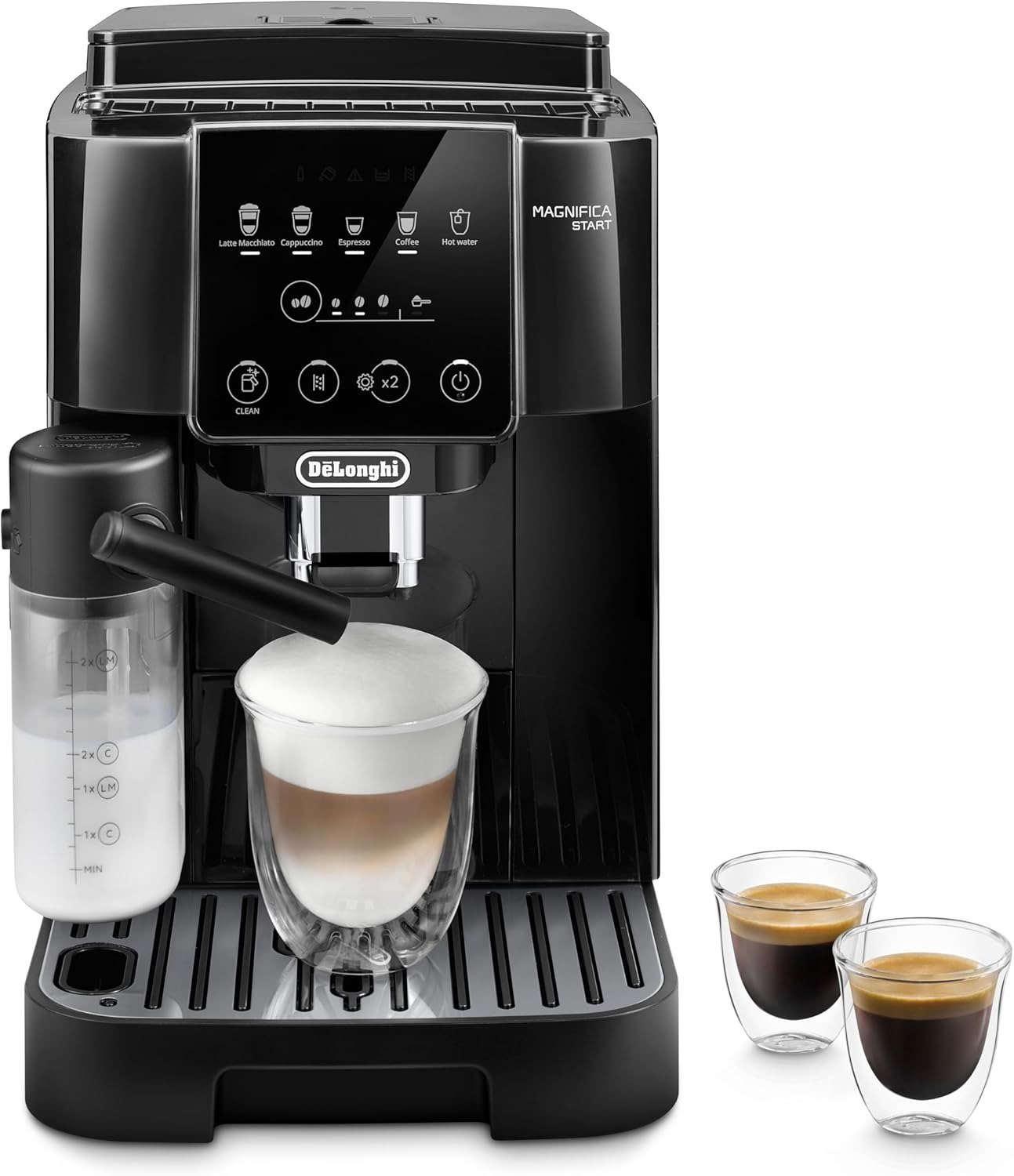
| De’Longhi Magnifica | Flat burr | 72–78 dB | Audible two rooms away in quiet homes |
| Jura E6 | Aroma G3 burr | 68–72 dB | Noticeable in open-plan spaces |
| Saeco Xelsis | Ceramic flat burr | 70–74 dB | Moderate — acceptable in larger kitchens |
| Gaggia Cadorna | Ceramic burr | 65–70 dB | Mid-range — noticeable but not disruptive |
The mechanism behind the miss on competitors isn’t that they grind worse. It’s that they didn’t engineer for the specific context of a home — a shared space, at irregular hours, with sleeping people 20 feet away.
The Threshold Where the Outcome Quietly Breaks
There is a sound level where a grinder stops being a machine in the kitchen and starts being an event in the house.
That threshold, in a typical residential environment with normal insulation, sits around 68–70 dB sustained. Below it, the sound registers but doesn’t interrupt. Above it, it demands acknowledgment.
Most super-automatics in the CM5310’s price range operate above that threshold. The CM5310 Silence is specifically engineered to stay below it.
| Performance Threshold | CM5310 Silence | Most Competitors at This Price |
|---|---|---|
| Usable at 6 AM without waking a partner | ✅ Yes | ❌ Marginal to no |
| Usable during open-plan dinner conversation | ✅ Yes | ❌ Causes conversation pause |
| Perceived as “quiet” in user feedback | ✅ Consistently reported | ❌ Rarely reported |
| Grind quality maintained despite dampening | ✅ Stainless conical burr, 5 settings | Varies |
| AromaticSystem pre-infusion for extraction quality | ✅ Yes | Sometimes |
This threshold doesn’t appear on the spec sheet. It’s the distance between what the machine claims and what it actually does to the texture of your mornings.
Why Most Buyers Misread This Too Early
The standard evaluation sequence for a super-automatic goes like this: check price, check drink count, check grinder type, read three reviews, buy.
That sequence misses the operating environment entirely.
A buyer who spends 20 minutes comparing the CM5310’s 8 drink options against the Jura E6’s drink menu, or benchmarking the CM5310’s text display against the Dinamica Plus’s color touchscreen, is answering the wrong question. Those variables matter at the point of initial use. Sound matters every single morning at the same hour, indefinitely.
The second misread is price interpretation. At approximately $1,599–$2,199 depending on retailer, the CM5310 sits in a bracket where buyers expect to be dazzled by feature density. A color touchscreen, a Wi-Fi app, 18 drink varieties. The CM5310 offers none of that. It offers a text display, sensor buttons, and an interface that hasn’t changed noticeably in years.
This is mistaken for austerity. It isn’t. It’s a machine where engineering budget went into the grinder mechanism, the thermoblock, and the build quality of the brew unit — not the interface layer.
| What Buyers Evaluate Early | What Actually Determines Daily Satisfaction |
|---|---|
| Drink variety count | Whether you make 3 drinks repeatedly or explore 18 once |
| Touchscreen vs. text display | Speed and reliability of the interface over 2+ years |
| Price vs. competitors | Total cost including café spending it replaces |
| Noise decibel claims | Actual intrusion in your specific household context |
| Number of user profiles | Whether your household shares the machine or one person owns the settings |
The CM5310 has no user profiles. Settings are saved as a single global memory. In a single-person or two-person household where one person controls the machine, this is invisible. In a three-person household where everyone prefers different coffee strength, it becomes a source of daily friction — someone’s settings get overwritten, every time.
Who Is Actually Inside This Problem
The CM5310 Silence fits a specific household profile with precision. Outside that profile, it fits imprecisely.
The household this machine was built for:
You have one or two regular coffee drinkers. Your kitchen is either small or open-plan. You care about coffee quality but don’t want to manage a grinder, scale, and portafilter every morning. You’ve had a super-automatic before, or you’re coming from a capsule machine and moving toward fresh-ground. You drink medium-roast espresso, cappuccino, or latte macchiato as your primary formats. Early-morning coffee is a ritual, not an afterthought.
| Household Profile | CM5310 Fit |
|---|---|
| 1–2 coffee drinkers, shared mornings | ✅ Excellent |
| Open-plan kitchen, entertaining household | ✅ Excellent |
| Former café regular rebuilding the habit at home | ✅ Strong |
| Light sleeper partner, early riser brewer | ✅ Specifically engineered for this |
| 3+ drinkers with different preferences | ⚠️ Manageable but no user profiles |
| Specialty extraction enthusiast, light roasts | ❌ Wrong machine |
| Budget-constrained buyer comparing to $300 setups | ❌ Price gap not justified by curiosity |
Where Wrong-Fit Begins
The CM5310 has a small water tank — 1.3 liters. In a household brewing 4–6 drinks per day, that tank requires daily refilling, sometimes twice. Real users report this consistently. It is not a dealbreaker for 1–2 people, but for larger households, it becomes a recurring maintenance interruption that compounds into daily annoyance.
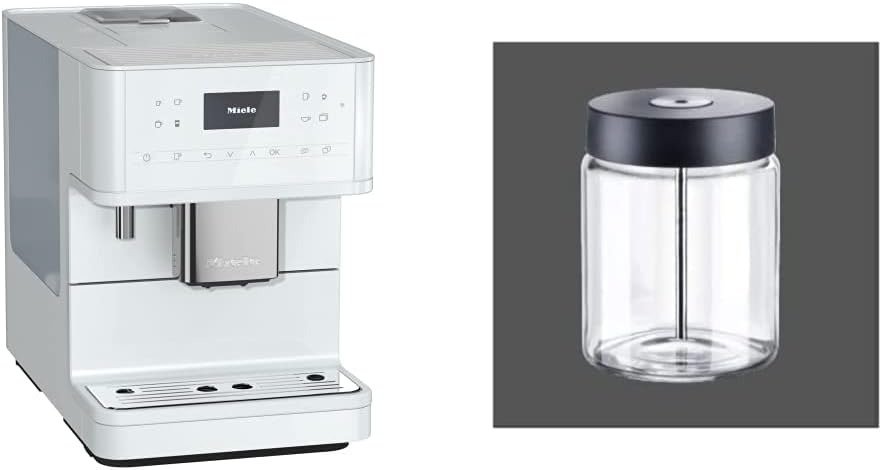
The milk system on the CM5310 is a cappuccinatore attachment — a tube that connects to a milk container. It is not an integrated carafe. This means you keep milk in a separate container, connect the tube when needed, and rely on the automatic rinse cycles to keep the system clean. The cleaning is genuinely automatic. But the physical setup of milk-based drinks requires slightly more friction than a fully integrated carafe system like the CM6160’s MilkPerfection.
| Limitation | Who Feels It | Who Doesn’t |
|---|---|---|
| 1.3L water tank, daily refill needed | Households of 3+ or high-volume drinkers | 1–2 person households — manageable |
| No user profiles, single memory | Multi-person households with different preferences | Solo or uniform-preference pairs |
| Milk tube vs. integrated carafe | Users who want zero-friction milk setup | Users comfortable with simple attachment |
| 5 grind settings only | Precision-extraction enthusiasts | Everyday drinkers at medium roast |
| No Wi-Fi or app control | Users who want remote scheduling | Users who simply want to press a button |
| Outdated text display | Buyers who prioritize interface aesthetics | Buyers who prioritize machine longevity |
| Not designed for light or single-origin roasts | Specialty coffee explorers | Medium and dark roast daily drinkers |
If you’re running a busy household, want an integrated carafe that never needs tube-connecting, need per-person profile memory, or want app control — the CM6160 MilkPerfection is the next logical step at a higher price point. The feature difference between the two is structural, not cosmetic.
The One Situation Where This Machine Becomes Logical
You are one of the people described above. You value quiet above novelty. You make 2–4 drinks per day from fresh beans. You want to press a button and have it done correctly, silently, every morning, without becoming a home barista.
The Miele CM5310 Silence delivers:
- A stainless steel conical burr grinder that operates at a genuinely lower intrusion level than most competitors in its class
- The AromaticSystem pre-infusion that produces consistently balanced espresso — full-bodied, low-bitterness, with good crema on medium roasts
- A thermoblock that heats in roughly 45 seconds from cold start
- A removable brew unit that rinses under a tap in 90 seconds
- Dishwasher-safe components including the drip tray, milk pipework, and water reservoir
- Automatic cleaning cycles at startup and shutdown — approximately 20 seconds each, fully automated
- Miele build quality, which has a documented durability record across decades of German appliance manufacturing
| What the CM5310 Delivers | Measured or Reported Outcome |
|---|---|
| Grinder noise reduction vs. previous CM5300 | ~50% quieter by Miele’s own testing |
| Espresso extraction (TDS measured in testing) | 6.8–8.4% — honest, balanced, good daily base |
| Warm-up time | ~45 seconds from cold |
| Weekly active maintenance time | ~3–4 minutes |
| Descaling interval (moderate water hardness) | ~6 weeks, machine-prompted |
| Milk foam quality | Fine, stable microfoam — consistent across tests |
| Build material | Stainless steel burr, durable polymer housing, metal internal frame |
| Warranty | 2 years standard |
This is not the machine that will impress a specialty coffee enthusiast who measures TDS with a refractometer. It is the machine that makes a genuinely good cappuccino at 6:15 AM without waking anyone, without asking anything from you, and without degrading over the first 18 months.
What It Solves, What It Reduces, and What It Still Leaves to You
What the CM5310 Silence actually solves:
The daily sound friction of early-morning or open-plan coffee brewing. The inconsistency of manual preparation at scale. The maintenance complexity of most super-automatics at this price — cleaning cycles here are automatic, not optional.
What it meaningfully reduces:
The cost and ritual of daily café visits for 1–2 people. The cognitive load of remembering to descale, clean, or calibrate — the machine prompts all of it. The compromise of pod machines — fresh-ground beans, not capsules.
What it still leaves to you:
Refilling a 1.3L water tank daily if you’re a high-volume household. Connecting the milk tube when making milk-based drinks. Living with a single settings memory if multiple people have different preferences. Accepting that light roast or single-origin precision extraction will not be this machine’s strength.
| Variable | Managed by Machine | Remains Your Responsibility |
|---|---|---|
| Grind and brew cycle | ✅ Fully automated | — |
| Milk frothing | ✅ Automated once tube is connected | Connecting and storing milk container |
| Cleaning cycles | ✅ Auto-rinse at start and shutdown | Brew unit rinse weekly (~90 seconds) |
| Descaling | ✅ Machine prompts with timing | Purchasing descaling solution, 30-minute process |
| Water refill | ❌ | Daily or every 2–3 days depending on usage |
| Grind calibration | ⚠️ 5 settings, accessed via rear service panel | Minor adjustment when changing bean type |
| Settings memory | ✅ Saves last-used settings | No per-user profiles — one memory for all |
Final Compression
The Miele CM5310 Silence is not the most feature-dense machine in its price range. It is not the most visually striking. It does not have an app.
What it has is a specific answer to a specific problem: the sound threshold where a super-automatic stops being a background appliance and starts being an event in the house. The CM5310 was engineered to stay below that threshold. Most competitors in this class were not.
If your household is 1–2 people, you brew in the early morning or in an open-plan space, you want consistent quality from fresh beans without manual effort, and you want a machine built to last rather than built to impress on a showroom floor — the decision calculus here is not complicated.
The water tank is small. There are no user profiles. The display is not modern. Those are real limitations.
But the quiet is real too. And if the quiet is what you needed, waiting to find it in a machine that also has Wi-Fi and a color touchscreen means paying more, getting a different set of tradeoffs, and still waking your partner at 6:15 AM.
If you are already inside this threshold — a quiet kitchen, fresh beans, and two people who want good coffee pressed from a button every morning — this is where the decision stops being ambiguous.
Transparency Note:
This analysis is built on aggregated real-world experience.
It extracts what repeatedly holds, what breaks, and what users uncover only after living with the system—then shapes it into a clear model you can use immediately.
Think of it as structured experience, refined and presented so you don’t have to learn it the hard way.
“A quick note: Don’t believe the star ratings, but trust personal experience. This article is a compilation of collected experiences”