Veise VE017-L Fingerprint Smart Lock Review: The Detail Nobody Reads Before Buying
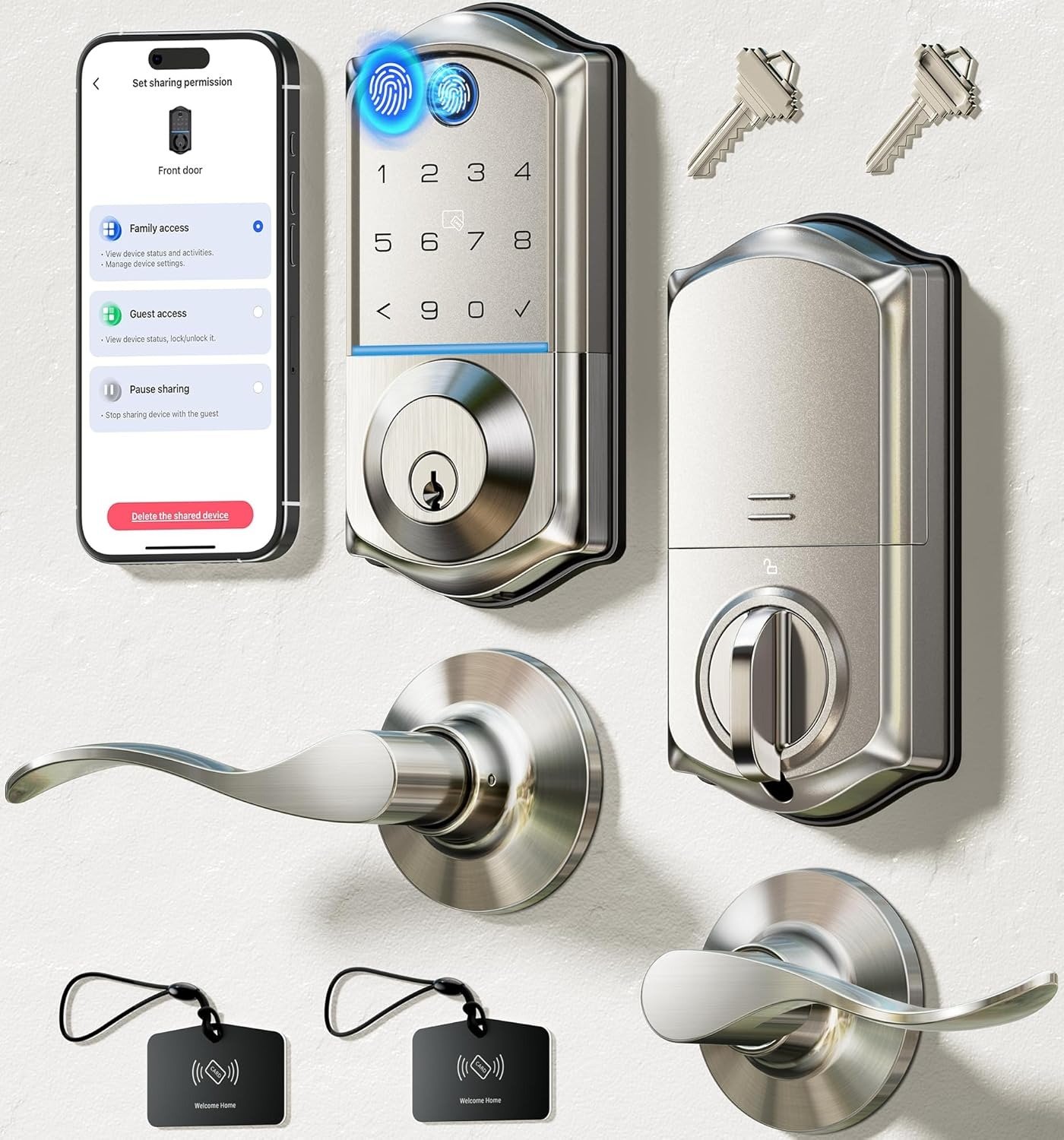
VEISE VE017-L FINGERPRINT SMART LOCK
You’re halfway down the driveway, keys already gone from your hand, when the thought hits: did I actually lock it? Not the polite version of that thought — the one that makes you pull over. For years the fix seemed obvious: swap the old deadbolt for something with a fingerprint pad and an app, and that specific 2 a.m. anxiety disappears. That’s the promise on the Veise VE017-L’s box. What the box doesn’t spell out is that “smart” and “remote” aren’t the same thing — and that gap is exactly where most buyers’ expectations quietly come apart.
Veise VE017-L Unboxing: When It Looks Perfect and Still Isn’t Enough
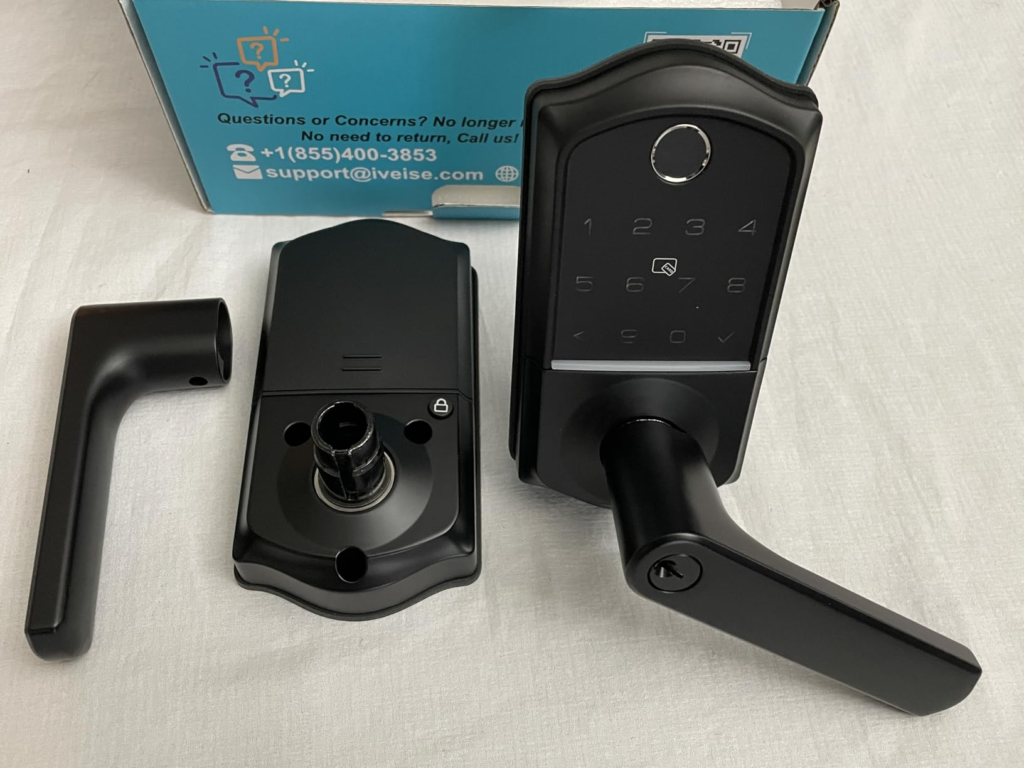
Out of the box, this lock earns its first impression. The kit includes a complete handleset — two matching zinc-alloy lever handles plus the deadbolt, in either Matte Black or Satin Nickel — so there’s no second trip to the hardware store for parts that don’t match. The package includes the strike, latch, mounting plate, two backup keys, and two IC cards, along with both manuals.
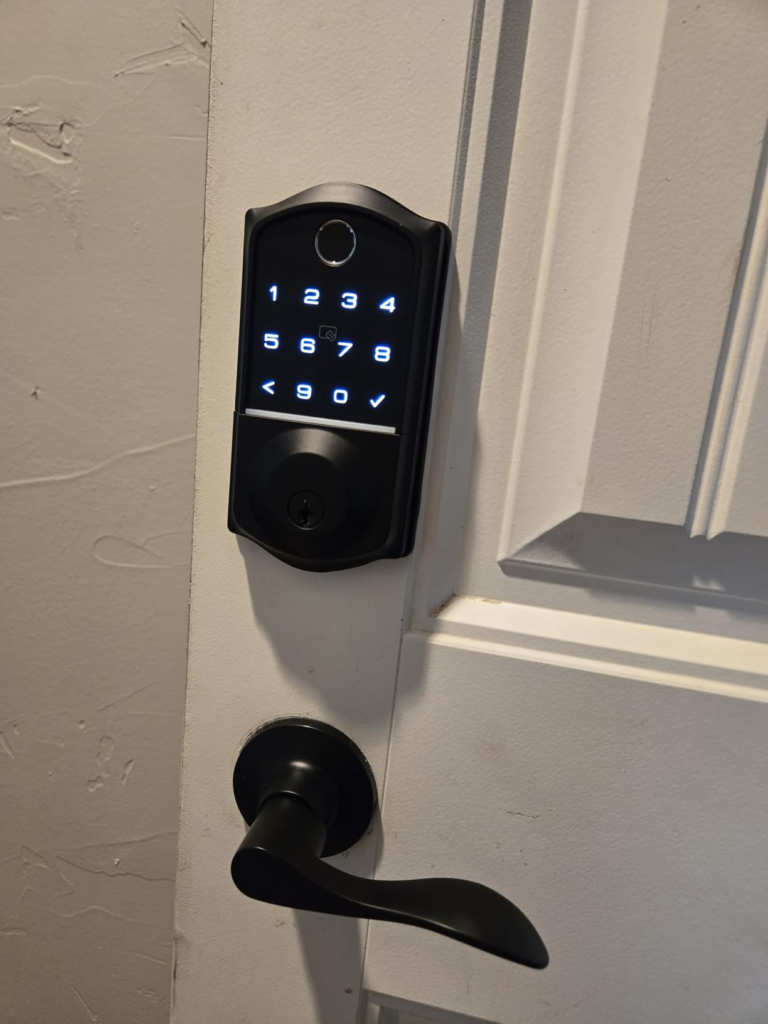
The touchscreen lights up, the print reads on the first try, and for the first week it feels like exactly what the listing promised.
Then someone asks you to unlock the door from your desk at work, or wants to check who came in while you were on a flight — and the app just doesn’t do that. Nothing broke. The lock is Bluetooth-based for local control, with no built-in Wi-Fi, so it’s doing precisely what it was built to do. It’s just not the thing the Alexa and Google Assistant mentions on the box quietly implied.
Fingerprint Lock Frustration: The Real Reason Keyless Entry Still Feels Uncertain
If you’ve owned any Bluetooth lock before, you recognize a specific unease: the app works fine standing at the door, then goes vague the second you’re not standing at the door. That’s not paranoia — the app is Bluetooth-only, with a working range reported by owners at around 50 feet, so distance is the actual variable, not reliability.
There’s a quieter friction too: the moment your thumb doesn’t register and you genuinely can’t tell if it’s your finger, the cold, or the lock. Most people never get an answer. They just press harder or switch to the keypad, and never learn which one it actually was.
Veise VE017-L App Control Explained: The Mechanism Behind the Confusion
Here’s the part that resolves the confusion. Fingerprint, keypad PIN, key fob, and the physical key all work locally without any internet connection or gateway, and the app also works within Bluetooth range. Remote access, remote code management, and voice control through Alexa or Google specifically require the Veise G1 Gateway — a small Wi-Fi bridge sold separately, listed around $39.99, that plugs into an outlet near the door and connects the lock to your home network. Without it, you own a genuinely capable local smart lock. With it, you own a remote one. Those are two different purchases.
The fingerprint side has its own mechanism worth knowing. These sensors read the electrical and physical map of your ridges and valleys, so skin moisture, sensor cleanliness, battery voltage, and cold weather can all interfere with a scan in ways a metal key never would. And that “deadbolt cycles three times before locking” complaint some owners report isn’t a defect — it happens when the latch and strike are misaligned, or the bolt hole isn’t drilled deep enough for the bolt to fully extend, a fix that lives in the door, not the electronics.
| Spec | Detail |
|---|---|
| Unlock methods | Fingerprint, keypad code, key fob, Bluetooth app, physical key, plus remote code sharing and Alexa/Google voice via the optional Gateway |
| Fingerprint | ~0.2 second recognition, up to 20 fingerprints stored |
| Codes | Up to 100 passcodes, including temporary and one-time guest codes |
| Connectivity | Built-in Bluetooth; Wi-Fi remote access only through the separate G1 Gateway |
| Battery | 4 AA (not included), roughly 12 months of typical use |
| Backup power | USB-C emergency port for a power bank |
| Build | Zinc-alloy handleset and deadbolt, Matte Black or Satin Nickel |
| Certification | ANSI/BHMA Grade 3 |
| Environment | Rated -35°F to 160°F, IP55 water resistance |
| Data storage | On-device, AES-128 encrypted, no cloud |
| Support | 2-year warranty window on current listings, lifetime mechanical support, US-based phone and email service |
Battery, Weather, and Gateway: The Threshold Where Convenience Quietly Breaks
Every one of these systems has a point where it stops feeling seamless. A battery running low doesn’t just die — it slows the motor down first, so a sluggish lock is usually an early warning, not a random glitch. Cold, dry winter skin loses the conductivity fingerprint sensors depend on, and the ridges that define your print become harder to read — this is true of every capacitive sensor on the market, not a Veise-specific flaw, which is exactly why the keypad and key exist as real daily backups, not decorative extras.
The Gateway threshold is the one that catches the most people off guard. No Gateway means no lock/unlock from outside Bluetooth range, no remote code changes, and no Alexa or Google voice control — regardless of what the box implies those logos mean.
Smart Lock Buying Mistakes: Why Shoppers Misjudge the Veise VE017-L Too Fast
Three assumptions cause most of the disappointment reviews. First, reading “App Control” and “Alexa/Google Compatible” as remote-ready out of the box, when it’s a local Bluetooth system until you add the Gateway. Second, seeing “ANSI Grade 3” and assuming a downgrade — when Grade 3 is the standard certified tier that most consumer smart locks sold at retail carry, this one included, not a Veise-specific compromise. Independent locksmiths add real nuance here, though: Grade 3 is generally recommended for interior or lower-risk doors, with Grade 1 or 2 suggested for a primary exterior entry if you want the strongest available forced-entry resistance, and ANSI grades measure durability and strike resistance, not pick-resistance — so “certified” shouldn’t be read as “unbeatable.”
Third: a price below the big hardware-store names doesn’t automatically mean an anonymous factory. Public FCC filings tied to Veise’s connected locks point to Shenzhen Kaadas Intelligent Technology, an established name in electronic lock manufacturing, as the certified hardware source behind this line.
| What the Box Implies | What Actually Happens |
|---|---|
| “App Control + Alexa/Google” sounds remote-ready | Base unit is Bluetooth-only; remote and voice control need the separate G1 Gateway |
| “Grade 3” sounds like a weak spot | Grade 3 is the standard tier across the whole consumer smart lock category |
| Budget price suggests corner-cutting | FCC records tie the hardware to an established lock manufacturer |
| “Fingerprint unlock” replaces the need for codes | Cold or dry skin affects any sensor, so the keypad stays a real daily backup |
Who the Veise VE017-L Fingerprint Lock Actually Fits
This lock makes the most sense for households and small rentals that want local, biometric-and-keypad convenience without a monthly fee, and that value fingerprint and code data staying encrypted on the device instead of a cloud server. The owner account can share full “Family” access or limited “Guest” access with other people through the app, which suits families, roommates, or a landlord issuing a cleaner a temporary code without ever cutting a spare key.
| Get This If… | Consider Skipping If… |
|---|---|
| You want one box that replaces the whole handleset | You need remote/voice control on day one and don’t want the added Gateway purchase |
| You manage several household or guest users | Your entry door genuinely needs Grade 1/2-level forced-entry hardware |
| You’d rather your biometric data stay off the cloud | You’ll rely on fingerprint alone through long, harsh winters |
| You don’t want a subscription for basic smart features | You specifically need Apple Watch or browser-based management |
Where Buyer’s Regret Starts With This Smart Lock
Regret shows up in a predictable place: someone installs the lock expecting to check it from work, discovers the Gateway is a separate line item, and feels misled by marketing that was, technically, accurate the whole time. It also shows up with people in genuinely harsh climates who lean on fingerprint alone and never build the keypad into their routine — then get frustrated on the one morning it matters. And it shows up on doors where the real requirement was commercial-grade forced-entry resistance, where a Grade 1 or 2 deadbolt was always the more honest answer regardless of brand.
Veise VE017-L Fingerprint Smart Lock: When It Becomes the Logical Choice
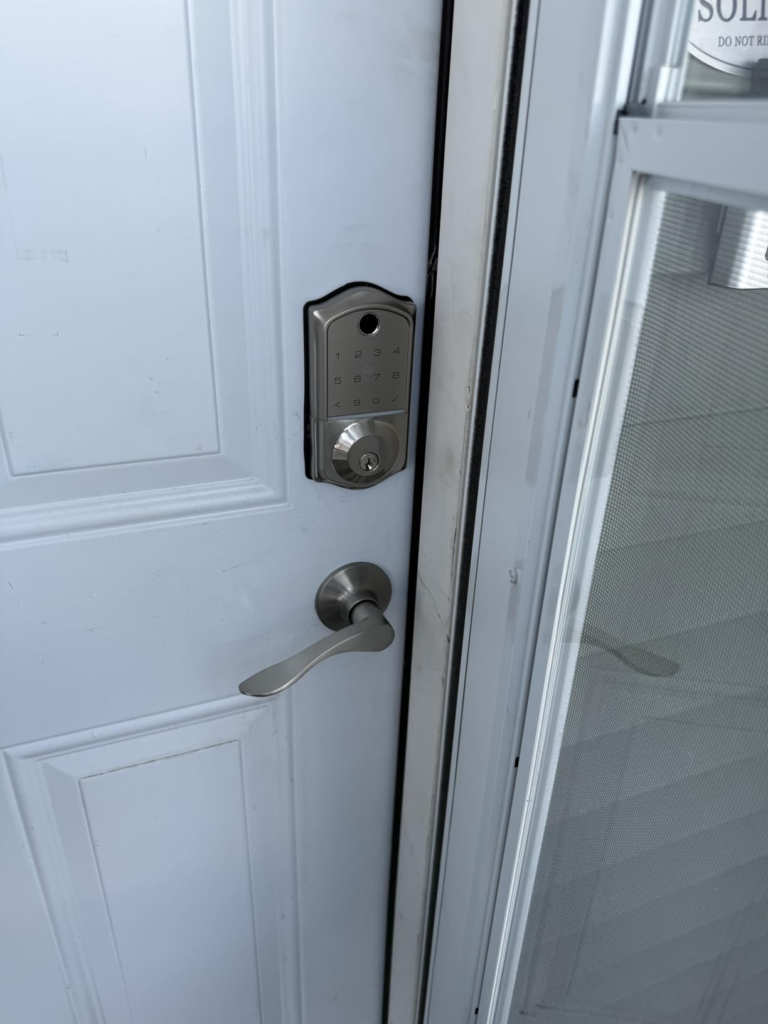
If what you actually need is a complete handleset replacement with real local convenience — fingerprint, keypad, fob, and key, all working without an internet connection — and you’re comfortable treating the G1 Gateway as an optional add-on rather than an included feature, this lock earns its price. There’s no subscription fee at any point, and Bluetooth control keeps working locally even if your internet connection goes down, which matters more in daily life than most spec sheets let on.
What the Veise VE017-L Fixes, What It Reduces, and What’s Still On You
Real owner accounts line up with the spec sheet more often than not. One buyer described the lock as meeting or exceeding expectations, with a quick, useful response from Veise support on a gateway compatibility question, and another confirmed installation was straightforward, with the auto-lock feature simply needing the door properly aligned to trigger reliably. Related Veise models carry strong aggregate satisfaction too — one variant sits at 4.3 out of 5 stars across 1,884 reviews, another at 4.4 out of 5 across 226, a solid signal at this price point.
| Solves | Reduces | Still On You |
|---|---|---|
| Key fumbling and lost-key panic | Locksmith re-key visits and app subscription fees | Correct backset and strike alignment during install |
| Dead-battery lockouts (USB-C port + physical key) | Cloud privacy exposure | Buying the Gateway if remote access matters |
| Managing guest and family access without spare keys | Guesswork about who came and went | Re-enrolling fingerprints occasionally in harsh winters |
Veise VE017-L Fingerprint Smart Lock: Common Questions Answered
| Question | Answer |
|---|---|
| Does it need Wi-Fi to work? | No. Fingerprint, keypad, fob, and key all work locally over Bluetooth. Wi-Fi only matters if you add the G1 Gateway. |
| Is the G1 Gateway included? | No, it’s sold separately and is required for remote lock/unlock and Alexa/Google voice control. |
| How many fingerprints and codes can it store? | Up to 20 fingerprints and up to 100 passcodes, including one-time guest codes. |
| What happens if the batteries die? | The physical key still opens the door, and the USB-C port lets you power it temporarily from a power bank. |
| Is fingerprint data stored online? | No. Everything is stored locally on the lock with AES-128 encryption. |
| Does cold weather affect the sensor? | Yes, but this is true of any fingerprint sensor — it’s exactly why the keypad and fob exist as daily backups. |
| Can family or guests get their own access? | Yes, the owner can share full “Family” or limited “Guest” access through the app. |
| How is VE017-L different from the plain VE017? | VE017-L includes a full matching handleset with two levers; VE017 is deadbolt-only for your existing handles. |
Final Verdict: Is the Veise VE017-L Fingerprint Smart Lock Worth Buying
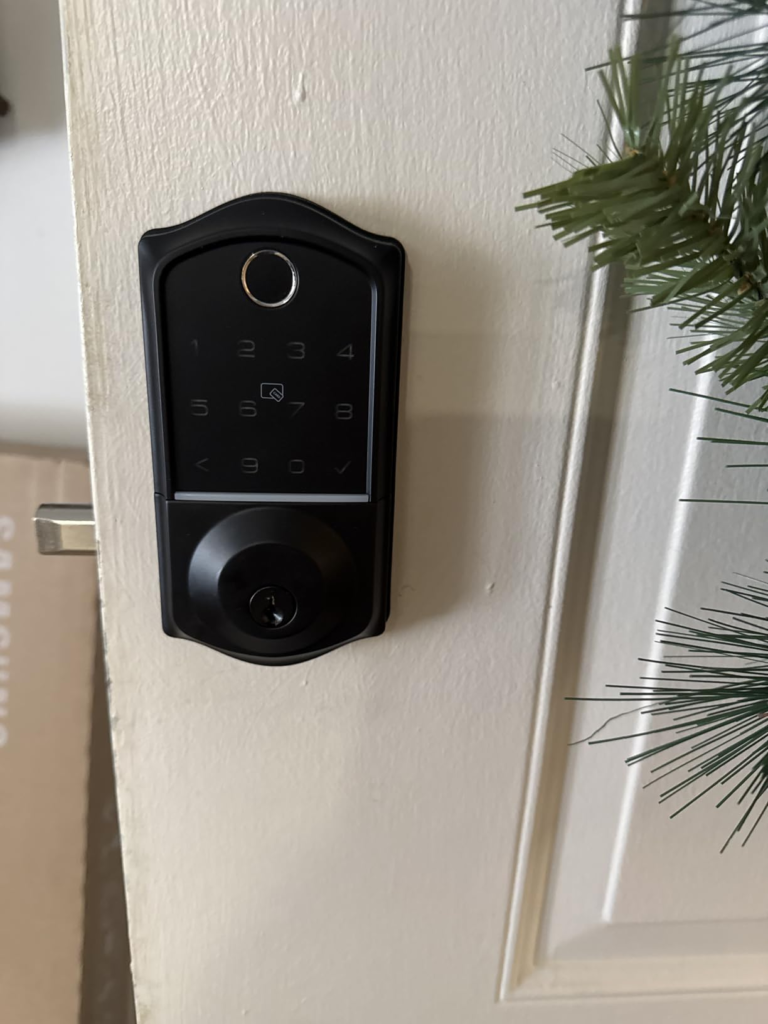
The real question was never “is this a good lock.” It’s “will it do the one thing I actually need it to do” — and that answer depends entirely on whether the Gateway is part of your plan or not. Decide that first, keep the keypad in your regular routine rather than as a last resort, and the rest of this decision resolves itself.
Transparency Note:
This analysis is built on aggregated real-world experience.
It extracts what repeatedly holds, what breaks, and what users uncover only after living with the system—then shapes it into a clear model you can use immediately.
Think of it as structured experience, refined and presented so you don’t have to learn it the hard way.
“A quick note: Don’t believe the star ratings, but trust personal experience. This article is a compilation of collected experiences.”