Schlage Arrive Review: It Locks Perfectly on Day One — That’s Not the Whole Story
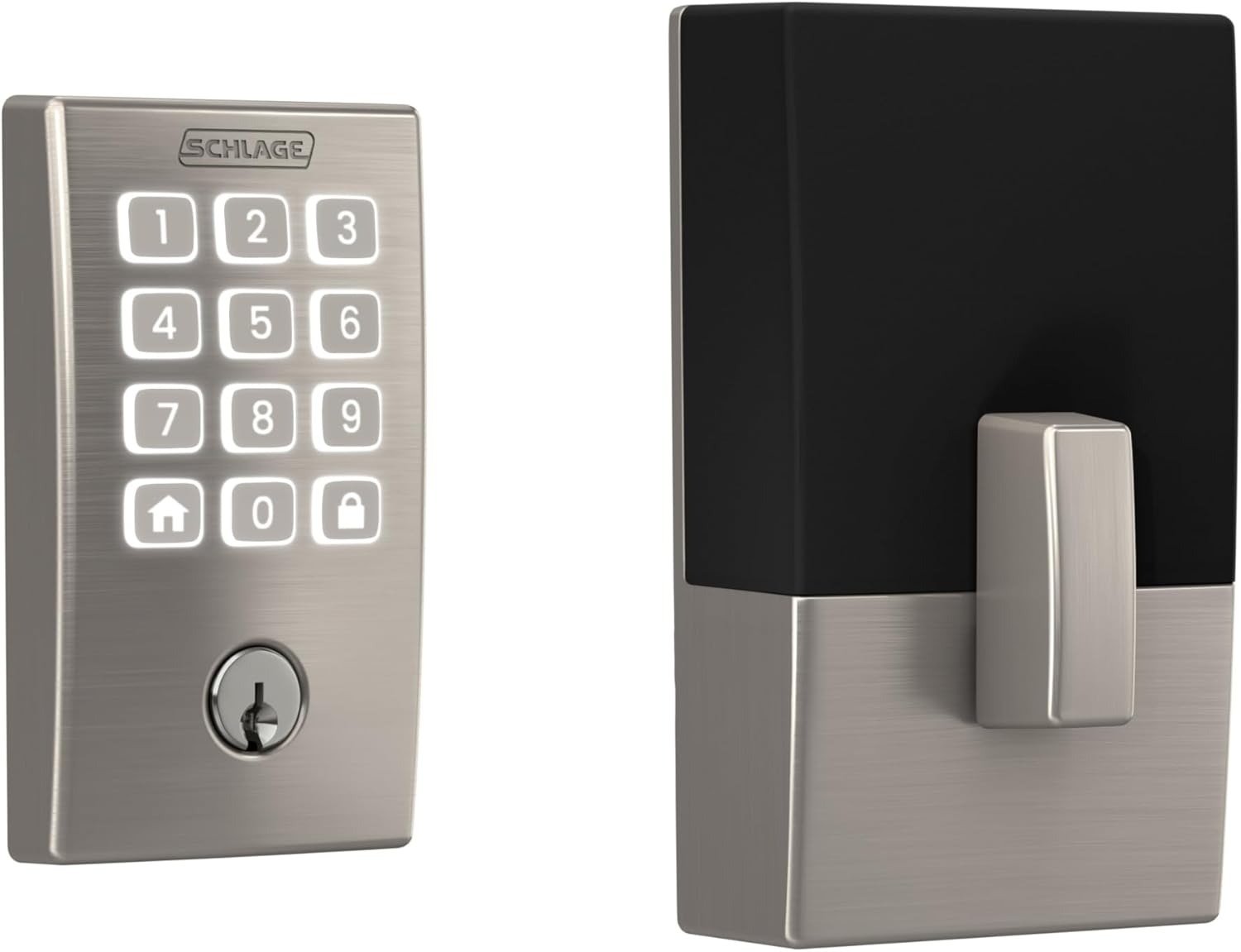
SCHLAGE ARRIVE
It’s 11 PM. You’ve already looked at the app once. The screen says “Locked,” calm and green. You go check the door anyway, hand on the deadbolt, because some part of you still trusts the click more than the icon.
That gap — between what the app claims and what your hand needs to confirm — is the actual story behind this lock. Not the unboxing. Not the spec sheet. What happens in month three, once the newness wears off and your home’s own WiFi quietly starts deciding how this thing behaves.
Schlage Arrive Problems: The Result Looks Fine, The Problem Isn’t
On paper, there isn’t much to argue with.
| Spec | Detail |
|---|---|
| Connectivity | Built-in WiFi (2.4GHz only) + Bluetooth fallback — no hub required |
| Keypad | Backlit push-button, physical silicone buttons (not touchscreen) |
| Access Codes | Up to 250 |
| Security Rating | ANSI/BHMA Grade 1 + AAA (security, durability, finish) |
| Battery | 4x AA batteries (alkaline recommended), rated ~12 months |
| Smart Home | Amazon Alexa, Google Assistant, Ring — no Apple HomeKit |
| Trim / Finish | Century, Camelot, Remsen trims; Satin Nickel or Matte Black |
| Warranty | 3-year electronics, limited lifetime mechanical |
| Install Time | About 10 minutes, single Phillips screwdriver |
| Typical Price | Around $269 (Century / Satin Nickel); up to $299 for other trims |
Most people report a smooth first week. Here’s what doesn’t show up in that first week: two households can buy the identical lock, install it the same afternoon, and end up living completely different lives with it six months later. One owner reports 92% battery remaining after months of daily use. Another, in the same Amazon Q&A thread, reports batteries dead in thirteen days, with no warning at all.
Same lock. Same box. Opposite outcome. I went through the Amazon Q&A threads, Schlage’s own troubleshooting library, and independent hands-on tests from outlets like PCWorld to find out why — and it wasn’t luck, and it wasn’t a bad unit. It was WiFi. That’s the part almost nobody selling you this lock bothers to explain.
Schlage Arrive Daily Use: What You’re Actually Feeling but Not Naming
Why does a smart lock start to feel like a chore instead of a convenience? It’s rarely one dramatic failure. It’s smaller than that.
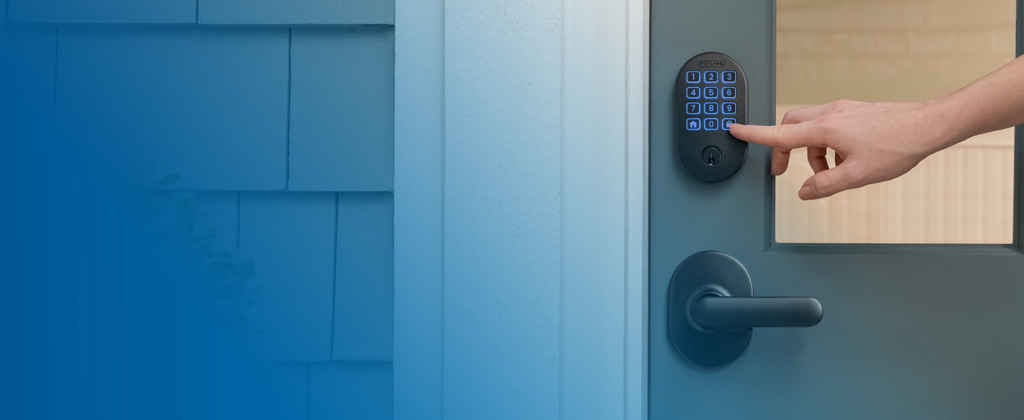
It’s the extra half-second before the deadbolt turns when you’re standing in the rain with your hands full. It’s a notification landing on your phone 30 to 40 seconds after you already heard the door click — Schlage’s own support documentation confirms this delay is a known, named behavior, not something you imagined. It’s opening the app “just to check,” even though you’re already sure, because a few weeks of small lags built up into a quiet doubt.
None of that is dangerous. All of it is annoying in a way that’s hard to name until someone names it for you. Call it latency anxiety, and it has one root cause.
Schlage Arrive Battery Life: The Hidden Mechanism Behind the Miss
Here’s the detail almost no buyer checks before ordering: this isn’t a Bluetooth-only lock, and it isn’t a Z-Wave lock leaning on a hub. It runs its own built-in WiFi radio, live, so your phone can see real-time status and unlock it from anywhere on earth.
That radio is what costs battery — not the motor that throws the bolt. Schlage’s own troubleshooting guidance says it plainly: a weak WiFi signal forces the lock into constant reconnection attempts, and that retry cycle is one of the leading causes of batteries dying in weeks instead of months. The other cause is simple volume — cross roughly 35 to 40 lock or unlock events a day, common in larger households or short-term rentals, and drain speeds up further.
Call it the WiFi tax. You don’t see it on the box. You see it on your third battery change of the year, wondering what you did wrong — when often, you didn’t. Your signal did.
| Symptom | What’s Really Happening | The Threshold |
|---|---|---|
| Lock feels slow to respond | App has dropped from live cloud connection to local Bluetooth mode | Most common when signal at the door is weak or the router sits far away |
| Batteries die in weeks, not months | Lock is constantly retrying its WiFi connection to stay “live” for the app | Weak signal and 35–40+ daily unlocks both accelerate the drain |
| WiFi pairing won’t complete | Router defaults to 5GHz, or the password breaks an unlisted rule | Only 2.4GHz, WPA/WPA2, passwords ≤24 characters, no spaces or $ / & |
| No low-battery warning before it dies | Lithium and rechargeable cells discharge in a curve the lock reads poorly | Crosses over the moment non-alkaline batteries go in |
Schlage Arrive WiFi Signal: The Threshold Where the Outcome Quietly Breaks
So where exactly does a fine lock become a frustrating one? Not at one dramatic point of failure — at a handful of quiet thresholds most people cross without noticing.
The lock only speaks 2.4GHz. If your router auto-steers devices to 5GHz, or your mesh system hides the 2.4GHz band by default, pairing stalls before you’ve even started. Your password has rules the box never mentions either: 24 characters or fewer, no spaces, no “$” or “&.” Cross any of those and you get a flashing red light with no obvious explanation.
Then there’s distance. Two rooms and a brick wall between the router and the front door is a different lock experience than a router sitting ten feet away. Same hardware. Different threshold. Different verdict.
Schlage Arrive vs Other Smart Locks: Why Most Buyers Misread This Too Early
Most people shop this category by stacking spec sheets — Arrive against Encode against Encode Plus against an August or a Yale — and scoring whichever has the most codes or the lowest price. Watching enough of these threads, the buyers who end up disappointed almost always skipped one question: not “which lock has more features,” but “does my WiFi actually reach my front door.”
That same shortcut creates two more common misreadings. First: assuming physical push-buttons mean a cheaper lock than a touchscreen. In practice, it’s a durability trade-off — fewer weather-exposed capacitive parts means fewer things to fail after two winters outside. Second: assuming “built-in WiFi, no hub” automatically beats a hub-based lock. A lock holding its own live internet connection works harder, and drains faster, than one that only wakes briefly to talk to a nearby hub. Neither is wrong. Most buyers just never realize they’re choosing between the two.
Schlage Arrive Best For: Who Is Actually Inside This Problem
Strip away the marketing and the real fit is narrower, and more specific, than “anyone who wants a smart lock.”
| Your Situation | Why the Arrive Fits |
|---|---|
| Your router reaches the front door with a strong signal | Removes the single biggest cause of the battery and lag complaints above |
| You manage a lot of comings and goings — family, cleaners, guests, a short-term rental | 250 codes is roughly double what Schlage’s own Encode allows |
| You’re on Android, Alexa, or Google Home | Full feature access without paying for Apple-only hardware you won’t use |
| You want a full deadbolt replacement, not a retrofit sleeve | Genuine ANSI Grade 1 + AAA-rated mechanical security, tested across 15 standards |
| You don’t mind physical buttons over a touchscreen | One less exposed, weather-sensitive surface to wear out |
Schlage Arrive Not For Everyone: Where Wrong-Fit Begins
The reviews that read like regret almost always come from someone who wanted a different lock and bought this one anyway, usually chasing a price or a brand name alone.
| If You Actually Need… | Look At Instead |
|---|---|
| Tap-to-unlock with an iPhone or Apple Watch | Schlage Encode Plus, or the Yale Assure Lock 2 Plus |
| Auto-unlock as you walk up, no code required | August Wi-Fi Smart Lock |
| To keep your current keys and deadbolt (renting) | August’s retrofit design |
| A sensor that flags the door itself as ajar, not just the bolt as thrown | August or Yale’s DoorSense-equivalent sensor |
And be honest about your own house, too. If your front door sits in a WiFi dead zone and you’re not willing to add an extender or mesh point, almost any WiFi-native lock — not just this one — is going to disappoint you.
Schlage Arrive Review: The One Situation Where It Becomes the Logical Choice
If you’ve read this far and your situation matches the fit above — solid WiFi at the door, a household or rental that genuinely needs more than a couple of codes, no pull toward Apple Home Key or auto-unlock, a preference for hardware over hub subscriptions — the calculation is simple, not sentimental.
The Century trim in Satin Nickel reviewed here typically runs around $269, sitting below the Encode Plus’s roughly $270–300 (which adds Apple HomeKit) and close to the standard Encode’s $230–250 (which caps out at 100 codes). Camelot and Remsen trims, and the matte black finish, tend to land closer to $299. Prices move with retailer deals, so the live listing is worth a glance before deciding.
At that position, you’re not paying for features you’ll never touch. You’re paying for the top security certification in this price range, double the code capacity of Schlage’s own cheaper model, and a brand that’s topped Lifestory Research’s consumer trust survey for security hardware seven years running, according to independent industry reporting.
Schlage Arrive Pros and Cons: What It Solves, What It Reduces, What’s Still on You
| Solves | Reduces | Still On You |
|---|---|---|
| Grade 1 + AAA-certified physical security | Handing out spare physical keys to guests or staff | Checking WiFi strength at the door before blaming the lock |
| Remote lock, unlock, and code management with no hub or monthly fee | The “did I actually lock it” habit, once signal is solid | Using alkaline batteries, not lithium or rechargeable |
| Up to 250 individually tracked access codes | Guesswork about who came and went, and when | Accepting there’s no Apple Home Key, auto-unlock, or door-ajar sensor here |
Schlage Arrive FAQ: The Questions Buyers Actually Ask
Does the Schlage Arrive still work if my WiFi goes down?
Yes. It falls back to Bluetooth, so the app still controls it at close range and stored codes keep working. You lose remote access and instant notifications until the connection returns.
How long do the batteries actually last?
Schlage rates it around 12 months on four AA alkaline batteries. In practice, that number swings hard based on WiFi signal strength and daily usage volume — see the mechanism section above.
Is it compatible with Apple HomeKit or Apple Watch tap-to-unlock?
No. Schlage’s own answer for Apple Home Key is the Encode Plus, not the Arrive.
Can it connect to a 5GHz WiFi network?
No — 2.4GHz only. If your router broadcasts one combined network name, you may need to split out a dedicated 2.4GHz band to pair successfully.
How many people can have their own access code?
Up to 250, roughly double the 100-code limit on Schlage’s standard Encode.
How long does installation actually take?
About ten minutes with a Phillips screwdriver on a standard door, according to hands-on reviews — no wiring, no hub to configure.
Does it work with Ring and Alexa?
Yes to both, plus Google Assistant. It does not connect to Apple HomeKit.
Schlage Arrive Review: Final Verdict
No lock is right for every door, and this one is no exception. But if the sections above described your house instead of someone else’s — decent WiFi at the entry, a real need for more than a couple of codes, no pull toward Apple Home Key or auto-unlock — you already have what you need to stop going back and forth.
If your front door already gets a solid signal and what you actually want is serious, no-subscription, keypad-based security that can handle a busy household without flinching, this is where the decision stops being vague:
Transparency Note:
This analysis is built on aggregated real-world experience.
It extracts what repeatedly holds, what breaks, and what users uncover only after living with the system—then shapes it into a clear model you can use immediately.
Think of it as structured experience, refined and presented so you don’t have to learn it the hard way.
“A quick note: Don’t believe the star ratings, but trust personal experience. This article is a compilation of collected experiences.”