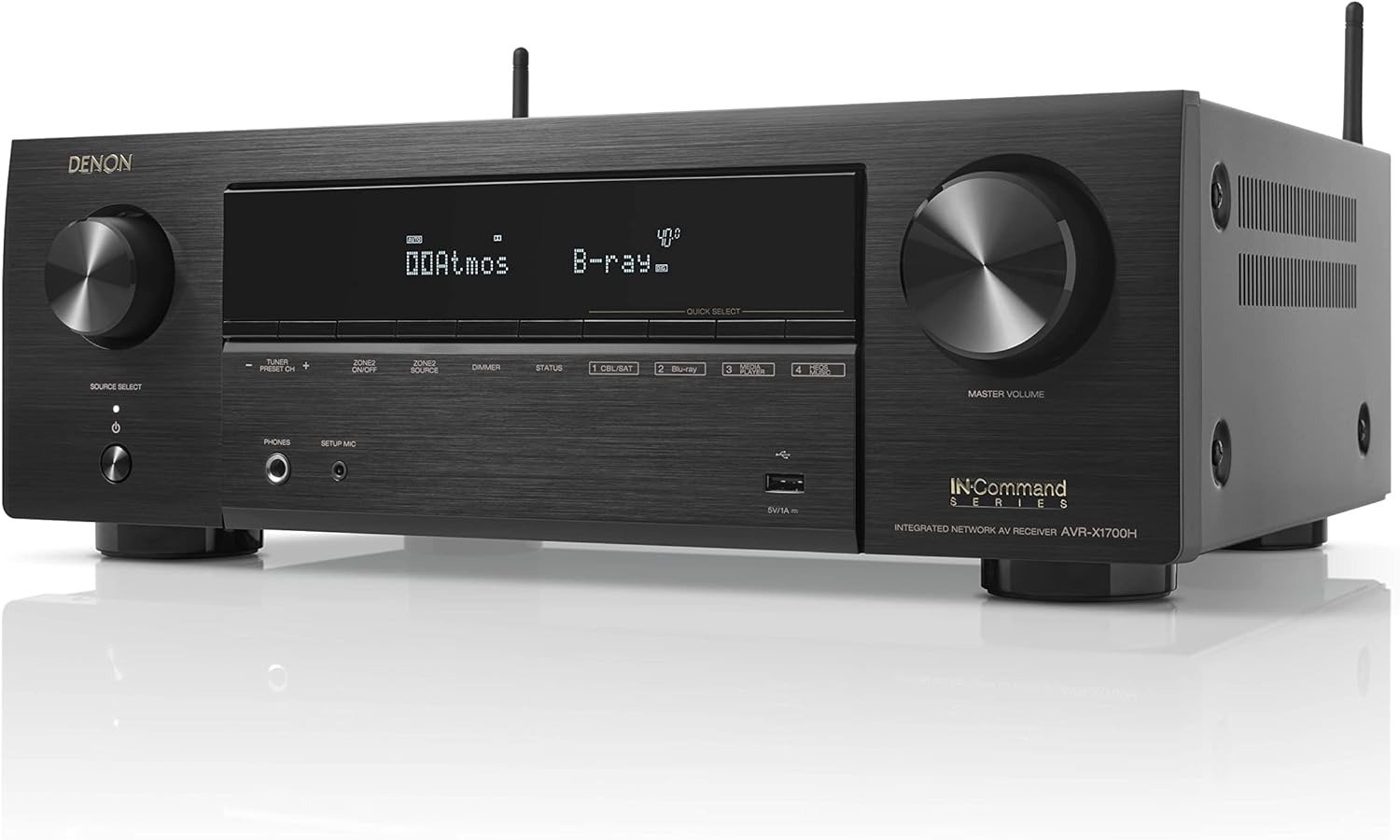
You Do Not Buy the ONKYO TX-RZ50 for More Noise. You Buy It When the Room Starts Lying to You.
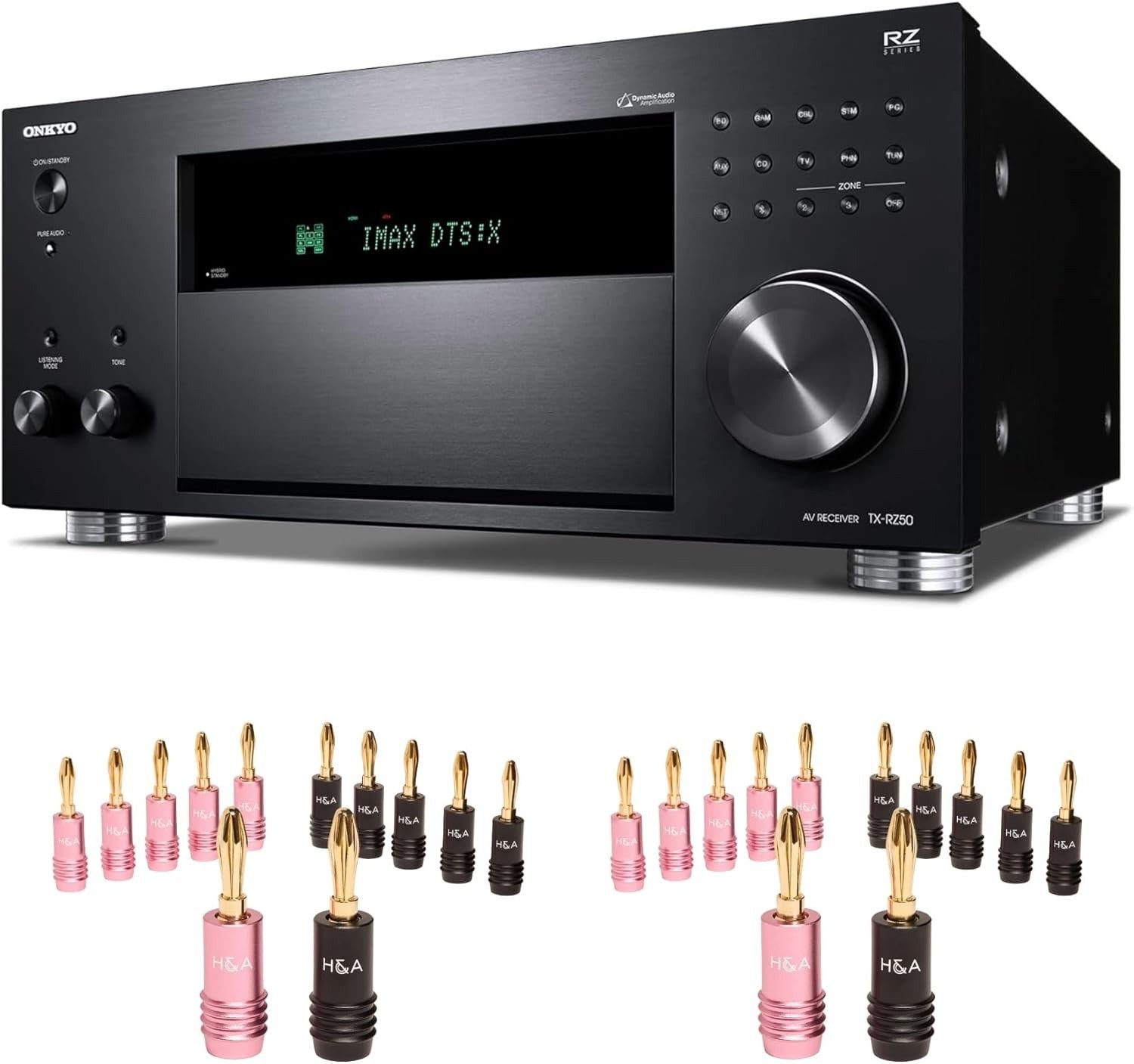
I do not trust the first ten minutes with an AV receiver. The lights come on. The menus flash. A trailer swells. Everything feels “powerful.” That part is cheap. The expensive part comes later, when dialogue still sounds pinned to the center, bass stops smearing across the room, and the whole system quits acting like nine speakers arguing in a box. That is where the Onkyo TX-RZ50 starts to matter. Not at hello. At correction. At load. At the moment the room stops cheating your ears. Its real appeal is not that it is a 9.2-channel receiver with THX, IMAX Enhanced, Dolby Atmos, DTS:X, 11.2-channel processing, pre-outs for 7.2.4, and HDMI 2.1 support for 8K/60 and 4K/120. It is that Onkyo paired that hardware with Dirac Live out of the box, and that combination changes the decision standard from “How many features are printed on the carton?” to “How much of my room’s damage can this thing actually clean up?”
The Result Looks Fine. The Problem Isn’t.
Most disappointing home theater systems do not fail loudly. They fail politely. The explosion lands, but the chest hit is loose. The dialogue is clear enough, but not carved. Music fills the room, yet never locks into place. You keep turning volume into the problem because volume is visible. It has numbers. It obeys your hand. But in real rooms, the more common failure is not lack of output. It is misbehavior after output: reflections, phase errors, bass stacking, timing smear, center-channel fatigue. The TX-RZ50 matters because it is built for that more annoying class of failure, the one buyers often misname as “I need a stronger receiver.” Owners and reviewers consistently praise the sound quality, power, and Dirac implementation, while the product has held strong retail sentiment across Amazon and Best Buy, where buyers repeatedly single out the sonic jump over older receivers rather than just the feature list.
What You’re Actually Feeling but Not Naming
What you are usually feeling is not disappointment with the soundtrack. It is distrust in the handoff between your speakers and your room.
That friction shows up in three ways:
- voices that seem a little larger or blurrier than the screen image deserves,
- bass that hits hard in one seat and goes thin two feet away,
- surround effects that feel busy rather than believable.
I have seen this pattern too many times in owner reports and measurement-driven discussions to call it taste. It is a systems problem. Dirac Live exists precisely for that class of problem: it measures the interaction between speakers and room acoustics, then corrects across the full frequency range. That is why the TX-RZ50 drew so much attention when it launched: not because Dirac was new, but because it showed up in a receiver tier where buyers were used to compromise.
The Hidden Mechanism Behind the Miss
Here is the hidden mechanism most spec sheets hide in plain sight: the room is often the biggest component in the chain, and it is the one people forget to price into the decision.
A receiver can promise 120 watts per channel into 8 ohms, 20 Hz–20 kHz, with 0.08% THD, and that number is real. The TX-RZ50 does. It also offers 11.2-channel processing, pre-outs for 7.2.4, THX certification, and broad HDMI 2.1 support. But if your room is pulling bass peaks into one seat, dipping them in another, or smearing timing cues that tell your brain where sound lives, raw amplification is only half the machine. Dirac is the other half. EISA’s award language cut straight to the point: the value case is not just the feature count, but the combination of full-bandwidth Dirac, immersive movie performance, and enough amplification and processing to expand without immediately outgrowing the chassis.

The Threshold Where the Outcome Quietly Breaks
This receiver becomes logical at a very specific threshold.
Not when you simply want “a better AVR.” Not when you only need easy surround. Not when you are shopping by wattage alone.
It becomes logical when all three of these are true at once:
| Threshold Signal | What it really means | Why the TX-RZ50 starts making sense |
|---|---|---|
| Your room is audibly fighting the speakers | You are hearing placement and acoustic problems, not just equipment limits | Dirac Live is included and designed to correct exactly that class of error |
| You want to grow beyond basic 5.1 or 7.1 | You need 11.2 processing and pre-outs, not just nine powered channels | The TX-RZ50 can process up to 7.2.4 and offers the pre-outs to get there |
| You run modern video sources, especially gaming | You need real 4K/120, 8K/60, eARC, VRR, ALLM, and QFT support | The receiver supports HDMI 2.1-era features across its key HDMI paths |
That is the threshold. Below it, the TX-RZ50 can look like overbuying. Above it, cheaper receivers start pretending.
Why Most Buyers Misread This Too Early
Most buyers misread the TX-RZ50 because they compare the wrong things too soon.
They compare wattage before correction. They compare badge count before system behavior. They compare menu screenshots before ownership friction.
That is how people end up underestimating the things that actually separate this unit. The RZ50’s reputation is strong for sound, power, and feature depth, but the record is not spotless. Some owners report HDMI quirks, slower input switching, or setup friction. Measurement-focused discussions also keep alive the old “limp mode” debate under clipping or difficult loads, and community threads have repeatedly flagged that its dual subwoofer outputs are not independently managed in the way some enthusiasts expect. That does not kill the product. It simply narrows the fit. A serious article should do that. It should not flatter every buyer into the same conclusion.
Who Is Actually Inside This Problem
I would place the real-fit buyer into a very narrow, very identifiable pocket.
You are inside this problem if:
- your room is already good enough to expose timing and bass issues,
- you care about movies, games, and music rather than only one of them,
- you want a receiver that can anchor a serious setup now and stretch to 7.2.4 later,
- you understand that room correction is not garnish but structure,
- you are comfortable doing setup properly instead of demanding magic in five minutes.
That buyer profile lines up with why the TX-RZ50 has stayed relevant even as newer receivers arrived. It was strong enough to win EISA’s Best Buy AV Receiver 2023–2024, and broad enough in streaming, smart-home, and zone support to avoid feeling stranded in a modern source-heavy living room.
Where Wrong-Fit Begins
Wrong-fit begins the second you need the receiver to solve a different problem than the one it was built for.
| Wrong-Fit Condition | Why it breaks the match |
|---|---|
| You need independent dual-sub calibration as a core requirement | The TX-RZ50 sends the same signal from each subwoofer pre-out, and community guidance has long treated its base implementation as effectively single-sub in practice |
| You want a frictionless, foolproof calibration experience | Even newer Onkyo/Dirac coverage notes that Dirac setup can be finicky, and firmware notes have specifically addressed measurement-error issues |
| You run punishing speaker loads at high output and expect brute-force indifference | Community discussions around clipping/protection behavior mean this is not the right product to buy carelessly for the hardest loads without understanding your speaker demand and room size |
This is where trust is won. Not by pretending the machine is universal, but by drawing the line where regret begins.
The One Situation Where This Product Becomes Logical
The Onkyo TX-RZ50 becomes deeply logical when you are building a real home theater around room correction, modern HDMI sources, and future 7.2.4 expansion, but you are not shopping in processor-plus-external-amp territory.
That is the pocket.
In that pocket, the RZ50 is not just “good for the money.” That phrase is too small. What it really gives you is a cleaner decision stack:
- proper correction before endless speaker swapping,
- enough amplification and processing to avoid an early ceiling,
- enough connectivity to carry movies, gaming, streaming, and multi-room use without feeling dated.
That is why the product kept winning the same kind of praise from different directions: official spec depth, enthusiast attention, retail satisfaction, and award recognition all converge on the same idea. The box is not special because it shouts. It is special because it removes the need to keep compensating elsewhere.

What It Solves, What It Reduces, and What It Still Leaves to You
Here is the honest ledger.
| It Solves | It Reduces | It Still Leaves to You |
|---|---|---|
| Bringing Dirac Live into a receiver tier where many buyers would otherwise compromise | The guesswork around room damage, especially in dialogue focus, staging, and bass balance | Learning the setup properly and taking calibration seriously |
| Supporting 11.2-channel processing and pre-outs for 7.2.4 expansion | The urge to upgrade too early from a basic AVR that tops out fast | Matching it with sane speaker loads and realistic output expectations |
| Modern HDMI needs for 4K/120, 8K/60, eARC, VRR, ALLM, and QFT | Cable-splitting, source juggling, and next-gen console compromises | Accepting that it is not the best choice for buyers who demand fully independent dual-sub behavior out of the box |
That final column matters. A receiver that does a lot still cannot rescue a careless room, poor speaker placement, unrealistic expectations, or a buyer who needs a different bass-management architecture entirely.
Final Compression
The lazy way to buy an AVR is to ask which one has more power, more logos, more hype. The expensive way is to buy twice after the room keeps sounding wrong. The clean way is harder for five minutes and easier for five years.
This is the clean read on the Onkyo TX-RZ50:
If your system is already at the point where the room is the liar, Dirac is not a luxury.
If you want 7.2.4 growth without jumping into a separate-processor bill, 11.2 processing matters.
If you run modern gaming and video sources, the HDMI stack matters.
That is the threshold.
Below that threshold, the TX-RZ50 is more receiver than you need.
Inside that threshold, it stops looking expensive and starts looking correct.
And that is the moment the decision stops wandering.
If this is the condition you are actually dealing with, this is the logical next step:
Transparency Note:
This analysis is built on aggregated real-world experience.
It extracts what repeatedly holds, what breaks, and what users uncover only after living with the system—then shapes it into a clear model you can use immediately.
Think of it as structured experience, refined and presented so you don’t have to learn it the hard way.
“A quick note: Don’t believe the star ratings, but trust personal experience. This article is a compilation of collected experiences”