ECOBEE SMART THERMOSTAT ENHANCED REVIEW: I KNOW EXACTLY WHO SHOULD BUY THIS — AND WHO WILL REGRET IT
The Result Looks Fine. The Problem Isn’t.
You set your thermostat. The house reaches the number on the screen. You assume the job is done.
But your energy bills stay flat. The bedroom gets hot while the living room overshoots. The HVAC runs longer than expected. And you’re left wondering whether the device you paid nearly $200 for is actually doing anything different from the programmable one you pulled off the wall.
This is not a malfunction. It’s a misread.
The ecobee Smart Thermostat Enhanced works exactly as advertised. The problem is that “working as advertised” and “delivering what you imagined” are not the same thing — and the gap between those two is where most buyer frustration quietly lives.
What You’re Actually Feeling but Not Naming
There’s a specific kind of dissatisfaction that doesn’t announce itself clearly. It’s not the anger of something broken. It’s the low-level unease of something that should feel different but doesn’t.
If you upgraded from a basic programmable thermostat and you’re not feeling a meaningful shift — not in comfort, not in the bill — what you’re experiencing is the single-zone blindness problem.
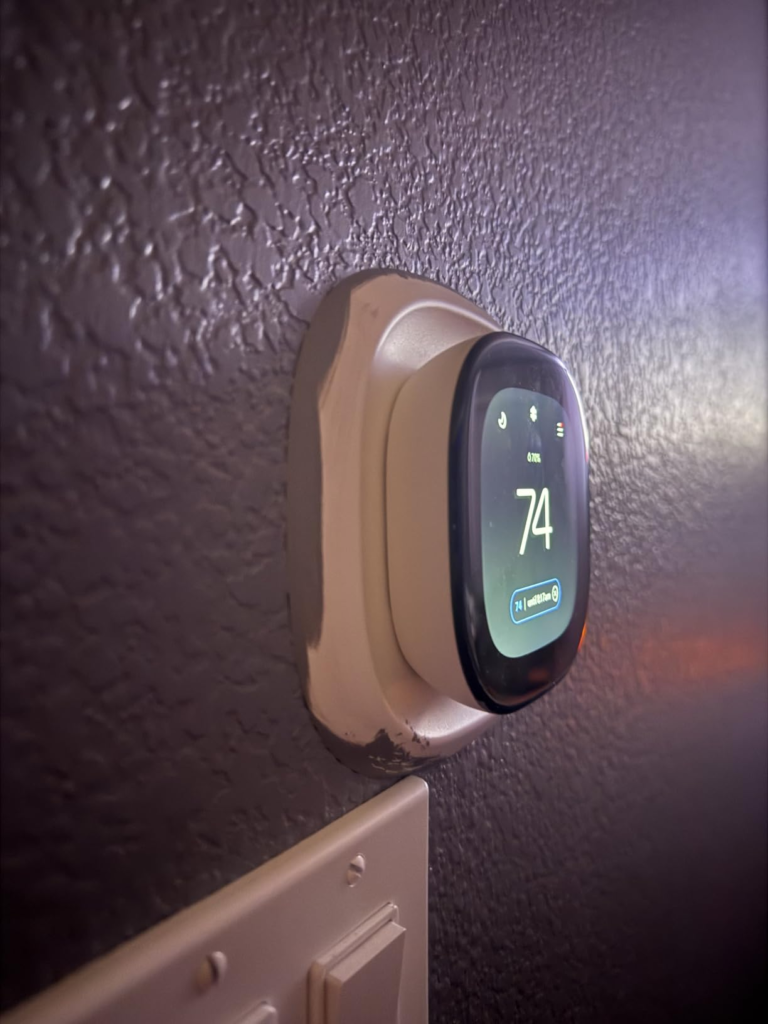
The ecobee Enhanced has a built-in occupancy sensor. It reads motion near the thermostat. It adjusts when it thinks no one is home. But here’s what the box doesn’t say loudly enough: the thermostat senses its own location, not your home.
If your thermostat is in the hallway, and you sleep in a bedroom two doors down with the door closed, the thermostat doesn’t know you’re there. It may have already cooled to an away setting before you wake up. The device is working correctly. Your comfort is not being addressed.
This irritation — waking up cold, returning to a house that hasn’t pre-cooled adequately, or watching a sensor “miss” your presence — is not random. It’s structural. And it’s the exact friction that most Enhanced buyers experience without being able to name it precisely.
The Hidden Mechanism Behind the Miss
The ecobee Enhanced runs on the eco+ software platform. This is legitimately sophisticated: it learns your schedule, detects occupancy, adjusts around time-of-use electricity rates, and uses geofencing from your phone.
The eco+ platform includes Schedule Assistant, Smart Home/Away detection, geofencing, and Community Energy Savings — all functional on the Enhanced model.
But the mechanism that actually determines whether those features reach you depends on one thing that’s not included in the box: a SmartSensor in the room you occupy most.
Without an external SmartSensor, the Enhanced is measuring temperature at a single point — wherever it’s mounted on your wall. Room sensors are what truly separate ecobee from most competitors — the “Follow Me” algorithm prioritizes comfort where people actually are, not just near the thermostat. In a two-story home, this difference matters enormously.
The Enhanced supports SmartSensors. It does not include them. You’re buying the engine. The steering is sold separately.
This is not a flaw. It’s a design decision. But buyers who don’t understand it set up the device, run it for a month with the default occupancy sensor, and wonder why it feels like a $200 programmable thermostat.
The Threshold Where the Outcome Quietly Breaks
There is a specific point below which the ecobee Enhanced behaves like an expensive convenience device rather than a genuine energy management tool. I call this the single-point sensing threshold.
| Condition | What the Enhanced Does | What You Experience |
|---|---|---|
| Standard home, thermostat in central hall | Reads hallway temp, adjusts for hallway occupancy | Comfortable near thermostat, inconsistent elsewhere |
| Single-floor open layout, frequent movement | Occupancy sensor functions correctly | Solid performance, genuine savings |
| Multi-room home, SmartSensor added | Temperature balanced across occupied rooms | Full system behavior activated |
| Multi-story home, no SmartSensor | Upper floor overheats, lower floor overcools | Frustration, not savings |
| Home with irregular schedules | eco+ Schedule Assistant adapts over time | Takes 2–3 weeks before adaptation stabilizes |
Testing also revealed a temperature accuracy gap — the device measured up to 3.5 degrees Fahrenheit off from actual room temperature. In most homes, this level of drift is absorbed by the system’s logic. In homes where precision matters — nurseries, home offices with precise comfort requirements, or rooms with poor insulation — that 3.5°F offset becomes the silent reason the house never quite feels right.
Why Most Buyers Misread This Too Early
The most common comparison buyers make before purchasing the ecobee Enhanced is ecobee vs. Nest.
This is the wrong comparison axis.
The Nest Learning Thermostat earns its reputation from learning without configuration. You live in your house normally for a week and it adapts. The appeal is zero intentional setup.
The ecobee Enhanced earns its performance from adaptive infrastructure. It learns faster when you tell it things. It saves more when you add sensors. It reaches its ceiling only when the full ecosystem is in place.
HVAC professionals who work with both platforms report consistently fewer field issues with ecobee than with Nest systems. That’s a signal about long-term reliability and HVAC integration depth — not about who wins the first-week experience.
Buyers who choose the Enhanced expecting passive, effortless optimization and skip the sensor setup will be underwhelmed. Buyers who engage with the platform — app, sensors, scheduling, eco+ settings — typically extract its full value within 30 days.
The mistake is not buying the wrong thermostat. The mistake is buying the right thermostat and treating it like the wrong one.
Who Is Actually Inside This Problem
This is the profile of the buyer for whom the ecobee Enhanced performs at its designed ceiling:
| Buyer Profile | Fit Level |
|---|---|
| Replacing a dumb or basic programmable thermostat | Strong fit |
| Single-story home or open-concept layout | Strong fit |
| Household with predictable occupancy patterns | Strong fit |
| Apple HomeKit, Alexa, or Google Assistant ecosystem user | Strong fit |
| Someone willing to add 1–2 SmartSensors within 60 days | Strong fit |
| Renter with permission to change thermostat wiring | Check compatibility first |
| Multi-story home, no plans to add sensors | Marginal fit |
| Highly variable schedule, rarely home consistently | Marginal fit |
| Already owns ecobee and wants to upgrade from ecobee3 | Strong fit |
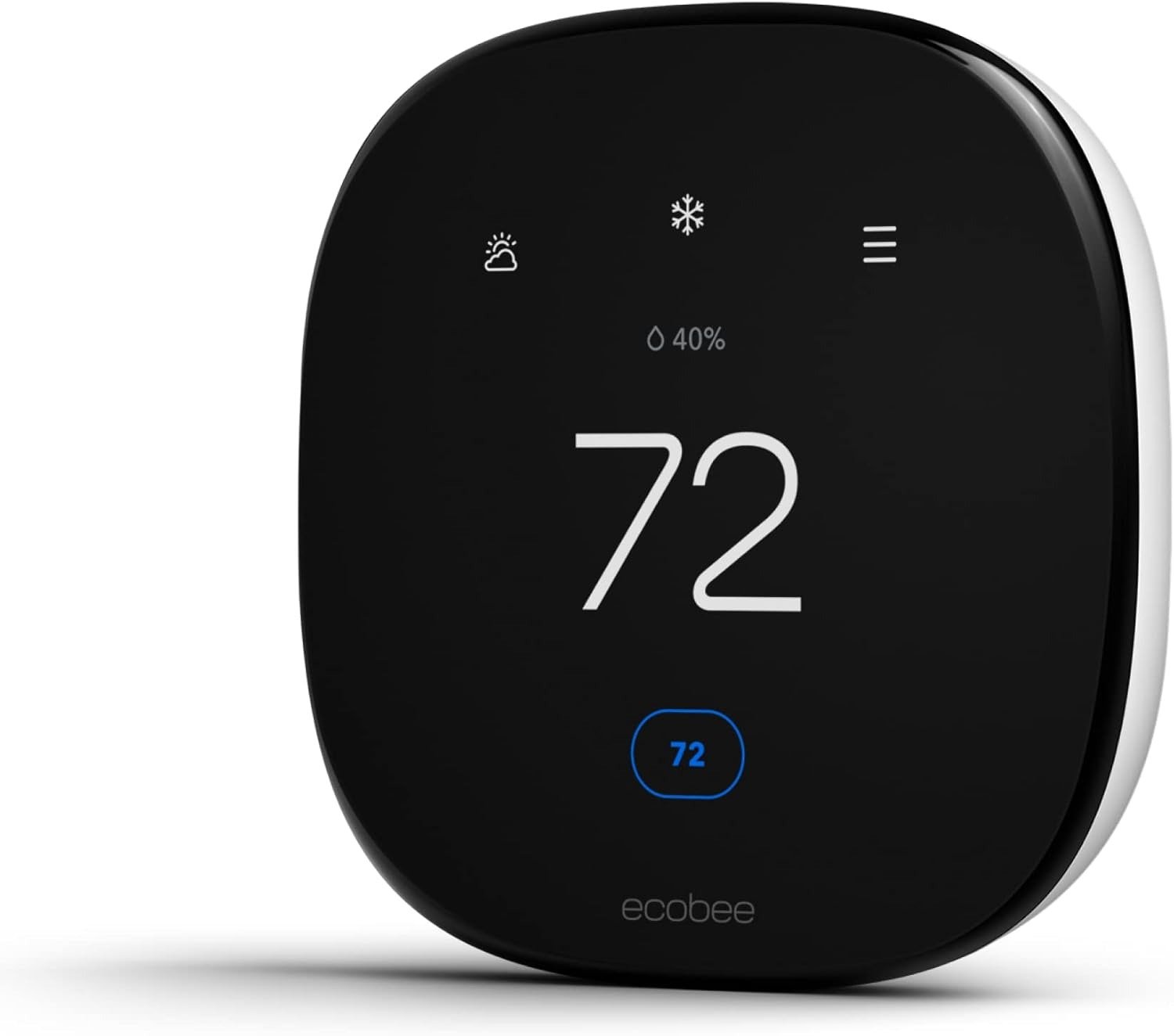
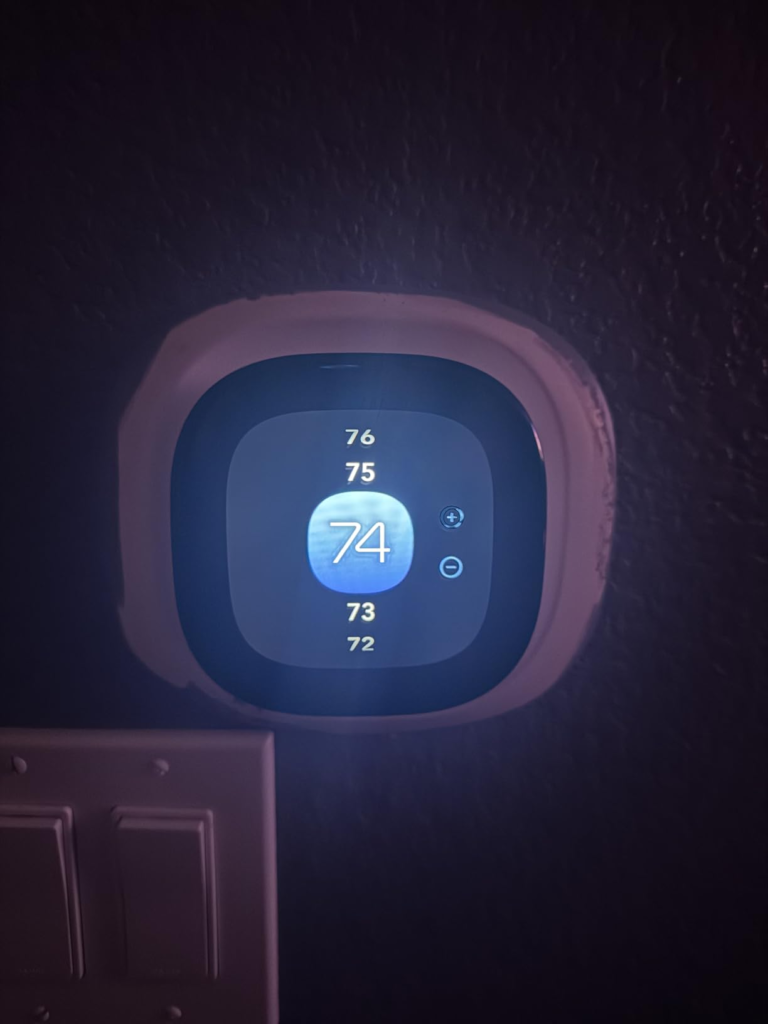
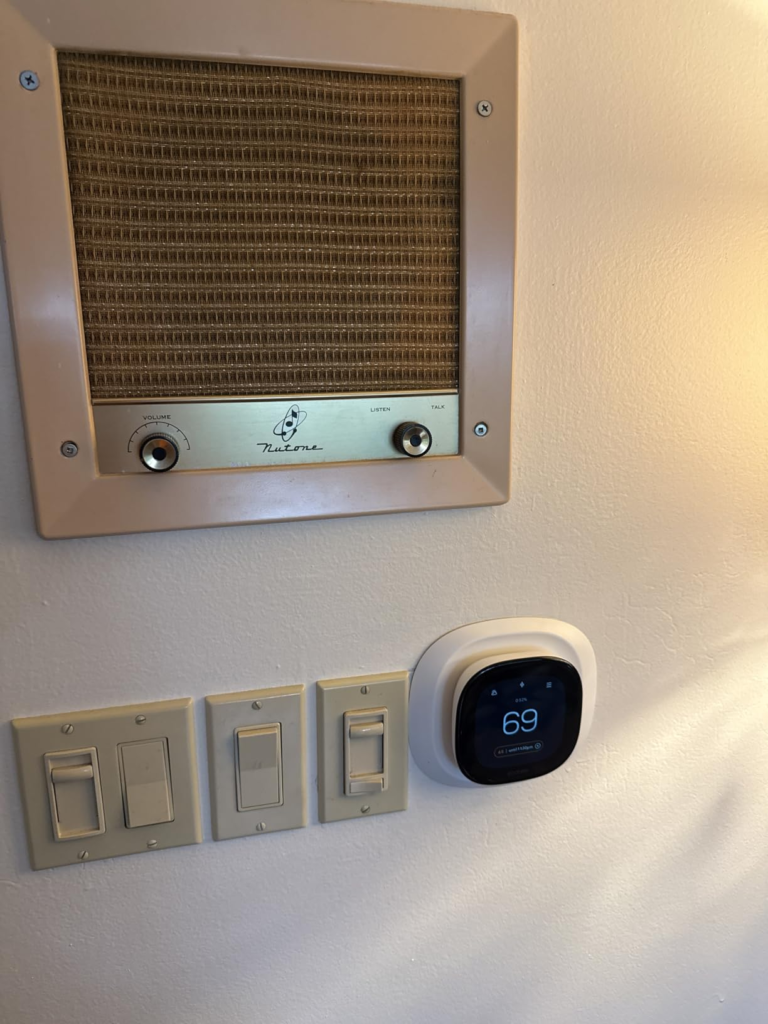
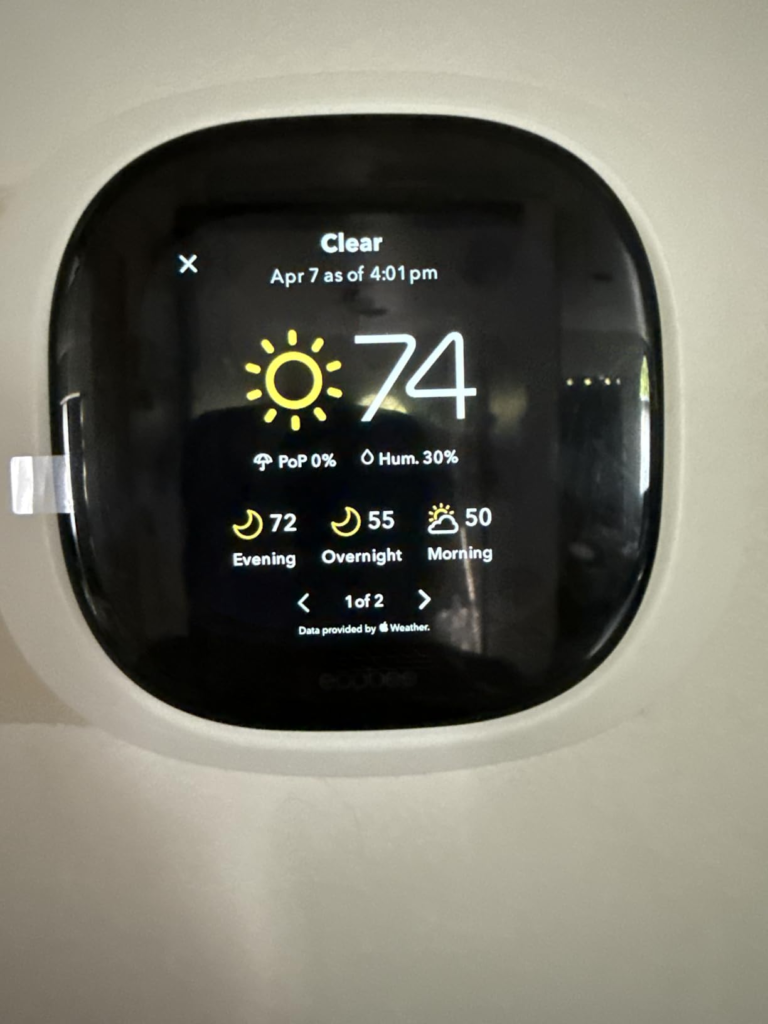
The 3.5-inch color touchscreen is crisp and responsive. The build quality feels solid and durable, and installation is straightforward — the package includes clear instructions, a built-in level, and press-button wire ports. No additional tools required.
The physical experience of this device is genuinely good. It’s not a placeholder thermostat waiting to be replaced. It’s designed to live on your wall for over a decade.
Where Wrong-Fit Begins
Before discussing who should buy, it’s worth being specific about who shouldn’t — because the wrong-fit profile is actually predictable.
You are outside this product’s effective range if:
The Enhanced only supports 2-stage heat pumps and 1 stage of auxiliary heat, and only supports HVAC accessories connected by one wire. If your system uses a 3-stage setup, complex dual-fuel configurations, or variable refrigerant flow (mini-split / VRF) systems, the Enhanced will require additional hardware or may not integrate at all without professional configuration.
You are also wrong-fit if your primary motivation is having the most capable device right now, out of the box, without adding anything. That buyer is better served by the ecobee Smart Thermostat Premium, which includes a SmartSensor in the box and adds built-in air quality monitoring.
The Premium model has a zinc body rather than plastic, a notably larger display, and includes a remote sensor — the Enhanced uses plastic and sells sensors separately.
The $40–$60 gap between the two (current pricing: Enhanced ~$169–$200, Premium ~$210–$250) closes quickly once you price a single SmartSensor (~$40–$50 sold separately). If you know you’ll add sensors, the Premium often becomes the more logical entry point economically.
And if you have no intention of adding sensors, no interest in scheduling, and just want a set-it-and-forget-it device — the ecobee3 Lite at $149 handles that use case without the hardware overhead.
The One Situation Where This Product Becomes Logical
After everything above, here is the precise scenario where the ecobee Smart Thermostat Enhanced is the cleanest, most defensible purchase:
You have a standard ducted HVAC system. You live in a home with one or two floors. You’re replacing a basic programmable thermostat. You already use or plan to use Alexa, Apple HomeKit, or Google Assistant. And you’re willing to spend one Saturday in the first month adding a SmartSensor to your bedroom or home office.
That’s the window. Inside that window, this device earns its price in the first two to three billing cycles.
Ecobee’s 26% savings claim is based on an internal analysis from April 2021 comparing ecobee customers against a constant 72°F hold, representing potential savings of up to $284 per year based on an average annual HVAC spend of $1,091. Annual savings vary by energy use and location.
Real-world outcomes from independent users tend to land between 15–23% depending on how actively the eco+ system is used. One homeowner comparing utility bills across identical seasons reported approximately 18% savings against a previous schedule-based thermostat. That’s a realistic ceiling for someone engaged with the platform but not obsessing over it.
At $169–$200, with a payback window of roughly 12–18 months under average energy costs, this is not a speculative purchase. The math holds for the right household.
What It Solves, What It Reduces, and What It Still Leaves to You
Being precise about this matters more than being enthusiastic.
| Category | What the Enhanced Does |
|---|---|
| Solves | Heating and cooling an empty home — the single largest HVAC waste driver |
| Solves | Manual schedule management — eco+ adapts so you don’t have to |
| Solves | Remote access and voice control — fully functional across all major platforms |
| Reduces | HVAC runtime through occupancy-based logic |
| Reduces | Temperature overshoot through pre-heating/pre-cooling |
| Reduces | Energy during peak-rate hours with time-of-use optimization |
| Leaves to you | Multi-room temperature balance — requires SmartSensor purchase |
| Leaves to you | Air quality awareness — not monitored on this model |
| Leaves to you | Initial schedule setup — takes 15–30 minutes and is not optional |
| Leaves to you | Compatibility verification before purchase |
When unit or support issues arise, ecobee’s support responsiveness has drawn criticism from some users — reports of setup loops, difficulty reaching live agents, and cases of support teams going silent mid-resolution exist across Home Depot and Trustpilot reviews. This is worth naming honestly. The hardware is reliable for most users. Support, when needed, has been inconsistent.
If your HVAC system is older, non-standard, or was recently installed by a third-party contractor, spend 10 minutes with ecobee’s compatibility checker before ordering. The regret of returning a thermostat is avoidable.
Final Compression
The ecobee Smart Thermostat Enhanced is not the wrong choice for most homes. It’s the wrong configuration for the specific buyer who expects passive magic from a single-sensor device.
If your home is standard ducted, your schedule is moderately predictable, and you’re prepared to add one sensor and spend 20 minutes in the app — this thermostat will deliver real savings, real comfort improvement, and a platform that continues improving via software updates.
If you want the full performance envelope without the sensor purchase or the setup commitment, move directly to the Premium. If you want the simplest possible smart thermostat with no configuration expectations, the Essential handles that without friction.
The Enhanced sits precisely in the middle — which means it’s the best value in the lineup for the buyer who understands where the middle actually is.
If your home fits the profile above and your HVAC is compatible, this is where the decision stops being complicated.
Frequently Asked Questions
| Question | Answer |
|---|---|
| Does the ecobee Smart Thermostat Enhanced save energy if I don’t add SmartSensors? | Yes — the built-in occupancy sensor and eco+ platform still function without additional sensors. The geofencing and schedule optimization work independently. However, the savings are meaningfully higher once a SmartSensor is added to the room where you spend the most time, because the system can then prioritize comfort in the right location rather than at the thermostat’s fixed wall position. |
| What is the real-world energy savings — not the “up to 26%” marketing figure? | Independent user comparisons consistently report 15–23% savings over a previous schedule-based thermostat, with the higher end requiring active engagement with eco+ settings and at least one SmartSensor. The 26% figure is ecobee’s internal benchmark measured against a constant 72°F hold — a worst-case baseline that most households don’t actually use. |
| What’s the honest difference between the Enhanced and the Premium? | The energy savings engine is identical on both models. The Premium adds a built-in air quality monitor, a Siri/Alexa speaker, a zinc body instead of plastic, a larger display, and an included SmartSensor. If you plan to add a sensor anyway, the Premium’s price premium often becomes negligible. If you don’t care about air quality monitoring or the built-in speaker, the Enhanced delivers the same thermal management at lower cost. |
| Is the ecobee Enhanced compatible with my older HVAC system? | Compatible with approximately 90% of North American ducted systems. Key limitations: it only supports 2-stage heat pumps and 1 stage of auxiliary heat, and it does not natively support VRF/mini-split systems without additional hardware adapters. Always run the ecobee Compatibility Checker before purchasing — it takes under two minutes and prevents an unnecessary return. |
| Can I install it myself or do I need an HVAC professional? | Most homeowners with basic comfort around home wiring install this successfully in under 30 minutes. The app provides step-by-step photo guidance, the wire ports are press-button (no screwdriver required), and a built-in level is in the base. If your system is non-standard or you’re unsure about your wiring, ecobee recommends a certified installer — this is not a situation where guessing is worth it. |
| What if I already own an older ecobee — is this worth upgrading to? | If you’re on an ecobee3 or ecobee3 Lite, the Enhanced offers radar-based occupancy sensing, a better display, improved eco+ features, and a 3-year warranty. The upgrade is legitimate. If you’re already on a previous Enhanced or SmartThermostat, the improvement is marginal — your existing device is receiving the same software updates. |
Transparency Note:
This analysis is built on aggregated real-world experience.
It extracts what repeatedly holds, what breaks, and what users uncover only after living with the system—then shapes it into a clear model you can use immediately.
Think of it as structured experience, refined and presented so you don’t have to learn it the hard way.
“A quick note: Don’t believe the star ratings, but trust personal experience. This article is a compilation of collected experiences”