The Floor Can Look Clean and Still Wear You Down — Why the Dreame X50 Ultra Starts Making Sense Right Where Most Robot Vacuums Quietly Fail
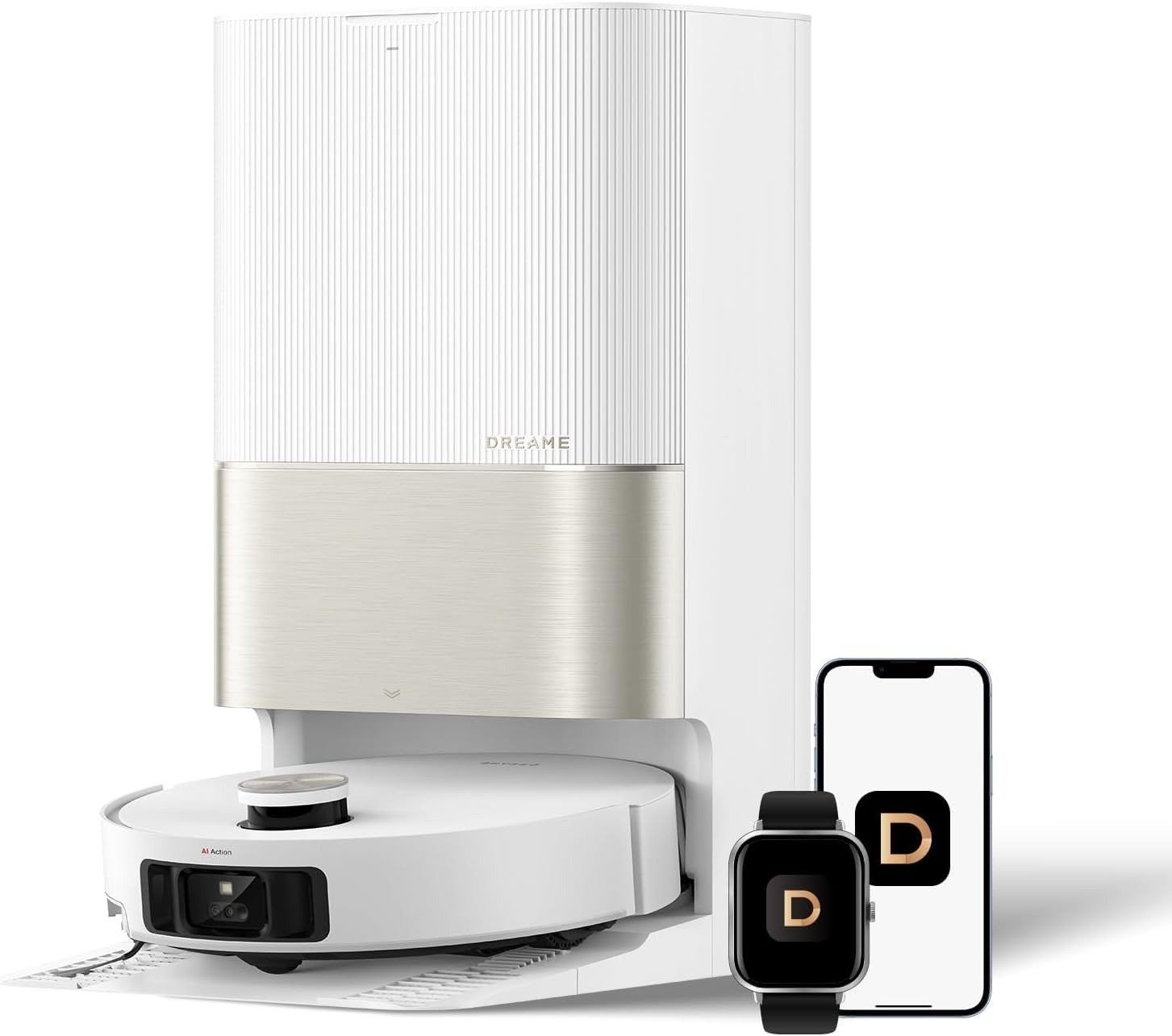
DREAM X50 ULTRA
The Result Looks Fine. The Problem Isn’t.
A lot of homes do not have a dirt problem. They have a friction problem.
The floor looks passable from the doorway. Then your sock catches grit near the baseboard. Hair gathers where the rug ends. A low console turns into a permanent blind spot. The robot you bought still runs, still hums, still draws tidy little lines on the map, but part of the job stays unfinished. Not broken. Worse. Almost right.
That “almost” is where most people lose money.
I kept coming back to the same pattern while analyzing test data, reviewer notes, and owner feedback: people do not replace weak robot vacuums because they stop moving. They replace them because they start creating a second job — checking thresholds, pulling hair off brushes, rescuing them from rug edges, wiping corners by hand, and wondering why a machine with a premium spec sheet still leaves low-grade irritation behind. The Dreame X50 Ultra is built precisely around that zone of failure. Its defining features are not random luxury ornaments. They target the places where routine breaks: obstacle crossing, low-clearance reach, hair handling, dock automation, and edge coverage.
This is why the product is expensive. And this is also why the wrong buyer will overpay.
What You’re Actually Feeling but Not Naming
Most people describe the wrong symptom.
They say:
“I need stronger suction.”
“I need a smarter map.”
“I need something more premium.”
Usually, that is not the real issue.
What they are actually feeling is a three-part drag:
| What you notice | What is really happening | Why it matters |
|---|---|---|
| The robot runs often, but the house never feels fully reset | Coverage is incomplete in the exact places your eye returns to | You stop trusting the routine |
| Hair and dust come back too quickly | Brush design or edge reach is losing the daily war | The machine creates maintenance instead of removing it |
| You still intervene manually | Thresholds, carpets, furniture height, or mop behavior are breaking automation | The promise of “hands-free” collapses |
That is the hidden tax. Not dirt alone. Not power alone. Decision fatigue. You start living around the machine instead of the machine dissolving into the background.
The X50 Ultra becomes interesting the moment your cleaning problem stops being “Can a robot pick things up?” and becomes “Can it stop asking for my supervision?” Its official feature set leans hard into that question: retractable legs for taller obstacles, a retracting navigation tower that drops the body to about 89 mm for low furniture, a DuoBrush anti-tangle system, edge-reaching brush and mop extensions, and a dock that empties, washes, dries, and refills instead of handing half the routine back to you.
The Hidden Mechanism Behind the Miss
Here is the part buyers often miss: robot vacuum disappointment rarely comes from one catastrophic weakness. It comes from misaligned thresholds.
A machine can have huge suction numbers and still underperform in lived reality if the brush system tangles, if the body cannot get under furniture, if the dock reduces nothing, or if the robot hesitates around obstacles and leaves slim uncleaned borders. That is why the X50 Ultra is more interesting in behavior than in marketing.
Its mechanism stack is unusually specific:
| Mechanism | What it is supposed to solve | What outside testing found |
|---|---|---|
| ProLeap / retractable legs | Door tracks, thresholds, awkward transitions | Dreame says it can clear obstacles up to 2.36 inches / 6 cm under certain conditions, with a maximum single vertical obstacle of 4.2 cm. |
| VersaLift / retractable sensor tower | Low-clearance furniture access | Dreame says the robot can drop to 89 mm. RTINGS also highlighted its ability to get under furniture that many LiDAR bots cannot. |
| DuoBrush anti-tangle design | Hair wrap and pet-hair frustration | Vacuum Wars found 0% tangling in its 7-inch hair test and 98% pet-hair pickup on carpet, both unusually strong results. |
| Edge-reaching brush and mop | Corners and wall lines that usually stay dirty | TechRadar specifically praised its edge cleaning and dusty corner performance. |
| Full-service dock | The return of daily manual chores | Vacuum Wars found the dock’s real strength is automatic emptying, pad washing, drying, and onboard water refilling; it also notes 80°C hot-water pad washing. |
That combination matters because it attacks not one cleaning event, but the repetition curve. Day one is easy for many flagships. Week eight is where truth starts showing.
Could you say, at first glance, that this is all just more gadgetry? Yes. That would be the lazy reading.
The harder truth is that robot vacuums fail in layers. The X50 Ultra is one of the few that seems designed by someone who understands where the layers stack.
The Threshold Where the Outcome Quietly Breaks
This article sits on one governing model only: Threshold.
Not price threshold. Not suction threshold. Intervention threshold.
That is the point where a robot vacuum stops feeling like automation and starts feeling like a needy appliance.
For most homes, that threshold appears when three conditions pile up:
- you have mixed flooring and real transitions
- you have hair, fur, or long strands
- you have furniture the robot usually cannot meaningfully clean under
Below that threshold, cheaper machines can feel “good enough.” Above it, they start fraying.
The X50 Ultra was not especially dazzling in every single lab metric. Vacuum Wars found its suction and airflow only around average on the bench, and its dried-on stain score, while improved over older Dreame models, still trailed some top rivals in mopping torture tests. In a direct comparison, Roborock’s Saros 10R posted a stronger dried-on stain result than the X50 Ultra.
That sounds like bad news until you ask the more important question: where does your routine actually break?
If your breakpoint is flour-like powder buried in certain carpets or severe stain-lifting expectations, the X50 Ultra is not untouchable. If your breakpoint is daily hair control, obstacle navigation, under-furniture reach, edge performance, and reducing upkeep, its logic becomes much stronger. RTINGS called its object avoidance excellent, and Vacuum Wars scored it well above average in obstacle handling and navigation efficiency.
That is the threshold. Not “best on everything.” Best where your patience usually snaps.
Why Most Buyers Misread This Too Early
They shop the wrong way.
They stare at suction numbers the way people stare at horsepower on a car they will only drive in traffic. They compare feature lists like trading cards. They see “20,000Pa” and assume the decision is settled. Dreame itself markets the X50 Ultra around 20,000Pa suction, a 6,400mAh battery, up to 220 minutes in Quiet Mode, and five cleaning modes, but those claims only matter once they survive contact with a real home.
This is where most early judgments go wrong:
- Feature-led judgment: a bigger number gets treated like a better life
- Early comparison trap: people compare against the easiest debris case, not the chores they resent most
- Surface cleanliness illusion: the room looks fine, but the annoying parts remain untouched
I would not buy this machine because a spec sheet shouted at me. I would buy it because the evidence points to an unusually complete attack on repeated domestic friction: strong pet-hair pickup, very low brush tangling, excellent obstacle handling, unusually good under-furniture access, and a dock that does more of the dirty work than most owners actually realize before purchase.
That is a different argument. A better one.
Who Is Actually Inside This Problem
The X50 Ultra makes sense for a very specific household profile.
| You are inside this problem if… | Why the X50 Ultra fits |
|---|---|
| You have pets, shedding, or long hair | The DuoBrush design posted 0% tangling in Vacuum Wars’ 7-inch hair test and excellent carpet pet-hair pickup. |
| Your home has thresholds, tracks, or awkward transitions | Its retractable leg system is one of the product’s defining advantages. |
| You have low sofas, cabinets, or beds | The retracting tower lowers the body to roughly 89 mm, which both Dreame and RTINGS emphasize as a real differentiator. |
| You are tired of cleaning the cleaner | The dock empties dust, washes pads, dries them, and refills water; TechRadar also found it notably low-maintenance. |
| You care more about daily reset than lab theatrics | Its real strength is consistency across navigation, edge work, hair handling, and upkeep rather than domination in every isolated metric. |
This is not a robot for someone who merely wants to “try one.” It is for the person whose current setup has already taught them where automation fails.
Where Wrong-Fit Begins
This is where the glamour needs to stop.
The X50 Ultra is the wrong fit if your profile looks like this:
- you want flagship performance at a midrange price
- your biggest need is brutal dried-on stain lifting above all else
- you have very large spaces and hate recharge interruptions
- your home is cluttered with tiny floor hazards, tassels, cords, pet messes, or rug edges that punish even advanced navigation
That last point matters. RTINGS says it can get caught in tasseled rugs. TechRadar noted occasional struggles with smaller obstacles, pet waste, and some rug edges. Even owners who like the machine still mention settings and floor-specific tuning as part of getting the best behavior.
There is also the battery reality. Dreame advertises up to 220 minutes in Quiet Mode, but TechRadar’s in-home use averaged around 90 minutes, which is not shocking for a feature-heavy flagship running outside ideal lab conditions.
So no, this is not a miracle machine. It is a highly targeted one.
That distinction protects buyers from regret.
The One Situation Where This Product Becomes Logical
There is one situation where the Dreame X50 Ultra stops feeling extravagant and starts feeling cleanly rational:
when your home has already crossed the intervention threshold.
That means the old pattern is familiar:
You notice the missed strip near the wall.
You pull hair off the brush again.
You watch the robot hesitate at a transition it should have handled months ago.
You move a chair. You rescue it from a rug edge. You wipe the corner yourself.
Then you realize you did not buy automation. You bought choreography.
That is the moment this machine becomes logical.
Because the X50 Ultra is not strongest as a generic “premium robot vacuum.” It is strongest as a system for people who are done babysitting the category. Its standout case is the home where thresholds, hair, low furniture, and upkeep all collide. In that lane, the evidence is unusually coherent: RTINGS praises its obstacle handling and low-clearance reach; Vacuum Wars reports excellent hair control, strong carpet cleaning, good navigation, and above-average overall mopping; TechRadar highlights superior edge cleaning and low-maintenance operation.
That is the authorization point. Not hype. Fit.
What It Solves, What It Reduces, and What It Still Leaves to You
Here is the cleanest way I can frame it.
| Category | What it solves well | What it reduces | What it still leaves to you |
|---|---|---|---|
| Hair | Brush tangling and pet-hair pickup are major strengths in third-party testing | Manual detangling and repeat passes | Occasional side-brush maintenance over time |
| Navigation | Excellent obstacle avoidance and better-than-average route efficiency | Rescue missions and random collisions | Some caution zones: tassels, tiny clutter, messy floors |
| Furniture reach | Low profile with retracted tower improves access | Blind spots under lower furniture | Extremely low or awkward pieces may still defeat it |
| Thresholds | One of the category’s standout advantages | Failed room-to-room transitions | Real-world success still depends on shape, spacing, and floor type |
| Mopping upkeep | Dock handles emptying, washing, drying, and refilling | Odor, pad scrubbing, daily dock chores | Not the class leader for every dried-on stain scenario |
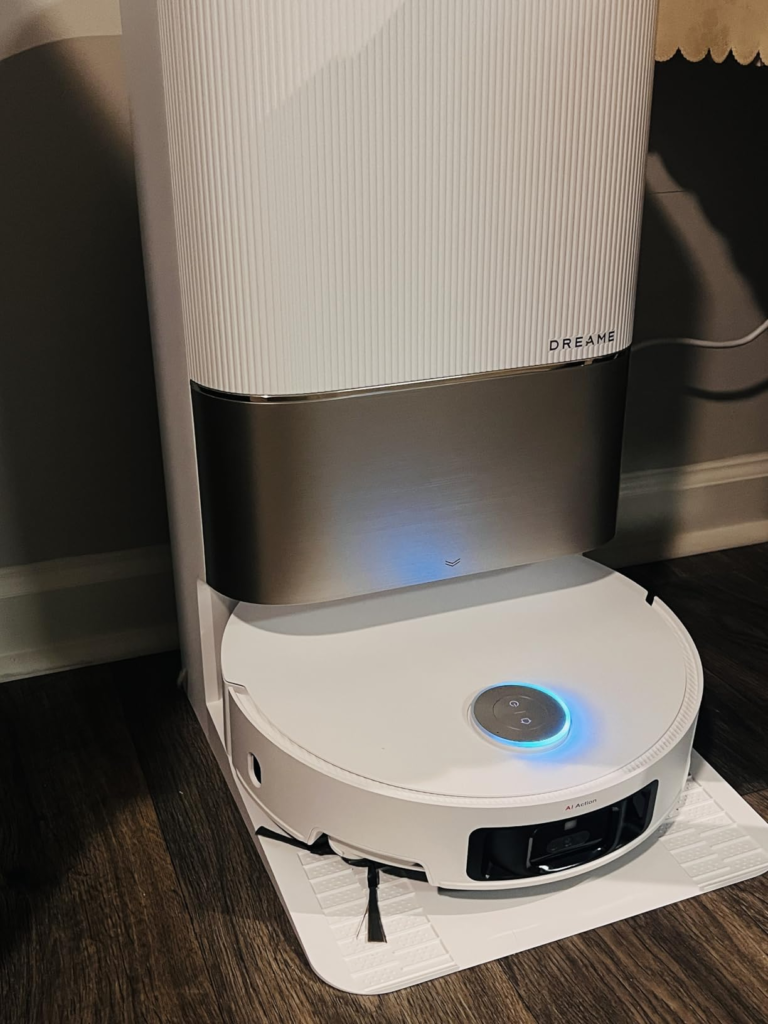
| Aesthetic / room feel | Turns the dock into a fixed utility object instead of a tool you drag around | Visual clutter from loose cleaning gear | You still need to place the dock deliberately |
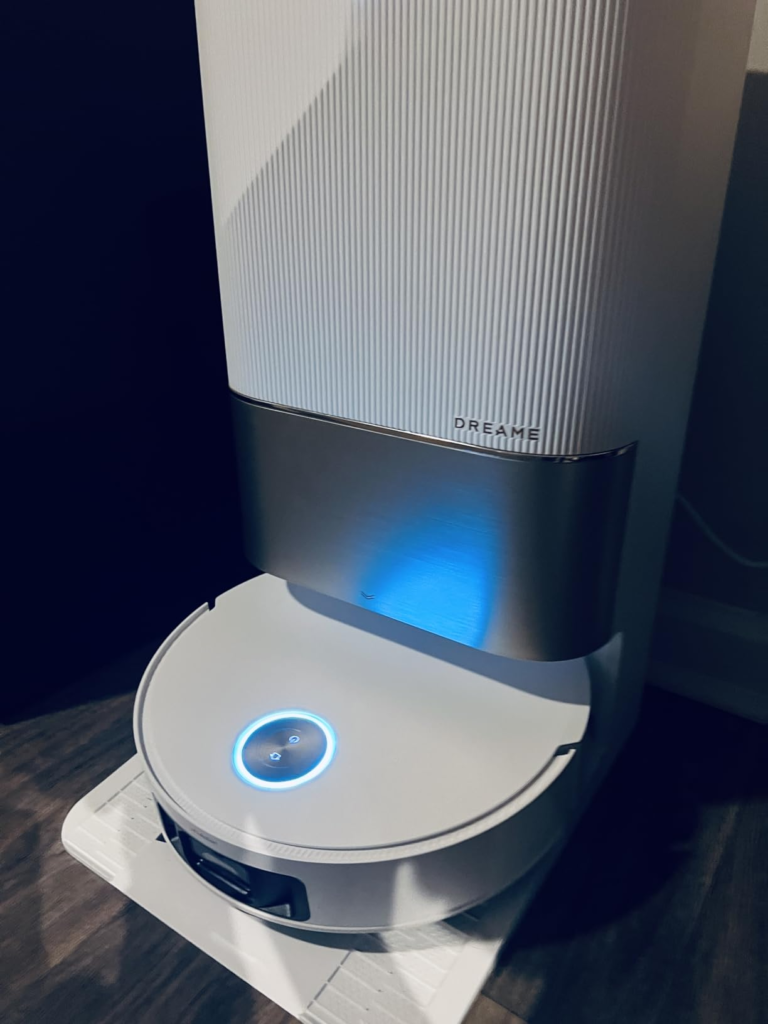
On that last point, placement changes how the machine feels in the room. I would not hide this dock in a cramped corner like an apology. I would place it on a hard, level edge of the room where the robot can launch cleanly and the dock reads like a designed appliance rather than a plastic afterthought — beside cabinetry, at the end of a kitchen run, or along a wall where the brushed, upright form feels intentional. Do that, and the product changes the atmosphere in a subtle way: less “gadget parked on the floor,” more “quiet utility station.” That is not marketing copy. It is interior logic.
Final Compression
Here is the shortest honest version.
The Dreame X50 Ultra is not the robot vacuum I would recommend to everybody. It is the one I would point to when a home has moved past casual mess and into recurring friction.
If your problem is light debris in a simple apartment, this is overkill.
If your problem is the slow irritation of hair wrap, stubborn room transitions, low furniture dead zones, corner residue, and a machine that still needs too much of you, then the decision is no longer vague. The X50 Ultra’s value is not that it wins every isolated test. It is that it removes enough points of failure at once that the routine finally starts feeling closed.
That is the real luxury here: not seeing the robot.
Not thinking about the robot.
Not finishing what the robot should have finished.
Transparency Note:
This analysis is built on aggregated real-world experience.
It extracts what repeatedly holds, what breaks, and what users uncover only after living with the system—then shapes it into a clear model you can use immediately.
Think of it as structured experience, refined and presented so you don’t have to learn it the hard way.
“A quick note: Don’t believe the star ratings, but trust personal experience. This article is a compilation of collected experiences”