OXO Brew Conical Burr Coffee Grinder: YOUR CUP IMPROVED. BUT NOT FOR THE REASON YOU THINK.
The Result Looks Fine. The Problem Isn’t.
You switched from a blade grinder. The coffee tasted better immediately. The grounds looked uniform, the brew smelled cleaner, the bitterness softened. You assumed the grinder was performing.
It was. Just not in the way the description implied.
The OXO Brew Conical Burr Coffee Grinder doesn’t fail at grinding. It fails at being understood. Most buyers evaluate it through the wrong lens — espresso precision, upgrade ceiling, feature count — and either dismiss it before they should or feel a vague disappointment they can’t locate afterward.
Neither response is accurate. And neither comes from the grinder’s actual weakness.
The problem is that this machine has a very specific operating territory. Inside that territory, it’s one of the most reliable, repeatable, and acoustically honest grinders at its price. Outside that territory, no amount of dial-adjusting rescues the result. And the package doesn’t tell you where the line is.
This article does.
What You’re Actually Feeling but Not Naming
The dissatisfaction isn’t consistent. Some mornings the cup is excellent. Others it’s flat — same beans, same dose, same dial position.
The irritation is subtle enough that most people blame the beans. A few blame their technique. Almost nobody identifies the real source: they crossed a setting boundary the grinder wasn’t built to handle cleanly, or they’re asking the machine to perform a brew-method role it was never designed to own.
Here’s what the friction actually feels like in daily use:
| Symptom | What You Blame | What’s Actually Happening |
|---|---|---|
| Flat extraction some mornings | Stale beans | Grind setting drifted toward espresso range |
| Grounds clinging to container | Cheap design | Normal static behavior at certain grind fineness levels |
| Bitterness at fine settings | Over-extraction technique | Particle inconsistency below the machine’s reliable threshold |
| “Good enough” plateau | Personal taste limits | You’ve reached the top of this grinder’s filter-coffee ceiling |
| Retention of ~3g inside machine | Mechanical defect | Expected retention for this class of grinder |
None of these are catastrophic. All of them are real. And each one maps to a specific condition, not a product flaw.
The Hidden Mechanism Behind the Miss
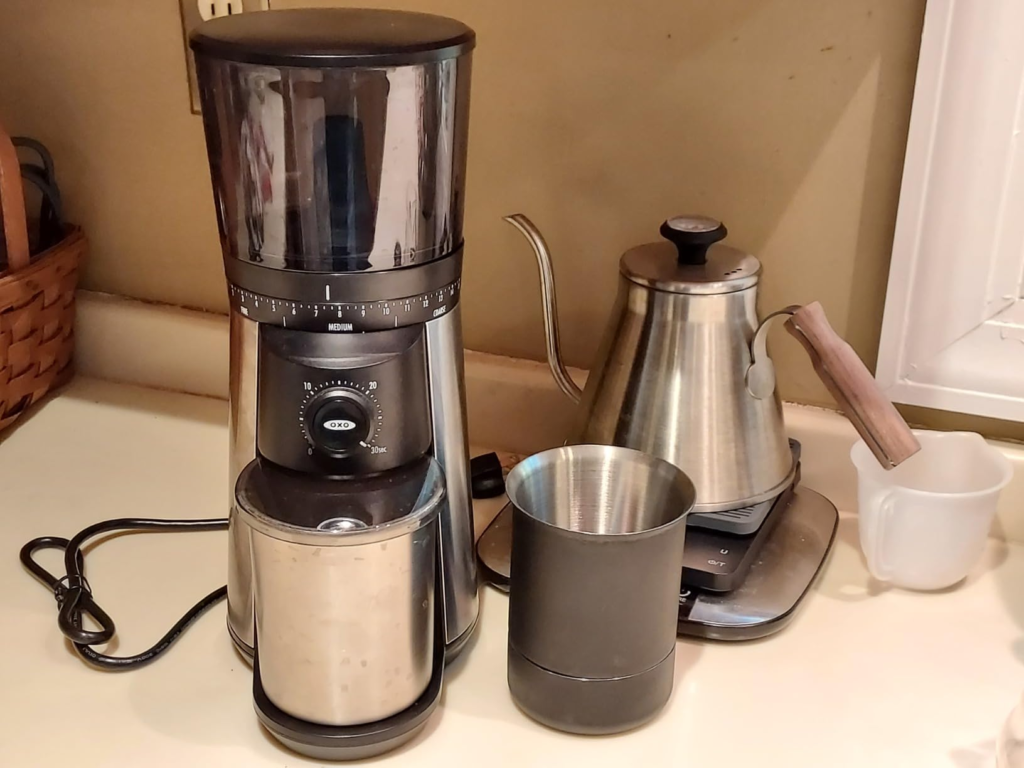
The OXO Brew uses 40mm stainless steel conical burrs — the same diameter used in Baratza’s Encore, which has held a Wirecutter top recommendation since 2017. Conical burrs create uniform particle sizes by crushing beans between a stationary outer ring and a rotating inner cone. The geometry is efficient. The result is predictable.
But predictability has an operating window.
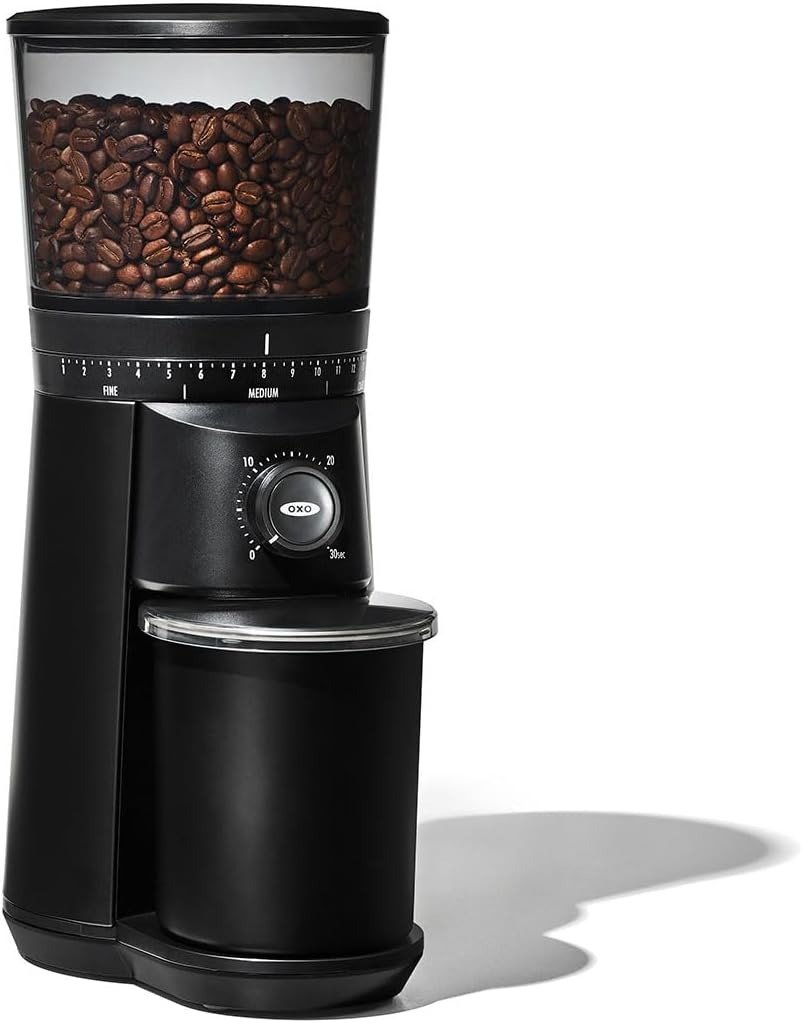
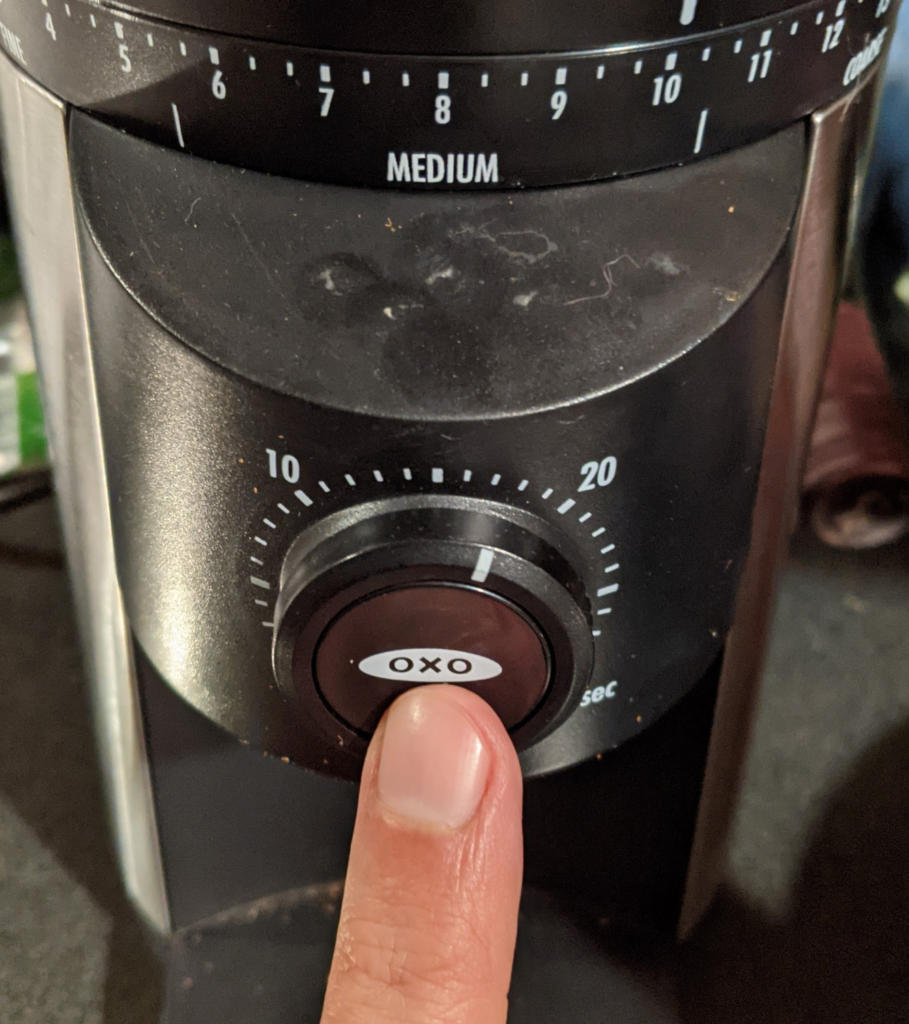
The 15 grind settings on the OXO Brew are not distributed evenly across the grind spectrum. Settings 6 through 8 deliver the most particle consistency — a range that covers drip machines, Hario V60, Chemex, Kalita Wave, and AeroPress at longer brew times. Coarser settings (10–15) handle French press and cold brew cleanly. Finer settings (1–5) claim espresso suitability. They don’t deliver it. Not in the way a pressurized, unpressurized, or naked portafilter demands.
The mechanism behind inconsistency at fine settings: at sub-threshold burr distances, the 40mm conical geometry produces a higher rate of fines — micro-particles that extract faster than the rest of the bed. The result is a cup that tastes simultaneously over-extracted (bitter fines) and under-extracted (coarser particles that didn’t finish). You don’t taste “bad coffee.” You taste confused coffee. A cup with no center.
This only happens below setting 5. Above setting 5, the burr geometry is working as designed.
| Grind Setting | Target Method | Grinder Reliability | Notes |
|---|---|---|---|
| 1–4 | Espresso (claimed) | Low | Fines spike; inconsistent for naked portafilter |
| 5 | Moka pot / AeroPress fine | Acceptable | Works with pressurized systems; edge case |
| 6–8 | Pour-over / V60 / Drip | High | OXO’s genuine operating sweet spot |
| 9–10 | AeroPress coarse / Chemex | High | Reliable, uniform output |
| 11–13 | French press | High | Performs well; some fines at lower end |
| 14–15 | Cold brew | High | Consistent coarse output; ideal range |
The Threshold Where the Outcome Quietly Breaks
Call it the Espresso Illusion Threshold: the point at which the dial suggests capability the burr geometry cannot support.
It sits at setting 4 on the OXO Brew. Cross it toward fine, and you’re no longer in this machine’s domain. The number is printed on the dial. The consequence isn’t.
This threshold matters because most buyers discover it through failure, not instruction. They buy the grinder, brew excellent drip coffee for weeks, then decide to try espresso with the same machine. The shot pulls wrong. The grinder gets blamed entirely. The real issue: they moved from a method the OXO owns (filter) to a method it doesn’t (true espresso extraction).
The grinder didn’t change. The task did.
A secondary threshold exists around static management. The stainless steel grounds container significantly reduces electrostatic cling compared to plastic-bodied competitors. But at settings below 6, the particle size decreases and surface area increases — static returns even with the metal container. Users who expect zero static at fine settings will be surprised. Users who remain in the medium-to-coarse range will rarely see it.
The threshold isn’t a defect. It’s a boundary. And every machine has one. The OXO’s is better-positioned than most at its price point. It’s just not labeled.
Why Most Buyers Misread This Too Early
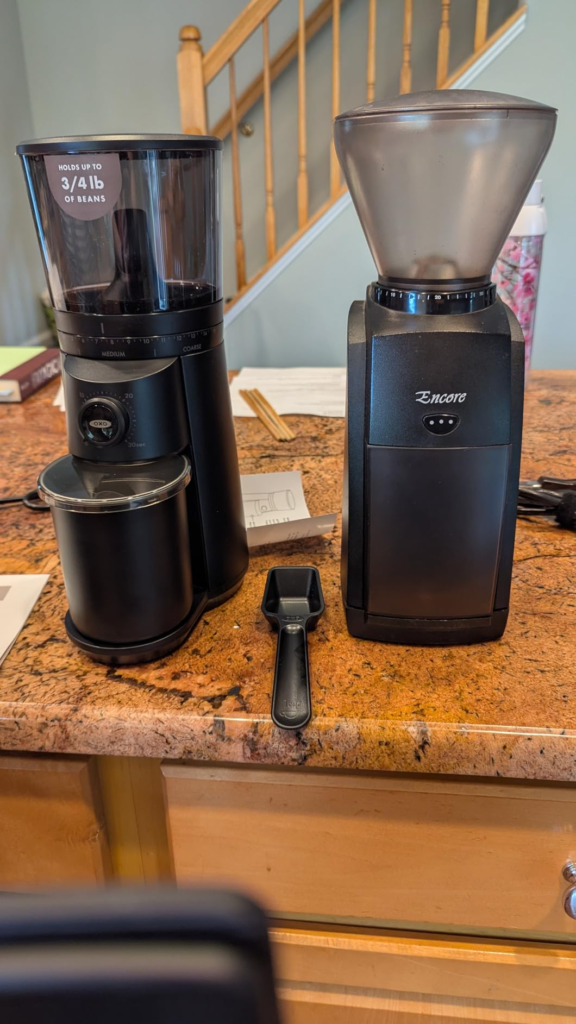
The early evaluation mistake is comparison-by-specification. Both the OXO Brew and the Baratza Encore carry 40mm conical steel burrs. Both offer settings across a similar range. Both hit comparable price points. The specs look equivalent on paper.
They aren’t equivalent in ownership experience.
| Dimension | OXO Brew Conical Burr | Baratza Encore |
|---|---|---|
| Burr size | 40mm conical steel | 40mm conical steel |
| Grind settings | 15 + micro-adjustments | 40 stepped |
| Operation | Timer dial (up to 30s) | Manual pulse button |
| Espresso suitability | Low (no fine micro-control) | Low (unless ESP version) |
| Repairability | Good (OXO support) | Exceptional (every part purchasable) |
| Static behavior | Low-to-moderate | Lower (quieter motor) |
| Grind retention | ~3g | ~1–2g |
| Best use case | Drip / pour-over / filter | Drip / pour-over / filter |
| Noise profile | Moderate-louder | Quieter |
| Learning curve | Near-zero | Minimal |
The OXO’s timer is genuinely better for autopilot mornings. You set the seconds once. You push the dial. The machine stops itself. The Encore’s pulse button gives more tactile control but demands more attention. Neither is superior in absolute terms — they serve different habits.
Where buyers misread the OXO: they see the timer feature as “smart” and assume the rest of the machine is proportionally advanced. It isn’t. The timer is a convenience layer over a well-engineered but fundamentally entry-level burr system. Convenience and precision are not the same thing. The OXO delivers the first reliably. The second only up to its threshold.
Who Is Actually Inside This Problem
This grinder exists for a specific person at a specific stage.
You are inside this problem if:
- You are grinding pre-ground coffee or using a blade grinder and the result consistently disappoints.
- You brew primarily drip coffee, pour-over, French press, AeroPress (medium-coarse), or cold brew.
- Your morning routine doesn’t include calibration, dial-tinkering, or dose-weighing by reflex.
- You want the grinder to stop itself rather than require your hand on a button.
- You have a household where multiple people use the machine, and no one should need to understand it.
- You’ve tasted the difference between fresh-ground and pre-ground and want to build that into your daily routine without building a coffee system around it.
You are inside this problem and may not know it if you’re currently using a blade grinder and blaming beans, water, or technique for flat or bitter results. The blade grinder is almost certainly the source. A burr grinder at this price point — used correctly — eliminates that variable in week one.
Where Wrong-Fit Begins
Wrong-fit is not complicated. It begins the moment your primary brewing method demands what this grinder’s threshold doesn’t support.
You will feel friction — not from the machine, but from the mismatch — if:
You pull espresso on an unpressurized portafilter. The OXO cannot grind consistently fine enough. You will not achieve repeatable espresso shots. This is not a setting adjustment issue. It is a burr-size and range limitation that cannot be dialed away.
You are a dial-tweaker by nature. The OXO has 15 settings plus micro-adjustments. The Baratza Encore has 40 stepped settings. If you enjoy iterating grind size by small increments to chase extraction targets, the OXO’s coarser step resolution will feel blunt.
You want long-term repairability through third-party parts. OXO has solid customer support. But the Baratza ecosystem — where every single component is available for individual purchase — is a different category of long-term ownership. If you want to tinker, rebuild, and upgrade burrs in five years, the Baratza is built for that. The OXO isn’t.
You grind for single cups through small-mouthed filters. The OXO’s grounds container has a wide mouth. Transferring into a narrow single-cup dripper spills grounds. It’s a real inconvenience that compounds across 365 mornings.
| Wrong-Fit Trigger | Why It Matters | Likely Regret Timeline |
|---|---|---|
| Espresso as primary method | Burr range too coarse for true espresso | Week 2–3 |
| Narrow-mouth filter use | Wide container mouth = daily spill friction | Day 5 |
| Obsessive grind-step dialing | Only 15 main settings | Month 1–2 |
| Expecting no static at fine settings | Static increases below setting 6 | First fine-grind attempt |
| Long-term part replacement mindset | Limited third-party parts | Year 2–3 |
The One Situation Where the OXO Brew Conical Burr Coffee Grinder Becomes Logical
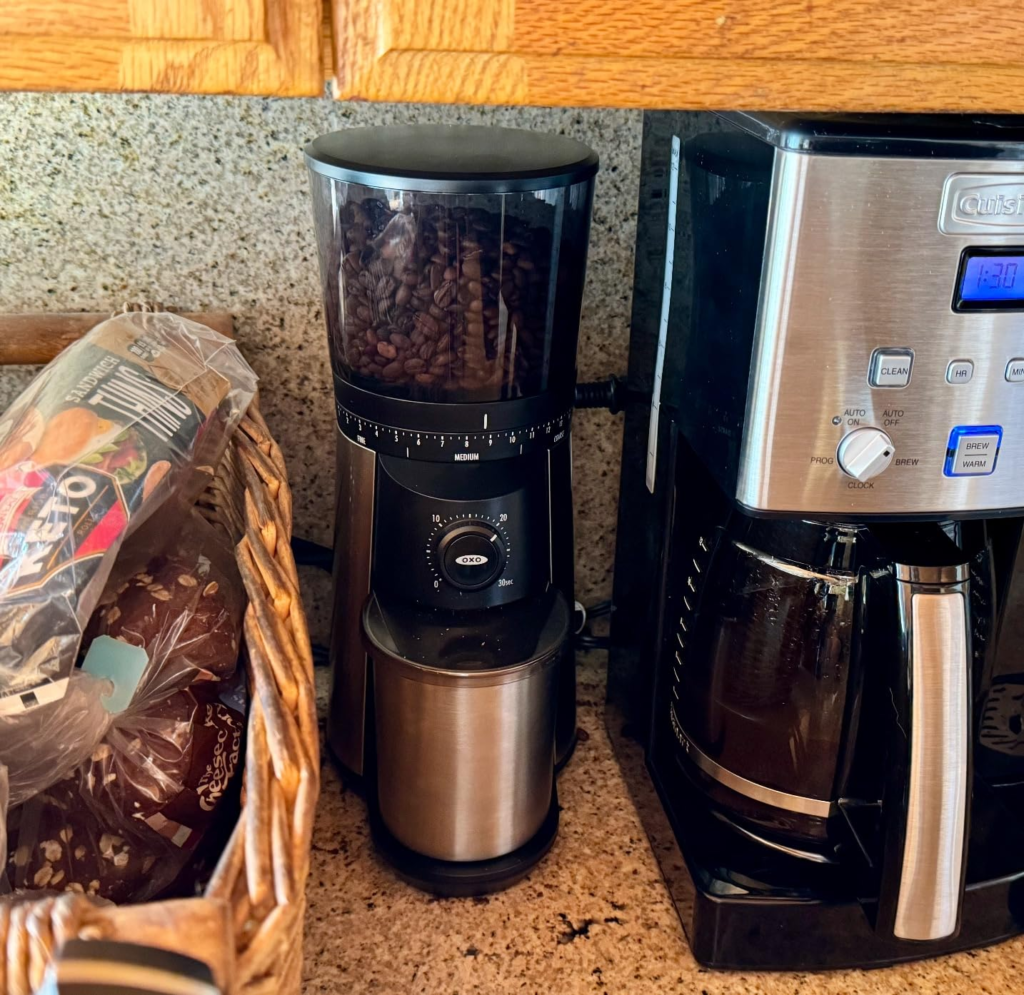
When your primary brewing method lives between coarse and medium — drip, pour-over, French press, AeroPress, cold brew, Chemex, Moka pot with pressure — and you want a grinder that requires zero morning cognition to operate, the OXO Brew Conical Burr Coffee Grinder is the structurally correct choice at its price point.
Specifically: if your issue is that you want fresh-ground coffee every morning without building a ritual around the grinder itself, the timer dial solves that problem more elegantly than anything else available at this price. You set it once. You push once. The machine stops on its own. The grounds are uniform. The cup is better than anything pre-ground can deliver.
Wirecutter named it their pick in 2025 for consistent grind quality and ease of use. Long-term owners across Slickdeals and Reddit report daily use across four to seven years without mechanical failure. Coffee Review found grind consistency that “largely stays on the better side of the line” for its class. That is not a compliment built from comparison-shopping. It’s a conclusion drawn from testing.
The machine earns that. Inside its operating window.
What It Solves, What It Reduces, and What It Still Leaves to You
| Category | Outcome |
|---|---|
| What it solves completely | Pre-ground inconsistency, blade-grinder bitterness, manual dosing (via timer), counter chaos (trap-door hopper) |
| What it meaningfully reduces | Static cling (vs plastic-body grinders), grind variation at medium-coarse settings, learning curve for new users |
| What it improves but doesn’t perfect | Grind retention (~3g stays inside; manageable, not ideal), noise (quieter than cheap options, louder than Encore) |
| What it leaves entirely to you | Espresso grind capability, narrow-filter pouring precision, long-term parts sourcing, fine-step dial calibration |
The regret profile is narrow and predictable. It belongs almost entirely to buyers who cross the espresso threshold, or who underestimated how important grind-step resolution would become for them as their interest deepened.
If you’re buying this grinder to improve your drip coffee, your pour-over, or your French press — and you want the machine to be invisible in your morning — it earns its place on the counter and then some.
Final Compression
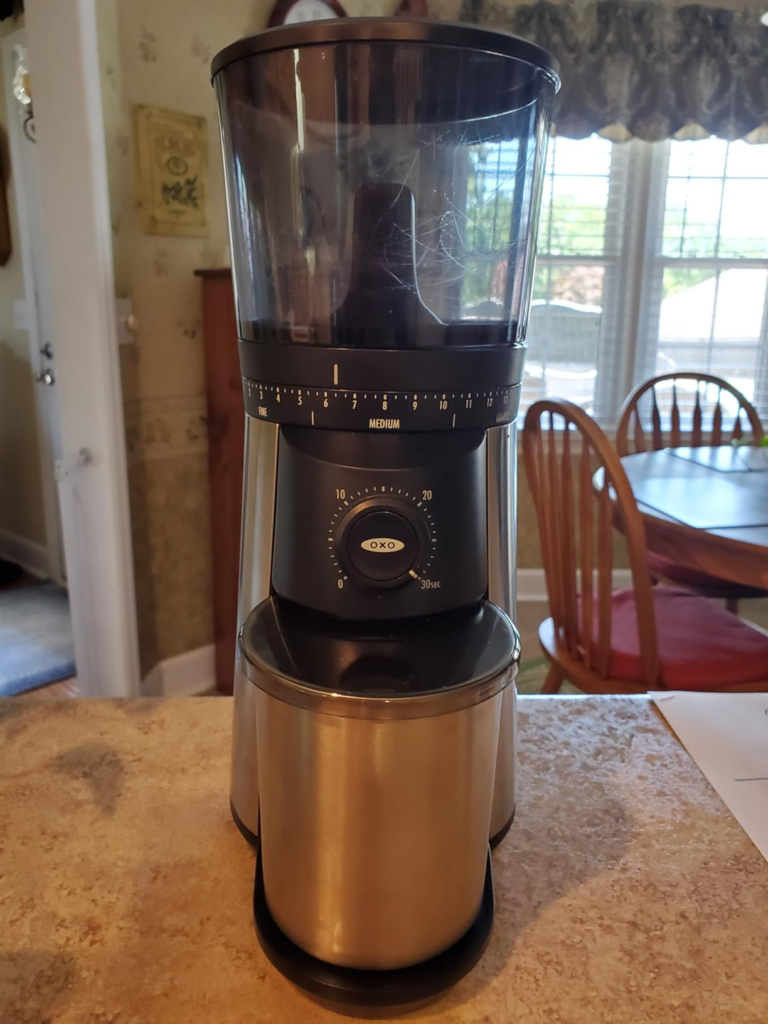
The OXO Brew Conical Burr Coffee Grinder is not the most precise grinder at its price. It is the most frictionless one.
That distinction carries real value if your relationship to coffee is: you want an excellent cup without the grinder becoming the subject of the morning. It carries no value if your relationship is: you want to dial in espresso, iterate settings daily, or own something that can be rebuilt from parts.
The machine knows what it is. Most buyers don’t — until they’ve either loved it for five years or felt the ceiling at week three.
| Decision Point | Recommended Action |
|---|---|
| Brew drip / pour-over / French press / cold brew daily | This is your grinder |
| Want zero-thought morning routine | Timer dial makes this the most logical option |
| Interested in espresso as primary method | Do not buy this — budget for a different machine |
| Want 40 grind steps and parts repairability | Choose the Baratza Encore instead |
| Upgrading from blade grinder for filter methods | Buy now — the improvement is immediate and sustained |
If your brewing life lives inside settings 6 through 13, you’ve already found what you’re looking for.
Frequently Asked Questions
| Question | Answer |
|---|---|
| Can the OXO Brew Conical Burr Coffee Grinder grind fine enough for espresso? | Not for unpressurized portafilters or high-end espresso machines. It can reach settings fine enough for moka pot and pressurized baskets, but it lacks the micro-adjustment range and particle consistency required for true espresso extraction. If espresso is your primary method, allocate a larger budget. |
| How does the OXO Brew compare to the Baratza Encore? | Grind quality for filter coffee (drip, pour-over, French press) is comparable between the two. The OXO wins on automation — its timer runs and stops the grind without your hand on a button. The Encore wins on grind-step resolution (40 settings vs 15), noise level, and long-term repairability through widely available parts. |
| Does the OXO Brew Conical Burr Grinder have a static problem? | Less than most plastic-body grinders at this price. The stainless steel grounds container reduces static cling significantly. Below setting 6, some static returns as particle size decreases and surface area increases. The Rossignol Droplet Technique (one drop of water on beans before grinding) eliminates it entirely if it becomes an issue. |
| How long does the OXO Brew last with daily use? | Multiple long-term owners report 4–7 years of daily use without mechanical failure. The motor is a DC design that preserves burr speed and generates less heat than cheaper motors. It is not designed for commercial volume, but for daily household use it is built to run long. |
| Is the OXO Brew Conical Burr Grinder worth upgrading to from a blade grinder? | Yes — immediately and noticeably. Blade grinders chop beans unevenly, producing fragments of inconsistent size that extract at different rates, creating simultaneous bitterness and flatness in the same cup. Burr grinding eliminates that variable. The improvement in cup quality is detectable from the first brew and compounds over time as you dial in your preferred settings. |
| What grind settings work best for pour-over and drip coffee? | Settings 6 through 8 are the documented sweet spot for pour-over (V60, Chemex, Kalita Wave) and standard drip coffee makers. Settings 9–10 suit AeroPress and Chemex at longer ratios. Settings 11–13 are reliable for French press. Settings 14–15 are designed for cold brew. |
| Why do grounds sometimes cling to the container? | The stainless steel container reduces static but does not eliminate it entirely. Grounds at medium-to-coarse settings rarely cling. At finer settings, increased surface area on smaller particles creates more static. Tapping the container on the counter after grinding dislodges most of what clings. It is a manageable behavior, not a design defect. |
Transparency Note:
This analysis is built on aggregated real-world experience.
It extracts what repeatedly holds, what breaks, and what users uncover only after living with the system—then shapes it into a clear model you can use immediately.
Think of it as structured experience, refined and presented so you don’t have to learn it the hard way.
“A quick note: Don’t believe the star ratings, but trust personal experience. This article is a compilation of collected experiences”