Your Espresso Problem May Not Be Taste. It May Be Friction That Keeps Winning.
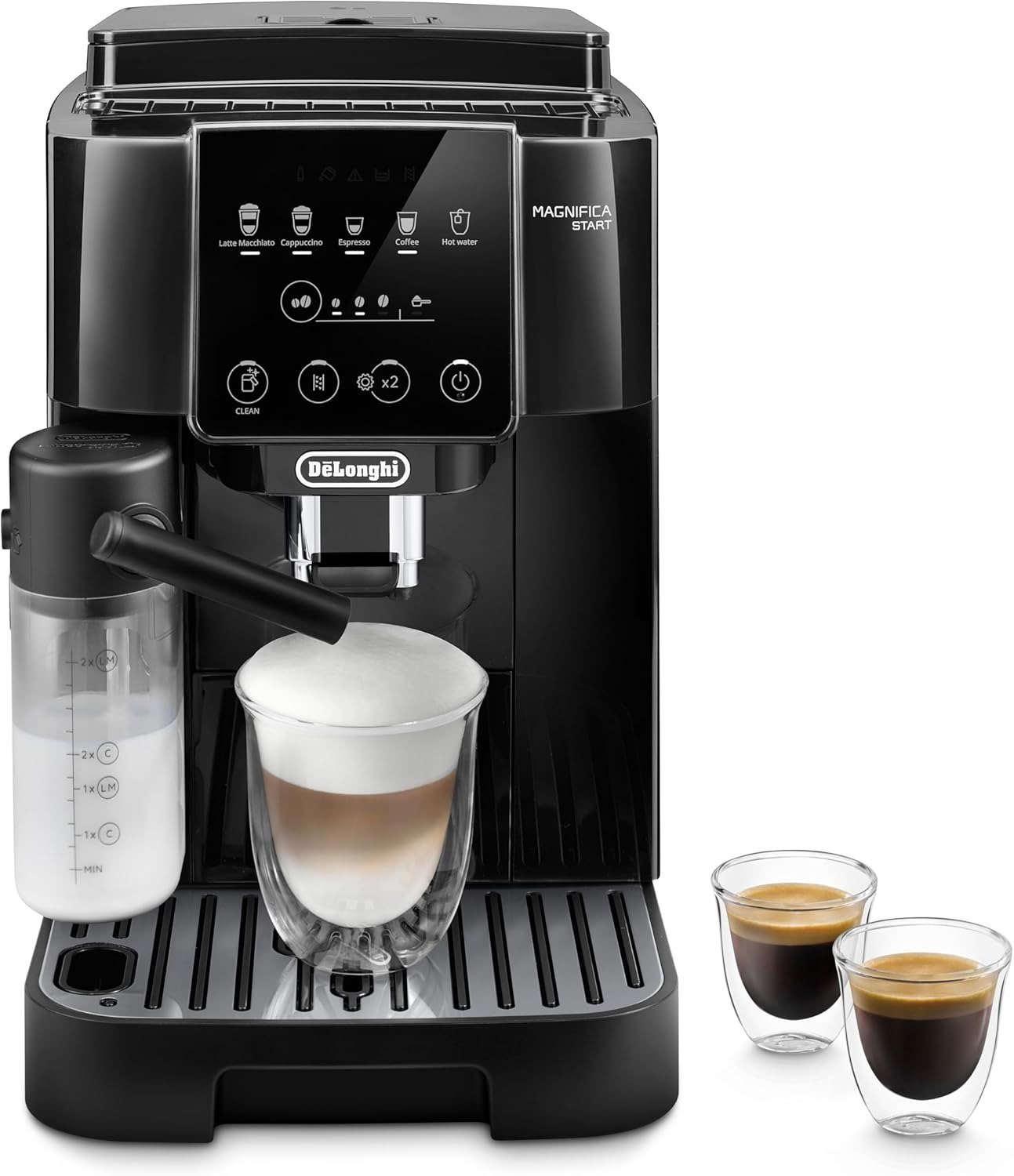
DE’LONGHI MAGNIFICA START
The lie is usually small.
You tell yourself you want better coffee. What you actually want is to stop losing the same little battle every morning: the measuring, the tamping, the milk mess, the half-cleaned wand, the cup that tastes “fine” on Saturday and somehow never happens on Tuesday.
That gap matters.
Because once coffee slips from pleasure into procedure, most people do not need a more “serious” machine. They need a machine that removes enough drag for the habit to survive real life.
That is the territory where the De’Longhi Magnifica Start lives: not as a café toy, not as a prosumer flex, but as a threshold machine built to close the distance between wanting espresso at home and actually making it on a random exhausted morning.
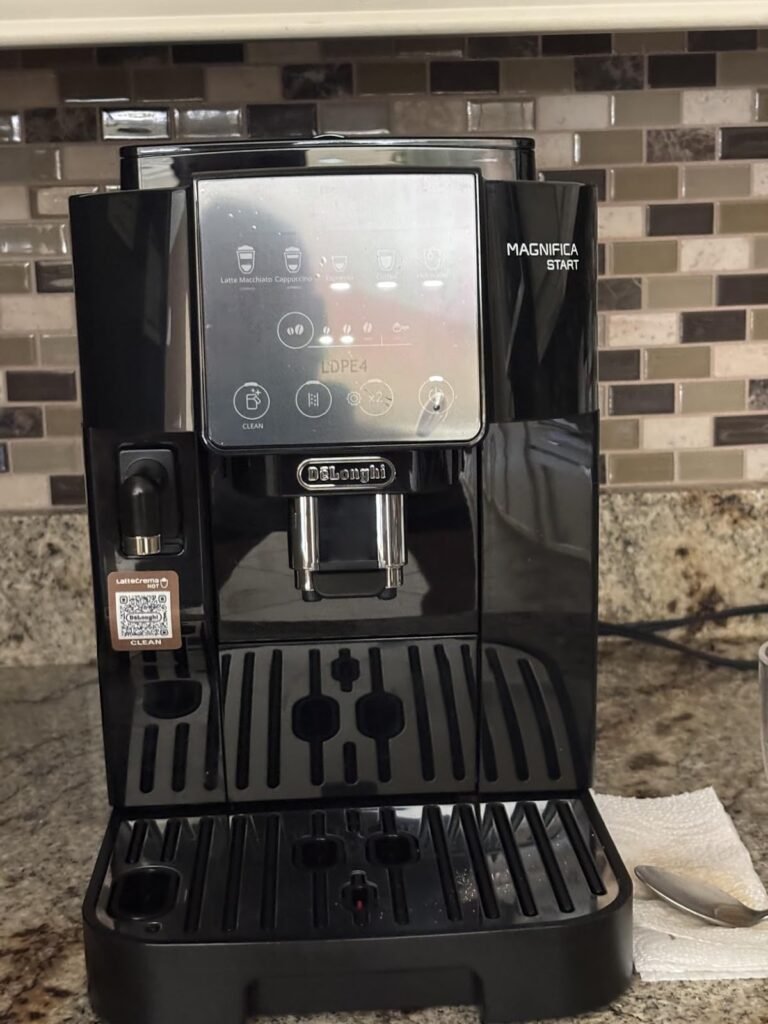
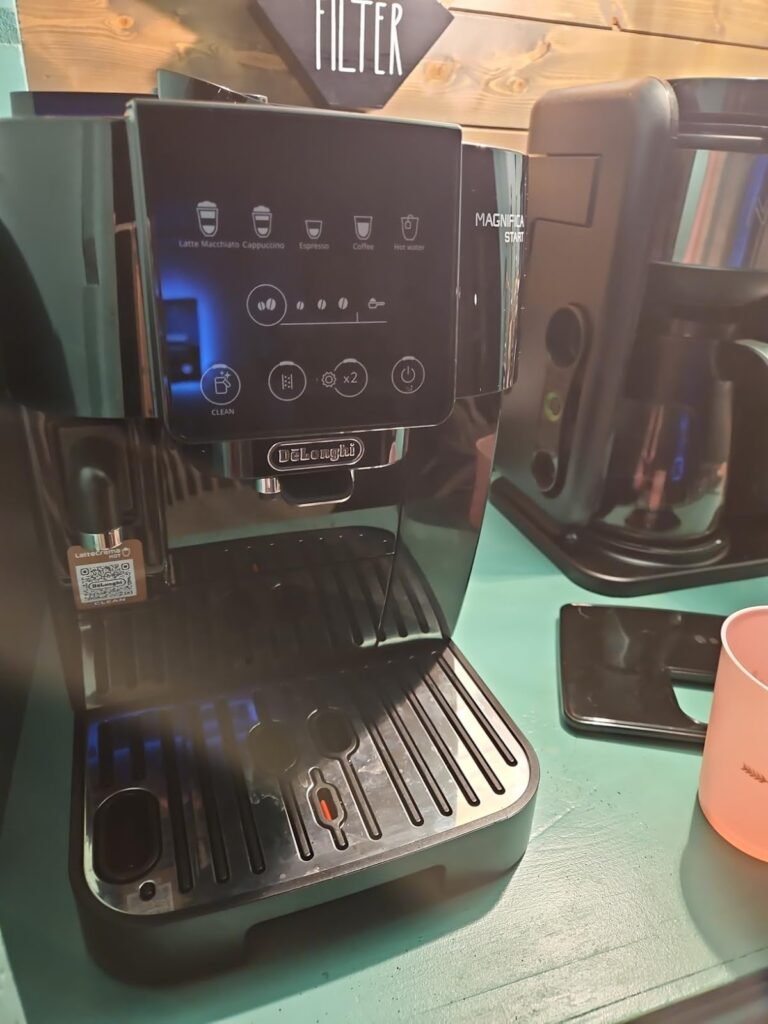
The official spec sheet points to the bones of that promise: a 15-bar pump, 13 grind settings, a 250 g bean hopper, a 1.8 L water tank, pre-ground bypass, touch controls, and five one-touch drinks on the LatteCrema version.
The Result Looks Fine. The Problem Isn’t.
A lot of coffee setups fail quietly.
Not with disaster. With erosion.
The first week is all enthusiasm. Fresh beans. New cups. The sound of the grinder feels like commitment. Then the routine begins to show its teeth. The machine asks for more attention than your morning can spare. The foam is good one day, thin the next. The cleanup lingers after the caffeine hit is gone. You start skipping the whole ritual and buying coffee outside “just for today.”
That is the real leak.
With the Magnifica Start, the appeal is not mystery. It is compression. One touch for espresso, coffee, cappuccino, latte macchiato, or hot water on the automatic-milk model; a grinder and brew system that handle the grinding and dosing without asking you to perform as a home barista; removable dishwasher-safe parts that lower the cleanup barrier after the drink is gone.
What kept surfacing in public customer feedback was not poetic language about crema. It was something more useful: easy to set up, easy to use, easy to clean. That is not glamorous copy. It is behavioral evidence. And behavior decides whether an espresso machine becomes part of your kitchen or just another polished object that stares back at you.
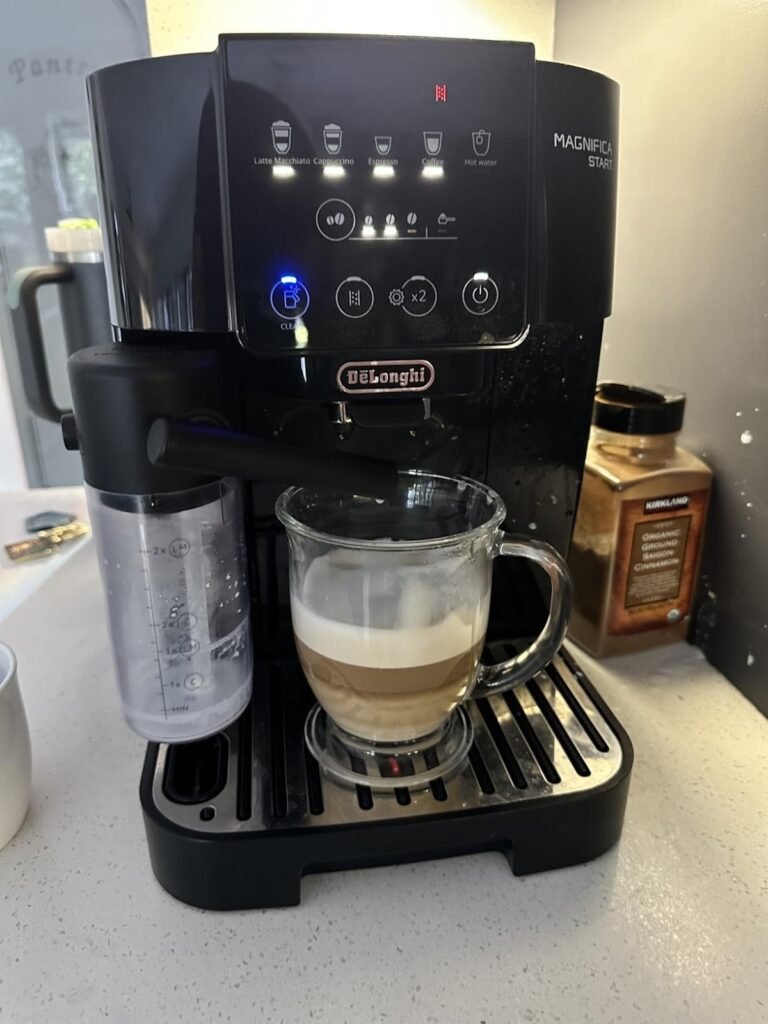
What You’re Actually Feeling but Not Naming
It usually gets mislabeled as “I want stronger coffee.”
Sometimes that is true. Often it is not.
What many buyers are actually feeling is a three-part irritation:
- Interruption burden — too many manual steps before caffeine arrives
- Cleanup dread — the drink is fast, the mess is not
- Consistency anxiety — one good cup does not guarantee the next one
That matters because people often buy the wrong cure for the wrong pain. They chase manual control when the real wound is routine friction. They compare pressure numbers and marketing language when the real question is whether the machine will still be welcome on a rushed weekday, a second cup after lunch, or a groggy winter morning before anyone speaks.
The Magnifica Start makes sense when coffee quality matters to you, but preserving the habit matters more. That is why reviewers kept circling the same pattern: intuitive controls, compact footprint, strong milk system on the LatteCrema model, and better-than-expected espresso for an entry-level superautomatic.
The Hidden Mechanism Behind the Miss
Most buyers compare espresso machines the wrong way.
They compare output theater. They should compare behavioral compliance.
A machine does not win in the real world because it can theoretically produce an excellent cup. It wins because it gets used repeatedly without extracting too much effort, time, cleanup, or attention from the owner.
That is the hidden mechanism here: the Magnifica Start is not primarily selling espresso. It is selling repeatability under low-energy conditions.
That is why several small but structural details matter more than marketing usually admits:
| Functional layer | What the machine does | Why it matters in real life |
|---|---|---|
| Grinder | 13-setting conical burr grinder | Lets you move away from stale pre-ground coffee and adjust taste without stepping into full manual complexity. |
| Drink access | One-touch drinks on the automatic-milk model | Removes hesitation and reduces the chance that you default to store-bought coffee instead. |
| Milk handling | LatteCrema carafe stores in the fridge and automates frothing | Cuts the most failure-prone part of milk drinks for non-hobbyist users. |
| Cleanup | Removable parts, front-access tray/grounds container | Keeps maintenance visible and manageable instead of hidden and resented. |
| Size | About 17 x 9.25 x 14 inches | Compact enough for kitchens where “counter permission” is part of the buying decision. |
That does not mean it is friction-free. It means the friction is concentrated in places many households can tolerate better than manual espresso rituals.
The Threshold Where the Outcome Quietly Breaks
Here is the threshold.
If your frustration begins before the first sip, this machine gets interesting. If it begins after the first sip, it may not.
That is the dividing line.
The Magnifica Start solves the kind of problem that sounds like this:
“I am tired of wanting café-style drinks at home and then deciding I do not have the patience.”
It does not fully solve the problem that sounds like this:
“I want maximum control over dose, flow, texture, temperature nuance, and shot behavior.”
Those are two different species of buyer.
The machine’s own structure reveals the threshold. It gives you three strength settings, memory functions, adjustable drink length, twin shot, pre-ground bypass, and automatic milk on the ECAM22080SB-type configuration—but it is still a one-boiler, no-app, no-touchscreen, no-profiles machine with a simpler control logic than more expensive superautomatics.
In plain English: it is built to remove routine resistance, not to indulge endless tinkering.
And there is another threshold buyers need to hear early: noise tolerance. One of the clearest independent knocks against this line is the grinder. Coffeeness measured the Start at 75.9 dB during grinding and described the sound as particularly shrill, even louder than the older Magnifica S they compared it with.
That single number changes the fit. A lot.
Why Most Buyers Misread This Too Early
Because they shop by fantasy.
Not by failure pattern.
They imagine weekend coffee. They should imagine Wednesday at 6:47 a.m.
They imagine one perfect first drink. They should imagine the 90th drink.
They imagine “coffee quality.” They should imagine coffee compliance.
That is where the lazy comparisons break down.
A manual machine may beat this on craft. A pricier superautomatic may beat it on drink menus, displays, or customization. Even within De’Longhi’s own range, reviewers note that the Start is simpler and more constrained than some alternatives, while still landing well on usability and price-performance for buyers who care more about reliable ease than deep customization.
The early buying mistake usually comes from using the wrong metric:
| Wrong metric | Why it misleads |
|---|---|
| “Can it make espresso?” | Too broad. Many machines can. The question is whether you will still use it after novelty wears off. |
| “How many bars?” | Pump pressure is easy to market and easy to misunderstand. It does not tell you how the full routine feels day after day. |
| “Does it look premium?” | Countertop beauty does not reduce cleanup fatigue or morning hesitation. |
| “Can I tweak everything?” | More control can become more avoidance if you are not actually a tinkering person. |
The sharper metric is this: How much effort stands between you and the drink you realistically make most often?
That is a very different question. And it is the one this machine answers best.
Who Is Actually Inside This Problem
I would place the real-fit buyer into one of three groups.
The first is the ex-café spender.
You are not chasing latte art. You are bleeding money through repetition. One purchased drink becomes two. One workweek becomes a habit. The machine starts making sense when convenience is what restores consistency.
The second is the manual-machine dropout.
You liked the idea of craft. Then life answered back. The grinder, puck prep, steam timing, and cleanup began to feel less like ritual and more like a second shift.
The third is the household compromise buyer.
One person wants espresso. Another wants milk drinks. Nobody wants a machine that demands barista training before breakfast.
Those buyers line up unusually well with what public feedback and independent reviews keep saying: setup is straightforward, drinks come quickly, milk drinks are easy on the automatic version, the machine is compact, and cleanup is manageable enough to support daily use.
Where Wrong-Fit Begins
Now the part that saves regret.
You should hesitate if any of this sounds like you:
- You are sensitive to grinder noise and want a calmer machine during early mornings or shared spaces. Independent testing and customer commentary both point to noise as a real drawback.
- You want deep customization, lots of user profiles, advanced drink programming, or a richer interface. The Start is intentionally simpler.
- You expect zero-maintenance ownership. Automatic machines hide labor; they do not erase it. Startup and shutdown flushing can fill the drip tray faster than some buyers expect, and milk components still require care.
- You are buying mainly for hot-temperature obsessiveness. Some public comments around De’Longhi superautomatics and one detailed Start review point to coffee that is satisfying but not always as hot as every buyer wants.
This matters because the worst espresso-machine regret is not “it was terrible.”
It is quieter than that.
It is “this is good, but not for my pattern.”
The One Situation Where This Product Becomes Logical
This is the one.
The De’Longhi Magnifica Start becomes logical when your breaking point is the daily effort required to get from beans to a milk drink or espresso you will genuinely keep making.
That is the purchase condition.
Not “I love coffee.”
Not “I want something fancy.”
Not “I want the best machine under X dollars.”
This:
I want better home coffee, but only if the machine reduces enough friction to survive ordinary life.
Under that condition, the machine’s design locks into place. The grinder handles freshness without manual espresso complexity. The automatic milk version removes the clumsiest part of milk drinks. The simple controls reduce learning drag. The compact build keeps it practical. And the routine, while not maintenance-free, stays within a range many busy users will actually tolerate.
That is why the product feels strongest not as a luxury object, but as a habit-preserving machine.
What It Solves, What It Reduces, and What It Still Leaves to You
Here is the cleanest version of the trade.
| Category | What it solves | What it reduces | What it still leaves to you |
|---|---|---|---|
| Daily convenience | One-touch espresso and milk-drink access | Decision fatigue and skipped mornings | Bean choice, periodic cleaning, water refills |
| Freshness | Built-in grinder and whole-bean workflow | Dependence on stale pre-ground coffee | Dialing grind sensibly; the finest settings may not be ideal according to independent review testing. |
| Milk drinks | Automatic frothing on the LatteCrema model | Manual steaming stress | Carafe cleaning and fridge handling |
| Cleanup | Removable parts and front-access waste/drip handling | The “I’ll clean it later” spiral | Frequent tray emptying because of rinses, plus normal descaling over time. |
| Learning curve | Soft-touch icon interface | Setup intimidation | Accepting limited customization compared with pricier machines |
This is where many buyers need the truth in one sentence:
The Magnifica Start does not remove responsibility. It removes enough of it to make better coffee happen more often.
And that “enough” is what changes a purchase from decorative to useful.
Final Compression
I do not think this machine is for the person who wants to choreograph espresso.
I think it is for the person who is tired of losing to friction.
That is a different buyer, a different pain, and a different decision.
If your real issue is that café spending keeps replacing the at-home habit you meant to build, if milk drinks matter but manual milk work keeps getting skipped, if you want a machine that narrows the path between craving and cup without turning your counter into a workshop, the De’Longhi Magnifica Start lands in a very specific sweet spot: compact, repeatable, easier than manual, better than capsule coffee, and honest about its trade-offs.
The loud grinder is real. The rinse-and-clean cycle is real. The limited customization is real. So is the convenience. So is the habit rescue.
If this is the condition you are actually dealing with, this becomes the logical next step: De’Longhi Magnifica Start.
Transparency Note:
This analysis is built on aggregated real-world experience.
It extracts what repeatedly holds, what breaks, and what users uncover only after living with the system—then shapes it into a clear model you can use immediately.
Think of it as structured experience, refined and presented so you don’t have to learn it the hard way.
“A quick note: Don’t believe the star ratings, but trust personal experience. This article is a compilation of collected experiences”