I Didn’t Need More Screen Size. I Needed the Picture to Survive Reality.
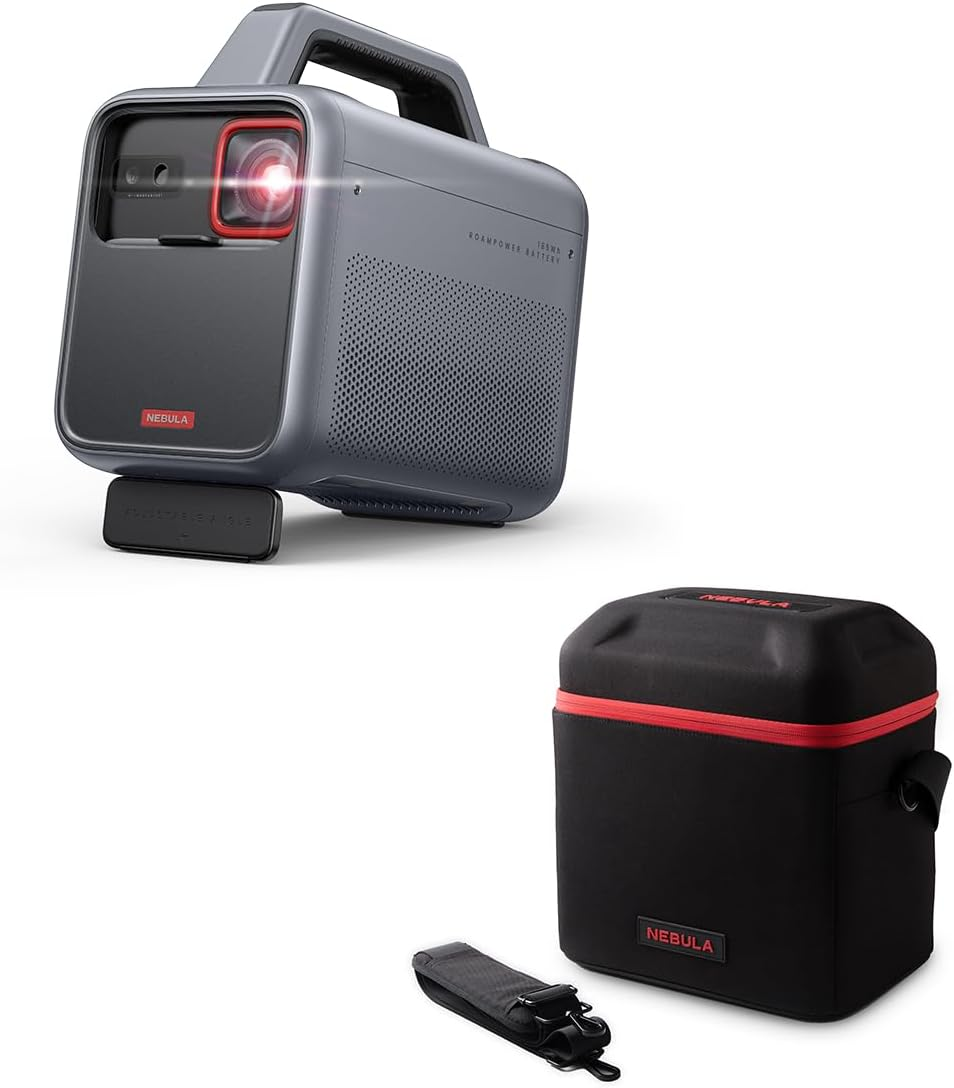
MARS 3 AIR
The mistake is usually small.
You buy a portable projector because the fantasy is clean: carry handle, built-in battery, Netflix without hacks, a wall that turns into a cinema in ten seconds. Then the room refuses to cooperate. The lamp in the corner stays on. The blinds leak light. Faces flatten. Black turns gray. What looked like “big-screen freedom” on the box starts to feel like a negotiation with physics.
That is the entire Mars 3 Air story to me.
Not whether it works. It does. The sharper question is this: at what point does it stop feeling like a real movie device and start feeling like a compromised convenience machine? That threshold matters more than almost anything else here, because the Nebula Mars 3 Air is a 1080p DLP portable projector with a rated 400 ANSI lumens, dual 8W speakers, built-in Google TV, official Netflix support, auto focus/keystone/screen fit/obstacle avoidance, a fixed 1.2:1 throw, and a claimed 2.5-hour battery life. Independent testing also found roughly 399 lumens in its brightest mode, about 383 lumens in Standard mode, and only about 145 lumens in Eco.
So I stopped asking the lazy question—is it good?—and started asking the one that actually protects your money:
Where does the Mars 3 Air still feel effortless, and where does the magic quietly break?
The Result Looks Fine. The Problem Isn’t.
On first contact, this projector is dangerously likable.
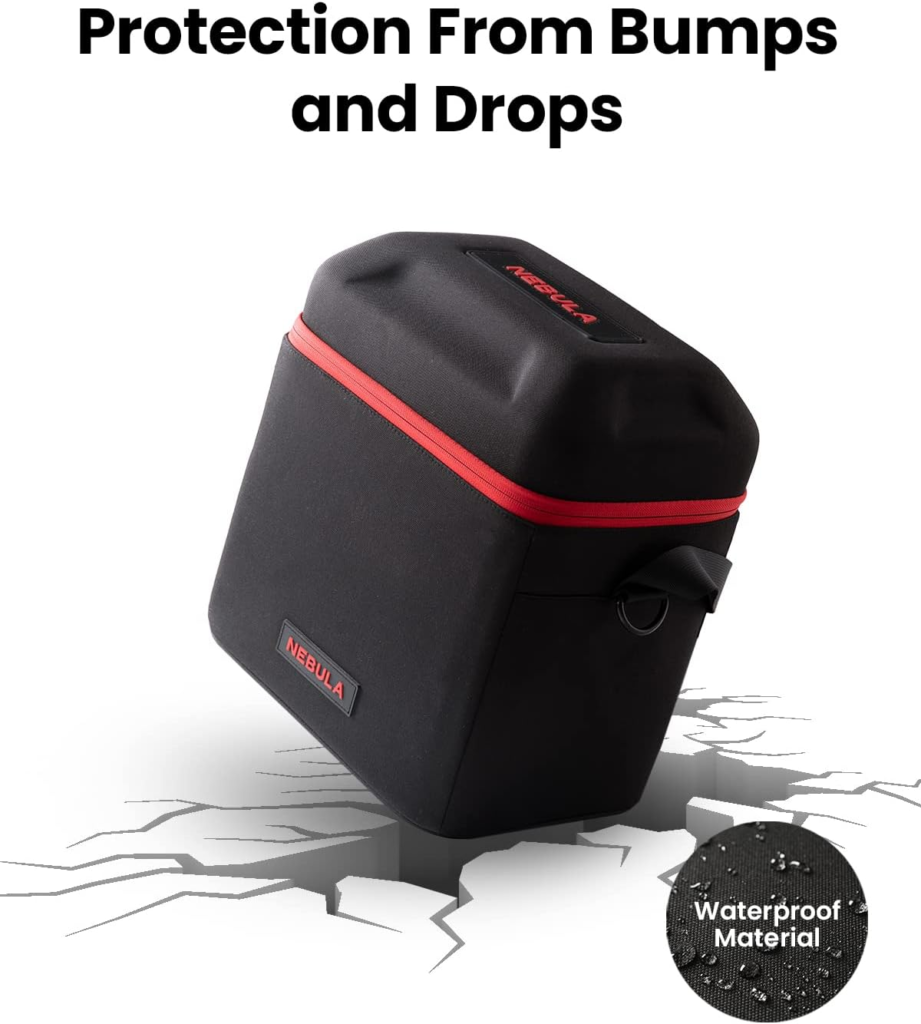
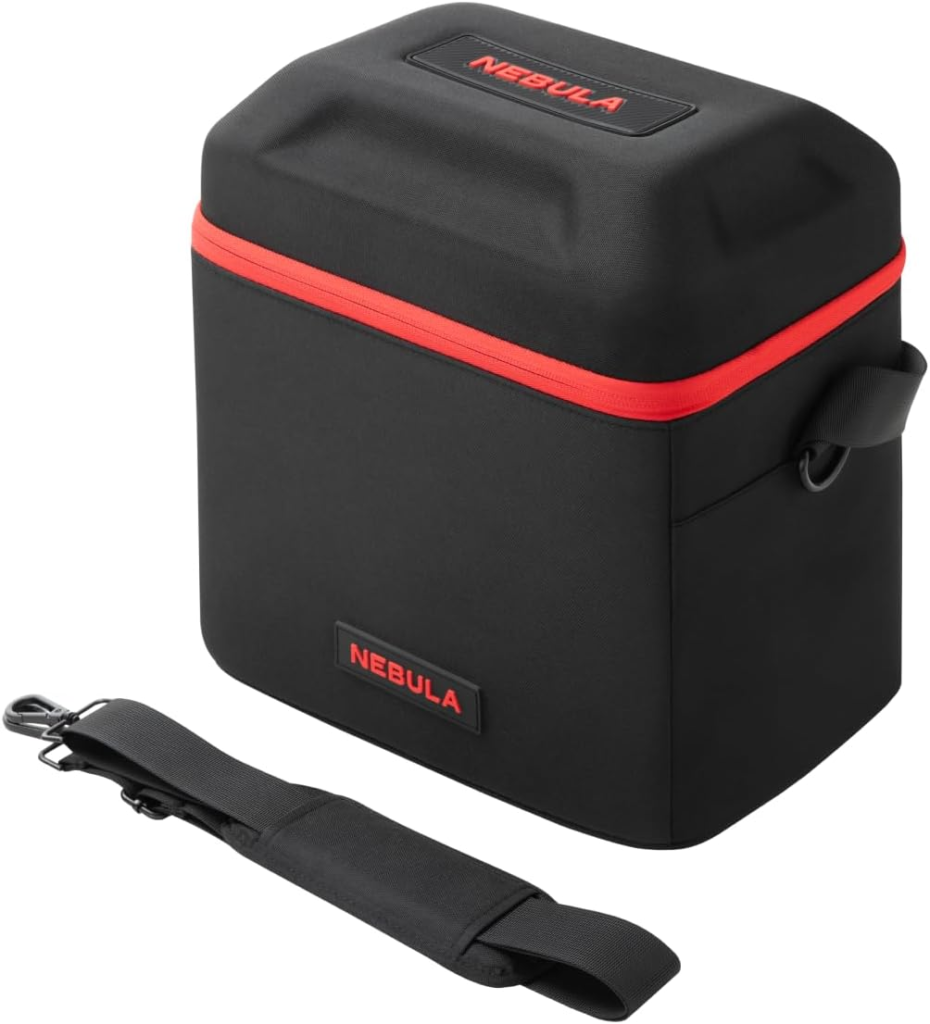
It is small enough to move around without turning setup into a chore, yet not so tiny that it feels toy-like. The strap is practical. The chassis looks better than most portable projectors in this class. Setup is unusually painless because the Mars 3 Air combines autofocus, auto keystone, auto screen fit, and obstacle avoidance. It also ships with Google TV and official Netflix support, which sounds trivial until you have used cheaper portable projectors that force awkward streaming workarounds.
That is why the first impression lands so well.
You turn it on. It locks itself in. The picture appears quickly. The speakers have more body than most people expect from a unit under four pounds. What Hi-Fi praised its picture and sound, ProjectorCentral called it a “big step forward” for portable projectors, and Amazon buyers have it at 4.4/5 from 274 ratings.
But a projector can be pleasant in the first five minutes and wrong for your room for the next five years.
That is the trap.
The Mars 3 Air does not fail like a bad product. It fails like a product that looks flexible before you understand its light ceiling.
What You’re Actually Feeling but Not Naming
Most people do not say, “I bought below my brightness threshold.”
They say:
“It looked better in the demo.”
“It’s nice at night, but kind of weak in the living room.”
“The image is big, but it doesn’t feel punchy.”
“I thought 1080p would matter more.”
“It’s portable, but I keep moving it to darker places.”
That last line is the real tell.
The friction is not usually resolution. The Mars 3 Air is natively 1080p, and that is enough to look clean and satisfying at sane sizes. The friction is not even setup; its auto-adjustment features are better than the typical portable-projector mess. The friction is the slow realization that brightness controls whether the image feels alive long before resolution becomes the bottleneck. Official specs put it at 400 ANSI lumens, and third-party testing essentially confirmed that ceiling.
I would name that feeling this way:
surface success, core compromise.
The image is there. The experience is not always.
The Hidden Mechanism Behind the Miss
Here is the hidden variable: the Mars 3 Air is not a “large image” device first. It is a “controlled-light portable cinema” device first.
That distinction changes everything.
A projector does not just create size. It has to preserve enough brightness and contrast across that size for the image to retain shape, depth, and snap. The Mars 3 Air’s 400-lumen class output is respectable for its category, and ProjectorCentral measured excellent 88% brightness uniformity, which helps the image look even rather than patchy. But the same review also noted that the image tends to wash out much beyond about 80 inches in brighter conditions, and Eco mode drops output to around 145 lumens—night-use territory, not casual mixed-light use.
That is why spec-sheet reading often goes wrong. People anchor on words like 1080p, HDR, 150-inch image, or Dolby Audio, then miss the operating truth:
A projector can technically throw a large image and still emotionally read as thin.
That is not a contradiction. It is the mechanism.
| What the spec suggests | What the real mechanism is |
|---|---|
| 150-inch max image | Maximum image size is not the same as satisfying image size |
| 1080p resolution | Sharpness helps only after brightness keeps the picture intact |
| HDR support | HDR on a 400-lumen portable unit is more format compatibility than dramatic peak-light impact |
| Built-in battery | Freedom from cables often means accepting lower-output use cases |
These are not flaws in honesty. They are flaws in interpretation. Officially, the Mars 3 Air supports HDR10/HLG and claims up to 150 inches, while reviewers also noted that HDR highlights lack real punch and that ambient light quickly reshapes the experience.
The Threshold Where the Outcome Quietly Breaks
This is the governing model of the article:
The Light Control Threshold.
That is the point where portability still feels like freedom instead of compromise.
For me, the Mars 3 Air stays on the right side of that threshold when three conditions line up:
- the room is dim or fully dark,
- the image size is kept sensible rather than pushed for bragging rights,
- the use case values convenience as much as raw picture authority.
When those conditions hold, the projector makes sense. When they do not, the value curve bends in the wrong direction.
ProjectorCentral’s measured numbers make this blunt. Standard mode delivered about 383 lumens with better color balance than the brightest Conference mode. Eco preserved battery but collapsed light output to around 145 lumens. What Hi-Fi also praised the picture while explicitly noting limited HDR impact, and Amazon reviews include buyers warning that this “Air” variant is the smaller option and may feel undersized for a large salon-style room.
I would define the threshold like this:
If your room, screen size, or expectations regularly demand daytime authority, the Mars 3 Air is below threshold. If your real life is night viewing, room-to-room use, travel, bedrooms, apartments, and quick setup, it stays above threshold.
| Threshold signal | What it means |
|---|---|
| You want to replace a bright living-room TV | Wrong side of the threshold |
| You mostly watch after sunset or in controlled light | Right side of the threshold |
| You care about built-in Netflix and easy setup | Right side of the threshold |
| You want dramatic HDR punch or gaming speed | Wrong side of the threshold |
| You want something you can actually carry and use often | Right side of the threshold |
Why Most Buyers Misread This Too Early
Because they compare the wrong things, in the wrong order.
They compare projector to projector the way people compare phones: resolution, apps, price, battery, maybe speaker wattage. That is too early. The correct first comparison is not feature versus feature. It is environment versus threshold.
A lot of buyers also overrate portability in theory and underrate it in routine use. They imagine camping trips, backyard movies, spontaneous watch parties, guest-room use, kitchen-counter projection, moving it from one wall to another. That part is real. The Mars 3 Air is strong precisely because it makes that lifestyle feel frictionless: under 4 pounds, built-in battery, official Netflix, Google TV, dual 8W speakers, autofocus, auto-keystone, and obstacle avoidance.
But then they smuggle in a second fantasy: they want all that convenience plus TV-like brightness plus gaming-grade responsiveness plus high-impact HDR. That is where the reading error starts.
Independent reviews put input lag at about 44–45 ms at 60 Hz, which is fine for casual play but not what I would call serious gaming material. What Hi-Fi noted 45.1 ms in Extreme Game Mode, and ProjectorCentral measured 44.1 ms.
So the lazy comparison sounds like this:
“Portable projector with Netflix, battery, 1080p, HDR, gaming mode.”
The useful comparison sounds like this:
“Compact lifestyle projector that wins on convenience and all-in-one usability, but only if I accept the brightness boundary and casual-gaming ceiling.”
That second sentence saves people money.
Who Is Actually Inside This Problem
You are inside this problem if you want a projector for one of these three lives:
- the movable-screen life — bedroom tonight, living room tomorrow, friend’s place next weekend;
- the no-boxes life — you do not want to attach a streamer, a soundbar, and a bag of accessories every time you watch;
- the low-friction life — you want to press power, let the projector square itself, open Netflix, and start.
That reader is exactly where the Mars 3 Air becomes interesting.
I can also narrow it further. This product makes the most sense if you care about:
- portable movie nights more than daylight dominance,
- ease more than tweaking,
- integrated sound more than external AV perfection,
- actual streaming convenience more than raw lumen bragging.
The evidence lines up. Officially, it is one of Nebula’s smaller portable Mars units with Google TV, official Netflix, 2 x 8W audio, and intelligent environment adaptation. Reviewers repeatedly highlighted ease of setup, sound quality for the class, and strong overall value around its original $600 bracket.
If that is your use case, the Mars 3 Air stops looking weak. It starts looking focused.
Where Wrong-Fit Begins
Wrong-fit begins the moment you ask this projector to protect you from bright rooms, oversized expectations, or performance categories it was never built to win.
I would not buy the Mars 3 Air if any of the following are central:
- you want a true TV replacement in daylight or mixed light,
- you plan to push very large images routinely and still expect rich contrast,
- you care deeply about high-speed gaming response,
- you want stronger HDR impact than a 400-lumen portable unit can credibly deliver,
- you expect rugged outdoor readiness on the level of the larger Nebula Mars 3.
That last distinction matters. RTINGS’ lineup comparison is useful here because it separates the Mars 3 Air from the bigger Mars 3: the larger model offers more brightness, bigger speakers, longer battery life, and outdoor-hardware advantages, while the Air trades downward on brightness and endurance but adds Google TV with official Netflix in a smaller body.
So no, this is not for everyone.
That is why it is easier to trust.
The One Situation Where This Product Becomes Logical
The Nebula Mars 3 Air becomes logical when your real problem is not “How do I get the biggest image?” but “How do I get a genuinely easy movie setup that I will actually use?”
That is the dividing line.
I can see the appeal of brighter portable units, and I can also see the appeal of cheaper no-name projectors that promise absurd screen sizes for less money. But those two paths often break in opposite ways. The brighter, larger models lose the easy-carry spontaneity that makes portable projection fun. The cheaper models often collapse on software, app legitimacy, setup friction, speaker quality, or the simple misery of unreliable streaming. By contrast, the Mars 3 Air’s case is clean: good-enough brightness for dark and dim use, native 1080p, official Netflix, Google TV, auto-setup features, battery power, and sound that reviewers repeatedly called better than expected for the size.
This is not the projector I would choose to overpower a difficult room.
It is the projector I would choose to remove excuses.
That is more valuable than it sounds.
What It Solves, What It Reduces, and What It Still Leaves to You
Here is the honest split.
| It solves | It reduces | It still leaves to you |
|---|---|---|
| Streaming hassle with official Netflix and Google TV | Cable clutter and add-on device dependency | Managing ambient light |
| Tedious setup through autofocus, auto keystone, screen fit, obstacle avoidance | The friction of moving from room to room | Choosing a sane image size |
| Weak portable audio with dual 8W speakers | The need for a separate speaker in many casual setups | Accepting casual-only gaming latency |
| Outlet dependence for short movie sessions | The “I’ll set it up later” barrier | Knowing that HDR here is limited by brightness realities |
Those trade-offs are not hidden. They are simply easy to ignore when the product is marketed as lifestyle freedom.
ProjectorCentral measured roughly 40 dBA fan noise in practice, around 44.1 ms input lag, and 2 hours to recharge with the unit off. Official materials list 2.5 hours of movie playback, 30,000-hour LED life, 30–150-inch image capability, and HDMI with ARC.
So the operating truth is simple:
The Mars 3 Air does not erase projector compromises.
It chooses the right compromises for a specific kind of buyer.
Final Compression
Most people shopping this category are not deciding between “good” and “bad.”
They are deciding between two kinds of disappointment.
One is the disappointment of owning a projector that is technically more powerful but too bulky, too annoying, or too cable-dependent to come out often. The other is the disappointment of owning something beautifully convenient that hits a wall the second the room gets bright or the image gets too ambitious.
The Nebula Mars 3 Air sits on one side of that line very clearly.
If your break point is light control, not feature count—if you mainly watch at night, value official streaming support, want setup to be almost frictionless, and prefer a projector you will genuinely move and use—the Mars 3 Air is easy to justify. If your break point is brightness authority, large-room confidence, or faster gaming response, the decision should stop here.
Transparency Note:
This analysis is built on aggregated real-world experience. It extracts what repeatedly holds, what breaks, and what users uncover only after living with the system—then shapes it into a clear model you can use immediately. Think of it as structured experience, refined and presented so you don’t have to learn it the hard way.
“A quick note: Don’t believe the star ratings, but trust personal experience. This article is a compilation of collected experiences”