YOUR ROOM ISN’T FAILING THE LG CINEBEAM PU700R — YOUR ASSUMPTION IS, AND THAT CHANGES WHETHER IT FEELS LUXURIOUS OR REGRETFULLY EXPENSIVE
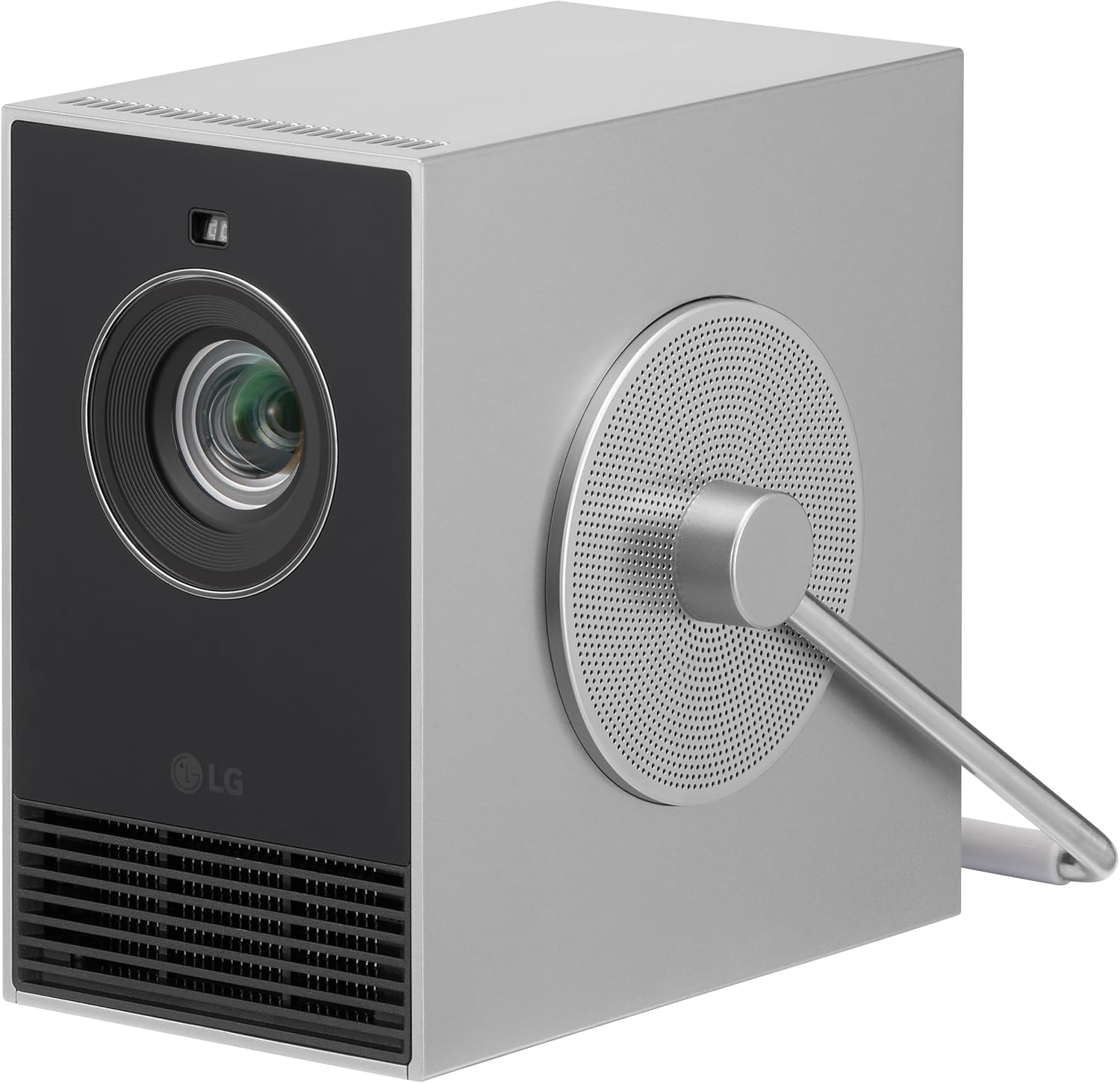
LG CINEBEAM PU700R
The Result Looks Fine. The Problem Isn’t.
The first thing that hit me was not the picture. It was the illusion.
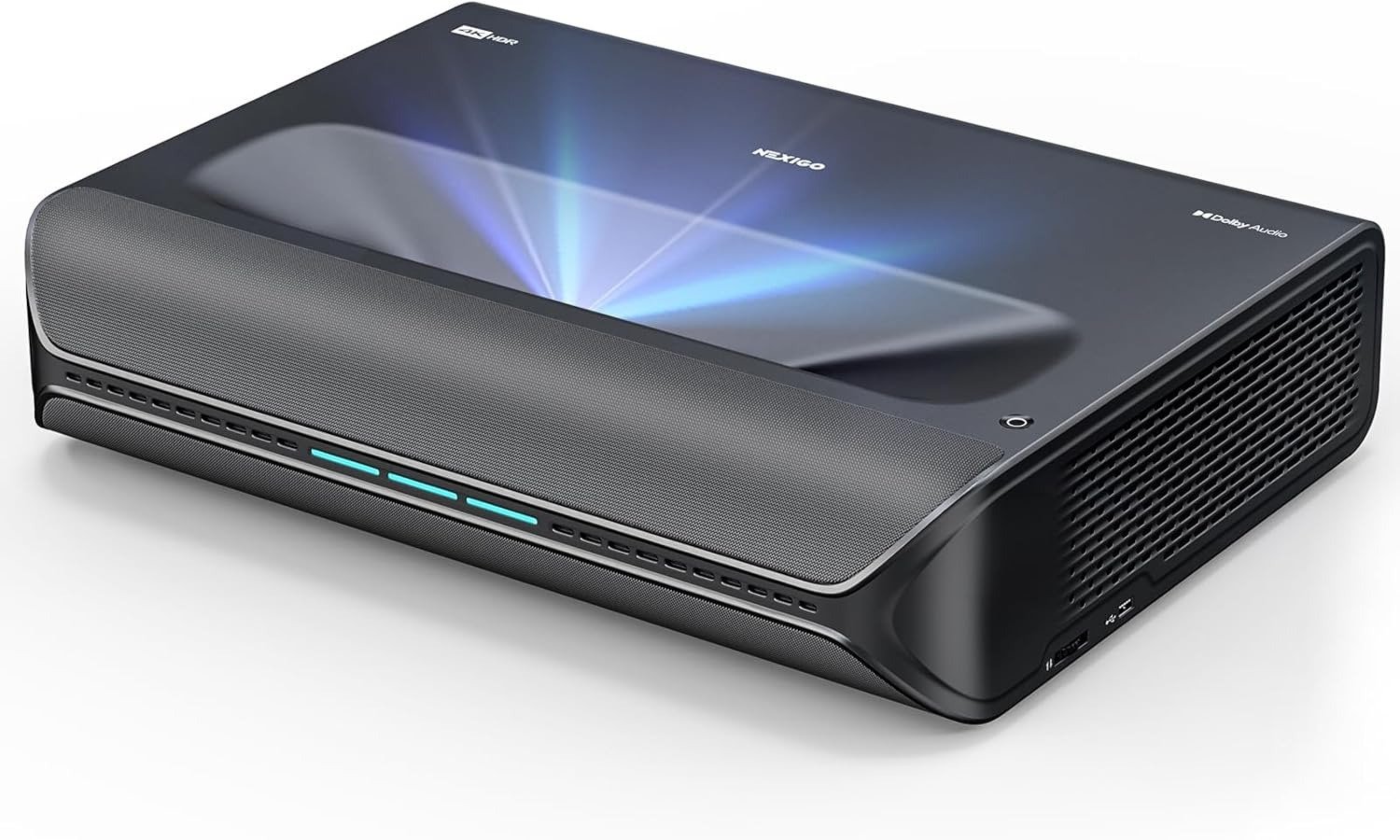
On paper, the LG CineBeam PU700R looks like the clean answer to a modern room: 4K UHD, HDR10, 1,000 ANSI lumens, auto screen adjustment, a 90-degree rotating head, webOS, AirPlay 2, Bluetooth dual audio, and a body that looks more like a sculptural spotlight than a projector. Set it on a console, angle it toward a wall or ceiling, dim the room, and the whole space changes character. It stops feeling like “a room with a gadget” and starts feeling staged — calmer, sharper, more deliberate. That part is real. LG’s own positioning is built around that flexibility, and professional reviews consistently praise the swivel design and setup ease.
But the deeper truth is less flattering. This projector does not win by overpowering a room. It wins by slipping into one that is already cooperative. That distinction sounds small. It isn’t. It is the whole purchase decision. ProjectorCentral describes it as excellent for casual viewing, awkward-room placement, and outdoor movie nights, not as a brute-force living-room cannon; Projector Reviews frames it more as home entertainment than hard-core home theater; owner sentiment on Amazon is far more mixed, with the current U.S. listing sitting at 2.8/5 from 15 ratings.
What You’re Actually Feeling but Not Naming
Most people do not say, “I am afraid of a threshold failure.” They say something vaguer.
They say:
“I want it to feel premium.”
“I want something easy.”
“I want the room to look better, not uglier.”
“I don’t want another black box screaming ‘tech product’ from the shelf.”
That is the emotional center of the PU700R. Not raw performance. Relief.
I can see exactly why this thing seduces people. The head tilts. The body looks expensive without shouting. The mood lighting adds atmosphere instead of tackiness. Ceiling projection suddenly becomes plausible. A movie night in the yard stops sounding like a logistical chore. Even the placement ritual is lighter: place, point, let the auto correction do its work. That emotional payload matters because people do not buy lifestyle projectors for lumens alone. They buy them to erase friction, tame clutter, and make entertainment feel less mechanical. LG leans into that with its “space-friendly” design, mood lighting, and ASA setup features, and reviewers keep circling back to the same point: it is unusually easy to live with.
The hidden emotional tax comes later. When a projector is bought for elegance, every compromise feels louder. A slightly washed-out image in ambient light does not feel like a technical footnote. It feels like betrayal. Sluggish gaming does not feel like a spec limitation. It feels sticky. A missing app does not feel small when the whole pitch was convenience. That is why owner reactions polarize so quickly. Some describe the image as beautiful and setup as easy; others fixate on reconnect annoyances, lag, or the simple fact that the whole package costs too much for a device with visible limits.
The Hidden Mechanism Behind the Miss
Here is the mechanism most buyers miss: the PU700R is not primarily a “performance-first projector.” It is a placement-first, mood-first, friction-light projector.
That sounds like praise. It is also a warning.
Its hardware stack is respectable: DLP, pixel-shifted 4K, RGB LED light source, HDR10/HLG support, up to 120 inches, around 6.8 pounds, and a rated 30,000-hour light engine according to Projector Reviews. In measured testing, Projector Reviews even recorded roughly 1,110 ANSI lumens, slightly above LG’s 1,000-lumen claim. This is not junk. It is a real projector with real capability.
But capability is not the same as immunity.
The same traits that make it elegant also reveal its breakpoints:
| What the sheet promises | What that means in a real room |
|---|---|
| 1,000 ANSI lumens | Fine after sunset, fragile once ambient light starts pushing back |
| 4K UHD pixel-shift | Crisp detail at sane sizes, not a license to ignore contrast and light control |
| Auto Screen Adjustment | Fast setup, especially in awkward spaces, but not magic against physics |
| 90° rotation | Huge lifestyle gain for walls and ceilings |
| webOS + AirPlay 2 | Cleaner streaming workflow, unless your must-have app is missing |
| Bluetooth Dual Sound Out | Easy audio escape hatch, because the built-in sound is not the reason to buy this |
That is the product in one table. It is a projector that reduces setup pain more aggressively than it defeats environmental pain. The room still has the last word.
The Threshold Where the Outcome Quietly Breaks
This is the threshold I kept seeing across specs, expert reviews, and owner comments:
The PU700R feels clever below the ambient-light threshold. It feels overpriced above it.
That is the break point.
In a dark bedroom, controlled living room, or nighttime patio, the projector’s identity makes sense. The color can look lively. The 4K image reads clean. The swivel design stops being a gimmick and becomes a genuine daily-use advantage. ProjectorCentral calls out its flexibility and casual-viewing appeal; Simple Home Cinema’s meta-review lands in nearly the same place, praising portability and ease while warning that it is best for moderate expectations and lower-light environments.
Cross that threshold and things soften in the wrong direction.
Bright-room viewing becomes less “wow” and more “watchable, if I’m being generous.” Dark-scene weight weakens. HDR becomes more brochure than revelation. Gaming collapses fastest: ProjectorCentral measured input lag above 180 ms and explicitly said it would not call this a gaming projector, even if casual RPG play remained enjoyable. That number alone redraws the product’s boundaries with a black marker.
| Condition | What happens |
|---|---|
| Dark room, movies, series, casual YouTube | The PU700R feels coherent and attractive |
| Bedroom ceiling use | One of its most convincing use cases |
| Outdoor night viewing | Good fit if expectations stay realistic |
| Daytime room with stray light | The premium feeling starts thinning out |
| Fast gaming | Wrong tool, wrong purchase |
| Buyer chasing deep black home-theater drama | Likely disappointment |
Why Most Buyers Misread This Too Early
Because they shop by visible features and ignore invisible tolerance.
The lazy comparison trap sounds like this: 4K, HDR, smart OS, pretty design, 1,000 lumens, done. But real ownership is uglier than spec reading. You do not live inside a product page. You live inside a room. You live inside habits. You live inside annoyances that repeat.
Three mistakes show up again and again:
- Feature-led judgment: “It has 4K and HDR, so it must feel cinematic.”
- Portability fantasy: “I can move it anywhere, so it will work anywhere.”
- Category confusion: “Lifestyle projector” gets mistaken for “home theater replacement.”
That last error is the killer. The PU700R is not trying to be an Epson-style light cannon or a gaming-first BenQ. Even broader 2026 RTINGS recommendation pages tilt buyers toward brighter or more responsive models when they care about ambient-light punch, gaming, or all-around projector value; RTINGS’ portable recommendations, meanwhile, favor compact projectors whose strengths and trade-offs are clearly bounded, which is exactly the framing buyers need here.
And then there is psychology. A beautiful chassis lowers skepticism. It makes the mind assume the rest of the experience will feel equally resolved. That is not stupidity. It is normal. Design spills over into expectation. The PU700R benefits from that effect more than most products in its class.
Who Is Actually Inside This Problem
I would put the right buyer into a very narrow frame.
You are inside this product’s sweet spot if three things are true:
- You care about where the projector goes almost as much as how it measures.
- You mainly watch at night, or you can control light.
- You want a projector that makes a room feel more elegant, less cluttered, and easier to use.
If that is you, the PU700R starts to make emotional and technical sense at the same time.
I can picture the exact placement. A low sideboard in a small apartment. Matte off-white wall. Projector angled slightly upward so the body still reads like decor instead of hardware. Warm lamp light behind the seating area, not near the wall. Sound handed off to a compact soundbar or paired Bluetooth speakers. In that setup, the PU700R does something many projectors fail to do: it disappears as equipment and reappears as atmosphere. The room feels taller. Cleaner. More intentional. LG’s design language and 90-degree articulation are unusually well suited to that kind of room choreography.
You are also inside the fit if you value “low maintenance” more than “absolute performance.” The long-life LED light source matters here. No lamp-replacement anxiety. No bulky install ritual. No sense that movie night requires preparation like a minor military operation.
Where Wrong-Fit Begins
Wrong-fit begins the moment your real priority is not elegance, but force.
Do not buy this if your private wish list sounds like any of these:
- “I want to watch with daylight leaking in and not think about it.”
- “I want deep blacks and shadow depth to be the star of the show.”
- “I want serious console or competitive gaming.”
- “I do not want to add a streaming stick, audio solution, or setup discipline.”
- “I am highly sensitive to DLP rainbow artifacts.”
That last point deserves bluntness. Some community discussions around the PU700R specifically raise rainbow effect concerns, and DLP sensitivity is not something a spec sheet warns you about politely; it shows up after purchase, in your eyes, in your headache, in your regret. Likewise, Amazon’s mixed rating and forum chatter suggest that once expectations drift from “stylish casual projector” toward “premium all-rounder,” satisfaction drops fast.
Wrong-fit signals that should stop the purchase
| If you say this | What it usually means |
|---|---|
| “I need it bright enough for anything” | You need a different class of projector |
| “I’ll game on it a lot” | The PU700R is the wrong buy |
| “I want the best value per performance dollar” | Its design premium may irritate you |
| “I hate external workarounds” | Missing app or audio compromises will feel bigger |
| “I buy once and compare forever” | You may resent brighter competitors |
The One Situation Where This Product Becomes Logical
Here is the one situation where the PU700R stops being ambiguous and becomes logical:
You want a design-conscious 4K lifestyle projector for controlled-light movie watching, ceiling sessions, or flexible room placement — and you care more about elegance, ease, and atmosphere than raw projector muscle.
That is the lane.
Inside that lane, the LG CineBeam PU700R is not just defensible. It is seductive in a very specific, very practical way. The rotating head solves real placement friction. Auto screen adjustment lowers the setup threshold. webOS and AirPlay 2 reduce device clutter. Bluetooth dual sound makes audio escape easy. The body itself improves the look of the space instead of vandalizing it. And when the room is dark enough, the image is sharp enough and colorful enough that the compromise hides instead of shouting.
If that is your actual condition, this is the logical next step: check the product page. The point is not urgency. The point is fit.
What It Solves, What It Reduces, and What It Still Leaves to You
It solves three things beautifully:
- Placement pain
- Visual clutter
- Movie-night friction
It reduces three more:
- Cable dependence
- Setup hesitation
- The ugly-box effect most projectors bring into a room
And it still leaves three responsibilities to you:
- Control the light
- Manage your gaming expectations
- Upgrade sound if you want real cinematic weight
That last part matters. The PU700R is not a miracle. It is a good answer to a narrow question. It is a bad answer to a broad one. The moment you ask it to be your bright-room beast, your gaming weapon, and your deep-black theater machine, the spell breaks. Professional reviews keep repeating this in different language, and the user feedback backs up the pattern.
Final Compression
Most projector regret is not caused by buying something bad.
It is caused by buying something outside its cleanest threshold.
That is the whole story of the LG CineBeam PU700R.
If I wanted a projector to dominate a compromised room, I would walk away. If I wanted low-latency gaming, I would walk away faster. If I wanted a machine that turns a bedroom wall, a ceiling, or a carefully lit apartment into something more cinematic, more polished, and noticeably less cumbersome, this is exactly where I would stop drifting and choose.
Because once your break point is honest, the decision is not hard anymore.
It is either a stylish compromise that fits your life — or an expensive misunderstanding that enters your room looking elegant and leaves it carrying the weight of a bad assumption.
Transparency Note:
This analysis is built on aggregated real-world experience. It extracts what repeatedly holds, what breaks, and what users uncover only after living with the system—then shapes it into a clear model you can use immediately.
Think of it as structured experience, refined and presented so you don’t have to learn it the hard way.
“A quick note: Don’t believe the star ratings, but trust personal experience. This article is a compilation of collected experiences”