Your TV Can Be Loud and Still Feel Small — The LG S95QR Fixes That, But Only After a Certain Point
LG S95QR
The mistake starts in silence.
Not the kind you notice when the movie pauses. The other kind. The one that hangs in the room after a big action scene, when the screen was full of fire, debris, helicopters, rain, panic—and somehow your living room still felt flat. The sound was clear enough. It was loud enough. It was even “good” enough. But nothing actually wrapped around you. Nothing climbed the wall. Nothing pushed the room open.
That is the break point this product is built for.
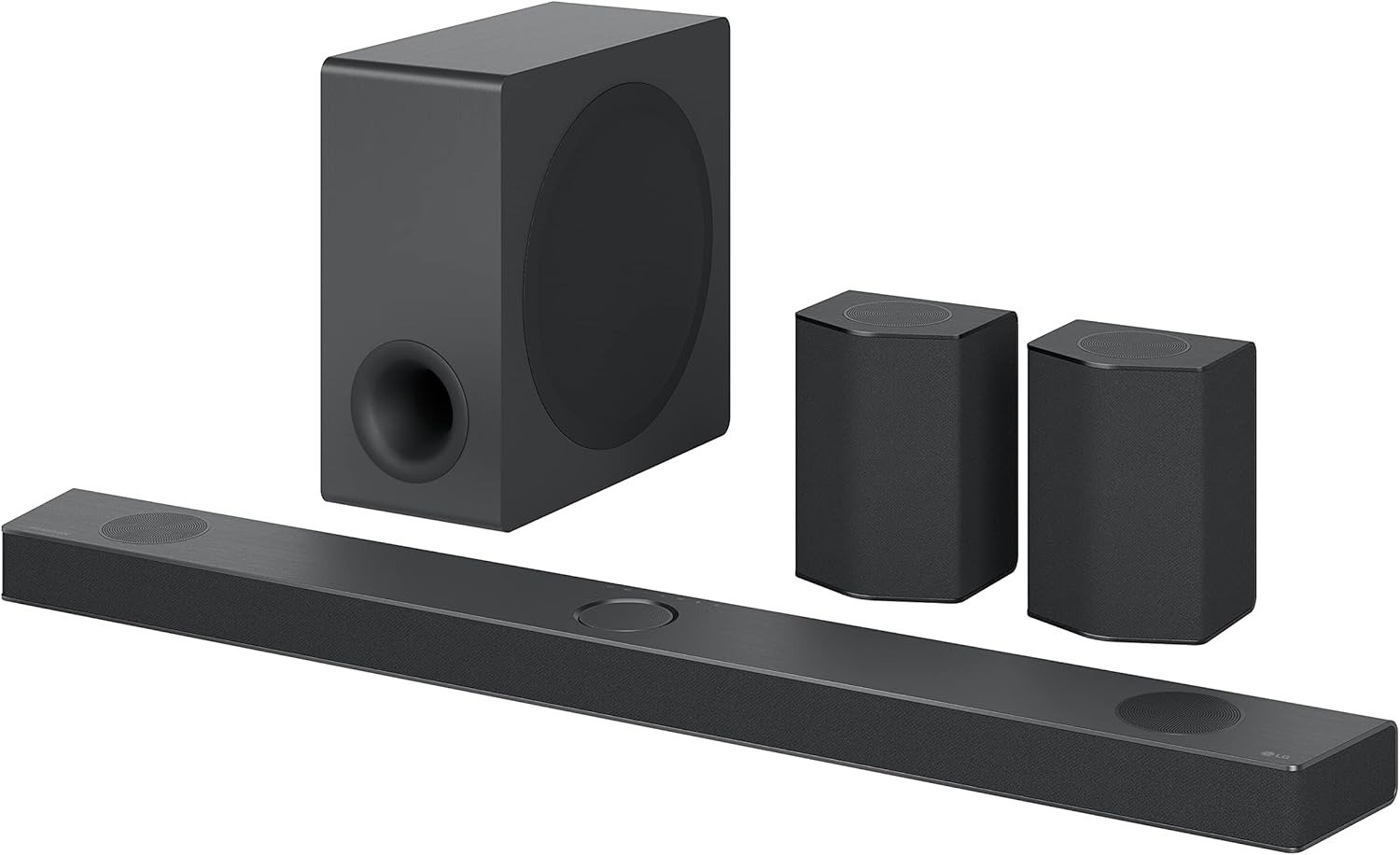
I came into the LG S95QR expecting a familiar premium soundbar story: bigger numbers, more channels, more logos, more promises. What changed my judgment was not the spec sheet first. It was the way the system shifts a room when the room is already starting to expose the limits of TV audio and simpler bars. Once that threshold is crossed, this stops feeling like an accessory and starts behaving like structural equipment. LG positions it as a 9.1.5-channel, 810W package with wireless subwoofer, included rear speakers, Dolby Atmos, DTS:X, IMAX Enhanced, AirPlay 2, Chromecast, and HDMI eARC support. Independent reviews broadly agree on the same pattern: strong immersion, very clear dialogue, wide spatial spread, and a bass balance that can need taming depending on the room and the listener.
The Result Looks Fine. The Problem Isn’t.
This is where most people misread their setup.
They hear cleaner TV sound and think the job is done. They hear a little more bass and assume they have arrived. They hear louder output and confuse volume with scale. But cinematic sound is not just louder, fuller, sharper. It has to detach from the hardware. It has to stop sounding like a bar under a screen and start behaving like a field.
That is the ugly middle zone the S95QR is trying to solve.
A lot of living rooms hit it quietly. You buy a larger TV. You sit farther back. You open the room into a dining area. The picture gets grander, but the sound still clings to the front wall like a coat hung on a nail. Reviewers kept circling the same strengths here: the S95QR throws a broad, room-filling presentation, its center presentation is unusually articulate, and its rear package makes it far more enveloping than the many bars that fake surround with side tricks alone. Users say similar things in less polished language: clear dialogue, huge bass, immersive rear activity, easier setup than expected.
What You’re Actually Feeling but Not Naming
You are not just hearing “bad TV sound.”
You are hearing front-wall collapse.
That is the sensation I kept coming back to while analyzing this category: everything happens near the screen even when the soundtrack is trying to tell you the space is larger. Footsteps do not travel behind you. Rain does not hover above you. Dialogue arrives clearly enough, but the world around that dialogue stays pinned to a single horizontal strip at the front of the room.
The annoyance grows in three ways:
- the room looks more expensive than it sounds
- the screen suggests scale the audio cannot carry
- the whole experience starts feeling thinner the longer you live with it
That is why people often describe the problem incorrectly. They say the TV lacks bass. Or they say they want more power. Or they say they need “better Atmos.” The deeper issue is spatial disbelief. The room does not close the circuit.
LG’s Architecture Here
LG’s architecture here is unusually aggressive for a soundbar system: a flagship package with rear speakers included, multiple up-firing drivers, and what LG marketed as a world-first triple up-firing arrangement, including a center up-firing speaker designed to improve vertical spread and speech anchoring. The included rear kit is not a token extra; LG says it uses a 6-channel rear arrangement with sound coverage up to 135 degrees, while RTINGS notes the rear speaker modules themselves include front-firing and up-firing elements rather than acting like minimal add-ons.
The Hidden Mechanism Behind the Miss
The miss is not caused by one missing feature. It is caused by a geometry failure.
When a room gets wider, seating gets deeper, and your expectations rise with a bigger panel, audio has to do three things at once:
| What the room demands | What weak systems do instead | What the S95QR is trying to restore |
|---|---|---|
| Push dialogue to the screen center without strain | Keep voices stuck low and narrow | Lift and stabilize speech so the screen feels like the source |
| Fill the side and rear field with discrete motion | Smear effects across the front | Build wraparound movement with dedicated rear channels |
| Add height cues that make scenes breathe | Fake spaciousness with brightness | Use up-firing drivers and room interaction to create vertical expansion |
That is the hidden mechanism behind why people either love this class of soundbar or feel cheated by it. If the room can reflect height cues reasonably well and the seating layout gives the rear speakers space to work, the jump can feel dramatic. If the room is acoustically awkward, the ceiling is too high, or the system is stuffed into a layout that blocks the rears, some of the magic leaks out before it reaches you.
This is also why the S95QR creates such polarized reactions. In review testing, it is repeatedly described as immersive, spacious, and dynamic with movies. At the same time, critics note that its default tuning can lean boomy, that the subwoofer can overstep, and that some listeners hear the presentation as less balanced than its strongest rivals unless adjusted. The system is capable. The room and the tuning decide how close it gets to greatness.
The Threshold Where the Outcome Quietly Breaks
Here is the threshold in plain English:
The LG S95QR becomes logical when your room and screen have already outgrown “better TV sound,” but you still do not want a full separates system.
That line matters because this is not a universal upgrade. It is a threshold product.
I would place the break point here:
| Threshold signal | What it usually means |
|---|---|
| Your TV is large enough that built-in sound now feels visibly outmatched | The image has become more cinematic than the audio can support |
| You sit far enough back that front-only sound loses body and direction | You need spread, not just loudness |
| You watch movies, Atmos titles, or concert mixes often enough to care where sounds land | Channel layout starts mattering more than spec-sheet hype |
| You want immersion without running wires for a full AVR system | Premium all-in-one packages become the practical ceiling |
| You have space behind or beside seating for rear speakers | This product’s architecture can actually do its job |
Now the harder truth.
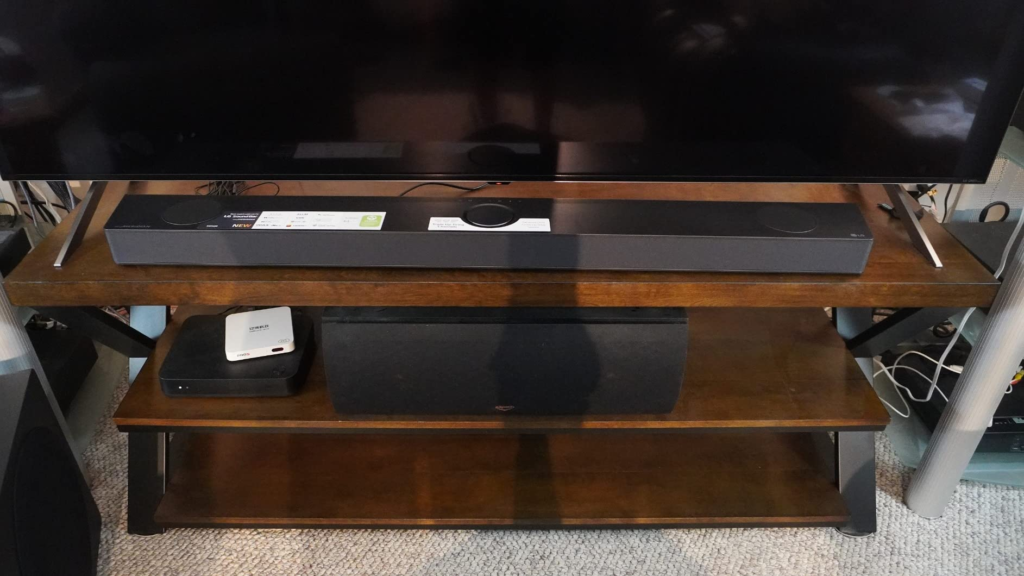
If you are still inside the “I just want clearer TV sound” stage, this is too much hardware, too much money, and too much physical presence. The main bar is wide, the package is substantial, and the whole system behaves like furniture-grade equipment, not a discreet little upgrade. LG’s own materials and retailer listings make that obvious: you are dealing with a large flagship bar plus subwoofer plus rear modules, not a minimalist add-on.
Why Most Buyers Misread This Too Early
Because they shop by labels instead of failure points.
They compare channel counts. They compare total wattage. They compare whether Atmos is on the box. They compare price drops and sale tags and assume they are making a rational move. But early in the process, those metrics can trick you.
Three traps appear again and again:
- feature-led judgment — buying the logo cluster instead of diagnosing the room
- early comparison trap — comparing premium bars before deciding whether you truly need rear-driven immersion
- soundbar optimism — assuming every expensive bar scales the room the same way
The S95QR makes this mistake easy because on paper it looks almost absurdly complete: 9.1.5 channels, 810W output, multiple HDMI features, voice-assistant ecosystem support, streaming convenience, rear speakers in the box. That breadth can seduce the wrong buyer. But the reviews tell a more mature story: yes, the feature set is extensive and the surround package is serious, but there are trade-offs. Several reviewers call out the bass as generous to the point of boom in default settings. Others mention that while the connectivity is strong, the lack of 4K/120 passthrough and HDR10+ passthrough is a real limitation for buyers who want a no-compromise gaming or source-switching hub.
Who Is Actually Inside This Problem
You are inside this problem if your room is asking for cinema, not just sound.
That usually means one of these people:
| You | Why the S95QR starts to make sense |
|---|---|
| The big-screen movie watcher | The image has already become grand enough to expose weak audio depth |
| The open-plan living room owner | Sound has more air to fill and front-only systems leave holes |
| The person who wants rear immersion without AVR complexity | Included wireless rears cut the setup burden dramatically |
| The dialogue-sensitive viewer | The center presentation is one of this system’s strongest recurring praises |
| The LG TV owner who wants a visually coherent setup | The industrial design, control integration, and placement logic fit that environment well |
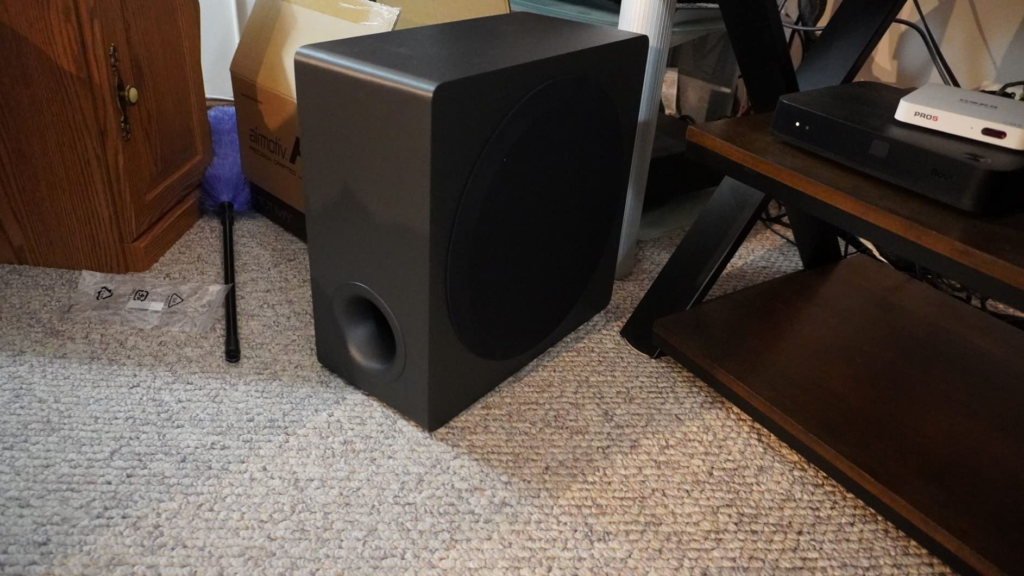
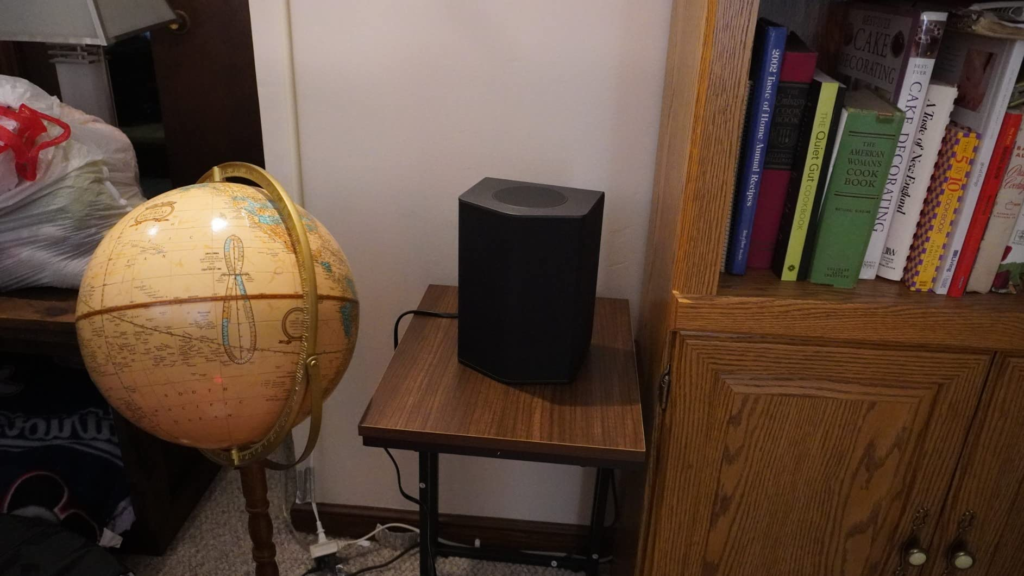
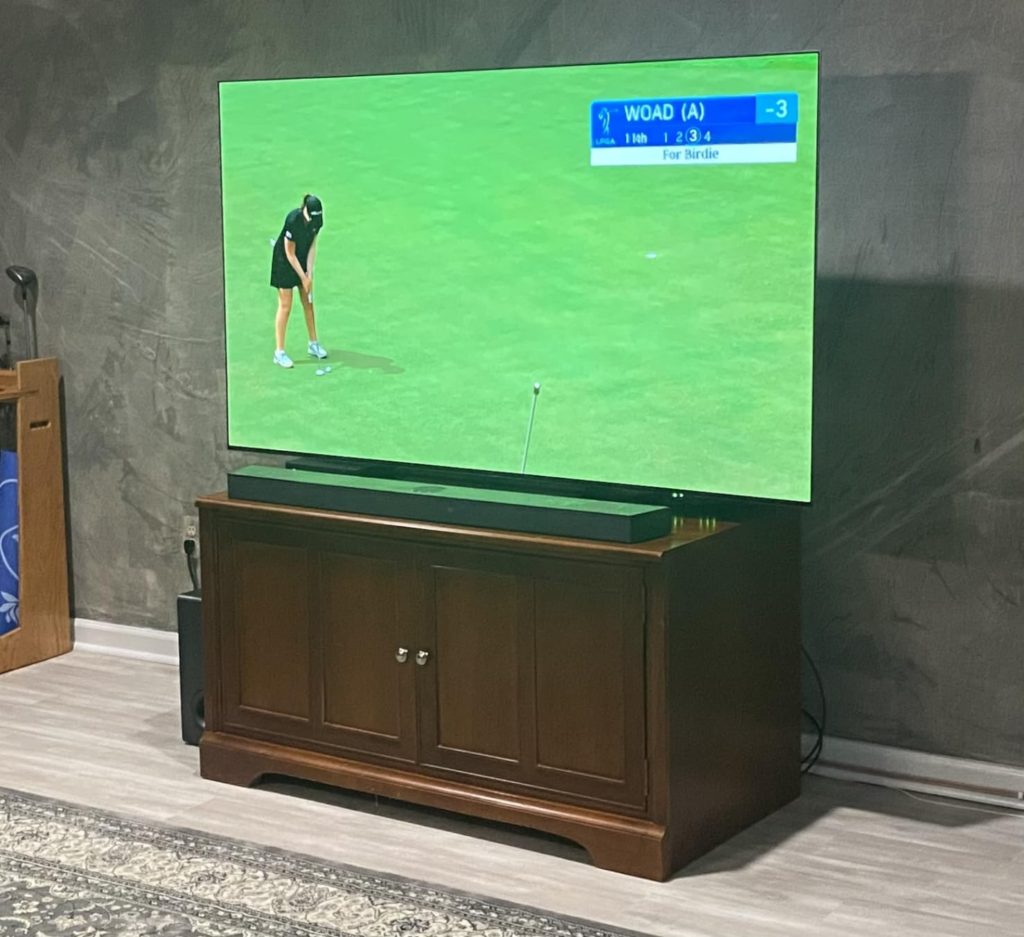
This last point matters more than people admit. Placement changes perception long before playback starts. A system like this alters the visual authority of a room. The bar belongs low and centered beneath a large screen, with clean horizontal breathing space on the media console. The subwoofer works best when it is not hidden like an apology. Tuck it near the front stage, give it room to breathe, and the setup stops looking like gadget clutter and starts reading like a deliberate theater zone. The rear modules should sit slightly behind the seating position, not merely beside it, so the room’s geometry supports the illusion instead of exposing it. LG’s own layout language and third-party impressions both reinforce that this is a room-shaping package, not just a sound upgrade.
Where Wrong-Fit Begins
This is the part too many “reviews” refuse to say cleanly.
The S95QR is the wrong fit if your real goal is one of these:
- a discreet bar for a small room
- a music-first, neutrality-first tuning without manual adjustment
- a gaming chain where 4K/120 passthrough is non-negotiable
- a plug-it-in-and-forget-it experience with zero interest in placement or tweaking
- a bargain at full flagship pricing
That is not an insult to the system. It is respect for the threshold.
Here is where regret usually starts:
| Wrong-fit condition | Why regret shows up later |
|---|---|
| Small room, close seating | The package can feel physically oversized and sonically excessive |
| You hate tuning bass or app adjustments | The default low-end emphasis may irritate you |
| You mostly stream casual TV and news | You are paying for theater architecture you will rarely activate |
| You expect the best rival-class performance in every category | Competing flagship bars can outperform it in out-of-box balance or Atmos precision |
| You buy it only because it is “high-end” | Prestige wears off faster than mismatch |
RTINGS found the default sound bass-heavy but adjustable. What Hi-Fi praised the connectivity and clear center channel, yet still framed the sound as improved rather than untouchable. AVForums and T3 liked the immersion and scale but also pointed to missing next-gen passthrough features. User sentiment follows the same contour: strong satisfaction when bought for a real cinematic use case, more hesitation when judged harshly against competing flagships or bought near full price without room matching.
The One Situation Where This Product Becomes Logical
Here it is.
The LG S95QR becomes the logical choice when you want genuine room-filling movie immersion, you have the space to place the rear speakers correctly, and you want to stop at the top edge of soundbar convenience without crossing into full AVR complexity.
That is the one situation.
Not “if you love good sound.”
Not “if you want the best.”
Not “if you have a big TV.”
Only this one.
In that lane, the S95QR is persuasive because it bundles the hard part. It does not ask you to imagine a future upgrade path. It arrives as a complete topology: main bar, wireless sub, rear speakers, height ambition, broad codec support, and enough power to energize a large room. Critics repeatedly describe it as LG’s most immersive and most convincing flagship soundbar of its generation, especially for movies, with surround performance that begins to approach what people actually mean when they say “home theater” rather than “nice TV audio.”
If that is your condition, the forward move is simple: LG S95QR.
What It Solves, What It Reduces, and What It Still Leaves to You
The honest version looks like this:
| It solves | It reduces | It still leaves to you |
|---|---|---|
| Flat front-heavy TV sound | The sense that action scenes shrink at the screen edge | Proper placement of bar, sub, and rears |
| Weak dialogue anchoring in busy scenes | The need to strain during complex mixes | Bass tuning for your room and taste |
| Fake surround created by processing alone | The disappointment of expensive-but-small sound | Accepting that room acoustics still matter |
| Upgrade fatigue from piecemeal add-ons | The urge to keep stacking partial fixes | Deciding whether missing 4K/120 passthrough matters in your setup |
| The visual mismatch between premium screen and average audio | The psychological itch that the room is underperforming | Buying at a price that makes structural sense |
And that last line matters. A lot.
The S95QR is easier to defend when it is treated as an older flagship bought for the right room and at the right discount, not as a blind full-price purchase made on channel count lust alone. LG’s own U.S. product page marks it discontinued, while review comparisons and current category rankings make clear the market has moved on to newer models. That does not make the S95QR weak. It makes price discipline part of the fit equation.
Final Compression
A cheap soundbar fails loudly.
A mismatched premium soundbar fails quietly.
That is what makes this category expensive in such a sneaky way. You can spend a lot of money and still live with a room that never quite opens. The LG S95QR is not the answer to every living room, every buyer, or every taste. But once your setup crosses the threshold where front-heavy sound starts shrinking the entire experience, this model becomes easy to understand.
Not because the spec sheet is flashy.
Because the room stops arguing with the screen.
If your break point starts there—big display, real movie use, space for rears, no appetite for AVR complexity—this is where the decision stops being vague. And if that is your actual condition, waiting usually costs more in daily disappointment than choosing cleanly now.
Transparency Note:
This analysis is built on aggregated real-world experience.
It extracts what repeatedly holds, what breaks, and what users uncover only after living with the system—then shapes it into a clear model you can use immediately.
Think of it as structured experience, refined and presented so you don’t have to learn it the hard way.
“A quick note: Don’t believe the star ratings, but trust personal experience. This article is a compilation of collected experiences”