Bose Smart Soundbar 600 + Bass Module 500
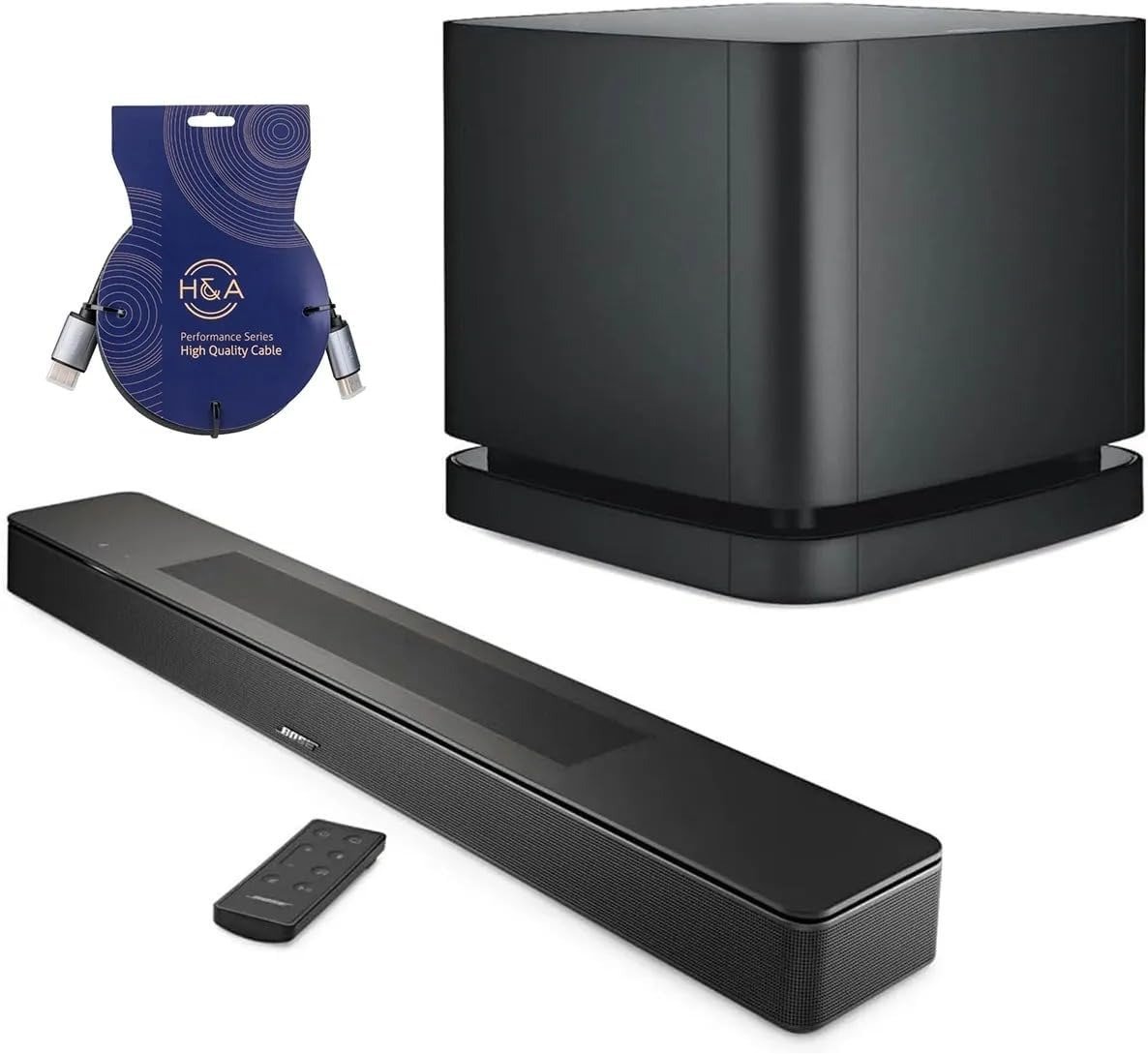
BOSE SMART SOUNDBAR 600 + BASS MODULE 500: THE MOMENT “CLEAR” STOPS BEING ENOUGH
The Result Looks Fine. The Problem Isn’t.
The trap is simple. Your TV sounds cleaner than it used to, the dialogue is easier to catch, and for a few nights you tell yourself the problem is solved. Then an action scene rolls in, the floor stays still, the room never opens up, and something quietly collapses.
Not volume.
Not clarity.
Conviction.
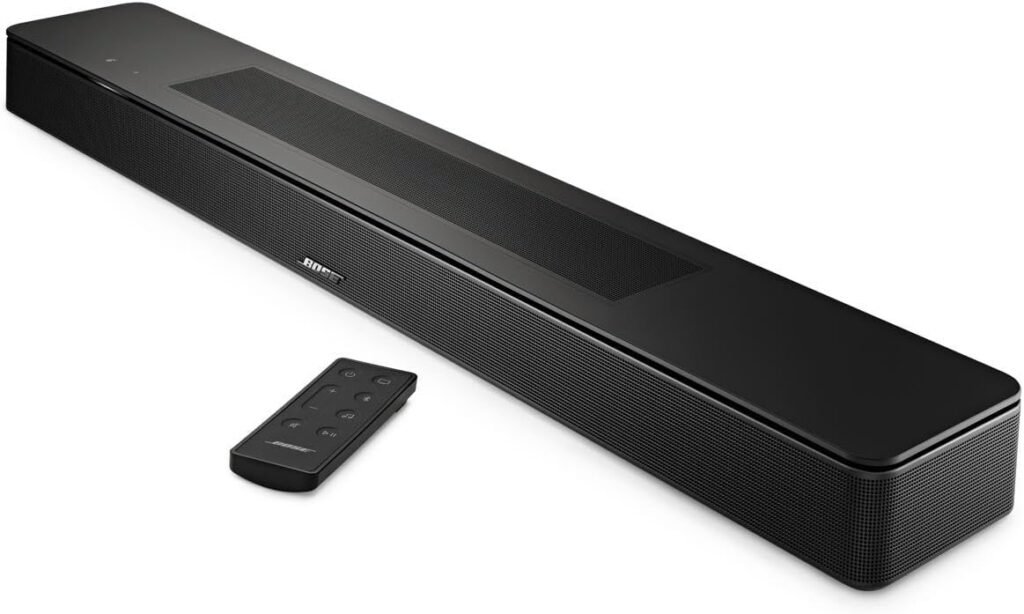
That is the whole story of the Bose Smart Soundbar 600 when people judge it too early. On paper, it does a lot right: Dolby Atmos support, a compact body, five transducers in a 3.0.2 layout, two upward-firing drivers, HDMI eARC, optical, Wi-Fi, Bluetooth, AirPlay 2, Chromecast, Alexa, and Bose’s TrueSpace processing. Reviewers consistently praise its dialogue clarity and spacious presentation for its size, while also circling the same missing piece: low-bass authority.
What struck me in the measurements, pro reviews, and owner feedback was not that the bar sounds bad. It does not. The more uncomfortable truth is that it sounds good enough to delay the correct decision. That is worse, because it hides the break point.
What You’re Actually Feeling but Not Naming
Most people do not say, “I am missing sub-bass extension and tactile anchor.” They say something looser.
Something is off.
Movies feel flatter than expected.
The sound is clean, but it does not land.
That vague dissatisfaction matters. It is the friction that keeps appearing in owner reports and lab impressions from different angles: voices are clear, placement is respectable, the bar gets impressively wide for a chassis this small, but the bottom octave never really arrives unless you add a separate subwoofer. RTINGS says the 600 is balanced and clear for dialogue and music, but lacks low-bass rumble as a standalone bar; TechRadar reaches the same conclusion from a listening perspective.
I keep coming back to one image: this soundbar is like a beautifully lit stage with no floor under it. You see the scene. You hear the lines. But the body of the performance is not fully carrying its own weight.
That is why people often love it first and question it later.
The Hidden Mechanism Behind the Miss
The hidden variable is not “Bose tuning” in the abstract. It is physical limitation crossing into perceptual disappointment.
The Smart Soundbar 600 is compact by design—about 27.3 inches wide and 2.2 inches tall, with five total transducers, including two upward-firing drivers for Atmos effects. Bose built it to fit under almost any TV, not to act like a giant cabinet moving air like a dedicated subwoofer can. That design choice gives you elegance, placement flexibility, and a surprisingly open soundfield. It also creates the exact limit that many buyers eventually run into.
This is the mechanism:
| What the soundbar does well | What it cannot fully fake |
|---|---|
| Centers voices clearly | Pressurize a room with deep bass |
| Throws effects wider than TV speakers | Add chest-level impact in action scenes |
| Creates some vertical lift with up-firing drivers | Replace the weight of a real subwoofer |
That tradeoff is not a flaw in engineering. It is the cost of size. The Soundbar 600’s strongest reviews all orbit this same geometry: compact body, strong dialogue, credible Atmos height for the class, but limited bass depth unless you expand the system.
So the miss is not mysterious. You are hearing a clean top and middle layer without the lower foundation that turns “nice” into “cinematic.”
The Threshold Where the Outcome Quietly Breaks
This article lives under one model only: Threshold.
The threshold is the point where a compact Atmos bar stops feeling like an upgrade and starts feeling like an incomplete answer.
For the Bose 600, that threshold usually appears in one of three situations:
| Threshold trigger | What starts happening | Why the standalone bar feels smaller |
|---|---|---|
| You watch effects-heavy films or games | Explosions and score swell, but the room does not press back | The bar lacks the low-end force a separate sub adds |
| You move from late-night TV to “movie night” expectations | Dialogue stays clean, spectacle stays polite | Width survives; impact does not |
| You sit in a medium room and want immersion, not just clarity | The bar projects, but does not fully anchor | Small enclosure, no dedicated subwoofer |
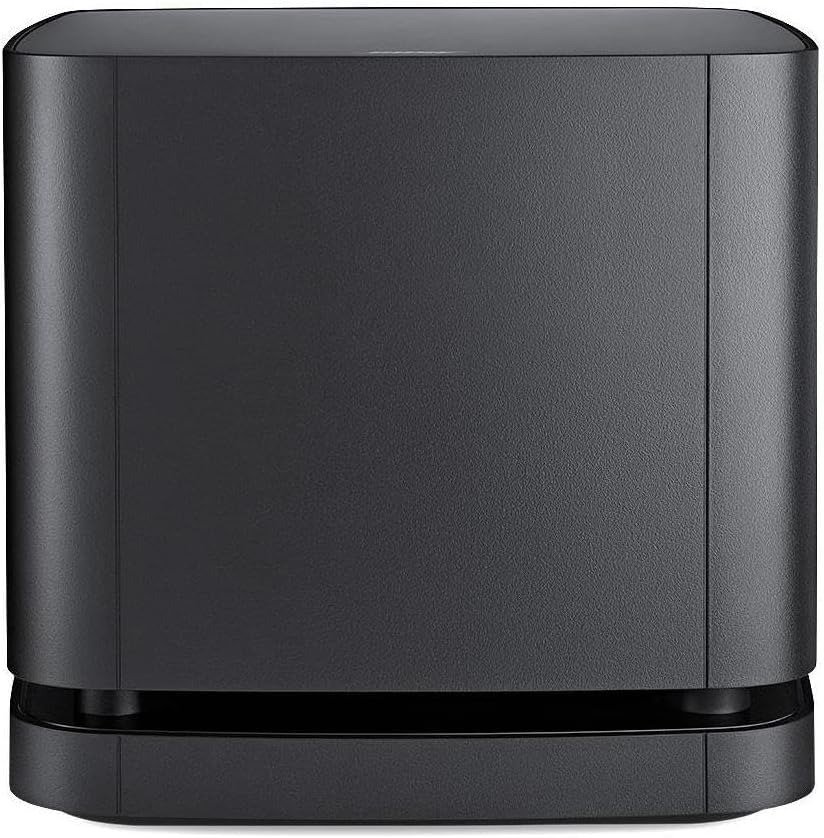
That threshold is exactly why the Bass Module 500 exists. Bose describes it as a compact wireless 10-inch cube designed to add “sound you can feel,” and that phrasing, for once, is close to the real value. The sub is not there to make the system louder in some vulgar way. It is there to restore missing physical consequence.
Once that clicks, the product changes category in your head. You stop asking, “Is the bar good?” and start asking, “Am I already past the point where a bar alone can no longer do the job I expect?”
That is the right question.
Why Most Buyers Misread This Too Early
Because clarity flatters judgment.
A bar that instantly sharpens speech and spreads sound beyond the TV feels like a solved problem on day one. It seduces the ear in the most respectable way possible: not with cartoonish bass, but with neatness, focus, and easy setup. Bose also makes that first week especially smooth—HDMI eARC or optical, app-guided setup, voice control, wireless streaming, and a compact chassis that does not dominate the room.
That creates three early-reading errors:
- Feature-led judgment: “It has Atmos, so it must be cinematic enough.”
- Short-session bias: dialogue and streaming music sound good before the low-end absence becomes emotionally obvious.
- TV-upgrade illusion: compared with TV speakers, the leap is large enough to mask what is still missing.
You may think, at first glance, that the bar’s up-firing drivers solve the immersion problem by themselves. The more sobering truth is that height cues and low-end grounding are different jobs. One gives you lift. The other gives you weight. Without both, the experience can feel airy rather than complete. TechRadar praises the 600’s real up-firing Atmos implementation over rivals that rely more heavily on virtual trickery, but still flags limited bass and no DTS:X; RTINGS also notes more cinematic effect with TrueSpace and Atmos, while clearly pointing out the missing rumble without a sub.
That is not a contradiction. It is the threshold revealing itself.
Who Is Actually Inside This Problem
Not everyone needs the bundle.
If your life with a soundbar is mostly news, sitcoms, YouTube, podcasts, and modest-room TV watching at reasonable volume, the Bose Smart Soundbar 600 alone can be a smart, elegant answer. Its discrete center presentation and dialogue enhancement are legitimate strengths, and reviewers consistently call out speech intelligibility as one of the bar’s best traits.
You are inside this problem if three things are true:
| You are likely inside the threshold if… | Why it matters |
|---|---|
| You care about film tension more than mere audibility | You need bass weight, not just cleaner voices |
| You want your room to feel larger than the chassis looks | Spatial cues need a low-end anchor |
| You are already nudging bass settings and still feeling polite impact | You are asking a compact bar to do subwoofer work |
That is where the bundle starts making sense—not as luxury theater cosplay, but as correction.
Where Wrong-Fit Begins
Wrong-fit begins the moment you expect this bundle to behave like a full rear-speaker system or a giant sub-driven home cinema rig.
It will not.
The Smart Soundbar 600 with Bass Module 500 is not for people chasing maximalist room-shaking violence, nor for buyers who want every codec under the sun, nor for those who demand multiple HDMI inputs on the bar itself. TechRadar notes the single HDMI limitation and no DTS:X support; Expert Reviews is also clear that non-Atmos material is less convincing than true Atmos content.
It is also the wrong fit if your real complaint is not bass at all, but a desire for rear-channel precision. A sub fixes depth and weight. It does not magically create the discrete behind-you realism of a full surround package.
So the exclusion line is clean:
- Not for the buyer who wants brute-force home theater for a large room.
- Not for the codec obsessive who hates compromises.
- Not for the person who actually needs rear speakers more than bass reinforcement.
The bundle is strongest in smaller to medium rooms where elegance, easy living, and a meaningful cinematic step matter more than checkbox excess. That is where Bose’s design philosophy stops looking restrained and starts looking disciplined.
The One Situation Where This Product Becomes Logical
Here is the exact situation.
You already know TV speakers are dead to you.
You like clean dialogue.
You want Atmos that is believable enough to matter.
But what really bothers you is that movies feel thin at the bottom.
That is the moment the Bose Smart Soundbar 600 + Bass Module 500 becomes logical.
Not because the soundbar suddenly transforms into some fantasy flagship.
Because the system finally closes its most obvious structural gap.
The 600 brings the qualities Bose is good at here: compact fit, tidy industrial design, strong center clarity, convincing width for the size, real up-firing Atmos hardware, simple setup, and wide streaming support. The Bass Module 500 adds the missing floor—wireless, compact, easier to place than a hulking sub, and meant to be the piece that turns “I can hear it” into “I can feel why this scene matters.” Official Bose materials frame the sub as a wireless 10-inch cube built to add physical bass presence, and owner comments often describe the combination in almost the same language: fuller, more cinematic, more complete.
That is the authorization point. Not before.
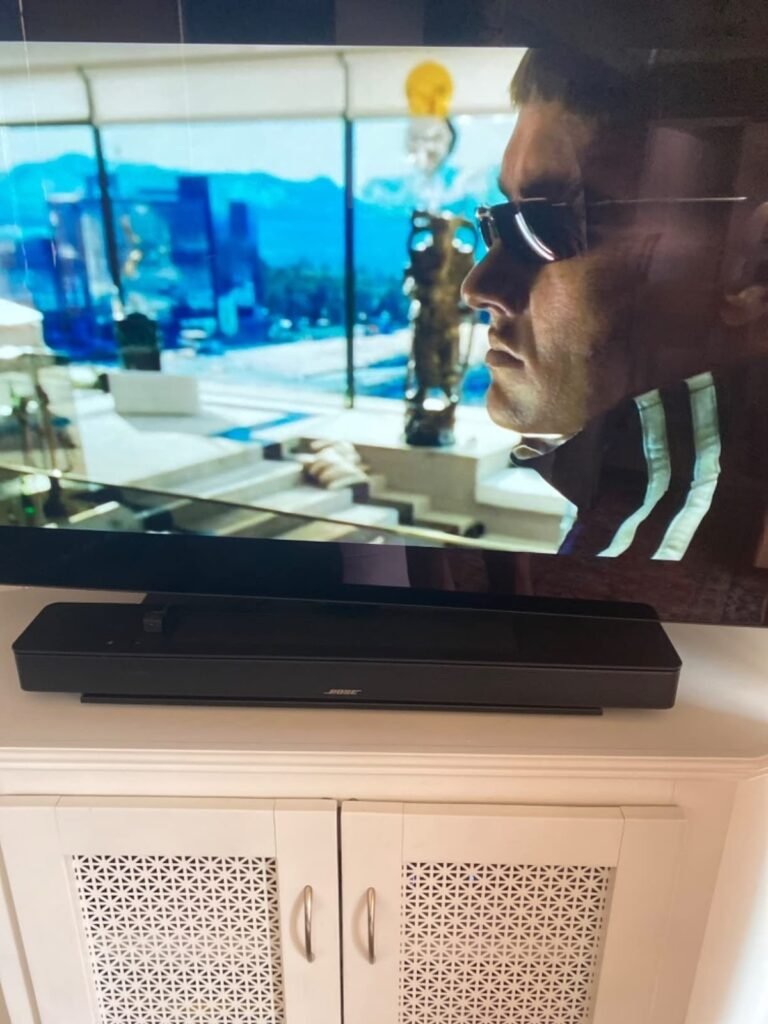
What It Solves, What It Reduces, and What It Still Leaves to You
What it solves:
- The standalone bar’s biggest weakness: missing low-end authority.
- The emotional flatness of action scenes that sound clean but not consequential.
- The mismatch between Bose’s airy presentation and your expectation of physical movie sound.
What it reduces:
- The urge to keep turning volume up just to create excitement.
- The sense that Atmos height is floating without a foundation.
- The buyer’s remorse that often appears when a compact soundbar sounds impressive for a week, then starts to feel slight.
What it still leaves to you:
- You still need the right expectations for room size and use case.
- You still do not get rear speakers in the box.
- You still live with Bose’s platform choices, including no DTS:X on the 600 and the bar’s limited physical input story.
That final category matters. I do not trust audio articles that pretend every problem dissolves after checkout. This system is a targeted fix, not a universal pardon.
Final Compression
After reading the measurements, the major reviews, the user praise, and the recurring complaints, I do not see this bundle as a flashy upgrade. I see it as a threshold correction.
The Bose Smart Soundbar 600 by itself is the kind of product people underestimate and overestimate in the same week. It is better than cheap bars at sounding composed, articulate, and genuinely spacious for its size. But that same refinement can hide the fact that it still leaves movie sound emotionally underfed when your expectations rise.
The Bass Module 500 is the piece that stops the system from living only from the neck up.
If your break point is not clarity, but missing physicality—if that is the condition you are actually dealing with—then this bundle is the logical next step.
Transparency Note:
This analysis is built on aggregated real-world experience.
It extracts what repeatedly holds, what breaks, and what users uncover only after living with the system—then shapes it into a clear model you can use immediately.
Think of it as structured experience, refined and presented so you don’t have to learn it the hard way.
“A quick note: Don’t believe the star ratings, but trust personal experience. This article is a compilation of collected experiences”