Instant Pot Pro Plus Review: Why The App Timer Lies About How Long Dinner Takes
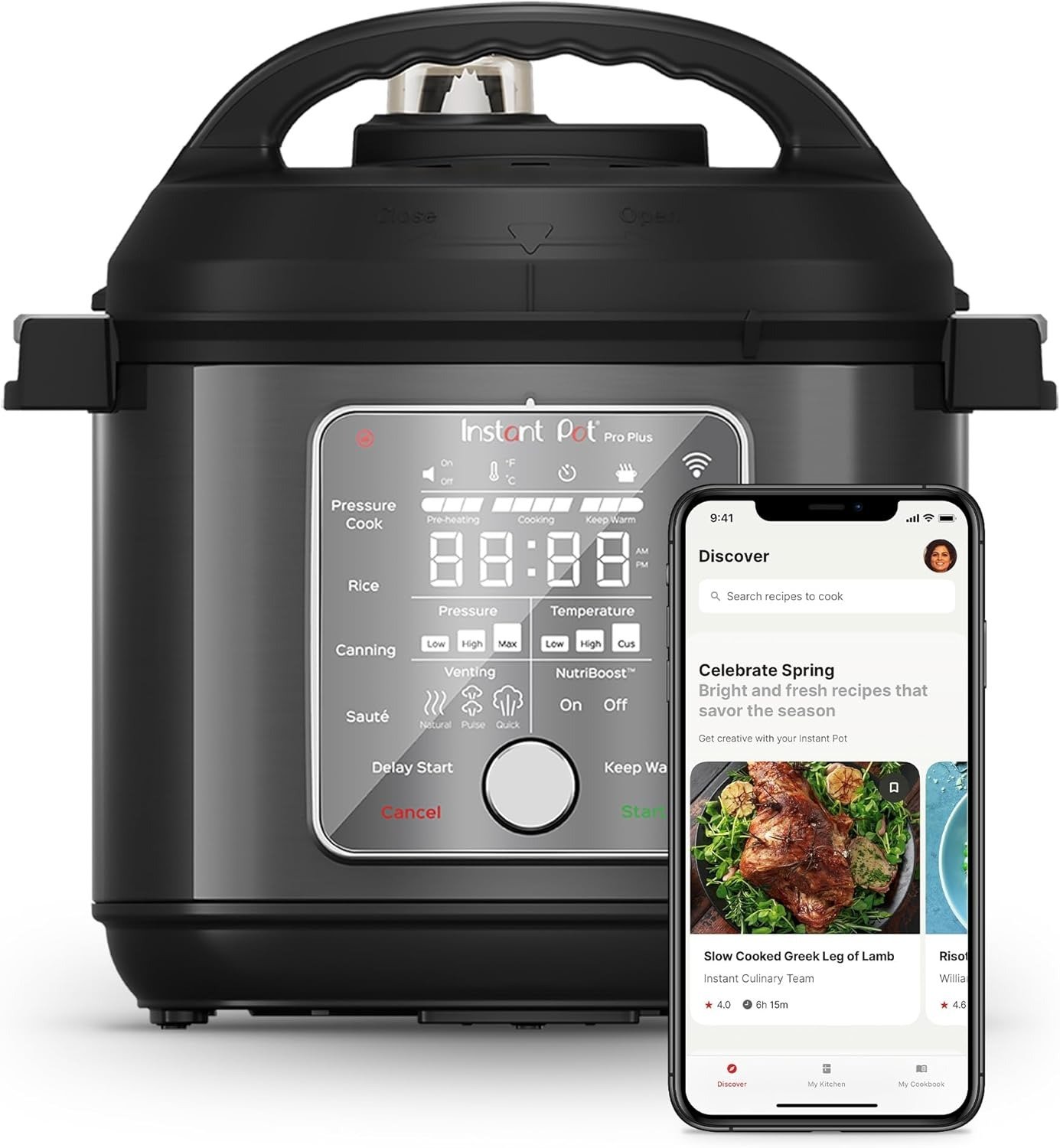
INSTANT POT PRO PLUS
You set the Instant Pot Pro Plus for an 18-minute recipe and mentally block out maybe 25 minutes before dinner’s on the table. Twenty minutes pass. Then thirty. The display still reads “Pressurizing” or “Venting,” the lid is still locked, and your evening isn’t where you planned it to be.
That gap — between the number on the screen and the number in real life — is the first thing that kept surfacing as I went through hundreds of owner reviews, app store complaints, and support threads on this exact machine. It isn’t a defect. It’s baked into how pressure cooking physically works, and almost nobody tells you that before you buy.
Instant Pot Pro Plus Reviews: The Result Looks Fine — The Problem Isn’t
Most of what’s written about this cooker is genuinely positive, and it should be. Best Buy has this specific model rated 4.6 out of 5 stars across 101 reviews, and Amazon’s aggregated feedback shows quality mentioned positively far more often than negatively, with ease of use rated the same way. Owners describe tender, consistent results, and more than one mentions starting dinner from their phone while out of the house — the exact convenience it’s sold on.
None of that is manufactured. The food is good. The touchscreen genuinely simplifies things for someone new to pressure cooking. But “the result looks fine” and “the problem is solved” turn out to be two separate claims. The friction shows up later — not in the food, but in three specific places owners keep circling back to: the app, the sous vide function, and how long dinner actually takes versus what the screen promised.
Here are the basics before going further:
| Instant Pot Pro Plus 6 Qt — Quick Facts | |
|---|---|
| Capacity | 6 quarts |
| Cooking functions | 10-in-1: pressure cook, slow cook, sauté, steam, sous vide, rice, yogurt, canning, NutriBoost, keep warm |
| Power | 1,200 watts, 120V |
| Control | Touchscreen + Instant Connect app |
| Steam release | 3 modes — natural, pulse, quick, via WhisperQuiet technology |
| Pot material | Tri-ply stainless steel with an aluminum core, stovetop- and oven-safe up to 350°F |
| Warranty | One year, limited |
| Made/sold by | Instant Brands, which emerged from Chapter 11 bankruptcy in 2024 under Corelle Brands |
| Typical price | Roughly $190–$220 new, frequently discounted — confirm the live listing |
Instant Pot Pro Plus App Complaints: What You’re Actually Feeling but Not Naming
Most complaints aren’t really about the pot failing to cook. They’re about the app not matching what the pot is actually doing. One Best Buy reviewer summed up the core limitation well: the app mostly reports elapsed time and current mode without offering much real control over settings. Another owner noted connectivity issues at first that eventually got resolved.
Across the App Store and Google Play, the specific complaints cluster around a few things: measurement units that aren’t consistent from recipe to recipe, a save-and-favorite feature that glitches often enough to be genuinely annoying, and — the one that matters most — recipe timers that don’t account for preheating or natural pressure release, so an 18-minute recipe can end up taking over an hour from start to finish. Some users also report the unit defaulting to the wrong cook cycle at the end of a program.
None of that is you misreading your own kitchen. It’s a documented gap between what the interface promises and what the hardware is actually doing.
Instant Pot Pro Plus Sous Vide Accuracy: The Hidden Mechanism Behind the Miss
Sous vide is real on this unit — and it’s shared with the cheaper Duo Plus, so if that’s your only reason for choosing Pro Plus, you should know that going in.
Here’s the mechanism nobody explains at the point of sale: the pot uses a single temperature sensor mounted at the bottom, with no active water circulation. For a thin, single layer of food, that setup can hold impressively close to your target. But once food is stacked or blocks the bottom of the pot, a gap of five to seven degrees Fahrenheit can open up between the water at the top and the water at the bottom. Why does that matter more than it sounds like it should? Because Instant Pot sells its own standalone immersion circulator as a separate product for exactly this reason — even the company that built your multi-cooker treats “convenient sous vide” and “precision sous vide” as two different jobs.
| Built-In Sous Vide (Pro Plus) | Dedicated Immersion Circulator |
|---|---|
| One sensor, mounted at the bottom | Continuous sensing with active circulation |
| No water movement | Constant water movement |
| Reliable for thin, single-layer food | Built for stacked, thick, or precision cuts |
| No extra gadget or storage needed | Tighter accuracy, at added cost |
Instant Pot Pro Plus Cook Time: The Threshold Where “Quick” Quietly Breaks
The “quick” promise holds exactly as long as you’re mentally adding preheat and release time yourself. It breaks the moment you plan your evening around the number on the app alone — and that’s precisely why an 18-minute recipe can eat over an hour of a weeknight once preheat and natural release are factored in. Separately, one owner noted it heats up slower than other brands they’ve owned.
Call this the real-time gap. Once you know to add it, “quick” stops being a false promise and starts being an honest one:
| What the App Shows | What It Often Skips | Realistic Add-On |
|---|---|---|
| Pressure-cook time | Time to build pressure + release | +15 to +35 minutes |
| Sous vide soak time | Time to bring the water to temperature | +10 to +20 minutes |
| Slow cook / yogurt / keep warm | — | Minimal to none |
Instant Pot Pro Plus vs Duo Plus: Why Most Buyers Misread This Too Early
The lazy version of this comparison asks, “why pay almost double for the same pot?” It’s the wrong question. Both machines share slow cook, pressure cook, steam, sauté, rice, yogurt, keep warm, and sous vide. What Pro Plus actually adds is narrower and more specific: Wi-Fi and app control, a touchscreen instead of a dial, a third steam-release mode alongside natural and quick, silicone-covered pot handles, and dedicated canning settings.
So the real question isn’t which one cooks better — the food is comparable. It’s whether those five specific additions are worth the premium to you, or whether you’d be paying for a feature set you won’t actually use. One reviewer who upgraded said as much directly: nothing about the newer model felt necessary, since their older one still worked like new.
| Instant Pot Rio | Instant Pot Duo Plus | Instant Pot Pro Plus | |
|---|---|---|---|
| Functions | 7-in-1 | 9-in-1 | 10-in-1 |
| Sous vide | No | Yes | Yes |
| Wi-Fi / app control | No | No | Yes |
| Steam release modes | 1 | 2 | 3 |
| Canning | No | No | Yes |
| Control style | Buttons | Dial + panel | Touchscreen |
| Typical price | ~$99 | Mid-range | ~$200 |
Who Should Buy the Instant Pot Pro Plus: Who’s Actually Inside This Problem
This is the right cooker if:
- You’re currently running a separate pressure cooker, slow cooker, rice cooker, and yogurt maker, and you want one appliance and one footprint on the counter instead of four.
- You genuinely start cooking remotely from another room, and monitoring — not full mid-cook override — is enough for you.
- You’ll actually use the third steam-release mode or the canning function, not just admire that they exist.
- You’re fine treating sous vide as a casual, thin-cut tool rather than a chef-grade one.
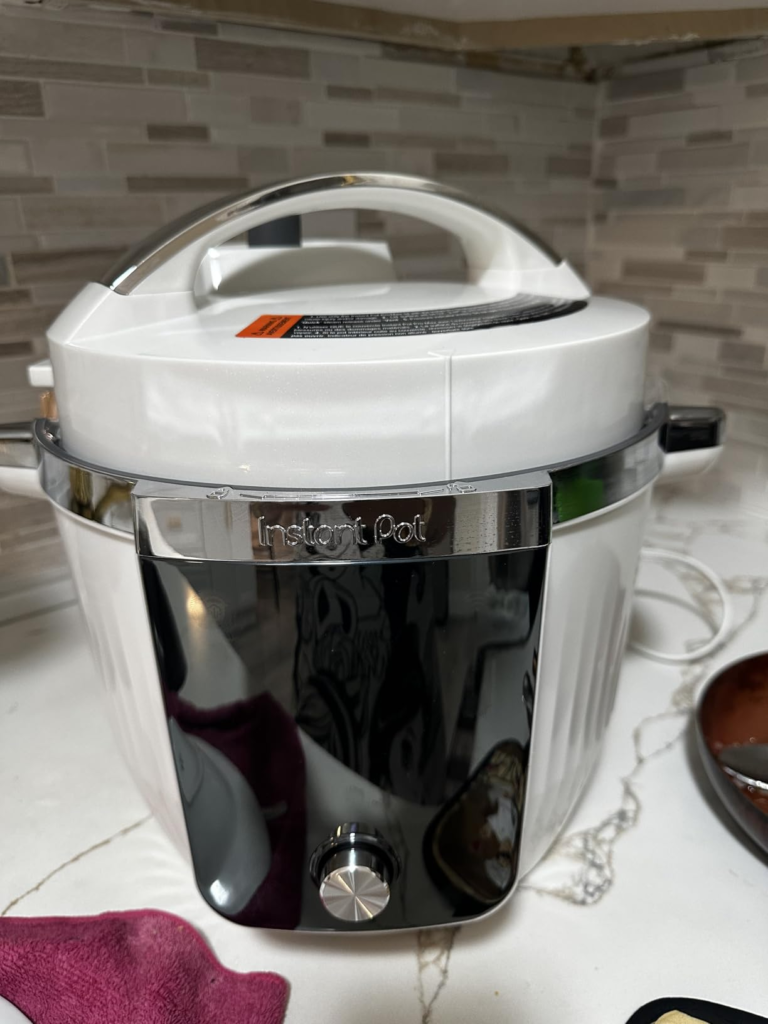
Instant Pot Pro Plus Cons: Where Wrong-Fit Begins
Skip it, or at least wait, if:
- You already own a working Duo or Duo Plus. The functional upgrade here is thinner than the price gap suggests.
- Precision sous vide is your actual reason for shopping — a dedicated circulator gets you there, and Instant Pot itself sells one for exactly that reason.
- You’re sensitive to lingering food smells and unwilling to do upkeep. The silicone ring absorbs odor from strong dishes like curry or bone broth, and Instant Pot’s own guidance suggests replacing it every six to twelve months with regular use.
- Fast support matters to you. Brand-wide complaint-forum data — which skews toward already-dissatisfied customers by design — shows a 2.5-out-of-5 average across 92 reviews, with slow support and warranty response as recurring themes.
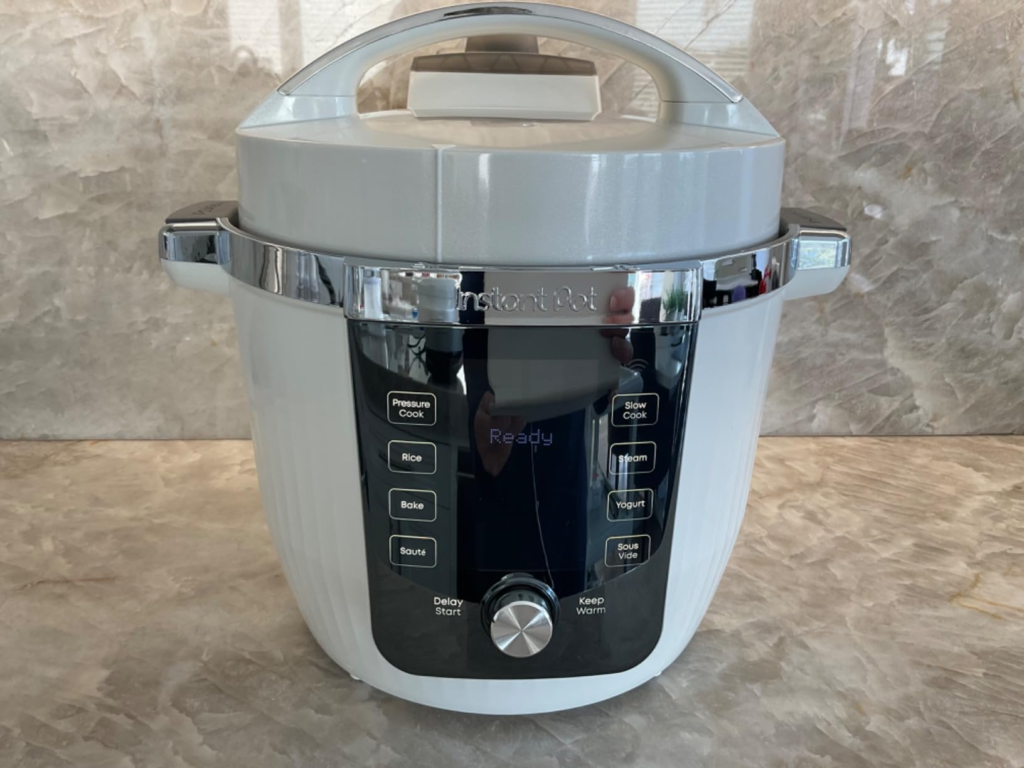
Is the Instant Pot Pro Plus Worth It: The One Situation Where It Becomes Logical
Strip away the marketing, and the case for paying the premium over Duo Plus is narrow but real: you want one machine replacing four gadgets, you’ll use remote-start convenience for real rather than just imagining it, you treat the app as a nice-to-have layer rather than a precision tool, and you’re willing to spend thirty seconds on ring maintenance after a strong-smelling meal. In that specific case, the extra cost buys usable convenience — not a “smart” label you’ll never touch.
Instant Pot Pro Plus Pros and Cons: What It Solves, Reduces, and Still Leaves to You
| Solves | Reduces | Still Leaves to You |
|---|---|---|
| Countertop clutter from several single-job gadgets | Guesswork for pressure-cooking beginners, via guided recipes | Sealing-ring cleaning and periodic replacement |
| “Did I actually start dinner” uncertainty, via remote monitoring | Active, hands-on time standing at the stove | Doing the real-time-gap math yourself |
| Inconsistent results from stovetop guessing | The learning curve of a new appliance | Patience with occasional app rough edges |
| A safer, three-mode steam release | — | Registering the unit and keeping your receipt |
Instant Pot Pro Plus FAQ: The Questions Everyone Asks Before Buying
| Question | Answer |
|---|---|
| Is the Instant Pot Pro Plus worth the extra money over the Duo Plus? | Only if you’ll actually use the Wi-Fi app, the third steam-release mode, or canning — the two share the same core pressure-cook, slow-cook, and sous vide functions. |
| Does the app let you fully control the cooker remotely? | Mostly monitoring, not full override — several owners note it reports status more than it changes settings. |
| Is it accurate for sous vide? | Good for thin, single-layer food; less reliable for thick or stacked cuts, since it relies on one bottom-mounted sensor with no circulation. |
| How often should I clean or replace the sealing ring? | Clean it after every strong-smelling meal, and plan on replacing it roughly every six to twelve months with regular use. |
| Has the Instant Pot Pro Plus been recalled? | Not as of this writing. Other Instant Pot models have been recalled in the past — the Gem 65 in 2018–19 for an overheating risk and the 8-quart Duo in 2023 for a burn hazard — so register your unit and follow the venting instructions regardless of model. |
| Who makes Instant Pot now, and does the warranty still hold up? | Instant Brands emerged from Chapter 11 bankruptcy in 2024 under Corelle Brands. The one-year warranty is still honored, though response times can be slow, so register immediately and keep your receipt. |
Instant Pot Pro Plus Review: Final Verdict
What’s left, once the marketing language is stripped away, is a genuinely capable multi-cooker with one real weak point — its relationship with time and precision — and one real strength: it actually replaces the gadgets it claims to.
If you recognized your own kitchen somewhere in these pages — the crowded counter, the habit of checking on dinner from another room, the choice to trade lab-grade sous vide for one less thing to store — that recognition is the actual answer to whether this is worth buying.
Transparency Note:
This analysis is built on aggregated real-world experience.
It extracts what repeatedly holds, what breaks, and what users uncover only after living with the system—then shapes it into a clear model you can use immediately.
Think of it as structured experience, refined and presented so you don’t have to learn it the hard way.
“A quick note: Don’t believe the star ratings, but trust personal experience. This article is a compilation of collected experiences.”