RING STICK UP CAM BATTERY (2-PACK) REVIEW: I THOUGHT ONE BATTERY WAS ENOUGH. IT WASN’T.
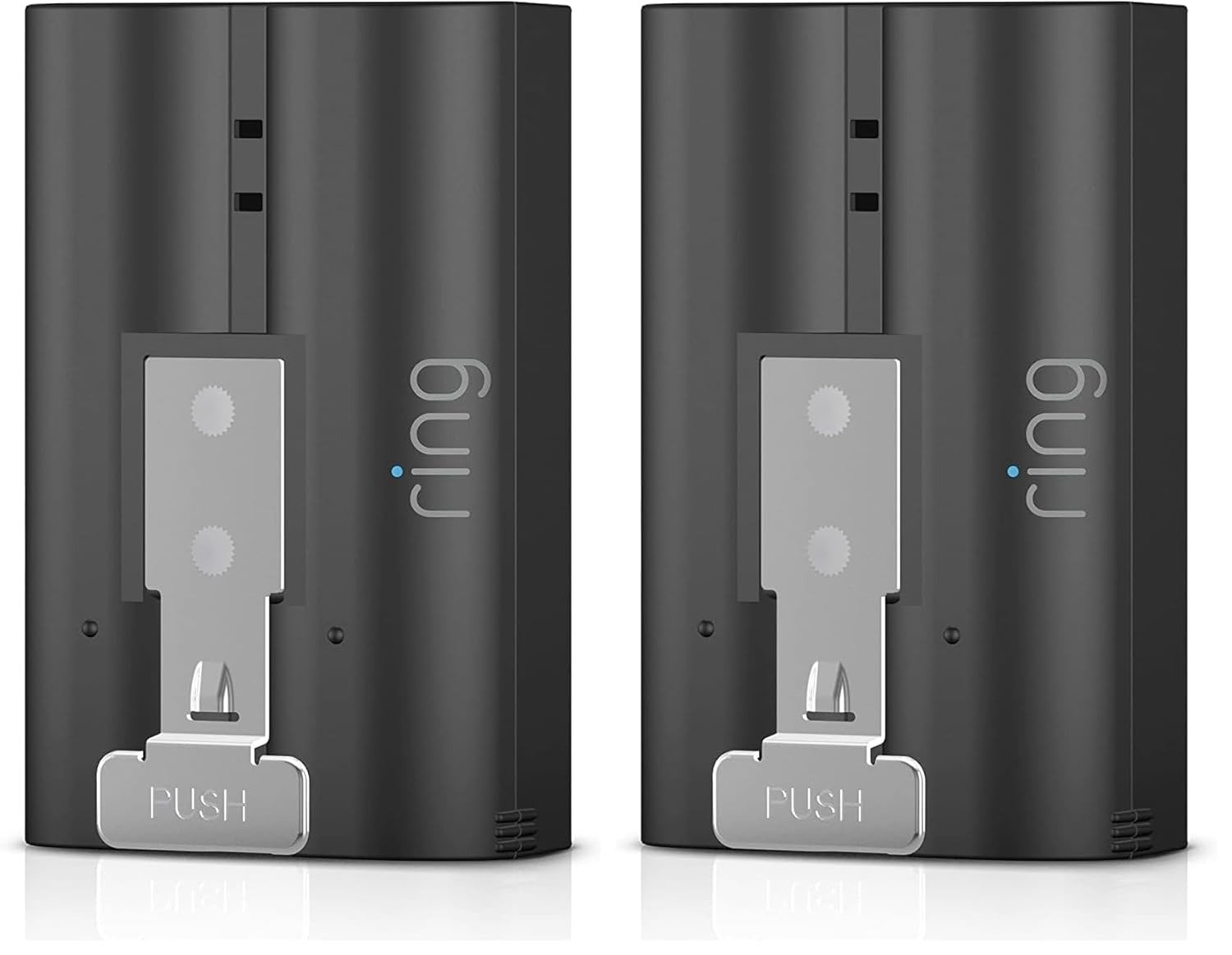
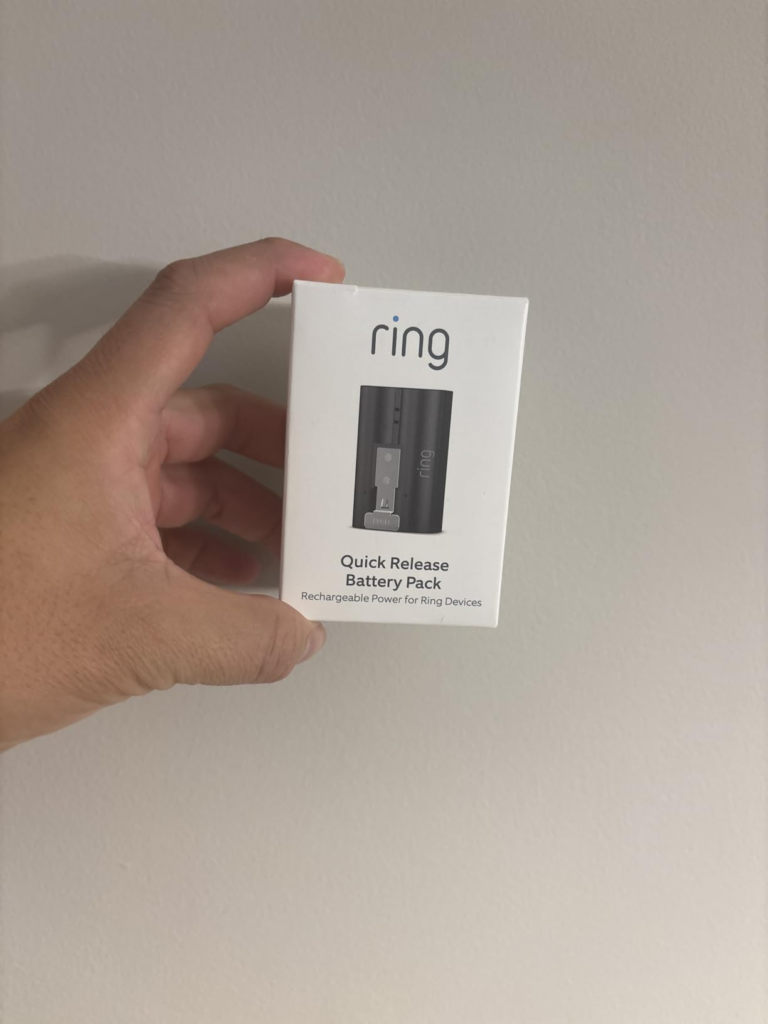
RING STICK UP CAM BATTERY (2-PACK)
Here’s the part nobody puts in the product photos: your app can say 68% and your camera can still miss the one thing you needed it to see. Not because anything is broken. A battery-only security camera goes through a quiet decline between “fully charged” and “dead” that the percentage number doesn’t really describe. I’ve watched this play out on a Stick Up Cam through an actual winter, not a two-week loaner test, and the gap between what the app promised and what the camera actually delivered is where this review starts.
Ring Stick Up Cam Battery Life: The Result Looks Fine. The Problem Isn’t.
On paper, this is the simplest accessory Ring sells: a spare battery, a tab you press, a five-minute swap. The listing shows two black cylinders and a promise of backup power. It looks solved.
The problem is that “fully charged” and “reliably recording” aren’t the same claim, and the distance between them is where most people’s disappointment actually lives. Before anything else, here’s what you’re genuinely buying, stripped of marketing language:
| Spec | What It Actually Is |
|---|---|
| Official name | Ring Rechargeable Quick Release Battery Pack (Pack of 2) |
| Battery capacity | 6,000 mAh lithium-ion, about 3.6V |
| Charging port | Micro-USB (not USB-C) |
| Charger included? | No — you need your own micro-USB cable and 5V adapter, or Ring’s separate Charging Station |
| Full charge time | Roughly 5–10 hours |
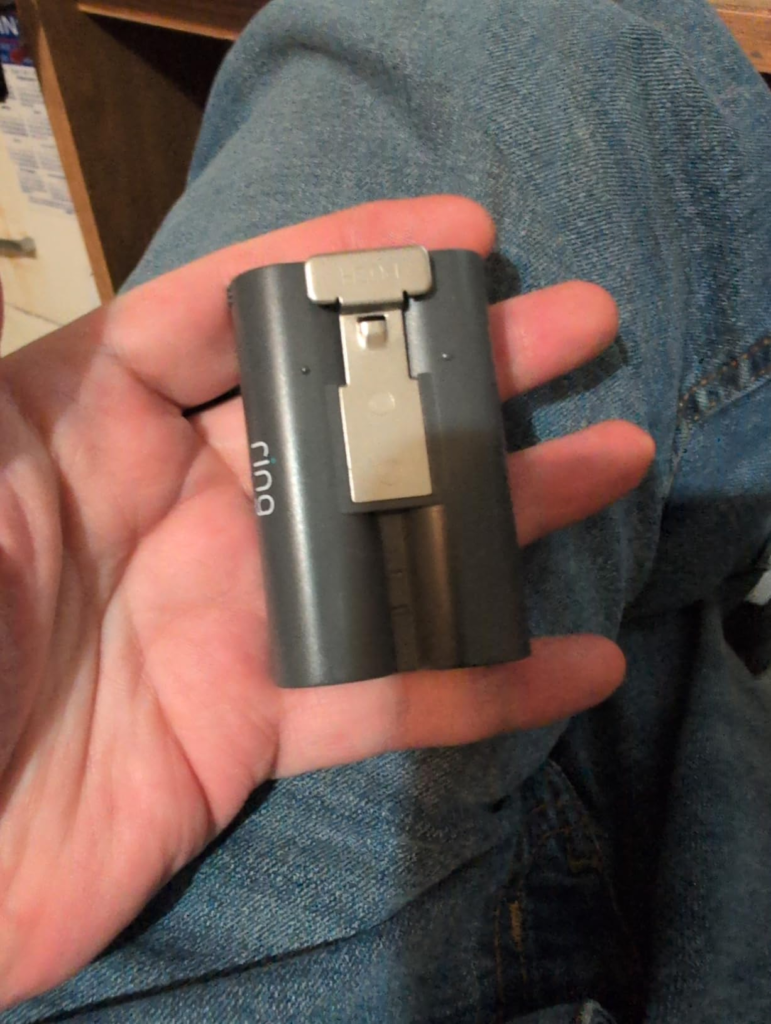
| Size | About 2.9 in (7 cm) long, with the quick-release tab |
| Operating range | -4°F to 122°F (-20°C to 50°C); stops charging below freezing |
| Ring’s advertised runtime | Up to 6 months (some listings cite up to a year) |
| Real-world runtime | Commonly 1–6 months; can drop to weeks with heavy Live View use, high motion, or cold |
| Works with | Stick Up Cam (all gens), Stick Up Cam Pro, Spotlight Cam (Battery/Solar/Plus/Pro), Video Doorbell 2/3/3 Plus/4, Battery Doorbell Plus/Pro (original), Peephole Cam, Solar Floodlight, Outdoor Cam Plus |
| Doesn’t work with | Battery Doorbell Plus/Pro (2nd Gen) — those need the Quick Release Ultra |
| Typical price | ~$34.99 for a single pack; the 2-pack usually runs somewhat below buying two separately — check the live listing, since pricing shifts |
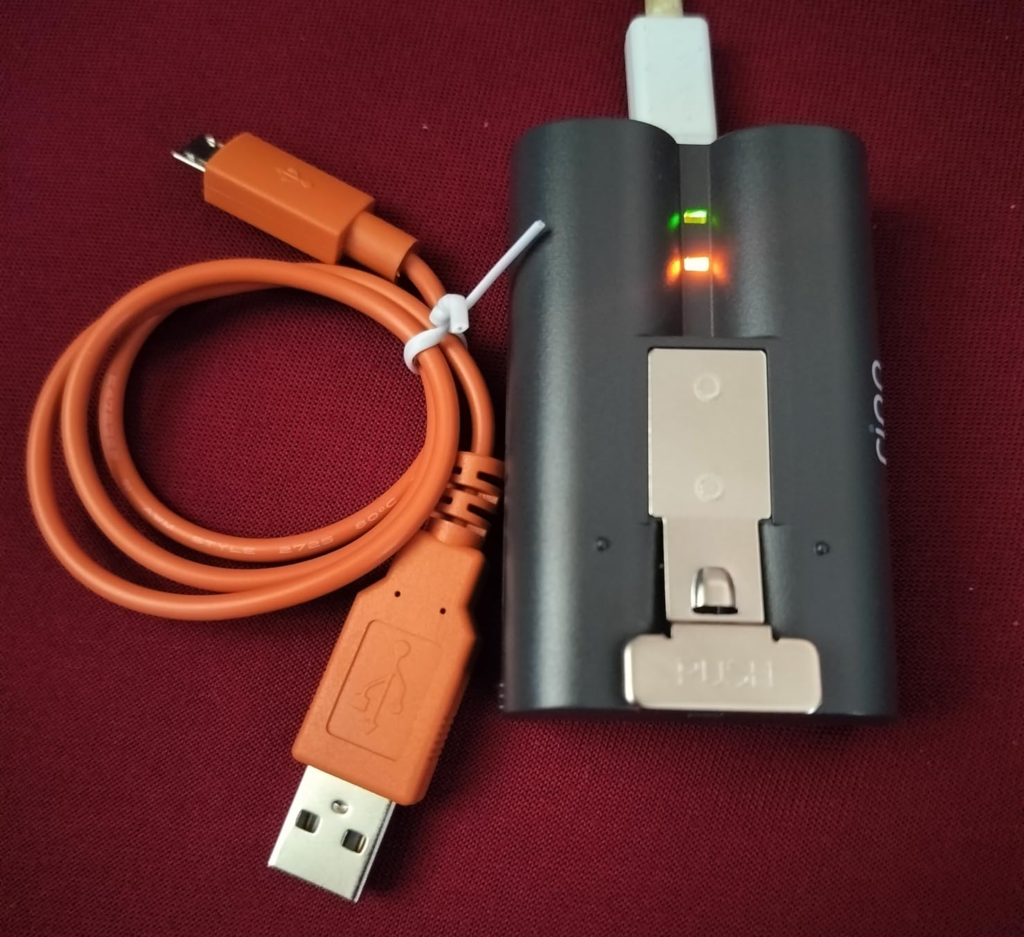
Two lines in that table matter more than the rest: the charge port, and the gap between Ring’s advertised runtime and what owners actually report. Micro-USB on a battery still being sold in 2026 isn’t an oversight — it’s the tell that this is the standard-generation battery, and it’s still the correct one for a Stick Up Cam, which matters more than it sounds like right now.
Ring Battery Swap Routine: What You’re Actually Feeling but Not Naming
There’s a specific, low-grade habit that comes with owning exactly one battery-powered camera, and it usually doesn’t get named until you say it out loud: you start rationing your own security camera. You skip Live View because you don’t want to “waste” the charge. You put off checking a clip because the battery’s already at 34% and you don’t know how the weather’s about to turn. You leave the house and, for half a second, wonder if you actually charged it in time.
None of that is overthinking. It’s a rational response to a system where the backup plan — unplug, wait five to ten hours, plug back in — takes longer than most people are willing to leave a camera dark.
Why Ring Batteries Drain Fast: The Hidden Mechanism Behind the Miss
Why does a battery rated for up to six months sometimes not survive three weeks? Not because Ring’s number is fiction — it’s a best-case figure, measured the way best-case figures usually are. In practice, two forces do almost all of the damage, and they multiply each other instead of adding.
The first is current draw. Live View, frequent motion recording, and Snapshot Capture all pull heavier, sustained power instead of the light, occasional draw a six-month estimate assumes. Owners tracking this closely report the difference directly: heavy Live View use can burn through a fifth of the battery in a single day, while that same battery, left alone, can stretch for weeks. That’s not a small variance — that’s two different products wearing the same label.
The second force is temperature. Lithium-ion cells lose efficiency in the cold, and Ring’s own guidance is specific: below roughly 40°F (4°C), expect noticeably shorter runtime, and below freezing, the battery stops accepting a charge until it warms back up. A camera on a north-facing wall in January isn’t living the same battery life as one on a shaded porch in April — even with the identical battery pack.
| Drains It Faster | Extends It |
|---|---|
| Frequent Live View checks | Leaving Live View for when you actually need it |
| Camera facing a busy street, sidewalk, or driveway | Camera aimed at a calmer zone |
| Cold weather, especially below ~40°F (4°C) | Mild, stable temperatures |
| Motion sensitivity set to catch everything | Motion Frequency set to Regularly/Periodically, Zones narrowed |
| Weak Wi-Fi forcing the camera to work harder | Strong, nearby Wi-Fi |
| Snapshot Capture and constant-recording features left on | Turning off features you don’t actually use |
The fix usually isn’t a better battery. It’s five minutes in the Ring app, narrowing Motion Zones and resisting the urge to open Live View out of boredom.
The Ring Battery Dead Window: Where the Outcome Quietly Breaks
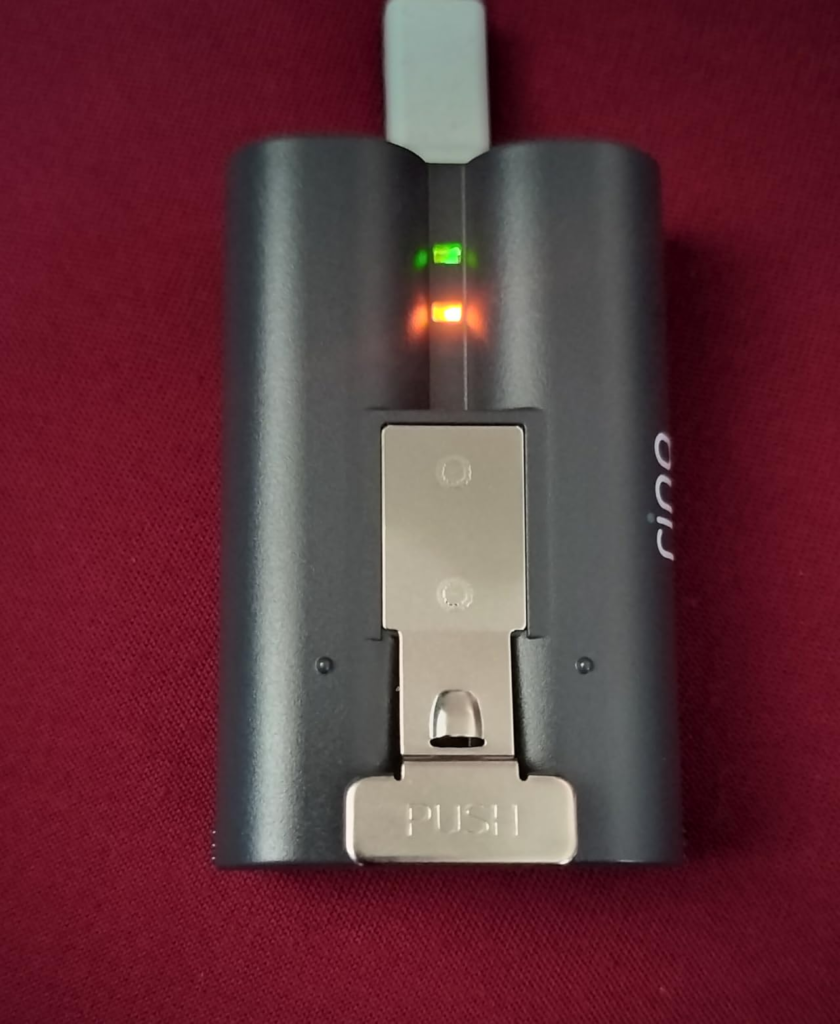
Every battery-only camera has what I’d call a Dead Window: the five-to-ten-hour stretch where the battery you just pulled is on the charger and the camera is running on nothing. With a single battery, that window isn’t a possibility. It’s scheduled — by your own charge cycle, at whatever moment happens to be least convenient.
Most Dead Windows are harmless. You lose a quiet Tuesday afternoon; nothing happens. The break is quiet in a different sense, too: you don’t find out whether it mattered until you go looking for footage that isn’t there — a delivery, a knock, a car that shouldn’t have been in the driveway. The failure doesn’t announce itself. It’s just absent when you need it.
This is also what clarifies what a second battery buys you. It adds no capacity — it’s still 6,000 mAh either way. It removes the Dead Window entirely, by making sure a charged battery is already waiting before the first one dies.
Ring Quick Release vs. Ultra Battery: Why Most Buyers Misread This Too Early
Two comparisons trip people up before the item’s even in their cart, and both come from comparing the wrong things.
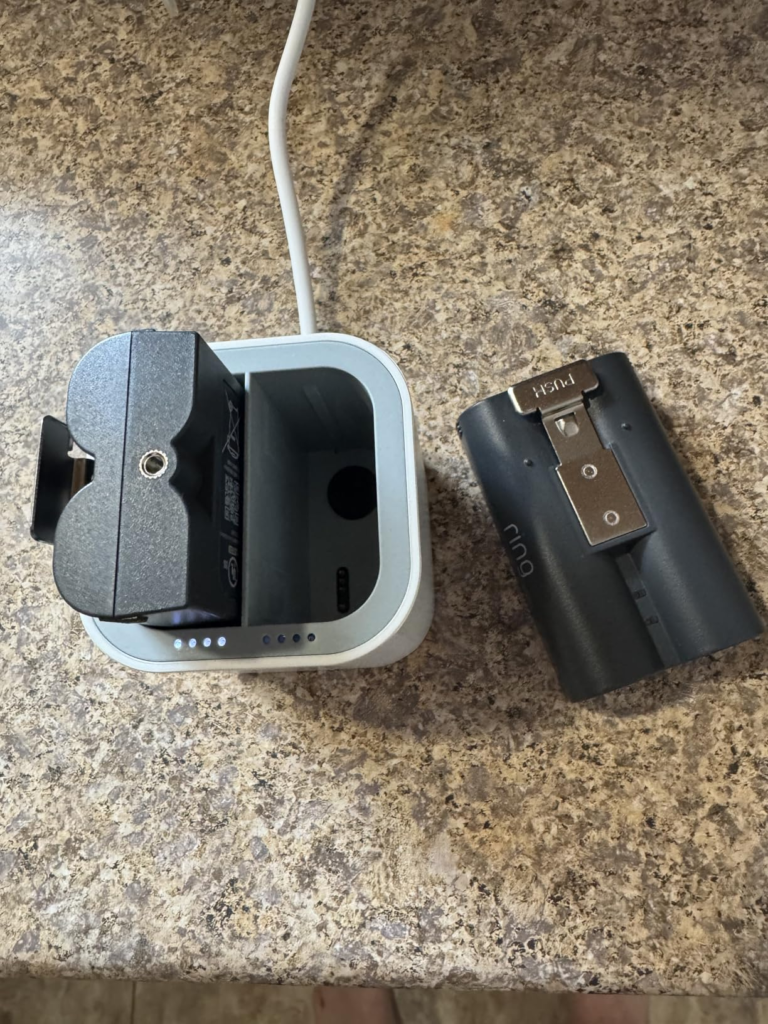
The first is the “Ultra” battery. Ring now sells a Quick Release Ultra Battery Pack — 10,000 mAh, built-in USB-C fast charging, a more precise charge readout — and it’s easy to see that spec sheet and assume the standard pack, the one this review covers, is the outdated leftover. It isn’t. The Ultra is built exclusively for the newest Battery Doorbell Plus and Battery Doorbell Pro (2nd generation); it isn’t offered for the Stick Up Cam, the Spotlight Cam, or any older doorbell at all. If your camera is a Stick Up Cam, there’s no upgraded version you’re missing out on. This standard pack isn’t the compromise — it’s the only compatible option.
| This Pack (Standard) | Quick Release Ultra | |
|---|---|---|
| Capacity | 6,000 mAh | 10,000 mAh |
| Charge port | Micro-USB | USB-C, built-in fast charging |
| Charge readout | Basic LED indicator | LED in 25% increments |
| Works with Stick Up Cam? | Yes | No |
| Compatible devices | Nearly every battery-powered Ring camera and older doorbell | Only Battery Doorbell Plus (2nd Gen) and Battery Doorbell Pro (2nd Gen) |
The second trap is chasing bigger numbers from unfamiliar brands. Third-party packs claiming 6,040 to 7,200 mAh exist, usually cheaper, and the math looks tempting on a spec sheet. What that comparison leaves out is fit tolerance, certification, and whether the seller still exists to honor a warranty next year — a real cost, just not one that shows up in the mAh column.
Who Needs the Ring 2-Pack Battery: Who Is Actually Inside This Problem
This makes sense for a specific set of people, and if you recognize yourself in more than one, you’re squarely inside the problem it solves.
You’re renting, or you simply never ran doorbell wiring, so battery power isn’t a backup plan — it’s the only plan. You live somewhere winters are real, and you’ve already noticed a battery drain faster in January than it did in September. Your camera watches something that moves a lot: a street, a shared driveway, a porch with real foot traffic. Or, simplest of all — you’ve already been caught once, camera dead exactly when you needed it, and you’ve decided once was enough.
Who Should Skip This Ring Battery: Where Wrong-Fit Begins
Just as clearly, some buyers should stop here and look elsewhere.
If you already own the newest Battery Doorbell Plus or Pro (2nd generation), this is the wrong battery entirely — you need the Quick Release Ultra, and no amount of enthusiasm changes that compatibility wall. If your device is wired with no removable battery, a spare has nothing to attach to. And if your one camera already sits in a shaded, low-motion spot with a solar panel keeping it topped up, a second battery is solving a problem you don’t currently have.
| You’re a Fit If | You’re the Wrong Fit If |
|---|---|
| Your camera runs on battery only, no wiring backup | You own the newest Battery Doorbell Plus/Pro (2nd Gen) — you need the Ultra, not this |
| You live somewhere winters are real | Your camera already has a solar panel in a calm, sunny spot |
| Your camera watches a busy street, driveway, or entry | You expected double the runtime per charge, not just no downtime |
| You’ve already been caught with a dead camera once | Your device is hardwired only, with no removable battery |
Ring Stick Up Cam Battery (2-Pack): The One Situation Where It Becomes Logical
Strip away the marketing and the decision is almost plain in how simple it becomes: if your camera runs on battery alone, watches something that actually moves, and you’ve already felt a Dead Window once — even a small one — a second battery is the direct fix for that one specific failure. Not an upgrade. Not a bundle you’re being talked into. Just the one piece that was missing.
It doesn’t change how long a single charge lasts. It changes whether that limit ever costs you anything.
What the Ring 2-Pack Battery Actually Fixes: What It Solves, Reduces, and Still Leaves to You
| What It Solves | What It Reduces | What Still Depends on You |
|---|---|---|
| The Dead Window — total blackout while the only battery charges | The urge to obsessively check the battery percentage | Sensible Motion Zone and Motion Frequency settings |
| Missed events during a recharge cycle | How often you physically remove the camera | Owning a micro-USB cable and adapter |
| Being away from home with no backup ready | The guesswork of “did I charge it in time” | Remembering to swap the charged one back in |
| — | — | Runtime per single charge — still the same 6,000 mAh either way |
Worth being honest about that table: nothing here makes the battery last longer per charge, drain slower in the cold, or charge faster. Those limits are physical, and no second unit changes physics. What changes is whether those limits ever turn into an actual gap in your coverage.
Ring Stick Up Cam Battery FAQ: The Questions People Actually Ask
| Question | Answer |
|---|---|
| How long does the Ring battery actually last? | Ring advertises up to six months, sometimes up to a year. Real-world reports cluster much lower — commonly one to six months, and sometimes just weeks if the camera watches a busy area, you check Live View often, or it’s near freezing. Treat “six months” as best-case, not a guarantee. |
| Does the 2-pack include a charging cable or adapter? | No. Both batteries ship on their own. You’ll need your own micro-USB cable and a 5V USB adapter, or Ring’s separate Charging Station if you want to charge both at once. |
| Will this work on my Stick Up Cam even though Ring sells an “Ultra” battery now? | Yes — and it’s actually the only one that will. The Ultra is built exclusively for the 2nd-generation Battery Doorbell Plus and Pro; it isn’t offered for the Stick Up Cam at all. |
| Does cold weather really drain it that much faster? | Yes, and it’s normal lithium-ion behavior, not a defect. Efficiency drops noticeably near freezing, and charging pauses below 32°F. A camera in an exposed, cold spot will need swapping much more often in winter. |
| Is the 2-pack actually cheaper than buying two singles? | Typically yes, by a modest margin — a single pack runs about $34.99 at most major retailers. Check the live Amazon listing before checkout, since pricing moves often. |
| My battery drains fast even with alerts turned off — is it defective? | Not necessarily. Ring’s own community support threads show this is sometimes a camera-side glitch fixed by a full reset (holding the setup button about 20 seconds) rather than a bad battery. Try that before assuming the battery is at fault. |
Ring Stick Up Cam Battery (2-Pack) Review: Final Verdict
So — worth it, or not?
If your camera runs on battery only, watches somewhere with real activity, and you’ve already had one moment of “wait, is it dead again” — this stops being a maybe. A spare that’s always charged is the version of this decision that doesn’t stay vague. If none of that describes your setup, save the money; you were never actually inside this problem.
If you are, here’s the listing:
Transparency Note:
This analysis is built on aggregated real-world experience.
It extracts what repeatedly holds, what breaks, and what users uncover only after living with the system—then shapes it into a clear model you can use immediately.
Think of it as structured experience, refined and presented so you don’t have to learn it the hard way.
“A quick note: Don’t believe the star ratings, but trust personal experience. This article is a compilation of collected experiences.”