COSORI TurboBlaze Air Fryer Review: Why Your Basket Looks Full but Your Fries Still Come Out Soft
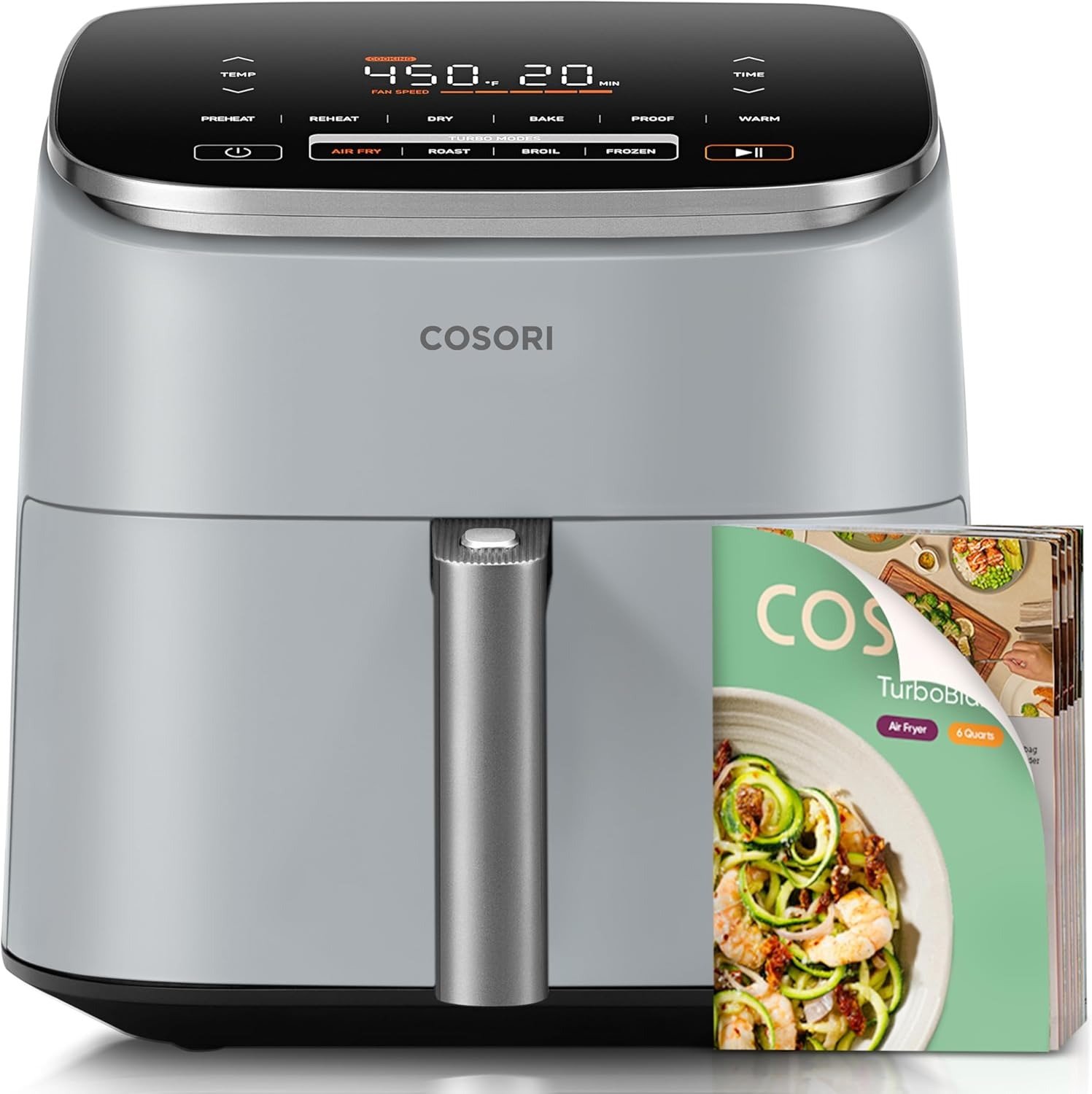
COSORI TURBOBLAZE AIR FRYER
You’ve done this before. Second batch goes into the basket looking exactly like the first — same amount, same spot, same eleven minutes — and it comes out pale on one side, slightly damp under coating that was crisp twenty minutes earlier. Nothing beeped. Nothing broke. The machine did exactly what you told it to do. So why didn’t it work the second time?
COSORI TurboBlaze Performance: The Result Looks Fine, The Problem Isn’t
Most air fryer disappointment isn’t a malfunction. Settings are correct, time is correct, temperature is correct — and the food still comes out uneven. That gap between “I did everything right” and “it still didn’t work” is where most people quietly decide they just don’t like air fryers, when really, nobody ever explained what was actually happening inside the basket.
COSORI TurboBlaze Common Complaints: What You’re Actually Feeling but Not Naming
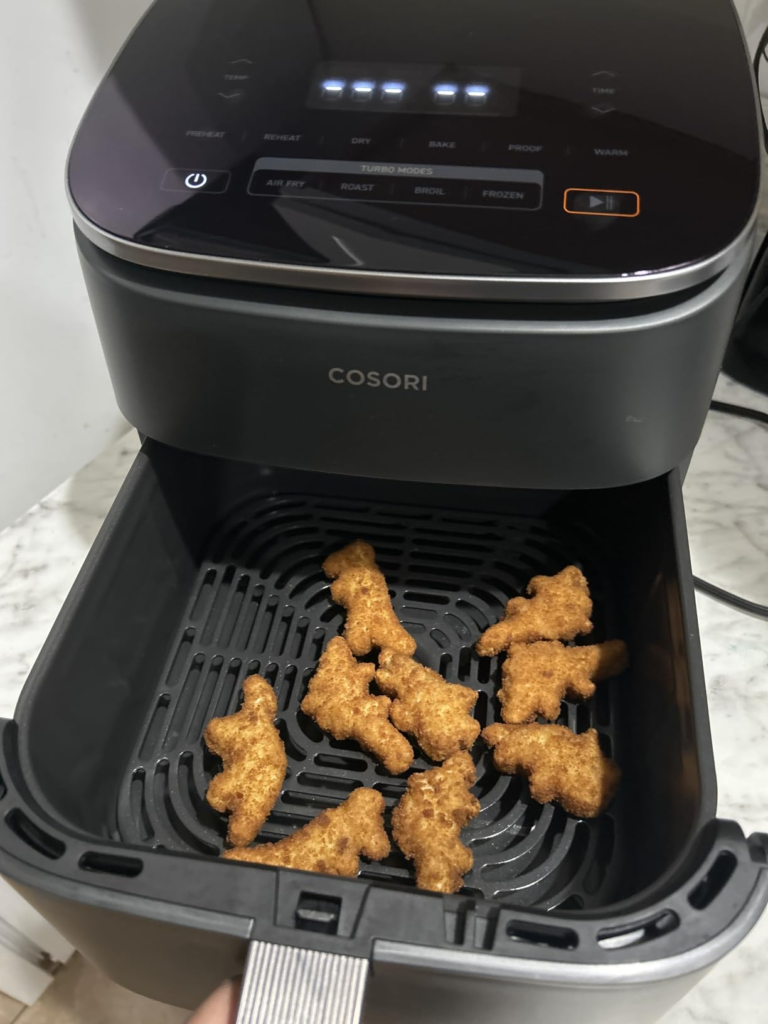
It isn’t randomness. It’s a pattern people feel but rarely name: the edges lag behind the center, the bottom layer steams instead of crisping, small cuts vanish through gaps in the tray. Across dozens of basket-style air fryers, the same complaint keeps surfacing in different words — it just needs a name.
How the COSORI TurboBlaze Cooks: The Hidden Mechanism Behind the Miss
An air fryer is a compact convection oven. Crisping happens because fast-moving hot air keeps stripping moisture off every exposed surface of the food, continuously. That mechanism only works if air can actually reach that surface. The moment food blocks food, the unit quietly stops being a fryer and starts being a small, crowded steam box — trapped moisture has nowhere to go, so it sits on the surface instead of leaving it.
Here’s the part nobody puts on the box: quart capacity measures volume, not airflow. Two “6-quart” air fryers can behave completely differently once you actually fill them.
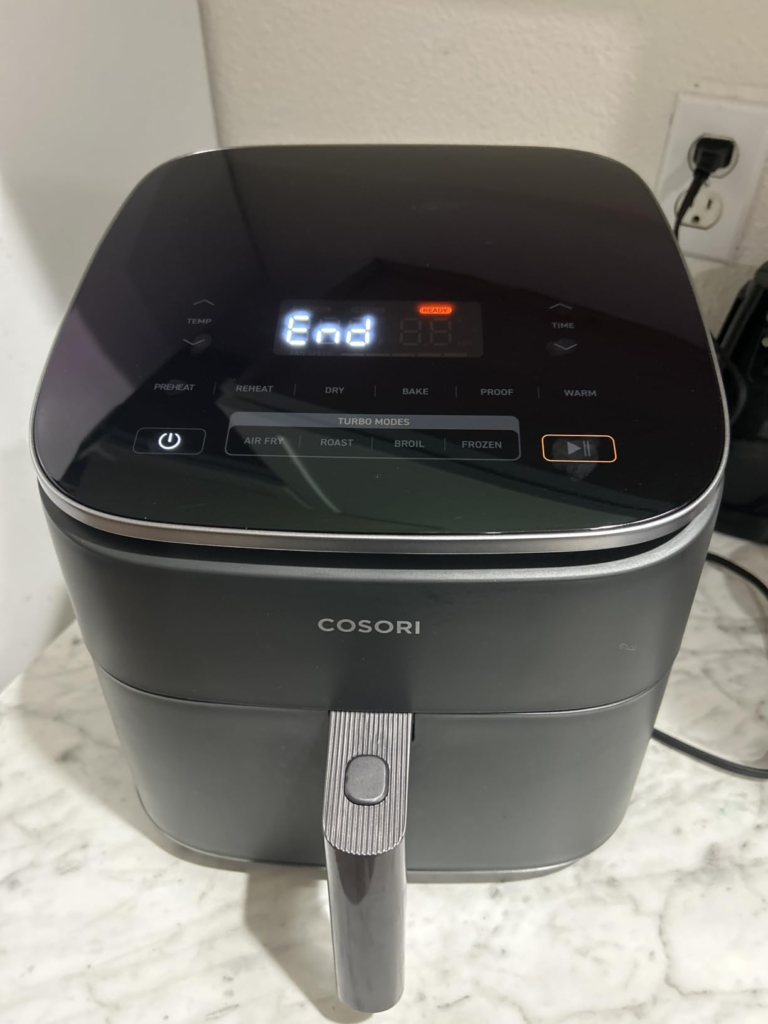
COSORI TurboBlaze Basket Capacity: The Threshold Where the Outcome Quietly Breaks
Call it the fill line — the real, functional ceiling before crisping quality drops, usually well below the marketed capacity on basic single-speed baskets. Push past it, and results soften even though your settings never changed.
Two things move that line. Basket shape: a square basket puts more food into direct, single-layer contact with moving air than a round one at the same nominal capacity, which is exactly why reviewers keep pointing at the TurboBlaze’s wide, flat, square 6-quart basket as a real usability difference, not a cosmetic one. And fan control: the TurboBlaze runs a DC motor across five selectable fan speeds, up to 3,600 RPM, instead of one fixed setting — meaning you can push more air through a fuller load rather than accepting whatever a single speed gives you.
Six quarts of space is not six quarts of airflow. That distinction is the whole story.
COSORI TurboBlaze vs Ninja and Other Air Fryers: Why Most Buyers Misread This Too Early
The common shopping mistake is comparing air fryers purely on quart number and price, as if six quarts means the same thing everywhere. It doesn’t. Head-to-head testing against Ninja’s Air Fryer Pro XL AF181 — a frequent comparison point at this price range — is a useful example of why. The Ninja runs hot and aggressive: excellent, fast crisping, but easy to overcook if you don’t adjust for its speed, and noticeably louder at full power. The TurboBlaze spreads heat more gradually across its five fan settings, trading a little raw crisping ferocity for a wider margin of error and a much quieter kitchen. Neither is the wrong design. They’re built for different tolerances, and most buyers never get told that before they check out.
Who Should Buy the COSORI TurboBlaze: Who Is Actually Inside This Problem
This is for households of roughly three to six people cooking real dinners, not just snacks. For anyone meal-prepping proteins and sides in one batch instead of three. For anyone replacing a tired, single-speed air fryer that’s only ever been trusted with frozen fries. For open-plan kitchens where a loud motor during a call or a show is a genuine problem, not a minor one. And for anyone specifically trying to move away from PFAS-based nonstick coatings in the kitchen.
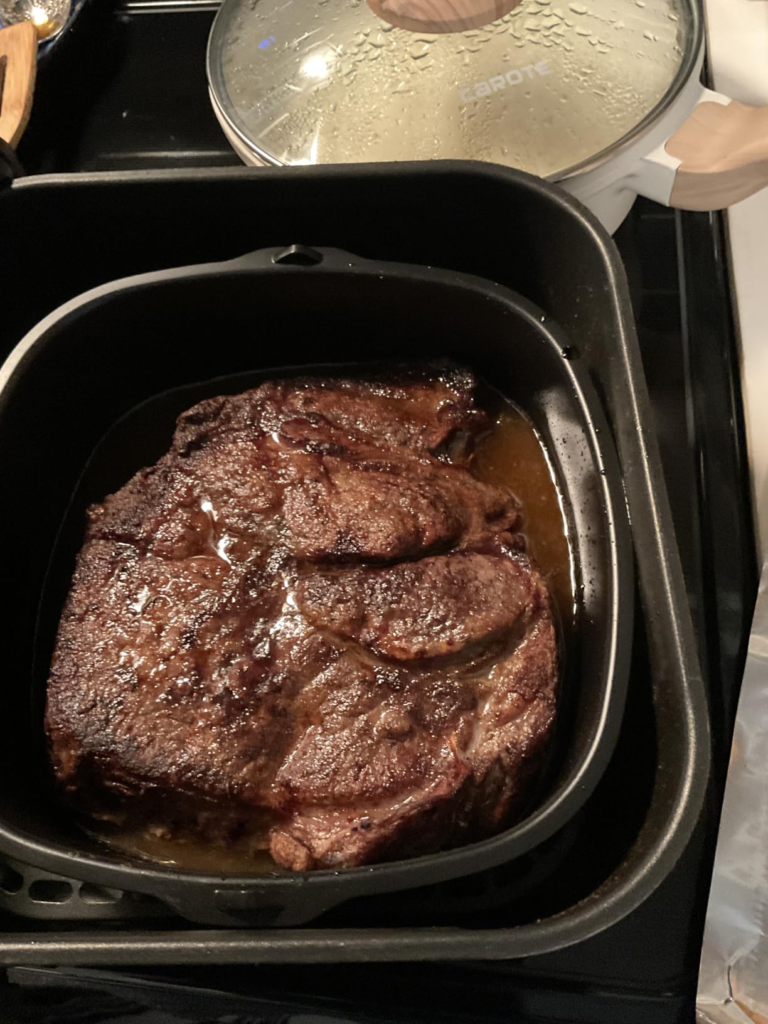
COSORI TurboBlaze Pros and Cons: Where Wrong-Fit Begins
It’s worth saying plainly who shouldn’t buy this. Solo cooks who rarely fill more than a third of a basket are better served — faster preheat, less counter space, less power draw — by a compact 2–4 quart unit. Anyone who wants two dishes cooked separately at two different temperatures at the same time needs a dual-zone design; a single basket, this one included, doesn’t solve that. Anyone expecting literal deep-fried texture will be let down by every air fryer on the market, not just this one — that’s a category ceiling, not a COSORI shortfall. And one real, specific flaw worth naming: the crisper plate’s center cutout is generous enough that very small cut pieces — diced potato, halved Brussels sprouts — can fall through unless you cut slightly larger or use a liner.
| You’ll probably love it if… | You’ll probably regret it if… |
|---|---|
| You’re feeding 3–6 people on a normal night | You’re almost always cooking for one |
| You’re tired of soggy “second batch” results | You need two zones at two different temperatures |
| Kitchen noise genuinely matters in your home | You want zero motor hum, full stop |
| PFAS-free coating is a real factor for you | You specifically want a metal or stainless basket |
| You want frying, baking, dehydrating, and proofing in one unit | You already own separate tools for those and just want basic frying |
COSORI TurboBlaze 9-in-1 Air Fryer Review: The One Situation Where This Product Becomes Logical
For the household already living the fill-line problem — cooking dinner in two loud, uneven batches, standing over the basket rearranging pieces halfway through, keeping the air fryer on snack duty because “real food” never comes out right — a unit built to push more controllable air through a fuller basket is a mechanical answer to a mechanical complaint. That’s what the TurboBlaze’s spec sheet actually maps to: DC motor, five adjustable fan speeds, a 90°F–450°F range, a wide square 6-quart basket, and a PFAS-free ceramic coating rated for the dishwasher.
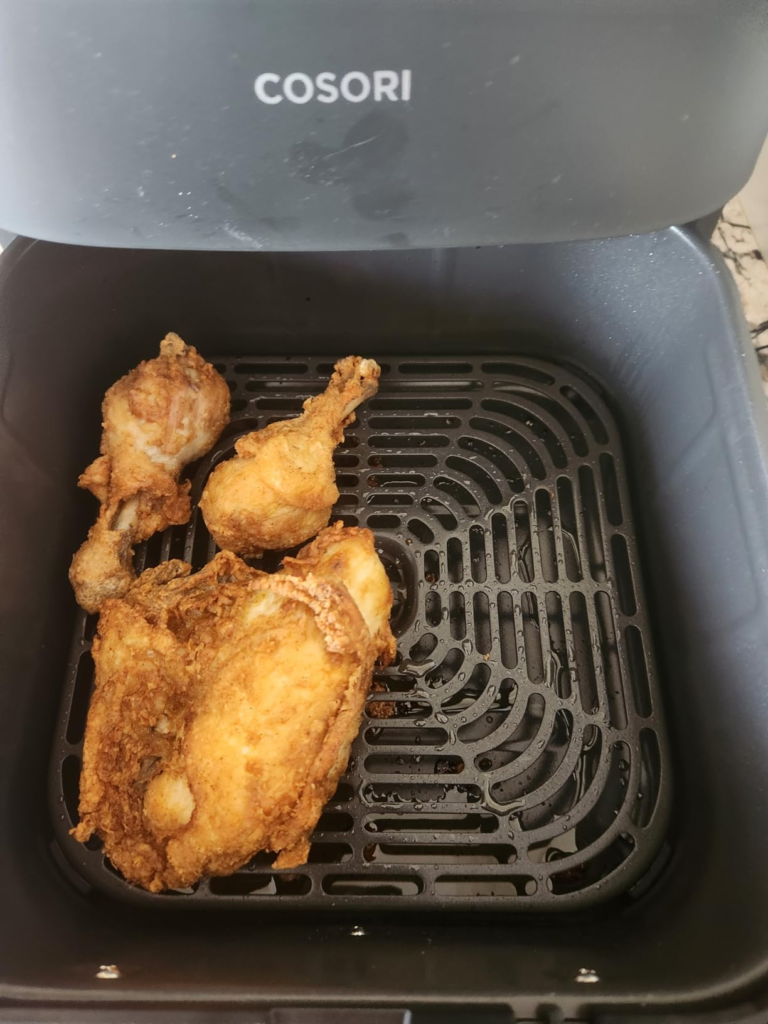
Quick specs
| Spec | Details |
|---|---|
| Capacity | 6 quarts, square basket |
| Cooking functions | 9-in-1: Air Fry, Roast, Bake, Broil, Dry, Frozen, Proof, Reheat, Keep Warm |
| Temperature range | 90°F – 450°F |
| Motor / fan | DC motor, 5 fan speeds, up to 3,600 RPM |
| Noise level | Under 53 dB at top speed |
| Coating | PFAS-free ceramic, dishwasher-safe basket & crisper plate |
| Oil use | Up to 95% less oil than deep frying (SGS lab tested) |
| Dimensions | 11.8″ x 14.4″ x 11.9″ (with handle) |
| Power | 120V |
| Warranty | 2-year limited |
| Typical price | ~$119.99 list, frequently discounted |
COSORI TurboBlaze: What It Solves, What It Reduces, and What It Still Leaves to You
Solves: the soggy-second-batch pattern, up to a genuinely higher real fill line. A quieter kitchen. Easier cleanup with a dishwasher-safe basket and crisper plate. One appliance instead of four for frying, baking, dehydrating, and proofing.
Reduces: daily guesswork — labeled presets instead of icons mean you’re not decoding what “fish” means at six in the morning.
Still leaves to you: a stronger fan doesn’t cancel physics. You still need breathing room around each piece for real crisping at real capacity. A very full load still benefits from a shake or a rearrange halfway through. Sticky proteins like bacon or sausage still do better with a quick soak than a wipe. And ceramic coatings, this one included, last longest with silicone or wood tools and a gentle sponge — never metal, never abrasive pads.
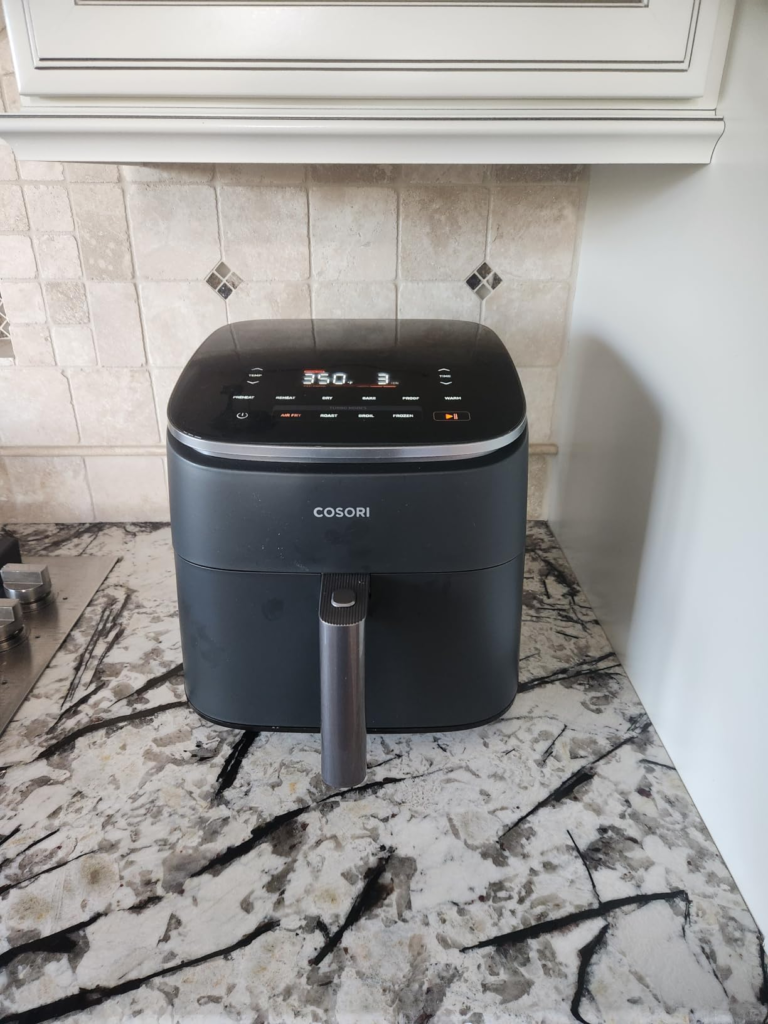
COSORI TurboBlaze FAQ: Common Questions Before You Buy
| Question | Answer |
|---|---|
| Has COSORI had a recall? Is the TurboBlaze affected? | Yes, and it deserves a direct answer instead of a dodge. In February 2023, COSORI voluntarily recalled roughly 2 million air fryers in the U.S. through the Consumer Product Safety Commission, after reports that a wire connection could overheat. That recall covered specific older, smaller units — 3.7-quart and 5.8-quart models sold between 2018 and 2022, with model numbers like CP158-AF, CP137-AF, CS158-AF, and CO158-AF. The TurboBlaze 6-Qt is a separate, later generation, released after that recall, and it isn’t on the affected list. You can check any unit against the official record at recall.cosori.com. |
| What does “9-in-1” actually mean? | Nine built-in cooking modes — Air Fry, Roast, Bake, Broil, Dry, Frozen, Proof, Reheat, and Keep Warm — each mapped to a sensible starting time and temperature. |
| How loud is it, really? | Independent testing and owner reports consistently land in the same place: under 53 decibels even at the top of its five fan speeds — closer to a quiet conversation than the harsh whir some baskets produce at full power. |
| Is the basket dishwasher-safe, and how long does the coating last? | Yes, both the basket and crisper plate are dishwasher-safe. Like any nonstick surface, ceramic coating lasts longest with silicone or wood utensils rather than metal. |
| Can I use foil or liners inside it? | Yes, carefully. Foil is fine as long as it doesn’t block airflow or touch the heating element; liners are fine as long as food weighs them down so they don’t lift into the fan. |
| How many people can it realistically feed in one batch? | Most reviewers and owners land on 3 to 6 servings per batch — a family-sized round of wings, a full tray of vegetables, or a small whole chicken, without a second round. |
| What’s the warranty? | A standard 2-year limited warranty from COSORI. |
COSORI TurboBlaze Air Fryer Review — Final Verdict
None of this was ever really about an appliance. It’s about whether dinner turns out the same way twice. If your current air fryer has quietly been telling you it’s full when it’s actually just blocked — and you’ve been adjusting your cooking around that instead of the other way round — the TurboBlaze’s whole design points at that exact frustration: the fan speeds, the wider square basket, the higher ceiling before crisping breaks down.
If that’s the wall you keep hitting, this is where it stops being something you work around.
Transparency Note:
This analysis is built on aggregated real-world experience.
It extracts what repeatedly holds, what breaks, and what users uncover only after living with the system—then shapes it into a clear model you can use immediately.
Think of it as structured experience, refined and presented so you don’t have to learn it the hard way.
“A quick note: Don’t believe the star ratings, but trust personal experience. This article is a compilation of collected experiences.”