Instant Pot Duo Plus Review: Why It Saves Some Kitchens and Clutters Others
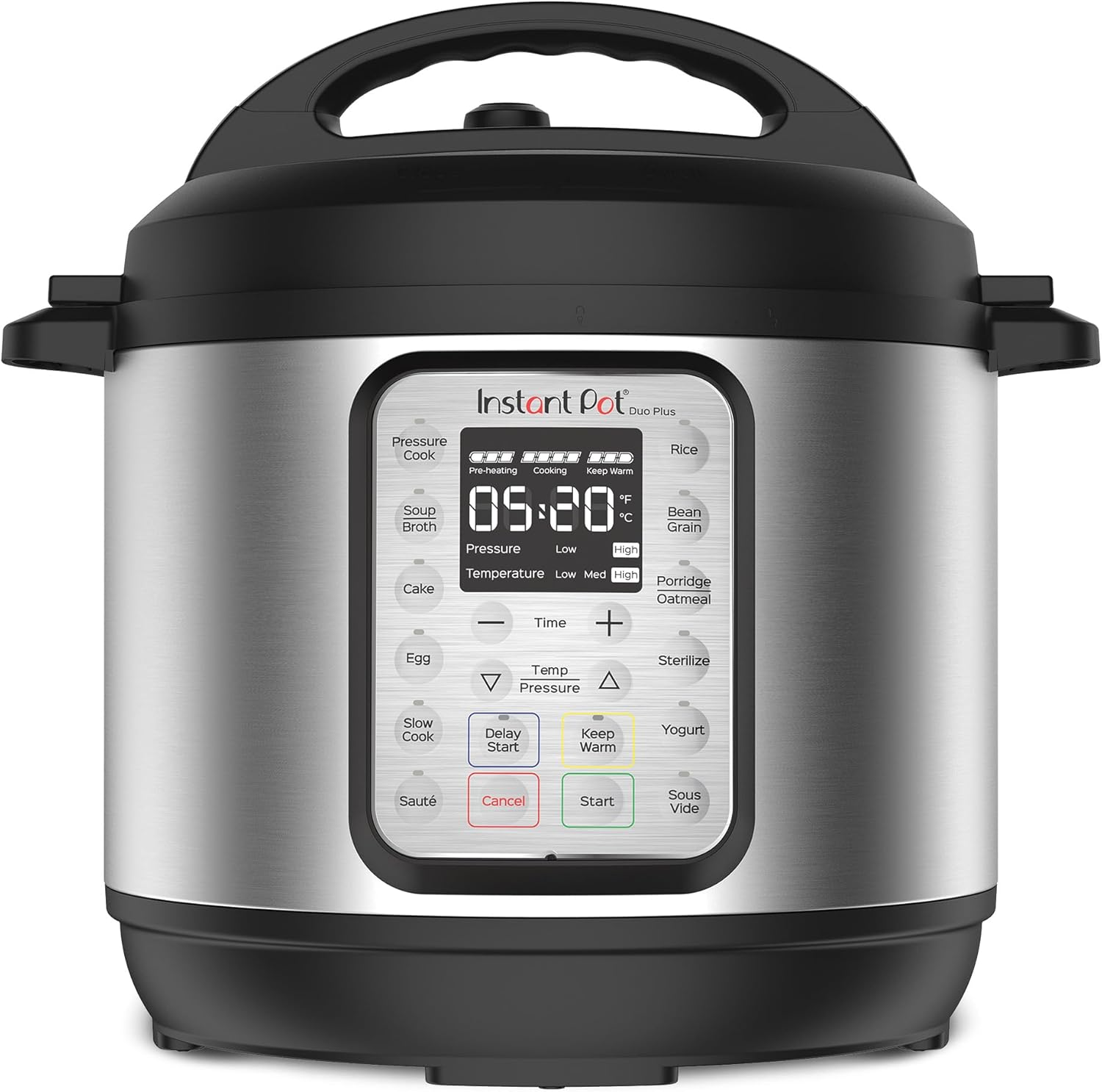
INSTANT POT DUO PLUS
Tuesday, 6:10 p.m. Rice is on the stove threatening to boil over, a pot of stock has been simmering since three and still tastes thin, and someone is standing in the kitchen doorway asking how long until dinner. You don’t have an answer, because you never do. Stovetop pressure cooking is a guessing game, and slow-cooked anything means you had to plan this morning, which you didn’t.
That’s usually the exact moment someone tells you to just get an Instant Pot.
So maybe you did. Or maybe you’re reading this with a tab open to the Duo Plus, cursor hovering, trying to figure out if this is the appliance that finally fixes weeknight dinner, or the one that joins the bread maker in the cabinet nobody opens. Both outcomes are common. Both happen to capable, sensible cooks. The difference usually isn’t the product. It’s whether the size and the way you actually cook line up with what you bought — and that’s the part this review is built around.
Instant Pot Duo Plus Review: The Result Looks Fine, The Problem Isn’t
On paper, there’s very little to argue with. The Duo Plus carries somewhere around 180,000+ ratings on Amazon, sitting near 4.6 out of 5 — the kind of number that makes a purchase feel safe before you’ve read a single review. Nine functions. Stainless steel. Dishwasher-safe. An app with recipes already loaded. Nothing on the spec sheet is dishonest.
And yet. Search “Instant Pot” alongside “never use” and you’ll find plenty of people who bought this exact well-rated appliance and quietly stopped opening the cabinet it lives in. Nothing broke. Nothing was defective. The 4.6 stars weren’t lying. What happened is simpler and harder to spot from a product page: the appliance was fine, and it still didn’t match how that specific kitchen actually cooks. A strong spec sheet tells you what a machine can do. It says nothing about whether your Tuesday needs it.
9-in-1 Pressure Cooker Confusion: What You’re Actually Feeling but Not Naming
If you’ve circled this page more than once without buying, it’s probably not indecision about money. It’s quieter than that. Maybe it’s the memory of a stovetop pressure cooker rattling like it wanted to leave the kitchen, and some part of you isn’t convinced an electric one won’t do the same. Maybe it’s the unopened air fryer in your cabinet, and the fear that this becomes appliance number four you defend for a month and then abandon. Maybe it’s simpler — you just don’t know if “9-in-1” means nine tools you’ll use, or one tool doing nine jobs it doesn’t need to do.
Worth saying plainly: the exploding-pressure-cooker fear is outdated. This isn’t a jiggling stovetop weight — it’s a sealed, locking system with more than ten separate safety mechanisms, including a lid that mechanically won’t open while there’s pressure inside. That fear you can set down.
The clutter fear, though, deserves to stay. It’s the right instinct, just aimed at the wrong target. The target people worry about is function count. The one that actually decides the outcome is capacity and rhythm — and that’s the part almost nobody explains before checkout.
The Hidden Mechanism Behind the Miss: Instant Pot Sizing Explained
Here’s what the spec sheet can’t tell you, because it depends on you, not the machine: of the nine functions on the box, most households lean hard on three or four and quietly forget the rest exist.
Pressure cook and sauté get used weekly — that’s the core of the appliance, and it’s genuinely excellent at both. Yogurt maker earns its keep for anyone who actually makes it, since homemade yogurt runs close to a dollar a quart against four or more at the store. The warmer quietly solves the “dinner’s ready but nobody’s home yet” problem. Sterilizer is a lifesaver exactly for the months a household has a newborn on bottles, and close to invisible after that. Sous vide, if we’re honest, is the one most likely to get a single curious try and never get pressed again — true sous vide holds temperature within half a degree, and this holds it within two or three, fine for a decent steak, not what a precision cook is chasing.
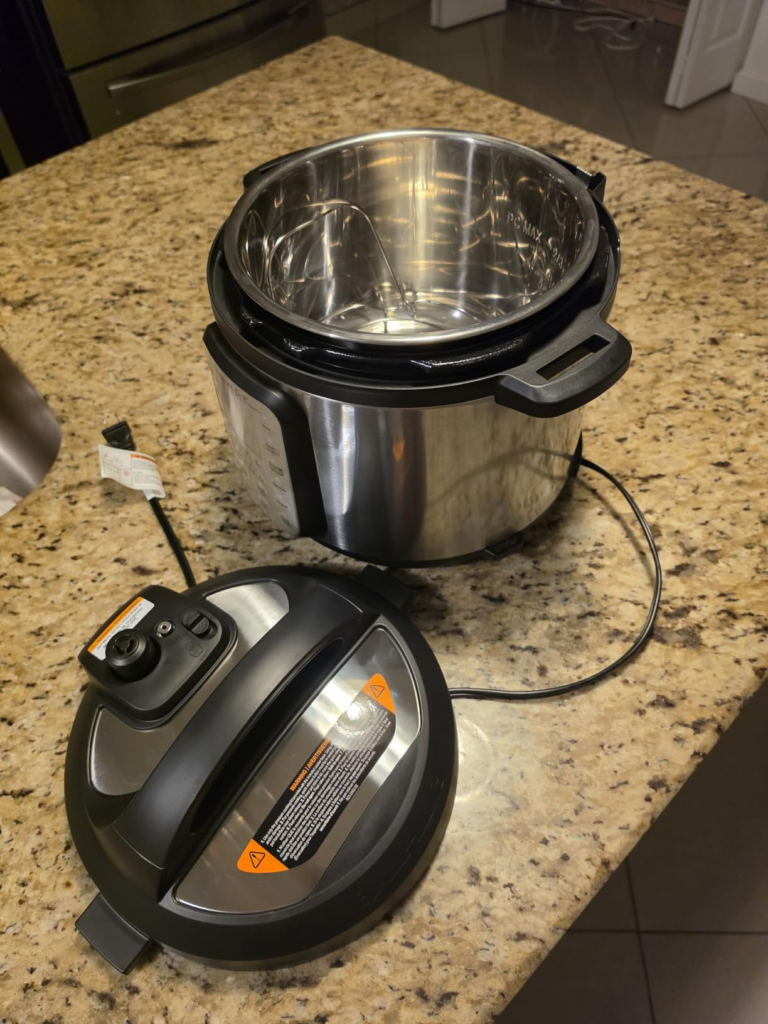
None of that is a flaw. It’s just arithmetic. A 9-in-1 appliance is really a 3-in-1 you’ll use constantly, wrapped around six extras that either save your week twice a year or sit untouched — and which six matter is different in every kitchen. The real mistake isn’t buying functions you won’t use. It’s buying the wrong capacity for the ones you will.
| At a Glance | Instant Pot Duo Plus (6 Qt) |
|---|---|
| Capacity options | 3 qt, 6 qt, 8 qt |
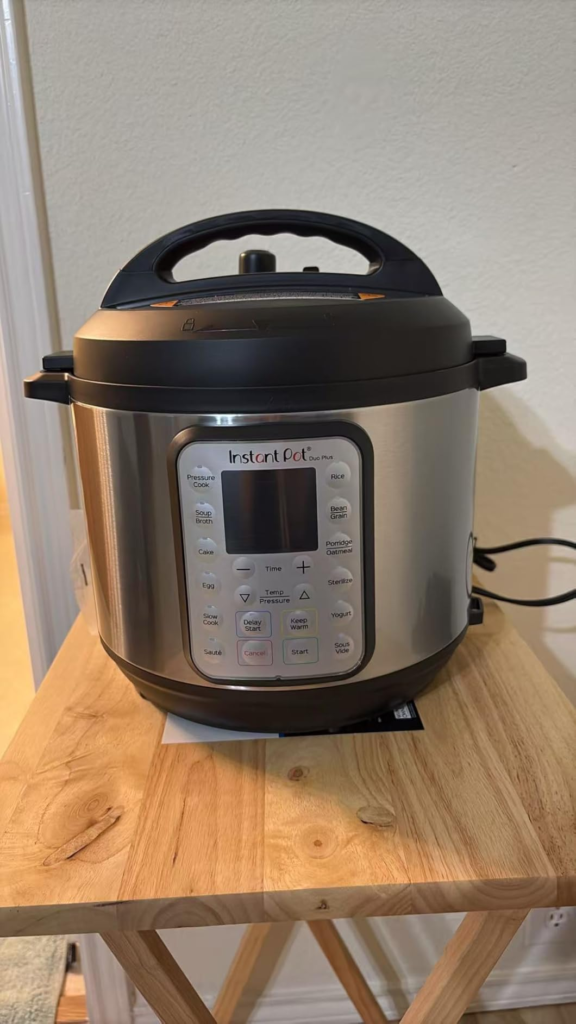
| Functions | 9-in-1: pressure cook, slow cook, rice, steam, sauté, yogurt, sous vide, sterilize, warm |
| One-touch programs | 15 |
| Power (6 qt) | 1000W, 120V |
| Weight (6 qt) | ~12 lbs |
| Dimensions (6 qt) | ~13″ x 12.2″ x 12.5″ |
| Inner pot | Tri-ply 18/8 stainless steel, anti-spin base |
| Safety mechanisms | 10+, incl. locking lid, overheat protection |
| Included accessories | Steam rack, 2 sealing rings |
| Cleanup | Pot, lid, accessories all dishwasher-safe |
| Typical price range | Roughly $90–$130 (watch for lightning deals) |
| Amazon rating (approx.) | ~4.6/5 from 180,000+ ratings |
6-Quart vs 3-Quart vs 8-Quart: The Threshold Where the Outcome Quietly Breaks
This is the one decision that quietly decides whether you love this appliance or store it. Not the color, not the model year — the quart size, matched honestly against how many people you feed and how you feed them.
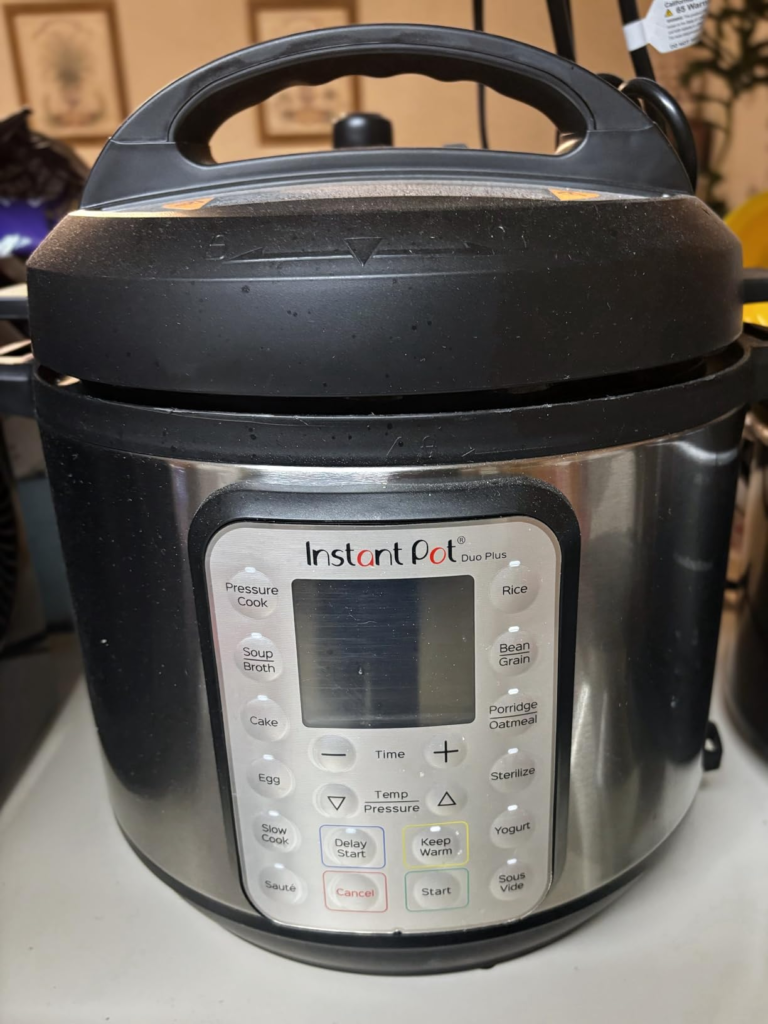
The 6-quart is where most people land, and there’s a practical reason beyond popularity: most published Instant Pot recipes, from the official app to the average food blog, are written and tested for 6 quarts first. Buy a different size and you’re doing conversion math before you’ve even started cooking.
| Household / Use | Recommended Size | Why |
|---|---|---|
| 1–2 people, tight kitchen | 3 quart | Matches real portions, smallest footprint |
| 3–5 people, everyday cooking | 6 quart | Most popular size; most recipes built for it |
| 5+ people or serious batch cooking | 8 quart | Whole chicken, big-batch broth, weekly meal prep |
| Second pot alongside a main one | 3 quart | Sides or small batches while the main pot runs |
The line to actually watch is liquid and headroom, not headcount alone. A pressure cooker needs roughly a cup of liquid at minimum to build pressure regardless of size, and it should never be packed past two-thirds full. That means a 3-quart doing Sunday batch cooking for five hits its ceiling fast, and an 8-quart making dinner for two will do the job fine but will also dominate a small counter and take longer to come up to pressure for a small amount of food. Undersize it and you’re cooking in two shifts every Sunday. Oversize it and you’re storing a family-reunion appliance between Tuesday dinners for two.
Instant Pot Duo vs Duo Plus: Why Most Buyers Misread This Too Early
This is where the lazy comparison catches people, usually in the first ninety seconds of shopping. Someone sees the base Duo sitting twenty to fifty dollars cheaper, assumes “Plus” just means “newer,” and buys the cheaper one to save money. Someone else sees “Plus” and assumes it must be the smarter buy across the board, and pays extra for functions they’ll never open the app to use.
Both are reading the wrong signal. The price gap isn’t about newness — the core pressure cooking, the part doing the actual work, is nearly identical between the two. What the extra money buys is specific: a quieter, easier steam-release switch instead of a manual valve you nudge with a spoon; a status display that shows preheating versus cooking versus done instead of leaving you guessing; and a handful of extra programs — sous vide, cake, sterilize — that matter enormously to some households and not at all to others.
| Feature | Duo | Duo Plus |
|---|---|---|
| Core pressure cooking | Yes | Yes — same core performance |
| Steam release | Manual valve | Quieter Easy-Release switch |
| Display | Basic LED | Progress bar showing cooking stage |
| Extra programs | — | Sous vide, cake, sterilize |
| Typical price gap | Lower | +$20–$50 |
| Best for | Core cooking on a tighter budget | Quiet release and extra programs matter to you |
If you’ve never once wished your old cooker had a quieter release, and you have no real interest in sous vide or baking a cake in a pressure cooker, the base Duo does the same core job for less. If steam hissing near a sleeping baby’s room sounds like a dealbreaker, or you want the sterilizer for bottles, the Plus earns its price difference honestly. Neither model is the wrong one. Buying based on the name instead of what’s actually underneath it is.
Who Is Actually Inside This Problem: Is the Duo Plus Right for You
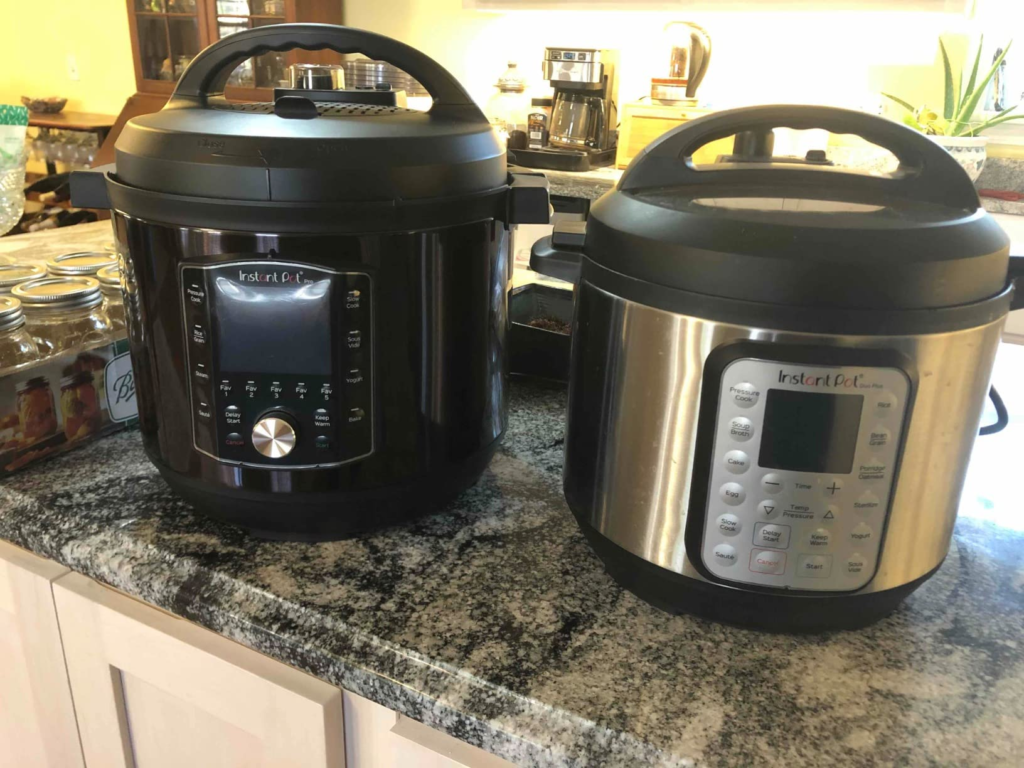
The person this quietly saves isn’t a “foodie.” It’s whoever’s week already has a repeating shape — the Sunday-batch-cook parent, the two-person household eating the same four proteins on rotation, the cook currently running a rice cooker, a slow cooker, and a steamer that all resent each other for the same eighteen inches of counter. It’s the beginner who wants a machine that tells them, in plain text, what stage of cooking they’re in instead of a manual valve and a guess. It’s the new parent who’ll use the sterilizer four times a month for exactly as long as bottles matter, and is completely fine with that trade.
If any part of your week sounds like “I make roughly the same handful of dinners on rotation” or “I currently own three appliances that each do one job,” you are, structurally, who this was built for.
Sealing Ring Smell and Burn Notice: Where Wrong-Fit Begins
Here’s what won’t show up on the product page, because it isn’t a defect — it’s just how the machine behaves, and it’s better to know on day one than mid-recipe.
The silicone sealing ring absorbs smell. Cook curry Monday and bake a cheesecake Wednesday in the same ring, and the cheesecake will taste faintly like curry. This isn’t a manufacturing flaw — every electric pressure cooker with a silicone gasket does this. It’s common enough that the Duo Plus actually ships with two extra sealing rings already in the box, one meant for savory, one for sweet, which solves the problem completely if you separate them from day one, and becomes an annoying surprise if you don’t find out until after that first cheesecake.
Then there’s the “Burn” notice — the single most-searched complaint tied to this machine, and also the most fixable. It isn’t malfunctioning. It’s an overheat sensor doing its job when there isn’t enough liquid at the bottom of the pot, or when something — tomato paste, a thick sauce, unstirred flour — scorched onto the base before pressure built. The fix is almost always the same: cancel, add a little more liquid, scrape the bottom, reseal, and continue. Once you know the cause, it stops being alarming and becomes a habit, the same way you learned not to walk away from a stovetop pot with milk in it.
| What Happens | Real Cause | Fix |
|---|---|---|
| Sealing ring smells like last night’s dinner | Silicone absorbs odor | Keep 2 rings — one savory, one sweet — wash both after every use |
| “Burn” notice mid-cook | Not enough liquid, or something scorched on the base | Cancel, add liquid, scrape bottom, reseal, continue |
| Rice comes out slightly sticky | Ratio or release method not adjusted | Use a 1:1 rice-to-water ratio, don’t skip the natural release |
| Slow-cook dish finishes early | Runs a little hotter than a dedicated slow cooker | Cut the recipe’s cook time by roughly 15–20% |
| Inner pot spins while stirring | Anti-spin base is built for sauté, not vigorous stirring | Stir gently, or lift the pot out briefly if needed |
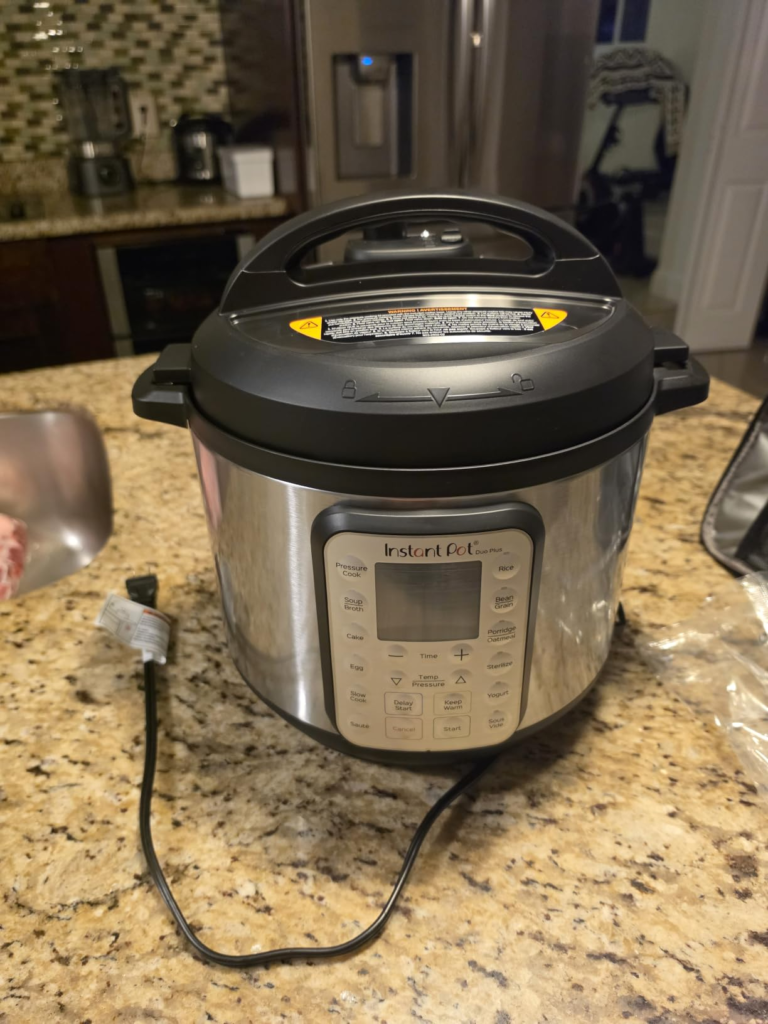
Where this genuinely isn’t the right fit: if you want built-in air frying, this isn’t that machine — it makes wet food exceptionally well and crisp food not at all; air frying needs a separate lid accessory or a different model built around one. If you’re chasing lab-grade sous vide precision, a dedicated immersion circulator will beat it every time. And if your counter and cabinets are already full, a 12-pound, 13-inch appliance deserves an honest look at where it will actually live before it arrives.
Instant Pot Duo Plus 6 Qt: The One Situation Where This Product Becomes Logical
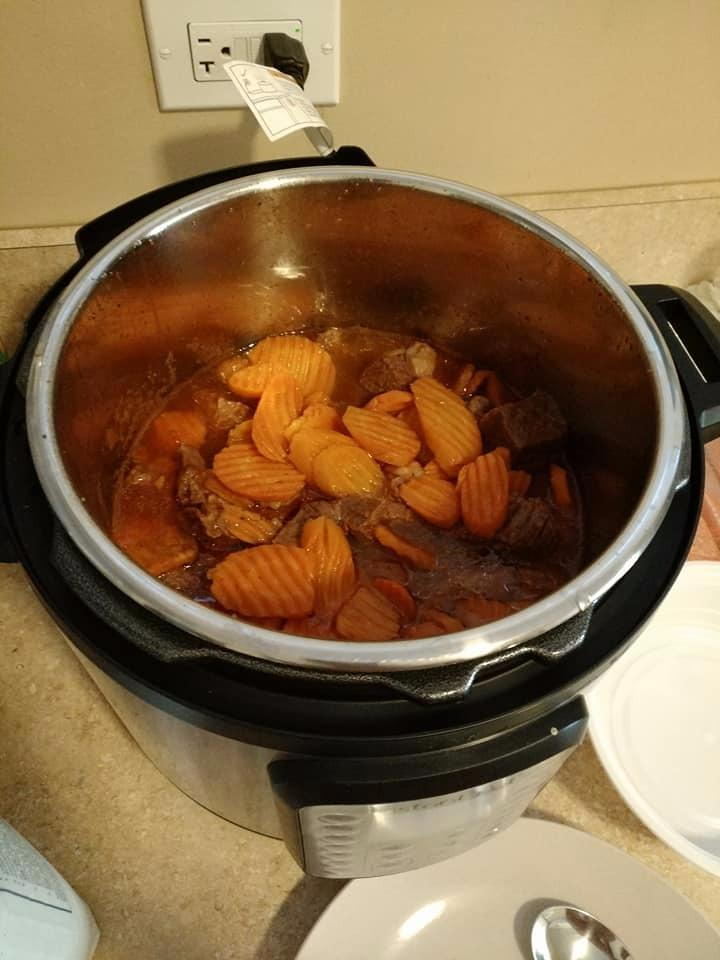
Put it together and the decision stops being complicated. If your week already has a repeating rhythm of batch cooking or the same rotation of weeknight meals, if you’re currently running two or three single-task appliances fighting for the same counter space, and if a 6-quart pot realistically covers your household — the Duo Plus isn’t a gamble. It’s the logical next step, not because it’s flashy, but because it removes friction you’re already dealing with every week. That’s a higher bar than “it has good reviews,” and this is one of the few countertop appliances that actually clears it.
What the Duo Plus Solves, What It Reduces, and What Still Depends on You
It solves the guessing game. Bone broth that used to take most of a day is done in about two and a half hours, frozen chicken goes in without a thawing detour, and rice comes out consistent enough that you stop double-checking it. It reduces the appliance pile-up, since one 6-quart pot can quietly retire a separate rice cooker, slow cooker, and steamer.
It does not reduce the small amount of judgment cooking still requires. You’ll still need enough liquid in the pot, still need to scrape the bottom after searing, still need to actually keep those two sealing rings apart. It removes the waiting. It doesn’t remove you from the process.
Frequently Asked Questions
| Question | Answer |
|---|---|
| Is the Instant Pot Duo Plus worth it in 2026? | For households cooking a repeating rotation of meals, or juggling several single-task appliances, yes — it consistently replaces a rice cooker, slow cooker, and steamer with one dishwasher-safe pot. For someone who cooks from scratch rarely, the value is harder to justify. |
| What size should I buy for a family of four? | The 6-quart. It’s built around roughly 3–6 servings and it’s the size most published recipes are written for, so you’re not doing conversion math on every dish. |
| Why does my Instant Pot keep saying “Burn”? | Almost always insufficient liquid, or something scorched on the bottom before pressure built — thick sauces, tomato paste, or bits left over from sautéing. Cancel, add liquid, scrape the base, and restart. |
| How do I stop the sealing ring from smelling like my last meal? | Keep the two included rings separate — one for savory, one for sweet — and wash both after every use. A short vinegar steam cycle handles anything that lingers. |
| Is the Duo Plus worth the extra money over the base Duo? | Only if you’ll use what that money buys: the quieter release, the clearer status display, or the sous vide, cake, and sterilize programs. If none of those matter to you, the base Duo does the same core cooking for less. |
| Can it replace an air fryer? | No. It’s built for wet cooking — soups, stews, rice, beans, proteins. Crisping needs a separate air-fry lid accessory or a different model built around one. |
| How long does the sterilizer function actually matter? | For most households, only during the months a baby is on bottles. It’s not a deciding feature on its own, but a genuine bonus if the timing lines up. |
Instant Pot Duo Plus Review: Final Compression Before You Decide
Strip out the noise and it comes down to two honest questions. Does your week already have a repeating shape — the same rotation of dinners, the same Sunday batch-cook, the same appliances competing for one outlet? And does a 6-quart pot actually match how many people you’re feeding? If both answers are yes, the size mistake this review opened with isn’t one you’re likely to make.
Transparency Note:
This analysis is built on aggregated real-world experience.
It extracts what repeatedly holds, what breaks, and what users uncover only after living with the system—then shapes it into a clear model you can use immediately.
Think of it as structured experience, refined and presented so you don’t have to learn it the hard way.
“A quick note: Don’t believe the star ratings, but trust personal experience. This article is a compilation of collected experiences”