EDIFIER R1280T REVIEW: THE SPECS PROMISE ONE SOUND — YOUR SETUP DECIDES THE REAL ONE
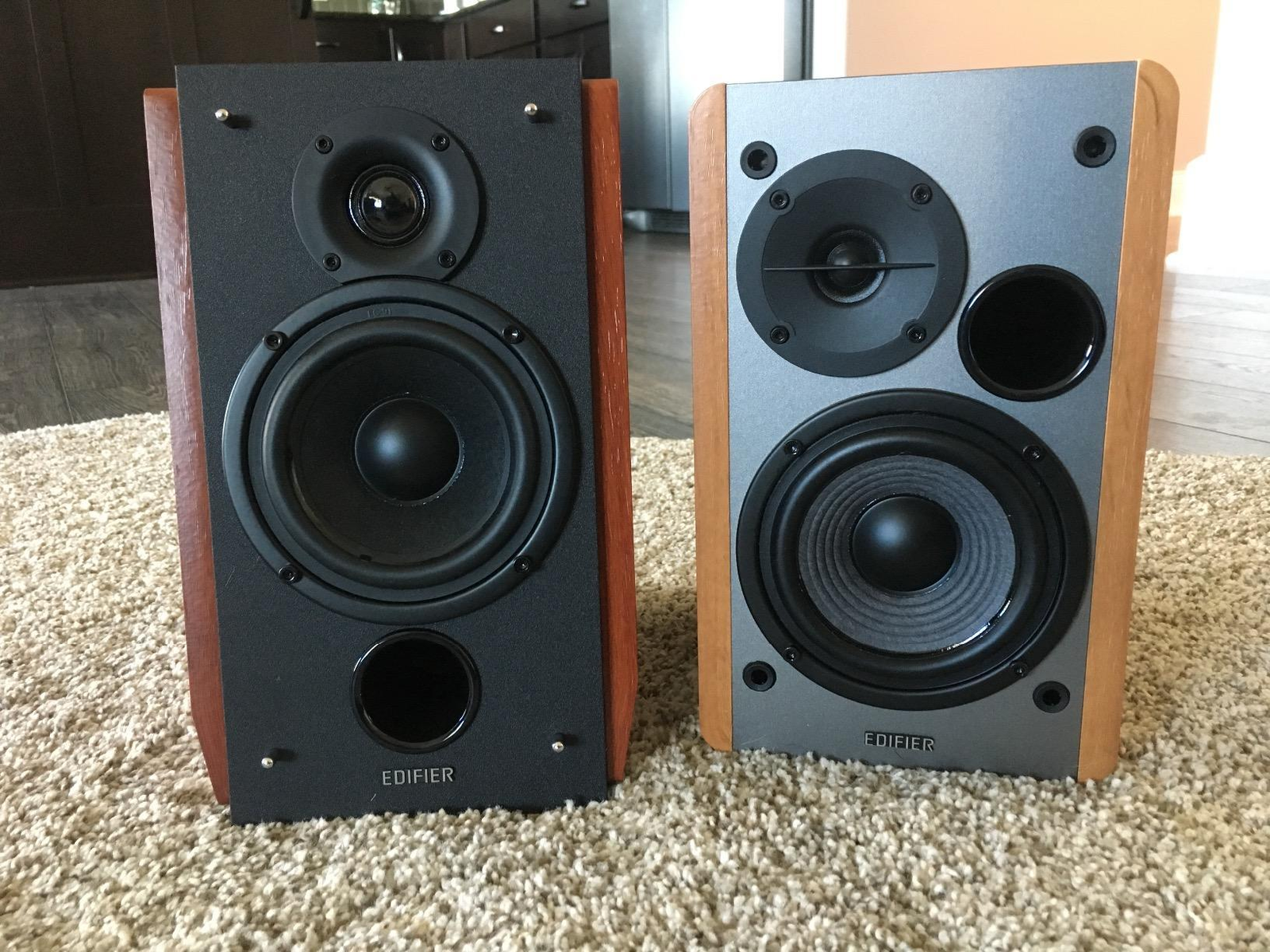
Two people buy the exact same pair of Edifier R1280T speakers this month. One gets precisely what the spec sheet promises — full, warm, near-field sound that punches well above what a $100–130 system has any right to produce. The other gets the same drivers, the same amplifier, the same wood-paneled cabinet, and ends up with a faint hiss, a hollow, thin sound, or a turntable hum they can’t explain.
Same product. Different result. The difference was never the speaker. It’s four setup variables almost no quick review names, and this one exists to name them before you spend the money.
The Result Looks Fine. The Problem Isn’t.
On paper, the R1280T checks every box a budget powered speaker should: a wood-paneled cabinet instead of bare plastic, a silk-dome tweeter instead of a cheap piezo disc, dual RCA inputs, physical bass and treble knobs, a remote for volume. Most short demos and unboxings confirm it sounds clearly above its price class at desk or bedroom distance. That part is accurate, and it’s why this model has stayed a default recommendation for the better part of a decade.
But look past the first-week impressions into longer-term owner reports, and a pattern shows up that a five-minute video never catches: a meaningful share of the disappointment attached to this exact model has nothing to do with how the drivers sound, and everything to do with where the cabinet sat, what it was plugged into, and how the wire was connected. The same unit produces a small system one owner loves and a “why does this hiss/hum/sound thin” complaint from another — without either of them owning a different product.
The spec sheet is a promise about the hardware. It is not a guarantee about your room, your source, or your wiring.
What You’re Actually Feeling but Not Naming
Strip the noise out of owner complaints about this speaker and five sensations cover almost all of it:
- A faint hiss or rushing-air sound at idle that grows louder as you raise the volume knob, even with nothing playing.
- A low, constant hum or buzz — especially through a turntable — that gets worse as you push the gain higher.
- A sense that the sound is thin, boxy, or stuck right in front of you instead of filling the desk or room.
- One side going completely silent — not distorted, not quiet, just dead.
- Bass that feels heavier than expected out of the box, crowding out vocals you wanted clear.
None of these, on their own, mean a broken speaker. They mean a setup condition wasn’t met. The next section names exactly which one.
The Hidden Mechanism Behind the Miss
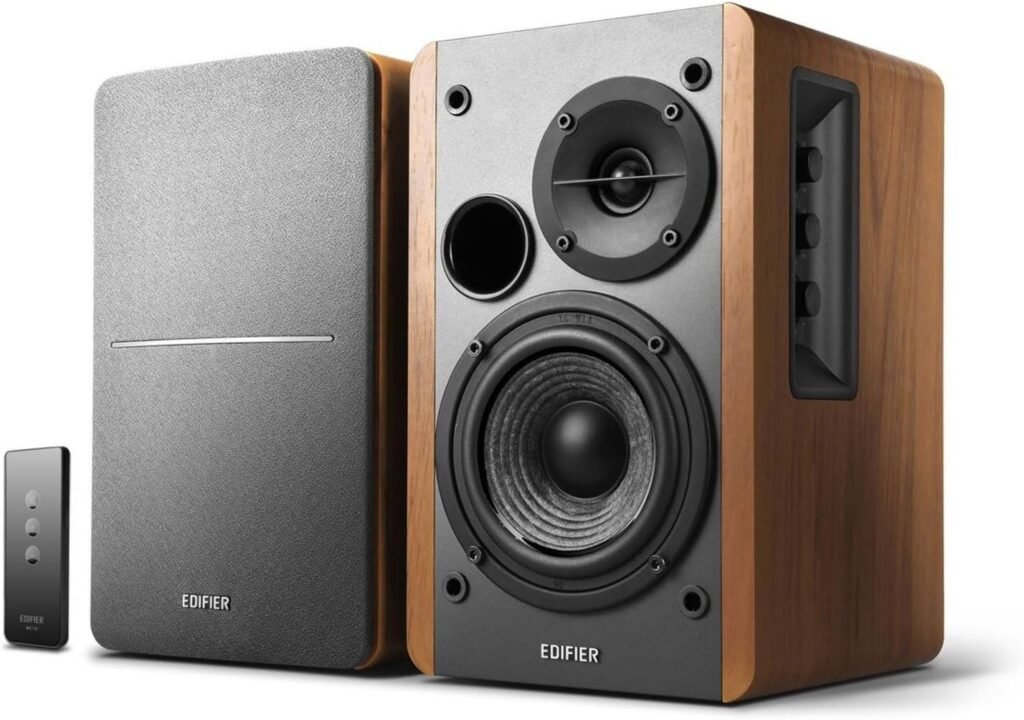
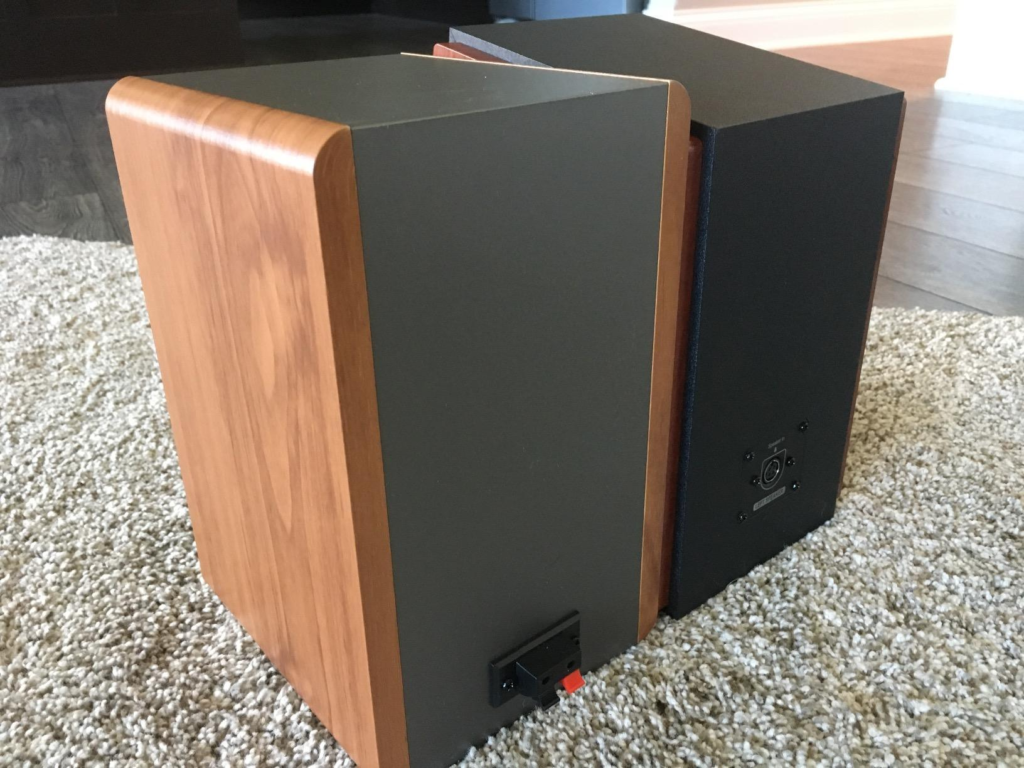
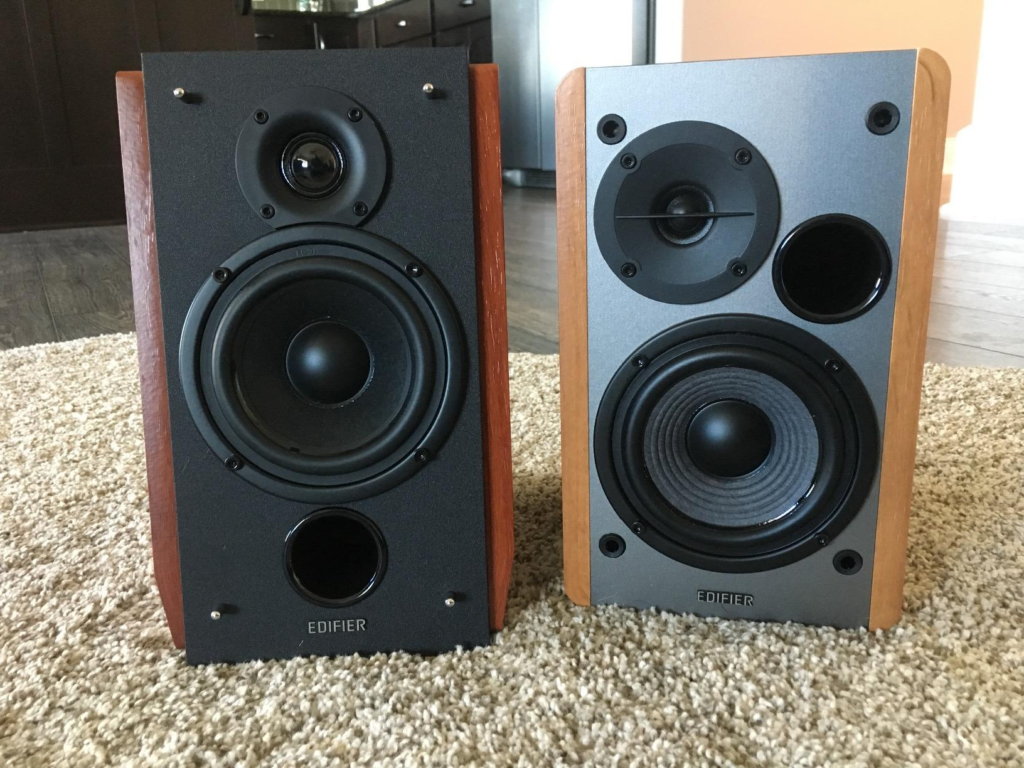
The R1280T isn’t two identical speakers. It’s one active unit — housing the amplifier, both RCA inputs, and the volume/bass/treble knobs — and one passive unit, connected to it by a simple two-wire spring-clip cable. The active side pushes 42W RMS total (roughly 21W per channel) through a 4-inch woofer and 13mm silk-dome tweeter in a bass-reflex cabinet tuned for close-range reinforcement, not room-filling output.
| Spec | Value |
|---|---|
| Drivers | 4″ woofer + 13mm silk-dome tweeter (bass-reflex) |
| Power | 42W RMS total (≈21W per channel) |
| Frequency response | 75Hz – 18kHz (±9dB) |
| Signal-to-noise ratio | 85dBA |
| Input sensitivity | 750mV |
| Inputs | 2× RCA, line-level only — no Bluetooth, no optical |
| Cabinet | Wood-paneled, 3 finishes (black / white / walnut) |
| Footprint | ~9.5″ tall, ~5.7–6.9″ wide, ~5.8–7.7″ deep, per speaker |
| Controls | Volume, bass, treble — physical knobs on the active unit only |
That 85dBA noise floor is a real, documented spec — not a defect. It surfaces in exactly two conditions: a quiet room, or a noisy upstream source. The “hiss” most people hear is frequently their laptop or audio card’s own noise, amplified and made audible because they’re listening close, in silence, not because the speaker introduced it.
The hum follows the same logic. Both RCA inputs are wired for line-level signal only. A turntable with a built-in preamp outputs line-level and runs clean. A turntable without one outputs a raw phono signal — quieter, bass-heavy, and far more prone to ground hum — straight into a line-level input. That single mismatch explains nearly every turntable-hum complaint tied to this model.
The thin, hollow sound traces to placement, not the drivers: at typical desk height, the cabinet sits below ear level, and the tonal balance collapses exactly there. Raise it to ear height and the same unit sounds full again.
And the “dead” speaker is almost always a wiring error, not a failed unit: the passive speaker’s two-wire connection has polarity, and reversing it on either end produces total silence on that side.
| What you notice | What’s actually happening | What fixes it |
|---|---|---|
| Faint hiss at idle, grows with volume | Noise floor + a noisy source, surfacing in a quiet room | Lower source gain, use a cleaner output |
| Low hum, worse with turntable | Raw phono signal hitting a line-level input | Add a phono preamp, or confirm the turntable’s is switched on |
| Sound feels thin or boxy | Cabinet sitting below ear level | Raise to ear height — stand, shelf, books |
| One side completely silent | Reversed polarity on the speaker wire | Swap the +/− ends |
| Bass overwhelms vocals | Default tuning leans bass-forward for near-field punch | Use the side knobs, or add a software EQ |
The Threshold Where the Outcome Quietly Breaks
Fix all four of those and one limit still remains, and no setup change touches it. Call it the Near-Field Ceiling: this speaker is built and voiced for listening within arm’s reach to across a small room, at desk or bedroom volume — not for filling a living room of guests or competing with a party speaker.
Inside that range, the cabinet, drivers, and tone knobs do real, audible work. Push past it — by distance or by volume — and the small tweeter runs out of clean headroom well before the dial maxes out; distortion shows up first on top-end detail. The frequency window reinforces the same wall structurally: 75Hz–18kHz means the deepest bass and the very top of the treble were never part of the design brief. No EQ, no preamp, no placement fix changes that — it’s the driver size and cabinet volume, not a mistake you made.
Everything below the Near-Field Ceiling is a setup problem you can solve. Everything above it is a category mismatch you can’t.
Why Most Buyers Misread This Too Early
Four misreadings account for most of the regret attached to this model:
- Treating “42W” as “loud enough for any room,” when at this tier wattage describes clean near-field output, not party-level SPL.
- Judging it against a Bluetooth speaker or soundbar on convenience, then docking it for lacking wireless — when the entire value case is a no-compromise wired amplifier section at this price, not portability.
- Buying the cheapest model in the R1280 family without checking whether their actual source needs Bluetooth or optical, then feeling shorted by a feature that was never advertised on this SKU.
- Plugging a non-preamp turntable straight in, hearing hum, and blaming the speaker instead of the missing preamp stage.
| Model | Inputs | Extra | Closest fit |
|---|---|---|---|
| R1280T | 2× RCA | — | Wired desk / line-level turntable |
| R1280Ts | 2× RCA | Subwoofer output | Same, plus room to add a sub later |
| R1280DB | RCA, optical, coax, Bluetooth | — | TV or wireless source |
| R1280DBs | RCA, optical, coax, Bluetooth | Subwoofer output | Wants everything |
The comparison most buyers should run isn’t “R1280T vs. a Bluetooth speaker.” It’s “which input does my actual source use, vs. which input does this model have.” Get that one match right and most of the disappointment in this entire line disappears before the first cable goes in.
Who Is Actually Inside This Problem
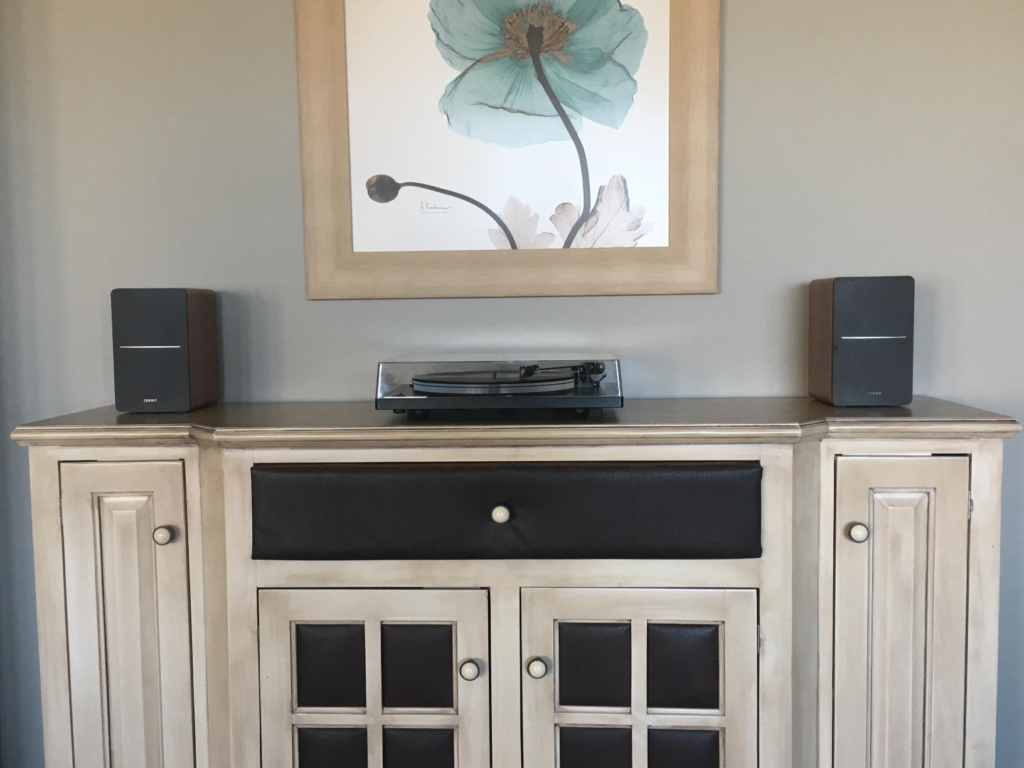
You’re the buyer this product was built for if: you’re setting up a desk, dorm, or bedroom system and want a clear step up from laptop or TV speakers without buying a separate amplifier; your turntable already has, or will get, a working preamp; you listen at conversational-to-moderate volume within roughly a room’s width, not party levels; you want real tone control rather than fixed presets; and $100–130 for a wired, no-frills system sounds reasonable to you.
If that’s an accurate description, you’re already inside the problem this speaker solves. The rest of this review is confirmation, not persuasion.
Where Wrong-Fit Begins
If your TV has no RCA or 3.5mm output and you don’t want another adapter, you need the optical input on the R1280DB — not this one. If your phone is the source and wireless is non-negotiable, this entire wired model is the wrong category, regardless of price. If “loud enough” means filling a living room for guests, you’re not underbuying within this category — you’re shopping outside it. If your turntable has no preamp and you won’t add one, the hum you’ll hear isn’t a defect; it’s a missing part you chose not to buy. And if your plan is to build a real, upgradeable hi-fi system over the next few years, an all-in-one active speaker means replacing the whole unit later instead of swapping one component at a time.
One more line worth running through your own math: tariff-driven pricing has pushed listings for this line anywhere from around $100 up toward $150–170 at different points. The value case here was built around budget pricing. A $170 version of a $100 decision is a different decision — check the current listing before assuming the math still works.
| You’re the right fit if… | You’re the wrong fit if… |
|---|---|
| Desk, dorm, or bedroom listening | Living-room party or large-room fill |
| Source is line-level (PC, preamp turntable, TV w/ RCA) | Source is wireless-only or phono-only with no preamp |
| You want wired simplicity + tone knobs | You need Bluetooth, optical, or cable-free |
| Price sits near $100–130 | Listing has climbed well past that window |
| This is your endpoint system | You’re building toward an upgradeable hi-fi setup |
The One Situation Where This Product Becomes Logical
Once you’ve filtered through all of that, the verdict is unglamorous on purpose: if you’re a near-field listener with a clean line-level source and the price in front of you sits near its normal range, the R1280T is simply the correct answer. A properly sized woofer and tweeter, real tone-shaping knobs, and an amplifier section that doesn’t need a separate box — closed into one system, for less than many people spend on a single pair of “good” headphones. It doesn’t win by being exciting. It wins by doing exactly what its spec sheet says, the moment the four setup conditions above are respected.
What It Solves, What It Reduces, and What It Still Leaves to You
It solves the gap between thin laptop or TV speakers and a separate amp-plus-passive-speaker setup, and it replaces fixed EQ presets with real physical control. It reduces regret specifically when the Near-Field Ceiling and the four setup conditions are respected — most negative reports trace back to one of those, not the unit itself. What it still leaves to you: confirming your source is line-level, placing the cabinet at ear height, getting the speaker-wire polarity right, and accepting the volume and frequency ceiling instead of fighting it.
Frequently Asked Questions
| Question | Answer |
|---|---|
| Does the Edifier R1280T have Bluetooth? | No. It’s RCA-only, line-level input. If you need Bluetooth or optical, the R1280DB is the model built for that. |
| Can I connect a turntable directly to it? | Yes — but only if the turntable has a built-in preamp switched to line-level output. A raw phono signal will sound quiet, bass-heavy, and prone to hum. |
| Why is only one speaker making sound? | Almost always reversed polarity on the passive speaker’s two-wire connection, not a dead unit. Swap the wire ends before assuming a fault. |
| Is the background hiss normal? | A faint noise floor at idle in a quiet room is normal and documented in the speaker’s own spec sheet. A loud, growing hiss usually traces to a noisy source, not the speaker. |
| Will these work as TV speakers? | Yes, if your TV has an RCA or 3.5mm output. If it only offers optical or HDMI ARC, the R1280DB is the correct model instead. |
| Are these loud enough for a small party? | No. They’re voiced for near-field, room-sized listening, not for filling a living room at party volume — pushed that hard, the tweeter runs out of clean headroom. |
Final Compression
Strip away the setup variables and the verdict is short: the R1280T does what a $100–130 wired near-field system is supposed to do, and almost every complaint attached to it traces back to a missing preamp, a wiring error, a placement mistake, or a price that drifted outside its intended window — not the drivers inside the box.
If your source is line-level, your distance is near-field, and the price in front of you still sits close to where this model is meant to live, the decision isn’t really open anymore.
Transparency Note:
This analysis is built on aggregated real-world experience. It extracts what repeatedly holds, what breaks, and what users uncover only after living with the system—then shapes it into a clear model you can use immediately.
Think of it as structured experience, refined and presented so you don’t have to learn it the hard way.
“A quick note: Don’t believe the star ratings, but trust personal experience. This article is a compilation of collected experiences”