The Screen Gets Bigger. The Mistake Gets Bigger With It.
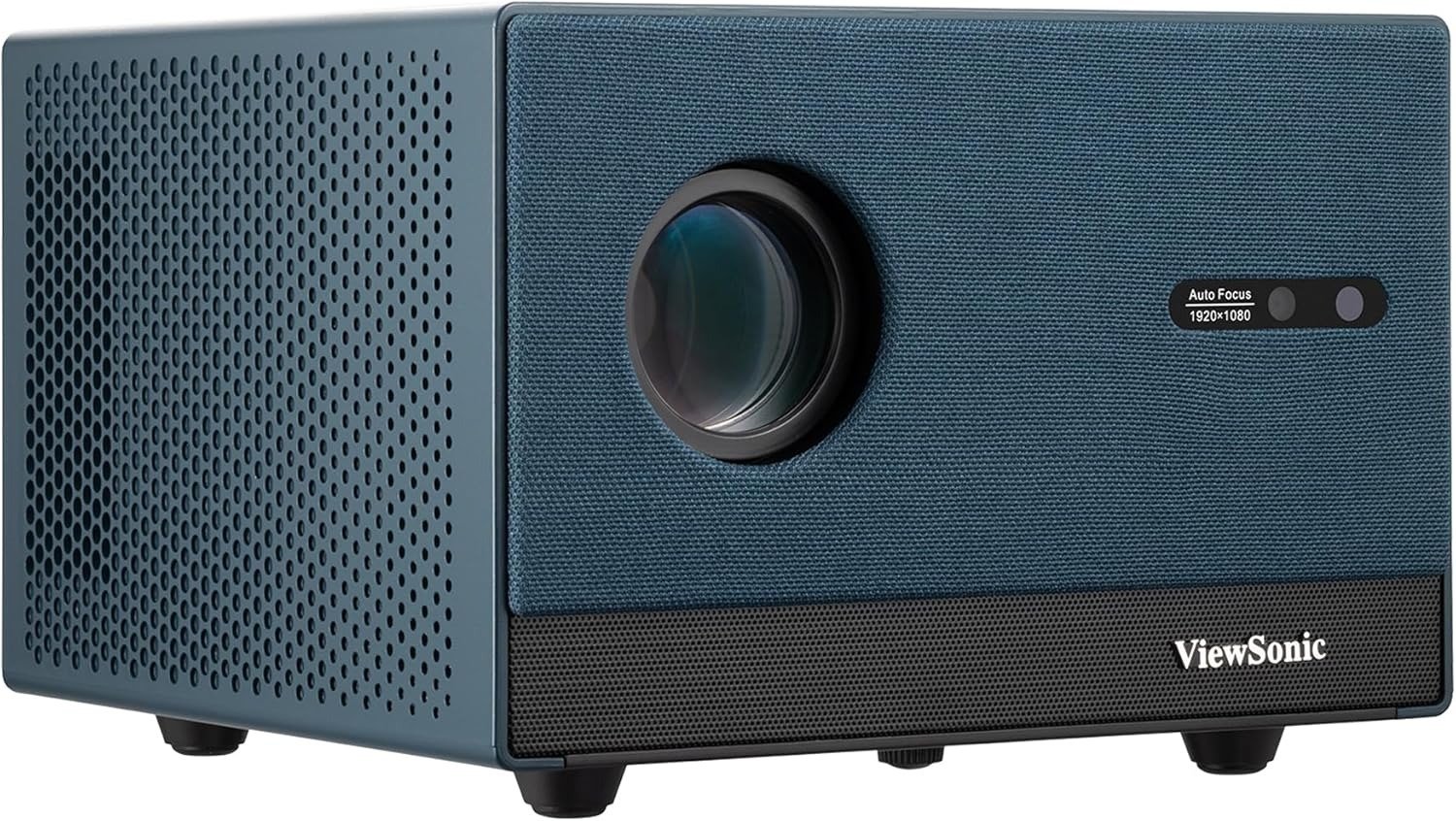
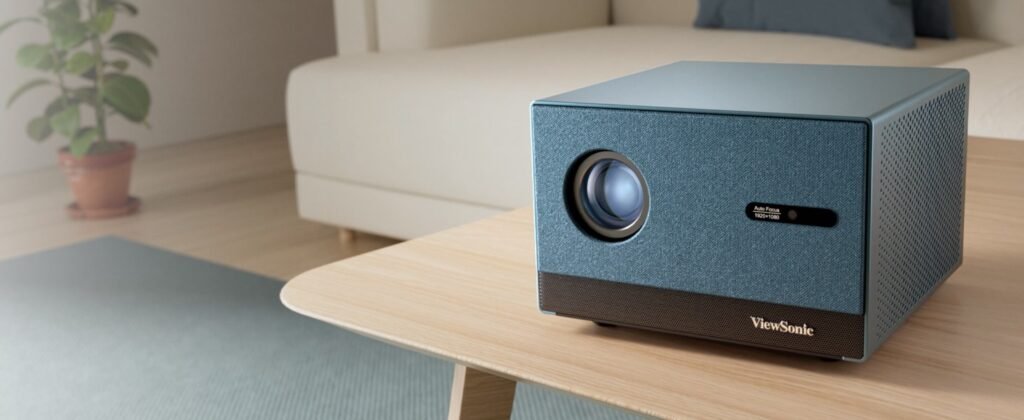
VIEWSONIC LX60HD
A cheap projector can fool you for about ten minutes.
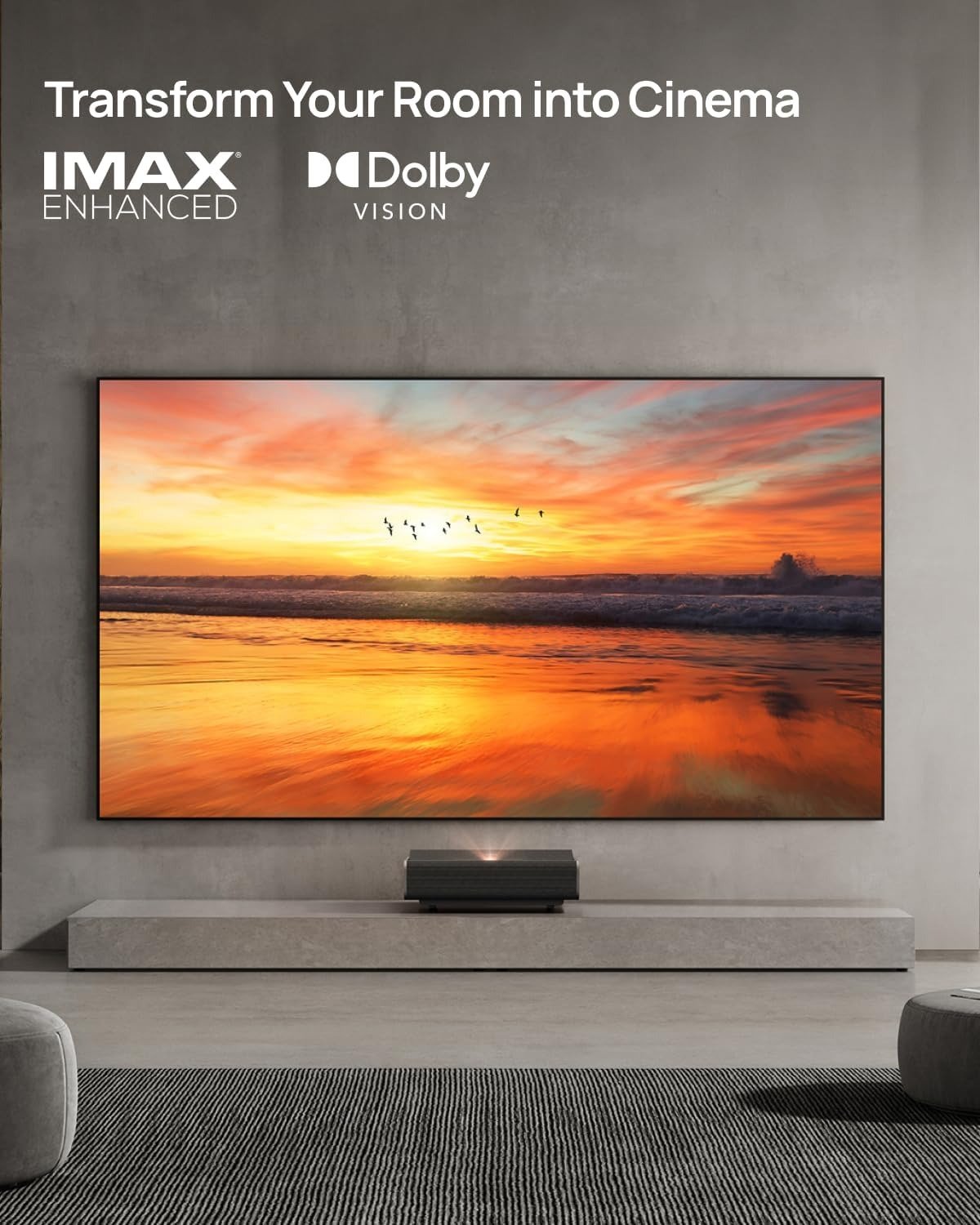
The image lands on the wall. The room goes quiet. The screen suddenly feels huge. For a moment, that alone looks like value. Then the real test starts: black scenes turn soft, menu lag becomes noticeable, fan presence stops being theoretical, and the room itself begins deciding whether the projector still looks impressive or merely large. That is the real entry point for the ViewSonic LX60HD. Not price. Not 1080p. Not Google TV. The break point is whether you understand the brightness threshold before you buy it.
I do not read this projector as a miracle box. I read it as a tightly bounded device that becomes surprisingly rational when you stop asking the wrong question. The wrong question is, “Is this a cheap projector with a lot of features?” The right question is, “At what point does the room let this projector stay convincing?” That is where this product either makes sense or quietly disappoints.
The Result Looks Fine. The Problem Isn’t.
What makes the LX60HD dangerous for careless buyers is that its strengths show up before its limits do.
The first impression is easy to like. It gives you native 1080p resolution, built-in Google TV, a native Netflix app, autofocus, auto keystone, screen-fit tools, Wi-Fi, Bluetooth, a sealed optical engine, and a price that has hovered around the $299 to $339 range depending on retailer and review timing. On paper, that bundle looks cleaner than what many budget projectors offer. Projector Reviews even measured its brightest modes at 723 lumens, above the 630 ANSI-lumen spec ViewSonic publishes.
That is the visible result.
The hidden problem is that convenience can mask conditional performance. A projector can be easy to set up and still be easy to misbuy. The LX60HD does a strong job removing streaming friction and setup friction. It does not remove light from your room, and it does not repeal the image-quality cost of stretching modest brightness across a very large picture. That is where many low-cost projector purchases go wrong: the buyer thinks convenience solved the core problem, when in reality convenience only made the device easier to start.
What You’re Actually Feeling but Not Naming
Most people do not say, “My projector crossed the brightness threshold.”
They say something looser.
They say the image looked exciting at first, then somehow less solid at night. They say bright scenes looked acceptable, but darker scenes felt flatter than expected. They say streaming was simple, but the whole setup started feeling more fragile when they tried to use it in a not-quite-dark room, or when they pushed image size because the product page told them it could go up to 140 inches. They say the picture is “fine,” yet they keep adjusting something. That repeated adjustment is the symptom.
With the LX60HD, the lived friction is usually one of these:
| What you notice | What it usually means |
|---|---|
| The picture is large but not convincing | You expanded image size past the room’s brightness tolerance |
| Dark scenes feel gray rather than deep | You are inside the portable-projector contrast limit |
| The setup feels convenient but slightly restless | Auto tools solved placement, not performance |
| The projector seems better at casual watching than “movie night” seriousness | The device is optimized for accessible streaming value, not enthusiast-grade depth |
Source basis: official specs, third-party measurements, and category guidance on portable-projector brightness tradeoffs.
The Hidden Mechanism Behind the Miss
The hidden mechanism is simple: the same 630-ish-lumen class that feels lively on a restrained screen in a dim room starts thinning out when you ask it to fill more space, fight more ambient light, and preserve more shadow detail at the same time.
This is why the projector can be honestly good and still honestly limited.
The LX60HD uses a single TFT LCD design with an LED light source rated for 20,000 hours, a 1.20:1 throw ratio, powered focus, and a sealed optical engine. That combination helps with longevity, reduces dust-related annoyance, avoids the rainbow effect some viewers notice on DLP models, and keeps the package friendly for living-room or bedroom use. But it is still a modest-brightness portable-class projector. The imaging technology shapes the trade-off: easier ownership, decent color for the money, helpful smart features, and manageable black detail for the class, but not the kind of luminous headroom that forgives sloppy room conditions.
That is the counterintuitive part many buyers miss: on a product like this, the streaming platform is not the hard problem. The hard problem is light distribution. Google TV can make the experience feel premium faster than the optics can keep up with careless expectations.
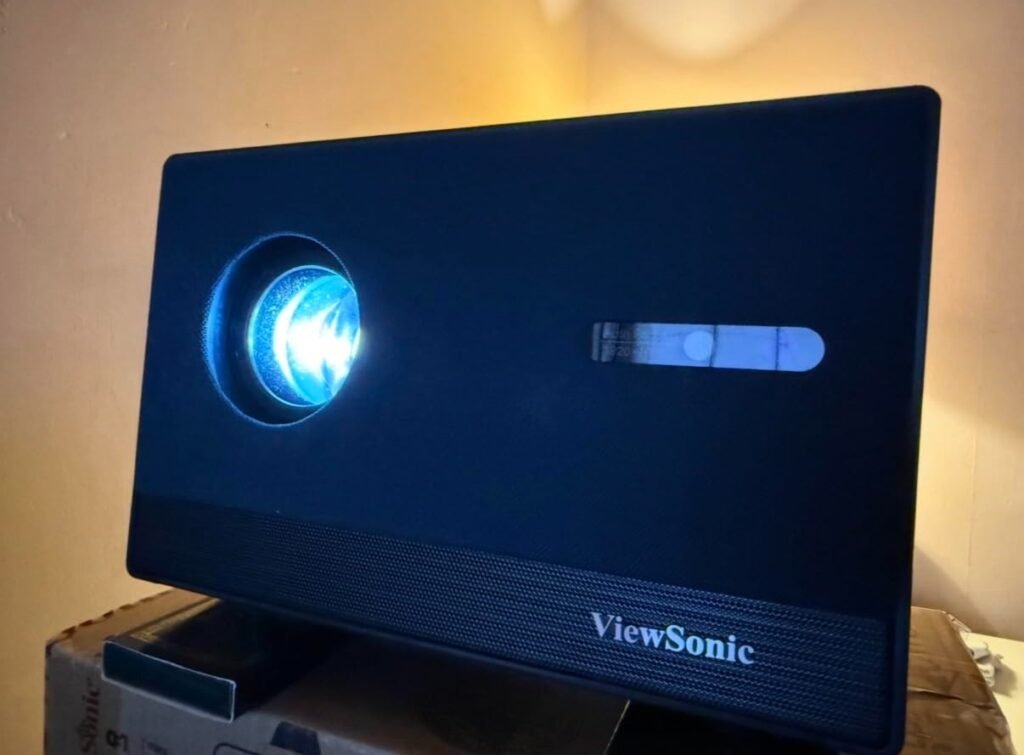
The Threshold Where the Outcome Quietly Breaks
Here is the threshold in plain language:
The LX60HD stays logical when you keep the room dim, keep expectations realistic, and resist the urge to treat “up to 140 inches” as the size you should actually use.
Projector Reviews found it strong enough for a 100-inch screen in rooms with low ambient light, and their measured brightness in the brighter modes came in at 723 lumens. That matters, because it tells me the product is not fake-spec nonsense. But it also tells me exactly where the line sits: it is a dark-room or near-dark-room device first, not a “make any room cinematic” device.
The threshold table looks like this:
| Condition | Fit |
|---|---|
| Dark bedroom, controlled light, 90–100″ target | Strong |
| Casual streaming, low friction, no dongle wanted | Strong |
| Small apartment, move room to room, plug-in use | Strong |
| Daytime living room with real ambient light | Weak |
| Large-screen obsession simply because 140″ is possible | Weak |
| Serious home-theater black-level expectations | Weak |
| Buyers who want premium motion, premium contrast, premium speed at once | Wrong fit |
This is a threshold product, not a universal one. It works by staying inside its lane.
Why Most Buyers Misread This Too Early
They misread it because they compare the wrong things first.
They compare app support. They compare resolution badges. They compare whether Netflix is native. They compare whether autofocus is included. Those things matter. They just do not decide the final satisfaction level as much as buyers think. The more important decision metric is whether the projector will still look composed once the novelty of “big image on wall” disappears.
The LX60HD is actually a good example of why feature-led judgment can be expensive. It is unusually complete for the money: Google TV, Netflix certification, auto setup features, sealed engine, 1080p, wireless connectivity, and respectable measured brightness for its class. That completeness invites overconfidence. Buyers start assuming “complete” means “forgiving.” It does not.
There is another mistake here: people read “portable” as “use anywhere.” In projector language, portable often means easier placement and easier movement, not immunity to room conditions. RTINGS’ current portable-projector guidance still centers category trade-offs, and broader reviewer guidance remains consistent: once you are under 1,000 lumens, darker environments matter much more. That aligns with what independent testing and owner comments say about the LX60HD.
Who Is Actually Inside This Problem
This projector makes sense for a specific buyer, and I would not blur that boundary.
You are inside this problem if you want a straightforward bedroom or small-room projector, you care more about clean streaming and low setup hassle than about chasing reference-grade image depth, and you are willing to shape the room around the projector rather than expecting the projector to overpower the room.
You are especially inside it if these priorities sound familiar:
| Need | Fit |
|---|---|
| Native Netflix and Google TV without workarounds | Strong |
| 1080p on a sensible screen size | Strong |
| Sealed engine for lower dust anxiety | Strong |
| Plug in, place, focus, stream | Strong |
| Outdoor or low-light casual use | Borderline to strong |
| Bright-room daytime use | Weak |
| Home-theater purist expectations | Weak |
The reason this split matters is that the LX60HD is not selling pure image authority. It is selling a controlled bundle of usability and enough picture competence to feel satisfying if you place it in the right operating zone.
Where Wrong-Fit Begins
Wrong fit begins the moment the buyer says one of these things:
“I want this to replace a bright TV in normal room lighting.”
“I want a huge image because the box says huge.”
“I am very sensitive to menu sluggishness, fan presence, or setup inconsistencies.”
“I care about deep blacks more than easy streaming.”
That is where the purchase starts drifting toward regret.
The friction is not imaginary. Projector Reviews criticized lights-on performance, loud cooling fans, sluggish Google TV behavior, and geometry quirks in some setup scenarios. Owner comments on Reddit were more forgiving, but they still mentioned present fan noise and, in one case, minor edge sharpness or light-bleed observations. Best Buy’s Q&A describes the fan as faint, while ProjectorCentral lists audible noise at 40 dB. Put those together and the correct reading is not “silent” or “loud, period.” The correct reading is that fan presence is real enough to matter to sensitive users, but it may recede once content is playing and expectations are sensible.
That is the pattern throughout this product: not disaster, not perfection, but a very specific band where the trade-offs stay acceptable.
The One Situation Where This Product Becomes Logical
The ViewSonic LX60HD becomes logical when you want a low-friction, dark-room, sub-$350 smart projector that feels complete out of the box and you are not pretending it is a bright-room home-theater machine.
That is the moment the product clicks.
At that point, the spec sheet stops being marketing and starts becoming structure. Native 1080p matters because text and detail stay cleaner than on many bargain-bin portable models. Google TV and native Netflix matter because you are no longer fighting dongles, sideloading, or app weirdness just to watch something. The sealed engine matters because cheap projector ownership often gets uglier over time, especially where dust is involved. Even the auto-setup tools matter more here, because this is exactly the kind of projector people move between casual spaces.
The trade-off table is cleaner than a pros-and-cons list:
| You gain | You trade off |
|---|---|
| Better smart-TV convenience than many cheap competitors | Less tolerance for bright rooms |
| Honest 1080p and usable brightness for the class | No escape from portable-class contrast limits |
| Sealed engine and lower dust anxiety | A chassis that still has audible cooling behavior |
| Helpful automation and easier setup | Some reports of menu or geometry friction |
| Good value at roughly $300 | A device that must be bought with discipline |
That is why I would not frame it as a bargain projector for everyone. I would frame it as a disciplined buy for the right environment.
What It Solves, What It Reduces, and What It Still Leaves to You
What it solves is obvious once you stop demanding too much from the category.
It solves streaming friction. It solves the annoying “why do I need another stick just to use my projector?” problem. It solves a decent part of setup friction through autofocus, keystone tools, screen fit, and obstacle avoidance. It reduces dust anxiety with a sealed engine. It reduces the feeling that every cheap projector is an off-brand gamble with messy software. On that front, the LX60HD is more coherent than many budget alternatives.
What it reduces is not the same as what it eliminates.
It reduces the pain of casual projection ownership. It reduces the number of little workarounds that usually poison cheap projector use. It reduces some of the optical anxiety that comes from dust-prone designs. It can even reduce rainbow-effect concerns for viewers who are sensitive to single-chip DLP artifacts, because this is an LCD-based model.
What it still leaves to you is the adult part of the decision:
You still have to control the room.
You still have to choose a sane image size.
You still have to accept that portable-projector cinema is a conditional experience, not a free upgrade over a television in every context.
You still have to know whether you are the kind of viewer who notices fan presence, motion compromises, menu lag, or grayish blacks and never unsees them.
That last part is where regret starts or ends.
Final Compression
My read is simple.
The ViewSonic LX60HD is one of the more coherent budget smart projectors in its lane. Independent review data supports that. The feature stack is unusually complete for the money. The measured brightness is respectable for the class. The built-in Google TV and native Netflix setup remove a lot of nonsense that usually comes attached to cheap projection. The sealed engine is a real ownership advantage. But the product only stays impressive when you buy it as a dark-room threshold device, not as a general-purpose brightness solution.
So the clean decision is this:
If your real use case is a dim bedroom, a controlled living room at night, or a casual movie setup where convenience matters more than enthusiast-grade image authority, the LX60HD is rational. If your break point begins with bright-room use, oversized projection ambitions, or premium picture expectations, the decision stops here.
If this is the condition you are actually dealing with, this becomes the logical next step
Transparency Note:
This analysis is not based on quick personal impressions.
It is derived from documented system behavior, verified user patterns, and the physical constraints of storage capacity.
The goal is to translate complex technical behavior into a realistic performance model that helps you make a clear decision.
“A quick note: Don’t believe the star ratings, but trust personal experience. This article is a compilation of collected experiences”