AOSU DOORBELL CAMERA REVIEW: THE VIDEO LOOKED PERFECT. THAT’S EXACTLY WHY I ALMOST MISSED THE REAL PROBLEM.
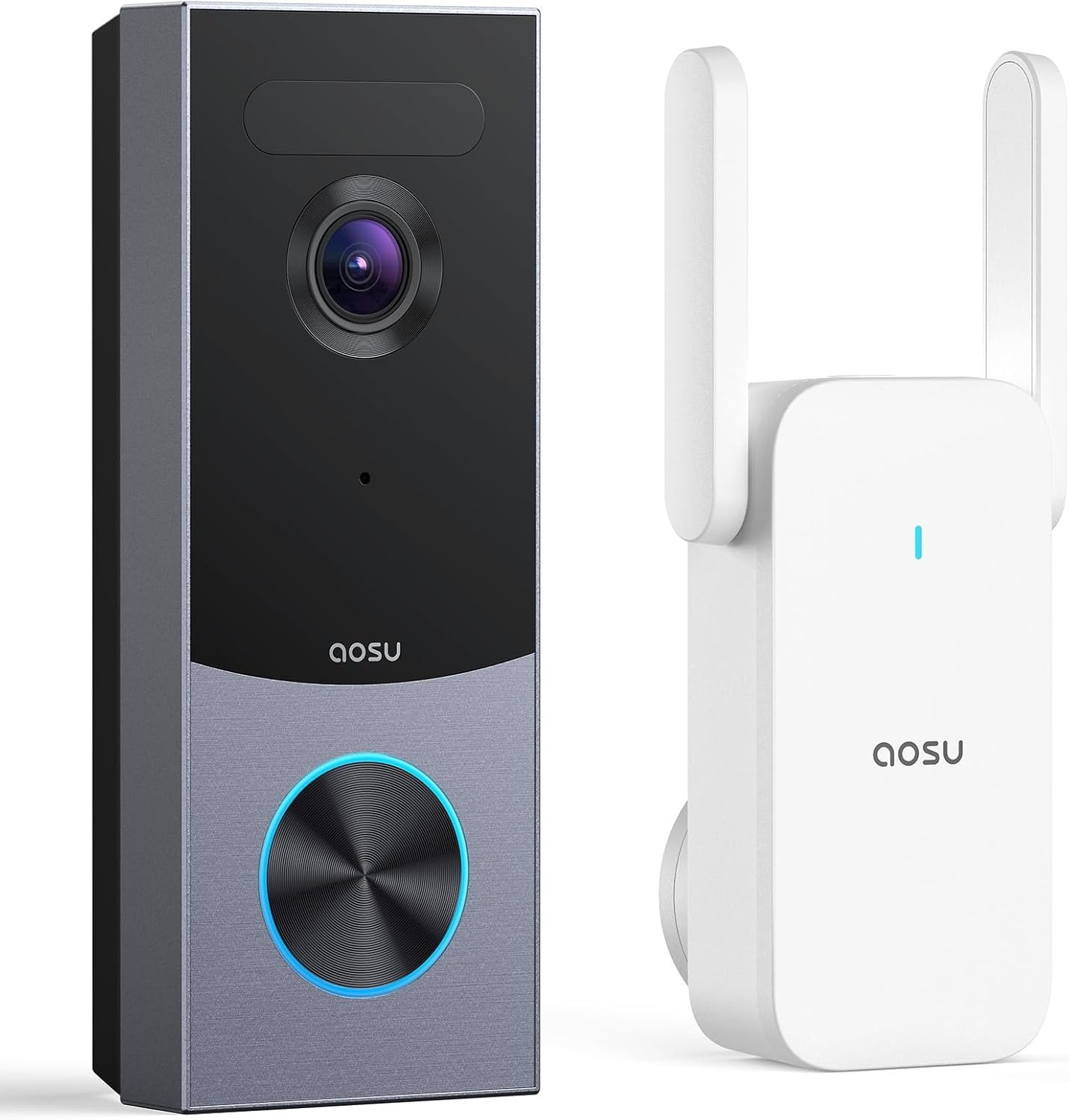
AOSU DOORBELL CAMERA
You hear the chime through your phone before you hear it through the wall. By the time you’ve unlocked the screen, found the notification, and tapped it open, the person at your door has already turned around and gone back to their car. The footage that loads a second later is sharp, colorful, perfectly exposed. And none of that matters, because you missed them anyway.
That contradiction is the whole reason I went deep on the AOSU Doorbell Camera — past the spec sheet, past the glossy product photos, into the long-term owner reports, the teardown reviews, and the pattern that kept repeating across hundreds of verified buyers. Because a doorbell camera doesn’t get judged on its best frame. It gets judged on the ten seconds around that frame.
AOSU DOORBELL CAMERA REVIEW: THE FOOTAGE LOOKS FINE. THE PROBLEM ISN’T.
Here’s the part nobody argues about: the image quality is genuinely good. The camera captures 5-megapixel resolution at 2560 by 1920 pixels, and on the exact listing this review covers, that’s paired with a 166° field of view in a 4:3 aspect ratio built for natural vertical framing — designed to catch a visitor’s full body and a package on the ground without blind spots. Independent testers backed this up directly: the 5MP sensor delivers sharp, detailed images that make it easy to identify visitors, even helped by the wide lens working well in tight doorway spaces.
So why does this camera still end up in “almost returned it” stories? Why do owners who praise the video in one sentence describe frustration in the next? Because video quality was never the actual decision point. It’s the thing you check in the store. It’s not the thing that breaks at 11pm when a delivery driver is standing at your door for four seconds, waiting.
AOSU DOORBELL CAMERA ALERTS: WHAT YOU’RE ACTUALLY FEELING BUT NOT NAMING
Most people can’t quite name the annoyance. They just know that “checking the doorbell” feels heavier than it should. Here’s the mechanism behind that feeling, and why it’s inconsistent depending on which version and firmware you’re running.
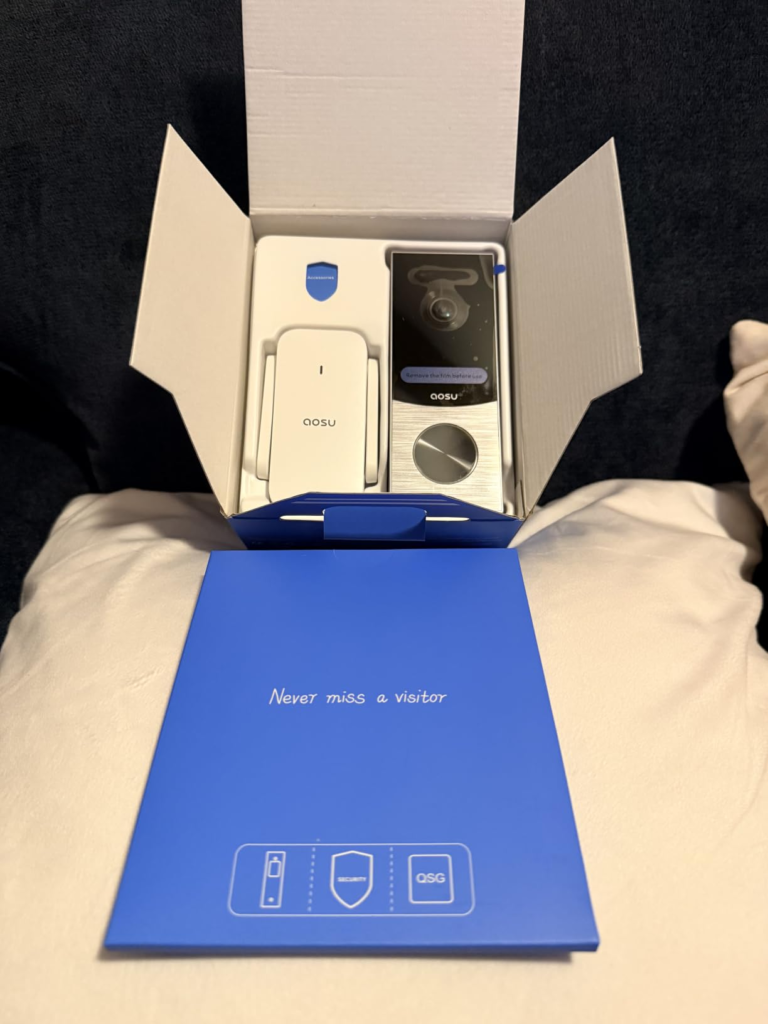
One long-term owner who pushed the doorbell hard described the experience plainly: a button press doesn’t always trigger a phone notification, and when someone else rang it from just outside while he was in the yard with good Wi-Fi, it only worked one out of three times. He also flagged the bigger structural issue — unlike Ring or Arlo, there’s no real incoming-call screen. You get a push notification like a new email, have to unlock the phone, find it in the list, tap it, and then wait several seconds for video to actually start. By the time all of that finishes, the moment is often gone.
I’m calling this the Two-Tap Lag — the gap between “something happened” and “I can actually see and respond to it.” And to be fair to AOSU, this isn’t a fixed flaw across every unit. More recent testing tells a different story: one 2026 review logged notifications landing on an iPhone within 2 to 3 seconds of someone entering the detection zone, and a separate tester reported alert speed near-instant, with video playback starting immediately and two-way talk ready within about 3 seconds. So the lag is real for some owners and basically gone for others. That spread itself is the actual story — and it’s worth understanding why before you assume your experience will match either extreme.
AOSU DOORBELL BATTERY LIFE AND AUDIO LAG: THE HIDDEN MECHANISM BEHIND THE MISS
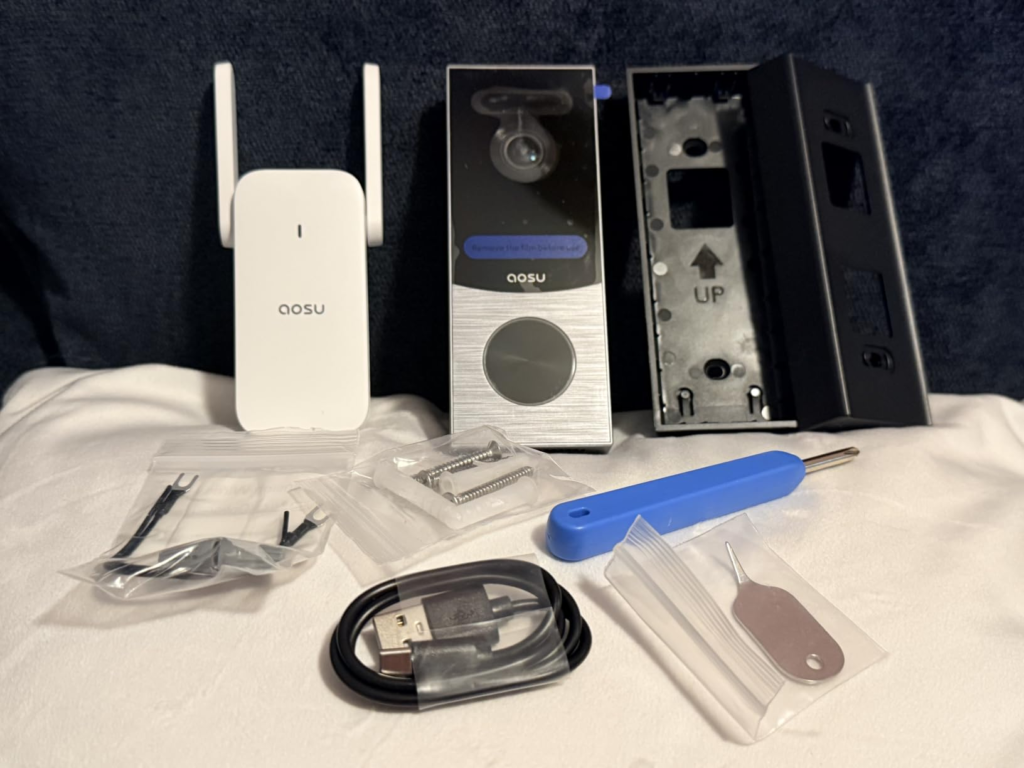
Two things sit underneath nearly every complaint pattern I found: the battery curve, and what happens to audio the longer you stay on a call.
The battery. AOSU’s own marketing ceiling is steep — up to 180 days on a single charge. But the brand’s own franker number, given directly to a reviewer, was more modest: good for 4 to 6 months on a full charge. That’s the honest range under moderate daily traffic. A separate long-term test confirmed the pattern: with 10 to 15 motion events a day, expect 4 to 6 months; heavy use can drop that to 2 to 3 months. The mechanism is simple — every motion wake-up, every recorded clip, every notification push costs battery, and a busier entryway means more wake-ups, period. There’s no setting that changes the physics of that.
The audio. This is the one that surprised me, because it shows up independently across multiple owners and multiple model years, which means it’s not a one-off defect — it’s closer to a design tendency. One owner described it directly: two-way voice has a lag that gets worse the longer the conversation continues, to the point where a sentence you say arrives at the camera’s end ten or twenty seconds later. A separate, more clinical test of a related AOSU doorbell found the same shape of problem: the longer a two-way talk session continued, the worse the delay became, badly enough that the same reviewer scored the recorded audio just 3 out of 9 points, due to regular breaks in the stream, poor frequency response, and constant static.
Why does delay compound instead of staying flat? Because every layer the audio passes through — doorbell, base station, your router, the app’s relay — adds a small amount of processing time, and those small delays stack the longer the connection stays open. A four-second exchange barely notices it. A two-minute conversation feels like talking through a tin can on a string with a satellite delay built in.
AOSU DOORBELL CAMERA THRESHOLD: WHERE THE OUTCOME QUIETLY BREAKS
There’s a specific point where each of these issues stops being a minor quirk and starts being a real problem. Naming that point is more useful than any star rating.
| What You’ll Notice | What’s Actually Happening |
|---|---|
| Notification arrives, but the visitor’s gone by the time video loads | The Two-Tap Lag — depends heavily on firmware version and whether your unit uses the older notification flow or the newer one |
| Conversation gets harder to follow the longer you talk | The Conversation Decay Point — audio delay compounds, usually becoming noticeable past roughly 15–20 seconds into a call |
| Battery drains faster than it used to, months in | The Charge Curve Drop — one long-term owner reported a unit that originally lasted close to a month per charge dropping to needing a recharge every two days after about eight months of use |
| Random pop-up pushing cloud storage | An upsell layer sitting on top of a product whose local storage already requires no subscription for video history — annoying, not dangerous |
None of these thresholds are dealbreakers on their own. They’re dealbreakers only if your specific use case sits right on top of them — which is exactly what the next two sections are for.
AOSU VS RING DOORBELL CAMERA: WHY MOST BUYERS MISREAD THIS TOO EARLY
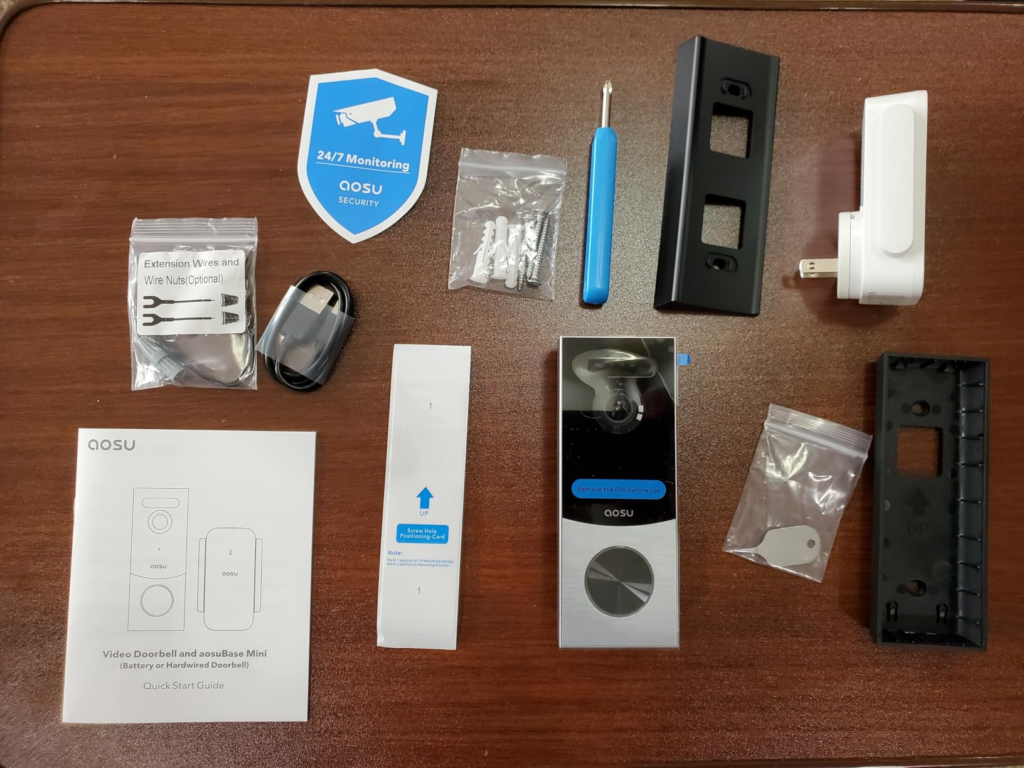
The comparison shopping almost always happens the same way: open two browser tabs, line up resolution, field of view, and price, and pick whichever number looks bigger. That’s the trap. Spec sheets don’t show you what a phone call sounds like at the thirty-second mark.
| AOSU DOORBELL CAMERA | RING BATTERY DOORBELL | EUFY E340 | |
|---|---|---|---|
| Subscription needed for basic video history | No — 60-day loop recording via the built-in AOSU Base Mini, no monthly fee | No, but features are limited without a paid plan | No — comparable 8GB local storage |
| Two-way call audio over time | Usable for short exchanges; delay worsens on longer calls | Reviewers found it far better, with little quality loss and considerably better motion-triggered timing | Similar two-stage notification structure to AOSU |
| Apple HomeKit support | No — Alexa and Google Assistant only | No native HomeKit | Yes, full HomeKit Secure Video support |
| Motion detection approach | Triple detection — PIR, radar, and AI working together | AI-based human detection | AI human/package detection |
| Typical price tier | Budget, often well under $130 with the included base station | Mid-range, frequently $150+ | Mid-range |
If your shortlist criteria are “no subscription” and “good video for the money,” AOSU wins that round cleanly. If your criteria are “flawless real-time call audio” or “Apple Home integration,” it loses just as cleanly. Buying on the spec sheet alone skips the one variable that actually determines daily satisfaction.
WHO ACTUALLY BELONGS WITH AN AOSU DOORBELL CAMERA
I’ll be direct about who this is genuinely built for, because the brand’s own positioning backs this up: AOSU sits as a consumer-focused, budget-to-mid-tier solution, not a professional-grade system — and that’s not an insult, it’s a category.
You’re the right fit if your front door sees light-to-moderate daily traffic — deliveries, family, the occasional visitor — rather than constant foot traffic. You’re the right fit if what you actually want from a “call” is identity confirmation and a quick instruction (“leave it by the door”), not a real conversation. And you’re the right fit if a recurring subscription bill for something as basic as “see who knocked” genuinely bothers you, since local storage here comes with no subscription requirement attached.
You’re also, frankly, the right fit if you’ve been burned before by a flimsier budget camera and want the false-alert problem solved properly. On that front, the evidence is strong: one 45-day independent test found the triple-sensor system accurately distinguished people approaching the door from swaying trees and passing cars more than 30 feet away, producing fewer than one false alert per day, and a separate week-long test reported zero false alerts from pets or foliage, even during a windy afternoon.
AOSU DOORBELL CAMERA: WHERE THE WRONG BUYER BEGINS
Now the part most reviews skip, because naming who shouldn’t buy something doesn’t feel like a sales pitch — which is exactly why it matters more than anything else here.
If your household runs on Apple HomeKit, stop here. This device doesn’t offer the HomeKit support that a comparable Aqara model does — Alexa and Google Assistant are covered, Apple isn’t. If your front door is a high-traffic entrance — a small business, a multi-unit building, a home with constant deliveries — the battery math stops working in your favor; more events simply means more charging, and at the extreme end, one owner’s battery went from lasting roughly a month per charge to needing a charge every two days after months of heavy cycling. And if the reason you want a doorbell camera is to have real, extended conversations through it — screening visitors verbally, checking in with someone at length — the audio lag pattern documented above will wear on you faster than the video quality will ever make up for.
AOSU DOORBELL CAMERA REVIEW: THE ONE SITUATION WHERE IT’S THE LOGICAL PICK
Strip away the marketing and the complaint threads, and one buyer profile is left clearly justified by the evidence: someone who wants sharp, wide, no-blind-spot video at the door, refuses to pay a monthly fee just to see their own porch, has a normal residential amount of daily traffic, and treats two-way calls as quick exchanges rather than conversations. For that person, the trade-offs documented in this review aren’t really trade-offs — they’re irrelevant. The thing that would have bothered them never gets triggered.
That’s not a verdict built on hype. It’s a verdict built on matching a real pattern of use to a real pattern of limitation, and finding that for one specific kind of household, the two simply don’t collide.
WHAT THE AOSU DOORBELL CAMERA SOLVES, REDUCES, AND STILL LEAVES TO YOU
| Solves | Reduces | Still On You |
|---|---|---|
| The recurring subscription cost of basic video history | False alerts from wind, traffic, and pets, via triple-sensor filtering | Charging cadence — check the app’s battery indicator every couple of months rather than waiting for a dead unit |
| Blind spots at the door, through the wide vertical field of view | Notification clutter, once you set custom detection zones | Keeping two-way calls short, since delay compounds the longer you talk |
| Night visibility, through built-in infrared illumination | Setup friction somewhat, though pairing the doorbell with the base station is, in one tester’s words, tedious without being genuinely difficult | Mounting security — the quick-release clip trades a screwed-down bracket for fast removal, offset partly by a built-in tamper alarm |
AOSU DOORBELL CAMERA FAQ: QUICK ANSWERS BEFORE YOU DECIDE
| Question | Answer |
|---|---|
| Does the AOSU Doorbell Camera require a subscription? | No. The AOSU Base Mini stores 60 days of footage locally with no subscription required for that basic history. |
| How long does the battery actually last? | The marketed ceiling is up to 180 days, but real-world figures from the brand itself and independent testing land closer to 4 to 6 months under moderate use, dropping to 2 to 3 months on busier entryways. |
| Does it work with Apple HomeKit? | No. It works with Alexa and Google Assistant, not Apple’s smart home platform. |
| Will I get spammed with false alerts? | Unlikely under normal conditions. Testing found the PIR, radar, and AI combination kept false alerts to under one per day even with wind and passing traffic nearby. |
| Why does the two-way audio get harder to follow mid-call? | Delay compounds the longer a call runs, a pattern reported independently across more than one AOSU doorbell model. The practical fix is to keep exchanges short and direct. |
| Is it weatherproof? | Yes — it’s rated IP65, meaning it resists dust ingress and water jets from any direction. |
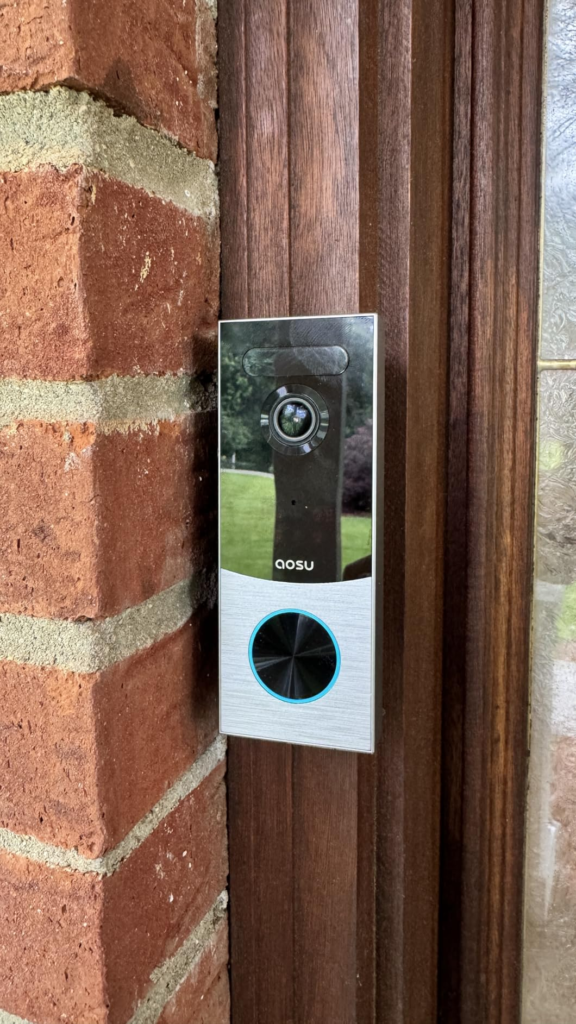
FINAL VERDICT: IS THE AOSU DOORBELL CAMERA WORTH IT?
This isn’t a camera that fails at being a camera. The image is clean, the field of view is genuinely wide, and the false-alert filtering does its job better than most budget doorbells manage. What it asks of you is smaller than what it asks of your patience during a long phone call, and smaller than what it asks of your charging routine every few months. Neither of those is a flaw hiding behind marketing — they’re documented, predictable, and easy to plan around once you know they exist.
If subscription-free local storage and reliable false-alert filtering are what actually brought you here, and you’re not relying on it for long real-time conversations, this is where the decision stops being vague. You can check current pricing and availability on the listing here.
From our analytics lab: More top-rated reviews
Transparency Note:
This analysis is built on aggregated real-world experience. It extracts what repeatedly holds, what breaks, and what users uncover only after living with the system—then shapes it into a clear model you can use immediately.
Think of it as structured experience, refined and presented so you don’t have to learn it the hard way.
“A quick note: Don’t believe the star ratings, but trust personal experience. This article is a compilation of collected experiences.”