Apple HomePod mini Review: The Renewed Orange Speaker That Sounds Bigger Than the Price Tag Admits
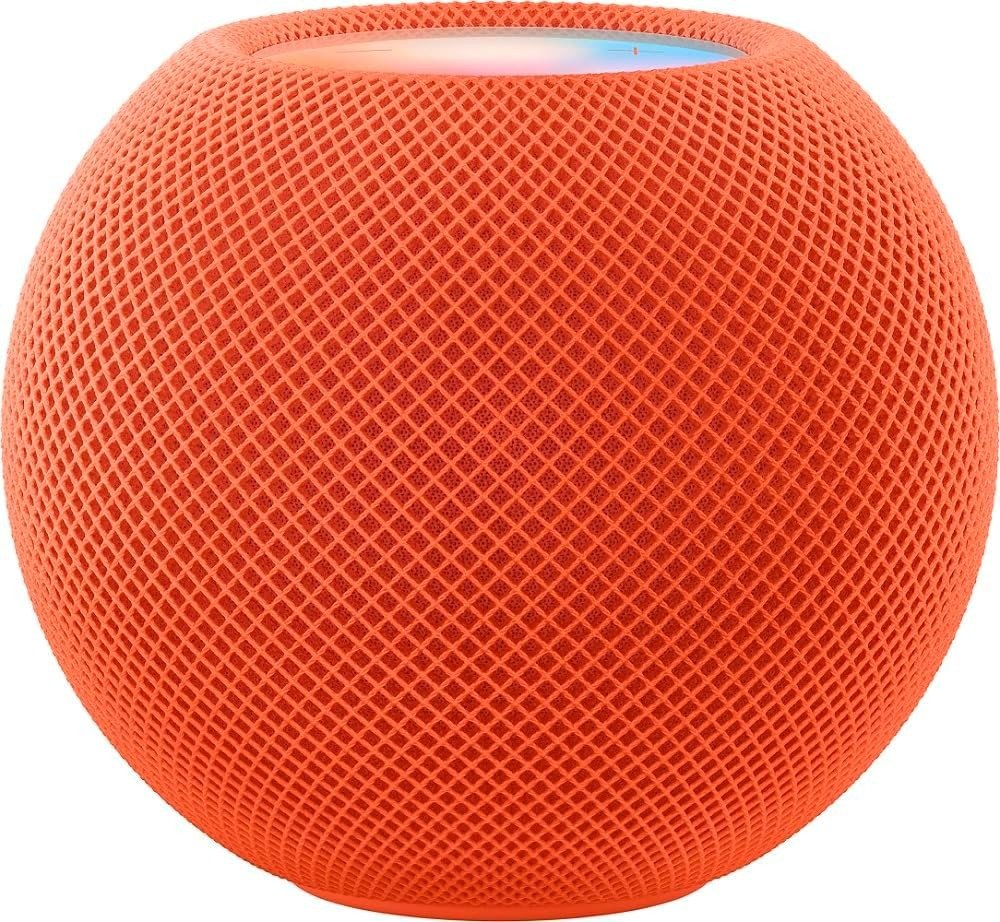
APPLE HOMEPOD MINI
It’s 7:40 in the morning, coffee’s not done, and you say “Hey Siri, play something.” This orange sphere the size of a fist answers before you finish the sentence, and it fills the kitchen with more bass than something that small has any business producing. Later that day you ask it for a playlist on Tidal, and it just… doesn’t. It searches Apple Music instead, finds nothing, and tells you so, cheerfully. That gap — between how good this thing sounds and how oddly it behaves — is the whole HomePod mini experience compressed into one afternoon.
You’re not browsing this speaker in general, though. You found one specific listing: an Orange HomePod mini, Amazon Renewed, at a price that got a lot more interesting two weeks ago, because Apple just raised the new price by 30%. So the real question isn’t “is the HomePod mini good.” It’s narrower: is buying a renewed one, right now, smart — or is a five-year-old design being sold to you at exactly the wrong moment?
| Category | Compact smart speaker / HomeKit hub |
| This listing | Orange, Amazon Renewed |
| New price since June 25, 2026 | $129 |
| New price before that | $99 |
| Height | 3.3 in |
| Chip | Apple S5 (2019-era, from Apple Watch Series 5) |
| Colors currently sold | White, Midnight, Blue, Orange, Yellow |
| Setup requirement | iPhone or iPad |
| Battery | None — stays plugged in |
| Hub support | HomeKit, Matter, Thread border router |
HomePod mini Sound Quality Review: The Result Looks Fine, The Problem Isn’t the Speaker
For a sphere you can wrap one hand around, the sound is genuinely surprising. An Apple-designed full-range driver with a neodymium magnet handles bass and highs, while force-cancelling passive radiators stretch the low end further than the size suggests, and computational audio fills the room with 360-degree sound. Reviewers who cover audio for a living tend to agree it over-delivers for its size and price bracket.
Not everyone is charmed. One long-time Apple reviewer put it bluntly: after months with the speaker sitting in his living room, he found the sound merely “OK,” and argued that OK isn’t enough for a speaker in this price range, noting that even an old Bluetooth speaker beat it on volume and bass. Both things are true at once. It sounds big for its size — and its size is still small.
So why do so many owners end up disappointed anyway, if the driver itself is doing its job? Because the complaint almost never starts with the speaker. It starts with what happens right after you talk to it.
HomePod mini Daily Use: What You’re Actually Feeling but Not Naming
Here’s the annoyance nobody names correctly: it’s not “bad sound,” it’s a voice tax. You want a song from Tidal or Spotify, so you have to say the app name every single time, or Siri quietly redirects you to Apple Music and comes up empty. One reviewer who bought the speaker with his own money described exactly this loop: you have to end every request with the app’s name, and if you skip it, the HomePod mini defaults to searching Apple Music instead, forcing you to repeat yourself mid-conversation like the speaker didn’t hear you the first time.
Multiply that by a year of mornings and it stops being a quirk and starts being friction you route around — playing music from your phone instead of asking, or just giving up and subscribing to Apple Music you didn’t necessarily want.
HomePod mini Siri Limitations: The Hidden Mechanism Behind the Miss
Why does it behave this way instead of just working like a normal speaker? Two mechanical reasons, both baked into the hardware from day one.
First, the brain. The HomePod mini runs on Apple’s S5 chip, the same silicon used in the 2019 Apple Watch Series 5 — genuinely old processing power being asked to do real-time computational audio and voice recognition in 2026. Second, the leash. Setup requires an iPhone or iPad; it cannot be configured from a Mac, and it was never designed to treat Spotify or Tidal as equals — Apple Music is the default it keeps steering you back toward.
None of this makes it a bad product. It makes it a product built for one specific household shape, and mismatched for every other one.
HomePod mini Price 2026: The Threshold Where the Deal Quietly Breaks
Here’s the number that changes everything about this listing. On June 25, 2026, Apple raised the price of the HomePod mini worldwide, from $99 to $129, alongside similar hikes on the full-size HomePod and Apple TV. Apple attributed the increase to a global memory chip shortage driving up RAM and storage costs — the same squeeze that pushed up prices across Macs and iPads.
That’s a 30% jump on hardware that hasn’t changed since 2020. One longtime reviewer, who’d recommended the HomePod mini as the best cheap option in its category for years, changed his position the same day the price rose: he noted the price gap between the HomePod mini and the pricier, more capable Sonos Era 100 SL had suddenly closed, and said he could no longer recommend the HomePod mini over it. That’s the threshold. At $99, this was a near-automatic yes for Apple households. At $129, it has to earn the purchase.
This is exactly why a Renewed listing, priced closer to the old $99 tier, is worth a second look instead of an automatic skip.
HomePod mini vs Echo Dot vs Nest Mini: Why Most Buyers Compare This Wrong
Most people compare these three on specs and price, which is the wrong axis. The right axis is: what phone is already in your pocket.
| HomePod mini (this listing) | Echo Dot 5th Gen | Nest Mini 2nd Gen | |
|---|---|---|---|
| New price | $129 | ~$50 | ~$50 |
| Assistant | Siri | Alexa | Google Assistant |
| Works fully on Android | No | Yes | Yes |
| Bluetooth speaker mode | No — AirPlay only | Yes | Yes |
| Smart home hub | Yes, Thread + Matter | Yes, via Eero | Limited |
| Compatible devices | Apple ecosystem only | 140,000+ smart home devices | About 50,000 devices |
An Android household buying this HomePod mini is buying a beautifully finished paperweight that occasionally plays music. An Apple household buying an Echo Dot is buying a device that will keep nudging them toward a companion app instead of just working the way their iPhone already does. Specs don’t decide this. Your ecosystem does.
Who Should Buy a HomePod mini: Who Is Actually Inside This Problem
This speaker is for a specific person: someone who already owns an iPhone, iPad, or Mac, wants a compact accent speaker for a kitchen, bedroom, or home office rather than a living-room centerpiece, and wants a real HomeKit and Matter hub without buying a separate one. It’s for someone who values Intercom and Handoff more than they value deep bass or Bluetooth flexibility.
It is not for someone chasing room-filling, audiophile-grade sound, and it is not for someone who splits their life between Android and iOS.
Amazon Renewed HomePod mini: Where the Wrong Choice Begins
Two honest corrections belong here, because getting them wrong is where buyers regret this purchase.
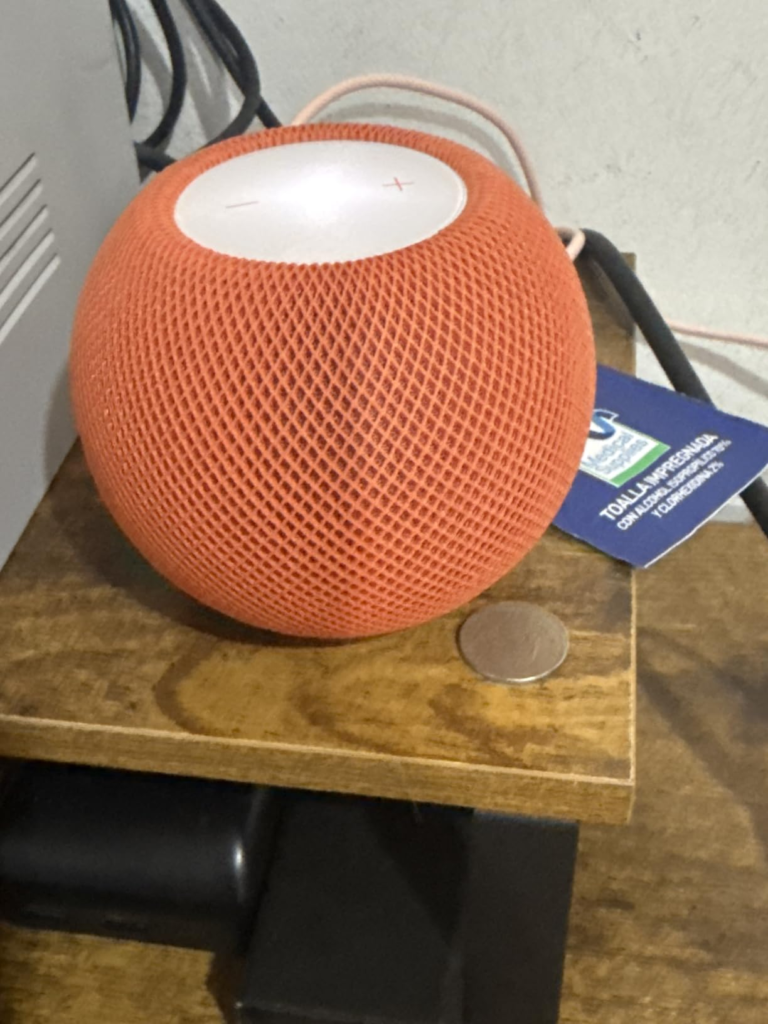
First: don’t read “2026 Colors Edition” as a new Apple product. It isn’t one. Orange has been part of the lineup since Apple added blue, orange, and yellow colors in October 2021, and the only color change since then was space gray being replaced by midnight in July 2024. Listing text that appends a year is a search-freshness habit on marketplaces, not a new colorway from Apple. You’re buying the same Orange that’s existed for years — which is fine, just go in knowing it.
Second: know what “Renewed” actually buys you. Most Amazon Renewed items carry a 90-day Amazon Renewed Guarantee, with a full refund or replacement if the product doesn’t work as expected. That guarantee comes from Amazon, not from Apple’s original warranty, which does not carry over to a resold unit.
| Grade | What to expect |
|---|---|
| Premium | Looks nearly new, with a 365-day guarantee |
| Excellent | Best price-to-quality ratio, light cosmetic wear |
| Good | Visible minor wear, fully functional |
| Acceptable | Noticeable wear, still fully functional |
Check which grade this specific listing states before you order, since it isn’t automatic. And on AppleCare+: it’s generally tied to a fresh retail purchase from Apple or an authorized reseller within a set window, so don’t assume you can add it after the fact to a secondhand unit — confirm on the listing rather than assume.
Skip this Renewed unit if you want a full manufacturer warranty for peace of mind, if cosmetic perfection matters because it’s a gift, or if you’d genuinely rather wait: a next-generation HomePod mini is widely expected later in 2026, possibly around September alongside the more personalized version of Siri debuting in iOS 27, though Apple hasn’t confirmed a date.
HomePod mini Orange Renewed: The One Situation Where It Becomes the Smart Buy
Put all of that together and one specific case falls out clearly. If you’re already inside the Apple ecosystem, you want a small, colorful, capable hub-slash-speaker rather than a home theater, and you’d rather pay something closer to the old $99 tier than the new $129 one for functionally identical hardware — buying this Renewed Orange unit now, backed by Amazon’s guarantee, is the logical move. Not because it’s flawless. Because it matches exactly what you need, at a moment when new units cost more for the same thing.
| Buy this Renewed unit if… | Skip it if… |
|---|---|
| You already own an iPhone or iPad | You’re on Android |
| You want a HomeKit/Matter hub | You want Bluetooth or an AUX jack |
| A small-room accent speaker is the goal | You want room-filling, bass-forward sound |
| You’d rather avoid the new $129 price | You need a full manufacturer warranty |
HomePod mini Pros and Cons: What It Solves, What It Reduces, What’s Still on You
| It solves or reduces | It still leaves to you |
|---|---|
| A real smart-home hub for an Apple household | Siri still needs the app name spoken aloud for Tidal or Spotify |
| Surprisingly full sound for a fist-sized speaker | No Bluetooth streaming, no AUX — AirPlay only |
| Avoiding the new $129 price on unchanged hardware | Still requires an iPhone or iPad, always |
| Amazon’s 90-day Renewed Guarantee as a safety net | Minor cosmetic wear is possible — check it on arrival |
HomePod mini Review: Frequently Asked Questions
| Question | Answer |
|---|---|
| Is the HomePod mini still worth buying in 2026? | For an Apple household wanting a compact hub and accent speaker, yes. For anyone chasing big sound or cross-platform flexibility, look elsewhere. |
| Does the HomePod mini work with Android phones? | Not meaningfully. It requires an iPhone or iPad to complete setup, and most of its smart features assume an Apple device nearby. |
| Can I play Spotify on it? | Yes, via AirPlay from your phone. Native voice control over Spotify or Tidal is limited — you generally have to name the app out loud each time. |
| What does “Amazon Renewed” actually guarantee here? | A minimum 90-day window for a full refund or replacement if the item doesn’t work as expected, backed by Amazon rather than Apple’s original warranty. |
| Should I wait for the HomePod mini 2 instead? | If a confirmed manufacturer warranty and the newest chip matter most to you, waiting is reasonable — a successor is rumored for later in 2026, possibly around September, though nothing is official. If you just need a working hub now at a fair price, that wait buys you uncertainty, not much else. |
| Is “2026 Colors Edition” a new Apple color? | No. Orange has existed since October 2021; no new colorway has shipped in 2026. |
HomePod mini Review: Final Verdict
Strip away the noise and it comes down to three numbers: $129 new, $99 not long ago, and a 90-day guarantee on the Renewed unit sitting between them. If you’re already living inside Apple’s ecosystem and you want a small, capable hub without paying this month’s higher price for it, this is the listing that makes sense — not because it’s perfect, but because it’s correctly matched to what you actually need.
Transparency Note:
This analysis is built on aggregated real-world experience.
It extracts what repeatedly holds, what breaks, and what users uncover only after living with the system—then shapes it into a clear model you can use immediately.
Think of it as structured experience, refined and presented so you don’t have to learn it the hard way.
“A quick note: Don’t believe the star ratings, but trust personal experience. This article is a compilation of collected experiences.”