Schlage Camelot FE595 Review: The Lockout Switch Nobody Warns You About
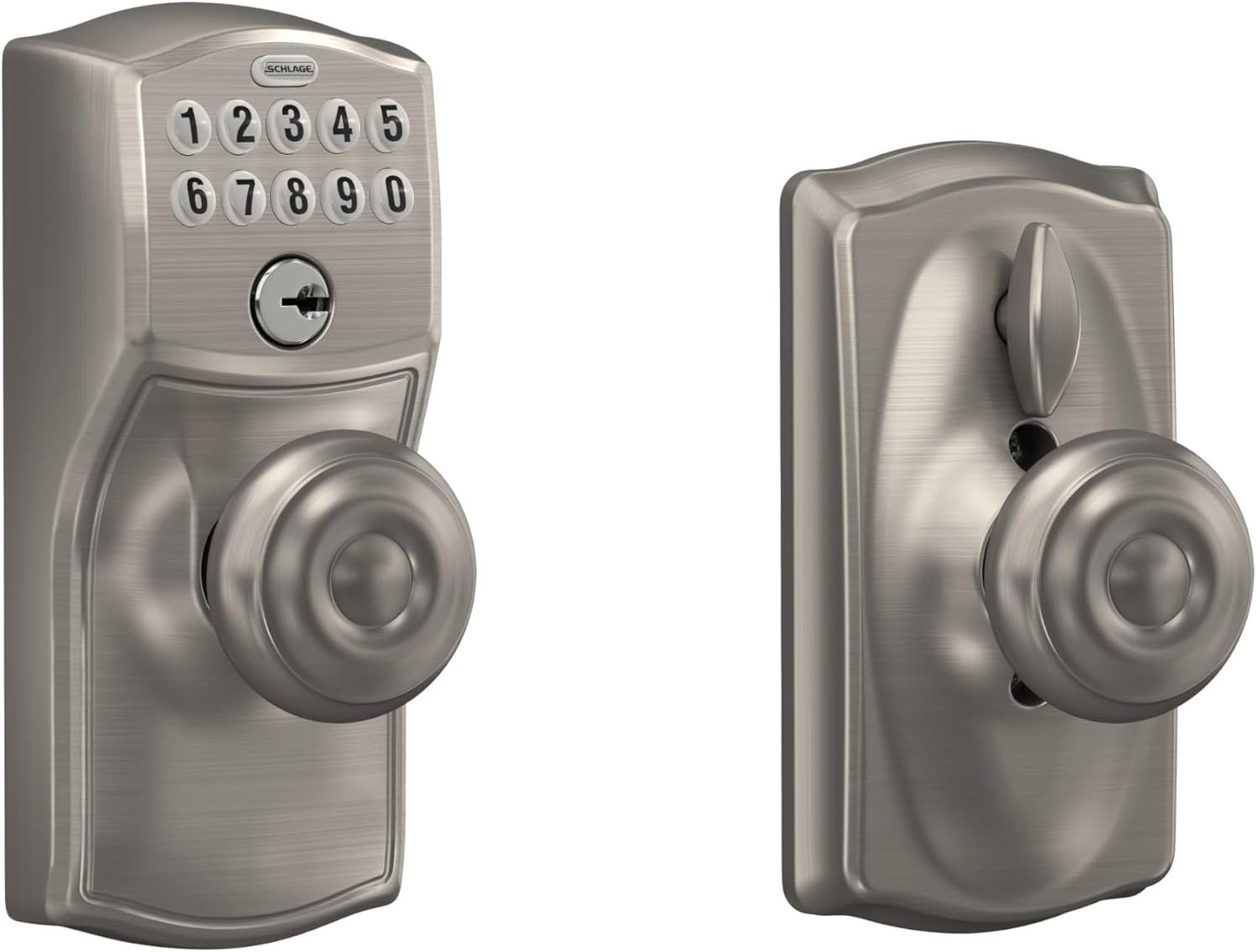
SCHLAGE CAMELOT FE595
Picture the moment. Arms full of groceries, garage door at your back, cold keypad lighting up under your thumb. You punch in the code you’ve used a hundred times. Green light blinks. The door doesn’t move.
That’s the moment most reviews of the Schlage Camelot FE595 skip entirely. They’ll tell you it’s easy to install, that the keypad lights up nicely, that it feels solid in the hand. All true. None of it explains why a correctly entered code, on a perfectly good lock, sometimes does absolutely nothing.
I went through the install threads, the warranty complaints, the locksmith forums, and the support tickets where people describe exactly this scenario, to find out what’s actually going on. Here’s the short version, before the long one: this is a well-built lock with one specific, well-documented blind spot — and whether that blind spot matters to you depends entirely on which door you’re putting it on.
| At a Glance | Schlage FE595 Camelot (CAM 619 GEO) |
|---|---|
| Type | Electronic keypad knob lock with key override (not a deadbolt) |
| Security rating | ANSI/BHMA Grade 2, AAA security/durability/finish |
| Codes | Up to 19 four-digit user codes, 10,000 possible combinations |
| Power | One 9-volt battery, no wiring |
| Best suited for | Garage, back/side doors, home office, sheds, short-term rentals |
| Connectivity | None — no app, no Wi-Fi, no Bluetooth |
| Warranty | Lifetime mechanical/finish, 3-year electronics |
| Typical price | Roughly $70–$100, depending on finish and lever style |
Schlage FE595 Knob Lock: The Result Looks Fine, the Problem Isn’t
For most buyers, the first few months are uneventful in the best way. Installation takes about twenty minutes with one screwdriver. The keypad lights up cleanly in the dark. Kids who used to lose keys stop losing keys. Reviews across Amazon and Home Depot sit around 4.5 out of 5 from thousands of buyers, and the praise is consistent: solid metal, simple setup, no fuss.
Then, somewhere between month eight and year two, a different kind of review starts showing up. Same lock, same household, same code — and the door won’t open. Not because the code is wrong. Not because the battery is obviously dead. The lock just stops cooperating, on its own schedule, with no warning that made sense at the time.
That’s the gap this review is actually here to close.
Keypad Code Not Working: What You’re Actually Feeling but Never Named
You’d assume a flashing green light means “unlocked.” That’s the entire promise of a keypad lock — type the right numbers, the door opens. So when the light blinks correctly and the knob still won’t turn, the instinct is to blame yourself. Wrong code. Sticky fingers. Maybe the battery’s weak.
It’s rarely any of those.
What’s actually happening is more specific than “the lock is broken.” There’s a second control point on this lock that has nothing to do with the keypad at all — and most people never know it exists until the day it overrides everything else.
Lock Override Switch: The Hidden Mechanism Behind the Miss
Here’s the part that doesn’t make it into most product descriptions. The FE595 has an interior thumbturn — Schlage calls it Flex-Lock — that decides whether the keypad is even allowed to control the door. Flip it one way, and the lock auto-relocks after every exit, code required to get back in. Flip it the other way, and the door stays mechanically locked regardless of what the keypad says, on purpose, for situations like a home office or storage room where you want the keypad disabled entirely.
The problem is that this switch gets bumped, far more often than anyone expects, during the one task every owner eventually has to do: changing the battery. Pop the cover, swap the 9-volt, snap the cover back on without noticing the thumbturn shifted position — and now the keypad will happily accept a correct code, blink green, and do nothing, because the mechanical override is physically blocking the latch. Independent troubleshooting reports describe this exact pattern repeatedly: codes work, light blinks, door stays shut.
It’s a separate failure mode from a dead battery, and it’s worth telling apart, because the fix is completely different.
| Symptom | What’s Actually Going On | What Fixes It |
|---|---|---|
| Code accepted (green light), door won’t budge | Interior override thumbturn in the wrong position | Check/flip the inside thumbturn before assuming the lock is broken |
| Keypad flashes red, no response | Battery low or dead | Replace with a fresh 9V alkaline; don’t wait for the warning beep |
| Keypad accepts nothing, not even valid codes | Vacation/lockout mode accidentally toggled | Re-enter programming code at the keypad to disable it |
| Door locked itself with someone on the wrong side | Auto-relock fired 5 seconds after the door closed | Use the key override, or disable auto-relock via the thumbturn |
| Knob turns but latch doesn’t retract (rare, older units) | Internal clutch spring loosened or missing | Lock typically needs warranty service or professional repair |
9-Volt Battery Life: The Threshold Where the Outcome Quietly Breaks
Ask three sources how long the battery lasts, and you’ll get three different answers — which is itself useful information.
| Source | Stated Battery Life |
|---|---|
| Schlage’s own spec sheet | “Average three-year battery life” |
| Schlage’s official support center | “Expected battery life of 2 years,” with a yearly replacement recommendation |
| Aggregated independent owner reports | Roughly 1.5+ years under regular, everyday use |
The honest threshold to plan around is the low end, not the marketing number. Heat, cold, and frequent use all shave time off a 9-volt battery faster than a lab test predicts. The lock does warn you — a slow flash and tone before it fully dies — but the override-switch issue above means the smartest habit isn’t just “wait for the warning.” It’s: every time you open that battery cover, double-check the thumbturn position before you walk away.
Knob Lock vs. Deadbolt: Why Most Buyers Misread the FE595 Too Early
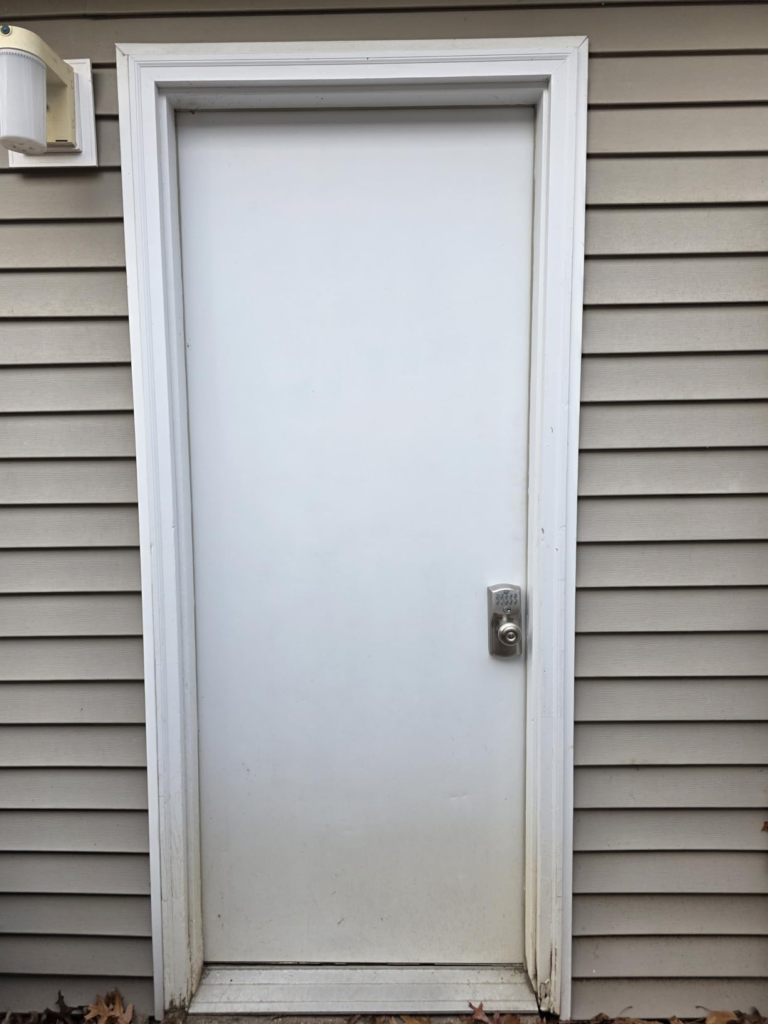
This is where a lot of comparison shopping goes sideways. People see “keypad,” “metal,” “Schlage,” and mentally file it next to a smart deadbolt. It isn’t one. The FE595 is a knob lock — a spring latch, not a solid bolt throw — and that distinction matters more than the keypad does once you start thinking about forced entry rather than convenience.
That doesn’t make it flimsy. It’s genuinely well-built for what it is: ANSI/BHMA Grade 2 with the AAA security/durability/finish rating, a free-spinning keyway that resists wrench attacks on the cylinder, a clutch design that lets the knob spin freely under force instead of snapping internals, and a motor tested through a million cycles. Schlage itself markets this exact model for garage entries, home offices, sheds, and back doors — not as a primary front-door deadbolt replacement.
| Schlage FE595 (this lock) | Schlage BE365 (keypad deadbolt) | Kwikset SmartCode 917/955 | Amazon Basics Keypad Deadbolt | |
|---|---|---|---|---|
| Lock type | Knob, spring latch | Deadbolt | Deadbolt-style lever entry | Deadbolt |
| Best use | Garage, office, secondary doors | Primary front door | Primary or secondary door | Budget primary door |
| Connectivity | None | None | None | None |
| Typical price | $70–$100 | $90–$130 | $70–$110 | $40–$60 |
So why do most buyers misread it? Because the comparison they’re running in their head is “keypad lock vs. keypad lock,” when the comparison that actually matters is “knob vs. deadbolt.” Once you sort doors by that line instead, the right pick gets obvious fast.
Schlage FE595 Camelot: Who This Lock Is Actually Built For
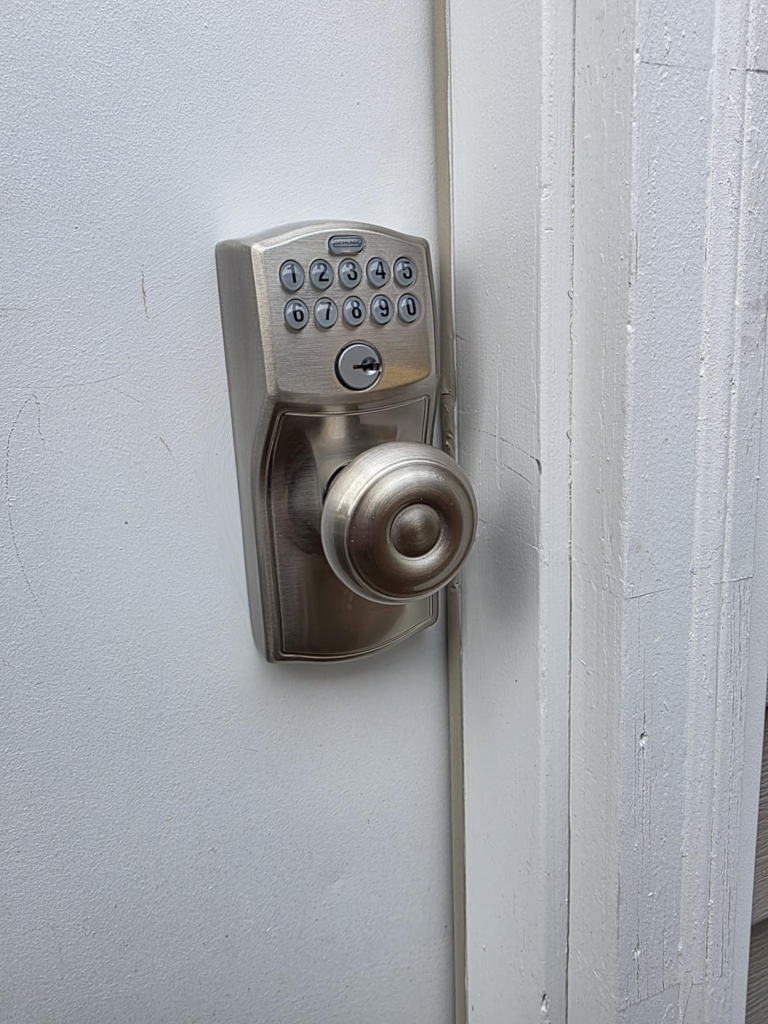
Strip away the marketing language and the real buyer looks like this: someone tired of juggling a separate key for the garage, the shed, the office, or the side door. A landlord or short-term rental host who needs to hand a guest a four-digit code on Friday and erase it on Sunday, without ever cutting a key or calling a locksmith. A household already running Schlage keyways who wants the new lock rekeyed to match the existing front door key, as a backup.
It’s also, quietly, the right pick for people who specifically don’t want a connected lock. No app, no Wi-Fi, no account, no firmware update, no battery drain from a radio chip running in the background. For some buyers that’s a limitation. For a fair number of the people leaving five-star reviews, it’s the actual selling point.
Where the Wrong Fit Begins: Who Should Skip the FE595
| Good Fit | Skip It |
|---|---|
| Garage, shed, office, or back/side door | Your home’s main exterior entry, used as the only lock |
| Short-term rental or shared-access door | You want remote unlock or smart home/app control |
| You’re comfortable rekeying with a locksmith | You need guaranteed access without ever touching a battery cover |
| You’ll check the override thumbturn after battery swaps | A household with young kids who treat the keypad as a toy and don’t mind the 30-second lockout after four wrong tries |
That last column isn’t a flaw list — it’s a fit list. A deadbolt-only household, or anyone who wants app-based remote access, is simply shopping for a different category of product, and no amount of installing this one well will close that gap.
Schlage FE595 Review Verdict: The One Situation Where It’s the Logical Pick
Put all of that together, and the logical case for the FE595 narrows to one clear shape: a secondary door — garage, office, shed, rental — where push-button entry, easy code sharing, and Grade 2 all-metal durability matter more than smart-home integration or deadbolt-level forced-entry resistance.
If your main front door already has a deadbolt and you’re solving a different, smaller problem — the side door you keep relocking yourself out of, the garage entry your kids need their own access to, the rental unit where guests rotate weekly — this is a sound, well-tested answer to that specific problem, backed by a lifetime mechanical/finish warranty and a 3-year electronics warranty.
What the FE595 Solves, Reduces, and Still Leaves to You
| Solves | Reduces | Still Leaves to You |
|---|---|---|
| No more spare keys hidden outside | Risk of a wrench/pry attack on the cylinder itself | Proactively replacing the battery on a schedule, not waiting for the warning |
| Instant code changes between tenants/guests | Lost-key lockouts (replaced by a learnable, avoidable risk instead) | Checking the override thumbturn after any battery change |
| All-metal build tested to a million cycles | Need for everyone to carry a separate key | Accepting it’s a knob lock, not a deadbolt, for security planning |
Pros
- Genuinely simple install, no wiring, one tool
- Rekeyable to match an existing Schlage house key
- No app, no Wi-Fi, nothing to hack remotely
- Strong warranty coverage (lifetime mechanical/finish, 3-year electronics)
Cons
- The override-switch lockout is real and not well documented by Schlage itself
- Battery life in practice often falls short of the “three-year average” claim
- It’s a knob lock — not a substitute for a deadbolt on a primary entry
Schlage FE595 FAQ: Real Questions Before You Buy
How long does the battery actually last?
Schlage’s spec sheet says an average of three years; its own support team tells customers to expect about two and to replace it yearly regardless. Real-world reports cluster closer to a year and a half under regular use, so plan around the shorter number.
What is the “Lock Override” switch, and why does it matter so much?
It’s the interior thumbturn that decides whether the keypad controls the door at all. If it’s flipped to the locked/override position, a correct code will light up green and still not open the door. It’s the single most common cause of “the code isn’t working” complaints.
Can this be installed on a front exterior door?
Mechanically, yes — Schlage markets it for that use too. For security planning purposes, though, it’s a knob lock, not a deadbolt, so most security guidance treats it as a secondary lock rather than a stand-alone front-door solution.
Can it be rekeyed to match my existing house keys?
Yes. It uses a standard 5-pin C-keyway, the same type most residential locksmiths can rekey on the spot, typically for $15–$20.
How many codes can I store, and can I set temporary ones for guests?
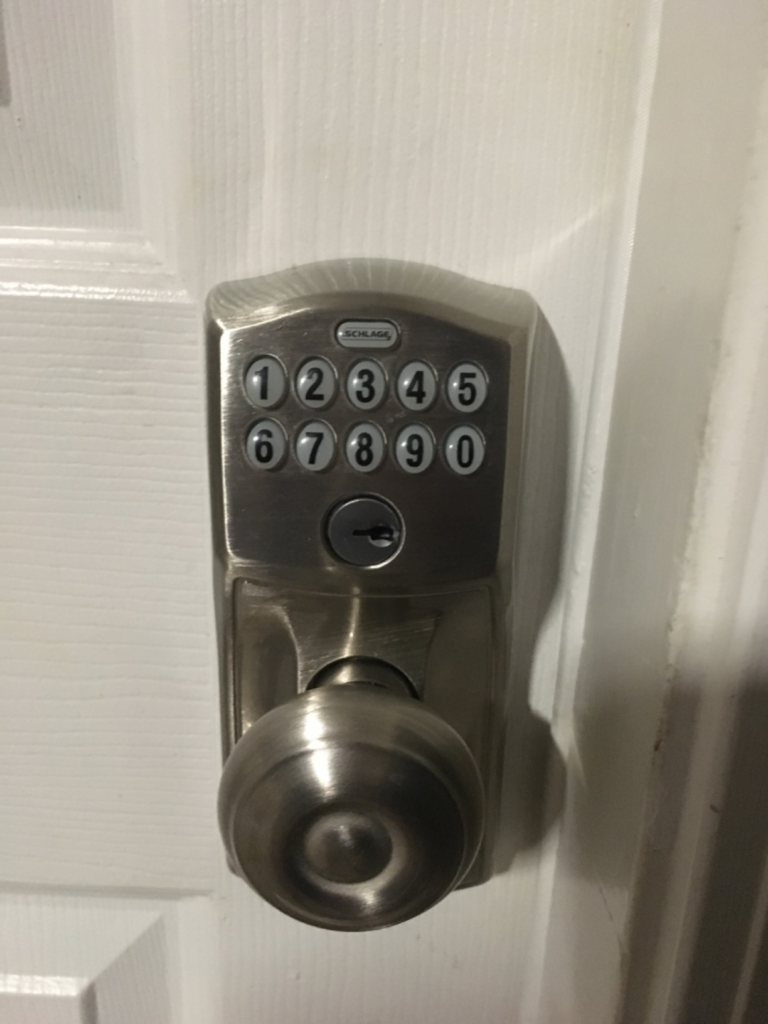
Up to 19 four-digit codes, chosen from 10,000 possible combinations, added or deleted directly at the keypad using your 6-digit programming code. There’s no auto-expiring “guest code” feature — you delete it manually when you’re done with it.
What happens if the battery dies completely while I’m out?
The lock includes a physical key override with two keys, so you’re never locked out by a dead battery alone — as long as you keep a spare key somewhere accessible.
Does it connect to Wi-Fi, Bluetooth, or a smart home app?
No. It’s a fully standalone mechanical-electronic keypad. No app, no account, no remote access — which some buyers consider a downside and others consider the whole appeal.
What happens if someone enters the wrong code repeatedly?
After four incorrect attempts, the keypad locks itself out for 30 seconds. It’s a basic anti-tampering measure, and it also means an unsupervised toddler mashing buttons won’t accidentally brute-force their way in.
Final Compression: The One Decision Left
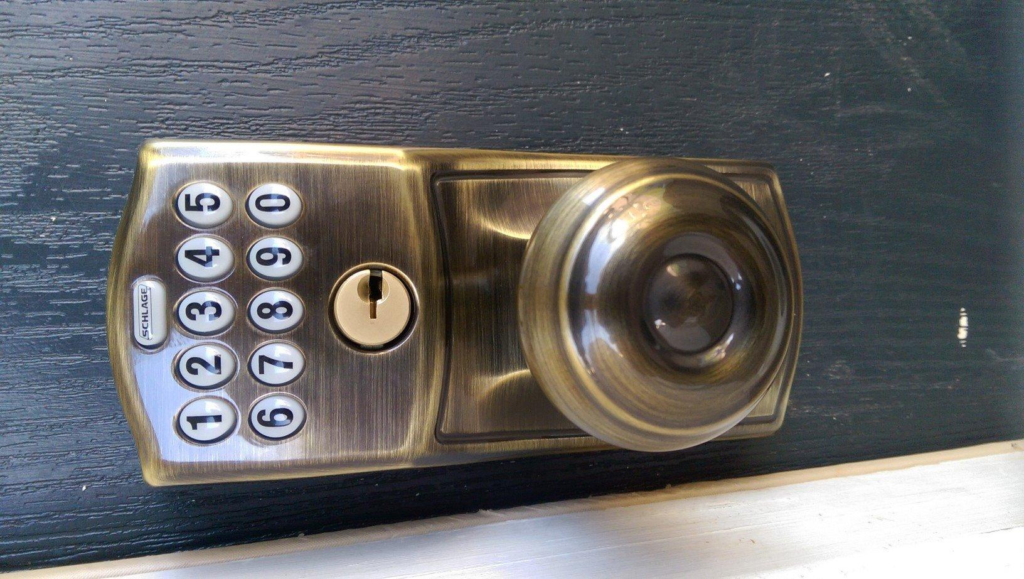
If the problem you’re actually solving is a garage, a back door, a shed, or a rental unit that needs simple, shareable, no-app entry — this lock answers that cleanly, and the one thing worth carrying forward is a thirty-second habit: check the inside thumbturn every time you touch the battery.
If the problem is your front door’s primary security, this isn’t that product, and no amount of installing it well changes that.
Transparency Note:
This analysis is built on aggregated real-world experience.
It extracts what repeatedly holds, what breaks, and what users uncover only after living with the system—then shapes it into a clear model you can use immediately.
Think of it as structured experience, refined and presented so you don’t have to learn it the hard way.
“A quick note: Don’t believe the star ratings, but trust personal experience. This article is a compilation of collected experiences.”