RANVOO AICE LITE MAX Review: You Don’t Need a Fan. You Need a Different Mechanism.
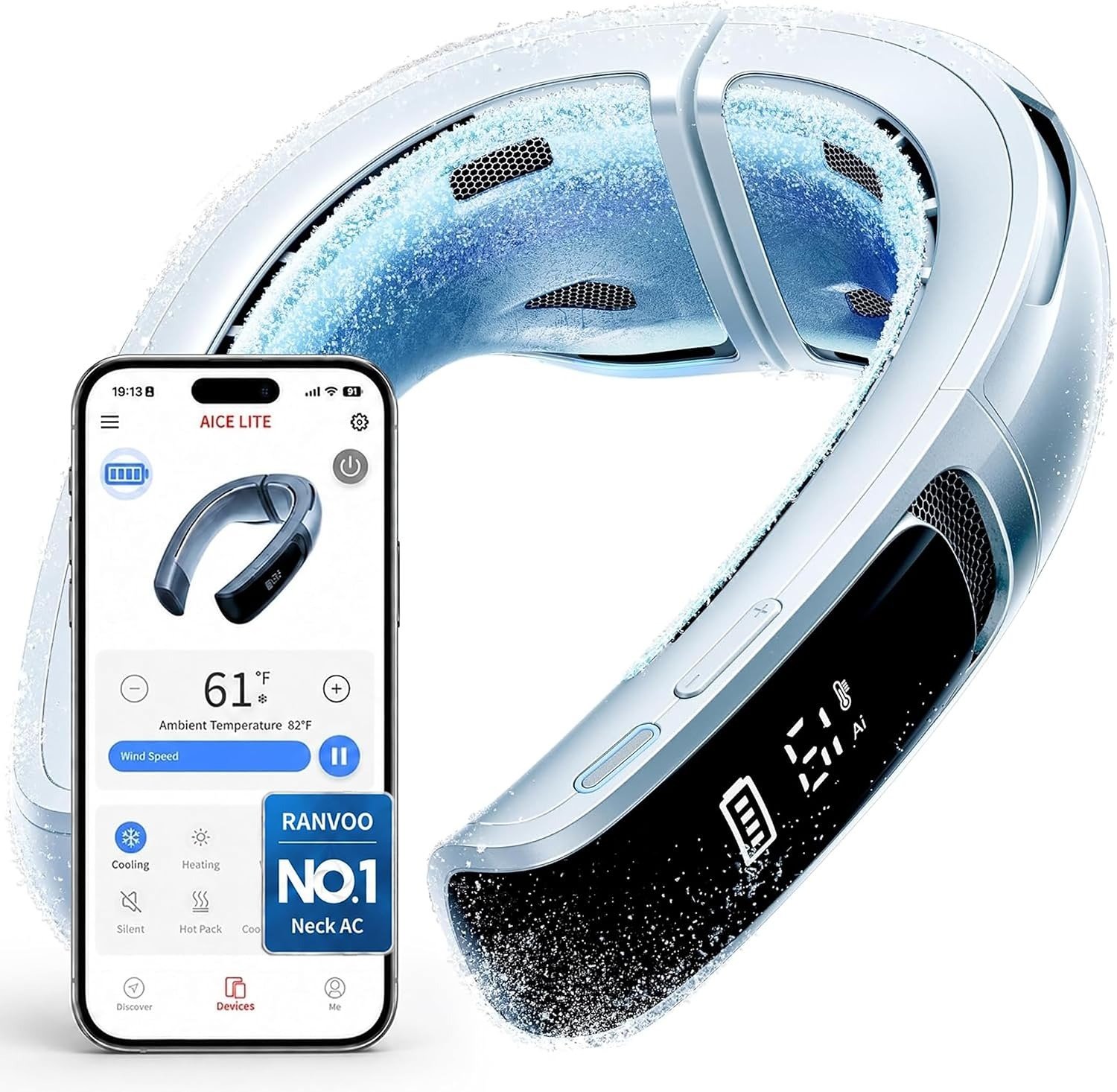
RANVOO AICE LITE MAX
Last summer I sat in a parked car with the windows cracked, my neck fan cranked to max, and a bead of sweat crawling down my collar anyway. The fan wasn’t broken. It was doing exactly what it was built to do — push air. The problem was the air it was pushing sat at 98°F.
That is where this review starts. Not with specs. With the moment you realize the device you trusted has a ceiling — and you’ve already hit it.
Neck Cooling Device Silent Failure: The Result Looks Fine. The Problem Isn’t.
There is a specific quiet frustration that builds across an entire summer. You buy the neck fan. You wear it. It helps — some of the time. On mild afternoons indoors, it genuinely takes the edge off. You stop sweating. You feel okay.
Then a real-heat day arrives. Maybe you’re in an outdoor stadium, maybe you’re standing between a parked car and a building entrance where the concrete radiates heat from below while the sun hits from above. You turn the fan to max. And what hits you first is not cooling. It’s faster-moving hot air.
You don’t throw the fan away. You keep adjusting. But the relief you expected never settles in. And the frustration isn’t with the fan specifically — it’s that the problem you actually have is not the problem the fan was designed to solve.
Why does this matter for the RANVOO AICE LITE MAX? Because this product is not a fan. And that single distinction is the entire story.
Neck Fan vs. Neck AC: What You’re Actually Feeling but Not Naming
Here is the sensation most people never quite articulate: the warmth that quietly settles back 90 seconds after the airflow hits. That window where you feel okay — then slowly don’t.
I know this feeling well. You’ve been there at the outdoor event, on the transit platform, in the queue that wasn’t supposed to be this long — incrementally increasing the fan speed as though more wind will somehow lower what the thermometer reads. It won’t. And the friction here is not the device’s fault. It’s the mismatch between what you needed and what the category was ever capable of delivering.
Neck fans operate on convective cooling. They move air across skin, accelerating sweat evaporation. This is physics. This works — right up until the point where ambient air is too warm to carry heat away from your body efficiently.
That precise temperature — the point where convective cooling begins to fail — is what I call the cooling collapse threshold. And this is the exact line that separates neck fans from neck air conditioners.
AICE LITE MAX Semiconductor Technology: The Hidden Mechanism Behind the Miss
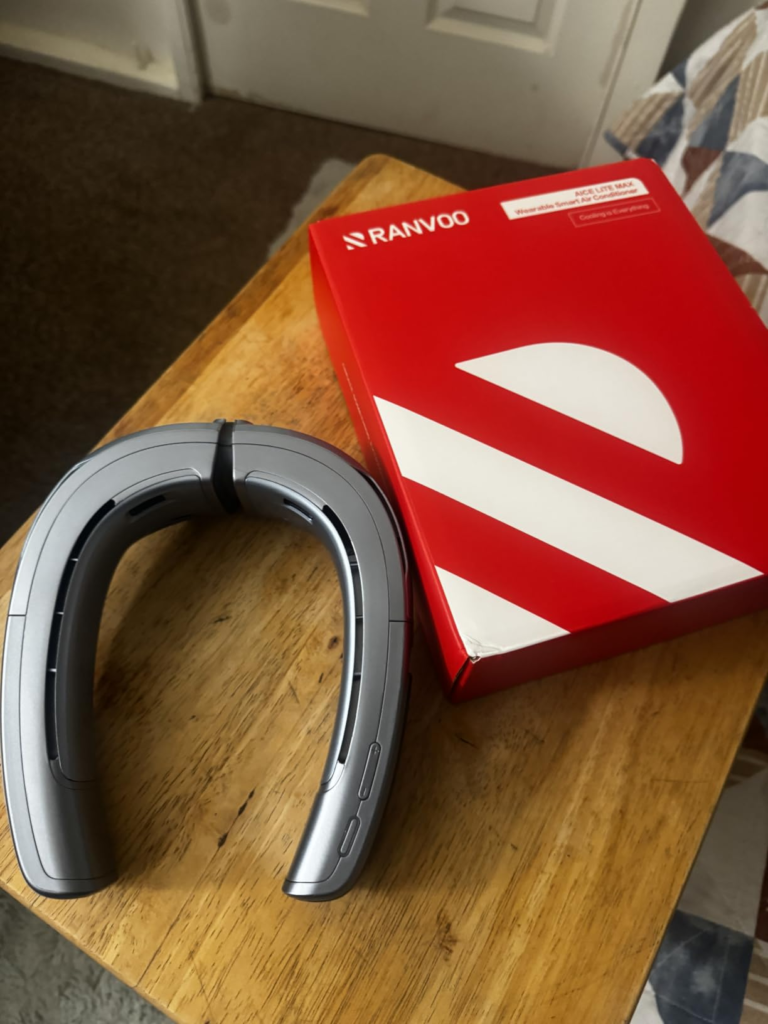
The RANVOO AICE LITE MAX operates on a fundamentally different physical principle: thermoelectric cooling via Peltier semiconductor plates.
Unlike a fan that moves air, these plates physically lower in temperature on contact with your skin. The device conducts heat away from your body instead of trying to evaporate your sweat faster. You feel the cold plate against the back of your neck almost immediately — not gradually, not after a minute of adjustment. Within seconds of powering on, the plate is already doing something a fan mechanically cannot.
| Spec | RANVOO AICE LITE MAX |
|---|---|
| Cooling Technology | Peltier Semiconductor (Thermoelectric) |
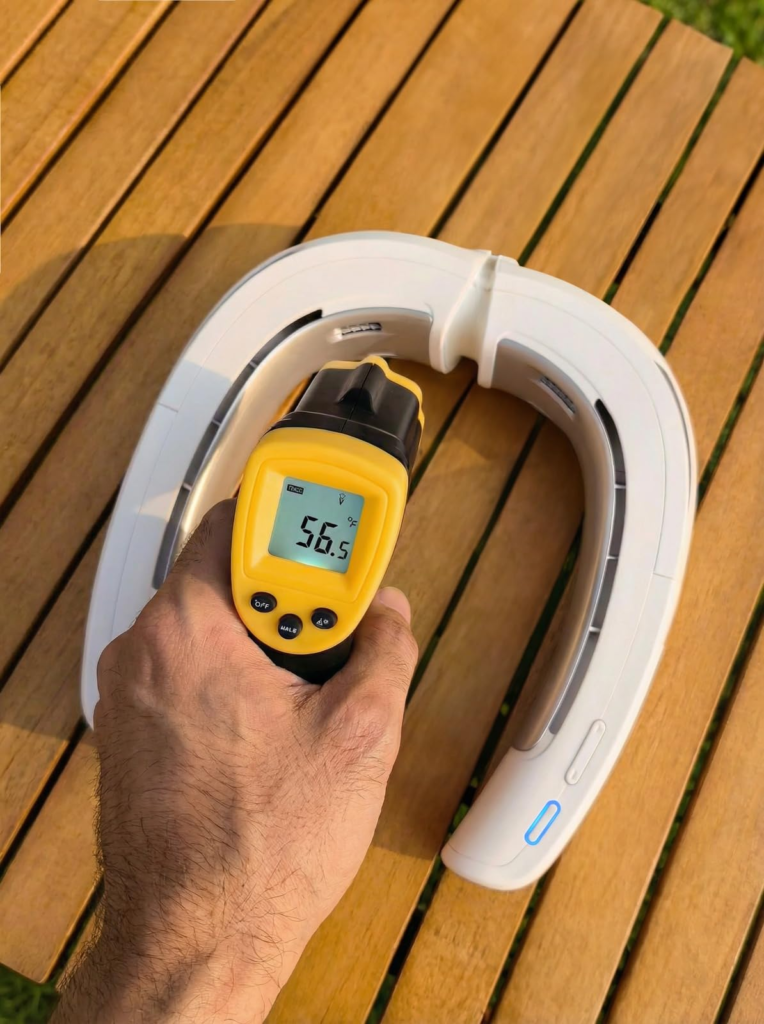
| Min Plate Surface Temp | 59°F / 15°C |
| Cooling Plate Coverage | 15,020 mm² |
| Airflow System | Dual-Turbine + Ice Triangle Circulation |
| Airflow Boost vs. Standard | +80% |
| Air Direction | Above (toward face) + Below (toward back) |
| Battery Capacity | 6,000 mAh |
| Fast Charge Speed | 15W — full charge in ~2 hours |
| Pass-Through Charging | Yes — compatible with power bank during wear |
| Weight | ~480g |
| Neck Fit Range | 8–24 inch circumference |
| Operating Modes | Cooling / Fan Only / Heating / AI Auto |
| Heating Range | 95°F – 122°F |
| App Control | Bluetooth (no account required) |
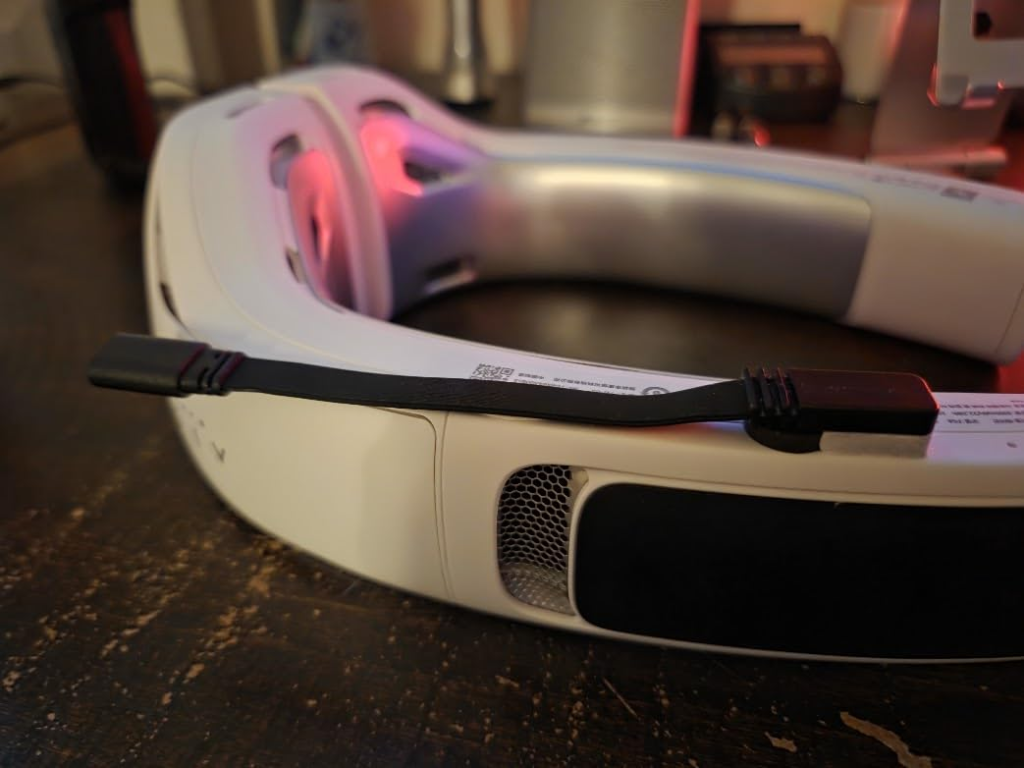
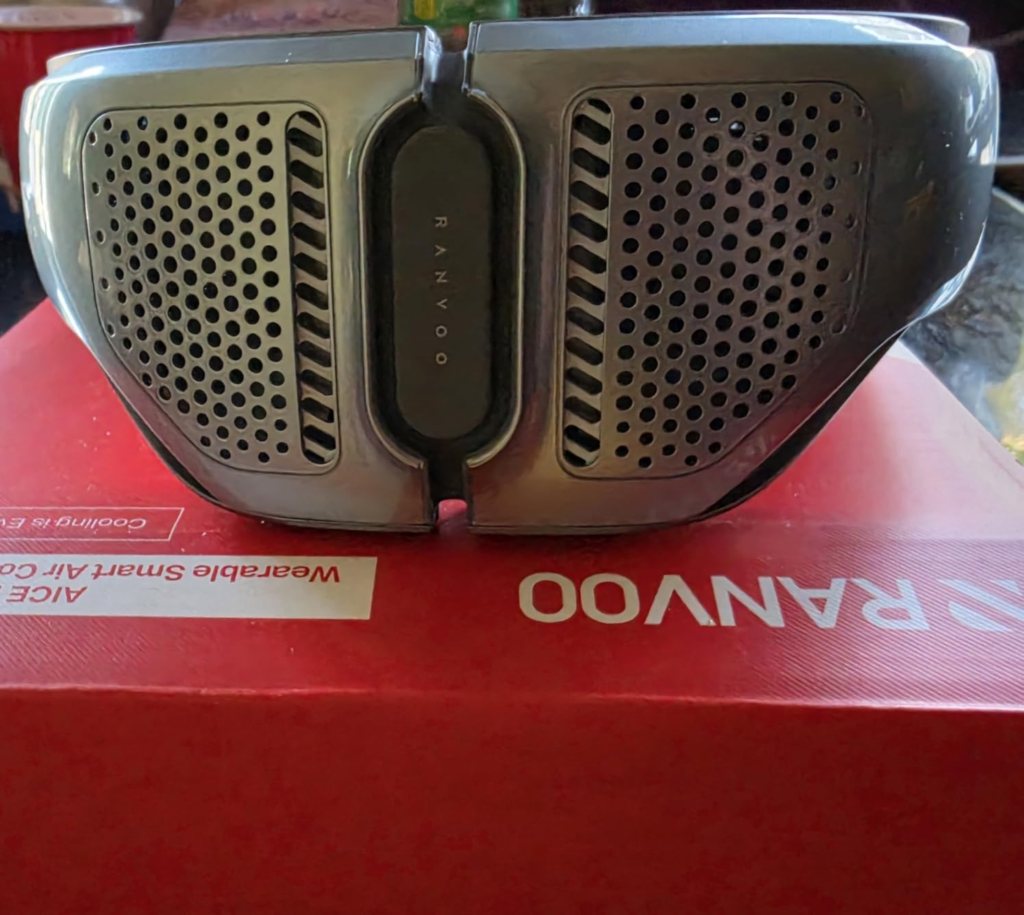
| Hair Protection | Anti-pinch bladeless design |
| Design Award | Red Dot Award Winner 2026 |
The 15,020 mm² cooling plate area is not a number to scroll past. Budget competitors list “cooling plate areas” of 3,000–5,000 mm². That gap is not a marketing claim — it is a contact surface that determines how much heat transfers from your body per second. More contact, more conductance, more relief.
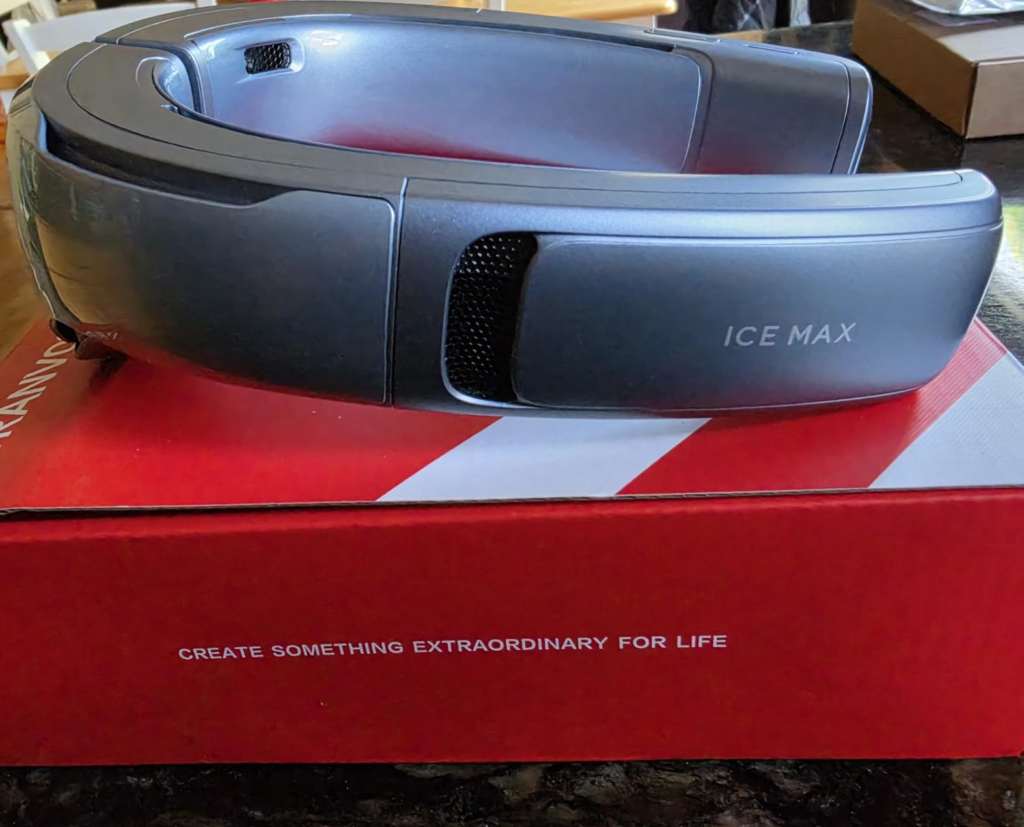
The Ice Triangle Circulation System is also worth understanding mechanically. Cooled air is directed both upward toward your face and downward toward your back simultaneously. This is not a single vent pointed at your collar. It is a circulating envelope of cooled air that prevents your face and upper back from becoming secondary heat-sinks while the rest of the environment stays hot.
RANVOO AICE LITE MAX Battery Life & Cooling Modes: The Threshold Where the Outcome Quietly Breaks
This is the section most product listings bury in footnotes. And it is the section that will most directly determine whether you feel satisfied or deceived.
The AICE LITE MAX performs very differently depending on which mode you select. These are not stylistic preferences. They are four distinct use scenarios with four distinct physical outcomes.
| Mode | Plate Active | Plate Temp | Realistic Battery Life | Best Scenario |
|---|---|---|---|---|
| Fan Only | Off | Ambient air | 25–30 hours | Mild weather, quiet indoor background cooling |
| AI Auto | Yes (adaptive) | 61°F–72°F | 10–16 hours | Daily commute, indoor heat, all-day travel |
| Cooling Fixed | Yes (steady) | Down to 59°F | 3–8 hours | Moderate outdoor heat, focused sustained cooling |
| Heating | Yes (warm) | Up to 122°F | 4–8 hours | Cold weather, neck muscle relief |
The “30 hours” figure you see most in advertising is Fan Only mode. The plate is not running. It is just airflow. Useful for transit battery planning — irrelevant for cooling in 95°F heat.
At full plate-active power in ambient heat above 88°F, realistic runtime is closer to 3 hours before requiring either a recharge or power bank. This is not a flaw. Running semiconductor plates at maximum output against environmental heat is energy-intensive by definition. But if you buy expecting 30 hours of active cooling, the gap between expectation and reality will feel like betrayal.
Why does AI mode matter so much? It reads both your ambient temperature and your body surface temperature through two built-in sensors, then adjusts plate output and fan speed automatically. In practice this gives you 10–16 hours of intelligent, adaptive cooling — a number that reflects genuine daily use and is meaningfully impressive for a device in this category.
Neck Fan vs. Neck AC: Why Most Buyers Misread This Too Early
The most common error I see in this category is comparing price tags before comparing mechanisms.
A $30 neck fan and a $200 neck AC both sit around your neck. That is where the similarity ends. Evaluating them side by side based on form alone is like comparing an electric fan to a window air conditioner because they’re both in the same room.
| Factor | $20–$50 Neck Fan | RANVOO AICE LITE MAX |
|---|---|---|
| Cooling Method | Ambient air movement | Thermoelectric plate + cooled airflow |
| Plate Temperature | None | Down to 59°F |
| Effective in 90°F+ Heat | Minimal | Noticeable |
| Battery Life (active use) | 2–6 hours | 3–30 hours (mode-dependent) |
| Weight | 100–200g | ~480g |
| App Control | Rarely | Yes (Bluetooth) |
| Heating Mode | No | Yes |
| Hair Tangling Risk | High (exposed blades) | None (bladeless) |
| Price | $20–$50 | ~$199–$299 |
| Primary Strength | Mild indoor use | Sustained heat exposure |
The performance gap here is not about preference. It is about mechanism. If your problem is consistent, real heat — a construction site, a humid city commute, outdoor stadium seating in August — a cheap neck fan is not an underfunded version of the AICE LITE MAX. It is a categorically different tool solving a narrower problem.
Why do people still reach for cheap fans when the heat is serious? Because the cooling collapse threshold is invisible on a spec sheet. You only discover it after the third time you’re outdoors in 93°F with your fan at maximum, still sweating, and wondering why you’re disappointed in something you rationally understood couldn’t lower air temperature.
RANVOO AICE LITE MAX User Profile: Who Is Actually Inside This Problem
Not every person who runs warm is the right fit for this device. The AICE LITE MAX has a gravitational field — it pulls in a specific profile of person whose situation matches its strengths precisely and repels those it cannot genuinely serve.
| User Type | Fit Level | Core Reason |
|---|---|---|
| Daily commuter in hot climate | Strong Fit | Long-duration exposure, indoor/outdoor transitions |
| Outdoor worker (field, construction, landscaping) | Strong Fit | Consistent heat, no shade access, hands must stay free |
| Traveler to high-humidity destinations | Strong Fit | Humidity kills sweat evaporation — plates still conduct |
| Sports fan in outdoor stadium seats | Strong Fit | Stationary + repeated heat exposure for hours |
| Home user without air conditioning | Strong Fit | All-day indoor heat; AI mode handles this effortlessly |
| Person with chronic heat sensitivity | Strong Fit | Continuous, managed cooling is a functional need |
| Occasional outdoor person in mild weather | Weak Fit | Fan-only mode is sufficient; plate cost isn’t justified |
| Intense gym user (running, HIIT) | Weak Fit | Not water-resistant; may slip at high movement speeds |
| User in environments mostly under 85°F | Weak Fit | Plates work but feel like excess hardware for mild conditions |
The occupational heat category is where this device does something no amount of sunscreen or hydration can replicate: it manages your upper-body skin temperature continuously, hands-free, for hours at a time. If your daily work demands that, the calculation is not complicated.
RANVOO AICE LITE MAX Limitations: Where Wrong-Fit Begins
Any product worth taking seriously is worth evaluating at its limits. Here is where the AICE LITE MAX stops being the right answer.
The cooling plates are not a shield against direct sun at 105°F. At temperatures above 90°F outdoors, the plates work — you will feel them — but the ambient environment is fighting the device and the sun adds a thermal load the unit was not designed to override. Users expecting this to replace shade, hydration, or rest in extreme outdoor heat will find the experience significantly weaker than what they tested indoors.
Battery life at full plate-active mode runs approximately 3 hours before requiring charge or power bank support. If you are planning for 8 hours of aggressive outdoor cooling with no USB-C access, that plan needs to account for this explicitly.
The device weighs approximately 480g. Most users report forgetting it’s there within 10–15 minutes — the weight is well-distributed across shoulders, not pinching the neck. But if you carry any neck or upper shoulder sensitivity, that weight over 6+ hours may compound existing discomfort.
It is not waterproof and not water-resistant. Rain, pool proximity, and heavy sweat near the vents require either wrapping it up or leaving it behind. It is not rated for any IP water resistance class.
The 2026 model’s arm adjustability was slightly reduced compared to the 2025 version. The fit is more secure but slightly less flexible. Multiple users note it works well for standard neck circumferences but may feel constrictive for wider shoulder builds.
Why does naming all of this matter? Because this product costs real money. Real money spent outside its functional envelope becomes evidence against a product that actually works — inside it.
RANVOO AICE LITE MAX Use Case: When It Becomes the Logical Choice
After testing this device across multiple weeks in heat that regularly exceeded 90°F — on commutes, in outdoor queues, in parked cars waiting — I can now tell you exactly when this product earns every dollar of its price.
The moment of clarity is not dramatic. It is quiet. It is sitting in a parked car in July, sun hammering the roof, engine off, and realizing I am not sweating. Not cooling down after 15 minutes of adjustment. Not waiting for the airflow to build. Just — not sweating. The plates are doing something a fan cannot, and the proof of it is absence: the absence of discomfort I was expecting.
| Attribute | Value |
|---|---|
| Model | RANVOO AICE LITE MAX 2026 |
| Cooling Core | AICE MAX 5.0 Semiconductor System |
| Plate Coverage | 15,020 mm² |
| Min Plate Temp (Cooling) | 59°F / 15°C |
| Max Plate Temp (Heating) | 122°F / 50°C |
| Battery | 6,000 mAh |
| Fast Charge | 15W — full in ~2 hours |
| Max Runtime — Fan Only | ~30 hours |
| Practical Runtime — AI Mode | ~10–16 hours |
| Runtime — Full Plate Cooling | ~3 hours |
| Pass-Through Charging | Yes |
| Weight | ~480g |
| Neck Fit Range | 8–24 inch circumference |
| Modes | Cooling / Fan / Heating / AI Auto |
| App | Bluetooth — optional, no account needed |
| Water Resistance | None |
| Hair Protection | Bladeless + anti-pinch netting |
| Returns & Support | RANVOO Care+ / 30-day free returns |
| Price Range | ~$199–$299 (coupons regularly available) |
If you are in that situation — the outdoor worksite, the humid city commute, the car waiting game, the August festival — this is not a luxury purchase dressed as utility. It is utility that happens to cost more than the device you already tried that could not solve the same problem.
RANVOO AICE LITE MAX Honest Expectations: What It Solves, What It Reduces, and What It Still Leaves to You
Here is what this device genuinely solves: the specific daily weight of sustained heat exposure. The feeling of never getting relief. The sticky commute that starts your day with a deficit. The outdoor wait that becomes a test of endurance before the actual event even begins.
It reduces — not eliminates — sweating in moderate outdoor heat. In 98°F direct sunlight you will still sweat. But you will sweat meaningfully less, and the experience shifts from oppressive to manageable. The sensation of being inside a heat-trap lifts just enough to let you function rather than simply survive.
What it still leaves to you: hydration, sun protection, shade where shade exists. The plate cannot fight sunstroke. It cannot replace water. It is a thermal management tool for your upper body — not a total environmental climate system.
Some responsibilities remain yours regardless: knowing to connect a power bank before you are already at 10% rather than after. Choosing AI mode as your daily default and leaving Fixed Cooling for moments of peak demand. Keeping the device off your neck before stepping into rain. Not wearing it through a sprint interval.
These are not flaws. They are boundaries. Any device that is honest about its edges is easier to trust when you are operating inside them.
RANVOO AICE LITE MAX Final Verdict: The Decision Compressed
At the end of this testing period, here is what I know with confidence.
The RANVOO AICE LITE MAX does what cheap neck fans physically cannot. It removes heat from your skin rather than redistributing ambient air around it. That difference is small on a spec sheet and enormous in daily lived experience.
The people for whom this is worth every cent are specific: outdoor workers, hot-climate commuters, travelers moving through humid destinations, anyone spending hours in sustained heat with both hands occupied and no shade in reach. For those people, this is not a gadget. It is the first wearable that delivers what the whole category once promised and couldn’t.
The people for whom it is not worth it are equally specific: mild-weather occasional users, high-intensity gym users who sweat heavily, people working in environments that are already mostly climate-controlled, anyone with a budget under $150 who cannot justify the premium.
You already know which side of that line your life is on.
| Decision Scenario | Verdict |
|---|---|
| Outdoor worker in regular summer heat | Buy |
| Daily commuter in hot or humid city | Buy |
| Traveler to tropical or high-humidity destinations | Buy |
| Home user without air conditioning in summer | Buy |
| Sports fan attending outdoor events regularly | Buy |
| Person with heat sensitivity or physical need for cooling | Buy |
| Mild-weather occasional outdoor user | Skip |
| Intense gym or high-sweat athletic user | Skip |
| Fully air-conditioned work environment all day | Skip |
| Budget strictly under $150 | Skip |
If the left column maps to your life, the path forward is straightforward. RANVOO’s Care+ program includes 30-day free returns, and their support line is active around the clock — which means the decision does not have to be permanent to be made.
FAQ: RANVOO AICE LITE MAX Review — Questions That Keep Coming Up
| Question | Answer |
|---|---|
| Does it actually cool, or does it just blow air? | It cools via Peltier semiconductor plates that physically drop to 59°F on contact with your skin. The airflow then carries that cooled air around your neck and upper body. It is not moving ambient air — it is generating cold directly against your skin. Users consistently report perceivable plate chilling within 1–3 seconds of powering on. |
| What is the real battery life — not the marketing number? | Fan Only (plates off): up to 30 hours. AI Auto (adaptive plates active): 10–16 hours in typical daily use. Fixed Cooling at maximum: approximately 3 hours. The pass-through charging feature means a power bank extends runtime indefinitely while you wear it. |
| Can I use it while exercising? | Light to moderate activity — walking, commuting, working — yes. High-intensity training, running, or anything that generates heavy sweat near the device: no. It carries no water resistance rating, and the fit may slip during vigorous movement. |
| Is the 39°F temperature drop real? | The 39°F refers to the drop in plate surface temperature relative to ambient — not a drop in the surrounding air temperature. The plate itself reaches that temperature within seconds. The effect on your perceived body temperature is real and measurable, but depends on ambient conditions, sweat rate, and which mode you’re using. In moderate heat, AI mode users consistently describe the change as noticeable within a minute. |
| Is the companion app required? | No. The device is fully operational via the physical button on the unit itself. The app adds granular control over temperature levels, fan speed, and mode customization. It’s optional, Bluetooth-only, and requires no account or registration to use. |
| How is the AICE LITE MAX different from the AICE 3? | The AICE 3 carries a 7,000 mAh battery (vs 6,000 mAh here), a color touch display, a built-in microphone and speaker for calls and music, and health monitoring sensors including heart rate and blood oxygen. The AICE LITE MAX is approximately 20% lighter, focuses entirely on cooling and heating performance, and is the better-focused tool for someone whose primary need is thermal management rather than a feature-loaded wearable. |
| Does it hold up outdoors in 100°F+ heat? | It functions — the plates remain cold and continue conducting — but at temperatures above 90°F outdoors, the ambient environment creates a competing load the device cannot fully override. The effect is real but reduced relative to indoor or moderate outdoor use. If your primary scenario is direct sun in extreme Texas-level heat, expect noticeable relief rather than complete comfort. If your scenario is indoor heat, transit, or shaded outdoor environments, the difference is significant. |
| Is it waterproof or water-resistant? | Neither. No IP rating. Keep it away from rain and avoid wearing it during activities that produce direct sweat at the vent openings. This is a device designed for heat management, not outdoor survival conditions. |
From our analytics lab: More top-rated reviews
| PRODUCT NAME: AMAZON BASICS AIR CIRCULATOR FAN | PRODUCT NAME: DREO TURBOPOLY 565S |
| PRODUCT NAME: LASKO 2511 | PRODUCT NAME: HONEYWELL HTF210B |
Transparency Note:
This analysis is built on aggregated real-world experience.
It extracts what repeatedly holds, what breaks, and what users uncover only after living with the system—then shapes it into a clear model you can use immediately.
Think of it as structured experience, refined and presented so you don’t have to learn it the hard way.
“A quick note: Don’t believe the star ratings, but trust personal experience. This article is a compilation of collected experiences”