FELLOWES POWERSHRED 79CI REVIEW: WHY 16 SHEETS NEVER REALLY MEANS 16
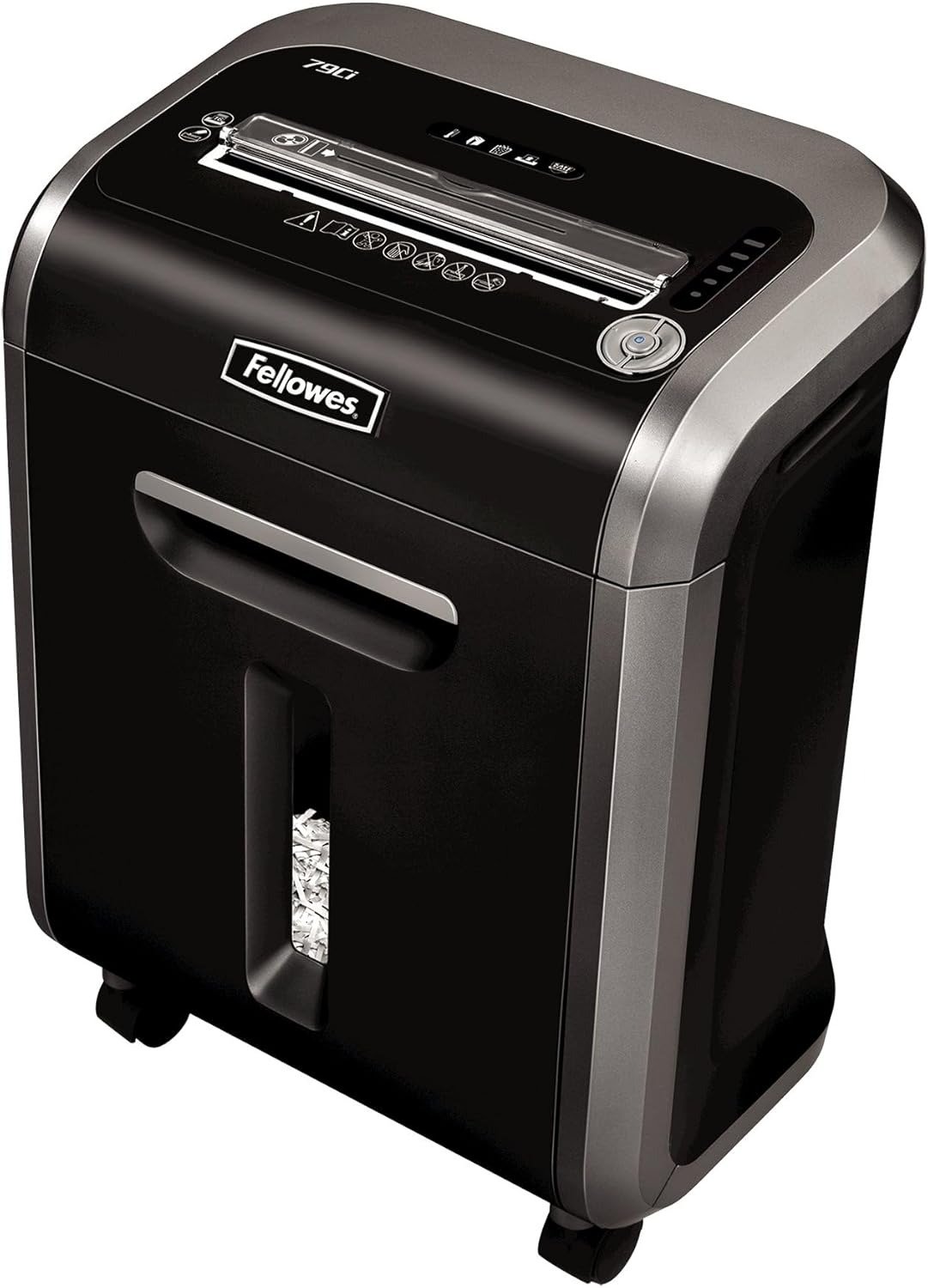
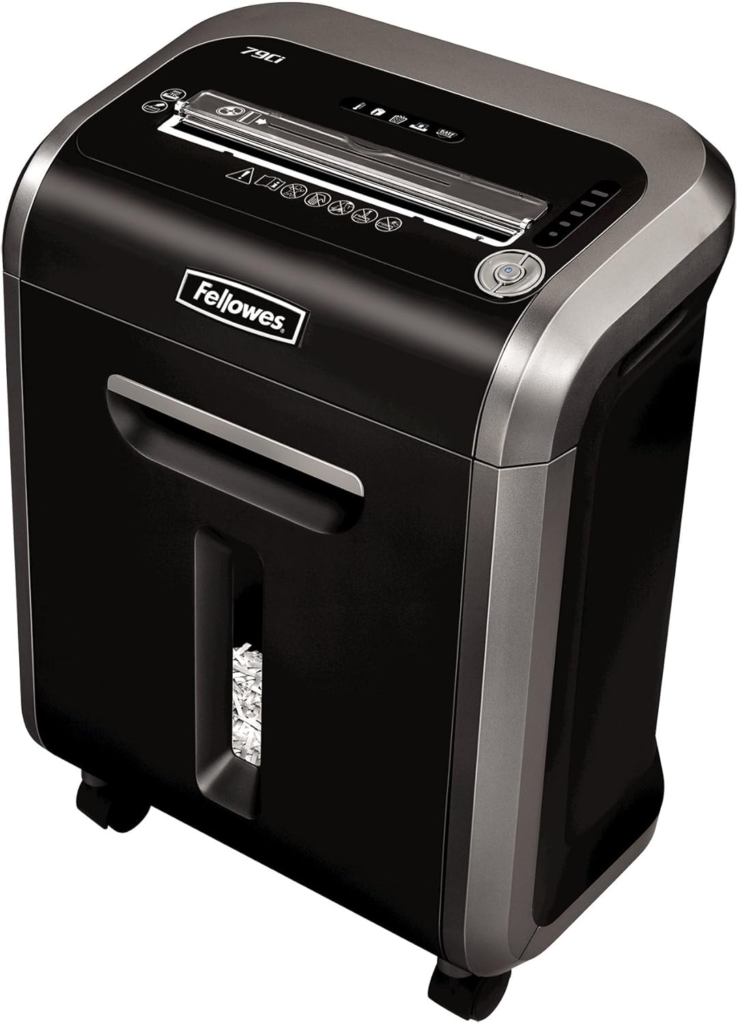
FELLOWES POWERSHRED 79CI
You’ve got a box of paper you’ve been meaning to deal with for years. Old bank statements. Pre-approved credit offers with your name printed right across the front. A tax return from an era nobody misses. At some point you decide this is the year, you look up shredders, you see “16 sheets,” you see “100% jam-proof,” you see a wall of near-perfect reviews, and you buy the Fellowes Powershred 79Ci.
Then you feed it 16 sheets.
Why does a machine built for exactly that number hesitate before it gets there? That moment — paper in, a red light blinking back at you instead of the confetti you expected — is where this review actually starts. Not the spec sheet. The gap between what the box promises and what the machine will really do for you, every day, for the next decade.
| Spec | Fellowes Powershred 79Ci |
|---|---|
| Cut type | Cross-cut, Security Level P-4 |
| Shred size | 5/32″ x 1-1/2″ — roughly 397 pieces per sheet |
| Marketed capacity | 16 sheets per pass |
| Reliable real-world capacity | ~14 sheets, per independent lab testing |
| Speed | Up to 140 sheets per minute |
| Run time | 20 minutes continuous |
| Cool-down | ~30 minutes, enforced automatically |
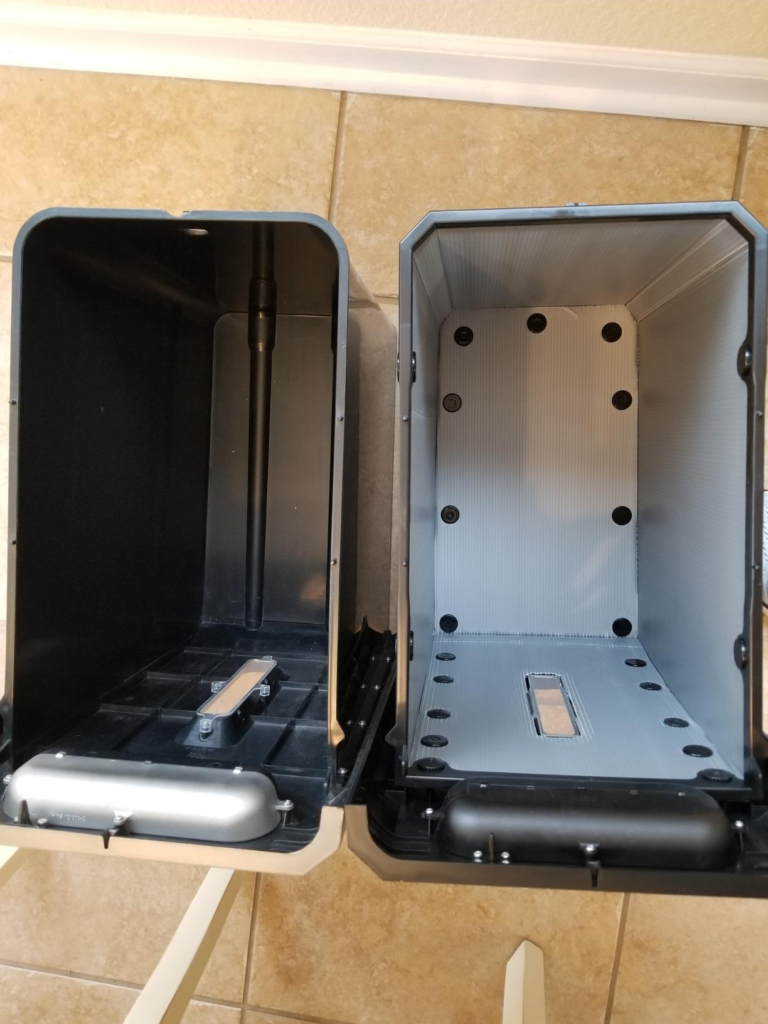
| Bin | 6-gallon pull-out, see-through, LED full indicator |
| Also shreds | Staples, small paper clips, credit cards, CDs/DVDs, junk mail |
| Noise | ~64 dB — rated quietest in its test class |
| Dimensions | ~21.3″H x 15.4″W x 10.4″D |
| Warranty | 2 years full product/service + lifetime on cutters |
| Typical price | Roughly $270–$300 list, often discounted |
Fellowes Powershred 79Ci Jam-Proof System: The Result Looks Fine, The Problem Isn’t
On paper, this looks like the safest purchase decision you could make. High capacity, a name-brand jam-prevention system, thousands of reviews sitting comfortably around 4.7 stars. Nothing about the listing warns you that “jam-proof” is a description of the blade mechanism, not a promise about every stack of paper you’ll ever feed it.
Here’s the short answer, stated plainly so you don’t have to dig for it: the 79Ci genuinely does not jam on ordinary paper within its real working range. That part of the marketing holds up. What it doesn’t tell you upfront is where that range actually ends — and it isn’t at 16.
Fellowes Powershred 79Ci Cool-Down Time: What You’re Actually Feeling but Not Naming
You start a real cleanout — three years of statements, a full filing cabinet — and twenty minutes in, the machine just stops. A light comes on. It won’t restart no matter how many times you press the button. You wait. You come back. You keep going, and it happens again.
That’s not a malfunction. It’s the duty cycle, and nobody mentions it until it interrupts you mid-task. The bin fills faster than the speed of the machine seems to suggest it should, so you’re emptying it more than you planned for. SafeSense, the sensor that halts shredding if your hand drifts too close to the opening, occasionally trips when you’re just repositioning paper, which a few long-time owners find mildly irritating even though they wouldn’t trade the safety feature away. None of this is a defect. It’s the texture of owning a machine built for speed in short bursts, not for marathon sessions — and that distinction is exactly what the box never tells you.
How the Fellowes 79Ci Jam-Proof Sensor Actually Works: The Hidden Mechanism Behind the Miss
The system works in layers, and understanding them explains almost every complaint you’ll read online. A sensor at the paper entry measures stack thickness before a single sheet moves, showing green, yellow, or red on an indicator strip. Green means feed freely. Yellow means it’s working harder. Red means stop — the machine won’t pull the stack in at all, so you’re not left digging out a half-shredded jam.
If the stack does start feeding and the motor senses resistance, a second layer kicks in: it either powers through with extra torque or reverses automatically to back the paper out. This is why the 79Ci rarely jams in the traditional, hands-in-the-blades sense that older shredders were infamous for.
But the sensor reads thickness, not sheet count — and that’s the hidden mechanism behind the miss. A thick glossy envelope with a plastic address window, or a folded letter with an insert, can register as far thicker than the same number of flat sheets, tripping a stop that a plain paper stack of the same count would sail through. Sticky notes gum up the teeth for a different reason entirely — the adhesive, not the paper. Once you know this, the “occasional” jam complaints in reviews stop looking random.
What it will shred: paper, staples, small paper clips, credit cards, CDs and DVDs, junk mail.
What it won’t shred: adhesive labels, continuous-feed paper, transparencies, newspaper, cardboard, large paper clips, laminates, file folders, X-rays, sticky notes.
Fellowes Powershred 79Ci Real Sheet Capacity: The Threshold Where the Outcome Quietly Breaks
| What Fellowes markets | What testing and Fellowes’ own documentation show | What it means for you |
|---|---|---|
| 16 sheets per pass | Jammed at 16 in independent lab testing; Fellowes’ own troubleshooting guide caps reliable use at 14 | Feed 12–14 sheets for consistently clean runs; treat 16 as headroom, not a target |
| “100% Jam-Proof” | Three-layer sensor prevents true blade jams; odd materials can still stop a feed | It protects the blades, not every possible stack — check the light before you push |
| 20-minute run time | Consistent across every source and the manual itself | Work in 20-minute bursts on big jobs; fighting the cool-down just wastes your time |
This is the real threshold, and it’s worth naming outright: the 79Ci is a genuinely 14-sheet shredder wearing a 16-sheet label. That’s not a flaw so much as a marketing convention the whole category shares — but it’s the single fact most buyers don’t have going in, and it’s the reason a small share of five-star-average products still collect confused one-star reviews from people who fed it exactly what the box told them to.

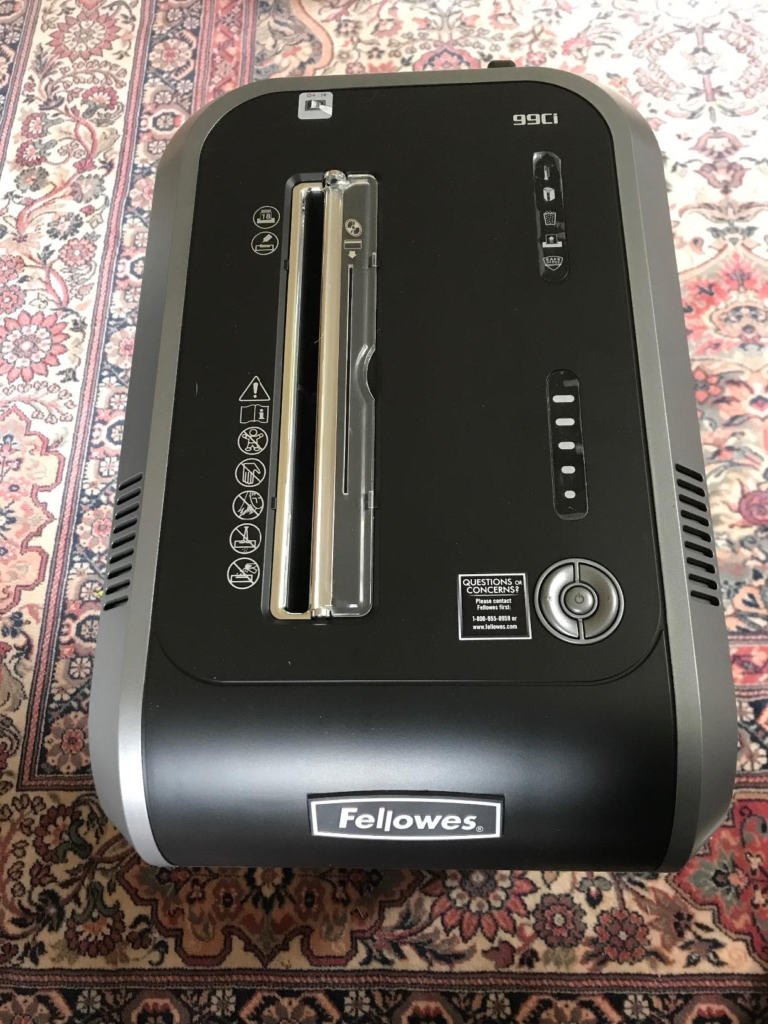
Fellowes Powershred 79Ci vs 99Ci: Why Most Buyers Misread This Too Early
The instinct in any comparison is to chase the bigger number. The 99Ci shreds a couple more sheets, runs longer between breaks, and costs only a bit more — so why wouldn’t you just size up? Because the bigger number solves a problem you may not have.
| 79Ci | 99Ci | |
|---|---|---|
| Marketed capacity | 16 sheets | 18 sheets |
| Duty cycle | 20 min on / 30 min off | 30 min on / 40 min off |
| Bin size | 6 gallons | 9 gallons |
| Built for | 1 person, home or desk use | 1–3 users, small office volume |
| Price position | Lower | Modestly higher |
If you’re one person shredding a drawer’s worth of mail a few times a week, the 99Ci’s extra duty cycle is capacity you’ll almost never use — you’re paying for a bigger bin and a longer run time that solve a volume problem you don’t have. The comparison only tips toward the 99Ci when the shredder needs to survive multiple people feeding it back-to-back through most of a workday. Match the machine to the job, not the spec sheet to your ego.
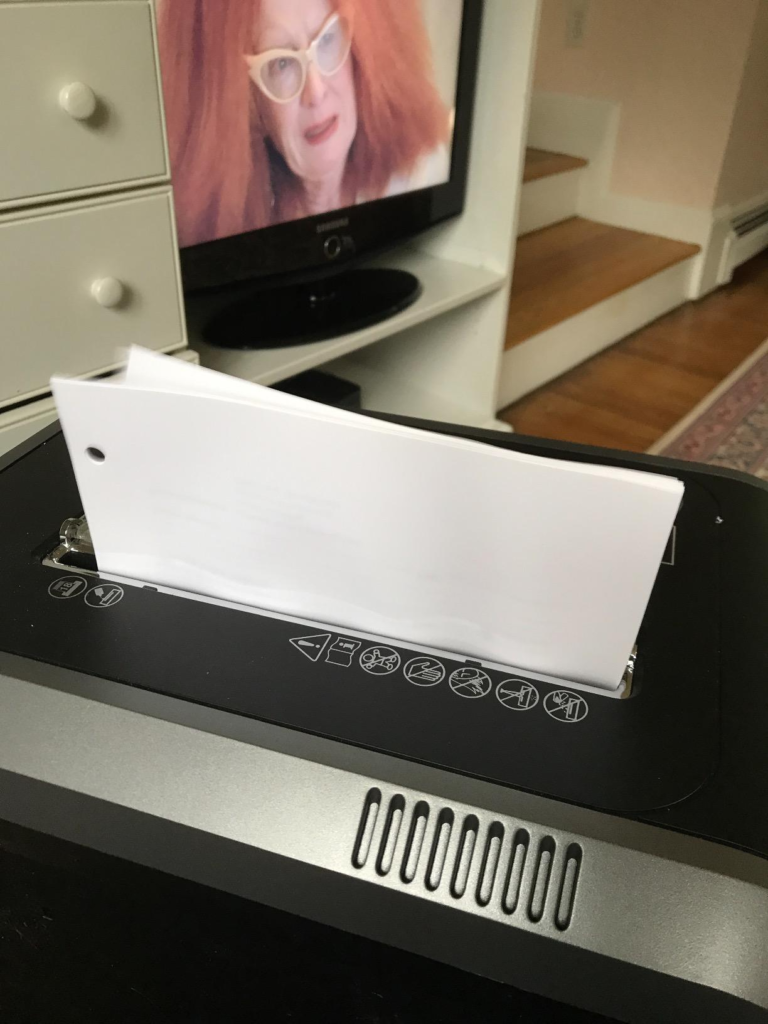
Fellowes Powershred 79Ci Best For: Who Is Actually Inside This Problem
This machine was built for a specific person, and if you recognize yourself here, the rest of this review will feel less like advertising and more like confirmation. You’re dealing with recurring sensitive paperwork — financial statements, medical bills, old cards, tax records — not a single one-time purge. You’ve probably already owned a cheap 6-sheet shredder that choked on four pages and taught you to hate the whole category. You want to destroy cards and discs along with paper, in one machine, without babysitting it. And you want it quiet enough to run near a home office, a shared desk, or a sleeping kid down the hall without announcing itself.
Fellowes Powershred 79Ci Downsides: Where Wrong-Fit Begins
Just as important is knowing when this isn’t your machine, because the regret pattern in negative reviews is consistent and avoidable. If you’re clearing out a departmental archive or running a shared office where the shredder never really gets a rest, the 20-on/30-off cycle will fight you constantly — look at a commercial-duty model built for continuous use instead. If your documents require the highest security tier for legal or medical compliance, cross-cut P-4 is solid but not the ceiling; micro-cut P-5 machines exist for exactly that need. And if you shred a handful of pages once a month, you’re paying for speed and capacity that will sit idle — a smaller, cheaper shredder does that job just fine.
Fellowes Powershred 79Ci: The One Situation Where This Shredder Becomes Logical
Strip away the marketing and the math is straightforward. If you’re a home or single-desk user with recurring sensitive documents, tired of a shredder that jams on four sheets, and you don’t need industrial-grade continuous duty — the 79Ci’s real 14-sheet capacity, independently measured 64 dB noise level, and a warranty that covers the blades for life stack up better than almost anything else in its price bracket. That’s not a sales pitch. It’s just where the numbers land.
Fellowes Powershred 79Ci Pros and Cons: What It Solves, What It Reduces, and What It Still Leaves to You
| Pros | Cons |
|---|---|
| Fastest shredding speed in independent testing (140 sheets/min) | Marketed 16-sheet capacity overstates real-world reliability |
| Quietest shredder in its tested class (~64 dB) | Bin fills quickly relative to its speed |
| Handles cards, CDs, and staples, not just paper | 20-minute duty cycle limits marathon sessions |
| SafeSense stops shredding if hands get close | Occasionally over-cautious with SafeSense |
| 2-year warranty plus lifetime cutter coverage | Cross-cut is not the highest available security tier |
| Multiple owners report 10+ years of daily use | Minor caster assembly required out of the box |
It solves the jamming frustration that drives most shredder complaints, and it solves it convincingly. It reduces noise and mess to a level most owners describe as a genuine surprise. What it still leaves to you: respecting the real 14-sheet limit instead of the printed one, oiling the blades every time you empty the bin (or at least twice a month) to prevent the drag and noise that come from a dry cutter, and planning bigger jobs around the cool-down instead of against it. One maintenance note worth knowing before you need it — never use compressed air to clean the entry sensors; the propellant can be a fire risk near a motor. A cotton swab is what Fellowes actually recommends.
Fellowes Powershred 79Ci Review: Frequently Asked Questions
| Question | Answer |
|---|---|
| Is the Fellowes Powershred 79Ci actually jam-proof, or is that just marketing? | Mostly true, with a caveat. The three-layer sensor system reliably prevents true blade jams within its working range. Odd materials — glossy envelopes, sticky notes — can still stop a feed, so “jam-proof” describes the mechanism, not a guarantee against every possible stack. |
| How many sheets can it really shred at once? | Fellowes markets 16. Independent lab testing and Fellowes’ own troubleshooting documentation both point to roughly 14 as the reliable ceiling. Stay at 12–14 for consistently smooth runs. |
| How long can I run it before it needs a break? | 20 minutes of continuous use, then a mandatory cool-down of around 30 minutes enforced by an overheat sensor. Build big cleanouts around this rhythm rather than fighting it. |
| Is it loud? | No. Independent testing measured it at roughly 64 dB and rated it the quietest shredder in its class. Most owners describe it as noticeably quieter than they expected. |
| What else can it shred besides paper? | Staples, small paper clips, credit cards, CDs, and DVDs. It cannot handle adhesive labels, sticky notes, laminates, large paper clips, X-rays, or continuous-feed paper. |
| Fellowes 79Ci or 99Ci — which one should I get? | Solo or home-office use points to the 79Ci. Frequent, multi-person office volume points to the 99Ci and its longer duty cycle and bigger bin. |
| How long do these actually last? | Long enough that multiple owners report over a decade of regular use from a single unit, and Fellowes backs the cutters with a lifetime warranty on top of two years of full product coverage — among the strongest guarantees in the category. |
Fellowes Powershred 79Ci Review: The Final Verdict
Sixteen sheets on the box, fourteen in reality, and a machine that’s still faster and quieter than almost everything else in its class once you feed it correctly. That’s the honest shape of this shredder. If you recognize your own stack of papers somewhere in this review — if you’re done babysitting a cheap machine that jams on four sheets, and you don’t need a commercial unit you’ll never fully use — this is the logical next step, not a leap of faith.
Transparency Note:
This analysis is built on aggregated real-world experience. It extracts what repeatedly holds, what breaks, and what users uncover only after living with the system—then shapes it into a clear model you can use immediately. Think of it as structured experience, refined and presented so you don’t have to learn it the hard way.
“A quick note: Don’t believe the star ratings, but trust personal experience. This article is a compilation of collected experiences.”