TIMEMORE BLACK MIRROR BASIC 2 REVIEW: WHY YOUR "0.1G PRECISION" CUP STILL TASTES INCONSISTENT
You bought a scale that promises 0.1g accuracy. You weigh your dose, you start your pour, and the cup still comes out different from yesterday’s. Not wildly different — just enough that you start blaming the beans, the grinder, your kettle technique. Almost nobody blames the scale. I do. After going through every independent lab test, owner thread, and teardown I could find on this exact model, I can tell you the spec sheet isn’t lying — but it isn’t the whole story either.
The Result Looks Fine. The Problem Isn’t.
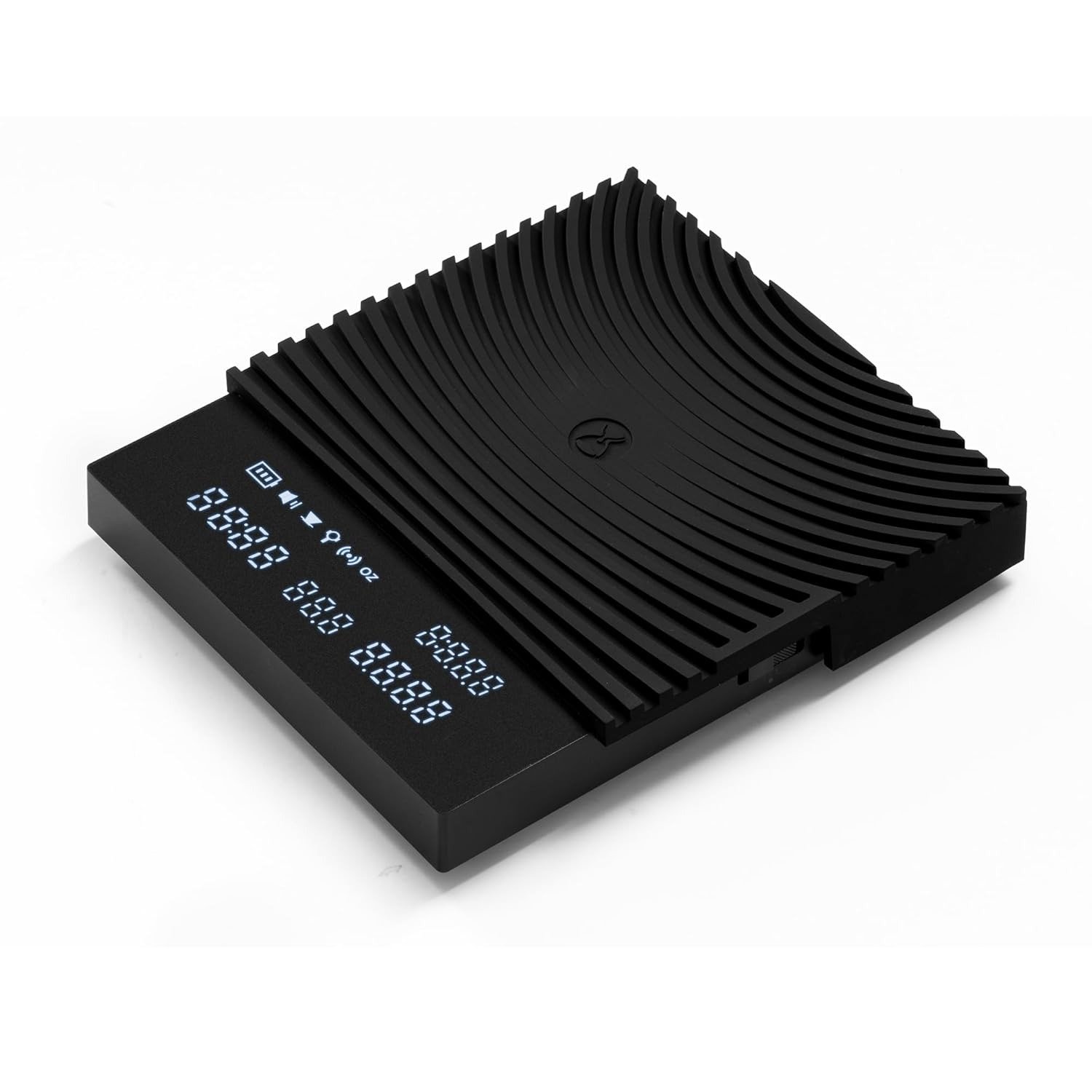
On paper, the TIMEMORE Black Mirror Basic 2 has nothing to apologize for. It detects weight from 0.5g up to 2kg and holds 0.1g precision, which is the same resolution you’d get from scales costing three or four times as much. One reviewer ran it head-to-head against five other coffee scales and found it matched almost every reading, with only a single 0.1g discrepancy across the whole test. That’s a genuinely accurate instrument.
So why does the same scale that nails the number sometimes hand you a brew that drifted off-recipe? The answer isn’t in the sensor. It’s in the surface you’re touching without meaning to.
What You’re Actually Feeling but Not Naming
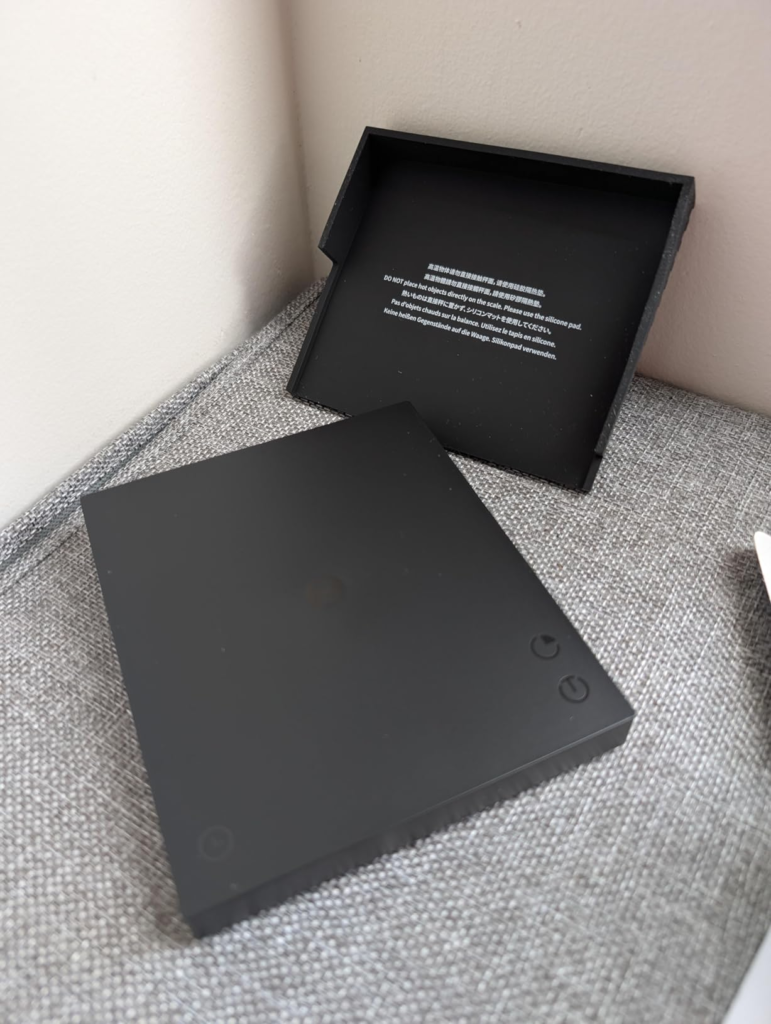
You’ve probably done this without thinking twice: wiped a coffee drip off the top of the scale mid-brew, nudged your dripper to sit straighter, rested a finger near the display to check the time. A second later, the weight reads 0.0. Your bloom timing is gone. You either restart the whole pour or just keep going and quietly accept a recipe that’s no longer the one you planned.
You didn’t do anything wrong. You didn’t even touch a button, most of the time.
The Hidden Mechanism Behind the Miss
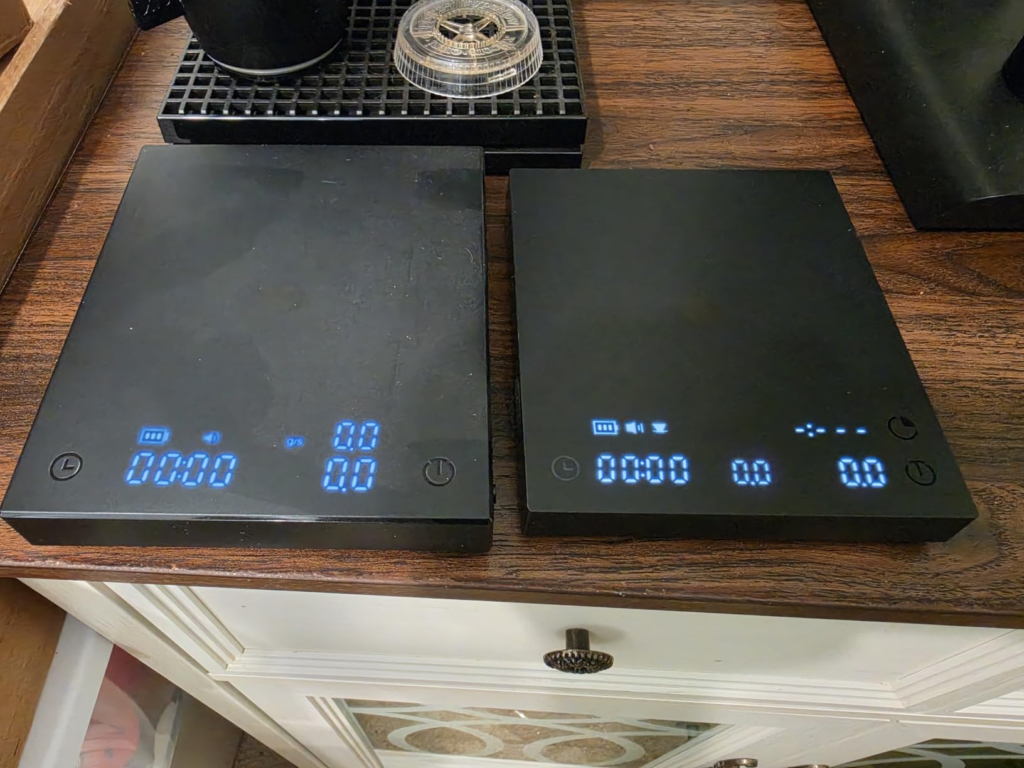
This scale uses capacitive touch controls instead of physical buttons, and the threshold for activation is lower than most people assume. The two touch zones are sensitive enough that you don’t need to make contact at all — hovering a finger in the right spot is enough to trigger a press, and an audible beep confirms it happened. One professional tester who built her routine around a V60 found this out the hard way: simply wiping spilled coffee off the surface, or repositioning the dripper and mug, was enough to make the scale tare itself mid-brew, forcing a restart.
The flow-rate display has a related, smaller credibility problem. It’s a real feature — the scale tracks how fast liquid is landing on it in real time — but in practice the digits refresh too quickly to read a single stable number while you’re actually pouring, which makes it closer to a visual flourish than a brewing tool. It’s not broken. It’s just less useful than the spec sheet implies.
The Threshold Where the Outcome Quietly Breaks
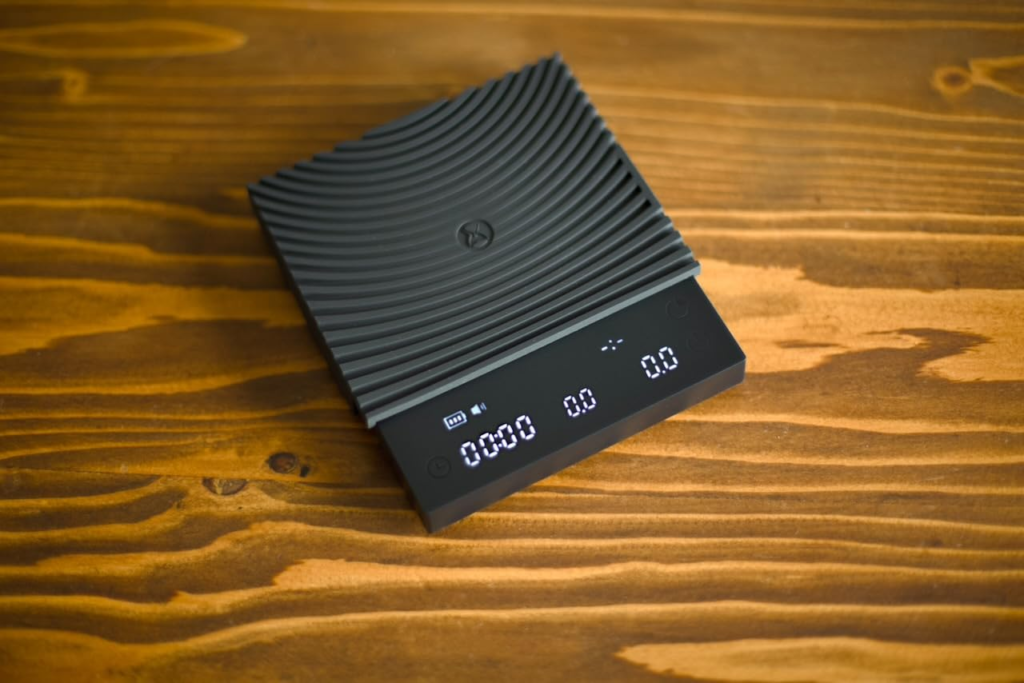
Here’s the actual mechanism, named plainly: this scale has no separation between its weighing surface and its control surface. They’re the same plastic panel. Every brewing scale asks you to keep your hands near the top during a pour — bloom, swirl, adjust, check. On the Black Mirror Basic 2, that same proximity is also the input zone for tare and timer. The moment your hand passes close enough to wipe, nudge, or hover, you’ve crossed into the same field the sensor uses to register a command.
This isn’t a manufacturing defect. It’s a design tradeoff TIMEMORE made in exchange for a seamless, button-free face. Most of the time it works in your favor. The cost shows up specifically during the fidgety middle of a pour-over — which, unhelpfully, is exactly when you’re most likely to be touching the scale.
Why Most Buyers Misread This Too Early
Most people shopping for this scale compare it the way you’d compare two calculators: look at the decimal point, look at the price, pick the cheaper one with the same number of digits. That comparison genuinely makes the Basic 2 look like a steal next to Acaia’s lineup. It also misses the actual differentiator, which isn’t the chip — it’s the control surface.
It’s also worth correcting a piece of reputation that follows this product line around. Owner forums from years back document real accuracy drift on the original Black Mirror scale — one user traced it to excess adhesive on the load cell mount and fixed it by disassembling the unit, and another reported the displayed weight slowly creeping after taring on an 18-month-old unit. Those reports predate this generation. The Basic 2 runs on a redesigned chip and PCB structure built specifically for better accuracy and responsiveness, and it’s a separate product from the early gray-market units those complaints describe. Old drift complaints aren’t irrelevant — they’re just describing different hardware.
Here’s the honest spec snapshot, the way it actually tests rather than the way it’s marketed:
| Spec | What it actually is |
|---|---|
| Weight range | 0.5g – 2kg |
| Accuracy | 0.1g |
| Weight (scale itself) | ~1.16 lb / 526g |
| Footprint | ~6 in / 15cm square, ~1–1.2 in / 3cm tall |
| Battery | USB-C rechargeable Li-ion; full charge in ~2 hours |
| Battery life claim | Listed anywhere from 10 to 24 hours depending on retailer — inconsistent marketing, but real-world testers confirm weeks of daily use on one charge |
| Auto-off | After 3 minutes idle |
| Waterproofing | Splash-resistant top surface; no official IP rating; charging port not submersible |
| Controls | Capacitive touch, proximity-triggered |
And against the scales people actually cross-shop it with:
| Scale | Price (approx.) | Timer | Waterproof | Smart/app | Known quirk |
|---|---|---|---|---|---|
| TIMEMORE Black Mirror Basic 2 | $50–60 | Yes, auto-start | Top surface only | No | Proximity tare |
| Hario V60 Drip Scale | ~$52 | Yes | No | No | Runs on AAA batteries |
| Subminimal Subscale | ~$49 | No | Yes | No | Espresso-only shape |
| KitchenTour Coffee Scale | ~$29 | Yes | No | No | Fewer features, no flow data |
| Acaia Lunar | ~$250 | Yes | No | Bluetooth | Premium pricing for app data |
| Acaia Pearl | ~$150 | Yes | No | Bluetooth | Industry-standard, not budget |
The Basic 2 sits in a specific gap: more capable than the sub-$30 scales, far cheaper than the Bluetooth-connected ones, and the only one in this price bracket with a genuinely splash-safe top.
Who Is Actually Inside This Problem
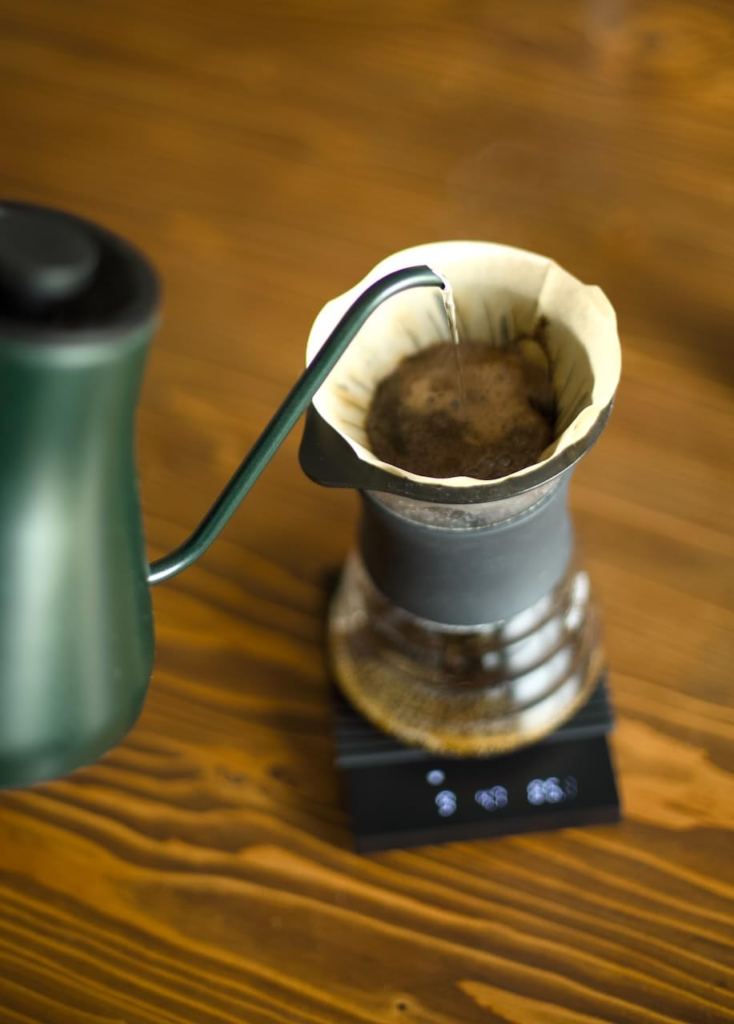
This scale earns its keep for one specific person: someone who brews both pour-over and espresso from the same kitchen counter and doesn’t want to own two separate scales to do it. Its mid-range footprint sits comfortably between dedicated espresso scales and full-size pour-over scales, so it covers a V60, a Chemex, and most home espresso drip trays without forcing a tradeoff. If you also want a built-in timer that starts itself when water hits the bed and don’t care about syncing brew data to a phone, this is your bracket.
Where Wrong-Fit Begins
If you only pull espresso and never touch a dripper, you’re buying size and weight you don’t need — the dedicated Nano version exists specifically for that case in a smaller footprint. If your portafilter or basket setup is unusually tall, check clearance first: at just under 3cm in height, this scale is too tall for some portafilters, and that’s not a complaint you can return your way out of after the fact. And if part of what you’re paying for is an app that logs every shot, this scale was never going to deliver that — it has no Bluetooth, no Wi-Fi, no companion software at all. Buying it for connected features is buying the wrong product on purpose.
The One Situation Where This Product Becomes Logical
If you’ve made it this far and recognized your own kitchen in the dual-brew description above, the math is straightforward. You’re not choosing between this scale and a flawless one — every scale in this price range has a tradeoff somewhere. You’re choosing between a $50–60 scale with one identifiable handling quirk and well-documented accuracy, or a $150–250 scale solving a problem you may not actually have. For the person who brews both espresso and pour-over and wants one reliable, waterproof-topped, auto-timing scale, the Basic 2 is the logical pick — not because it’s flawless, but because its one real flaw is specific, named, and easy to work around once you know it’s there.
What It Solves, What It Reduces, and What It Still Leaves to You
| Solves | Reduces | Still leaves to you |
|---|---|---|
| Genuine 0.1g weighing accuracy for dosing and dialing in ratios | Manual bloom-timing guesswork via the auto-timer | Keeping hands clear of the panel during the fidgety middle of a pour |
| One scale covering both espresso and pour-over sizing | The need for two separate scales for two brew methods | Checking your own portafilter clearance before buying |
| Splash damage anxiety, thanks to the sealed top surface | Worry about coffee grounds or spills ruining the unit | Treating the flow-rate number as a nice-to-have, not a brewing tool |
Frequently Asked Questions
| Question | Answer |
|---|---|
| Is the TIMEMORE Black Mirror Basic 2 actually accurate to 0.1g? | Yes — independent side-by-side testing against five other scales confirmed it tracks within 0.1g of comparable units almost every time. The accuracy claim holds up in practice, not just on the box. |
| Why does my scale reset to zero in the middle of brewing? | This is almost always the proximity-based touch controls reacting to your hand near the panel — wiping, adjusting a dripper, or even hovering close enough counts as a tap. Keep your hands off the front edge once brewing starts, and lift your dripper from the side rather than reaching across the display. |
| Is this the same scale people complained about losing accuracy over time? | Mostly not. Those reports trace back to the original, earlier-generation Black Mirror units. This version runs on a redesigned chip and PCB specifically built for better long-term accuracy and response. |
| Will it fit under my espresso portafilter? | Usually, but not guaranteed. At roughly 3cm tall, it clears most drip trays and portafilters, but a small number of taller or deeper baskets won’t have room. Measure your own clearance before buying if your setup is tight. |
| Does it connect to an app or track brew history? | No. There’s no Bluetooth, Wi-Fi, or companion app. If logging every shot digitally matters to you, this isn’t the scale for that — you’d be looking at something in the Acaia range instead. |
Final Compression
Strip away the spec-sheet comparison and the actual decision is simple: this scale is accurate, it’s splash-safe, and it covers two brewing methods most home setups otherwise need two devices for. Its one real cost is a touch surface that doesn’t distinguish between “I’m adjusting my dripper” and “I’m giving a command” — and once you know that, it stops being a mystery and starts being a habit you adjust around.
If that tradeoff is one you can live with for a scale in the $50–60 range, this is where the decision stops being vague:
Transparency Note:
This analysis is built on aggregated real-world experience.
It extracts what repeatedly holds, what breaks, and what users uncover only after living with the system—then shapes it into a clear model you can use immediately.
Think of it as structured experience, refined and presented so you don’t have to learn it the hard way.
“A quick note: Don’t believe the star ratings, but trust personal experience. This article is a compilation of collected experiences”
![The Hands-Free Espresso Problem: When Convenience Breaks Consistency ([شاركنينجا][1])](https://focusedinsight.net/wp-content/uploads/2026/02/image-26.png)