The Coffee Looks Fine Until You Notice the Part That Keeps Sending You Back Out
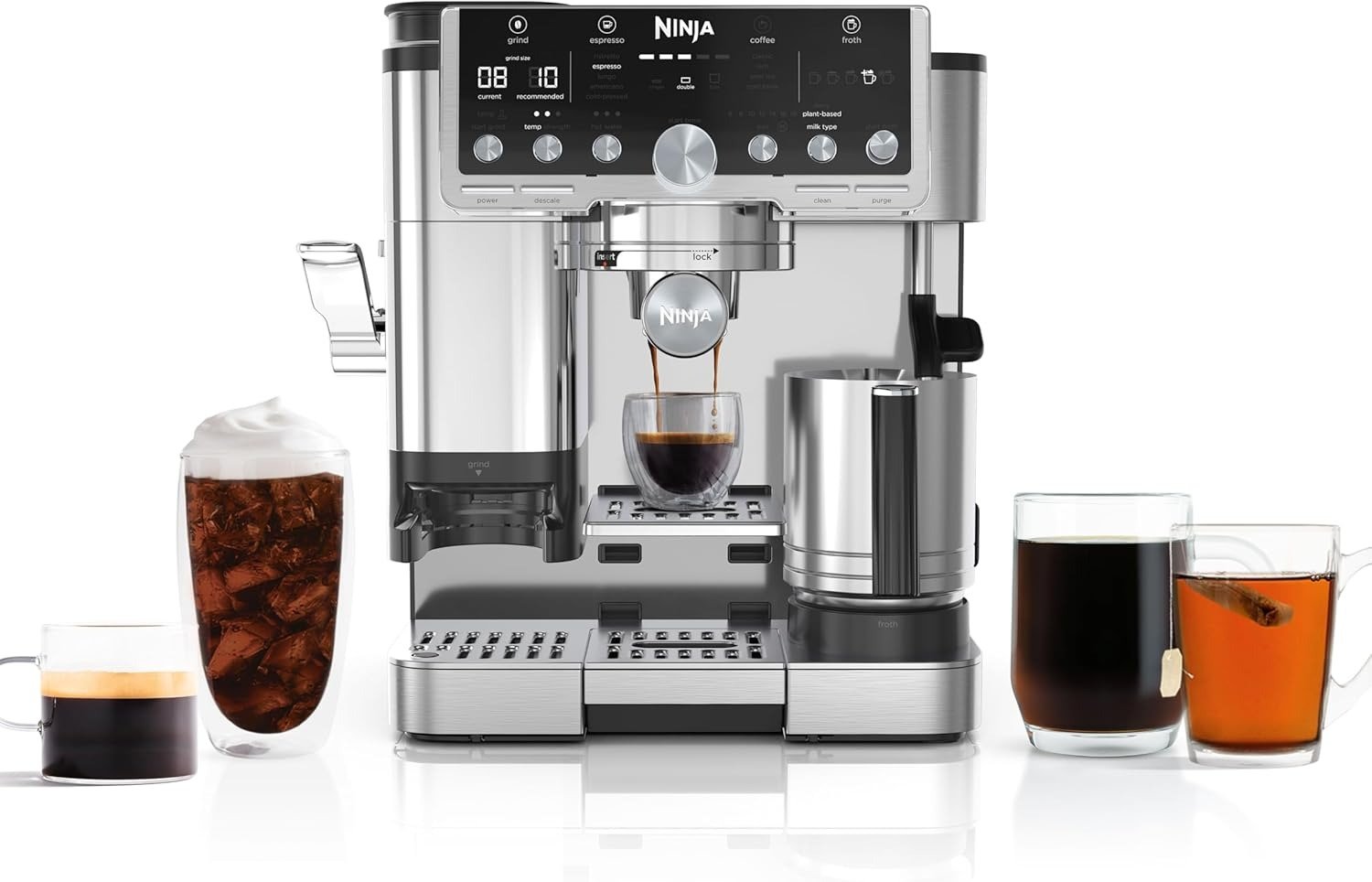
NINJA LUXE CAFÉ PRO ES701
The Result Looks Fine. The Problem Isn’t.
Most people do not buy an espresso machine because they want a hobby. They buy one because something small has started to grate on them. Not dramatic pain. Not cinematic suffering. Just that low, daily abrasion: the line at the café, the watered-down iced latte, the $7 “good enough” drink, the kitchen machine that produces something brown, foamy, and forgettable.
That is where the Ninja Luxe Café Pro ES701 got interesting to me.
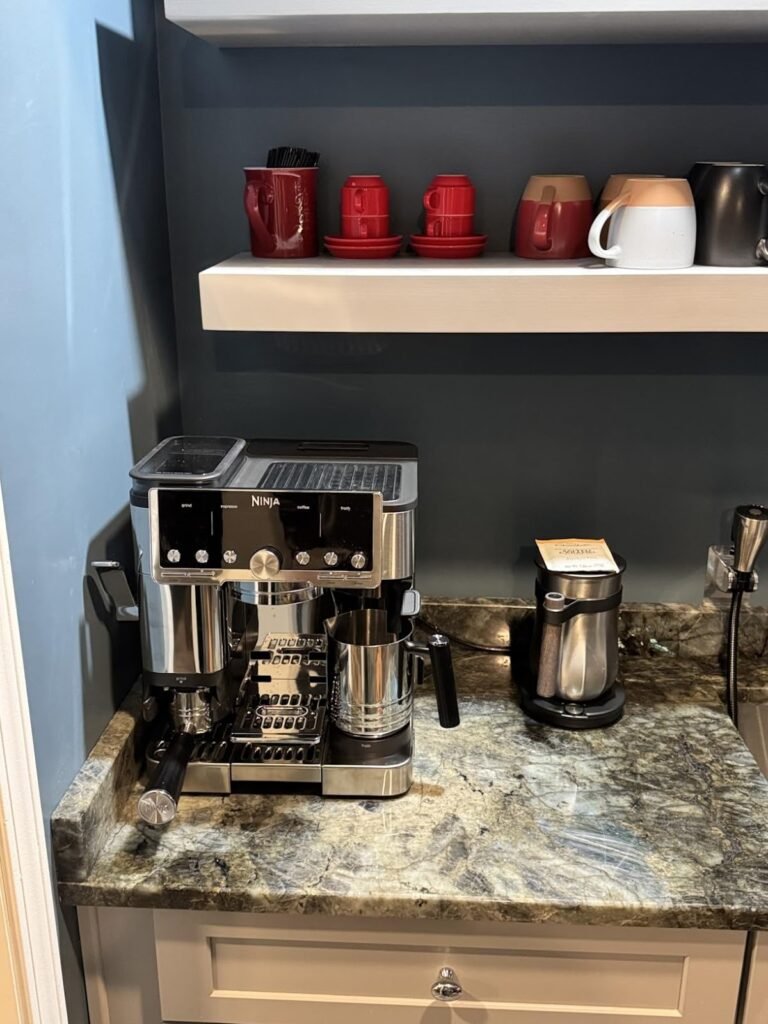
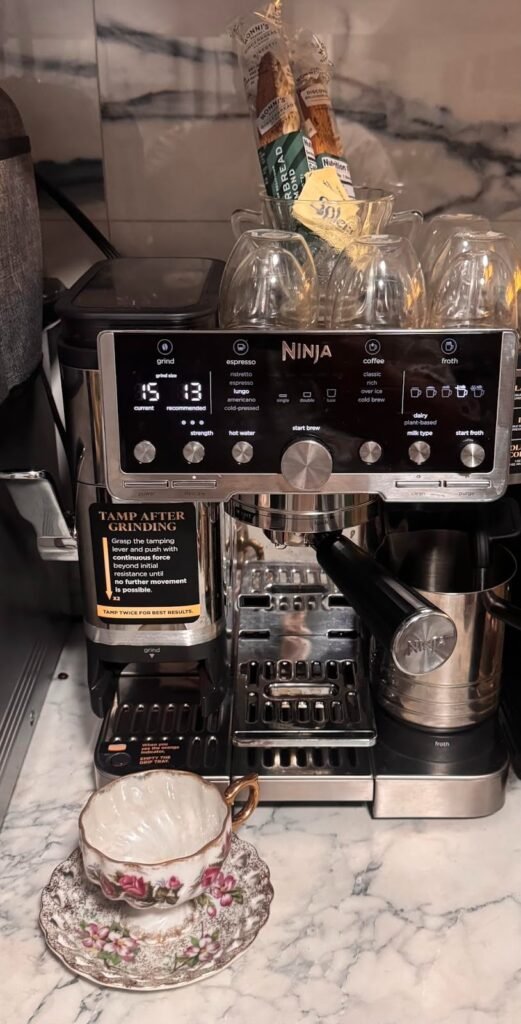
Not because it promises café magic. Plenty of machines do that. What changed the shape of the question was simpler: this machine is built around reducing the messiest break point in home coffee, the moment where convenience usually kills the cup. Ninja’s official spec sheet frames the ES701 as a 4-in-1 system with espresso, drip coffee, cold brew, independent hot water, an integrated tamper, a conical burr grinder with 25 settings, weight-based dosing, and five hands-free froth programs. In other words, it is not trying to be a pure espresso shrine. It is trying to control workflow friction before friction ruins consistency.
That distinction matters.
Because the ugly truth in this category is that many buyers do not regret the machine when it fails spectacularly. They regret it when it fails quietly. The espresso is passable. The milk looks acceptable. The countertop ritual feels premium for a week. Then the routine starts shedding patience, one clumsy morning at a time.
What You’re Actually Feeling but Not Naming
What most buyers call “I want better coffee” is usually three separate frustrations stacked on top of each other:
| What you think is wrong | What is actually draining you |
|---|---|
| “The coffee shop is too expensive.” | You are paying a convenience tax because your home setup creates too much intervention. |
| “My old machine isn’t consistent.” | The workflow asks for precision your mornings do not reliably give it. |
| “I want barista-quality drinks at home.” | You want less guesswork, less cleanup, and fewer bad cups posing as progress. |
That is the psychological toll here. Not just taste. Repetition.
A machine can make one lovely drink and still be the wrong machine. If it asks you to hover, adjust, wipe, re-dose, second-guess, and clean with the alertness of a lab technician before work, it does not fit real life. It fits your aspirational version of yourself. That person wakes up earlier, measures everything, never rushes, and apparently does not spill grounds.
I do not trust that version of the buyer. I trust the one who is already late.
That is also why so many positive reactions to the ES701 cluster around the same words: easy, clean, versatile, worth it, great frother, better than expected. Amazon’s current product summary shows a 4.4/5 rating from 396 reviews, with customer sentiment leaning positive on functionality, taste, ease of cleaning, and value, while complaints cluster around heat level, occasional leaking or defects, water use, and wanting a larger tank.
That pattern tells you what this machine is really being judged on. Not espresso romance. Workflow relief.
The Hidden Mechanism Behind the Miss
The hidden variable is not the grinder alone. It is not milk alone. It is not pressure, temperature, or dose in isolation.
It is workflow forgiveness.
The ES701 is engineered around guided correction. Ninja says Barista Assist recommends grind size and monitors brewing, while the built-in scale handles weight-based dosing and the tamp lever standardizes puck prep. Reviewers keep circling the same point from different directions: the machine tries to narrow the number of places a normal user can drift off course. Tom’s Guide praised that balance between ease and manual involvement. CoffeeGeek called the earlier Luxe Café Premier a “market disruptor” with unusually high value for cost, then noted that the ES701 should score even higher because it fixes major complaints by adding the hot-water dispenser, Americano mode, single-shot basket, and automatic tamping lever. Tom’s Coffee Corner went further and explicitly described the ES701 as making “real espresso” with standard non-pressurized baskets rather than fake-crema shortcuts.
That is the mechanism.
Not automation for its own sake. Constraint.
The machine is trying to reduce the distance between your intention and the cup by stabilizing the parts people routinely mangle:
- grinding too coarse or too fine,
- dosing by feel when they are still learning,
- tamping unevenly,
- steaming milk badly,
- bouncing between espresso mood and regular-coffee mood with two different appliances.
A bad machine makes you feel clumsy. A smart machine hides some of your clumsiness from the final result.
The Threshold Where the Outcome Quietly Breaks
Here is the threshold I would name for this machine:
The Intervention Threshold — the point where your coffee routine starts demanding more manual correction than your real mornings can sustain.
Below that threshold, a simpler or more manual machine can still make sense. Above it, the routine frays. Taste becomes inconsistent. Cleanup becomes annoying. Small misses start multiplying. That is where “I love coffee” turns into “I’ll just grab one outside.”
The Ninja Luxe Café Pro is built for people already brushing against that threshold.
You can see it in the design logic:
| Workflow point | What usually breaks | What the ES701 tries to stabilize |
|---|---|---|
| Dosing | Too much or too little coffee | Built-in scale with drink-specific dosing |
| Tamping | Uneven pressure, mess, channeling risk | Lever-based integrated tamper |
| Grind selection | Guesswork, wasted beans | Grind recommendations through Barista Assist |
| Milk drinks | Inconsistent foam texture | Dual Froth System Pro with five presets |
| Drink variety | Separate devices or compromise | Espresso, drip, cold brew, hot water in one body |
But thresholds cut both ways.
The same design that lowers the skill floor also introduces more systems, more cleaning events, more water movement, and more dependency on the machine behaving correctly. That is why owner complaints do not sound random. They sound structural: overflow tray filling quickly, a tank some people wish were larger, heat that some find merely adequate rather than scorching, and occasional reports of leaking or defective units. Long-term commentary outside Amazon echoes the same friction points around the small drip tray and awkward tank access.
So the threshold is not “Can it make coffee?” It can.
The threshold is “Does it remove enough friction to justify the complexity it adds?”
Why Most Buyers Misread This Too Early
They misread it because they judge the machine with the wrong metric.
They ask, “Can it make good espresso?”
Too shallow.
The better question is, “Can it keep me inside a good routine without constant manual rescue?”
Those are not the same question.
A machine can pull a respectable shot and still fail you if the surrounding experience is noisy, awkward, or fragile. That is where many espresso purchases go wrong. Buyers compare pressure bars, buzzwords, stainless panels, or aesthetic prestige. They compare brochure nouns. They do not compare resistance. Resistance is what kills habits.
May I put it plainly? The buyer who is obsessed with proving they are serious enough for a more “pure” machine often ignores the very thing that will decide whether the machine stays in use: morning obedience.
The ES701 is not trying to flatter purists. That is one reason it has landed well with reviewers who openly expected less from it. Coffee Kev admitted he initially assumed Ninja should stick to blenders and air fryers, then reversed himself after testing, describing the Pro as brilliant for the audience that wants guided espresso, convenience, and a broad café-style drink menu. Tom’s Guide reached a similar conclusion from the opposite direction, arguing that the Pro strikes an unusually accessible balance between automation and hands-on feel.
So if your first instinct is, “But is it as romantic as a more manual machine?” you may already be asking the wrong thing.
Romance does not make Tuesday easier.
Who Is Actually Inside This Problem
This machine fits a very specific kind of buyer. I would put them into three clean groups.
- The café-replacement household
You are not chasing competition-level espresso. You want the daily exit wound closed. Espresso for one person, drip for another, iced drinks later, maybe hot water for Americanos or tea, all without a multi-machine circus. Officially, the ES701 supports single, double, and quad shots, multiple espresso formats including ristretto and lungo, plus drip, cold brew, and hot water. That versatility is central to its value proposition. - The ambitious beginner who is tired of wasting beans
You want real espresso, not pod convenience disguised as progress, but you also do not want every cup to become a calibration exercise. The non-pressurized baskets and monitored brewing matter here because they give you a more serious extraction path without demanding expert fluency from the first week. - The convenience buyer with standards
This is the most important group. You still care how the drink tastes. You simply do not worship difficulty. You want the machine to do some of the remembering for you.
If you see yourself in that third group, the ES701 starts making far more sense than a glamour-machine built for handwork you will not actually maintain.
Where Wrong-Fit Begins
Wrong fit starts exactly where buyer fantasy overpowers buyer behavior.
This is not the right machine for everyone.
It starts drifting into wrong-fit when:
- you mainly want a compact, espresso-only setup and do not care about drip coffee, cold brew, or milk presets,
- you love manual steaming and manual dialing enough that assistance feels like interference,
- countertop space is already tight,
- you are highly sensitive to lukewarm output and expect very high serving temperatures without compromise,
- you hate emptying trays, wiping steam wands, or staying on top of maintenance cycles.
And maintenance is not a footnote here. It is part of the ownership experience. Ninja includes cleaning tablets, descaling powder, a hard-water testing kit, and a cleaning brush in the box, which tells you something important: the machine is meant to be maintained, not merely admired. Amazon owners also repeatedly mention water use, tray management, and periodic cleaning routines, including one user describing a six-minute clean cycle and a much longer descale cycle.
If you are hoping for “premium drinks with almost no upkeep,” that hope is the problem, not the machine.
The One Situation Where This Product Becomes Logical
The Ninja Luxe Café Pro becomes genuinely logical in one situation:
When your home coffee problem is no longer flavor alone, but flavor under routine pressure.
That is the split.
If your real life keeps colliding with your coffee standards, the ES701 has a strong case. Not because it is magical. Because it is organized around preserving acceptable-to-good results when time, attention, and patience are already under load.
That is also why the price lands the way it does. Ninja lists the ES701 at $749.99, 31.66 pounds, with a 1650W build and large footprint; TechRadar notes the Pro sits above the Premier in price and feature count, while CoffeeGeek’s ongoing Luxe coverage suggests the Pro improves on the already high-value Premier by fixing specific omissions rather than merely dressing them up.
So no, I would not frame this as “the best espresso machine.” That is lazy language.
I would frame it this way: this is the machine you buy when you are done pretending that your routine can support a more fragile workflow than it actually can.
If you are inside that condition, the logic tightens fast.
What It Solves, What It Reduces, and What It Still Leaves to You
| Category | What the ES701 solves | What it reduces | What it still leaves to you |
|---|---|---|---|
| Espresso setup | Real espresso workflow with dosing, tamping, and guided brewing support | Early beginner mistakes | Bean choice, taste preference, final dialing nuance |
| Milk drinks | Hot and cold microfoam with preset programs | Frothing inconsistency | Cleaning after use, accepting preset logic |
| Household versatility | Espresso, coffee, cold brew, hot water in one machine | Appliance sprawl | Counter space and a larger machine footprint |
| Daily routine | Faster path to a competent drink | Café dependence, messy tamping, dosing guesswork | Tray emptying, water refills, descale/clean cycles |
| Value perception | Broad feature set at a lower price than some premium rivals | Overpaying for prestige alone | Risk tolerance around defects, support, and long-term durability |
That last column is where trust lives.
I would rather a machine show me its remaining burdens than seduce me with a fantasy. The ES701 still asks something from you: space, maintenance, tolerance for a large footprint, and realism about temperature preferences and occasional QC complaints. The people who will resent it are the ones who wanted a servant. The people who tend to love it are the ones who wanted a capable partner.
That is a narrower promise. It is also a more believable one.
Final Compression
Here is the cleanest version of the decision.
If your real problem is that home coffee keeps collapsing under weekday conditions, the Ninja Luxe Café Pro is one of the more coherent answers in this price band because it attacks the exact places routines usually fail: dose, tamp, milk texture, drink variety, and repeatability under imperfect attention. Expert reviewers broadly praise its value, guidance, and versatility; owner sentiment reinforces that pattern, while also warning you about heat expectations, tray and water management, and the reality that more convenience features still require maintenance.
If that is your break point, this is where the decision stops being vague.
If you are already living inside that threshold, the product page is the logical next step.
Transparency Note:
This analysis is built on aggregated real-world experience.
It extracts what repeatedly holds, what breaks, and what users uncover only after living with the system—then shapes it into a clear model you can use immediately.
Think of it as structured experience, refined and presented so you don’t have to learn it the hard way.
“A quick note: Don’t believe the star ratings, but trust personal experience. This article is a compilation of collected experiences”